Brand Activations and Hospitality at Soldier Field
Soldier Field is not just a stadium. It is a 61,500-person stage planted on the Chicago lakefront — one of the most photographed and recognizable sporting venues in the United States. On game day, it becomes the epicenter of the city's energy: tens of thousands of fans flowing through Grant Park and Museum Campus, corporate clients settling into luxury suites overlooking Lake Michigan, and brands competing for attention in one of the highest-engagement environments in the Midwest.
For brand marketers and corporate event planners, that environment is an extraordinary opportunity — and an operational challenge. Getting an activation or hospitality program right at Soldier Field requires more than a great concept. It requires the right people, deployed in the right roles, at exactly the right moments.
This playbook breaks down everything you need to know about staffing brand activations and premium hospitality at Soldier Field — from activation zones and role definitions to game-day timelines and logistics. Whether you're running a pregame tailgate activation for a CPG brand or hosting 40 clients in an executive suite, the staffing decisions you make will determine how the day is remembered.
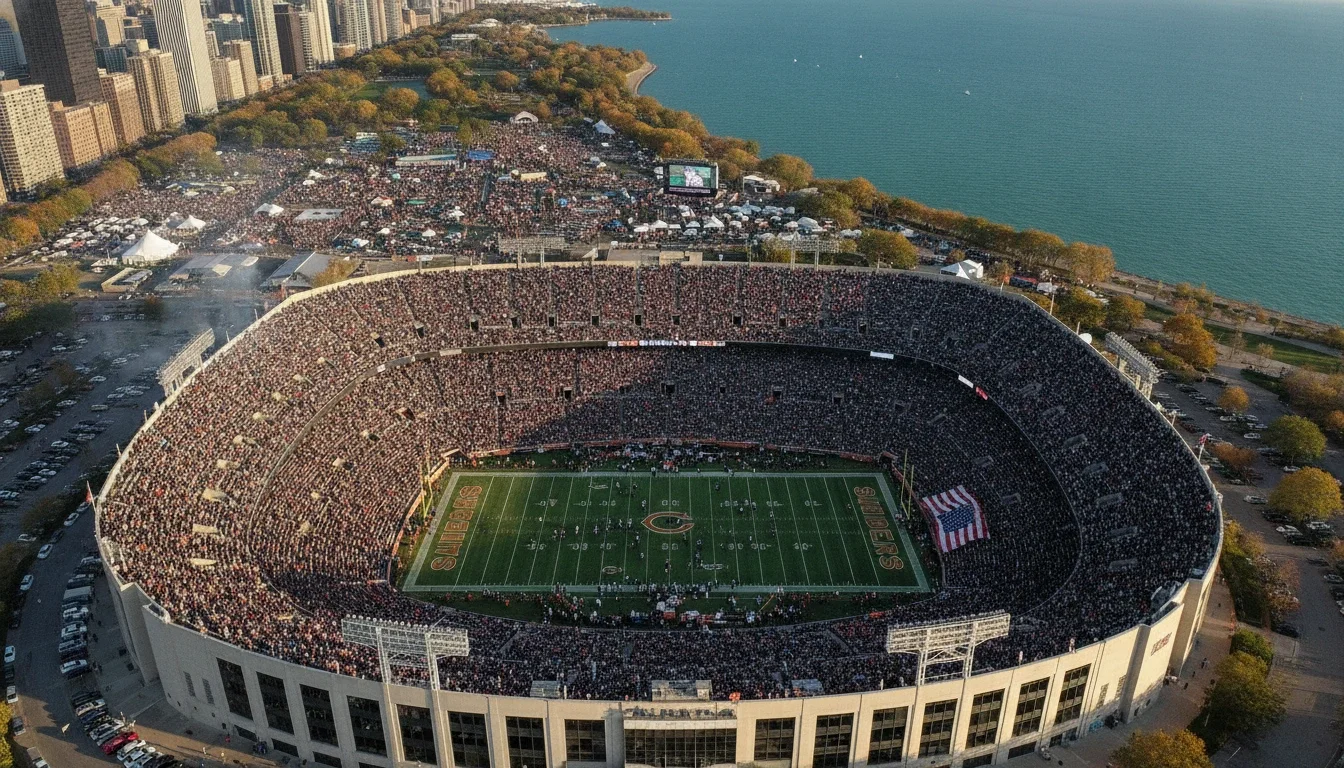
Aerial view of Soldier Field on Chicago's lakefront on a Bears game day, with Grant Park and Lake Michigan in the background
Why Soldier Field Is a Tier-One Venue for Brand Activations
Capacity, Audience Profile, and Activation Potential
With a seating capacity of approximately 61,500 and a typical Bears game drawing a sold-out crowd of dedicated, high-dwell-time fans, Soldier Field offers a concentrated activation environment that few venues in the country can match. The Museum Campus location means attendees arrive through a defined funnel — Museum Campus Drive, McFetridge Drive, and the lakefront pedestrian corridors — creating predictable, high-density foot traffic zones ideal for brand touchpoints.
The Bears fanbase trends toward a broad demographic mix: families, young professionals, corporate groups, and long-time Chicagoans who see attending a game as a social ritual rather than just a sporting event. That mix makes Soldier Field valuable not just for established consumer brands but for financial services, automotive, beverage, tech, and healthcare companies looking to reach an engaged, captive audience in a premium context.
Beyond NFL games, Soldier Field hosts Chicago Fire FC matches, major concerts, and marquee special events throughout the year — giving brands multiple activation windows across different audience profiles under a single venue relationship.
The Brand Activation Landscape Around Soldier Field
Activations at Soldier Field operate in two distinct zones: on-site (within venue-controlled grounds and concourses) and off-site (the Museum Campus plazas, parking lots, and Grant Park perimeter). Each zone has different access requirements, permit structures, and staffing dynamics — something brands often underestimate when planning their first Soldier Field activation.
On-site activations are coordinated directly through the Chicago Bears and Soldier Field event management, with branded footprints typically requiring venue sponsorship agreements or approved vendor status. Off-site activations in the Museum Campus parking areas and Grant Park perimeter operate under the Chicago Park District and City of Chicago permitting frameworks, offering more flexibility for independent brand activations timed to the fan arrival window.
Mapping the Soldier Field Activation Zones
Exterior Plazas and Tailgate Corridors
The exterior of Soldier Field is where game-day energy builds in the hours before kickoff. The Museum Campus parking lots — including the massive South Parking Lot — become a tailgate city on Bears game days, with thousands of fans gathering as early as four hours before kickoff. This is prime territory for experiential activations, product sampling, interactive installations, and high-engagement brand moments.
Staff deployed in exterior activation zones need to be physically energetic, weather-prepared, and capable of sustaining high-engagement interaction over a multi-hour window. The Chicago lakefront is notoriously unpredictable — warm September afternoons can give way to biting November wind off the lake within a matter of weeks, and your staffing plan should account for both scenarios.
Concourse-Level Brand Touchpoints
Inside the stadium, brand activations on the main concourse level offer access to the full fan population as they move between gates, concession stands, and their seats. Concourse placements typically involve sampling stations, interactive displays, or promotional handout operations. Traffic spikes heavily at three windows: the 30 minutes before kickoff, halftime, and the final quarter when early-departure fans begin filing out.
Staffing for concourse activations requires personnel who can work efficiently in high-density, high-noise environments — managing inventory, engaging fans quickly, and keeping a branded footprint looking clean and organized under pressure.
The United Club and Premium Level Access
Suite ticketholders at Soldier Field have access to the United Club, a private three-level club on the suite concourses featuring open lounge space, cash bars, and concession stands. For brands with suite ownership or partnerships, the United Club represents a significant secondary touchpoint — a quieter, more curated environment where premium guests linger before and during the game.
Staffing the United Club tier requires a different profile than exterior activation staff: hospitality-forward, professionally polished, and comfortable managing VIP-level interactions. This is where brand representation translates directly into business relationships.
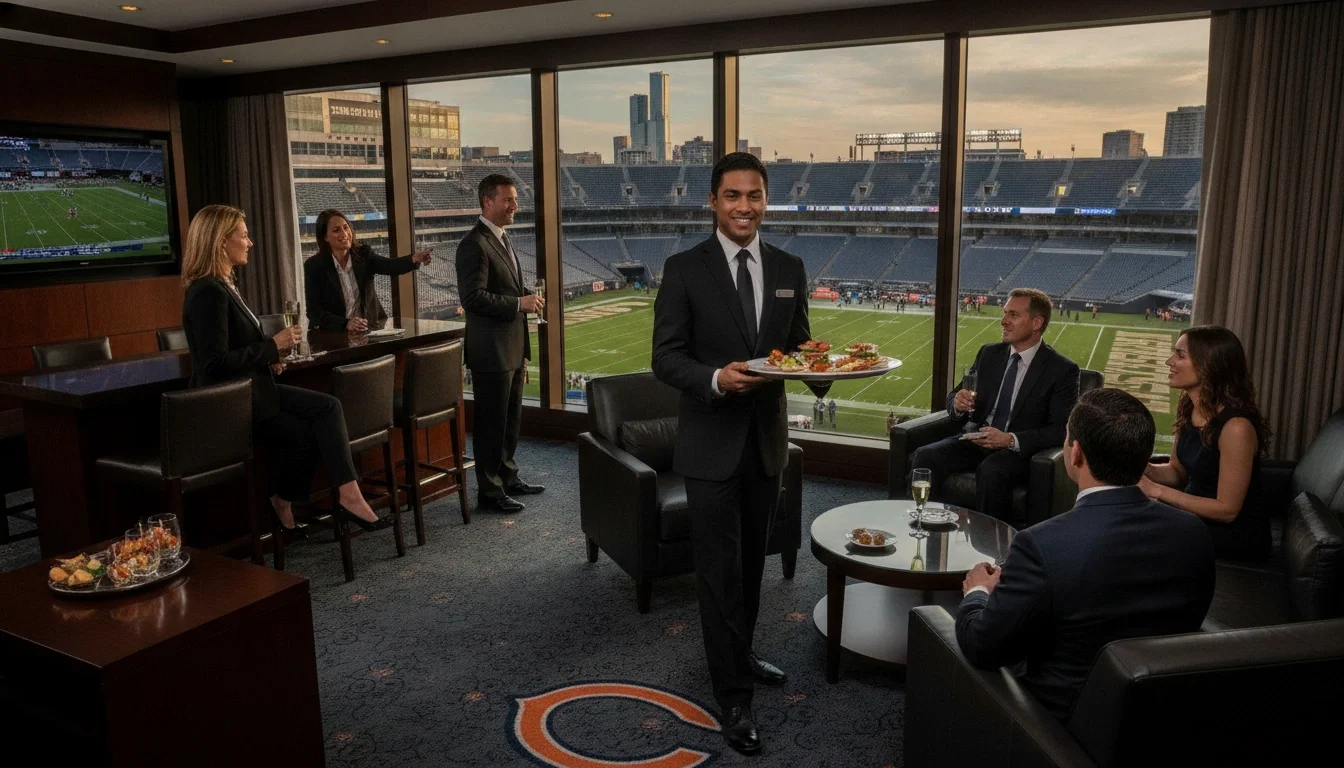
Professional suite attendant serving guests in a luxury Soldier Field executive suite with views of the field
Staffing Roles for Brand Activations at Soldier Field
Every successful Soldier Field activation is built on a clearly defined roster of roles. The staffing configuration that works for a pregame sampling activation in the Museum Campus parking lots is entirely different from what's needed for a sponsored interactive installation inside the stadium. Here is how to think about each role category.
Brand Ambassadors — Your Front-Line Activation Crew
Brand ambassadors are the primary human interface between your brand and the fan. At Soldier Field, they carry your message into one of the most emotionally charged environments in Chicago — game-day energy is high, attention spans are short, and the competition for fan attention is fierce. The best brand ambassadors for stadium activations combine genuine enthusiasm with structured talking points, knowing when to engage deeply and when to efficiently hand off product, signage, or a quick interaction and move to the next person.
Key responsibilities at Soldier Field activations include:
Product sampling and distribution across high-traffic zones
Fan-facing brand storytelling at interactive installations
Mobile outreach through tailgate corridors and parking areas
Digital engagement — QR code scanning, app downloads, contest entry
Lead capture and data collection at branded footprints
For a mid-scale exterior activation in the Museum Campus area targeting the full pregame window, a typical brand ambassador deployment ranges from six to twelve staff, depending on the size of the footprint and the depth of fan interaction required.
Promotional Models and Experiential Hosts
For premium brand presentations — auto launches, fashion and lifestyle activations, luxury consumer goods — promotional models and experiential hosts add a layer of brand polish that elevates the activation above a standard sampling operation. At Soldier Field, these roles work particularly well in corporate tailgate settings, sponsored VIP areas, or high-visibility concourse placements where brand image is as important as volume of interactions.
Experiential hosts take on a broader role than traditional promotional models, often serving as emcees, brand storytellers, or activation anchors who guide fans through a structured brand experience rather than simply handing out samples.
Street Team and Tailgate Activation Staff
The Museum Campus and surrounding Grant Park corridors represent some of the most valuable pedestrian real estate in Chicago on game day. Street teams deployed in these areas can intercept fans at multiple points in their journey to the stadium — from the CTA Museum Campus/11th Street station to the pedestrian walkways leading to stadium gates.
Street team roles at Soldier Field typically involve:
Guerrilla marketing and flyering along the fan approach corridors
Mobile sampling rigs and portable brand installations
Fan engagement games and prize-activation support
Social media and content capture support for brand documentation
Staffing Ratios and Deployment Logic
A practical rule of thumb for Soldier Field exterior activations: plan for one brand ambassador per 500–750 expected fan interactions per hour at your peak window. For a standard pregame footprint running two to three hours before kickoff, a team of eight to ten brand ambassadors with two team leads, or captains, provides sufficient coverage without overstaffing. For larger-scale multi-zone activations or those requiring significant fan data collection, scale accordingly and add a dedicated on-site activation manager.
Pro Tip: Always request a dedicated Captain or activation manager for Soldier Field deployments. Given the scale and energy of a Bears game day, having a single point of on-site authority who can make real-time decisions — staff repositioning, inventory management, weather response — dramatically improves activation outcomes.
Premium Hospitality Staffing at Soldier Field
The premium hospitality experience at Soldier Field is anchored by 141 executive suites across four levels on the east side of the stadium, ranging from intimate 12-person configurations to the Skyline Suite, which accommodates up to 193 guests. For corporate clients using these suites to entertain clients, reward employees, or host partner events, the quality of hospitality staffing is inseparable from the quality of the experience itself.
Executive Suite Attendants and VIP Hosts
Suite attendants at Soldier Field serve as the primary hospitality interface for premium guests. Their role spans the full event arc: welcoming guests as they arrive through Gate 38 or Gate 14's private suite entrances, managing the suite environment throughout the event, handling catering coordination, and ensuring the guest experience remains seamless regardless of what is happening on the field.
The professional profile for a Soldier Field suite attendant differs meaningfully from a general event staff member. These individuals need:
Polished presentation and professional communication — often interfacing with C-suite executives and major clients
Genuine hospitality instinct — anticipating needs rather than reacting to requests
Familiarity with stadium protocols, suite access points, and in-suite technology (HDTV systems, Wi-Fi, ordering platforms)
Ability to manage catering coordination and ensure food and beverage arrives and is refreshed on schedule
Calm under pressure — suites operate during a live event with unpredictable timing demands
Bartenders and Food & Beverage Staff for In-Suite Catering
In-suite catering at Soldier Field is handled through the venue's official catering partner, but the hospitality labor operating within the suite — the bartenders managing the wet bar, the staff plating and replenishing food, and the servers circulating with appetizers and drinks — represents a significant portion of the guest experience.
For brands or corporate clients bringing in supplementary or dedicated hospitality labor for their suite bookings, professional bartenders and waitstaff with event and stadium experience are essential. Key requirements at Soldier Field include:
Valid BASSET (Beverage Alcohol Sellers and Servers Education and Training) certification, required under Illinois alcohol service law
Experience managing service in a compact, climate-controlled suite environment with 20–40 guests
Professional appearance aligned with the suite host's brand or corporate standard
Ability to manage bar inventory and service flow without interrupting the guest experience
United Club and Club Level Hospitality
For suite guests utilizing the United Club's shared lounge environment on the suite concourses, ambient hospitality staff — greeters, club hosts, and floor staff — help manage flow and ensure the premium feel extends beyond the suite itself. For brands sponsoring club-level activations or receptions tied to a suite buy, this layer of staffing adds a significant experiential quality lift.
Managing Guest Flow in Multi-Suite Configurations
For large corporate bookings that span multiple adjacent suites or involve exclusive access to a full suite block, managing guest flow between spaces requires careful staffing design. One hospitality lead per suite, supported by floating service staff in shared corridors, prevents the confusion and service gaps that often occur when large groups spread across multiple premium spaces. Clear guest arrival protocols — coordinated with the suite access team and venue operations — should be built into every multi-suite booking plan.
The Game-Day Operational Timeline
Timing is everything at a Soldier Field activation. The fan arrival pattern, the operational windows dictated by venue rules, and the energy arc of a game day are all predictable — which means your staffing deployment should be equally precise.
Pre-Event Setup and Staff Briefing
Exterior parking lots at Soldier Field open four hours before kickoff. Suites open two hours before kickoff. Plan your staff arrival and activation setup to be fully operational before these windows open, not during them.
A practical pre-event timeline for a Soldier Field activation:
T-5 hours: Staff assembly point confirmed, transportation logistics finalized
T-4 hours: Arrival at Museum Campus, credential check, load-in of activation materials
T-3.5 hours: On-site setup complete, final brand briefing delivered by activation manager
T-3 hours: Activation live — first fans begin arriving at parking lots
T-2 hours: Suites open — hospitality staff in position for guest arrival
T-30 min: Concourse and interior touchpoints at peak staffing level
Activation Windows and Peak Engagement Periods
Understanding when fan attention and foot traffic peak helps you deploy staff where they are most needed, when they are most needed. At Soldier Field, engagement patterns typically follow this curve:
Pregame (Hours 3–1 before kickoff): Highest exterior activation value. Fans are social, unhurried, and receptive to engagement. Premium window for product sampling, lead capture, and interactive experiences.
Halftime (12–15 minutes): Brief but intense burst of concourse traffic. Staff should be pre-positioned for fast-flow engagement — this is not the time for deep conversations.
Fourth quarter and post-game: Exit flow creates secondary engagement opportunity for brands positioned along departure corridors — particularly those targeting the social media and recall phase of the fan journey.
Post-Event Breakdown and Recap Reporting
A professional staffing partner does not disappear after the final whistle. Post-event breakdown should be organized and efficient — branded materials collected, activation footprint cleared within venue-specified windows, and inventory counted. A structured post-event recap from your activation manager should include fan interaction counts, product distribution totals, any operational issues encountered, and notes for future events. This data is the foundation for improving every subsequent Soldier Field activation.
Logistics That Make or Break a Soldier Field Activation
Permitting, Venue Approval, and Credential Requirements
On-site activations at Soldier Field require coordination with the Chicago Bears event management and, in some cases, the Chicago Park District. Brands operating under a Bears sponsorship agreement will have a defined process for activation approval, load-in credentials, and staff badging. Independent activations in the Museum Campus parking areas or Grant Park perimeter operate under separate City of Chicago and Park District permitting requirements.
For all activations, ensure your staffing partner can provide a Certificate of Insurance meeting Soldier Field's venue requirements — including general liability and workers' compensation coverage. This is a non-negotiable requirement at nearly every major Chicago venue, and confirmation should be secured well in advance of event day.
Load-In Access, Parking Lots, and Lakefront Logistics
Vehicle access for activation load-in at Soldier Field is tightly controlled on game days. Confirm your approved load-in window, vehicle pass requirements, and designated unloading zones with venue operations before event day. Staff arriving via public transit (the CTA Green and Orange Lines to Museum Campus/11th Street) should have a confirmed meeting point and a clear process for credential pickup that does not depend on vehicle access.
The Museum Campus geography — bounded by Lake Shore Drive to the east, Columbus Drive to the west, and the Field Museum and Shedd Aquarium to the north — creates a defined pedestrian zone. Understanding how fans approach the stadium from different directions allows you to position staff at maximum-impact intercept points.
Weather Contingency Planning on the Chicago Lakefront
The Chicago lakefront in the fall is unpredictable in ways that can significantly affect an outdoor activation. Wind speeds off Lake Michigan can make tent and display signage management challenging. Temperature swings of 20°F or more between morning setup and afternoon kickoff are common in October and November. A well-prepared staffing plan includes:
Weather-appropriate uniform protocols and cold-weather gear provisions
Contingency positioning plans if outdoor footprints become untenable
A clearly designated inclement weather point of contact within the activation team
Staff briefed on venue shelter options and fan assistance protocols in severe weather
Weather Note: A staffing partner with genuine Chicago lakefront experience will have pre-built weather protocols for Soldier Field deployments. Ask potential partners specifically about their inclement weather procedures before signing any agreement.
How to Hire and Brief Event Staff for Soldier Field
What to Look for in a Chicago Stadium Staffing Partner
Not all staffing agencies are equipped for the operational demands of a major NFL stadium on game day. When evaluating a partner for Soldier Field activations or premium hospitality, assess them against these criteria:
Demonstrated Soldier Field or comparable Chicago stadium experience — ask for specific event references, not just general Chicago venue claims
Roster depth sufficient for the scale of your event — a 60,000-person stadium requires a partner with genuine bench strength, not last-minute recruitment
Backup coverage built into every deployment — the best agencies guarantee a briefed backup for every shift without charging extra
Dedicated account management — a single point of contact who knows your brand, your venue, and your event before day one
Proper insurance credentials — COI available on request, meeting Soldier Field's venue requirements
24/7 event-day support infrastructure — real-time issue resolution, not post-event apologies
Eleven8 Event Staff's Chicago-based roster includes professionals with active Soldier Field and major Chicago venue experience across brand activations, premium hospitality, and large-scale event operations. Their 3.5% hire rate, built-in backup coverage for every eight staff, and dedicated account manager model are specifically designed for the operational demands of stadium-scale events.
Briefing Your Staff for Maximum Brand Consistency
The quality of your pre-event staff briefing is one of the highest-leverage variables in any activation. At a minimum, a Soldier Field activation briefing should include:
Brand background and campaign objectives — not just what you're handing out, but why it matters
Specific talking points and prohibited topics or claims
Activation zone map with assigned positions for each staff member
Escalation protocol — who to contact for operational issues, inventory problems, or guest concerns
Photo documentation expectations and social media guidelines
On-site supervisor identification and communication channel
Staff who understand the brand story — not just the activation mechanics — deliver meaningfully better fan interactions. Build briefing time into your event-day schedule, not as an afterthought, but as the first operational priority.
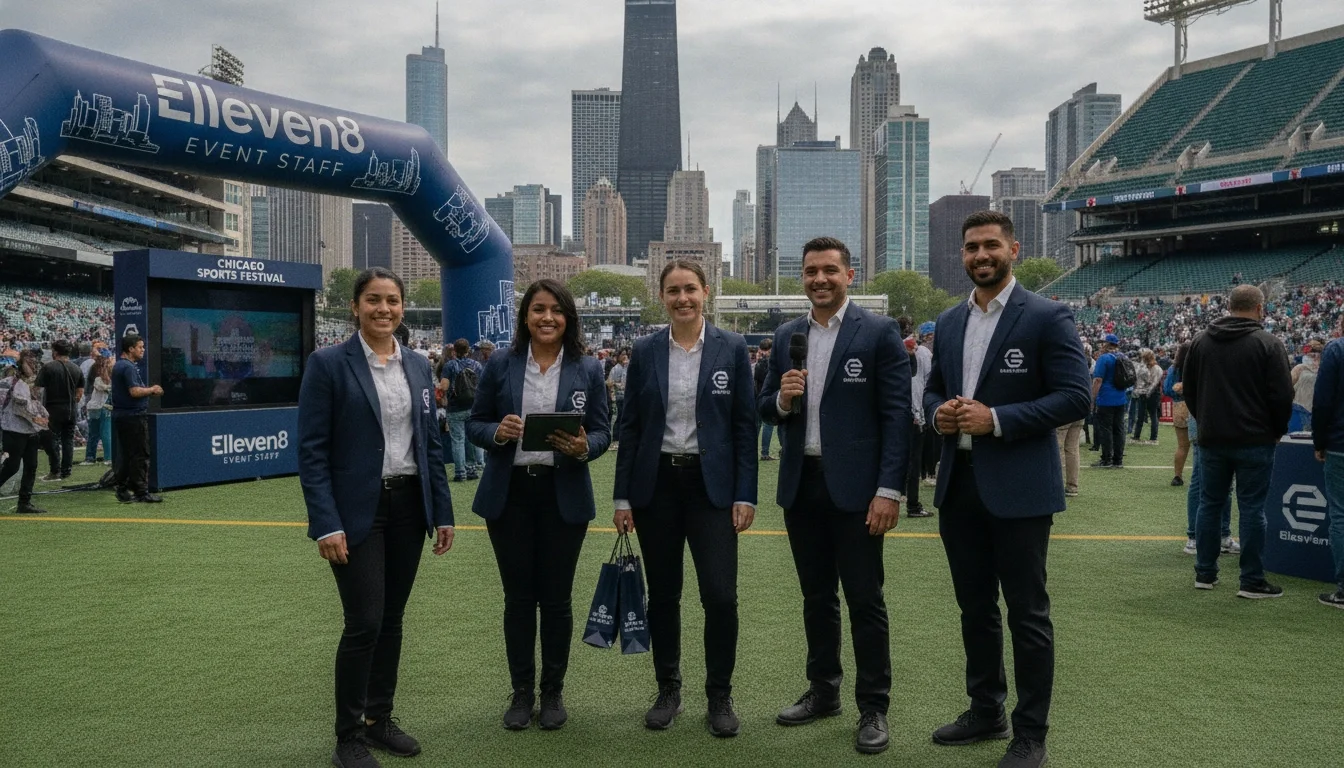
Eleven8 Event Staff brand ambassadors in professional branded uniforms deployed at a Chicago stadium activation
Soldier Field Game Day Deserves a Staffing Partner Built for It
Brand activations and premium hospitality at Soldier Field are not events you can staff with generalists. The venue's scale, the intensity of the fan environment, the operational complexity of the Chicago lakefront, and the expectations of corporate guests in a $40,000–$80,000 luxury suite all demand a staffing partner with genuine venue experience, genuine roster depth, and genuine accountability.
Whether you're running a pregame product sampling campaign in the Museum Campus parking lots, hosting 30 clients in an east-side executive suite, or managing a concourse-level brand activation that needs to perform through halftime, the staffing layer underneath your activation determines whether the day delivers on its promise.
Eleven8 Event Staff brings Chicago-tested brand ambassador teams, hospitality professionals, bartenders, and activation managers to Soldier Field and major venues across the city. Flat hourly pricing, no agency fees, 24/7 event-day support, and guaranteed backup coverage on every deployment.
Ready to build your Soldier Field staffing plan? Contact Eleven8 Event Staff today to get a custom quote for your next activation or hospitality event.