Brand Activations and Hospitality at U.S. Bank Stadium
U.S. Bank Stadium does not give brands a second chance at a first impression. With more than 66,000 fans moving through its seven levels on game day — and thousands more attending concerts, corporate events, and marquee experiences throughout the year — every activation decision you make compounds in real time, in front of one of the most engaged live audiences in the Upper Midwest.
This guide is built for brand managers, experiential marketing directors, and event producers who are planning an activation or hospitality execution at the stadium. You will find venue-specific zone guidance, a complete staffing role breakdown, timing windows that determine whether your activation lands or disappears into the crowd, and a hospitality playbook for suite and club-level executions.
If you are working with a staffing partner — or evaluating whether you need one — this is the practical framework for making the right decisions before event day.
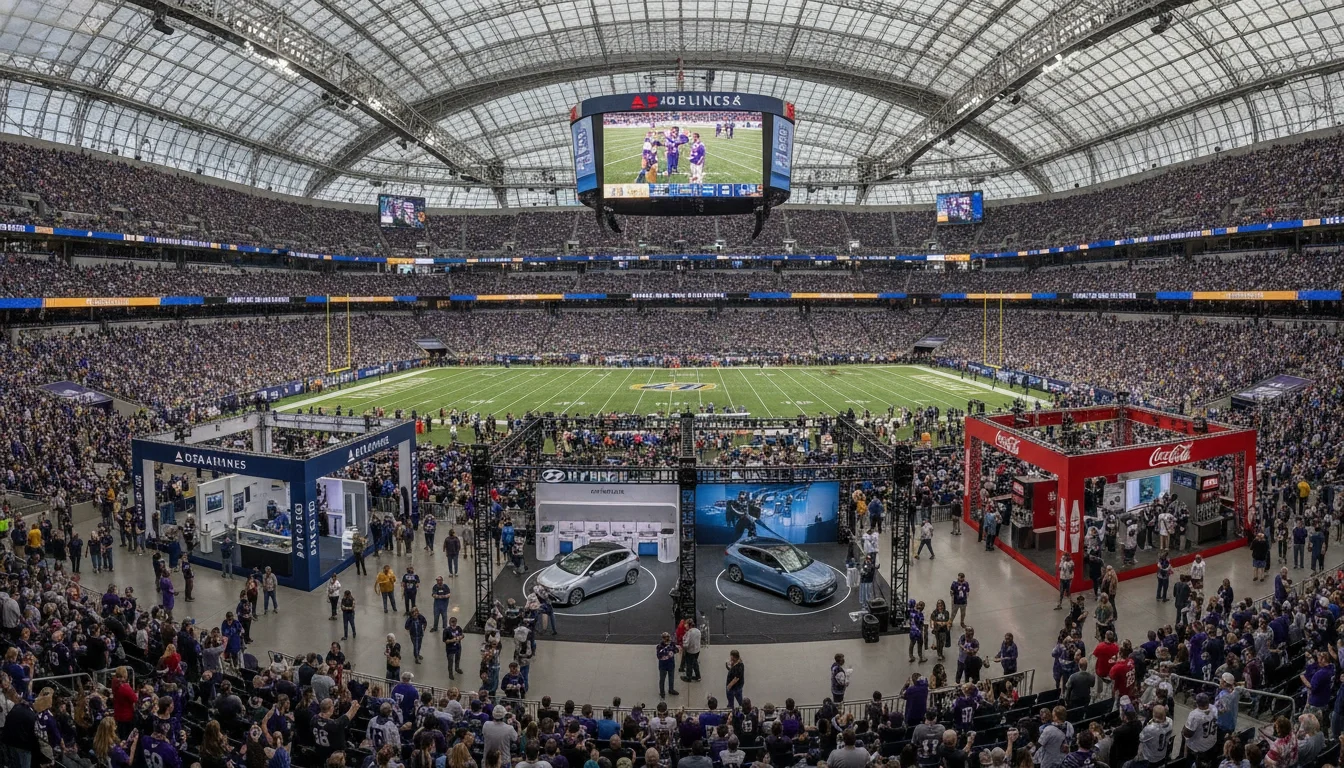
The sweeping interior of U.S. Bank Stadium on event day, with brand activation zones along the main concourse visible in the foreground
Why U.S. Bank Stadium Is One of the Most Valuable Activation Venues in the Midwest
Not every major stadium delivers equivalent brand value. U.S. Bank Stadium earns its place at the top of any experiential marketer's consideration list for reasons that go beyond raw capacity.
The Market Behind the Venue
Minneapolis is home to 19 Fortune 500 headquarters — Target, UnitedHealth Group, Best Buy, 3M, and General Mills, among them. The corporate density of the Twin Cities means that a well-executed activation at U.S. Bank Stadium reaches not just casual fans but executives, decision-makers, and brand-aware consumers who sit at exactly the top of the purchasing and influence pyramid.
The stadium also draws national audiences for events well beyond the NFL regular season. College football playoff games, major concerts, boxing events, international soccer, and the occasional Super Bowl (the venue hosted Super Bowl LII) put this venue in front of out-of-market audiences that few Midwest venues can match. For brands with a national footprint, that audience mix is highly desirable.
The Venue in Numbers
Understanding the physical scale of U.S. Bank Stadium is essential for any activation planner. Here are the numbers that shape every logistics decision:
Capacity: 66,400+ (expandable to approximately 73,000 for major events)
Levels: Seven distinct levels with full 360-degree concourse circulation
Premium clubs: Six dedicated club spaces available for private events
Suites: 135 suites of seven distinct types, including 23 Turf Suites positioned directly on the field
Main concourse entry gates: Four primary gates — Legacy Gate (west), Polaris Gate (northwest), and two additional access points
ETFE roof: The largest transparent ethylene-tetrafluoroethylene roof in the nation, creating a climate-controlled indoor/outdoor atmosphere year-round
The transparent roof is more than an architectural detail. It means your activation operates in full natural light during daytime events, and in a dramatic illuminated environment for evening games — a material consideration for visual brand displays, sampling, and photography.
Understanding the Activation Zones at U.S. Bank Stadium
A common mistake brands make at stadium events is treating the venue as one undifferentiated space. U.S. Bank Stadium is a layered environment. The audience, dwell time, engagement behavior, and staff requirements are fundamentally different depending on which zone your activation occupies.
The Main Concourse — Your Primary Engagement Layer
The main concourse is the highest-volume, highest-traffic activation zone in the building. With 360-degree circulation, fans can approach from any direction — and they will. This is where product sampling, interactive experiences, branded photo moments, and consumer engagement installations perform best.
The critical operational reality on the main concourse is crowd flow. Fans move in purposeful waves toward concessions, restrooms, and their sections, particularly during the 30–45 minutes before kickoff and at halftime. Your activation footprint must account for natural pedestrian paths rather than blocking them. Staff placement at the perimeter of your footprint — not behind a table — is essential for drawing traffic in rather than letting it flow past.
Premium Club Spaces — Where Hospitality Happens
U.S. Bank Stadium's six premium clubs are where the calculus changes. These spaces — including the Delta Sky360 Club, Medtronic Club, Sukup Club, Mystic Lake Club Purple, and the Polaris Club — serve a fundamentally different audience than the general concourse. Club guests are there for a curated experience, not a crowd. They expect attentive service, brand-aligned presentation, and a higher register of engagement.
Activations in club spaces tend to work best when they integrate seamlessly with the premium environment rather than feeling like a trade show booth that wandered into the wrong room. Think hosted brand experiences, curated product presentations, and personalized guest interactions rather than high-volume sampling tables.
The Suite Level — Corporate Hospitality at Its Peak
The stadium's 135 suites range from intimate configurations accommodating eight guests to large formats accommodating up to 100. Suite guests arrive with the highest expectations in the building. They have typically paid a significant premium for their experience and expect it to be flawless.
For brands, suites represent two distinct opportunities. The first is hospitality hosting — using a suite to entertain clients, partners, or key accounts in a premium environment that reflects brand status. The second is sponsored suite activations, where a brand's presence is woven into the suite experience through branded catering, gifting, product placement, or hosted experiences.
Both require staff who understand the difference between serving and managing. Suite attendants at this level must be polished, proactive, and capable of reading the room with the same fluency as a luxury hospitality professional.
Entry Gates and Pre-Event Footprint
The exterior plazas and gate approach zones are often the most underutilized activation real estate in a stadium plan. Fans arrive with excitement and attention at their peak — before the game has absorbed their focus. A well-placed sampling crew, a branded photo installation, or a product giveaway at the Legacy Gate or Polaris Gate can generate impressions and engagement volume that rivals anything inside the concourse, and at lower logistical complexity.
Coordinate gate access early. Entry point permissions at U.S. Bank Stadium are managed through the venue's event operations team, and exterior footprints require advance approval. Your staffing agency should be aware of this timeline when planning load-in.
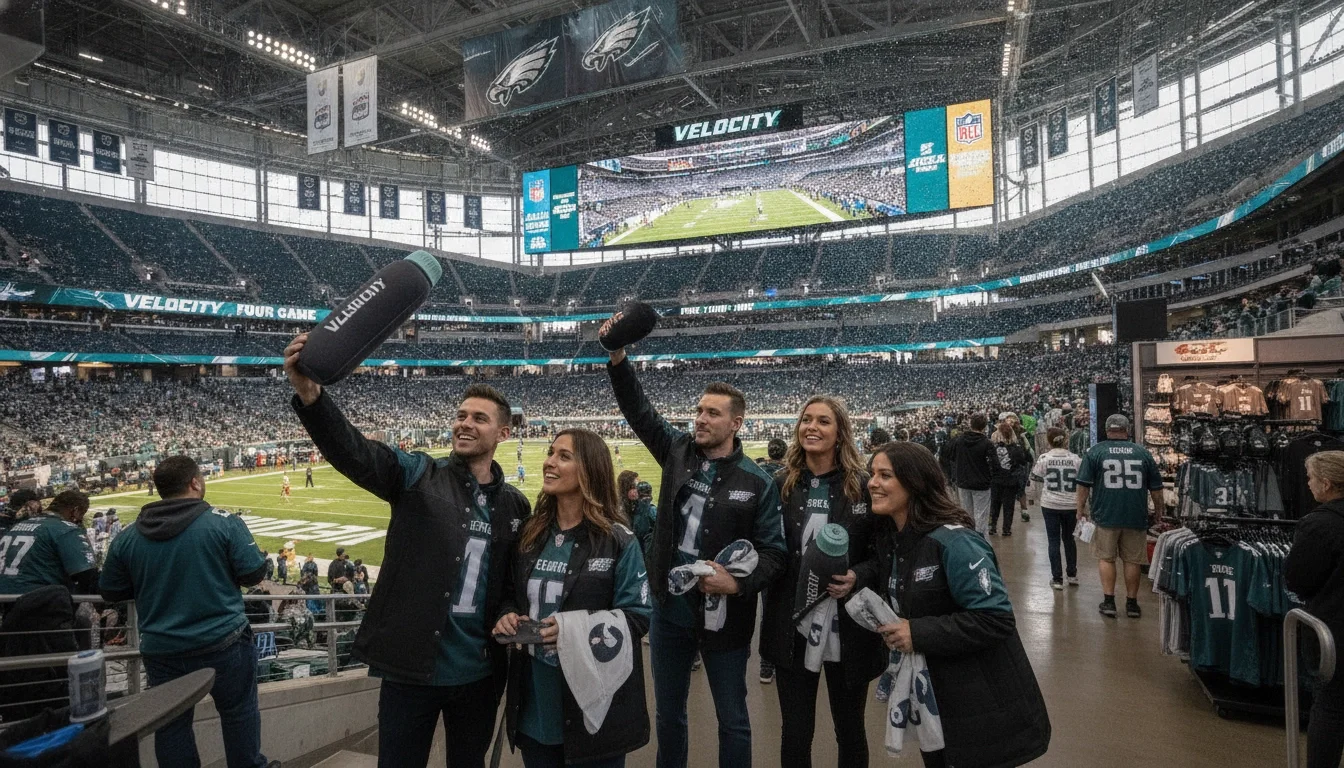
Brand ambassadors engaging fans on the main concourse of a major NFL stadium during the pre-game window, with branded signage visible in the background
The Staffing Playbook — Every Role You Need for a Successful Activation
The quality of your staffing is the single largest variable between an activation that performs and one that does not. Venue, creative, and budget are table stakes. Staff execution is where the gap between planned ROI and actual ROI is determined.
Below is a complete breakdown of the roles required for a full-scale U.S. Bank Stadium activation, from the street to the suite.
Traffic Drivers and Crowd Engagers
These are the staff members positioned outside your primary activation footprint — in the concourse, near gate approaches, at crowd convergence points — whose specific role is to attract attention and direct interested fans into your brand experience. They need energy, an outgoing personality, and the ability to initiate interactions naturally rather than mechanically.
A common mistake is positioning all staff inside the activation. The best-built activation in the building generates zero traffic if fans walk past it without stopping. Traffic drivers are your first point of contact with the audience and directly determine your engagement volume.
Brand Ambassadors
Brand ambassadors at a stadium activation are responsible for the core consumer interaction — delivering brand messaging, facilitating product experiences, answering questions, and capturing consumer data or leads where applicable. These roles require brand-specific training, strong verbal communication, and the ability to maintain consistent energy across a multi-hour activation window.
For U.S. Bank Stadium events, ambassadors must be comfortable working in high-density crowd environments where conversations will be brief and conditions unpredictable. The best performers can deliver a compelling brand story in 45 seconds and leave the consumer with a positive impression.
Eleven8's Minneapolis brand activation staff brings exactly this capability to stadium events — trained through an eight-step vetting process and matched to your specific brand profile before day one. Learn more about our brand activation staff in Minneapolis.
Activation Leads and On-Site Supervisors
Every stadium activation needs a designated lead who owns real-time decision-making on the floor. This person manages staff placement, monitors engagement flow, troubleshoots logistics issues as they arise, and serves as the single point of contact between your brand team and the deployed crew.
On events with large staff deployments (12+ people), a dedicated on-site supervisor is essential. They allow your brand manager to focus on the activation itself rather than managing individuals — a division of responsibility that directly improves execution quality.
Product Demonstrators and Experience Guides
For activations built around product interaction — tastings, technology demonstrations, test drives, VR experiences, or hands-on product trials — demonstrators and experience guides are specialized roles that require category knowledge on top of interpersonal skills. These staff members need to understand the product deeply enough to handle unscripted questions and to create genuine enthusiasm rather than reciting a spec sheet.
Registration and Check-In Hosts
Many brand activations at stadium events include some form of registration — lead capture, sweepstakes entry, VIP access check-in, or loyalty program enrollment. Registration hosts manage this flow efficiently while maintaining a positive first impression. Long lines and inefficient check-in processes directly undermine the experience you have built.
For high-volume activations, one registration host per line or station is the minimum standard. For VIP or premium experiences, a dedicated check-in specialist who greets by name and manages the transition into the experience is worth the investment.
VIP Suite Attendants and Hospitality Staff
Suite and club-level hospitality staffing is a distinct discipline from general activation staffing. Attendants at this level must understand pacing, anticipatory service, discretion, and the fundamentals of catering management — replenishing food and beverage before guests notice they are running low, managing the room's energy, and handling requests without requiring guests to ask twice.
Premium hospitality staffing is also a brand extension. How your suite attendant carries themselves reflects directly on your brand's values. Brands that treat hospitality staffing as an afterthought consistently underperform relative to the investment they have made in the suite itself.
Set Up and Strike Crews
Activation builds and teardowns at U.S. Bank Stadium operate within tight load-in and load-out windows. Set-up crews who understand the physical demands of event installation — who can move quickly, work efficiently under time pressure, and return the venue to its original condition post-event — are not interchangeable with general labor. Efficiency at setup and strike directly affects your day-of readiness and your relationship with venue operations.
Timing Your Activation — The Three Windows That Matter
Stadium events compress consumer engagement into distinct windows. Understanding these windows and staffing appropriately for each is the difference between a high-ROI activation and one that wastes its most valuable minutes.
Pre-Game (The Golden Window)
The 45–60 minutes before kickoff or showtime is the highest-traffic, highest-receptivity window at any stadium event. Fans arrive engaged, energized, and with attention to spare. They are not yet locked into their seats or focused on the on-field action. This is the window where product sampling, interactive experiences, and conversion-focused brand interactions perform at their peak.
Staff your activation at full strength during pre-game. If you have to choose where to concentrate your deployment, this is it. Have traffic drivers in position at the concourse approaches before the first fan enters the building.
Halftime
Halftime generates a compressed burst of concourse traffic — typically 12–15 minutes of high-volume movement followed by a rapid return to seats. The opportunity exists, but the window is tight. Halftime works best for activations built for speed: fast sampling, instant-win moments, quick photo experiences, and high-conversion giveaways. Anything requiring extended engagement will underperform during this window.
Keep your full team active during halftime transitions. Restroom and concession traffic is highest immediately after the half begins; consumer attention on your activation peaks roughly 5–8 minutes in.
Post-Game
Post-game is a variable window. At blowouts, the stadium empties quickly, and engagement is difficult to sustain. At close games, the post-game energy is high, and fans are receptive for 15–20 minutes before the crowd thins. Plan your post-game staffing conservatively and have a plan for scaling down quickly once foot traffic drops. This is also the optimal window for exterior gate activations targeting the departing crowd.
Hospitality at U.S. Bank Stadium — Elevating the Suite and Club Experience
Brand hospitality at U.S. Bank Stadium is one of the most powerful tools in a corporate account management strategy. The right execution turns a game into a relationship-building moment. The wrong execution — or worse, a well-appointed suite with mediocre service — leaves the impression that your brand does not understand what excellence looks like.
Suite-Level Hospitality Staffing
Suites at U.S. Bank Stadium accommodate between 8 and 100 guests and include access to premium catering and club amenities. For suites on the branded or sponsored end, your staffing team is an active extension of the experience. Budget for a minimum of one suite attendant per 15–20 guests for standard service. For VIP configurations or high-stakes client entertainment, a dedicated attendant per 10 guests maintains the level of attentiveness that premium guests expect.
Brief your attendants specifically on the guest list dynamics — who are the key accounts, what are the dietary considerations, and what is the tone of the event. The best suite staff can read a room and adjust their approach without being prompted.
Club-Level Service Standards
Club spaces like the Delta Sky360 Club and Mystic Lake Club Purple operate with a different guest profile than general suites — they tend to be more visible, more social, and more brand-aware. Hosts and hospitality staff in these spaces should be polished, personable, and capable of sustaining energy across a 3–4 hour event window without flagging.
Mystic Lake Club Purple offers a particularly distinctive space: an exterior rooftop area with views of the Minneapolis skyline and a bowl-facing seating section that replicates the feel of a rooftop bar. Activations or hosted experiences in this space benefit from staff who can work both the outdoor and indoor environments with equal fluency.
What Premium Guests Expect
Premium guests at U.S. Bank Stadium arrive with expectations shaped by years of high-quality hospitality experiences. They expect proactive service, not reactive service. They expect staff who know the answers before the question is asked. And they expect the experience to feel effortless — which requires significant behind-the-scenes effort to execute.
Anticipate needs rather than waiting for requests
Maintain food and beverage presentation throughout the event
Manage crowd dynamics within the suite or club without disrupting the atmosphere
Know the venue layout — where the nearest restrooms, elevators, and emergency exits are located
Represent your brand with professionalism in every interaction
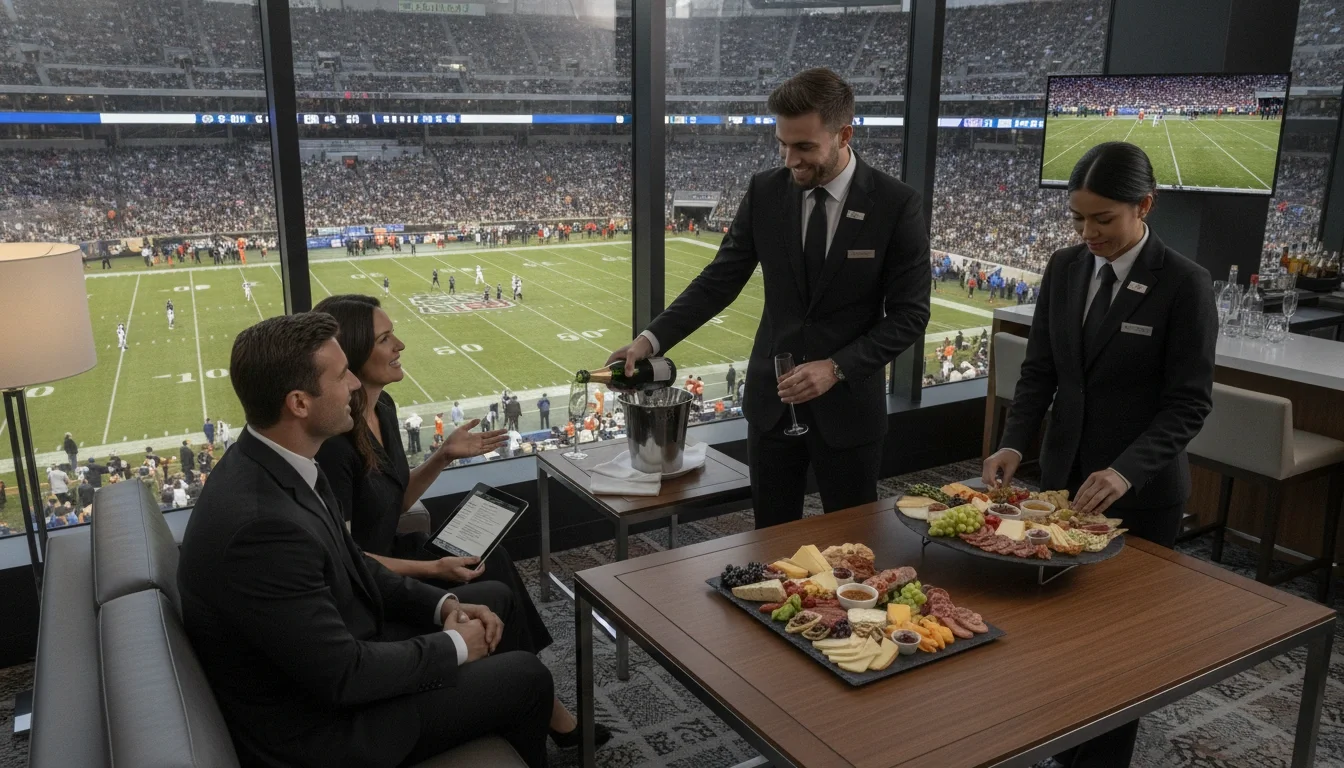
A suite attendant providing premium hospitality service to guests in a luxury stadium suite overlooking the field at an NFL stadium
Logistics That Most Brands Get Wrong
The most common source of activation failure at major venues is not creative or budget — it is logistics. Here are the three areas where brands consistently underplan.
Load-In Windows and Credentialing
U.S. Bank Stadium has structured load-in windows managed by the venue's event operations department, and these windows are not flexible on game day. Staff credentialing — access badges, activation area permits, and vendor passes — must be secured in advance and distributed before arrival. A staff member without the correct credentials standing at a venue entrance 90 minutes before kickoff is a staffing failure, regardless of how well-chosen they are for the role.
Work with your staffing agency and venue contact to confirm credentialing requirements at least two weeks before the event. For large deployments, assign a logistics coordinator specifically responsible for credential distribution and access verification.
Staff Briefings and Brand Training
Stadium activations move too fast for on-the-fly brand education. Every staff member on your activation must be briefed on brand messaging, activation mechanics, key talking points, escalation procedures, and the physical layout of their specific zone before the event begins. A 30–45 minute pre-event briefing is the minimum standard. For complex activations or premium hospitality events, a more detailed run-of-show walkthrough is appropriate.
The best staffing agencies provide this structure as standard practice. Eleven8 trains every staff member through a documented pre-event process — so your team arrives briefed, not briefed by you at the gate.
Built-In Backup Coverage
No staffing plan survives the day without a contingency. Staff call-outs, venue access delays, and unexpected crowd surges are not rare events at major stadium activations — they are routine. Every professional staffing deployment should include built-in backup coverage. Eleven8 provides a brief backup for every eight staff members at no additional charge, meaning a qualified replacement is on standby before your event begins.
This is the practical difference between a staffing vendor and a staffing partner. A vendor delivers what they promised. A partner ensures the event runs at full strength regardless of what happens between booking and game day.
Minneapolis Event Market Context — Who You Are Activating For
Activation strategy at U.S. Bank Stadium should be shaped by an understanding of who is actually in that building. The answer is not simply Vikings fans.
The Corporate Audience
Minneapolis's Fortune 500 density means that a significant proportion of premium seat holders and suite guests at any major U.S. Bank Stadium event are corporate buyers — professionals with discretionary authority, brand awareness, and decision-making influence. Activations that speak to this audience in the right register — premium, purposeful, and respectful of their time — outperform activations designed for mass market engagement but deployed in a premium context.
The Sports Fan Audience
Vikings game-day audiences are among the most loyal and engaged in the NFL. Minnesota fans show up consistently, even in cold-weather, late-season games — a function of the stadium's climate-controlled environment and the depth of the fan base in the region. Brands that lean into the stadium's energy and create activations that feel native to the game-day experience — rather than corporate interruptions — consistently generate stronger organic engagement.
Seasonal Activation Timing
U.S. Bank Stadium's event calendar extends well beyond the NFL season. Major concerts, college football games, international soccer events, boxing, and private corporate events fill the venue year-round. Each event type brings a different audience profile and activation opportunity. Plan your staffing and creative strategy for the specific event type, not for a generic stadium crowd.
NFL game days (August–January): Highest volume, most competitive activation environment, strong brand loyalty audience
College football events: Younger demographic, high social media engagement, strong product trial receptivity
Concerts and entertainment events: Broader demographic range, higher spontaneous purchase intent, festival-adjacent energy
Corporate and private events: Highest-value audience, premium hospitality most applicable, smaller footprint but stronger conversion
Why Eleven8 Is the Staffing Partner for U.S. Bank Stadium Activations
Executing a brand activation or hospitality event at U.S. Bank Stadium requires a staffing partner who has worked at this level before. Not a general staffing agency learning your event in real time. Not a platform that recruits from availability lists the week before your activation. A team with a proven process, a vetted roster, and the operational infrastructure to keep your event running at full strength regardless of what game day throws at it.
Eleven8 has staffed dedicated activation crews for Vikings game-day productions at U.S. Bank Stadium, Twins hospitality nights at Target Field, Timberwolves and Lynx matchday experiences at Target Center, and the seasonal brand campaigns that define the Minneapolis event calendar. Our Minneapolis teams are not learning the venues — they know them.
Top 3.5% of applicants accepted — every team member is vetted through an eight-step process before they work an Eleven8 event
101.80% fulfillment rate — we staff every position, every shift, every time
Built-in backup coverage for every eight staff at no additional cost
Dedicated account manager from inquiry through post-event recap
24/7 on-event-day support — issues resolved in real time, not after the fact
Named experience at iconic venues, including Madison Square Garden, the Beverly Hills Hotel, and Navy Pier
Whether you need a 40-person concourse activation crew, a suite hospitality team for 60 corporate guests, or a specialized experiential marketing staff for a sponsored installation, Eleven8 builds the team around your event.
Ready to plan your U.S. Bank Stadium activation? Inquire with Eleven8 at elev8.la/book-now or explore our full Minneapolis event staffing services at elev8.la/minneapolis/event-staff.