How to Plan a Successful Event in Minneapolis: A Complete Guide to Venues, Vendors & Staffing
Minneapolis doesn't get enough credit as an event city.
It has a world-class convention center. A thriving corporate scene anchored by 18 Fortune 500 companies. A dense concentration of unique venues — from repurposed flour mills to stunning waterfront spaces along the Mississippi. And a local event industry that's increasingly attracting national brands, conferences, and experiential campaigns that used to skip over the Twin Cities entirely.
But if you've never planned an event here — or even if you have — navigating Minneapolis's venue landscape, building a reliable vendor team, and getting your staffing right takes more than a Google search. This guide walks you through all of it: from choosing the right venue for your event type, to vetting vendors who actually deliver, to staffing your event in a city where the labor market has its own dynamics.
Whether you're bringing a national trade show to the Minneapolis Convention Center, launching a brand activation at a pop-up venue in the North Loop, or hosting a corporate gala at one of the city's historic hotel ballrooms, this is the Minneapolis event planning resource worth bookmarking.
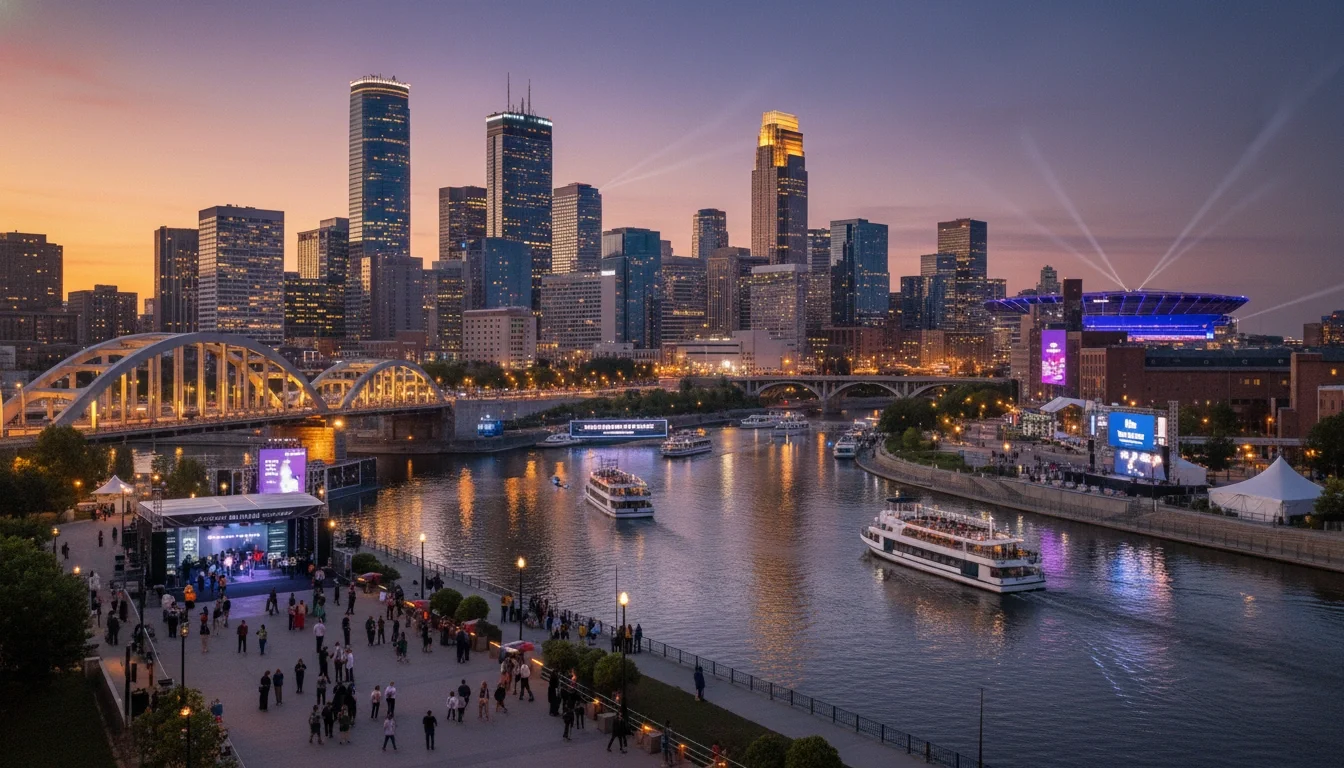
Minneapolis skyline along the Mississippi River — a growing hub for corporate events, conventions, and brand activations
Why Minneapolis Is One of the Midwest's Premier Event Cities
A Thriving Convention & Corporate Event Scene
Minneapolis punches well above its weight in the events world. The city is home to the Minneapolis Convention Center, one of the largest and most well-equipped convention facilities in the Midwest, spanning 1.6 million square feet of total space with 475,000 square feet of exhibit floor, 87 meeting rooms, and two large ballrooms. It's the kind of infrastructure that draws national and international conferences year after year.
Beyond the Convention Center, Minneapolis has a dense network of hotel meeting spaces, entertainment venues, and creative spaces that work equally well for everything from intimate executive retreats to multi-day brand festivals. Major venues like U.S. Bank Stadium and Target Center add large-scale capacity for sporting events, concerts, and high-profile corporate occasions.
The corporate backbone of Minneapolis — companies like Target, Best Buy, 3M, and UnitedHealth Group — keeps a steady pipeline of corporate events, incentive programs, and brand activations flowing through the city. For event planners, this means an active local vendor and staffing market that knows how to execute at a professional level.
Seasonal Planning Considerations You Can't Ignore
Minnesota's weather is not something you plan around — it's something you plan for.
Minneapolis winters are serious. Temperatures regularly drop below 0°F from December through February, and snowstorms can arrive as late as April. If your event falls in the colder months, you need venues with covered parking or skyway access, contingency plans for vendor delivery delays, and staff who can arrive reliably in adverse conditions.
The good news: Minneapolis is exceptionally well-connected through its downtown skyway system — 80 blocks of enclosed pedestrian bridges linking hotels, the Convention Center, retail, and dining. For winter events in the downtown core, the skyway system is a genuine logistics advantage.
Summer events in Minneapolis are a different story entirely. June through August brings ideal outdoor weather, and the city's lakes, riverfronts, and parks open up a whole category of outdoor venues that simply aren't available in colder months. Plan accordingly: outdoor venues book fast in the summer, and permits for public spaces require significant lead time.
Top Event Venues in Minneapolis for Every Occasion
The right venue does a significant portion of your planning work for you. A space with strong built-in character, good acoustics, and on-site catering reduces how much you need to bring in from outside. Here's a practical breakdown of what each venue category actually offers.
Large-Scale Convention & Conference Venues
Minneapolis Convention Center: The anchor of Minneapolis's convention infrastructure. With 475,000 square feet of exhibit space, a 3,400-seat auditorium, and 87 meeting rooms, this is the go-to for large conferences, trade shows, and national conventions. The venue has its own exclusive caterer (Kelber Catering) and a dedicated event planning team. Book well in advance — popular dates fill 12-18 months out.
U.S. Bank Stadium Home to the Minnesota Vikings, offers flexible private event configurations for large corporate gatherings, product launches, and brand activations. The dramatic interior and iconic architecture make for a high-impact experience.
Target Center Home to the Timberwolves and Lynx, hosts major private events, concerts, graduations, and corporate functions across multiple spaces with varying capacities.
Unique & Boutique Venues for Corporate Events and Activations
Minneapolis's most interesting venues often come from its industrial and cultural history.
The Fillmore Minneapolis is a 22,000-square-foot music venue in the North Loop that works equally well for product launches, corporate receptions, and brand activations. The combination of a 1,800-capacity main hall, VIP lounge, and full-service restaurant makes it genuinely flexible.
Aria Minneapolis is a converted factory space with exposed brick, soaring ceilings, and an open floor plan. Aria accommodates 400 to 1,700 guests and works well for gala dinners, conferences, and product launches where the venue itself does visual heavy lifting.
Mill City Museum Built on the ruins of a former flour mill, this award-winning venue combines industrial architecture with contemporary design. The courtyard is particularly striking for outdoor receptions and cocktail hours.
The Pourhouse For events that need downtown atmosphere and flexible capacity, The Pourhouse on 5th Street accommodates up to 900 guests and works across event formats — from concerts to corporate receptions.
Mosaic Minneapolis is a locally-owned downtown venue with flexible layouts for corporate meetings, fundraisers, conferences, and private celebrations. Well-suited for brands that want a venue reflective of Minneapolis's diverse, entrepreneurial community.
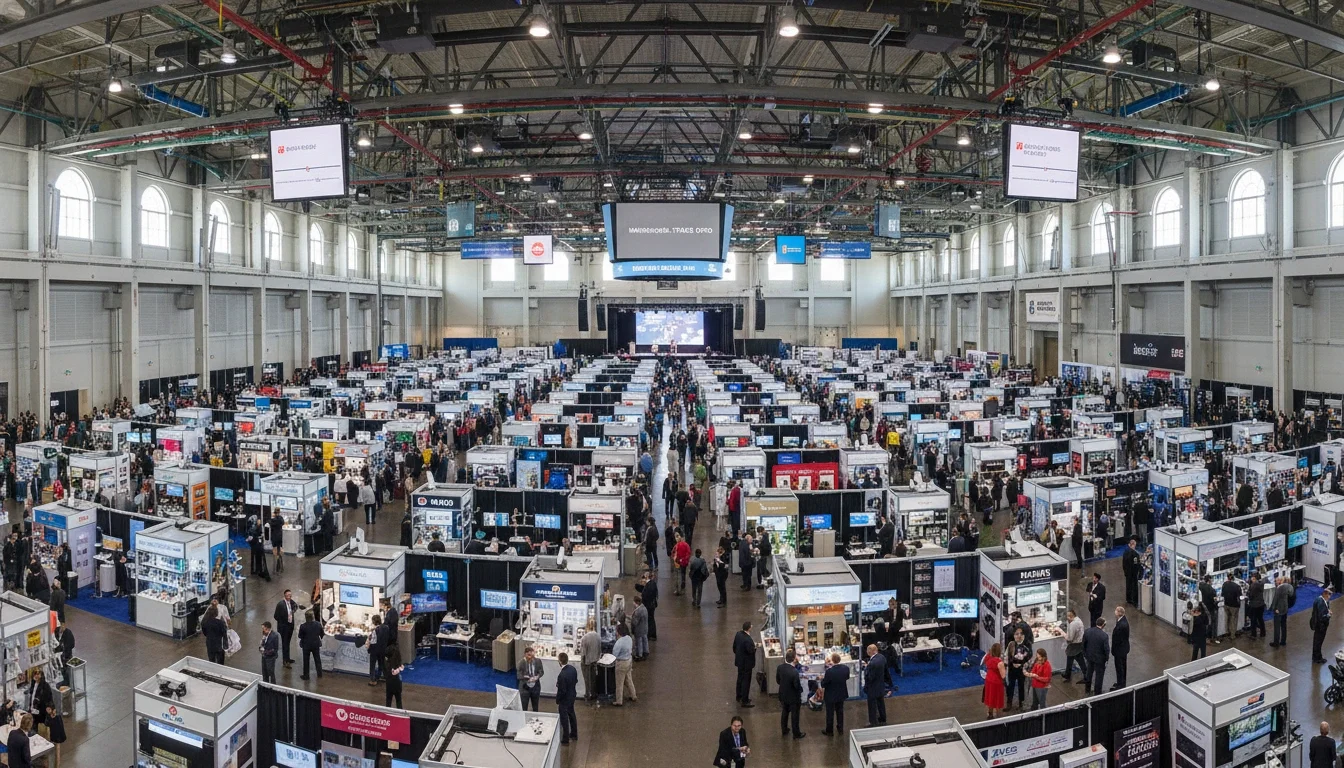
The Minneapolis Convention Center's expansive exhibit hall — ideal for trade shows, expos, and large conferences
Hotel Venues for Corporate Meetings and Galas
Minneapolis has excellent hotel meeting space in the downtown corridor:
Renaissance Minneapolis Hotel, The Depot — A historic train depot conversion with 26,300 square feet of event space, two elegant ballrooms, and 14 meeting rooms. One of the most character-rich hotel venues in the city.
Delta Hotels Minneapolis Northeast — Over 10,000 square feet of flexible space with modern technology, complimentary parking, and a landscaped courtyard for outdoor ceremonies.
Minneapolis Marriott City Center — Centrally located with strong business infrastructure for large corporate meetings.
Hotel Emery — Soaring ceilings, intimate nooks, and a glass-enclosed private dining room create a refined atmosphere for smaller, high-end corporate events.
Outdoor and Alternative Venues
When the weather permits, Minneapolis offers genuinely distinctive outdoor options:
Nicollet Island — A scenic island park on the Mississippi with panoramic views of downtown and the Stone Arch Bridge. Ideal for outdoor receptions in summer.
Al and Alma's Cruises on Lake Minnetonka — For groups of 20 to 149, a waterfront yacht experience that doubles as a venue and transportation. Memorable for corporate client dinners and incentive events.
Target Field — The Twins' ballpark offers private event spaces with downtown views and flexible configurations.
Mystic Lake Amphitheater — Accommodates 50 to 19,000 guests across lawn, plaza, and full venue options. A standout for large outdoor festivals and brand activations.
Building Your Minneapolis Event Vendor Team
A venue secures your space. Your vendor team determines whether the event actually works.
For any event in Minneapolis, you'll typically coordinate across several vendor categories. Here's how to approach each one — and what to look for when vetting providers.
Catering and Food & Beverage Vendors
Food and beverage quality is one of the most-remembered elements of any event. Some Minneapolis venues (like the Convention Center) have exclusive catering arrangements, which simplifies vendor selection but limits flexibility. For venues without exclusivity, you'll want a licensed caterer with relevant event experience, proper liability insurance, and references from comparable events.
Key questions to ask any Minneapolis caterer:
Do you have experience at this venue specifically?
What is your staff-to-guest ratio for service?
How do you handle dietary restrictions at scale?
Do you carry your own event liability insurance?
AV and Production Vendors
Audio-visual execution can make or break a conference or corporate event. Larger venues often have preferred or in-house AV providers — always confirm whether you're required to use them or whether you can bring your own.
For conferences and trade shows, establish AV requirements early and communicate them to your staffing team as well. A production assistant who understands your AV setup is invaluable during day-of execution.
Decor, Floral & Event Design Vendors
Minneapolis has a strong design and floral community, particularly for corporate events and galas. Look for vendors with a portfolio that includes your event type — corporate decor has different priorities (branding, wayfinding, scalability) than wedding design.
Photography and Videography
For brand activations, product launches, and conferences, event photography is documentation as much as it is memory-making. Brief your photographer on brand guidelines, key moments to capture, and any media restrictions at the venue before day one.
Entertainment and Activation Vendors
Minneapolis has a remarkably deep entertainment ecosystem — over 70 theater companies operate in the city, and the local music scene carries genuine national recognition. For corporate events, this translates into accessible, high-quality options from live bands and DJ sets to interactive experiences and keynote support.
How to Vet and Select Minneapolis Event Vendors
A few vetting principles that apply regardless of vendor category:
Request references from events of comparable size. A caterer who's executed 50-person dinners beautifully may struggle at 400.
Confirm insurance coverage in writing. Every vendor working your event should carry general liability insurance, and you should receive a Certificate of Insurance naming your organization.
Understand their contingency plans. What happens if their lead person gets sick the day of your event? Vendors who can't answer that question clearly are a risk.
Get all deliverables in a written contract. Timeline, staffing levels, equipment, setup/breakdown, and payment terms should all be documented before any deposit changes hands.
Event Staffing in Minneapolis: What Planners Need to Know
This is the area where Minneapolis events most frequently underperform — not because of venue or vendor choices, but because of staffing.
Many planners treat staffing as the last line item they fill in, booking whoever's available at the last minute. That approach works until it doesn't — and when staffing breaks down at a trade show, brand activation, or conference, there's no hiding it. Guest experience, brand perception, and operational flow all suffer in ways that are visible and memorable.
Getting staffing right in Minneapolis requires knowing what types of staff you need, how many, and how to find partners who can actually deliver.
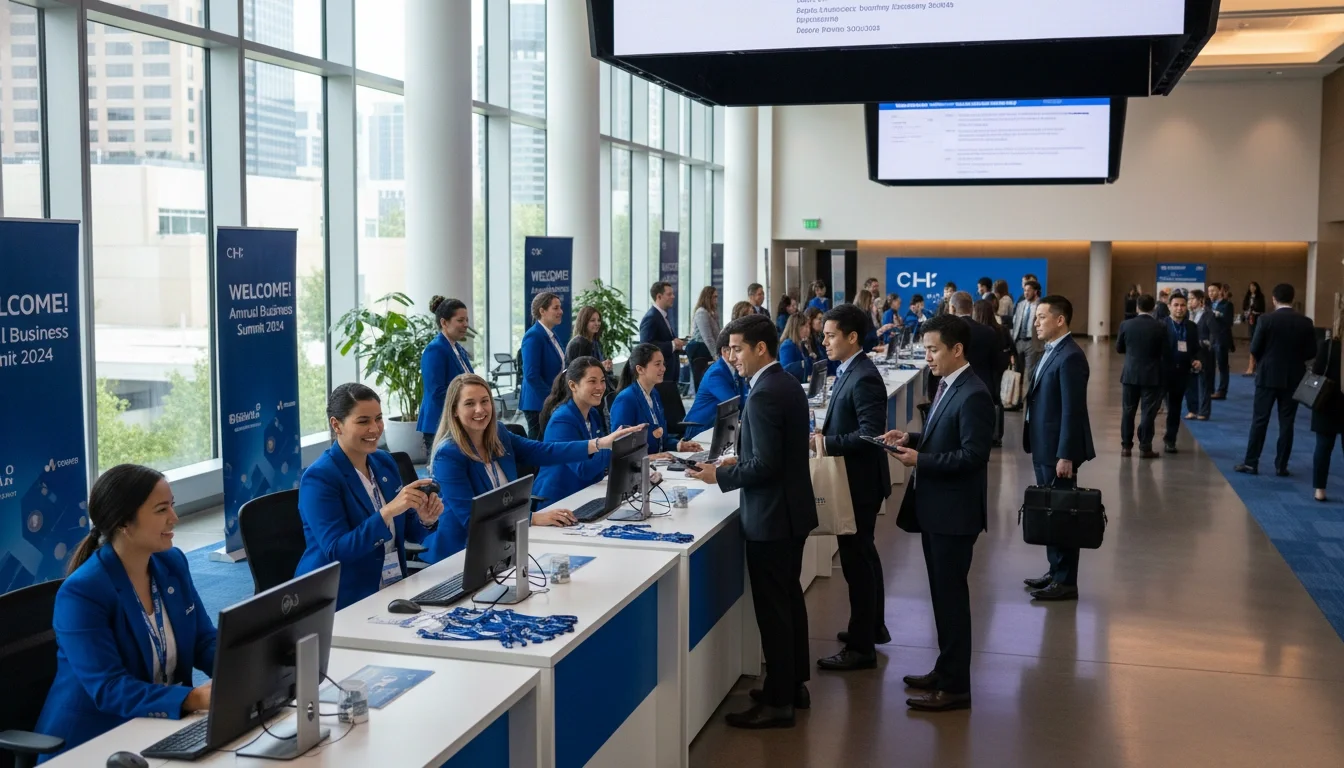
Professional event staff at registration during a corporate conference — the first impression every guest experiences
Types of Event Staff You May Need
Depending on your event format, you may need to staff across several roles simultaneously.
Conference & Convention Staff
Registration staff/check-in staff — Managing attendee check-in, badge distribution, and welcome experience. For large conferences, this team sets the tone for the entire event.
Ushers — Directing guests to sessions, managing seating, and keeping traffic flowing in large venues.
Greeters — The human face of your event at entry points, elevators, and key transition zones.
Production assistants — Supporting AV setup, speaker logistics, session transitions, and on-site coordination.
Trade Show & Expo Staff
Booth staff — Engaging attendees, presenting products, capturing leads, and representing brands at exhibit booths.
Brand ambassadors — Creating memorable guest interactions at experiential activations throughout the show floor.
Product demonstrators — Walking attendees through product features in structured demo formats.
Food & Beverage Staff
Bartenders — Essential for receptions, cocktail hours, and evening events. Minnesota requires certified bartenders for events serving alcohol.
Waitstaff/catering staff — Table service for seated dinners and receptions.
Bar backs and bussers — Supporting bar operations and clearing during high-volume service.
Marketing & Activation Staff
Street teams — Distributing materials, driving awareness, and engaging the public during outdoor activations.
Promotional models — Representing brands at product launches, auto shows, and trade shows.
Experiential staff — Staffing immersive brand experience installations.
Staffing Ratios: How Many People Do You Actually Need?
One of the most common planning mistakes is underestimating staffing needs. Here are general benchmark ratios for common event formats:
Conferences & Meetings:
Registration staff: 1 per 50-75 expected arrivals during peak check-in
Ushers/room attendants: 1 per session room
General support staff: 1 per 75-100 attendees
Trade Shows & Expos:
Booth staff: 2-4 per 10x10 booth, depending on traffic volume
Brand ambassadors for floor activations: 1 per 200-300 sq ft of activation space
Seated Dinners & Galas:
Waitstaff: 1 server per 8-12 guests for plated service; 1 per 20-30 for buffet
Bartenders: 1 per 50-75 guests
Cocktail Receptions:
Bartenders: 1 per 50 guests
Passed appetizer servers: 1 per 30-40 guests
When in doubt, add a buffer. A slightly over-staffed event runs smoother, and guests don't notice. An under-staffed event is the one they mention in reviews.
What to Look for in a Minneapolis Event Staffing Agency
When evaluating staffing partners, ask these questions directly:
1. How do you hire and vet your staff? The best agencies run multi-step hiring processes — applications, interviews, background checks, and trial placements — before anyone gets placed with a client. Agencies that recruit reactively when a booking comes in are at risk.
2. What is your fulfillment rate? This is the percentage of booked shifts that are actually filled. A fulfillment rate below 95% means your event could run short-handed. The best agencies guarantee fill rates and have built-in backup coverage.
3. Do you have backup coverage built in? Staff call-outs happen. What matters is whether your agency has already briefed a replacement before your event starts — not whether they're scrambling to find one when it's too late.
4. Can I see or select the specific staff assigned to my event? Premium agencies allow clients to preview staff profiles — photos, bios, relevant experience — before confirming. Generic agencies send whoever's available.
5. Do you have experience staffing my type of event? A brand activation requires different instincts than a convention registration desk. Make sure the agency has a track record in your specific event format.
Eleven8 Event Staff operates nationally with a proven deployment model — vetting only the top 3.5% of applicants, guaranteeing built-in backup coverage for every 8 staff booked, and assigning a dedicated account manager from inquiry through post-event wrap. For Minneapolis events — whether at the Convention Center or a North Loop activation space — Eleven8 deploys people who've done this before.
How Far in Advance Should You Book Event Staff?
Large conferences and conventions: 8-12 weeks minimum; 4-6 months for optimal selection
Trade shows and expos: 4-8 weeks minimum
Corporate galas, dinners, and receptions: 3-6 weeks minimum
Brand activations and pop-up events: 2-4 weeks for straightforward events
Urgent requests: Quality agencies can often fulfill within 24-48 hours, though earlier booking ensures better staff matching
For events during Minneapolis's peak convention season (spring and fall) or during major citywide events, add additional lead time. The best staff get booked early.
Working With a National Staffing Agency in Minneapolis
National agencies with a local presence offer something local-only agencies can't always match: a proven system, consistent training standards, and the depth to staff large events without scrambling.
When a national agency staffs your Minneapolis event, you get refined operational processes — standardized briefings, geo-clocked arrival verification, real-time supervisor oversight — combined with staff familiar with the local event landscape.
The best national staffing agencies also provide what most local temp agencies don't: dedicated account management, on-site backup coverage, and post-event performance reviews that feed into future bookings. That accountability loop matters when you're planning repeat events or running a national campaign across multiple cities.
Minneapolis Event Planning Timeline & Checklist
6+ Months Before Your Event
Lock in your venue and sign the contract (especially for the Minneapolis Convention Center or large hotel spaces)
Establish your event budget with allocated categories: venue, catering, AV, decor, staffing, contingency
Define event format, audience size, and core programming
Begin sourcing and evaluating key vendors: catering, AV, and staffing
Confirm whether your venue has exclusive vendor requirements
Register for required permits (outdoor events, alcohol service, public gatherings)
Confirm hotel room blocks for attendees if traveling to Minneapolis
3-6 Months Before Your Event
Contract your catering, AV, and primary vendors
Begin staffing inquiry — provide event details, estimated attendance, and role requirements to your agency
Confirm staff types and estimated quantities with your staffing partner
Finalize event programming and speaker/entertainment lineup
Begin guest communications and registration
Coordinate with the venue on setup/breakdown logistics and load-in schedules
1-3 Months Before Your Event
Confirm staff selections and finalize staffing contract
Share detailed event briefs with all vendor partners: timeline, floor plans, dress code, role expectations
Conduct a walkthrough of the venue with key vendors
Finalize menu, AV specs, and decor plan
Confirm all insurance certificates from every vendor partner
Build your day-of communication plan
2 Weeks to Day-Of
Distribute the final event brief to all staff and vendors
Confirm staff uniform/attire requirements with your staffing agency
Confirm final headcount and make last staffing adjustments
Walk the event space and confirm logistics with the venue coordinator
Distribute the emergency contact list to all key personnel
Confirm weather contingency plans for any outdoor elements
Budgeting for a Minneapolis Event: What to Expect
Venue Costs
Hotel meeting rooms (corporate day meetings): $500-$5,000+ depending on size and duration
Boutique event venues (Aria, The Fillmore, etc.): $3,000-$20,000+ for full-day rental
Minneapolis Convention Center: Exhibit hall rentals vary significantly; meeting room pricing depends on booking timing and event type
Outdoor/park venues: Relatively affordable base cost, but add permit costs and infrastructure (tents, power, restrooms) that can escalate the total
Staffing Costs
Event staffing in Minneapolis is typically priced hourly, per staff member. Key factors that affect pricing:
Staff type and skill level (a certified bartender costs more per hour than a general event assistant)
Minimum shift lengths (most agencies require a 4-6 hour minimum)
Lead time and event complexity
Whether supervisory or captain-level staff are required
Overtime rates for extended events
The important note: the cheapest staffing option is rarely the safest one. Agencies with thorough vetting processes, backup guarantees, and account management — the factors that actually prevent your event from failing — reflect that in their pricing. Flat hourly pricing with no hidden agency fees is a marker of transparency worth looking for.
Vendor Budget Benchmarks
General planning references for Minneapolis-area events:
Catering: $75-$200+ per person, depending on service format and menu complexity
AV: $2,000-$30,000+ depending on event size and technical complexity
Event photography: $1,500-$5,000+ for a professional event photographer
Decor and floral: Budget 10-20% of total event spend as a starting point
Entertainment: $500-$15,000+ depending on talent level and format
Always build a contingency buffer of 10-15% into your total budget. It's not a question of whether something unexpected will come up — it's a question of whether you're financially prepared when it does.
Common Mistakes Minneapolis Event Planners Make (and How to Avoid Them)
Underestimating winter logistics. If your event runs from November through March, add weather contingencies to every vendor contract. Build in setup buffer time. Confirm that your catering team, staffing agency, and AV crew all have contingency plans if conditions deteriorate.
Booking venues without checking exclusive vendor requirements. Some Minneapolis venues — including the Convention Center — have exclusive catering arrangements. Discovering this after you've already selected a caterer is a significant problem. Always confirm exclusivity requirements before signing the venue contract.
Treating staffing as an afterthought. The most consistent mistake in corporate event planning is the most costly. Staff is your guest experience. They're your operations team. They're often the only people attendees interact with for hours. Treating staffing as a last-minute checkbox guarantees you'll be managing fires on event day.
Ignoring load-in and breakdown complexity. Minneapolis venues range from extremely logistics-friendly to genuinely difficult. Always confirm load-in access, elevator dimensions, parking for vendor vehicles, and breakdown timelines before finalizing logistics.
Skipping the venue walkthrough. Floor plans and photos tell you some things. Walking the space with your key vendors tells you everything else — where the power outlets actually are, how sound travels, where the bottlenecks form when 300 people arrive at the same door.
Under-communicating with staff. The best event staffing agencies brief their teams thoroughly before every event. But you need to provide the information that makes a great brief possible: detailed timelines, specific role expectations, dress code, event brand guidelines, and answers to the questions staff are likely to get from guests. The more you give your agency to work with, the better they'll perform.