Kentucky Exposition Center 101: Foot Traffic Patterns Brands Should Know
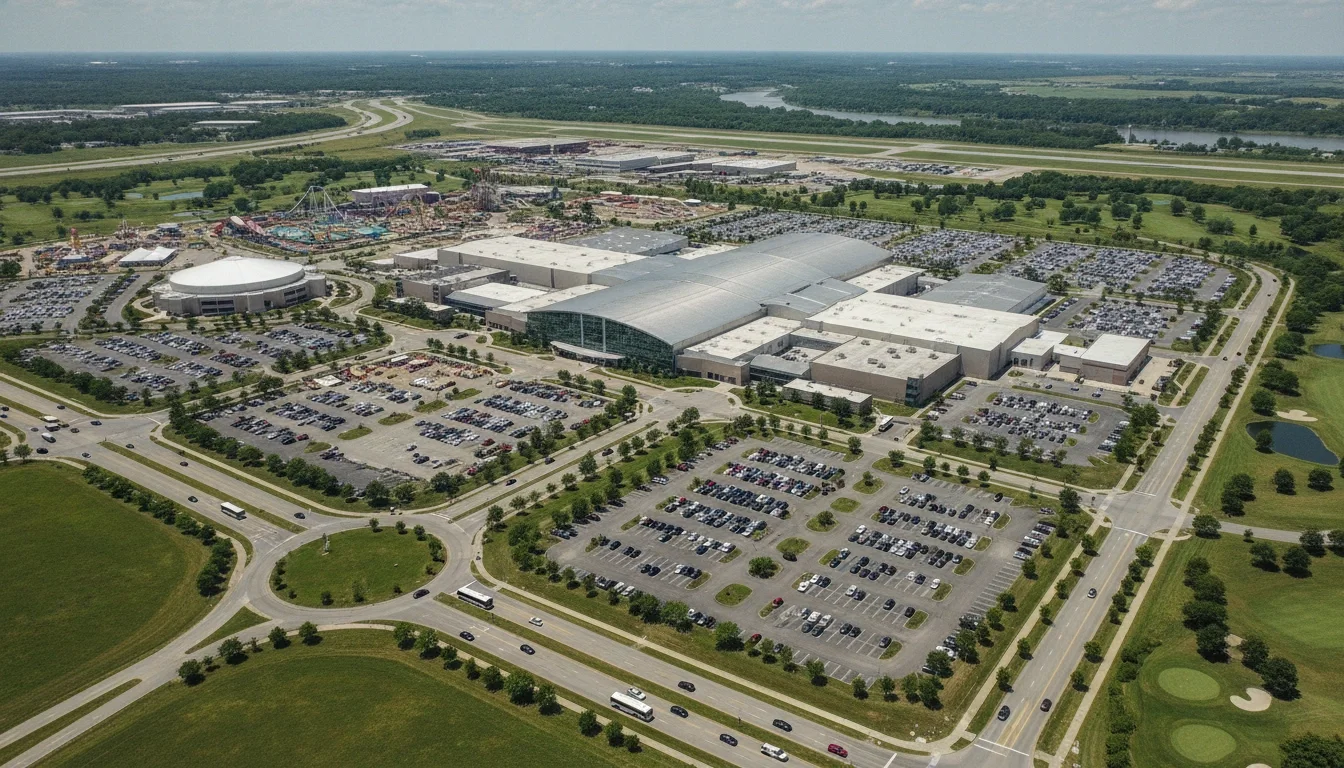
Aerial view of the Kentucky Exposition Center campus in Louisville, Kentucky
Most brands arriving at the Kentucky Exposition Center for the first time do the same thing: they set up their booth, arrange their materials, and wait. They wait for people to stop. They wait for conversations to start. They wait for leads to come to them.
The brands that consistently outperform at KEC don't wait. They plan. They know which hall their audience enters first, which corridors funnel the most consistent dwell time, and when the wave of foot traffic hits its daily peak. They staff accordingly, position strategically, and turn general attendance into meaningful brand interactions.
This guide gives you the same intelligence — a practical, venue-specific breakdown of how crowds move through the Kentucky Exposition Center and what that means for your activation strategy, booth placement, and staffing decisions.
Why Foot Traffic Strategy Matters More Than Booth Design Alone
There's a reason some brands spend thousands on display infrastructure at KEC and still report disappointing results. Booth aesthetics get attention only when people are already in front of you. If you're positioned in a low-traffic zone or staffed too lightly during peak hours, no amount of LED signage will close that gap.
Foot traffic strategy is the upstream decision. It determines whether your staff engages 200 people a day or 2,000. At a facility the size and complexity of KEC, understanding crowd behavior is the single highest-leverage investment a brand can make before event day.
Know the Venue: Kentucky Exposition Center at a Glance
Scale, Capacity, and Layout Overview
The Kentucky Exposition Center (KEC) sits on roughly 520 acres in Louisville, Kentucky, and ranks as the sixth-largest facility of its type in the United States. With over 1.3 million square feet of indoor space and nearly 500 acres of outdoor grounds, it is not a venue you can treat like a single-hall convention center.
Key facility facts at a glance:
Total indoor space: 1.3 million sq ft (majority contiguous)
Class A exhibit space: approximately 674,000+ sq ft across North, South, and East Halls
Meeting rooms: 56 flexible rooms plus two boardrooms
Arenas: Broadbent Arena (capacity 6,600) and Freedom Hall
Outdoor: 300 acres of configurable exhibit and demonstration space
Parking: Multiple lots (A, C, D, P, W) plus a parking garage ($10/vehicle)
Location: Adjacent to Louisville International Airport (SDF) and Interstate 65
That scale matters for brands. A venue of this size does not have uniform crowd density. Crowds pool, disperse, and reform based on which events are running, what time of day it is, and which anchor attractions are drawing people at any given moment.
The Key Halls and Wings: What Brands Need to Understand
KEC has undergone significant expansion over the decades. The result is a multi-wing campus where each section carries a distinct character, typical event type, and average traffic density. The primary zones brands need to know are:
Grand Lobby (unveiled 2007): 35,000 sq ft; central connector hub
North Wing: 215,000 sq ft of Class A space; modern ceilings, skywalk access to rear parking
South Wing A & B: Added 1990; home to educational, agricultural, and state fair commercial exhibits
South Wing C: Added 2003; 166,500 sq ft Class A plus 70,000 sq ft of conference rooms and a glass-and-steel lobby
West Wing (formerly East Wing pre-2006): Original construction; column-free Class A space with 27-foot ceilings
Freedom Hall: Arena-format venue; concerts, livestock, and specialty events
Outdoor Grounds: 300 acres used for farm machinery shows, livestock, and outdoor demonstrations
The Foot Traffic Map: Hall-by-Hall Breakdown
The Grand Lobby — Your First (and Last) Touch Point
The Grand Lobby is the connective tissue of the entire KEC campus. Its 35,000 square feet serve as the primary transition zone between parking (north lots, accessed via the pedway skywalk) and the exhibit halls. During multi-hall events, nearly every attendee passes through or near the Grand Lobby at some point in their visit.
For brands, this zone offers two distinct opportunities: arrival engagement and departure capture. Attendees entering via the north pedway arrive in a focused, forward-moving mindset — they're heading somewhere specific. On exit, they're reflective and often more open to conversation. Staffing the Grand Lobby with roving brand ambassadors or a compact activation footprint can dramatically expand your impression count beyond the hall where your booth sits.
Strategic note: If your budget allows only one staffed position outside your primary booth, a brand ambassador in the Grand Lobby during peak entry hours will consistently outperform a second static display inside your hall.
North Wing — The Power Corridor for Major Trade Shows
The North Wing is KEC's flagship exhibit space for large industry trade shows. Built in 2007 to replace the original East Wing, it features modern Class A finishes, high ceilings, fewer support columns, and superior LED lighting — the combination that top-tier exhibitors and event organizers request by name.
Events like industry conventions and national trade shows frequently use the North Wing as their primary floor. That concentration of purpose-driven, professional attendees creates some of the highest-quality foot traffic on the KEC campus. These are buyers, decision-makers, and industry professionals — not casual browsers.
Foot traffic in the North Wing tends to be dense in the morning (roughly 9 AM to noon on weekdays) as attendees complete scheduled walk-throughs, then dips during lunch hours and picks up again mid-afternoon. End-of-day traffic near 4–5 PM often produces strong engagement because attendees are wrapping up their visit and willing to spend more time at booths they've circled back to.
Best for: B2B brands, product launches, high-consideration purchases
Staff requirement: Knowledgeable brand ambassadors and trade show staff who can hold technical conversations
Peak windows: 9–11 AM and 3–5 PM on primary show days
South Wings A, B, and C — The Educational and Consumer Play
The South Wing complex is home to a different kind of crowd. During the Kentucky State Fair — KEC's largest single event, drawing over 600,000 people across 11 days — South Wings A and B house educational exhibits from agricultural organizations, state tourism boards, health agencies, and first responders. This is family-oriented, broad-demographic traffic.
South Wing C offers a step up in facility quality, with its glass-and-steel lobby and conference-room adjacency making it a strong choice for brands that want commercial exhibitor space with a polished presentation environment. The lobby entrance for South Wing C is a natural congregation point — particularly during meal breaks and transition periods when attendees move between buildings.
For consumer-facing brands, South Wings A and B during the State Fair represent the highest raw volume opportunity on the KEC campus. For professional or premium brands, South Wing C provides a more controlled, conference-adjacent environment.
Best for: Consumer brands, health and wellness, agriculture, state/regional services, family-focused products
Staff requirement: Outgoing promotional staff, product demonstrators, and registration teams for lead capture
Peak windows: Weekends and evenings during the Kentucky State Fair (August)
West Wing — Steady Mid-Level Traffic, Lower Competition
The West Wing is the original anchor of KEC's exhibit space. It's 250,000 square feet of column-free floor — with 27-foot ceilings — makes it the venue of choice for large equipment and machinery-focused events. The National Farm Machinery Show, one of KEC's signature annual events, uses this space extensively alongside the outdoor grounds.
Foot traffic in the West Wing tends to be more deliberate and less browsing-oriented. Attendees at equipment shows are typically there with purchase intent or serious evaluation goals. That changes how your team should engage. High-volume meet-and-greet energy works less well here; consultative, knowledgeable staffing performs significantly better.
Competition for attendee attention in the West Wing is often lower than in the North Wing for a simple reason: the events it hosts tend to draw specialist audiences with defined goals. A well-positioned, well-staffed booth in the West Wing during a niche industry show can achieve engagement rates that a general-consumer booth in the South Wing would struggle to match.
Outdoor Grounds — The Wildcard for High-Volume Events
KEC's 300 acres of outdoor space is the setting for some of the most visually arresting activations on the property. The National Farm Machinery Show uses it for live equipment demonstrations. The State Fair fills it with carnival midway rides, food vendors, and entertainment stages.
Outdoor traffic is the most unpredictable of all KEC zones. Weather dependency, event scheduling, and physical distance from indoor air-conditioned halls all affect density. However, during good weather at peak-attendance events — particularly the Kentucky State Fair — outdoor foot traffic can exceed indoor counts by a significant margin.
Brands activating outdoors need larger, weather-tolerant teams with the stamina for high-volume, fast-paced engagement. A roving street team format often outperforms a static booth in this environment.
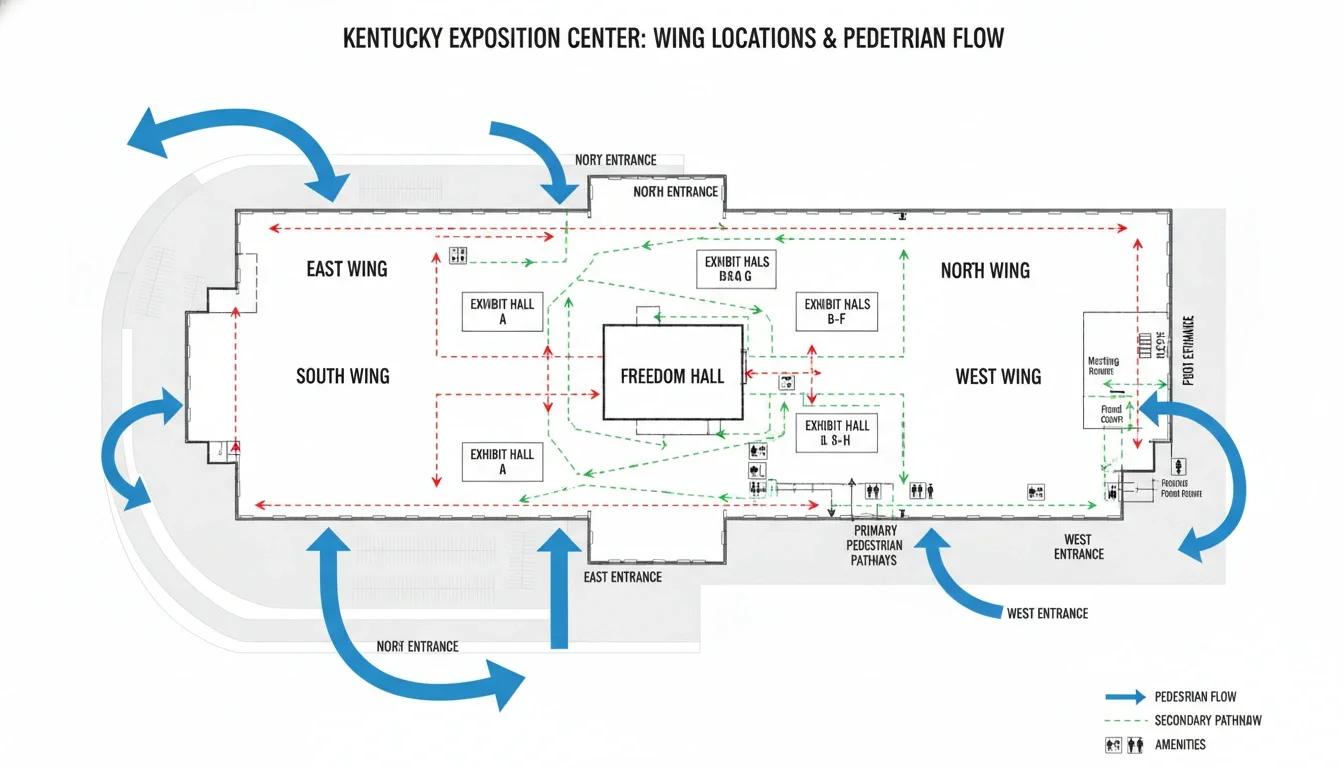
Map diagram showing Kentucky Exposition Center wing locations and pedestrian flow patterns
Event-by-Event Crowd Behavior at KEC
Kentucky State Fair (600,000+ Attendees)
The Kentucky State Fair is the single largest event held at KEC, running for 11 days each August. Over 600,000 fairgoers move through 520 acres of indoor and outdoor exhibits, entertainment, food vendors, and competitions. This is broad-demographic, leisure-oriented foot traffic — families, couples, retirees, and teenagers all present in significant proportions.
For brands, the State Fair offers unmatched volume but requires a consumer-engagement approach. Attendees are not in a purchasing mindset — they're in an exploration mindset. Brand activations that offer experiences (product sampling, interactive demos, games, giveaways) consistently outperform those that lead with hard sales messages.
South Wings A and B host commercial and educational exhibitors during the State Fair. The midway and outdoor entertainment zones generate significant foot traffic that passes adjacent to these halls, creating natural overflow opportunities.
National Farm Machinery Show
Held annually in February, the National Farm Machinery Show draws agricultural professionals, farmers, equipment dealers, and industry buyers to KEC's West Wing and outdoor grounds. Attendance is in the tens of thousands and highly concentrated within a professional demographic.
This is one of KEC's highest-value audiences for agri-tech, equipment, and rural service brands. Engagement is focused and purposeful — pre-scheduled meetings and product demonstrations drive significant booth traffic. Brands should staff with technically proficient team members who can discuss specifications and answer detailed product questions.
North American International Livestock Exposition (NAILE)
NAILE brings livestock producers, breed associations, and agricultural buyers to KEC each November, utilizing Freedom Hall, the arena spaces, and the West Wing. Crowd behavior is strongly community-oriented — attendees often know each other and move through the venue in clusters around show rings and competition areas.
For brands targeting the agricultural sector, NAILE offers intimate, high-trust access to a tightly networked audience. Relationship-oriented staffing — staff who can hold genuine industry conversations — dramatically outperforms transactional booth approaches at this event.
Trade Shows and Industry Conventions
KEC hosts dozens of industry-specific trade shows and conventions throughout the year beyond its flagship events. These range from regional B2B gatherings in the meeting rooms to national conventions using the full North Wing capacity.
Crowd behavior at trade shows follows a well-documented pattern: heavy traffic on the first day as attendees explore the full floor, lighter but more targeted traffic on day two as they return to shortlisted exhibitors, and rapid thinning on day three. Brands that staff at full strength on day one and maintain engagement quality on day two consistently report the best lead conversion outcomes.
When the Crowds Peak: Timing Your Brand Activation at KEC
Day-of-Week Traffic Patterns
For multi-day trade shows and conventions at KEC, the strongest foot traffic days follow a predictable pattern:
Day 1 (Monday or Tuesday): Highest exploratory traffic; attendees cover the full floor; strong opportunity for impressions and initial conversations
Day 2 (Tuesday or Wednesday): More targeted revisit traffic; attendees return to shortlisted booths; higher conversion quality
Day 3 (Wednesday or Thursday): Significant drop in overall attendance; remaining visitors are often the most serious buyers
For consumer events like the State Fair, weekends (especially Saturday and Sunday) generate the highest single-day attendance. Wednesday is typically designated a family or promotional day with discounted admission, also producing a significant traffic spike on what would otherwise be a slower mid-week day.
Time-of-Day Traffic Patterns
Within a given show day, KEC foot traffic follows a roughly consistent curve:
9:00–11:00 AM: Strong arrival wave; purposeful, fresh-energy traffic; optimal for complex product conversations
11:00 AM–1:00 PM: Gradual thinning as attendees break for lunch; lighter booth traffic but stronger casual conversation
1:00–3:00 PM: Mid-afternoon recovery; second wave of attendees, including late arrivals
3:00–5:00 PM: High engagement window; attendees wrapping up their visit are often ready to commit to follow-up conversations
After 5:00 PM (State Fair and consumer events): Evening attendance surge, particularly on weekends; families and groups arrive after work and school hours
Staffing Your KEC Activation for Maximum Foot Traffic ROI
Understanding foot traffic patterns is only half the equation. The other half is having the right people — in the right numbers — positioned to convert that traffic into brand outcomes. This is where most brands leave the most value on the table.
How Staffing Ratios Change by Hall and Event Type
There is no single staffing ratio that works across KEC's diverse event mix. A State Fair booth in South Wing B and a trade show exhibit in the North Wing require fundamentally different teams:
| Zone / Event Type | Recommended Staff Profile | Minimum Staffing (10x10 Booth) |
|---|---|---|
| North Wing — Trade Show | Brand ambassadors + trade show staff | 2–3 (core hours) |
| South Wings — State Fair | Promotional staff, demonstrators | 3–4 (peak days) |
| West Wing — Machinery Show | Technical brand ambassadors | 2–3 (knowledgeable) |
| Grand Lobby (Roving) | Outgoing brand ambassadors | 1–2 (peak entry hours) |
| Outdoor Grounds | Street team / roving staff | 3–5 (weather permitting) |
What High-Traffic Zones Actually Demand From Your Team
In high-density zones like the South Wing during the State Fair, your staff faces a fundamentally different challenge than at a professional trade show. Engagement windows are shorter. Attendees are moving faster. The audience is broader and less pre-qualified.
In these environments, your brand ambassadors need to be skilled at rapid rapport-building — capturing attention within the first three to five seconds of an interaction and communicating your core brand message in under 30 seconds. They also need to manage crowd flow proactively rather than waiting for visitors to approach.
Professional trade show staff trained for these dynamics will consistently outperform general promotional staff who have only worked in controlled, lower-volume environments. The investment in the right people pays for itself in qualified leads and brand interactions.
The Difference Between a Staffed Booth and an Activated Brand Presence
A staffed booth has people standing in it. An activated brand presence has people working for it — proactively engaging, drawing in passersby, managing conversation queues, handling registration and lead capture simultaneously, and representing your brand's energy at every touchpoint.
At KEC's largest events, the difference between these two approaches can mean the difference between 50 conversations a day and 500. The physical booth is the same. The staffing philosophy is everything.
Working with a professional event staffing agency that understands venue-specific crowd dynamics — and that vets, trains, and matches staff to your specific brand and event type — is the most reliable way to ensure you have the latter, not the former. Learn more about how Elev8's brand ambassador services are matched to your specific activation goals.
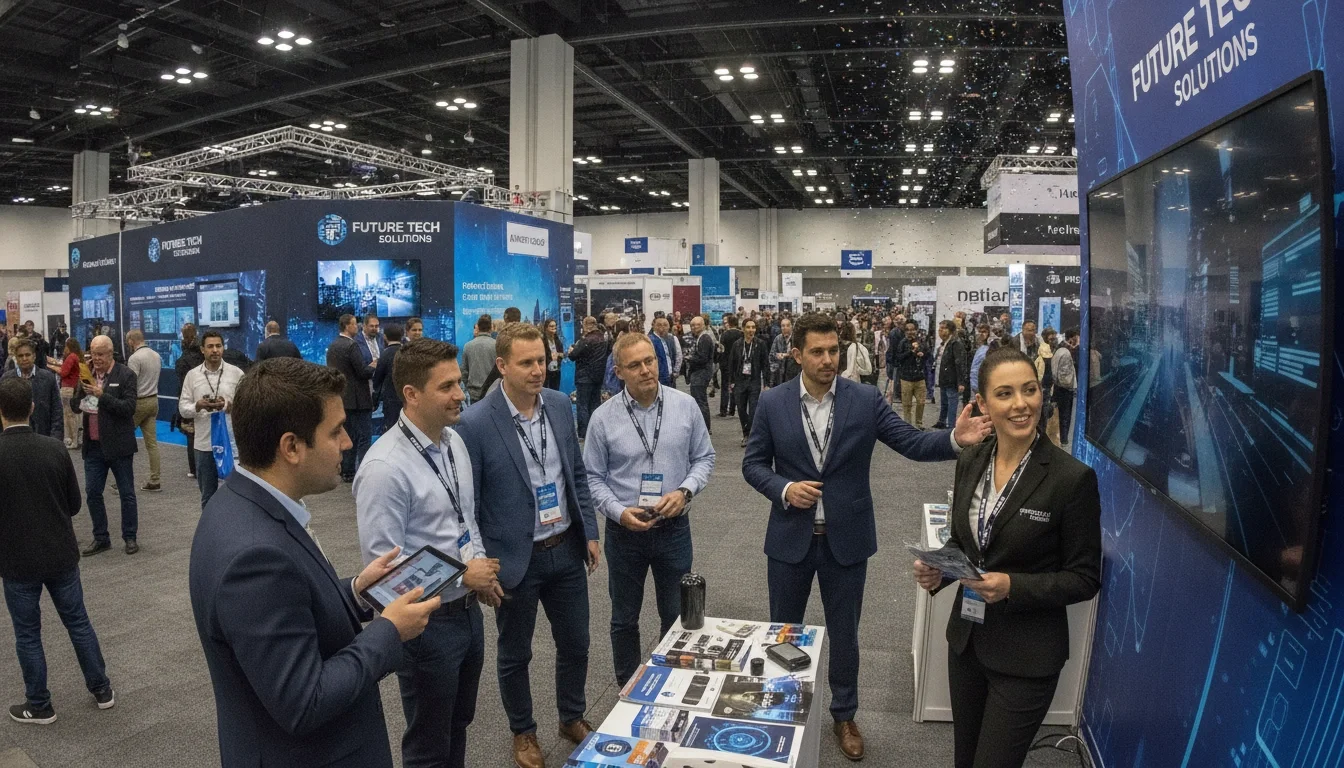
Professional brand ambassadors engaging with attendees at a busy trade show
Common Mistakes Brands Make at Large Venues Like KEC
The scale of KEC tends to amplify both good decisions and bad ones. These are the most consistent mistakes brands make when exhibiting at large venues without a traffic-informed strategy:
Treating all days as equal: Day 1 at a trade show requires full staff strength. Reducing headcount on days two and three because 'traffic is lower' misses the higher-conversion visitors who return on purpose.
Ignoring entry and exit points: The Grand Lobby and hall entrance corridors are among the highest-traffic locations on the property, yet most brands focus entirely on their booth footprint and ignore the surrounding flow.
Understaffing during peak hours and overstaffing during lulls: Peak windows at KEC are predictable. Staff scheduling should reflect the traffic curve, not a flat hourly distribution.
Sending staff who aren't prepared for high-volume engagement: General-purpose promotional staff untrained in rapid engagement and crowd management will struggle in KEC's highest-traffic zones. Venue-experience matters.
No backup coverage plan: At a facility this size, logistics issues and staff call-outs are a reality. Brands with backup staffing protocols — or an agency that builds backup coverage into every booking — protect their activation investment from day-of disruptions.
How to Choose the Right Event Staff for Your KEC Activation
Selecting event staff for a KEC activation is not a commodity decision. The venue's size, the diversity of its event mix, and the high attendee volumes mean that generic staffing solutions often underdeliver.
When evaluating event staffing partners for a KEC engagement, look for:
Venue familiarity: Have they staffed events at KEC or comparable large multi-hall facilities before? Venue experience directly affects how quickly staff can navigate, problem-solve, and perform.
Vetting standards: What percentage of applicants are accepted? Agencies with strict hiring processes deliver a meaningfully higher baseline of professionalism and engagement quality.
Event-type matching: A brand ambassador excelling at a tech conference may not be the right fit for an agricultural trade show. Look for agencies that match staff to specific event types and audiences.
Backup coverage: Every large-scale activation needs a built-in redundancy plan. Confirm your agency provides briefed backups, not just a replacement promise.
Account management: For multi-day or complex activations, a dedicated account manager who handles logistics and on-site communication is the difference between a smooth event and a stressful one.
Elev8 Event Staff has supported activations at large-scale conventions, trade shows, and public events nationwide for over 35 years. Their roster spans convention staff, crowd control teams, registration staff, and production assistants — all vetted to the top 3.5% of applicants and matched to your brand, event type, and audience before day one.
Ready to staff your next KEC activation? Request a quote at elev8.la/book-now and get a response within one business day.