Minneapolis Event Staff Jobs: A Complete Guide to Getting Hired by Top Agencies
Minneapolis has one of the busiest event calendars in the Midwest. Between the Minneapolis Convention Center hosting hundreds of trade shows and conventions each year, a thriving corporate event scene, outdoor festivals, brand activations, and sporting events at venues like Target Center and U.S. Bank Stadium, the demand for skilled event staff in the Twin Cities runs year-round.
But getting hired — especially by a reputable agency — isn't as simple as filling out a form and showing up. The agencies staffing major brands, conventions, and corporate events have high standards. They're not just looking for availability. They're looking for people who represent brands well, behave professionally under pressure, and show up prepared every single time.
This guide covers exactly what Minneapolis event staffing agencies look for, how the hiring process typically works, what you can do to stand out, and how to build a sustainable career in this industry.
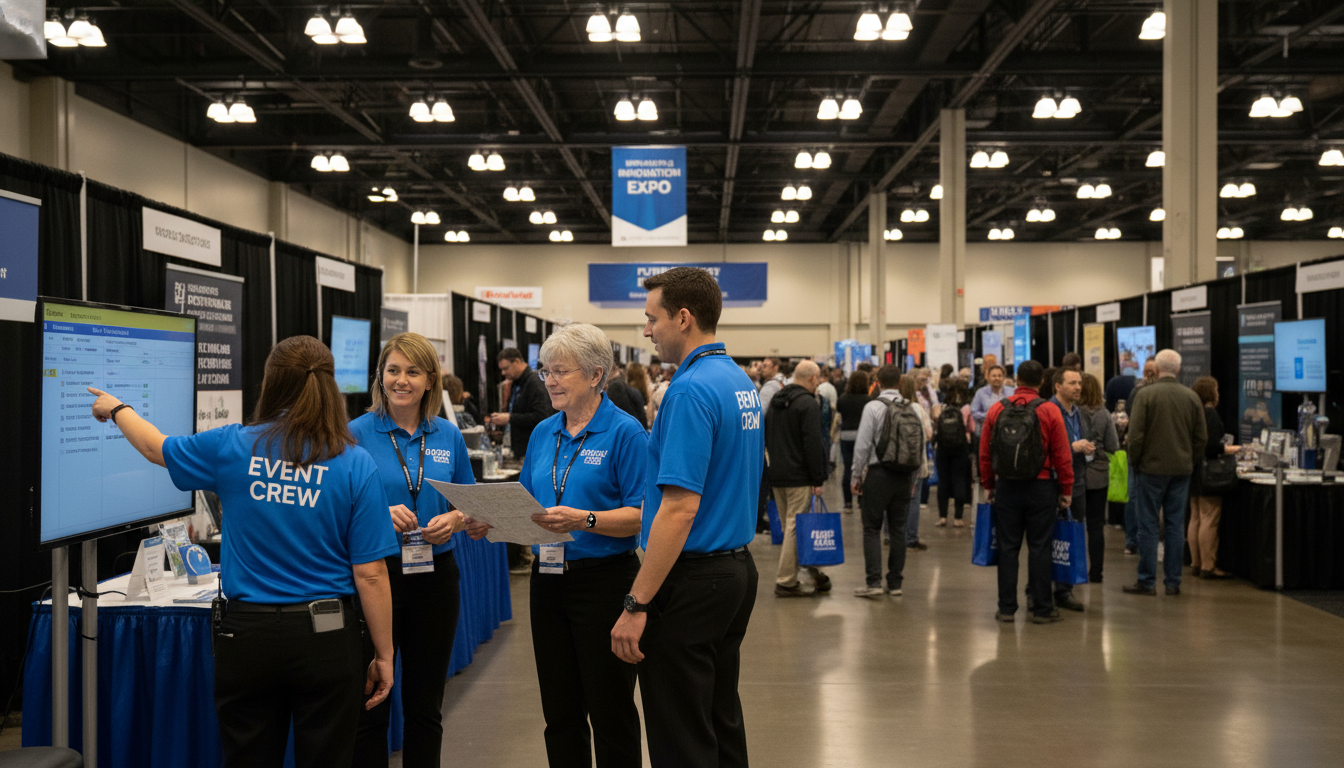
Event staff professionals at a busy trade show floor in Minneapolis
Why Minneapolis Is a Thriving Market for Event Staff
Before diving into how to get hired, it helps to understand why Minneapolis is such a strong market for event work — and why qualified candidates here are always in demand.
The Minneapolis Convention Center and Year-Round Demand
The Minneapolis Convention Center is one of the largest convention facilities in the Midwest, offering 475,000 square feet of exhibit space and 87 meeting rooms. Throughout the year, it hosts everything from major industry trade shows and medical conferences to consumer expos, volleyball championships, and cultural events.
The 2025 calendar alone included the Twin Cities Auto Show, the Minnesota Craft Beer Festival, the USA Volleyball Boys Junior National Championship, Sneaker Con, and large-scale professional conferences in industries ranging from healthcare to college research libraries. Each of those events requires event staff — often dozens to hundreds of people — working registration, floor support, brand ambassador roles, and guest services.
For event workers, this means there's rarely a slow season in the Twin Cities.
Beyond the Convention Center: Festivals, Brand Activations, and Corporate Events
The Minneapolis event scene extends well beyond convention floors. The city's corporate headquarters, agency scene, and brand culture generate consistent demand for:
Brand activations along busy corridors and in retail spaces
Corporate conferences and product launches at venues like The Depot Minneapolis, The Marquette Hotel, and converted warehouse spaces throughout the city
Outdoor festivals in summer and fall, including cultural events, music festivals, and sporting tie-ins
Paisley Park events and entertainment-industry activations tied to Prince's legacy and the annual Celebration gathering
Upcoming major events like the 2026 IIHF World Junior Championship (hosted jointly by Minneapolis and St. Paul), which will generate enormous staffing demand
If you're trying to break into event work or grow within it, Minneapolis gives you the volume to build real experience quickly.
What Event Staffing Agencies in Minneapolis Actually Look For
Here's the honest answer most candidates don't hear upfront: top event staffing agencies are not looking to fill seats. They're looking for people they can trust to represent brands in front of hundreds or thousands of people without supervision.
Premium agencies — including those operating nationally with Midwest coverage — accept only a small fraction of their applicants. The selection process is intentional, and the qualities that get candidates through aren't complicated. They're just not negotiable.
Professionalism and Presentation
Event staff are on-brand representatives from the moment they arrive at a venue. Agencies look for candidates who:
Dress appropriately and follow uniform instructions precisely
Maintain a polished, approachable appearance throughout long shifts
Speak clearly and confidently with guests, clients, and team members
Carry themselves professionally even when the event gets chaotic
This doesn't mean you need to look like a runway model or speak like a news anchor. It means you take the role seriously and recognize that you are the face of the brand you're representing.
Reliability — The Non-Negotiable
Of all the qualities agencies screen for, reliability is the one with zero tolerance for failure. Event staffing is a live business. When someone doesn't show, there's no way to fix it — the gap happens in real time, in front of clients who are paying for flawless execution.
Agencies look at:
Whether candidates show up to interviews on time
Whether they respond to communications quickly and professionally
Their history of no-shows or last-minute cancellations (in roles they've held before)
Whether they follow through on every step of the onboarding process
If you want to work with a serious agency, build a track record of showing up — every time, on time, prepared.
Communication Skills and Guest Engagement
A large portion of event staff roles involve talking to people: greeting guests, answering questions about a brand or product, directing attendees, managing check-in lines, or keeping energy up at a booth for hours on end.
Agencies look for candidates who:
Are naturally warm and approachable without being pushy
Listen actively and respond to guest needs
Stay energetic and engaged during repetitive interactions
Can adapt their tone depending on whether the event is a luxury corporate dinner, a high-energy consumer activation, or a professional trade show
Introversion isn't a dealbreaker — but the ability to engage guests professionally is.
Experience (And What Counts as Experience)
You don't necessarily need a long event staffing résumé to get hired. But you do need to demonstrate relevant experience somewhere. Agencies consider:
Previous event staff, brand ambassador, or promotional model work
Customer-facing hospitality roles (serving, bartending, hosting, retail)
Sales experience (particularly face-to-face or product demonstration)
Customer service in high-volume environments
Volunteer roles at large events, festivals, or conferences
When listing your experience, be specific about the types of interactions you managed, not just job titles. "Worked guest services at a 5,000-person music festival" tells an agency more than "had a customer service job."
Attitude Over Everything
The candidates who get booked repeatedly aren't always the most experienced — they're the ones with the right attitude. Agencies watch for:
Genuine enthusiasm for the work, not just the paycheck
Willingness to do what the role requires, even if it's unglamorous
Respect for clients, fellow staff, and agency coordinators
Flexibility when plans change last-minute (and in events, plans always change)
A coachable mindset that welcomes feedback
Agencies that staff high-profile brands can't afford staff who are difficult to work with. Attitude is part of the product.
Types of Event Staff Roles and What Each Requires
Understanding the different roles available helps you target the right positions and frame your experience accordingly.

A brand ambassador engaging with attendees during a product launch event
Brand Ambassador
Brand ambassadors are the most visible and common role in the event staffing world. They represent a brand directly to consumers, distribute samples, drive product awareness, and create memorable experiences.
What agencies look for in brand ambassadors:
Outgoing, engaging personality
Ability to learn product messaging quickly
Strong verbal communication skills
High energy over long periods
Prior brand or promotional experience is a plus but not always required
Trade Show and Convention Staff
Trade show staffing covers a wide range of roles: booth staff, lead generation support, product demo specialists, and floor support for large exhibitor spaces. The Minneapolis Convention Center's packed calendar makes this one of the most consistent sources of event work in the city.
What agencies look for:
Professional presentation and business-appropriate communication
Ability to qualify leads or engage attendees around specific products or services
Experience in B2B environments is valued for corporate shows
Multi-day reliability is critical — trade shows often run three to five consecutive days
Hospitality and Catering Staff
Catering, serving, bartending, and hospitality roles at private events, galas, and corporate functions require a different skill set — one rooted in food service knowledge, discretion, and fine-tuned service standards.
What agencies look for:
Food handler certification or TIP/TIPS certification (often required)
Prior serving, bartending, or catering experience
Professional demeanor in high-end settings
Ability to work efficiently under pressure
For hospitality staffing roles, agencies prioritize candidates who already understand service flow, table etiquette, and how to interact with VIP guests.
Registration and Check-In Staff
These roles manage guest flow at the entrance of conferences, conventions, and corporate events. While they're less glamorous than ambassador roles, they are critical — and agencies notice candidates who handle them with grace.
What agencies look for:
Organized, detail-oriented approach
Comfort with digital check-in tools and badge systems
Professional demeanor with a high volume of guest interactions
Ability to solve problems calmly when guest lists don't match or issues arise
Event Captains and Team Leads
Senior event workers who demonstrate consistency, communication skills, and leadership ability are often elevated into captain or team lead roles. These positions manage other staff on-site, serve as the client contact, and ensure the event runs according to plan.
What agencies look for:
Proven track record of reliability and performance in prior events
Clear communication and leadership presence
Problem-solving ability without escalating issues unnecessarily
Availability for briefing calls and prep before events
If you're aiming to grow within the industry, positions like event captain are the natural progression — and they typically come with higher pay and more consistent bookings.
How the Hiring Process Works at a Premium Event Staffing Agency
Not all event staffing agencies run the same process. But premium agencies — those staffing major brands and high-profile events — have structured, multi-step hiring processes that weed out candidates who aren't serious. Understanding this process helps you approach it the right way.
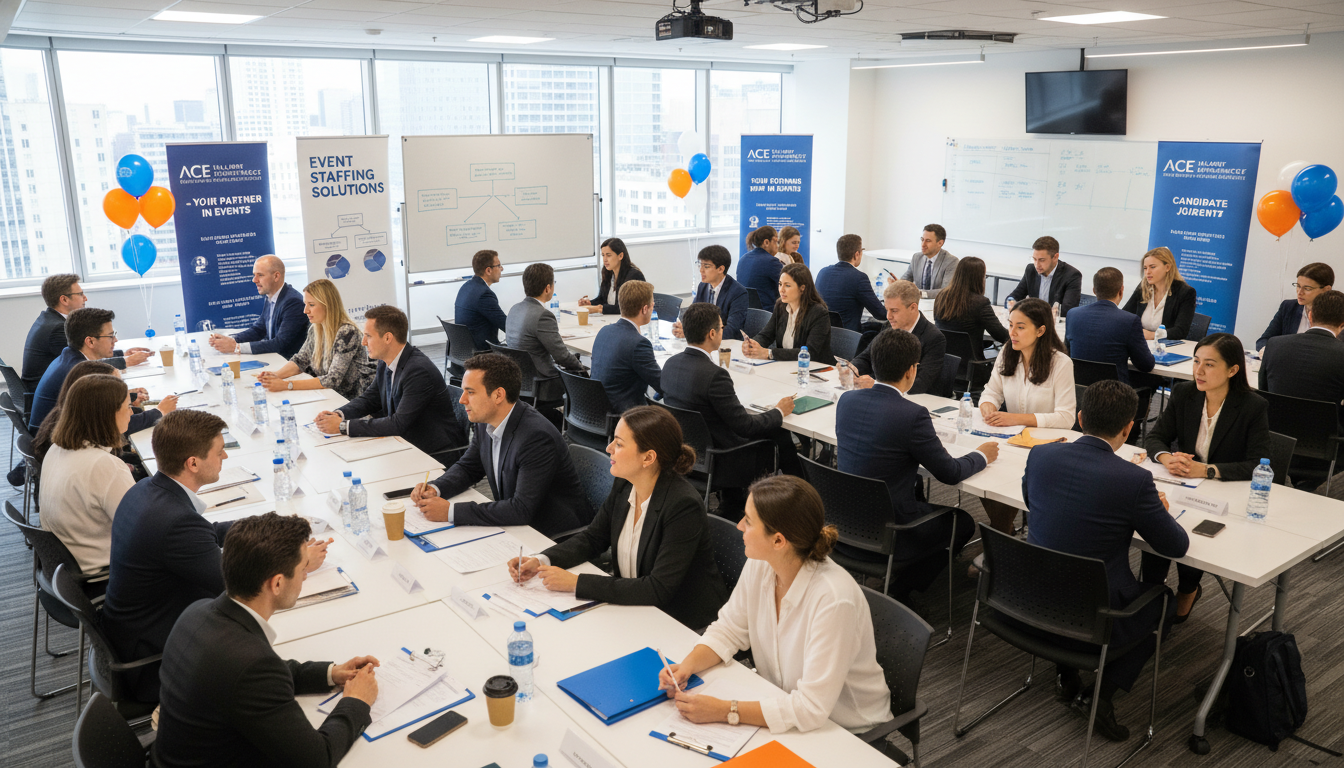
Event staff candidates going through an agency interview process
The Application
Most agencies start with an online application. At this stage, first impressions matter more than people realize. A few things to know:
Complete every field thoroughly — incomplete applications signal low effort
Include a clear, professional headshot or profile photo if requested
List all relevant experience specifically, not just job titles
If the application asks for a cover letter or personal statement, write one — even if it's short
Some agencies also ask for measurement information or specific photos for roles that involve branded uniforms. Be honest and accurate with this information.
The Interview
Agencies that take quality seriously conduct live interviews — not just automated screening. These may be conducted via video call or in person.
In a typical event staffing interview, you can expect:
Questions about your experience in customer-facing or events roles
Scenario-based questions ("What would you do if a guest became difficult at your booth?")
Questions about your availability and transportation reliability
Assessment of how you present yourself — energy, eye contact, professionalism
Possibly a role-play exercise or impromptu product pitch
Treat this as the audition it is. Arrive (or log on) early, dress as you would for an event, and bring the energy you'd bring on-site.
Background Checks and References
Premium agencies verify who they're hiring. This typically includes:
Reference checks from prior employers or event organizers
Background screening for criminal history
In some cases, verification of food handler certifications or other credentials
Be forthright in your application about your history. Agencies aren't necessarily looking for perfection — but they are looking for honesty.
Training and Trial Shifts
Before new hires work independently, most serious agencies put them through orientation and training. This may include:
Review of the agency's event protocols and standards
Specific product or brand training for upcoming events
A supervised trial shift alongside an experienced staff member
Evaluation and feedback before being placed on the regular roster
Agencies like Eleven8 Event Staff train every hire on a multi-step event process before their first shift — and match staff to the event type, brand, and audience, not just whoever's available. This level of system means your training performance matters.
How to Stand Out and Get Booked Repeatedly
Getting hired once is the easy part. Getting booked again and again — becoming someone agencies call first — is where real career building happens.
Build a Strong Profile
Agencies maintain talent databases. Your profile is your internal résumé. Keep it updated with:
Recent, professional photos (in appropriate attire for the types of events you want)
Updated availability calendar
A list of events you've worked, brands you've represented, and skills you've added
Certifications (TIPS, food handler, CPR/First Aid if relevant)
The more complete and current your profile, the more likely you are to surface when an agency is matching talent to an event.
Show Up Early and Stay Consistent
In event staffing, "on time" means "already there." Staff who arrive 15–20 minutes early, fully prepared, get noticed immediately. Agencies track this — formally or informally — and your reliability rating shapes how often you get called.
Show the same consistency across every shift, regardless of how high-profile the event is. Consistency at small events builds the trust that gets you placed at major ones.
Learn the Brand Before You Arrive
If you're given a product briefing or brand guide before an event, study it. Agencies take note of staff who arrive already knowing the product, the key messaging, and the brand standards. It makes the pre-event briefing faster and signals professionalism that clients appreciate.
This is especially important for trade show roles, where you may be answering questions from knowledgeable industry professionals all day.
Ask for Feedback and Improve
After events, agencies often conduct post-shift debriefs or evaluations. Take these seriously. Ask your event captain or agency coordinator: "Is there anything I could have done better today?"
Candidates who proactively seek feedback and apply it are the ones who climb quickly within an agency's roster — and who get recommended to clients for premium assignments.
Red Flags That Get Candidates Cut From Agency Rosters
It's worth being direct about what gets people removed from agency talent pools. Agencies track performance, and the following behaviors can end a relationship quickly:
No-shows or last-minute cancellations — even once can damage your standing significantly
Showing up late without communication — punctuality is fundamental in live events
Ignoring pre-event briefings or instructions — agencies notice when staff wing it
Unprofessional conduct with clients or guests — one complaint from a client can get you permanently removed
Inconsistent availability communication — if your availability changes, tell the agency in advance; don't go dark
Posting confidential event details or client brand information on social media — a major breach of trust for premium clients
The event staffing world in any city is smaller than it seems. Your reputation follows you.
Career Path: Where Event Staff Jobs Can Take You
Many people discover event staffing as a flexible side income — and end up building a real career within the industry. Here's how the path typically unfolds:
Entry Level → Consistent Performer Starting as a general event staff member or brand ambassador, building a track record of reliability and strong performance reviews.
Consistent Performer → Event Captain / Team Lead Getting elevated into on-site leadership roles, managing other staff, and serving as the primary point of contact for agency coordinators.
Event Captain → Agency Coordinator or Talent Manager Some experienced staff transition into the agency side — managing talent, overseeing bookings, and coordinating event logistics.
All Levels → Specialized Expertise Developing expertise in a specific niche (trade shows, luxury hospitality, experiential marketing) and being sought out specifically for those events.
Beyond the agency world, the skills developed in event staffing — guest engagement, brand communication, problem-solving under pressure, and leadership in dynamic environments — are transferable to careers in marketing, sales, event production, and hospitality management.
How to Apply for Event Staff Jobs in Minneapolis
If you're ready to start, here's a practical approach:
Identify agencies that staff the type of events you want to work. Look for agencies with a strong portfolio of brand work, trade shows, or hospitality events — whichever aligns with your skills.
Prepare your materials. Update your résumé to emphasize customer-facing, live-event, or hospitality experience. Have professional photos ready if required.
Apply through the agency's formal process. Don't just send an email. Complete the full application, answer every question, and treat the process as your first audition.
Follow up professionally. If you haven't heard back within one to two weeks, a brief, professional follow-up email demonstrates the kind of communication habits agencies actually want in their staff.
Be patient with the placement timeline. Premium agencies don't place staff immediately. The vetting process takes time — and that's a feature, not a bug. It means the work you get will be with serious clients at well-run events.
For those interested in working with a national agency that operates in Minneapolis and across the Midwest, Eleven8 Event Staff accepts applications through their online portal. With a presence in major markets across the United States — including nearby Chicago — and a structured, multi-step vetting process, Eleven8 is designed for event professionals who take the work seriously.