Portland Event Staff Cost Guide: Rates, Pricing & What to Expect
Planning an event in Portland means juggling countless details, but one question consistently tops the list: how much will professional event staff actually cost? Whether you're organizing a corporate conference at the Oregon Convention Center, a wedding reception overlooking the Willamette River, or a brand activation at Pioneer Courthouse Square, understanding staffing costs helps you budget accurately and avoid unpleasant surprises.
Event staffing costs in Portland typically range from $35 to $85 per hour per person, depending on the role, experience level, and event requirements. For a medium-sized event, you can expect to invest between $2,500 and $8,000 in professional staffing, though this varies significantly based on your specific needs.
In this comprehensive guide, we'll break down exactly what influences event staffing costs in Portland, provide role-by-role pricing, share real budget examples, and help you make informed decisions that balance quality with your financial constraints. By the end, you'll know how to budget confidently for your next Portland event while ensuring your guests receive exceptional service.
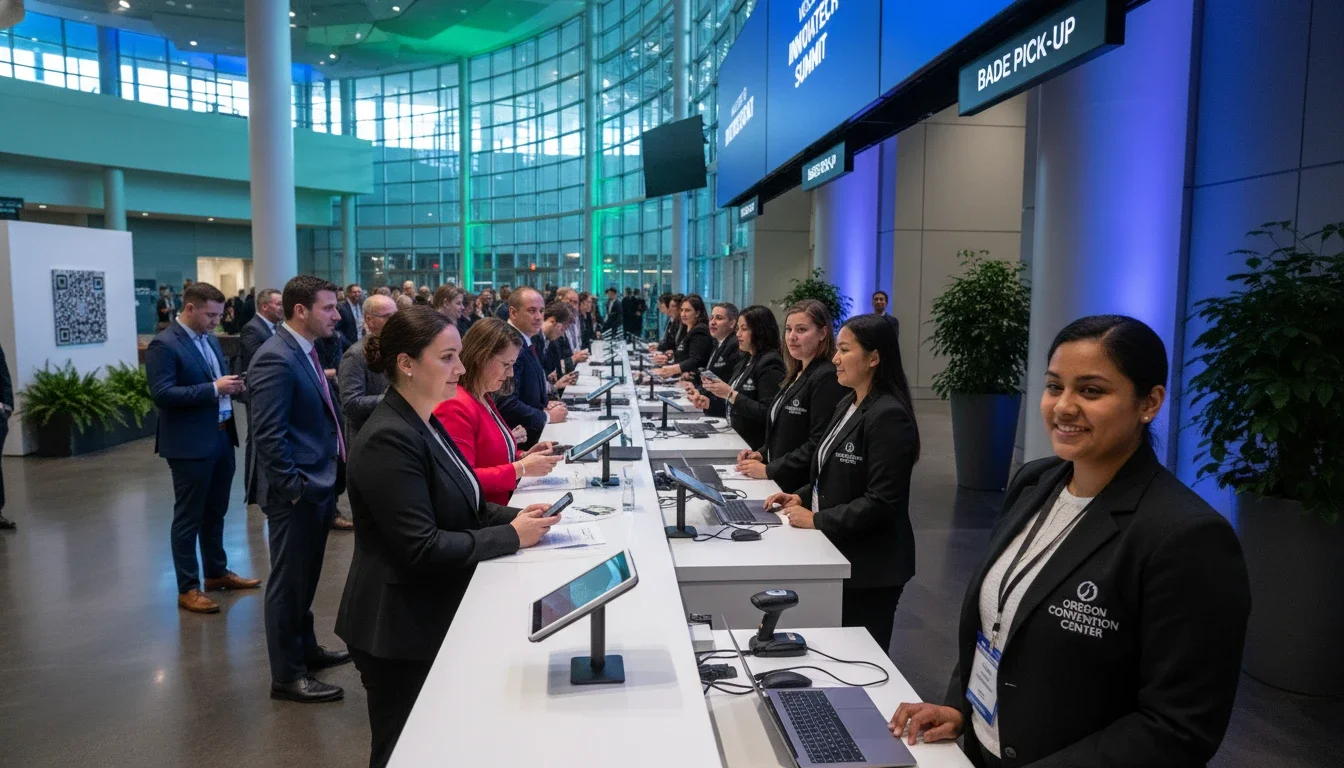
Professional event staff managing guest registration at the Oregon Convention Center
Portland Event Staff Cost Overview: What to Expect
The Portland event staffing market reflects the city's position as a major Pacific Northwest hub for conventions, corporate events, and cultural celebrations. While costs here run slightly below major markets like San Francisco or Seattle, they're higher than many mid-sized cities due to Portland's robust event industry and Oregon's labor regulations.
Average Hourly Rates by Role
Understanding the price ranges for different positions helps you build an accurate budget. Here's what you can expect to pay for event staff in the Portland metro area:
| Staff Role | Hourly Rate Range | Typical Use Cases |
|---|---|---|
| General Event Staff | $35 – $45 | Setup, breakdown, basic support |
| Greeters & Ushers | $38 – $48 | Check-in, wayfinding, guest assistance |
| Event Servers | $40 – $55 | Food service, beverage distribution |
| Bartenders | $45 – $65 | Bar service, cocktail preparation |
| Brand Ambassadors | $45 – $65 | Product demos, promotional engagement |
| Registration Coordinators | $42 – $58 | Check-in management, badge distribution |
| Event Captains/Supervisors | $55 – $75 | Team leadership, on-site management |
| Technical Staff | $60 – $85 | AV support, specialized equipment |
| Security Personnel (certified) | $50 – $75 | Crowd control, safety management |
These rates represent all-inclusive pricing from professional agencies, covering wages, insurance, payroll taxes, and administrative costs. Oregon's current minimum wage for the Portland metro area stands at $16.30 per hour, which provides a baseline for understanding these rates.
Typical Event Budgets in Portland
To put these hourly rates into perspective, here's what different event sizes typically require for staffing:
Small Events (50-100 guests): $800 - $2,400
Duration: 4-6 hours
Staff needed: 3-6 people
Examples: Small corporate mixers, intimate weddings, private celebrations
Medium Events (100-300 guests): $2,500 - $7,500
Duration: 5-8 hours
Staff needed: 8-15 people
Examples: Wedding receptions, company holiday parties, product launches
Large Events (300-1,000 guests): $8,000 - $25,000+
Duration: 6-12 hours
Staff needed: 20-50 people
Examples: Conference galas, festival activations, major conventions
Multi-Day Conventions: $15,000 - $50,000+
Duration: 2-5 days
Staff needed: Varies by day and function
Examples: Trade show booths, convention support, multi-day corporate retreats
These estimates account for a mixed staff composition appropriate to each event type, including supervisors for larger events and specialized roles where needed.
What Factors Influence Event Staffing Costs in Portland?
Event staffing isn't a one-size-fits-all expense. Multiple variables affect what you'll ultimately pay, and understanding these factors helps you anticipate costs and make strategic decisions.
1. Staff Role and Expertise Level
Not all event positions command the same rate. The complexity of duties, required skills, and level of training directly impact pricing.
General event staff handle straightforward tasks like setup, basic guest assistance, and breakdown. These positions require minimal specialized training and sit at the lower end of the rate spectrum.
Specialized roles demand specific skills or certifications. A trained bartender with Oregon Liquor Control Commission (OLCC) certification earns more than a general server. Brand ambassadors who can articulate complex product benefits and engage attendees strategically command premium rates due to their sales and communication abilities.
Leadership positions like event captains or supervisors carry the highest rates because they manage teams, troubleshoot problems in real-time, and ensure seamless event execution. These roles prevent costly mistakes and keep your event running smoothly, making their higher cost a valuable investment for events with 10 or more staff members.
2. Event Type and Complexity
The nature of your event significantly influences both the types of staff you need and their associated costs.
Corporate events and conferences typically require polished, professional staff who understand business etiquette and can interact appropriately with executives and clients. Events at venues like the Portland Hilton or Governor Hotel often need staff experienced in formal corporate settings.
Weddings and private celebrations benefit from staff who bring warmth and attention to detail. These events often require longer continuous shifts, with staff managing everything from ceremony coordination to late-night reception service.
Trade shows and conventions at the Oregon Convention Center or Expo Center demand staff who can stand for extended periods, engage with hundreds of attendees, answer product questions, and capture leads. The intensity and endurance required for multi-day convention work justifies higher rates.
Festivals and outdoor events present unique challenges including weather exposure, crowd management in open spaces, and sometimes rustic facilities. Events like those at Tom McCall Waterfront Park or Oaks Park require adaptable staff comfortable working in less controlled environments.
Brand activations need staff who essentially become temporary brand representatives, requiring thorough product training and the ability to create memorable consumer experiences that drive engagement metrics.
3. Venue Location and Requirements
Where your event takes place in Portland affects staffing costs in several ways.
Downtown Portland venues like the Sentinel Hotel, Revolution Hall, or spaces near Pioneer Courthouse Square typically work well with public transportation access, potentially reducing any travel stipends. However, parking can be limited and expensive, which might factor into costs.
Suburban venues in areas like Beaverton, Lake Oswego, or Gresham may require travel stipends for staff, particularly for evening events when public transit is limited.
Union venues including the Moda Center and Oregon Convention Center have specific requirements that can affect staffing. While not all event staff positions fall under union jurisdiction, understanding venue-specific rules prevents complications and unexpected costs.
Private estates and outdoor venues such as McMenamins Edgefield, Oaks Pioneer Church, or private Pearl District lofts may require additional coordination, with staff needing extra time for load-in at locations without dedicated event infrastructure.
4. Timing and Seasonality
When you hold your event significantly impacts what you'll pay for staff.
Peak season in Portland runs from June through September, when the weather is ideal and demand for event staff surges. Wedding season saturates weekends, while corporate summer parties and outdoor festivals compete for quality staff. Expect rates to sit at the higher end of ranges during these months.
December brings its own peak season with holiday parties, year-end corporate celebrations, and festive events filling calendars. This is Portland's second busiest event season.
Weekend events consistently cost more than weekday events, particularly Saturday evenings, which command premium rates due to high demand.
Last-minute bookings within two weeks of your event date typically incur rush fees of 15-30% above standard rates. Quality agencies maintain established rosters, but expedited scheduling and limited availability justify these premiums. Booking 4-6 weeks in advance secures better rates and ensures access to the most experienced staff.
Holiday weekends including Memorial Day, Fourth of July, Labor Day, Thanksgiving, and New Year's Eve often carry surcharges of 25-50% due to the personal time staff sacrifice and the reduced availability pool.
5. Event Duration and Shift Length
How long you need staff directly affects your bottom line, but it's more nuanced than simple multiplication.
Minimum hour requirements are standard in the industry. Most Portland agencies require 4-6 hour minimums per staff member, even if your event runs shorter. A 2-hour cocktail reception still incurs charges for at least 4 hours per person.
Overtime calculations typically apply after 8 hours of work in Oregon, with rates increasing to time-and-a-half. A 10-hour gala that requires staff from setup through breakdown will include 2 hours of overtime for each team member. For a team of 15 staff at $45 per hour, those two overtime hours add an additional $1,012.50 to your budget.
Multi-day events present both opportunities and considerations. While daily rates might be negotiable for multi-day commitments, you're paying for more total hours. A three-day trade show presence with consistent staffing requires careful budgeting across all days.
Load-in and load-out time extends beyond your official event hours. Staff arriving an hour early for setup and staying an hour after for breakdown means a 6-hour event actually requires 8 hours of paid time.
6. Number of Staff Required
The size of your team affects per-person costs and overall budget.
Guest-to-staff ratios vary by service style. A seated dinner typically requires one server per 12-15 guests, while a cocktail reception might need one server per 25-30 guests. Higher-touch service levels improve guest experience but increase costs proportionally.
Supervisor requirements become important once your team exceeds 8-10 people. A supervisor managing the team, coordinating with your event planner, and handling real-time issues prevents problems that could cost far more than their hourly rate. They also ensure other staff remain productive and take required breaks, actually improving efficiency.
Volume considerations sometimes offer modest per-person savings for very large events. An agency might reduce per-person rates slightly when booking 30+ staff, but this varies by company and isn't a given.
Complete Role-by-Role Cost Breakdown for Portland Events
Understanding exactly what each position does and costs helps you build your ideal team without overpaying for unnecessary expertise or understaffing critical functions.
Entry-Level Event Positions ($35-$50/hour)
These roles form the foundation of most event teams, handling essential tasks that keep events running smoothly.
General Event Staff ($35-$45/hour)
Versatile team members who handle setup, assist with various tasks throughout the event, and manage breakdown. They might arrange tables and chairs, assist with signage, help with coat check, or provide general wayfinding support. These staff members don't need specialized skills but should be professional, presentable, and reliable.
Greeters and Ushers ($38-$48/hour)
First impressions matter, and greeters set the tone for your event. They welcome attendees, check names against guest lists, direct traffic flow, and answer basic questions. At venues like the Portland Art Museum or Doug Fir Lounge, knowledgeable ushers enhance the guest experience by helping attendees navigate spaces efficiently.
Parking Attendants ($35-$45/hour)
For venues with parking logistics, attendants direct traffic, manage parking assignments, and assist guests with arrival and departure. Events at locations like Castaway Portland or venues with limited parking benefit from dedicated parking coordination.
Setup and Breakdown Crew ($38-$48/hour)
Physical work teams who arrive early to arrange furniture, set tables, handle decorations, and then return post-event to restore spaces to their original state. These positions require physical stamina and attention to detail but not specialized event service skills.
Mid-Level Professional Roles ($45-$65/hour)
These positions require more specific skills, training, or certifications and handle guest-facing responsibilities that directly impact event quality.
Brand Ambassadors ($45-$65/hour)
Skilled communicators who represent your brand or product with enthusiasm and knowledge. They engage attendees, conduct product demonstrations, answer questions, capture leads, and create memorable interactions. Brand activations at locations like Portland's waterfront or inside Mercantile require ambassadors who can think on their feet and adapt to varied audience responses.
Product Demonstrators ($45-$60/hour)
Specialized in showcasing products, conducting tastings, or explaining technical features. They need product expertise, engaging presentation skills, and the ability to field questions confidently. These staff members often work Costco Road Shows, trade show booths, or retail activation events.
Registration Coordinators ($42-$58/hour)
The organizational backbone of conferences and large events, registration staff manage check-in processes, distribute materials, handle last-minute changes, and solve attendee problems. They need excellent customer service skills, technological proficiency, and the ability to remain calm under pressure. Events at the Oregon Convention Center particularly benefit from experienced registration coordinators.
Event Servers and Bartenders ($40-$65/hour)
Food and beverage service professionals trained in proper service technique, menu knowledge, and guest interaction. Servers with Portland's Food Handler Card and bartenders with OLCC Alcohol Server Certification command appropriate rates for their training and expertise. Events at venues like Castaway or Union Pine need staff familiar with high-volume service.
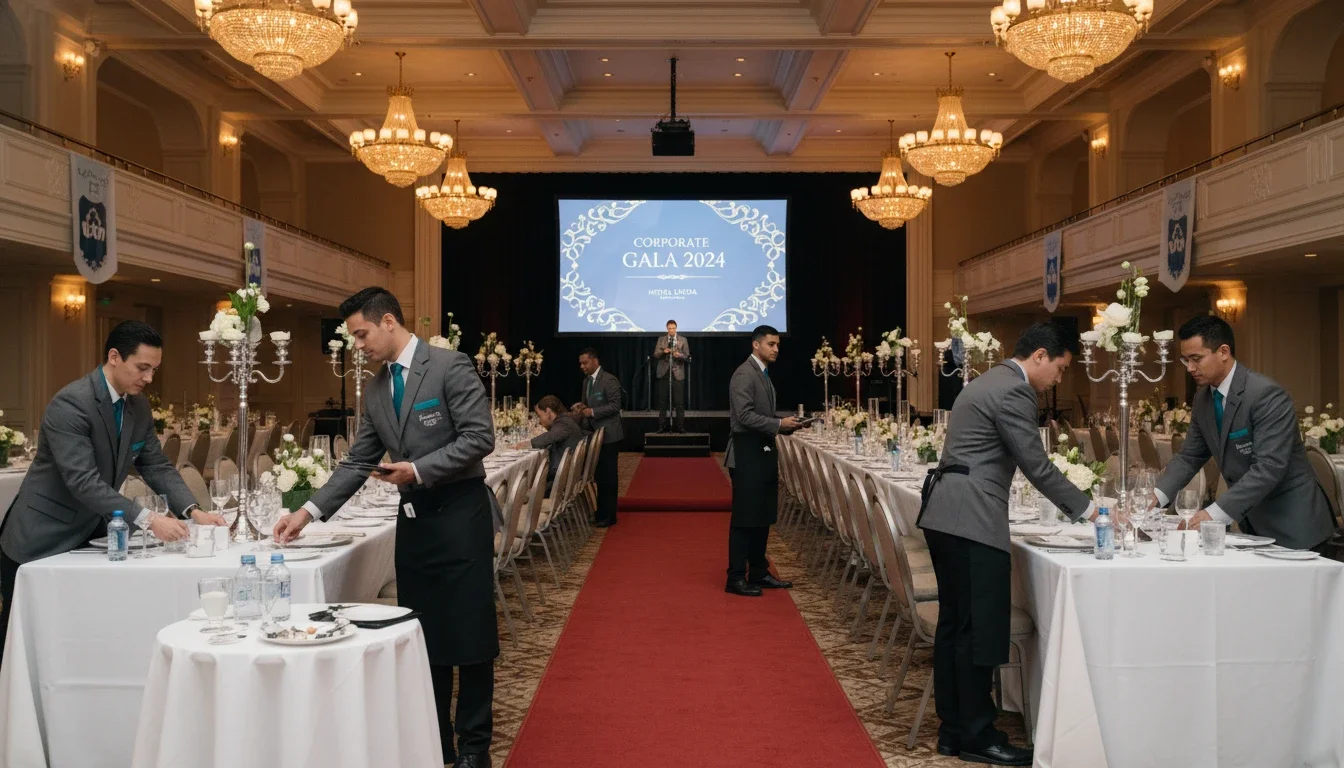
Professional event team in branded uniforms preparing for corporate gala at Hotel Lucia Portland
Specialized and Leadership Positions ($55-$85/hour)
These premium positions bring specialized expertise or leadership capabilities that elevate event execution.
Event Captains and Supervisors ($55-$75/hour)
On-site leaders who manage your event staff team, coordinate with venue personnel, handle unexpected issues, and ensure smooth operations throughout your event. They're your on-the-ground representative, making real-time decisions and keeping everything running according to plan. For events with 10+ staff members, a supervisor isn't optional—it's essential protection against chaos.
Technical Staff ($60-$85/hour)
Specialists handling audiovisual equipment, sound systems, lighting, or other technical elements. While many venues provide their own AV teams, some events require dedicated staff for specialized equipment or brand-specific technical needs.
Certified Security Personnel ($50-$75/hour)
Trained security professionals with Oregon licensing who handle crowd control, monitor entrances, manage VIP sections, and ensure guest safety. Events at venues like Crystal Ballroom or outdoor festivals at Oaks Park benefit from professional security presence. These rates apply to security staff, distinct from armed police officers whose costs fall into a different category entirely.
Event Managers ($65-$85/hour)
Senior professionals who oversee entire event operations, typically for complex multi-faceted events or high-profile occasions. They coordinate between multiple vendor teams, manage timelines, and ensure seamless execution of sophisticated event plans.
Premium and Niche Specialists ($75-$125+/hour)
Certain events require expertise that commands premium rates due to specialized skills or unique qualifications.
Bilingual Specialists ($65-$95/hour)
Staff fluent in Spanish, Mandarin, Japanese, or other languages valuable for international conferences or events serving diverse Portland communities. The Oregon Convention Center regularly hosts international events where bilingual staff enhance attendee experience significantly.
Industry-Specific Experts ($75-$125/hour)
Professionals with specialized knowledge in technology, medical devices, luxury goods, or other sectors who can provide sophisticated demonstrations or consultations. A tech product launch at CENTRL Office might need staff with genuine technology expertise beyond basic brand ambassadorship.
High-Profile Event Coordinators ($85-$125+/hour)
Seasoned professionals with extensive experience managing VIP events, celebrity appearances, or ultra-high-net-worth private celebrations. These coordinators bring connections, crisis management expertise, and the polish expected at Portland's most exclusive venues.
Hidden Costs and Fees to Consider
The hourly rate you're quoted rarely tells the complete story. Understanding the full cost structure helps you avoid budget-busting surprises and evaluate proposals accurately.
Agency Fees and Markups
Professional staffing agencies don't simply pass through labor costs—they provide valuable infrastructure that protects your event.
How agencies structure pricing: Most reputable Portland agencies use all-inclusive hourly rates that cover the staff member's wages, payroll taxes, workers' compensation insurance, general liability coverage, recruiting, vetting, training, scheduling, management, and administrative costs. This comprehensive approach means you're not receiving separate line items for each component.
What's included in rates: When an agency quotes $50 per hour for a brand ambassador, roughly $25-32 might go to the staff member's wages, with the remainder covering insurance, compliance, management, and the agency's operational costs. This isn't excessive profit—it's the cost of professional service delivery.
Administrative fees: Some agencies charge booking fees or service charges on top of hourly rates. Transparent agencies include these in their rate quotes, while others reveal them later. Always ask for itemized proposals showing exactly what you're paying.
Additional Expenses
Beyond the per-person hourly rate, several supplementary costs might apply depending on your event's specifics.
Uniforms and branded attire: Standard black-and-white attire is typically included in base rates. However, if you require custom uniforms, branded t-shirts, or specific costume elements, expect additional charges of $20-75 per person. Some agencies include one uniform change free, charging only if you need multiple costume changes throughout an event.
Travel and parking: Events in suburban locations or venues with limited public transit access might incur travel stipends or mileage reimbursement. Factor $25-50 per staff member for locations outside central Portland corridors well-served by public transportation.
Meal breaks for long events: Oregon law requires rest breaks and meal periods for shifts exceeding certain lengths. While breaks are unpaid, the time adds to your event's overall staffing coverage. A 10-hour event with a 30-minute unpaid meal break still requires 10.5 hours of schedule coverage per person.
Equipment and supplies: Some agencies provide equipment like portable bars, serving trays, or registration supplies at no additional cost. Others charge rental fees. Clarify these details upfront to avoid surprises.
Last-minute change fees: Significant changes to your staffing needs within 72 hours of your event might trigger rush charges or rescheduling fees. Agencies maintain rosters and schedules; last-minute changes disrupt their operations and often carry consequences.
Oregon-Specific Compliance Costs
Portland's location in Oregon creates specific regulatory requirements that affect staffing costs.
Minimum wage requirements: Oregon's minimum wage varies by region, with the Portland metro area currently at $16.30 per hour. This sets a floor for any staffing costs but doesn't account for the full cost of employment including payroll taxes and insurance.
Mandatory sick leave: Oregon's sick time law requires employers to provide paid sick leave, factored into agency operational costs and reflected in hourly rates.
Workers' compensation insurance: All legitimate Oregon event staffing agencies carry workers' compensation insurance protecting you and their staff. This insurance isn't optional—it's legally required—and represents a significant expense that separates professional agencies from corner-cutting alternatives.
Background checks and certifications: Quality agencies conduct background checks, verify eligibility to work, and ensure staff hold required certifications like Food Handler Cards or OLCC service permits. These verification processes cost money but protect your event from liability and ensure compliance with Oregon regulations.
Sample Event Budgets: Portland Staffing Cost Examples
Abstract numbers become clearer when you see them applied to real event scenarios. Here are detailed staffing budget breakdowns for typical Portland events.
Small Corporate Reception (50 guests, 4 hours)
Event details: Cocktail reception at a Pearl District venue with passed appetizers and an open bar.
Staff composition:
1 Event Captain (4 hours × $65/hr): $260
2 Bartenders (4 hours × $50/hr each): $400
3 Servers (4 hours × $45/hr each): $540
1 Greeter (4 hours × $40/hr): $160
Total staff hours: 28 hours
Total staffing cost: $1,360-$1,800 (varies by specific rates and agency)
Budget considerations: This lean but effective team handles a professional corporate event. The event captain coordinates service, manages the timeline, and interfaces with venue staff. Two bartenders keep lines moving at the bar, three servers circulate with appetizers and bus glassware, and one greeter welcomes attendees at the entrance.
Medium Wedding Reception (150 guests, 6 hours)
Event details: Plated dinner reception at McMenamins Kennedy School with dancing and a bar.
Staff composition:
1 Event Captain (7 hours including setup × $70/hr): $490
2 Bartenders (6.5 hours × $55/hr each): $715
1 Bar Back (6.5 hours × $42/hr): $273
8 Servers (6.5 hours × $48/hr each): $2,496
2 General Staff for setup/breakdown (3 hours × $40/hr each): $240
Total staff hours: 94.5 hours
Total staffing cost: $4,214 (before any overtime)
Budget considerations: This staffing level provides excellent service for a seated dinner with a 1:19 guest-to-server ratio. The bar back keeps bartenders supplied and handles restocking, while the event captain ensures smooth transitions between reception, dinner, toasts, and dancing. Setup and breakdown staff handle the physical work, leaving service staff focused on guests.
Large Convention Booth (3 days, Oregon Convention Center)
Event details: Trade show booth requiring consistent staffing throughout exhibition hours, plus setup and breakdown.
Staff composition per day:
1 Booth Captain (9 hours × $75/hr): $675
4 Brand Ambassadors (9 hours × $58/hr each): $2,088
1 Lead Capture Specialist (9 hours × $52/hr): $468
2 Setup Crew (3 hours first day × $42/hr each): $252 (Day 1 only)
2 Breakdown Crew (3 hours last day × $42/hr each): $252 (Day 3 only)
Daily cost (Days 1-3): $3,231 / $2,979 / $3,231
Total 3-day staffing cost: $9,693-$11,500 (accounting for rate variations and any overtime)
Budget considerations: Multi-day convention staffing requires endurance and product knowledge. The booth captain coordinates the team, interfaces with show management, and handles lead follow-up. Brand ambassadors engage attendees, conduct demonstrations, and qualify prospects. The lead capture specialist ensures every valuable interaction gets documented properly. Expect that experienced convention staff command the higher end of rate ranges due to the demanding nature of this work.
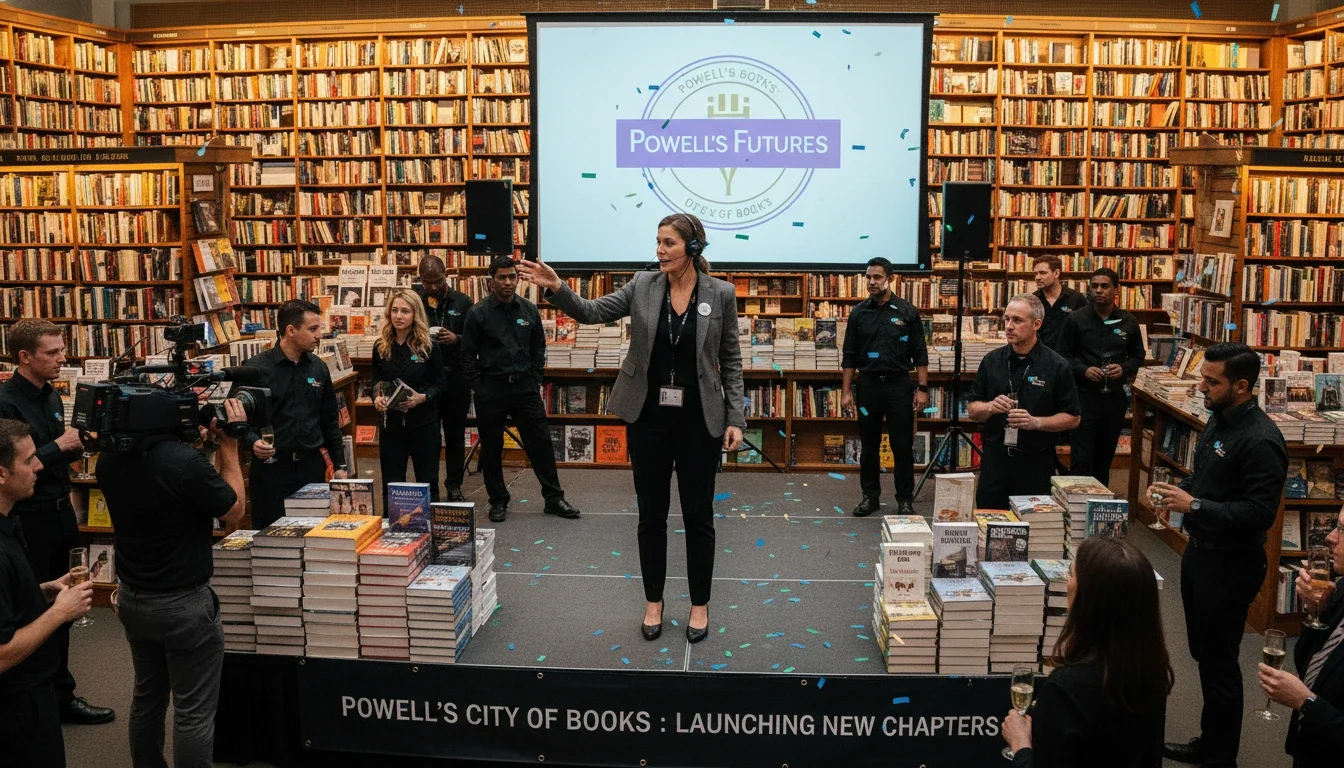
Event supervisor coordinating professional team at Powell's City of Books corporate event launch
Festival Activation (2 days, Tom McCall Waterfront Park)
Event details: Brand activation tent at a weekend waterfront festival with product sampling and engagement activities.
Staff composition per day:
1 Activation Manager (8 hours × $72/hr): $576
6 Brand Ambassadors (8 hours × $55/hr each): $2,640
2 Setup/Breakdown Crew (4 hours × $40/hr each): $320
Daily cost: $3,536
Total 2-day staffing cost: $7,072-$8,400 (depending on agency and specific rates)
Budget considerations: Outdoor festival activations need adaptable staff comfortable working in variable weather and managing high foot traffic. Brand ambassadors rotate through active engagement and rest periods to maintain energy levels throughout long days. The activation manager ensures brand consistency, manages inventory, and coordinates with festival organizers.
DIY Hiring vs. Professional Staffing Agency: Cost Comparison
When facing staffing costs, many event planners consider handling hiring directly to save money. Understanding the true cost comparison helps you make an informed decision.
The Real Cost of Hiring Staff Yourself
Direct hiring appears cheaper initially but carries hidden costs and risks that often make it more expensive than professional agency services.
Recruitment time and effort: Finding quality staff requires posting jobs, reviewing applications, conducting interviews, and checking references. For a team of 10 people, you're looking at 20-40 hours of your time. If your time is worth $50-100 per hour professionally, that's $1,000-$4,000 in opportunity cost.
Administrative burden: Hiring staff directly means you're handling payroll, calculating tax withholdings, filing paperwork, paying workers' compensation premiums, and managing timesheets. Mistakes in any of these areas can result in fines or legal issues. The administrative costs of proper employment processes are significant, even using payroll services.
Insurance and liability: Legitimate employment requires workers' compensation insurance, general liability coverage, and potentially other protections. You can't legally skip these costs, and small events don't get volume discounts—you'll pay full retail rates for insurance coverage.
No-show risk: What happens when someone doesn't show up? Without an established roster and backup system, you're scrambling on event day to fill gaps or operating short-staffed. Many DIY hires result in event-day panic when a staff member texts 30 minutes before start time with an excuse.
Quality control challenges: Vetting, training, and ensuring consistent service quality across your team requires systems and experience. First-time staff working their first event for you won't perform like trained professionals who understand the expectations and have worked dozens of similar events.
Hourly wage reality: Oregon requires you to pay at least minimum wage ($16.30/hr in Portland metro), plus payroll taxes add approximately 10-15%. Your $16.30 hourly wage costs you roughly $18-19 per hour after employer obligations. Professional agencies quoting $38-45 per hour aren't gouging—they're covering wages, taxes, insurance, recruiting, management, and overhead while absorbing risk you'd otherwise carry.
What You Get with a Professional Agency
Professional event staffing agencies provide value that extends well beyond simply sending warm bodies to your event.
Pre-vetted, trained staff: Quality agencies conduct background checks, verify references, and ensure staff have required certifications before ever placing them at events. They invest in training staff on customer service, event flow, safety protocols, and professional standards. You're hiring someone who's already proven themselves.
Backup coverage: No-shows happen in any business, but professional agencies handle them. When you book through an agency, they guarantee coverage. If someone can't make it, the agency replaces them without you ever knowing there was an issue. This insurance alone justifies agency fees.
Insurance and compliance: Professional agencies carry workers' compensation insurance, general liability coverage (typically $1-2 million), and handle all compliance requirements. You're protected from liability if a staff member is injured or damages property. The agency deals with all regulatory requirements and legal obligations of employment.
On-site management: Many agencies include supervision for larger teams, providing an experienced professional who manages your staff, coordinates with other vendors, and handles any issues that arise. This leadership layer keeps your event running smoothly while you focus on your actual role as host or event planner.
Single point of contact: Instead of managing multiple independent contractors, you have one point of contact for all staffing needs. Schedule changes, questions, issues, or last-minute adjustments go through one professional relationship, dramatically simplifying your event coordination.
Established relationships: Professional agencies maintain ongoing relationships with their staff rosters. These aren't last-minute hires pulled from job boards—they're established workers who want future assignments. This creates accountability and motivation for excellent performance that one-time DIY hires lack.
When Each Option Makes Sense
The choice between DIY and agency hiring depends on your specific situation, capabilities, and risk tolerance.
DIY hiring makes sense when:
You need 1-2 people for very simple tasks
You have extensive HR and payroll experience yourself
You're willing to accept significant risk of no-shows or poor performance
You have existing relationships with proven individuals
Your event is very small and low-stakes where mistakes won't matter
You have time to invest in recruitment, coordination, and management
Professional agency services make sense when:
You need 3+ staff members or multiple specialized roles
Your event is important enough that staffing failures would be catastrophic
You lack experience vetting, hiring, and managing staff
You want protection from liability and insurance risks
You value your time and would rather focus on other event elements
You need backup coverage guarantees
Your event is for a business, client, or high-profile occasion
You want experienced staff who've worked similar events
The break-even analysis: For most events requiring more than 3-4 staff members, professional agencies provide better value when you account for all costs. A DIY approach might save $5-10 per person per hour in direct costs, but that savings evaporates quickly when you factor in your time, insurance, risk, and the superior service quality agencies provide.
How to Save Money on Event Staffing Without Sacrificing Quality
Strategic planning and smart decisions can reduce staffing costs significantly while maintaining the service level your event deserves.
Strategic Timing
When you hold your event and when you book staff dramatically affect what you'll pay.
Book early: The single most effective cost-saving strategy is booking 4-6 weeks in advance. Early booking gives agencies time to staff your event thoughtfully, ensures access to their best team members, and avoids rush fees. You'll typically access standard rates rather than premium last-minute pricing.
Avoid peak dates: If your event date is flexible, avoiding prime wedding season Saturdays (June-September) and major holiday weekends can reduce rates substantially. A Friday evening corporate event costs less than Saturday, and a November event costs less than July, all else being equal.
Consider weekday events: Tuesday through Thursday events consistently cost less than weekend events. If you're hosting a corporate function, weekday dates often work better for attendance anyway and can save 15-25% on staffing compared to weekend premiums.
Be strategic about seasonal timing: Portland's event scene has distinct peaks. Late spring (May-June), summer (July-August), and December are busiest. Consider shoulder seasons like April, October, or November when demand dips and rates often follow.
Smart Staffing Decisions
How you structure your team significantly impacts total cost while maintaining excellent service.
Optimize staff-to-guest ratios: Work with your agency to determine appropriate staffing levels. Overstaffing wastes money while understaffing creates poor guest experiences. A cocktail reception needs different ratios than a plated dinner. Trust agency expertise on optimal team size rather than arbitrarily adding "one more person just in case."
Multi-skilled staff: When possible, choose versatile staff who can handle multiple roles. A brand ambassador who can also assist with setup reduces your total headcount needs. Staff who can flex between roles as the event evolves provide better value than rigid specialists.
Efficient shift scheduling: Structure shifts to match your actual needs. If your event runs 6 hours but requires heavy setup and breakdown, consider split scheduling where some staff work 8-hour shifts while others work the core 6-hour event window. Pay for early arrival setup only for the people actually doing setup work.
Right-size supervision: You need supervisors for teams of 10+, but smaller events often don't require dedicated supervisor positions. For a team of 4-6 experienced staff, one senior staff member can fulfill informal leadership without requiring a dedicated supervisor role and rate.
Stagger arrivals strategically: Not everyone needs to arrive simultaneously. Setup crew arrives first, service staff arrives closer to event start, and breakdown crew might be a subset of your service team staying late rather than everyone staying through breakdown.
Long-Term Partnerships
If you plan multiple events, building relationships with quality agencies creates opportunities for better pricing.
Multi-event discounts: Agencies often provide preferential rates for clients booking multiple events. If you're planning a quarterly event series or multiple annual corporate functions, negotiate package pricing that rewards your commitment.
Preferred client rates: Become a repeat client whom agencies want to work with. Pay invoices promptly, provide clear briefs, treat staff respectfully, and communicate professionally. Agencies reward easy clients with better rates and priority access to their best staff members.
Recurring booking benefits: Annual events benefit tremendously from working with the same agency year after year. The agency learns your preferences, understands your event's unique requirements, and can deliver increasingly seamless service. This efficiency often comes with stable or reduced pricing as the agency's cost to service your event decreases.
Honest communication: If you have a fixed budget, be upfront about it. Quality agencies can often restructure team composition or suggest timing adjustments to work within your constraints. They'd rather get your business at a slightly reduced margin than lose it entirely, and honest conversations facilitate creative solutions.
Red Flags: Warning Signs of Unreliable Event Staffing
Not all staffing providers deliver equivalent service, and some warning signs should make you cautious or look elsewhere entirely.
Pricing That's Too Good to Be True
If one agency quotes significantly less than multiple others, be skeptical rather than delighted.
Prices that seem impossibly low often indicate the agency is cutting essential corners. They might be using 1099 contractors (making you liable for insurance and compliance), skipping background checks, avoiding insurance costs, or planning to send whoever is available rather than appropriately skilled staff. The savings aren't worth the risk to your event and potential legal exposure.
Professional staffing has real costs. An agency quoting $25 per hour per person for experienced brand ambassadors in Portland's market either has unsustainable business practices or isn't being transparent about what you're actually receiving.
Lack of Transparency
Professional agencies willingly explain their pricing, policies, and processes. Red flags include:
Refusing to provide itemized proposals or breakdowns
Vague answers about what's included or excluded
Reluctance to discuss insurance coverage or compliance
No clear cancellation or change policies
Avoiding questions about backup plans or no-show procedures
No written contracts or agreement documentation
If an agency makes you work hard to understand the basics of what you're paying for, they're either disorganized or deliberately opaque—neither is acceptable for professional service.
No Backup Plans
Ask every potential agency: "What happens if someone doesn't show up?" Their answer tells you everything about their professionalism.
Quality agencies have established backup systems, maintain larger rosters than needed for any single event, and guarantee coverage. They might explain their on-call system, backup rosters, or how they handle unexpected absences. Unprofessional agencies shrug, suggest you deal with it, or claim it never happens (it does).
Event day no-shows are inevitable occasionally. The difference between professionals and amateurs is whether you even know about it because professionals handle it transparently while amateurs leave you scrambling.
Poor Communication
How agencies communicate before you book predicts how they'll communicate when you need them most.
Warning signs include:
Taking days to respond to inquiries
Inconsistent information between different representatives
Pressuring you to book immediately without adequate consideration
Dismissing your questions or concerns
Failing to provide requested documentation or references
Unclear about their processes or capabilities
If communication is difficult when they're trying to win your business, imagine how it will be after you've already paid them.
No Insurance or Compliance Information
Any legitimate agency readily provides certificates of insurance and discusses compliance. Red flags include:
Refusing or hesitating to provide proof of workers' compensation insurance
No general liability coverage or suspiciously low coverage limits
Claiming staff are "independent contractors" (often misclassification)
Unclear about employment status or payroll handling
No discussion of Oregon-specific compliance requirements
Working with uninsured or non-compliant agencies exposes you to enormous liability. If a staff member is injured at your event and the agency has no workers' comp insurance, you could be held liable for medical costs and lost wages—potentially tens or hundreds of thousands of dollars.
What to Ask When Getting Event Staffing Quotes in Portland
Armed with the right questions, you can evaluate proposals effectively and avoid surprises. Here's what to clarify with every potential agency:
Itemized pricing breakdown: "Can you provide a detailed breakdown showing hourly rates, number of staff, hours per person, and any additional fees?" You should see clear line items, not just a single total.
Included services and add-ons: "What exactly is included in your hourly rates, and what would cost extra?" Understand whether uniforms, travel, supervision, and other elements are part of the quote or additional charges.
Cancellation and rescheduling policies: "What are your cancellation terms, and what happens if I need to reduce staff or change my event date?" Know your financial obligations if circumstances change.
Overtime and minimum hour requirements: "What are your minimum hours, and when does overtime kick in?" Understand the billing structure, especially for events near the minimum threshold or potentially running long.
Insurance coverage: "Can you provide certificates of insurance showing workers' compensation and general liability coverage?" Verify coverage exists and meets your venue's requirements if applicable.
Backup staff procedures: "How do you handle no-shows or staff not meeting expectations?" Understand their guarantee and replacement process.
Supervisor inclusion: "For a team of [X] people, do you include a supervisor, or is that an additional role?" Clarify team leadership structure and associated costs.
Staffing process: "How do you vet and train staff, and will I meet them before the event?" Understand quality control measures and whether you'll have advance communication with your team.
Payment terms: "What is your payment schedule and what methods do you accept?" Know deposit requirements, final payment timing, and whether credit cards incur processing fees.
Experience with your event type: "Can you share examples of similar events you've staffed in Portland?" Verify relevant experience and ideally get references from comparable events.
Venue familiarity: "Have you worked at [specific venue] before?" Experience with your venue means faster setup, understanding of venue requirements, and better coordination with venue staff.
Why Portland's Event Staffing Market Is Unique
Understanding Portland's specific event landscape helps contextualize costs and set appropriate expectations for your event.
Local Culture and Professionalism Standards
Portland's reputation for laid-back culture coexists with high service standards for professional events. The city values authenticity and personal connection, which influences how event staff interact with guests. Portland audiences respond well to genuine, warm service rather than overly formal or scripted interactions.
The city's strong focus on sustainability and local values often extends to event preferences. Many Portland events emphasize locally sourced food, eco-friendly practices, and socially conscious vendors, and staffing agencies serving the market understand these priorities.
Major Venues and Their Requirements
Portland's diverse venue landscape includes several major facilities with specific requirements that affect staffing:
Oregon Convention Center regularly hosts major conventions, trade shows, and conferences. Events here often need experienced convention staff familiar with the venue's layout, policies, and coordination with in-house teams. The convention center's union relationships mean understanding which roles fall under union jurisdiction and which don't.
Moda Center (home of the Trail Blazers) hosts concerts, sporting events, and large-scale gatherings requiring staff experienced in high-volume crowd environments and venue-specific security protocols.
Downtown hotel venues like the Sentinel, Portland Hilton, and Governor Hotel frequently host corporate events, galas, and weddings requiring polished professional service aligned with upscale hospitality standards.
Unique Portland venues from McMenamins properties to Revolution Hall to the Portland Art Museum each have distinct character and operational quirks. Experienced local agencies know these venues, have worked them repeatedly, and understand the specific requirements that make events successful in each space.
Seasonal Demand Patterns
Portland's event calendar follows distinct patterns influenced by weather, convention schedules, and local traditions.
Summer peak (June-September) brings outdoor event season, wedding season, and favorable weather that makes the city a destination for conventions and festivals. Staffing costs peak during these months due to compressed demand.
Rose Festival (late May/early June) brings numerous events and activations citywide, creating a specific spike in staffing demand and rates.
Holiday season (November-December) sees intense demand for corporate holiday parties, year-end celebrations, and festive events, creating the year's second major peak season.
Quiet periods (January-March) offer opportunities for cost-conscious event planners, with reduced demand and often more negotiable rates.
Convention calendar impact: Major conventions at the Oregon Convention Center create demand surges for specific weeks. When major industry shows come to Portland, staffing costs can spike temporarily as agencies' rosters become fully committed.
Pacific Northwest Hospitality Expectations
The Pacific Northwest approach to hospitality combines professionalism with genuine warmth. Portland audiences expect service that's attentive without being intrusive, professional without being stuffy, and competent while maintaining approachability.
Staff in Portland benefit from understanding the local context—familiarity with neighborhood names, Portland cultural references, and the city's unique character enhances guest interactions. This local knowledge adds value beyond pure service mechanics.
Planning Your Portland Event Staffing Budget: Step-by-Step
A systematic approach to staffing budget development prevents surprises and ensures you allocate funds appropriately.
Step 1: Define your event specifications Start by clarifying exactly what you're planning:
Event type and purpose
Guest count
Event duration (including setup and breakdown)
Date and specific timing
Venue location
Service style (plated, buffet, cocktails, etc.)
Special requirements (language needs, technical skills, etc.)
The more specific your definition, the more accurate your staffing estimates will be.
Step 2: Calculate staff needs Work backward from guest experience to determine staffing requirements:
Identify all functions that need coverage
Apply appropriate guest-to-staff ratios for your service style
Consider specialized roles beyond servers
Factor in supervision needs for larger teams
Account for separate setup/breakdown crew if needed
Consultation with an experienced agency can refine these calculations based on your specific event.
Step 3: Research market rates Use this guide's rate ranges as starting points, then:
Contact 2-3 Portland agencies for specific quotes
Understand what each rate includes or excludes
Compare apples-to-apples (all-inclusive vs. base rates)
Ask about seasonal factors affecting your specific date
Step 4: Add buffer for contingencies Build a 10-15% contingency into your staffing budget to handle:
Potential overtime if your event runs long
Last-minute additions to staff needs
Unexpected changes or requirements
Minor unforeseen costs
Having this buffer means small changes don't require budget crises.
Step 5: Get multiple quotes Request detailed proposals from at least 2-3 agencies:
Provide identical specifications to each
Request itemized breakdowns
Ask all the questions outlined earlier
Compare not just pricing but also policies, guarantees, and responsiveness
Step 6: Verify what's included Before finalizing, confirm every element:
Exact hourly rates for each role
Number of staff and hours per person
All additional fees or potential charges
What happens if circumstances change
Insurance coverage and compliance handling
Payment schedule and terms
Get everything in writing within your contract or booking agreement.
Step 7: Book in advance Once you've selected an agency:
Book at least 4-6 weeks ahead for best results
Provide detailed event information and expectations
Maintain open communication leading up to your event
Confirm all details one week before the event
Be available for questions or coordination needs
Early booking and clear communication set the foundation for staffing success.
Conclusion: Investing in Quality Event Staffing for Portland Events
Event staffing costs in Portland typically range from $35 to $85 per hour depending on roles, expertise, and event requirements, with most events investing between $2,000 and $15,000 in professional staffing. While these costs represent a significant budget line item, they're investments in your event's success rather than discretionary expenses.
Quality event staff creates the guest experience that makes your event memorable. They're the face of your company at corporate events, the seamless service that allows wedding guests to focus on celebrating, and the knowledgeable brand representation that drives engagement at marketing activations. Attempting to save money by choosing the cheapest option or cutting corners on staffing often backfires, resulting in poor guest experiences, operational problems, or worse—actual liabilities.
The difference between adequate staffing and exceptional staffing isn't just a pleasant experience versus a mediocre one. It's the difference between an event that achieves its objectives and one that falls short. Professional, well-managed event staff handles the hundred small details and potential problems that guests never see, creating the illusion of effortlessness that defines successful events.
When planning your Portland event, start with clear objectives, understand your staffing needs, research quality agencies thoroughly, and budget appropriately for the service level your event deserves. The investment in professional event staffing through an established agency like Eleven8 provides not just warm bodies but expertise, reliability, and peace of mind that allows you to focus on what matters: creating an outstanding event experience.
Ready to staff your Portland event with experienced, professional team members? Contact Eleven8 for a customized quote tailored to your specific event needs. Our nationwide agency maintains an established Portland roster of vetted, trained professionals ready to elevate your next event.