What Brands Get Wrong About Staffing Specialty Events Like the International Quilt Festival
Every year, thousands of brands invest significant budget in booth space, custom displays, and product inventory to exhibit at large specialty events — only to watch their ROI quietly walk out the door because their event staff didn't fit the room.
The International Quilt Festival in Houston is one of the most instructive examples of this. It's the world's largest quilt show, drawing tens of thousands of passionate, knowledgeable attendees from around the globe. And yet, brands consistently show up with staff who treat it like any other convention — and wonder why their engagement falls flat.
Staffing a specialty event isn't just about filling headcount. It's about understanding who's in the room, what they care about, and how your team needs to show up to earn their trust. Most brands get this wrong in at least one critical way. This article breaks down exactly where those mistakes happen — and what better looks like.
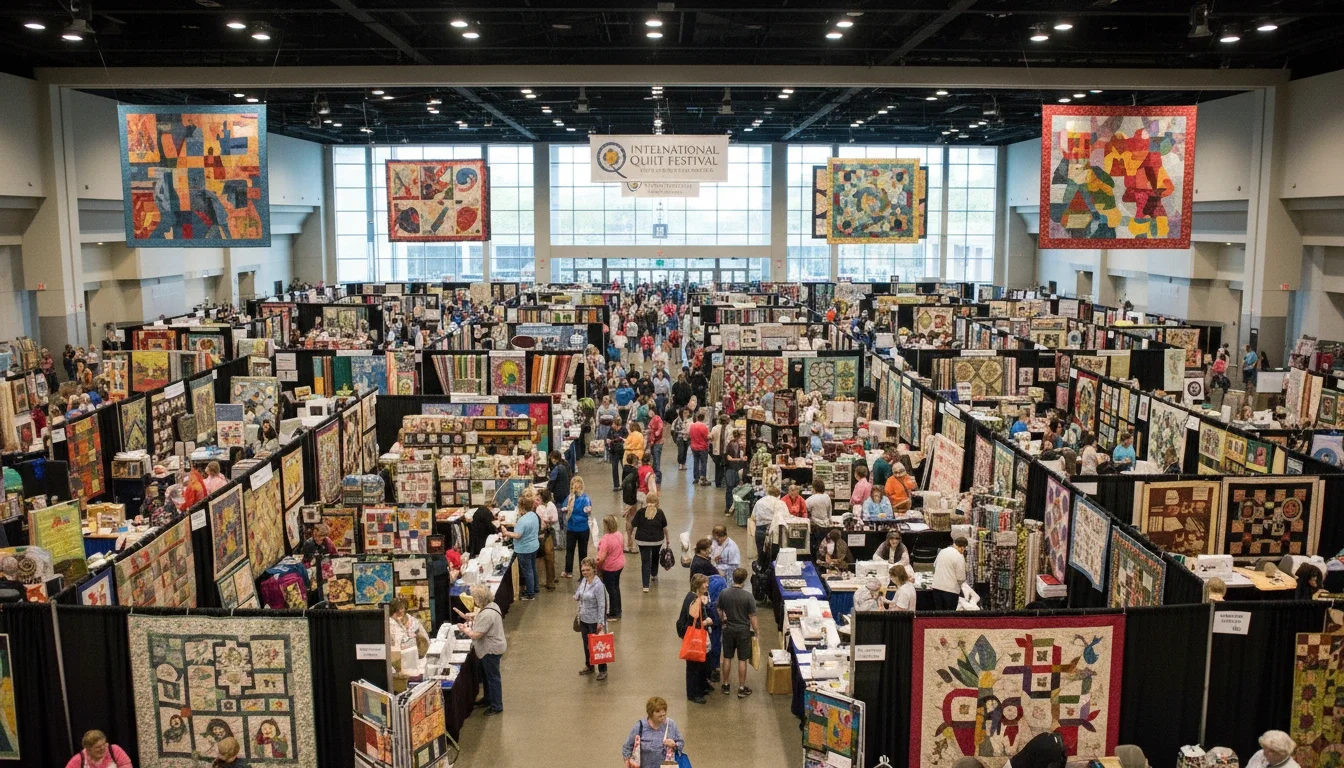
A busy convention floor during the International Quilt Festival at the George R. Brown Convention Center in Houston, TX
Why Specialty Events Demand a Different Staffing Strategy
Most event staffing advice is written with trade shows in mind — the kind where a procurement manager walks the floor looking for vendors. The attendees are professionals, the conversations are business-to-business, and the goal is lead generation.
Specialty events operate on entirely different social and commercial logic. Attendees aren't just shopping — they're immersed. They're learning. They're connecting with a community they're deeply committed to. They know more about the products on the floor than most of the staff working those booths.
This changes everything about how you need to staff.
What Makes the International Quilt Festival Unique
The International Quilt Festival (quilts.com), produced by Quilts, Inc. and held at the George R. Brown Convention Center in Houston, Texas, is the world's largest annual quilt show, sale, and quilt making academy. The event draws more than 50,000 attendees over four days, with hundreds of exhibiting companies showcasing fabric, sewing machines, notions, embroidery tools, longarm machines, and finished works.
It isn't just a marketplace. It also runs a full educational program — hundreds of classes, lectures, and workshops taught by industry instructors. Attendees often come with pre-planned schedules, enrollment in specific classes, and wish lists built from months of anticipation. They've budgeted for specific purchases and researched specific vendors in advance.
This is not an impulse-shopping crowd. This is an informed, passionate, multi-day community gathering. And that changes exactly what your staff needs to deliver.
The Attendee Profile That Generic Staff Always Misreads
The average International Quilt Festival attendee is:
Highly knowledgeable — they've often been quilting, embroidering, or working in textile arts for years or decades
Purposeful — they arrive with a list, a class schedule, and specific vendors already in mind
Community-oriented — they trust peer recommendations and are sensitive to inauthenticity
Detail-conscious — they notice quality, ask specific technical questions, and remember poor experiences
A brand ambassador who shows up without basic product knowledge, reads from a script, or visibly doesn't understand why someone would spend hours hand-stitching a quilt will lose the room instantly. These attendees can tell. And once they've written off a booth, they don't come back — and they tell their guild.
The 7 Biggest Staffing Mistakes Brands Make at Niche Conventions
Most of these mistakes aren't unique to the Quilt Festival. They show up at Comic-Con exhibitor booths, wine and spirits expos, specialized medical conferences, and collector fairs. The pattern is consistent: a brand underestimates how specific the audience is, and its staff pays the price on the floor.
Mistake 1 — Sending Staff Who Don't Understand the Audience
This is the most common — and most damaging — mistake. Brands will recruit attractive, energetic individuals who perform beautifully at a product launch or street activation, then deploy them at a specialty convention without any context about who they're talking to.
At the International Quilt Festival, attendees will ask which machine is better for free-motion quilting, what thread weight works best on a longarm, or whether a particular dye is colorfast on natural fibers. A staff member who can only say "I'm not sure, let me find someone" more than twice loses credibility for the brand — not just for themselves.
The fix isn't necessarily hiring a quilter. It's ensuring that every staff member has been deeply briefed on the product, the brand, and the audience's specific vocabulary and concerns before they step on the floor. Audience awareness is a training deliverable, not a nice-to-have.
Mistake 2 — Treating a Multi-Day Event Like a Single-Day Activation
The Quilt Festival runs four days, with classes beginning two days before the main show floor opens. Brands that plan their staffing like a single-day pop-up activation create serious problems:
Staff fatigue sets in without proper shift planning
Engagement quality drops significantly by day three
No-shows on day two or three leave booths understaffed during peak traffic periods
Staff who close out the event have no one to pass critical lead or attendee notes to
Multi-day events require a staffing plan that accounts for rotation, energy management, handoff protocols, and consistent briefing across every shift. A reliableconvention staffing partner builds this into the deployment plan — not as an afterthought.
Mistake 3 — Skipping the Brand Briefing (or Making It Too Vague)
"Just be friendly and tell them what we sell" is not a briefing. It's a recipe for an inconsistent brand experience repeated across hundreds of attendee interactions.
A proper brand briefing for a specialty event should include:
Audience profile summary — who attends, what they value, what they already know
Key talking points — specific product features and benefits in the audience's own language
Common objections and responses — what pushback the brand typically receives, and how to handle it authentically
Lead capture protocol — how to collect contact information and qualify interest
Escalation path — who on the brand team handles technical questions staff can't answer
Booth logistics — traffic patterns, product placement, demo schedules
The briefing document should be distributed at least one week before the event and followed by an in-person or video walkthrough before the floor opens. This is standard practice at agencies that specialize intrade show staff deployment.
Mistake 4 — Hiring for Availability Instead of Fit
When a brand calls a generalist temp agency the week before a major convention, they get whoever's available. At a specialty event, "whoever's available" is rarely the right answer.
The staff profile for an International Quilt Festival booth should include:
Strong interpersonal communication skills with non-transactional audiences
Comfort with enthusiastic, detailed, knowledge-driven conversations
An ability to listen genuinely rather than pitch over the attendee
Experience with multi-day event formats and sustained, consistent engagement
This isn't about requiring hobbyist expertise. It's about personality fit and professional temperament. An experiencedbrand ambassador who knows how to read a room and engage authentically will outperform a technically knowledgeable but socially disengaged rep every time.
The best staffing agencies pre-match candidates to event type and audience before the booking is confirmed — not after.
Mistake 5 — Underestimating the Volume and Flow of Foot Traffic
The Quilt Festival draws more than 50,000 attendees over four days to the George R. Brown Convention Center. Attendance is not evenly distributed. The floor is often packed on opening day and Saturday, with lighter traffic on Sunday afternoon.
Brands that staff uniformly across all four days find themselves overwhelmed during peak hours and overstaffed during quiet ones. A smarter approach maps the event's historical traffic patterns to a tiered staffing schedule — more hands during peak hours, fewer during off-peak windows, with built-in flexibility to scale if turnout exceeds expectations.
This requires a staffing partner that can deploy with operational precision. Agencies with a deepHouston event staffing roster can flex staffing levels in real time — something a national agency with no local bench simply can't deliver.
Mistake 6 — Ignoring the Role of Product Knowledge in Staff Performance
At general trade shows, a staff member's job is often to capture attention and hand off to an expert. At specialty events, the staff member often is the expert touchpoint — especially at smaller booths where the brand's product team is tied up managing other aspects of the exhibit.
For textile and quilting industry exhibitors, this means staff should be prepared to speak credibly about:
What the product does and how it works
How it compares or integrates with tools the audience likely already uses
What the brand's top-selling products are and why
Any show-exclusive promotions or demonstrations happening at the booth
Preparation of this depth doesn't happen overnight. It requires intentional pre-event training that a professional staffing agency coordinates in advance — not a five-minute briefing at the booth door on opening morning.
Mistake 7 — Failing to Build In Backup Coverage for Multi-Day Events
No-shows happen. Illness, transportation issues, and last-minute conflicts are unavoidable realities of event staffing. At a four-day event with complex scheduling, a single no-show on day two can cascade into an understaffed morning, a delayed product demo, and a poor first impression for hundreds of attendees.
Brands working without a backup plan discover this problem in real time — usually at the worst possible moment.
The solution is simple but non-negotiable: every booking for a multi-day specialty event should include briefed, ready-to-deploy backup staff. The keyword is briefed. A backup who shows up cold and doesn't know the product is nearly as problematic as no backup at all.
At Eleven8, every booking automatically includes a briefed backup for every 8 staff deployed — at no additional charge. It's one of the structural differences between purpose-built event staffing and a generalist temp agency.
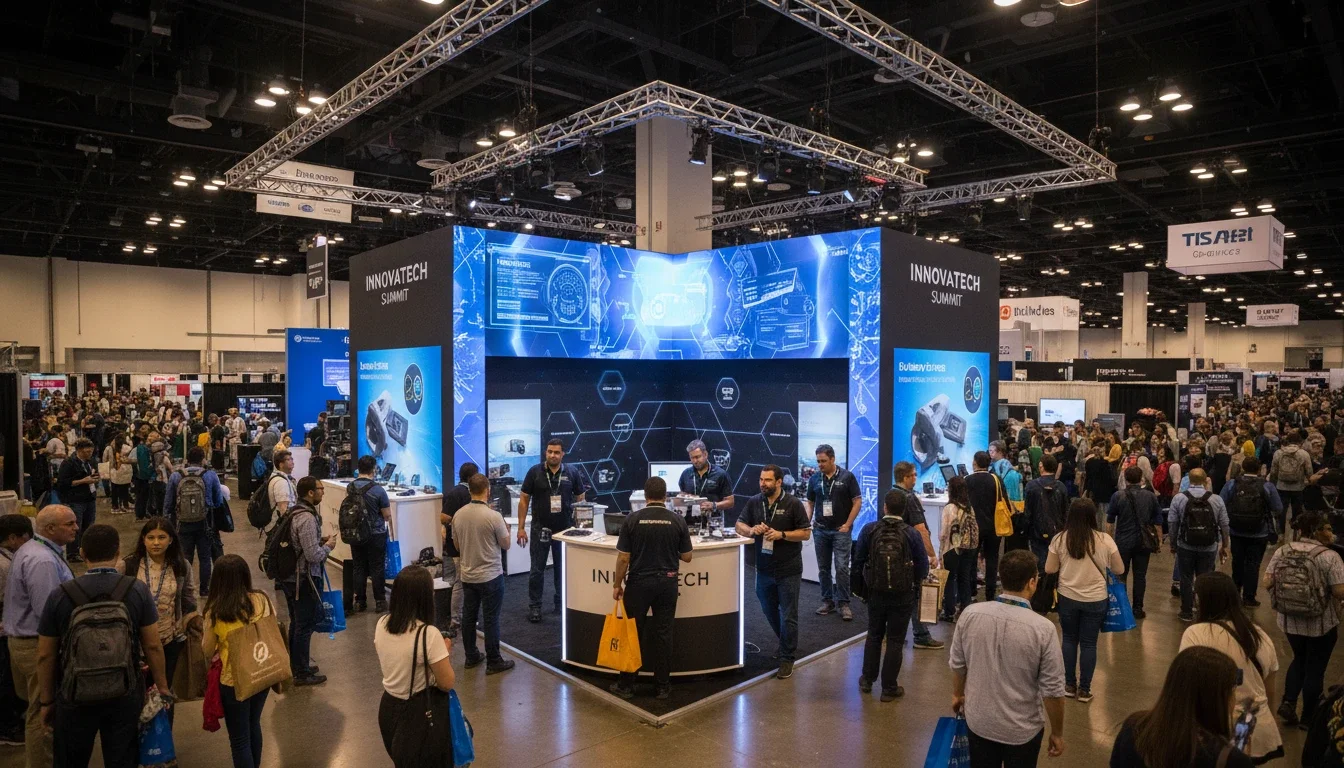
Event staff working at a large convention booth during peak traffic hours
What Great Staffing Actually Looks Like at a Specialty Event
Now that we've covered what goes wrong, it helps to have a clear picture of what the right staffing model looks like at an event like the International Quilt Festival.
The Right Roles for a Large Craft and Textile Convention
For an exhibitor at a large specialty event, the staffing mix typically includes:
Booth staff/product demonstrators — the primary engagement layer; they initiate conversations, conduct demonstrations, and represent the brand on the floor. These are ideally drawn from an expo staff roster with niche event experience.
Registration and lead capture staff — they manage sign-ups, collect contact information, and track qualified leads without disrupting the flow of attendee interaction. Registration staff with convention experience handle this smoothly.
Production assistants — they handle logistical support: managing inventory, keeping the booth organized during busy periods, assisting with demo setup and teardown. Production assistants are an often-overlooked staffing layer that significantly affects how polished the booth experience feels.
A floor captain or shift lead — someone on-site who owns communication between the brand team and the staffing team, manages the briefing each morning, and escalates issues in real time.
The exact ratio depends on booth size, demo complexity, and expected traffic. A staffing partner with conventional experience will help you build this out before you commit headcount.
How to Brief Staff for a Niche Audience
A strong pre-event briefing for a specialty convention follows this structure:
Audience overview — one to two paragraphs on who attends this event, their knowledge level, and what they typically care about
Product talking points — three to five key messages, in plain language, organized by audience segment where relevant
Demo script or flow — if the booth runs demonstrations, a clear walkthrough of how they run and what the staff say at each stage
Q&A preparation — ten to fifteen of the most common questions, with approved responses
Lead capture process — step-by-step instructions for capturing contact information and flagging high-interest leads
Booth logistics — opening/closing procedures, shift schedule, escalation contacts
Brand presentation standards — uniform, name badge, prohibited behaviors, phone policy
This document should be sent at least seven days before the event. Staff should confirm receipt and come to the day-of briefing prepared.
What a Pre-Event Walkthrough Should Cover
The morning walkthrough before the show floor opens is the final alignment point. It should cover:
Physical orientation of the booth (where everything is, what not to touch, where leads get logged)
Team introductions and role assignments
That day's traffic expectations and any scheduled demos
First-day opening checklist
Emergency contacts and escalation protocol
This session should take 20 to 30 minutes and be run by either the brand's on-site lead or the staffing agency's floor captain. Rushing it — or skipping it — is one of the most reliable ways to create a chaotic opening hour.
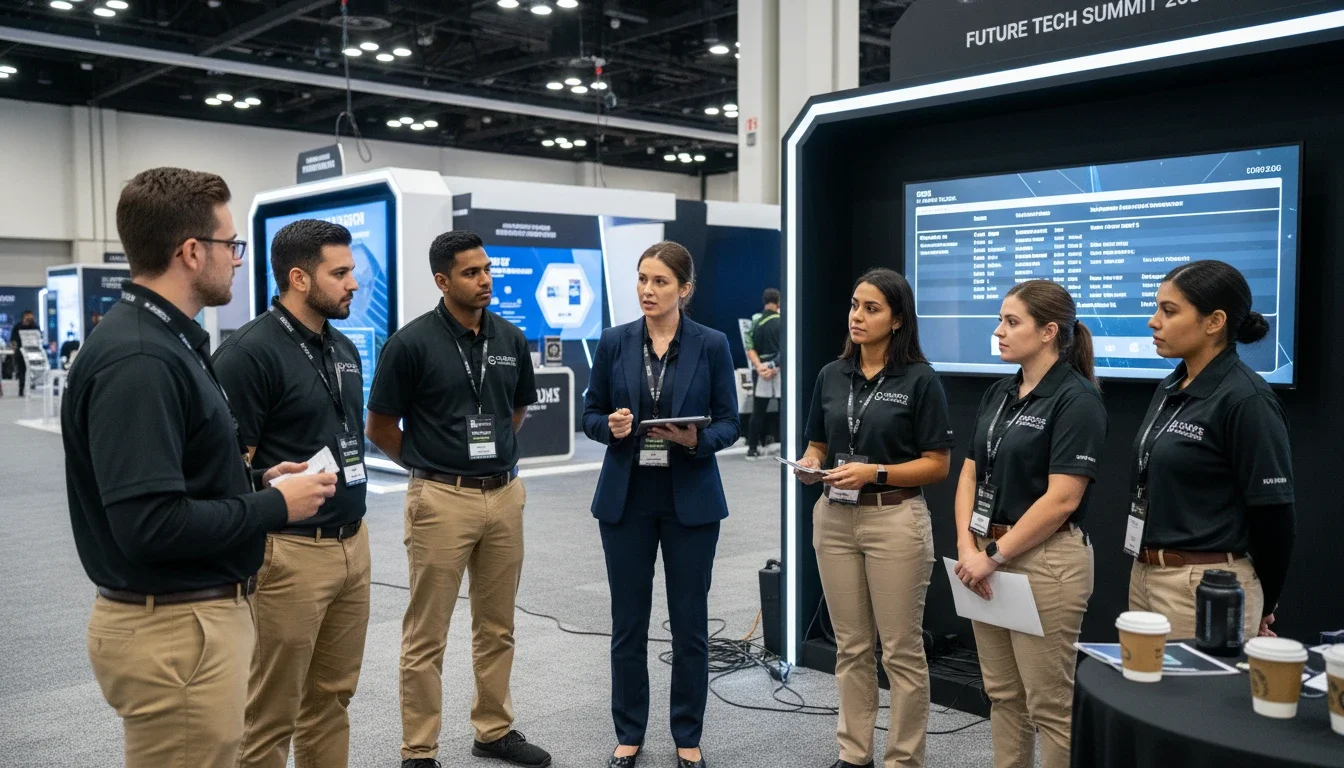
Event staffing agency team lead conducting pre-event briefing with booth staff
The Case for Working With a Specialty-Aware Staffing Agency
There's a meaningful difference between a staffing agency that can fill headcount and one that understands how to staff this kind of event — with this kind of audience — in this specific city.
At a public-facing specialty event like the International Quilt Festival, the stakes of poor staffing are high. Attendees form opinions quickly. A disengaged or uninformed staff member doesn't just lose a sale — they create a memory that follows the brand on forums, Facebook groups, and word-of-mouth within a tight-knit community.
Working with an agency that has genuine convention experience — with an existing roster, an operational backup system, and real-time on-site support — removes most of the variables that lead to bad outcomes.
Why Local Knowledge Matters at Events Like the International Quilt Festival
The Quilt Festival is held at the George R. Brown Convention Center, one of Houston's largest and most complex venues. Staff who know the venue — its layout, its parking situation, its service entrances, its loading dock flow — move more efficiently from day one. They don't get lost, they don't show up late because they misjudged the building, and they don't spend the first two hours figuring out logistics you needed them focused on your booth.
Local Houston convention staff also tend to have existing working relationships with venue service teams — which matters for day-of logistics like expedited badge pickup, supply delivery, or emergency booth adjustments.
An agency with a strong local Houston bench — rather than one that recruits remotely after a booking comes in — offers a fundamentally different level of operational reliability.
What to Ask Any Staffing Agency Before You Book
Before committing to a staffing partner for a specialty event, ask these questions:
Do you have an existing roster in Houston, or do you recruit after booking? The difference matters enormously for event day reliability and staff familiarity with the venue.
What is your fulfillment rate, and what happens if staff don't show? A 101.8% fill rate with briefed backups included is a very different answer from "we'll find a replacement."
How do you brief staff for niche audiences? Look for specificity: a detailed pre-event briefing process, not a vague promise that staff will "be prepared."
Can I review staff profiles before confirming? A quality agency allows you to select staff based on experience, skills, and personality — not just whoever's available.
Who is my point of contact on event day? You want a dedicated account manager, not a shared inbox or a general support line.
What insurance and compliance coverage do your staff carry? Workers' comp, general liability, and proper W-2 classification are non-negotiable.
Eleven8's approach to all of the above is documented in our case studies — including multi-day convention deployments, specialty events, and large-format cultural expos. If you're planning a presence at the International Quilt Festival or a similar specialty event, you can request a custom quote, and we'll build a staffing proposal specific to your booth size, traffic expectations, and brand requirements.