Every February, billions of eyes point toward music's biggest night. For brands, that collective attention isn't just cultural noise — it's a precision-timed window to build awareness, drive purchase intent, and insert themselves into some of the most-shared moments of the year.
But Grammy activation is not a marketing decision you make in January.
The brands that win at the Grammys — that get the social impressions, the media coverage, and the lasting cultural equity — are the ones that started planning months earlier, built their operational infrastructure carefully, and staffed their activations with people who understood the stakes. The brands that stumble are the ones that underestimate how much execution matters at an event of this scale.
Whether you're considering an official Recording Academy partnership, an independent Grammy Week pop-up, a celebrity gifting suite, or a brand ambassador program surrounding the red carpet, this guide covers what your team needs to know before a single wristband gets printed.
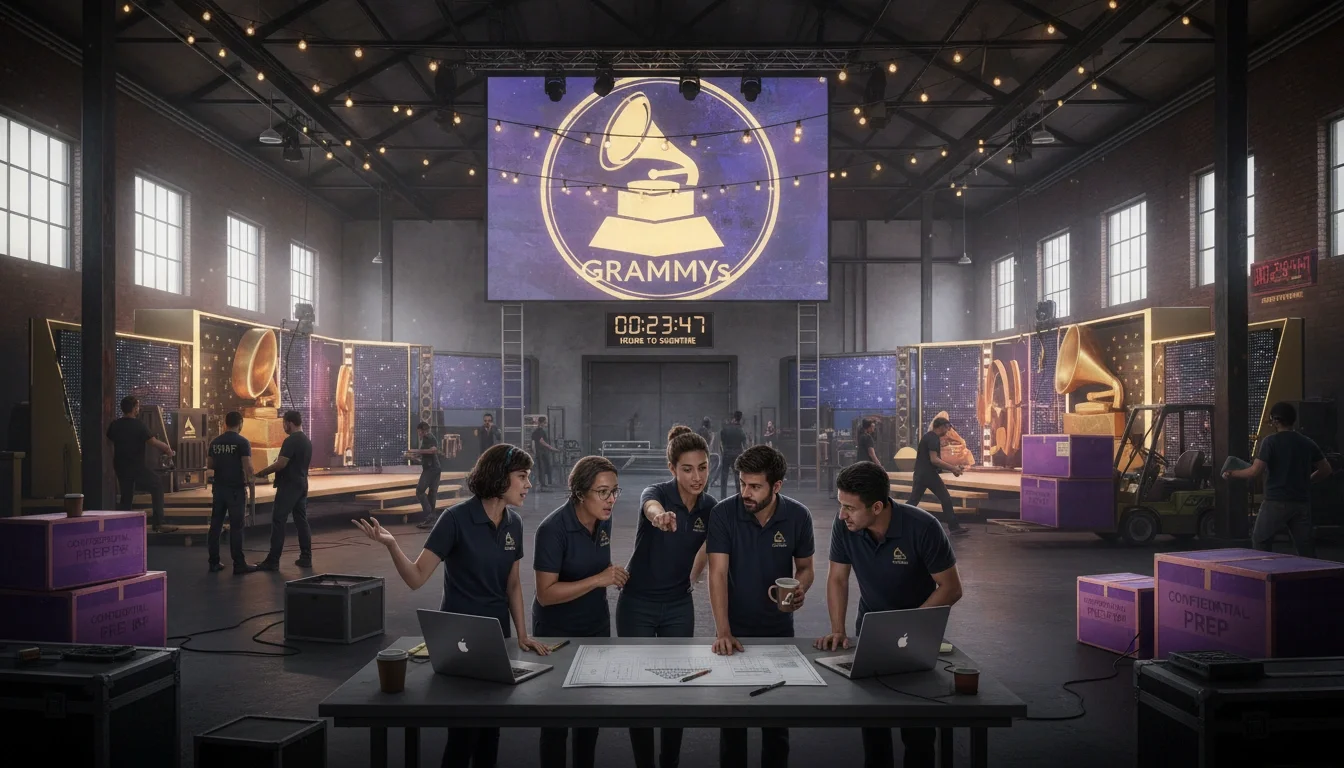
Grammy Week activations require months of planning, the right creative concept, and a staffing team that can deliver under pressure
Why the Grammy Awards Are a Tier-One Brand Activation Opportunity
Not all award shows are equal, and marketers know it. The Grammy Awards occupy a unique position in the cultural calendar: they are the only major awards show that spans music's full range of genres, fanbases, and demographic reach in a single night. That breadth translates directly into brand opportunity.
The Grammys broadcast draws tens of millions of viewers domestically, and the ceremony generates hundreds of millions of additional social media impressions across Grammy Week — the multi-day period of events, parties, and activations surrounding the main show. According to Launchmetrics, major fashion placements during a recent Grammy telecast generated an average media value of $3.4 million per high-visibility brand moment. That figure doesn't account for the earned media, user-generated content, or long-tail brand recall that come from well-executed surrounding activations.
The event has also expanded well beyond a single night. Grammy Week now encompasses industry showcases, fan experiences, official Recording Academy parties, celebrity gifting suites, sponsor lounges, after-parties, and satellite pop-ups across Los Angeles — each representing a distinct activation opportunity with a different audience and objective.
The Grammy Effect: What Happens to Brands That Get It Right
The recording industry has long documented what Billboard calls the "Grammy Effect" — the measurable surge in streaming numbers, search volume, and sales that follows a Grammy win or performance. That same momentum is available to brands that align their activations thoughtfully.
When Adidas activated around a Grammy winner's appearance in their footwear, the brand saw a significant search spike tied to the moment within hours. When Mastercard turned Lady Gaga's Grammy performance into an open casting call for fans to appear in a music video, the campaign generated 1.4 billion views and became the number-one branded dance contest on TikTok that year. These weren't accidents. They were precision-engineered brand moments backed by operational excellence — and staffed accordingly.
Who's Watching — and Why It Matters for Targeting
Grammy viewers and Grammy Week attendees skew younger, more culturally engaged, and more socially active than audiences for most other awards shows. Industry data shows that 67% of Gen Z describe themselves as music superfans, and Grammy viewership indexes strongly against this cohort. For brands in beauty, fashion, spirits, technology, and lifestyle, this is a primary target demographic.
Grammy Week specifically draws music industry insiders, media professionals, influencers, and high-net-worth consumers — a highly concentrated audience that influences broader cultural trends. A well-executed activation in front of 500 of the right people can outperform a mass-market campaign reaching millions.
Understanding the Full Grammy Activation Ecosystem
One of the most common misconceptions among brands new to Grammy marketing is that "activating at the Grammys" means buying an official sponsorship from the Recording Academy. That is one path — and a significant one — but it is far from the only option.
Official Recording Academy Partnerships
The Recording Academy offers formal partnership tiers for brands looking to carry official sponsor status. Recent official partners have included Mastercard, Sony, Häagen-Dazs, PATRÓN Tequila, Sharpie, FIJI Water, Hilton, United Airlines, and SiriusXM. These deals reportedly range from approximately $10 million to $50 million per year, depending on category exclusivity and activation rights.
Official partnerships come with the right to use Grammy branding and marks, access to Recording Academy events, on-site activation rights at the Premiere Ceremony and the main show venue, and the ability to integrate into Grammy.com content and broadcasts. For brands at this investment level, the activation rights are extensive — but so are the operational requirements to execute well.
What's notable is that, unlike sports sponsorships, where brand awareness is the top motivation, Grammy partnerships overwhelmingly focus on product and service demonstration. Three-quarters of Grammy sponsors activate primarily to showcase what they make or do. The implication for planning teams: your activation concept needs to be built around a direct product or service experience, not just logo placement.
Grammy Week Events and Satellite Activations
Beyond the main telecast, Grammy Week hosts dozens of official and semi-official events across Los Angeles — producer and engineer showcases, industry networking nights, and pre-Grammy celebration parties. These events attract a mix of artists, executives, press, and tastemakers, and many brands find that a curated presence at a Grammy Week satellite event delivers a better return per dollar than broad-reach advertising.
Brands that don't have official sponsorship status can still create a meaningful presence by sponsoring or co-hosting Grammy Week events, partnering with talent management firms, or creating adjacent experiences in the ecosystem.
Gifting Suites, After-Parties, and Fan Zones
Three specific activation formats deserve particular attention for brands operating without official sponsor status:
Celebrity gifting suites are curated product experiences hosted in private suites or lounges, typically the day before the show. Nominees, performers, and entertainment industry VIPs are invited to experience products firsthand. The earned media value — through celebrity social posts and press coverage — can be substantial for the right brand category.
Grammy after-parties are a staple of the week and represent some of the highest-density influencer and celebrity access available at any event all year. Brands can integrate through beverage partnerships, décor sponsorships, gifting moments, photo experiences, and co-hosting arrangements. A properly staffed Grammy after-party activation, with professional brand ambassadors running product experiences, can generate content that circulates for weeks.
Fan zones and public activations have grown significantly as Grammy organizers and sponsors have sought to extend the event's reach to general consumers. Sharpie activated the Sharpie Fan Zone on Grammy Sunday at the most recent ceremony. These formats require high-volume guest interactions and depend heavily on skilled, energetic experiential staff to create memorable moments at scale.
Digital and Social Extensions
The most sophisticated Grammy activations today are built for digital before they're built for physical. Social listening data shows that Grammy-related conversations generate over 2.3 million social media mentions per day during peak Grammy season. The brands that capture that conversation are the ones that build their on-site activations with shareable moments at their core — photo-worthy installations, interactive elements, and content capture opportunities that give attendees a reason to post.
This has operational implications. Staff at Grammy activations aren't just welcoming guests — they're facilitating content moments, capturing UGC releases, and guiding guests through brand experiences designed for the camera.
What It Actually Costs to Activate at the Grammys
Budget transparency is rare in the Grammy space, and that opacity causes brands to either over-invest without a clear objective or walk away from the opportunity, thinking it's out of reach. The reality is that meaningful Grammy activation exists across a wide range of investment levels.
Official Sponsorship Tiers
Official Recording Academy partnerships reportedly begin around $10 million for category-exclusive rights and scale upward based on integration scope, exclusivity, and multi-year commitments. These investments include production costs, staffing, and activation development on top of the rights fee itself. For most brands, official sponsorship is appropriate only when Grammy alignment represents a multi-year brand platform, not a single campaign.
Independent Activation Budget Ranges
$50,000–$150,000: A gifting suite presence or co-sponsorship of a Grammy Week event. Enough to create high-quality brand touchpoints with industry insiders and generate meaningful influencer content, but limited in scale.
$150,000–$500,000: A standalone Grammy Week activation — a pop-up experience, after-party integration, or fan-facing brand event with professional staffing, production, and social amplification. This range allows for a genuine creative concept and a properly resourced on-site team.
$500,000–$2M+: A multi-touchpoint Grammy Week campaign spanning digital activations, physical experiences, influencer partnerships, and media extensions. This investment level can produce genuine cultural moments and measurable business results, particularly for brands in beauty, spirits, fashion, and technology.
The critical variable at every budget level is execution quality. A $200,000 activation staffed by the wrong team will underperform a $75,000 activation staffed by professionals who understand brand representation.
The Grammy Activation Planning Timeline: Start Earlier Than You Think
Grammy activations fail in predictable ways, and most of them trace back to the same root cause: the planning process started too late. The brands that execute well at Grammy Week are typically 6–9 months into their planning before most competitors start thinking about it.
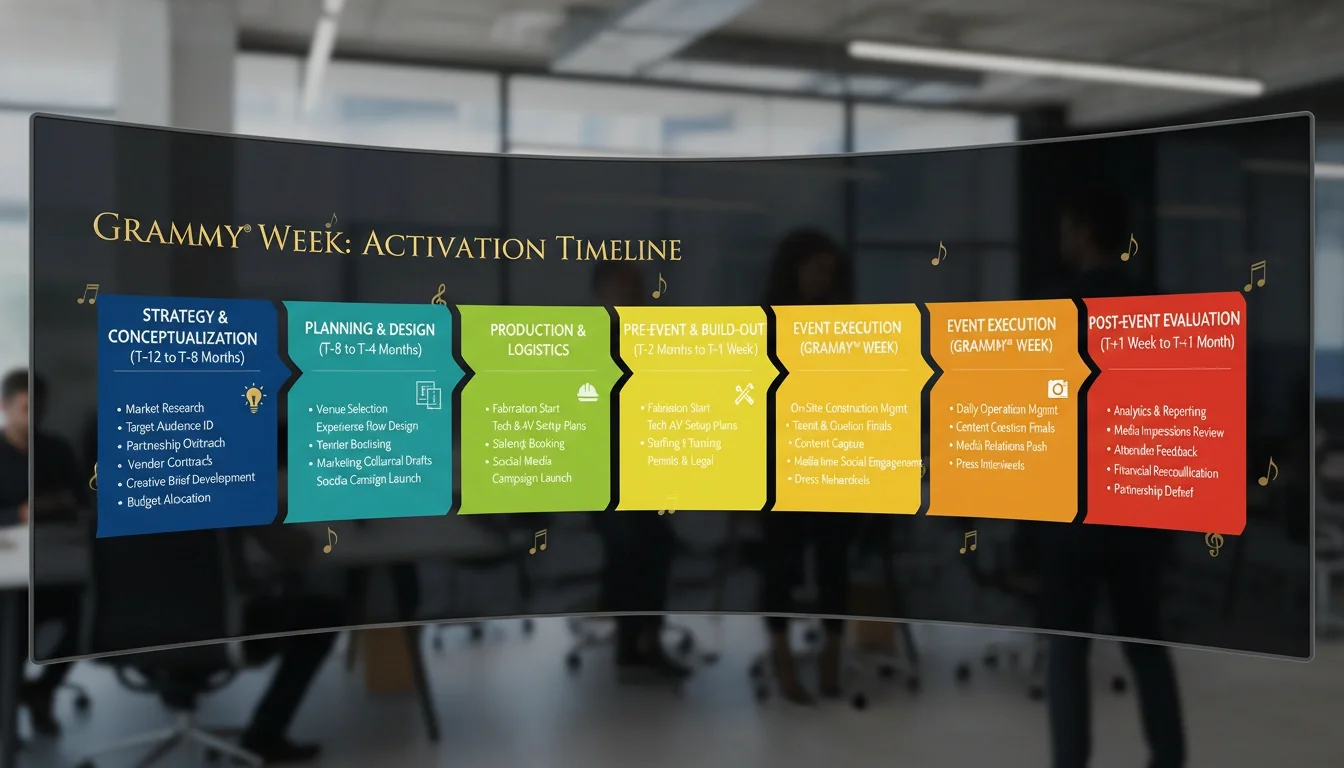
A Grammy Week brand activation planning timeline from strategy through post-event evaluation
6–9 Months Out: Strategy and Partnerships
This is the window for determining what kind of activation you're pursuing and locking in the key partnerships. If you're pursuing an official Recording Academy partnership, conversations need to begin here — categories fill up, and exclusivity negotiations take time. If you're pursuing an independent activation, this is when you identify your venue or event host, confirm your creative direction, and align your activation objectives to measurable KPIs.
Award season marketing data shows that brands employing structured timing strategies experience 35% higher conversion rates during award seasons compared to reactive approaches. The nomination announcement — typically in late November — creates a 48-hour activation window that pre-planned campaigns can immediately leverage. That window requires having your creative infrastructure already built.
3–6 Months Out: Creative, Permitting, and Logistics
This phase is where the activation comes to life operationally. Your brand experience concept needs to be finalized, production vendors selected, permit applications filed with the City of Los Angeles or the relevant venue authority, and insurance secured. For activations involving street-level presence, outdoor builds, or events within the Grammy perimeter, permitting timelines can be unforgiving.
This is also when your event staffing partner should be engaged. For Grammy Week, where demand for professional experiential staff in Los Angeles surges dramatically, early booking is not optional — it's a competitive necessity.
4–8 Weeks Out: Staffing, Briefing, and Rehearsals
Your staff roster should be confirmed, and your brand briefing materials completed. Every person representing your brand at a Grammy activation — whether they're managing a gifting suite, running a fan zone, greeting guests at an after-party, or handling check-in logistics — needs to be briefed specifically on your brand messaging, your activation flow, and the specific audience they'll be engaging.
Grammy Week draws a sophisticated crowd. The person staffing your activation may interact with a platinum-selling artist, a major label executive, a top entertainment journalist, and a social media creator with 8 million followers — in the same hour. Generic event staff briefed on the morning of your event are not equipped for that environment.
Grammy Week: Final Execution Prep
In the final days before your activation, run walkthroughs with your full team. Brief your production assistants on contingency protocols. Confirm your 24/7 support contact at your staffing agency. Verify that every team member has your event-day communications channel. The activations that look effortless on camera are the ones where every contingency was mapped, and every staff member understood their role before the doors opened.
Building the Right On-Site Team for Grammy Week
Event staffing is where the best-planned Grammy activations either succeed at the level they deserved or fall apart in front of the audience they worked months to reach.
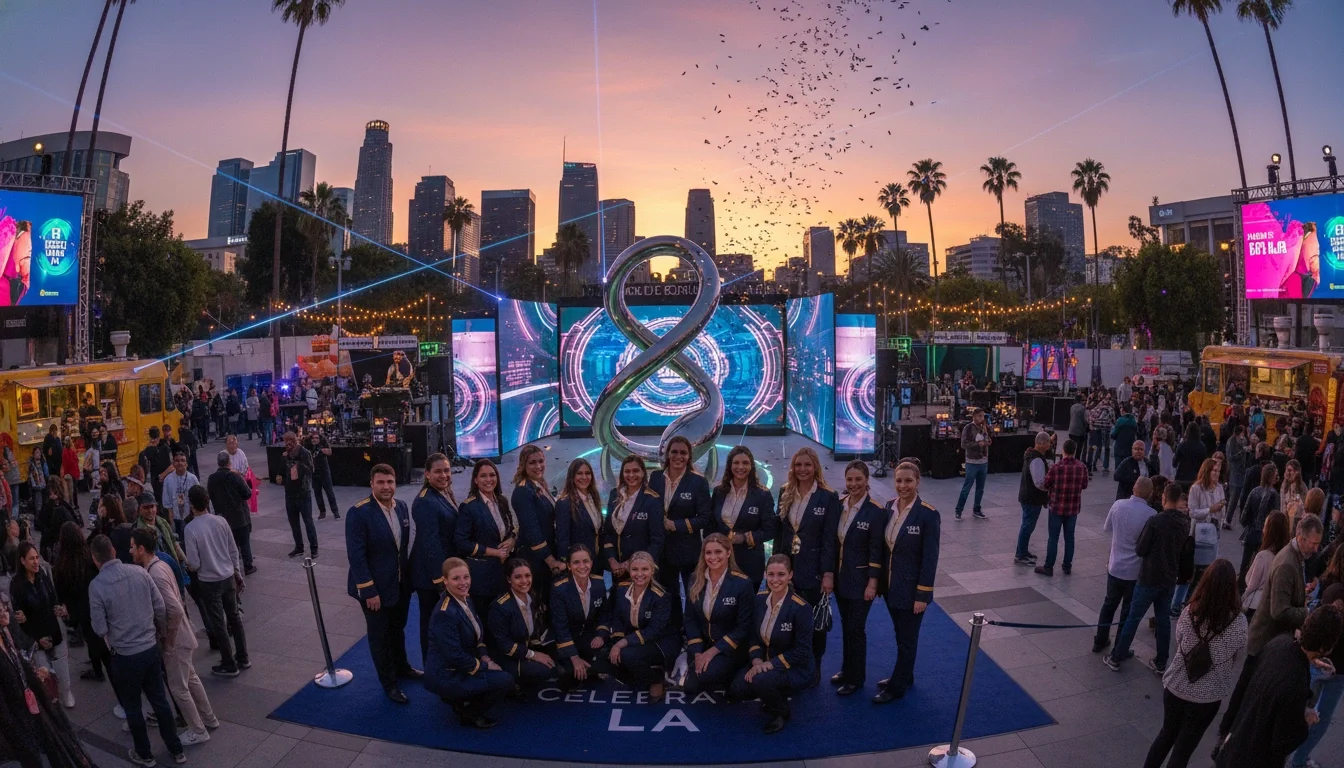
Professional brand ambassadors and event staff at a high-profile entertainment activation in Los Angeles
Roles You Need and Why
A well-resourced Grammy activation typically requires a mix of the following:
Brand Ambassadors: The face of your activation. These are the staff members who engage guests, communicate your brand story, guide experiences, and generate social moments. At a Grammy activation, brand ambassadors need to be polished, poised, and genuinely conversational — not scripted. The audience they're engaging is too sophisticated for a rehearsed pitch.
Production Assistants: The operational backbone of your activation. PAs handle setup and breakdown, manage inventory, coordinate with vendors, troubleshoot in real time, and support the event lead. For activations with multiple moving parts — a gifting suite running simultaneously with a social content capture station, for example — experienced PAs are the difference between chaos and seamless execution.
Registration and Check-In Staff: For ticketed or invited-guest activations, your check-in team sets the tone for everything that follows. At a Grammy Week event with celebrities and high-profile guests, this position demands someone who manages pressure gracefully, maintains a guest list with discretion, and creates a welcoming first impression under any circumstance.
Hospitality Staff: Bartenders, servers, and hospitality specialists who deliver the food and beverage experience at after-parties, gifting suites, and sponsor lounges. The caliber of the hospitality team directly reflects the caliber of the brand.
Crowd Management Staff: For fan-facing activations or high-attendance events, professional crowd management staff keep the experience safe, organized, and enjoyable for everyone.
What Separates Effective Grammy Staff from Generic Help
At an event like the Grammy Awards, brand representation is everything. The gap between professional event staffing and last-minute generic help is visible immediately — to guests, to media, and to the artists and executives walking through your activation.
The qualities that matter most at a Grammy activation are brand fluency (the ability to articulate your story naturally, not robotically), composure under high-visibility pressure, adaptability to unexpected schedule changes and crowd surges, and the professional presentation that reflects your brand's positioning. These are not qualities you can develop in a morning briefing with someone hired the night before.
Working with a Professional Event Staffing Agency
For Grammy Week, working with an established event staffing agency in Los Angeles that maintains an existing roster — not one that starts recruiting after your booking — is essential. Demand for experienced event staff in LA spikes sharply during award season. An agency that recruits reactively will send you whoever is available. An agency with a developed, rated workforce will send you the right people.
When evaluating staffing partners for a Grammy activation, ask specifically:
Do you maintain an existing roster of L.A. staff, or do you recruit per booking?
Can we review staff profiles and select preferred team members in advance?
What is your fulfillment rate guarantee, and do you provide backup coverage?
Do you have experience staffing entertainment industry activations?
Is there a dedicated account manager for our event?
At Eleven8, every Grammy Week booking includes a dedicated account manager, built-in backup coverage for every eight staff, and a roster of pre-vetted professionals who have represented brands at the highest levels of the entertainment industry. Inquire about staffing your Grammy activation here.
6 Common Mistakes Brands Make at Grammy Activations
Even experienced brand marketers make the same avoidable errors when they enter the Grammy ecosystem. Here are the six most consistent failure patterns:
1. Starting the planning process too late. Grammy Week fills up — venues, vendors, and quality staffing alike. Brands that begin planning in December for a February ceremony are already behind. The most successful activations begin their planning process in the summer or early fall.
2. Building for broadcast, not for the room. Some brands design their Grammy activations for the social content they hope will come from it, and forget that the people in the room need to have a genuine, meaningful experience first. Forced photo moments with no organic engagement read as hollow — and the creators, journalists, and industry insiders at Grammy events are experts at spotting inauthenticity.
3. Confusing official sponsorship with effective activation. Buying official partner status does not guarantee activation quality. Some of the most memorable Grammy brand moments in recent years have come from brands that had no formal Recording Academy partnership but executed satellite activations brilliantly. Conversely, official sponsors with poor execution are quickly forgotten.
4. Under-staffing the guest experience. Brands routinely budget for activation build-out, venue, catering, and creative production — and then cut corners on staffing. A stunning installation staffed by two inexperienced people who can't handle the crowd volume, explain the brand experience, or manage the guest flow will underperform a modest experience run by a skilled, fully deployed team.
5. Ignoring the full Grammy Week calendar. Many brands fixate on Grammy Sunday and overlook the week of events surrounding it. Grammy Week events — industry showcases, award ceremonies for non-televised categories, pre-Grammy parties — often offer better access, higher influencer concentration, and less competitive clutter than the main show night itself.
6. Failing to plan post-event content. The content captured during a Grammy activation has a lifespan far beyond Grammy night — if your team plans for it. Brands that brief their staff to facilitate content moments, capture UGC release forms, and document the activation create assets they can use in campaigns for months. Brands that don't plan for content capture leave their most valuable output on the table.
Measuring Success After Grammy Week
ROI measurement for experiential activations is notoriously underdisciplined, and Grammy activations are no exception. Define your KPIs before the activation launches, not after.
Depending on your objectives, meaningful Grammy activation metrics might include:
Earned media value (EMV): Total estimated media value of press mentions and social content generated during Grammy Week, measured by tools like Launchmetrics or Meltwater
Social impressions and engagement rate: Volume and quality of user-generated content tied to your activation hashtag or branded element
Influencer reach: Combined following of influencers who organically posted about your activation
Leads and data captured: For technology, spirits, beauty, or direct-to-consumer brands running interactive experiences, qualified leads captured on-site
Brand sentiment lift: Pre/post survey data among target demographics measuring awareness, consideration, or favorability changes
Revenue and conversion attribution: For brands with trackable digital extensions (QR codes, landing pages, promo codes), direct conversion data from Grammy Week traffic
Build your measurement framework into your activation design — not as an afterthought. The brands that consistently demonstrate Grammy ROI to their executive teams are the ones that had measurement infrastructure in place before the first guest walked through the door.
Ready to Staff Your Grammy Week Activation?
The execution of a Grammy brand activation comes down to the people on the floor. Eleven8 Event Staff has spent 35 years building the kind of roster — vetted, trained, and deployed from an existing workforce — that represents brands at the highest levels of the entertainment industry.
From brand ambassadors and production assistants to hospitality staff and crowd management teams, Eleven8 provides the staffing infrastructure that Grammy activations require. With a 101.8% fulfillment rate, dedicated account managers on every booking, and a built-in backup guarantee, we don't leave your activation to chance.
Get a quote for your Grammy Week staffing needs →