Dressed for Success: Why Presentation and Polish Matter Most at MAGIC Las Vegas
Walk the floor of MAGIC Las Vegas during peak show hours, and one thing becomes immediately apparent: every brand is competing for the same 30 seconds of a buyer's attention.
MAGIC is the largest fashion marketplace in the United States. It draws tens of thousands of industry professionals — retail buyers, boutique owners, department store merchandisers, e-commerce operators, and brand decision-makers — all moving through hundreds of booths across the Las Vegas Convention Center over just three days. In that environment, your booth team's presentation isn't a nice-to-have. It's one of the most powerful conversion tools you have.
This guide breaks down why polish and presentation matter more at MAGIC than at virtually any other trade show, what that polish actually looks like in practice, and how to build the kind of booth team that turns walk-bys into wholesale accounts.
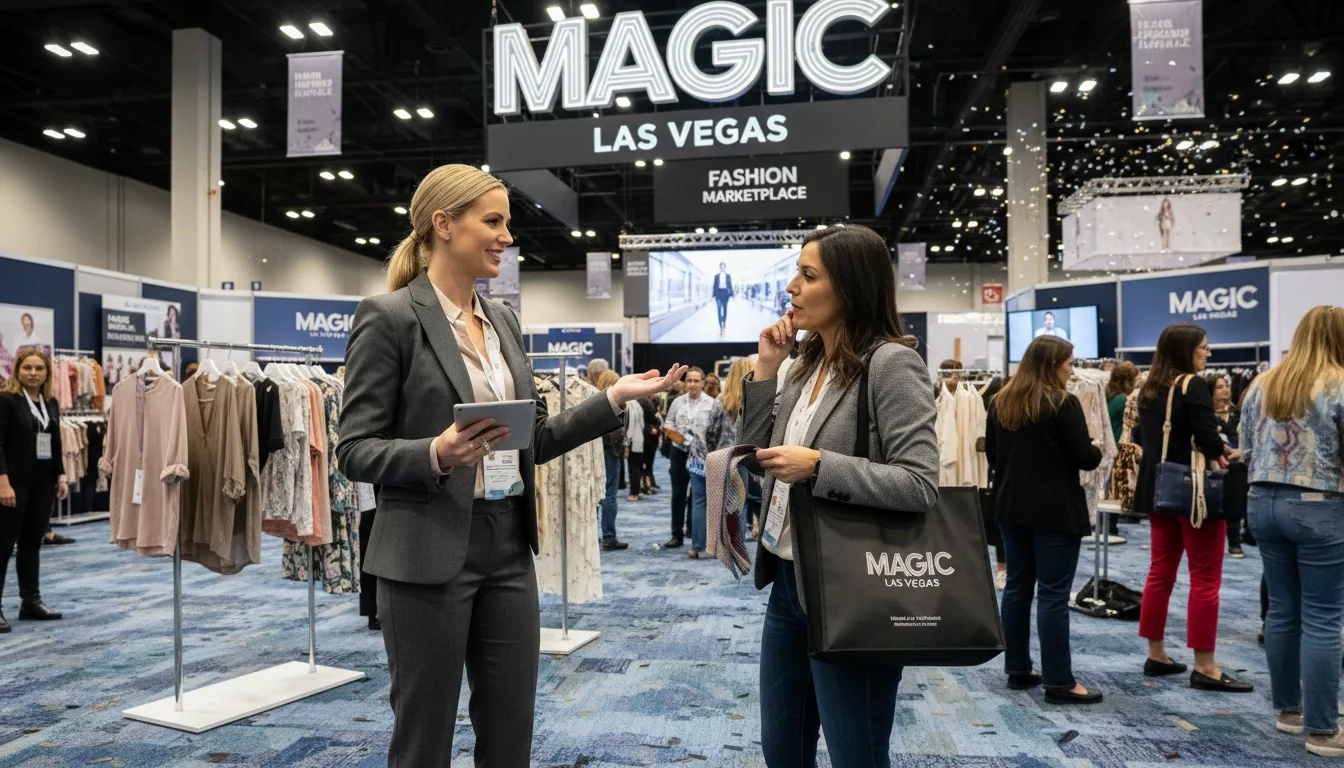
A polished brand ambassador engages a wholesale buyer on the show floor at MAGIC Las Vegas
What Makes MAGIC Las Vegas Different from Any Other Trade Show
Most trade shows attract a mixed audience — engineers, procurement managers, marketing executives — where first impressions are shaped by product specs and business card exchanges. MAGIC is different. Its audience is made up almost entirely of fashion professionals, and fashion professionals are, by trade, trained to read visual signals at a glance.
A Fashion-Industry Audience Judges Differently
A retail buyer who spends her days evaluating collections, fabrics, and brand identity does not assess your booth through the same lens as a software procurement manager at a tech conference. She notices whether your staff's look is consistent with your brand's aesthetic. She picks up on mismatched attire, inconsistent energy, and whether your team seems genuinely connected to what they're representing.
That doesn't mean your staff needs to be fashion models. It means they need to look intentional — like every element of your booth presentation, including the people in it, was chosen on purpose.
According to the official MAGIC by Informa website, the event attracts top buying power season after season, drawing retail buyers from boutiques to chain stores to big-box and department stores. With nearly 85% of the show floor comprising active buying power, you are not presenting to casual browsers. Every interaction has real commercial stakes.
The Buyer Psychology at MAGIC
Buyers at MAGIC are efficient. They walk into the show with appointments, wishlists, and limited time. They're also experienced enough to form strong opinions quickly. The brands they stop to engage are the ones that signal credibility and quality — not just through the merchandise on display, but through everything surrounding it.
Your booth team is part of that signal.
First Impressions Are the Only Impression That Matters on the Show Floor
The 7-Second Rule — And Why It's Shorter at Fashion Events
Research in sales and consumer psychology consistently shows that people form their initial impression of a brand or person within seconds of first contact. At a trade show like MAGIC, where buyers are walking past dozens of booths in a single aisle, that window shrinks further. A buyer in motion decides whether to slow down — or keep walking — based entirely on what she sees before anyone speaks.
Your booth's visual appeal carries that first 60% of the impression. Your staff carries the rest.
What Buyers See Before You Say a Word
Before a single greeting, a buyer registers:
Whether your team looks cohesive and put-together
Whether they're engaged and attentive (or distracted, hunched over phones)
Whether their appearance aligns with the brand aesthetic on the booth walls
Whether their energy is welcoming or indifferent
These signals are processed in under three seconds. No amount of great product can fully recover from a sloppy first read.
The Anatomy of a Polished Trade Show Booth Team
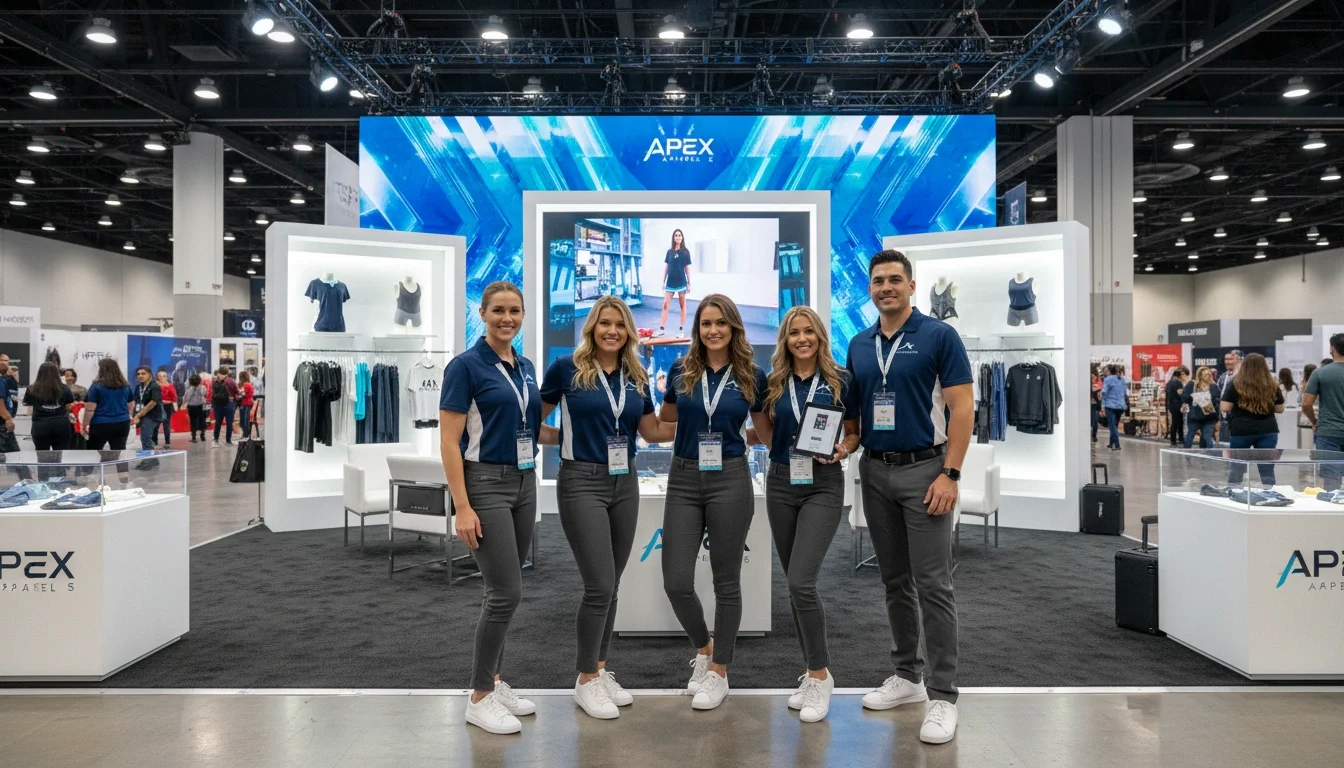
Event staff in coordinated, brand-aligned attire representing an apparel exhibitor at Las Vegas Convention Center
Appearance Standards That Align with the Fashion Industry
At MAGIC, "professional attire" is not enough of a standard. Your staff needs to reflect your brand's specific point of view. A streetwear brand's booth team should look sharp but edgy. A contemporary women's label needs staff who embody the collection's customer. A heritage workwear brand can be structured and minimal.
The key questions to answer before your first show day:
What is the aesthetic range of our brand, and how does our team's look reinforce it?
Are all team members styled consistently — same palette, same general silhouette, same level of polish?
Does every person on the floor look like they belong in the room?
Cohesion matters more than individual style. A team of five who look like a team will always outperform five individuals who each decided for themselves what "appropriate" means.
Grooming, Attire, and Brand Consistency
Specific standards to brief your team on ahead of MAGIC:
Attire: Establish a clear dress code that goes beyond "business casual." Specify color ranges, acceptable garment types, and what's off-limits. If you're providing branded apparel, confirm fit and sizing in advance — ill-fitting branded wear looks worse than no branding at all.
Grooming: Hair should be neat and styled (not haphazardly pulled back). Nails, shoes, and accessories should be clean and consistent. At a fashion show, these details are noticed.
Footwear: Trade show floors are concrete. Your staff will stand for eight to ten hours. Require footwear that is both polished and supportive — this is one area where appearance and practicality genuinely overlap.
Scent: Subtle or none. A strong fragrance in a tight booth space is a buyer deterrent, not a welcome signal.
Posture, Energy, and Approachability
Appearance gets buyers to slow down. Posture and energy determine whether they stop entirely.
A team member who stands tall, makes confident eye contact, and projects genuine interest in the conversation creates a completely different buyer experience than one who is slumped, scrolling a phone, or looking past visitors toward the back of the booth.
Brief your team explicitly on:
Standing, not sitting, during peak floor hours
Greeting every person who enters the booth's visual range
Staying present and engaged even during slow stretches
Reading buyer cues — knowing when to approach versus when to let someone explore independently
Beyond Looks: The Communication Skills That Convert Buyers
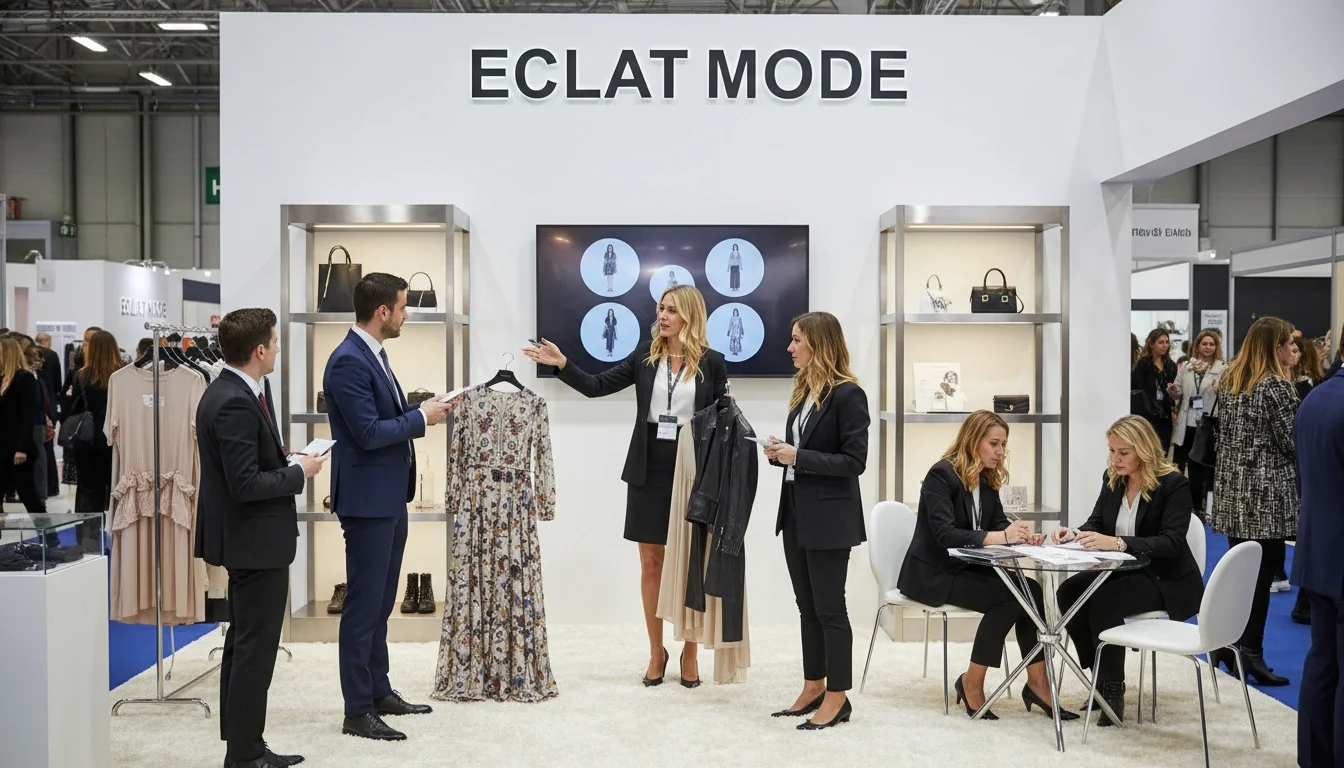
Trade show staff facilitating a product presentation and buyer conversation at a fashion trade show
Fashion Vocabulary and Product Knowledge
This is where a lot of exhibitors make a critical mistake: they hire presentable people but skip the product briefing. A buyer who asks a question about your line and gets a vague or incorrect answer does not come back.
Before MAGIC, every staff member working the floor should be able to clearly answer:
What categories does this collection cover (tops, bottoms, footwear, accessories)?
What are the key seasonal trends this collection addresses?
What are the price points and minimum order quantities?
Who is the target retail customer — boutique, big box, e-commerce, or all three?
What makes this brand different from others in the same category on this floor?
Staff don't need to know every SKU. They need to know the brand story, the key selling points, and when to bring in a senior company representative to continue the conversation.
How to Engage a Wholesale Buyer (Without Pushing Them Away)
Fashion buyers have a finely tuned aversion to aggressive sales tactics. The approach that works at MAGIC is almost the opposite of traditional sales floor behavior.
What works:
Opening with a light, genuine observation rather than a sales pitch ("These just came in from production last week — the fabrication is completely different from what you'll see anywhere else here.")
Letting buyers handle the product without immediately launching into a description
Asking questions about the buyer's store or current gaps before pitching features
Following the buyer's pace, not your own
What doesn't:
Blocking the entrance with an outstretched hand and a brochure
Reciting specs in a rehearsed monologue
Hovering during product browsing
Treating every person who slows down as an immediate sales opportunity
The goal at the first contact is not to write an order. It's to earn 10 more minutes of quality conversation.
Lead Qualification at the Booth
Not every visitor to your booth is a buyer. Some are competitors, students, the press, or simply curious walkers. Well-trained staff know how to qualify a lead quickly without being rude about it.
A simple qualifying framework:
Establish role: "Are you buying for a specific account, or exploring the show generally?"
Gauge fit: "What categories are you stocking for next season?"
Identify timing: "Are you looking to write orders here, or is this more of a discovery visit?"
This takes 60 seconds and determines whether to invest the next 20 minutes or gracefully redirect. Good lead qualification is not gatekeeping — it's making sure your best attention goes to your best prospects.
The Operational Side of Booth Staffing at MAGIC
How Many Staff Do You Need?
The right team size depends on your booth footprint and product complexity, but a practical baseline is:
Inline booth (10x10): 2 staff members — one primary engagement role, one support/lead capture
Inline booth (10x20): 3 staff members
Island or corner booth (20x20+): 4–6 staff, including a team captain or on-site lead
Large multi-section footprint: 6–10+ staff with zone assignments
The critical mistake is understaffing and then scrambling when the floor gets busy. A buyer who walks up to a booth during peak hours and waits more than 30 seconds without acknowledgment is likely to walk away. The cost of an additional staff member is almost always less than the cost of a missed order.
Pre-Show Briefing: What Your Team Must Know Before Day One
A show-floor briefing held 48–72 hours before MAGIC opens is non-negotiable. Cover:
Brand overview: history, positioning, target customer, seasonal story
Collection walkthrough: key pieces, bestsellers, what's new this season
Booth layout: product zones, appointment area, storage, lead capture stations
Engagement approach: how to open conversations, how to qualify, when to escalate
Lead capture process: which system, what data to collect, how to log appointments
Schedule: shift times, break rotations, meal plan, end-of-day closeout
The briefing is also where you establish appearance expectations. Don't assume. Spell them out, provide references if you can, and confirm that everyone has what they need before they show up on day one.
Rotation, Coverage, and Backup Planning
MAGIC runs across three full days. Show days start early and run long. Energy management is a real operational challenge, and a fatigued team member who has been standing on concrete since 8 a.m. does not perform the same way at 4 p.m. as they did at 10 a.m.
Plan intentional rotations:
Schedule 15–20 minute breaks every 2–3 hours
Identify a "floor captain" who manages rotation and covers gaps
Build in a lunch plan that staggers the team, so coverage is never fully pulled from the floor
For exhibitors working with a staffing agency, ask explicitly whether backup coverage is included in your booking. At Eleven8, every booking includes a pre-briefed backup for every eight staff — not reactive replacement, but pre-arranged coverage that's ready before the show starts.
Uniforms, Dress Codes, and Brand Cohesion
Matching Your Booth Aesthetic to Your Staff's Look
The most visually polished booths at MAGIC treat their team's appearance as part of the overall brand experience — not an afterthought. The booth graphics, the product display, the lighting, and the staff all tell one consistent visual story.
A few approaches that work well:
Branded basics: Simple, well-fitting garments (crew-neck tees, button-downs, polos) in your brand's palette. Clean and recognizable without being costumey.
Collection pieces: Having staff wear actual pieces from the current collection communicates confidence in the product and gives buyers a live look at how the line wears.
Contrast styling: A darker or neutral backdrop to your team's look draws attention to the product itself rather than competing with it.
Whatever direction you choose, communicate it clearly to your staffing partner well in advance and confirm sizing.
Working with a Staffing Agency on Custom Attire
If you're working with a staffing agency, communicate your uniform requirements at the time of booking — not the week before the show. A reputable agency like Eleven8 accommodates branded apparel and custom dress codes for all Las Vegas trade show bookings, including MAGIC. The earlier your attire requirements are confirmed, the more time the team has to ensure every staff member is properly outfitted and styled before day one.
Visit Eleven8's uniform options page for reference on standard staffing attire options across show types.
Why Most Exhibitors Underinvest in Staffing — And Pay for It
The True ROI of Professional Trade Show Staff
Booth real estate at MAGIC is not cheap. Travel, lodging, freight, booth fabrication, and the MAGIC exhibit fee add up to a significant investment. The single highest-leverage variable that exhibitors can control — the quality of the people representing them — is also the one that gets the smallest share of the planning budget.
Consider the math: if a single well-qualified wholesale account from MAGIC generates $30,000–$100,000+ in annual orders, what is the value of the booth interaction that opened that relationship? Typically, a few minutes of skilled, polished engagement by a well-trained team member.
The cost of professional trade show staff — even a team of four for three days — represents a fraction of the value of a single new account.
Calculating the Cost of an Unprepared Team
The cost of getting staffing wrong at MAGIC is less obvious but very real:
Buyers who walk up get ignored or poorly engaged and move to the next booth
Brand ambassadors who give incorrect product information to a major retail buyer
A lead capture process that breaks down because staff weren't properly trained on the system
An end-of-day debrief with your internal team, realizing that 40% of booth visitors were never meaningfully engaged
These aren't hypotheticals. They're the most common post-show frustrations reported by exhibitors who went into a show underprepared on the staffing side.
How to Book Professional Trade Show Staff for MAGIC Las Vegas
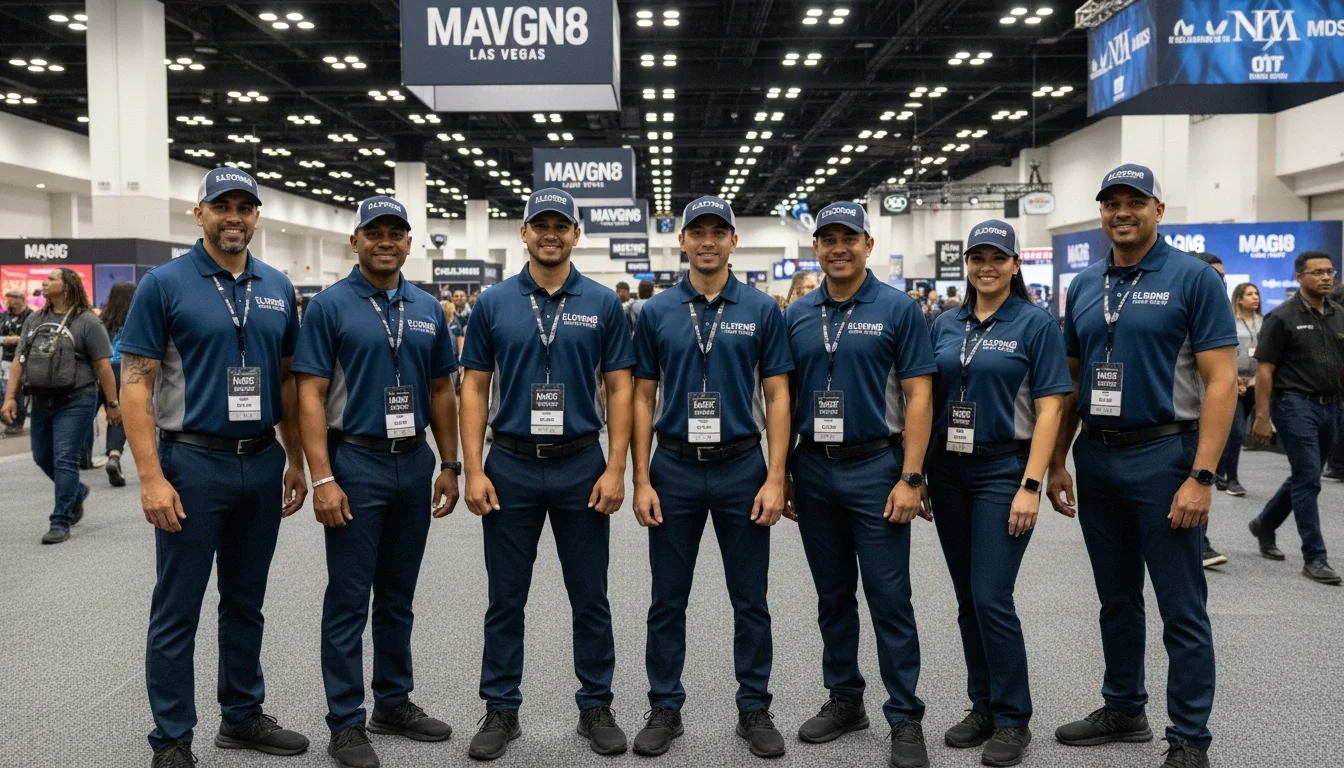
Eleven8 Event Staff team members ready to represent your brand at MAGIC Las Vegas and major conventions
What to Look for in an Event Staffing Agency
When evaluating a staffing agency for MAGIC Las Vegas, ask:
Do they have documented experience at MAGIC specifically? Fashion trade shows have unique demands that differ from tech or industrial expos.
Can you see staff profiles before confirming? The ability to review headshots, bios, and prior event experience before committing is a basic transparency standard that quality agencies offer.
What's their fulfillment guarantee? Last-minute cancellations happen. What's the agency's plan when they do?
Is there a dedicated point of contact? For a multi-day event like MAGIC, having a single account manager coordinating the staffing is not optional.
Are staff pre-briefed before show day? A team that walks in cold on the morning of day one is not prepared.
How Eleven8 Staffs Fashion Trade Shows
Eleven8's Las Vegas team has supported exhibitors at MAGIC Marketplace and across Las Vegas's major convention venues, including the Las Vegas Convention Center. Every booking includes:
A dedicated account manager from inquiry through post-event recap
Staff selected from a vetted, rated roster — not recruited on demand after you book
Pre-show briefing coordination aligned with your brand's requirements
Built-in backup coverage (one pre-briefed backup per eight staff, included at no extra charge)
Custom uniform and dress code accommodation
24/7 event-day support with real-time issue resolution
Eleven8 accepts only the top 3.5% of applicants and trains every staff member on an 11-step event process before deployment. For a show like MAGIC, where your booth team is interacting with serious wholesale buyers across three consecutive days, that foundation matters.
Explore Las Vegas trade show staffing, brand ambassadors in Las Vegas, and booth staff Las Vegas — or submit an inquiry to get a custom quote for your MAGIC booking.
Final Thoughts
MAGIC Las Vegas gives fashion brands one of the highest-density access points to qualified wholesale buyers available anywhere in the industry. Three days. Tens of thousands of professionals. Hundreds of competing booths.
In that environment, the brands that win are rarely the ones with the biggest booths or the loudest graphics. They're the ones who show up with a team that's prepared, polished, and genuinely capable of turning a two-minute conversation into a lasting business relationship.
Your collection is ready. Make sure the people presenting it are too.