Why SEC Football Fanfare Is One of the Biggest Untapped Opportunities for Sports Sponsors
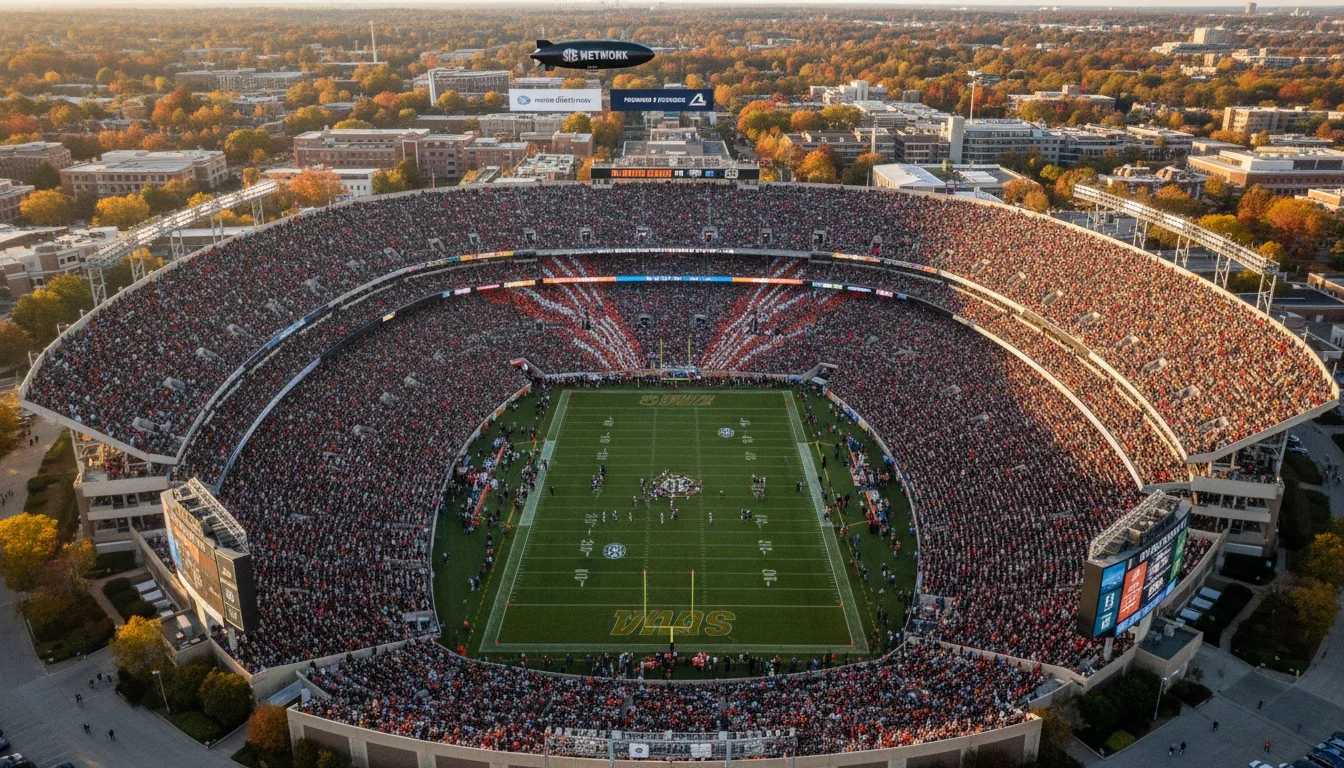
An aerial view of a packed SEC stadium on a fall Saturday — where 100,000 passionate fans become a live brand audience
Walk into Bryant-Denny Stadium in Tuscaloosa on any fall Saturday and you are not simply attending a football game. You are inside one of the most culturally dense, emotionally charged consumer environments in American sports. More than 100,000 fans in crimson and white. Tailgate villages that stretch for miles. Families who have been rooting for this team for three and four generations.
This is SEC football — and for sports sponsors, it remains one of the most underutilized brand activation playgrounds in the country.
While Fortune 500 brands compete aggressively for NFL and NBA sponsorship inventory, a quieter but potentially more powerful opportunity sits in the Southeastern Conference. SEC football generates attendance, television ratings, and fan loyalty metrics that compete directly with professional leagues — yet sponsorship pricing, particularly at the activation level, has not fully caught up with that audience value.
The brands that recognize this gap now will secure deeper fan relationships, stronger brand recall, and more cost-effective reach than they could achieve in more saturated professional sports environments. This article breaks down exactly why — and how to capitalize on it.
The Scale of SEC Football Fandom — By the Numbers
Before evaluating any sponsorship category, the first question is always the same: who is the audience, and how big is it? In the SEC, the honest answer is: bigger than most marketers realize.
Attendance and Viewership That Rival the NFL
The SEC consistently leads all college football conferences in average game attendance. Stadiums like those in Baton Rouge (Tiger Stadium), Athens (Sanford Stadium), and Knoxville (Neyland Stadium) regularly seat between 80,000 and 102,000 fans per game. The conference has repeatedly topped 9 million total attendance figures in a single season.
Television performance matches the on-site energy. SEC games on CBS, ESPN, and ABC draw audiences measured in the millions each week. The SEC Championship Game in Atlanta typically ranks among the top five most-watched college football events of any given year. For context, these viewership numbers routinely exceed the average audience of many NFL regular-season matchups.
For a brand sponsor, those aggregate numbers translate into a reach vehicle that scales far beyond the 100,000 fans physically present on any given Saturday.
The SEC's Unique Fan Loyalty and Spending Power
What truly separates SEC fandom from most other sports audiences is not size — it is depth of identity. Research on college football fandom consistently shows that SEC fans rank among the highest in the country for program loyalty and emotional engagement. In many SEC states, college football is the dominant sporting cultural event, with no professional team competing for fan attention and wallet share.
That translates to meaningful sponsor considerations:
Higher per-game discretionary spending on merchandise, food, and brand experiences compared to casual sports fans
Multi-day event attendance patterns (travel fans, bowl games, championship weekends) that extend brand exposure windows significantly
Strong household brand preference formation — fans who associate a brand with positive game-day moments tend to carry that preference across purchase categories
Intergenerational loyalty — parents pass brand preferences to children in the same way they pass team allegiances, creating a lifetime customer pipeline value
Why Most Brands Are Still Leaving SEC Sponsorship Money on the Table
If the audience data is so compelling, why is the SEC still considered an "untapped" opportunity? The answer comes down to a few well-documented biases in how sports marketing budgets get allocated.
The NFL Premium Bias That Hurts Smaller Brands
The NFL occupies the top tier of sports sponsorship prestige. Brands pay premium rates for the association, and for global household names with near-unlimited budgets, that premium is often justified. But for mid-market and regional brands, NFL sponsorship entry costs can be prohibitive, and the audience, while massive, is also more fragmented across 32 markets.
SEC sponsorships offer something the NFL cannot: concentrated regional audience density. A single SEC school can deliver hyper-focused reach into a defined geographic market with extraordinary fan loyalty. For a regional bank, a healthcare system, an automotive dealership group, or a consumer packaged goods brand trying to own the Southeast, that focus is more valuable than a diluted national NFL reach.
Misconceptions About College Sports Sponsorship ROI
A second barrier is the lingering perception that college sports sponsorships lack the measurability and activation infrastructure of professional leagues. This was partly true a decade ago. It is no longer accurate.
SEC schools and the conference itself have invested heavily in sponsorship infrastructure — dedicated activation spaces, digital integration, data-driven fan engagement programs, and licensed brand ambassador frameworks. Brands that come in with a clear activation strategy and the right execution partners now have access to robust measurement tools and fan touchpoint ecosystems.
The gap between perception and reality in SEC sponsorship ROI is precisely where prepared brands can gain a competitive advantage.
What Makes SEC Markets Uniquely Powerful for Brand Activation
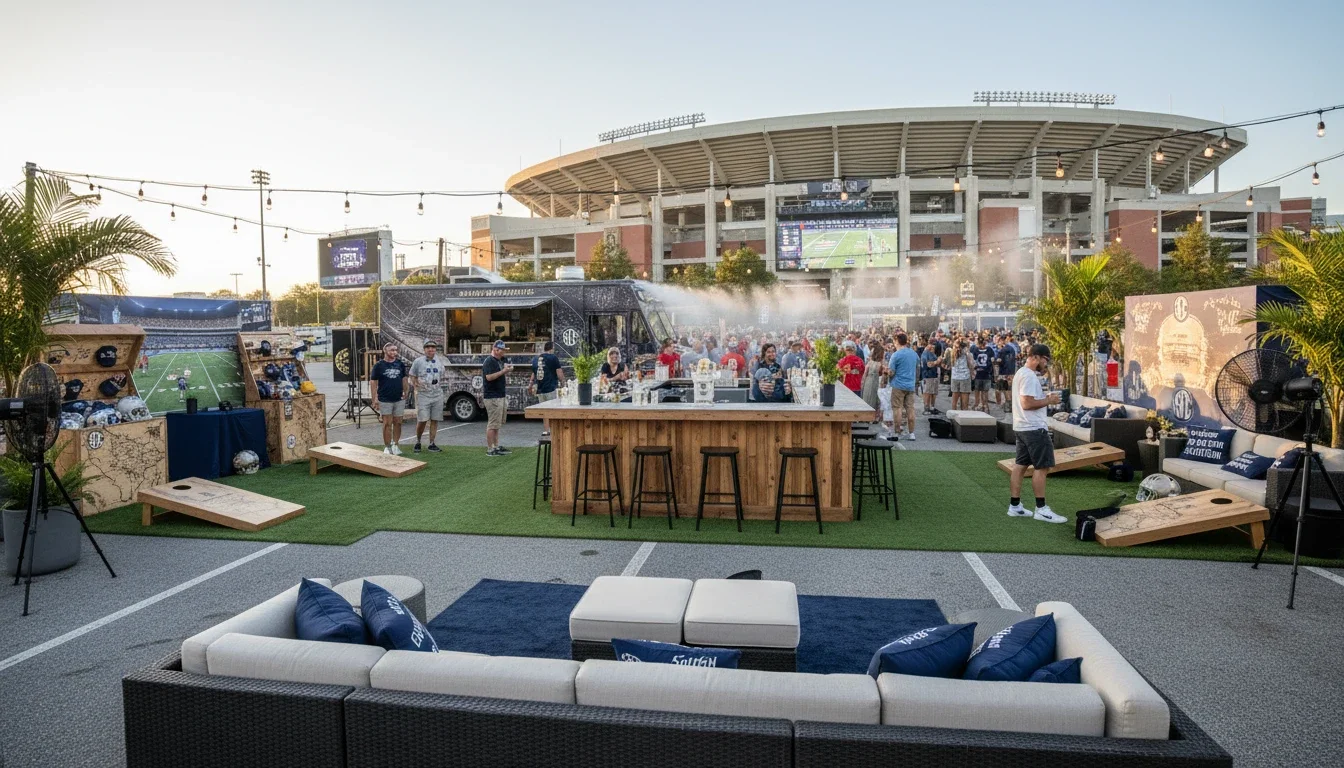
SEC tailgate zones transform stadium parking into immersive brand activation environments — with captive audiences spending hours pre-game
The SEC's Geographic Footprint — A Sponsor's Regional Goldmine
The SEC's footprint spans 14 universities across Alabama, Arkansas, Florida, Georgia, Kentucky, Louisiana, Mississippi, Missouri, South Carolina, Tennessee, and Texas. This geographic concentration covers some of the fastest-growing population centers and consumer markets in the United States.
Atlanta serves as the conference's championship epicenter, hosting the SEC Championship Game and functioning as the region's logistics hub. Houston — now home to Texas A&M's massive fanbase draw — anchors the western expansion. Nashville, New Orleans, and Lexington round out a circuit of major SEC activation cities that any regional brand campaign should map carefully.
For brands deploying event staff across multiple markets, this geographic concentration is operationally efficient in a way that coast-to-coast NFL campaigns are not. A brand can build a consistent activation template and deploy it across five or six SEC markets in a single fall season.
Tailgate Culture as a Live Brand Activation Stage
Few environments in American sports offer what the SEC tailgate culture provides: a pre-game window of three to six hours where hundreds of thousands of passionate, celebratory fans are physically present, emotionally engaged, and consuming food, beverages, and entertainment together.
For experiential marketing purposes, this environment is exceptional. Brands can set up activation tents, sampling stations, interactive experiences, and fan engagement moments without the access restrictions that accompany in-stadium activations. The tailgate space is democratic, high-traffic, and deeply photogenic for social media amplification.
The key to converting tailgate presence into brand equity is having the right people representing your brand on the ground. A trained brand ambassador who understands the fan culture, engages authentically, and moves product or collects data effectively is worth significantly more than a passive signage placement.
Multi-Day Events Create Extended Brand Exposure Windows
Beyond regular-season Saturdays, SEC football generates a calendar of extended activation opportunities: rivalry weekends, bowl game weeks, the SEC Championship in Atlanta, and national playoff events. These multi-day windows compress high-value fan concentration and create sponsor exposure that extends from Thursday through Sunday.
Brands that plan activations around these extended calendar events — rather than treating each game as a standalone — build momentum over the season and drive higher cumulative brand recall.
Types of SEC Football Sponsorship Opportunities
SEC football sponsorships are not one-size-fits-all. The market offers multiple entry points at different investment levels and audience touchpoints.
Official Team and Conference Sponsorships
The most direct path is an official sponsorship agreement with an individual university athletic program or, for broader exposure, with the SEC Conference itself. These agreements typically include logo placement on official materials, in-stadium digital signage, access to players and coaches for marketing use (within NCAA and NIL guidelines), and co-branded content rights. Investment levels vary significantly by school profile and category exclusivity.
Stadium Naming Rights and Signage
SEC stadium real estate carries strong brand association value. Scoreboard placements, end zone signage, concourse branding, and premium club sponsorships deliver repeated impressions across a captive 80,000-plus-person audience. For awareness-stage campaigns in SEC markets, signage within established stadiums delivers cost-effective reach.
Broadcast and Streaming Partnerships
The SEC Network, ESPN, and streaming deals have expanded the conference's broadcast footprint significantly. Brands can layer broadcast sponsorships onto their live activation strategy for unified messaging across on-site and remote audiences. The SEC Network's dedicated carriage and SEC+ streaming platform now provide year-round content that extends beyond football into basketball, baseball, and Olympic sports.
Gameday Experiential Activations and Fan Zones
This is arguably the highest-ROI and most underutilized category in the SEC sponsorship landscape. Experiential activations — brand-sponsored fan zones, tailgate experiences, sampling events, interactive installations, and pop-up retail — deliver direct consumer engagement that broadcast and signage cannot replicate.
They also generate authentic user-generated content, drive data capture, and create emotional brand memories tied to some of the most positive moments in a fan's social calendar. For brands willing to invest in execution quality — the right setup, the right staff, the right experience design — experiential activations within the SEC ecosystem offer measurable returns that justify the investment.
How to Activate an SEC Football Sponsorship That Fans Actually Remember
Securing the sponsorship is step one. Executing it in a way that creates real brand impact is the harder, more consequential step — and where many brands fall short.
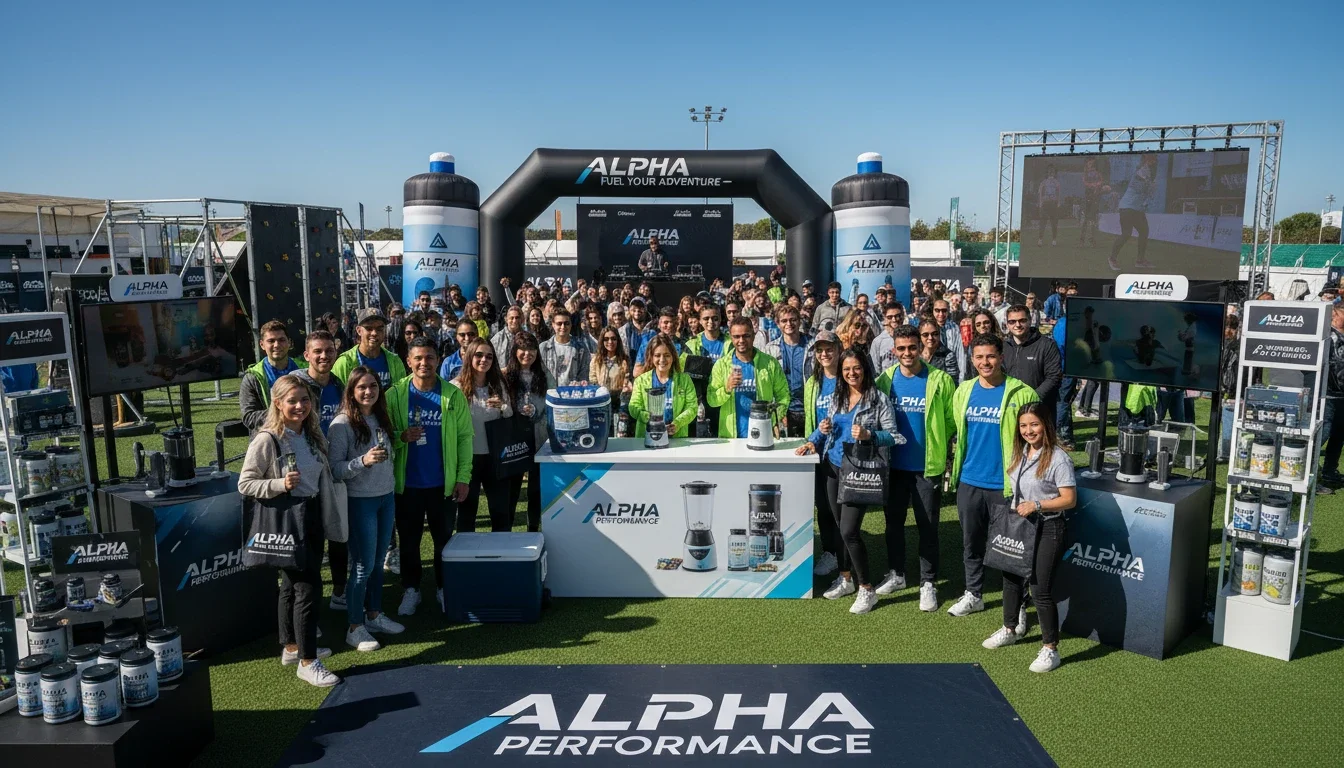
Professional brand ambassadors staffed at an outdoor sports sponsorship activation, engaging fans with product samples and interactive experiences
The Role of Trained Brand Ambassadors at Live Activations
The single biggest differentiator between a forgettable sponsor tent and a memorable fan experience is the quality of the people representing your brand. An unmanned banner does not build relationships. A table staffed with someone checking their phone does not drive conversions. But a trained, enthusiastic brand ambassador who knows your product, understands the fan culture around them, and can have a genuine conversation — that person creates brand equity in real time.
At Eleven8 Event Staff, we have deployed staffing across sports and entertainment activations at scale, working within events where first impressions directly determine whether a brand leaves with leads, data, and loyal new customers — or not. The pattern is consistent: activation quality is largely determined by staff quality.
What Brand Ambassadors Do at SEC Game Activations
Effective brand ambassadors at a live SEC activation typically:
Manage sampling and product distribution efficiently in high-traffic tailgate environments
Guide fans through interactive experiences, sweepstakes entries, or digital activations
Represent the brand's visual identity and messaging with consistency across large crowds
Capture lead data, photos, and engagement metrics on behalf of the activation team
Create social media moments that extend the brand's reach beyond those physically present
For multi-market activations across several SEC cities, having a staffing partner with existing nationwide roster depth — rather than recruiting locally market-by-market — is what separates smooth activations from logistical nightmares.
Building a Staffing Strategy for Multi-Market SEC Activations
A brand activating at, say, the Alabama home opener in Tuscaloosa, the Georgia-Tennessee game in Athens, and the SEC Championship in Atlanta is effectively running three separate events in three separate markets over the course of one season. The staffing infrastructure for each must be: locally sourced for cultural fit, centrally briefed for brand consistency, and operationally backed by someone with real event-day accountability.
This is not a "post on a job board and hope" situation. Multi-market SEC activations require advance roster planning, dedicated account management per market, and built-in backup coverage for each activation day. Brands that underinvest in this infrastructure consistently report disappointing activation outcomes — not because the strategy was wrong, but because the execution lacked the operational support it needed.
For brands planning sports and entertainment activations across multiple markets, explore Eleven8's brand ambassador staffing services and experiential event staff nationwide.
Measuring Fan Engagement and Sponsorship ROI On-Site
Modern SEC activations can and should be measured with precision. Key metrics for experiential activations include:
Foot traffic and dwell time: How many fans engaged, and for how long?
Samples or units distributed: Direct product trial metric
Lead capture volume: Email, mobile, or loyalty sign-ups at the activation
Social media amplification: UGC posts, hashtag usage, branded photo interactions
Post-event recall studies: Brand awareness lift measured against control groups in activated vs. non-activated markets
Well-trained event staff is the primary data collection mechanism for most of these metrics. They are not just brand representatives — they are your activation's operational backbone.
SEC Football Sponsorship Across Key Markets
Understanding the individual market dynamics within the SEC footprint helps brands allocate activation resources strategically.
Atlanta — The SEC Championship Hub
Atlanta is the SEC's commercial epicenter. Home to the annual SEC Championship Game at Mercedes-Benz Stadium, Atlanta hosts the conference's highest-profile annual event and a fan audience that draws from across all 14 member schools. For brands that can only activate in one SEC market with maximum cross-school reach, the SEC Championship weekend is the single highest-leverage opportunity on the calendar.
The Atlanta market also benefits from a sophisticated event infrastructure, significant convention and hospitality capacity, and a consumer base with strong brand awareness. For event staffing in Atlanta, Eleven8's dedicated Atlanta team supports activations across the city's sports, entertainment, and convention verticals year-round.
Houston and Nashville — Rising Activation Markets
Texas A&M's inclusion in the SEC anchored Houston as a permanent SEC activation market, bringing with it one of college football's largest and most passionate fanbases. The Houston metro's population scale and consumer spending power make it an attractive market for both regional and national brands entering the SEC sponsorship ecosystem.
Nashville — home to Vanderbilt and increasingly used as a neutral-site SEC event location — offers a different value proposition: a rapidly growing, demographic-diverse urban market with strong entertainment and hospitality infrastructure. Brands looking to reach younger, higher-income SEC fans in a lifestyle-aligned environment find Nashville particularly receptive to experiential marketing investments.
New Orleans and Other SEC Footprint Cities
New Orleans has served as a perennial SEC bowl destination and cultural backdrop for conference events. Its unique hospitality character makes fan activation events there feel naturally embedded in celebration rather than commercial — a tone that brands should match with their activation approach. Other cities within the SEC footprint, including Birmingham, Lexington, and Columbia, offer tighter but deeply loyal market concentrations worth evaluating for targeted regional campaigns.
Is SEC Football the Right Sponsorship Fit for Your Brand?
Brand Categories That Consistently Win in the SEC
Not every brand belongs in every sponsorship. The categories that have historically performed strongest in SEC football environments share common traits: they align with the SEC fan's identity, purchase behavior, and game-day lifestyle. The most consistently successful categories include:
Food and beverage: Beverages (alcoholic and non-alcoholic), snack brands, and QSR chains align naturally with tailgate culture and in-stadium consumption patterns
Automotive: SEC fans skew toward strong new-vehicle purchasing intent; automaker and dealership group sponsorships routinely generate significant in-market lead value
Financial services: Regional banks, insurance brands, and fintech companies find SEC audiences receptive to financial product messaging tied to major life events
Consumer electronics: Tech and electronics brands benefit from the SEC's tech-forward, mobile-first, younger fan demographic
Healthcare and pharmacy: Health system sponsorships carry strong community positioning value in markets where teams are central to civic identity
Retail and apparel: Brands competing for share of wardrobe and fan merchandise spending have obvious alignment with the conference's visual and lifestyle culture
Checklist: Signs You Are Ready to Activate in SEC Markets
Use this checklist to assess your brand's readiness for SEC football activation:
You have defined geographic targets that align with one or more SEC markets
Your brand has a consumer story that resonates with loyalty-driven, community-oriented audiences
You can commit to multiple activation touchpoints rather than a one-game presence
You have identified an execution partner capable of staffing and managing live activations at scale
You have measurement frameworks in place to capture ROI data at the activation level
Your marketing calendar allows for full-season commitment, including bowl season and championship planning
The Opportunity Is Open — For Now
SEC football represents a convergence of attributes that serious sports sponsors rarely find in the same place: massive, loyal audiences; concentrated geographic markets; cultural environments uniquely receptive to live brand experiences; and sponsorship inventory that has not yet fully priced in its actual audience value.
The brands entering this space thoughtfully — with clear market strategies, well-designed activations, and professional execution partners — are building regional brand equity that will compound for years. The brands waiting for the market to mature further will find themselves paying significantly more for less available inventory.
If your brand is evaluating SEC sports sponsorships, the most important next step is not finalizing the deal — it is building the activation infrastructure to make that investment worthwhile. That means professional event staff who know how to engage fans, represent your brand, and execute consistently across multiple markets on some of the most high-energy days of the American sports calendar.
Eleven8 Event Staff specializes in sports and entertainment activations across the country, with dedicated teams in Atlanta, Houston, Nashville, New Orleans, and throughout the SEC footprint. If you are planning a brand activation around college football this season, request a staffing quote and let us build your activation team.