The Rock 'n' Roll Marathon Series brings together elite athletes, enthusiastic amateurs, and thousands of spectators across iconic cities throughout the year. As runners cross the finish line to live music and cheering crowds, a carefully orchestrated team of event staff works behind the scenes to ensure every moment runs flawlessly. From medal distribution to sponsor activations, the difference between a good event and an exceptional one often comes down to strategic staffing decisions.
Whether you're organizing a Rock 'n' Roll Marathon event or planning a sponsor activation, understanding the full staffing landscape is essential. This comprehensive guide walks you through professional staffing strategies for both finish line operations and sponsor zones, providing actionable frameworks to create memorable participant experiences while maximizing sponsor ROI.
Let's explore how to build a high-performing event staff team that elevates every aspect of your Rock 'n' Roll Marathon presence.
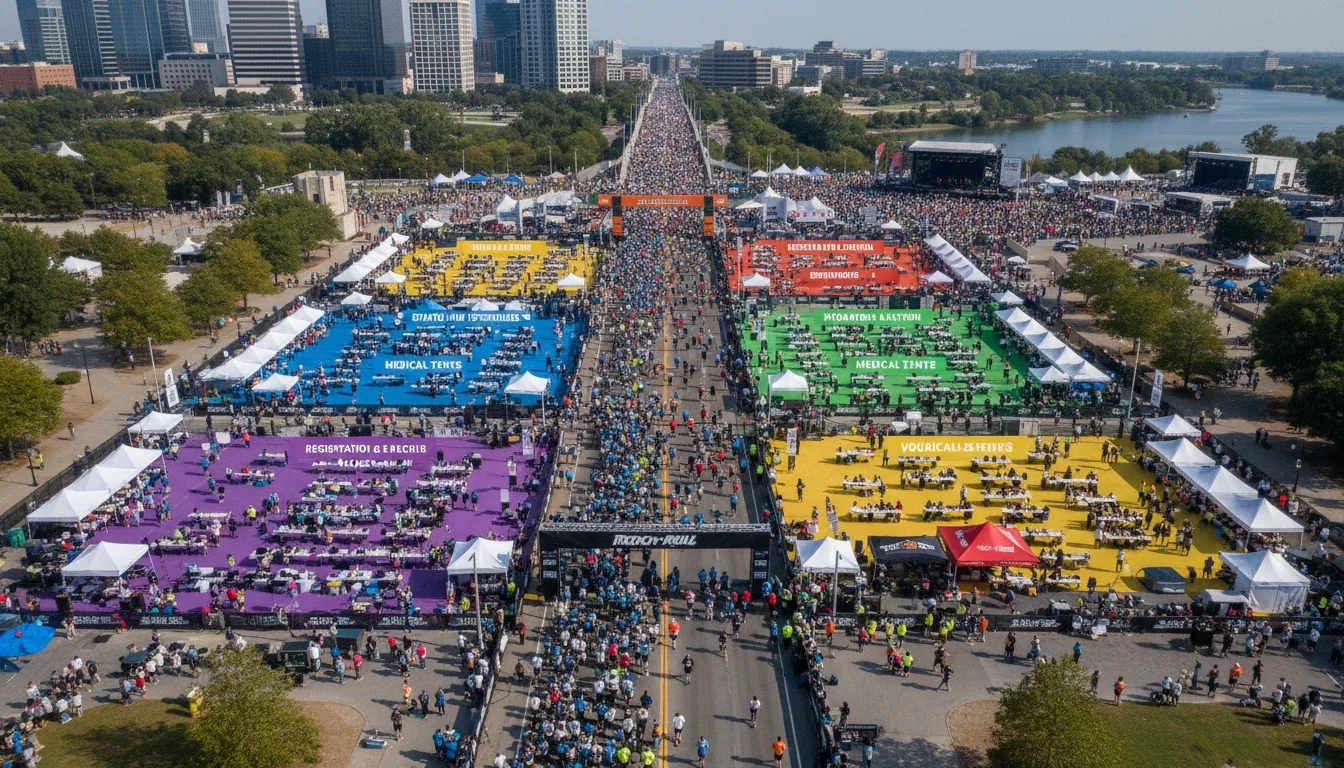
Overview of major staffing zones at a Rock 'n' Roll Marathon event
Understanding the Rock 'n' Roll Marathon Series Staffing Landscape
What Makes Rock 'n' Roll Marathon Staffing Unique
The Rock 'n' Roll Marathon Series distinguishes itself from traditional road races through its signature integration of live music, entertainment, and premium sponsor experiences. This creates unique staffing considerations that go beyond conventional marathon operations.
Unlike standard races where staffing focuses primarily on logistics, Rock 'n' Roll events require staff who can balance operational efficiency with experiential marketing excellence. Your team must manage traditional race functions while simultaneously creating engaging brand moments and entertainment coordination points throughout the course.
The series' multi-city format presents additional challenges. Cities from San Diego to Las Vegas host these events, each with distinct venue layouts, local regulations, and participant demographics. Staff familiar with local nuances can navigate these variables more effectively than those working their first event in an unfamiliar market.
Sponsor expectations also run higher at Rock 'n' Roll events. Major brands invest significantly in premium activations, expecting professional-grade execution that reflects their brand standards. This requires staff with event marketing experience, not just general event volunteers.
Key Staffing Zones Overview
Successful Rock 'n' Roll Marathon staffing divides the event into strategic zones, each with specific operational needs:
Finish Line Operations Zone serves as the event's emotional apex. This area handles medal distribution, timing chip collection, participant photography, and immediate post-finish needs. Staff here must balance efficiency with creating celebratory moments that runners will remember.
Sponsor Activation Areas transform brand partnerships into tangible participant experiences. These zones require staff who understand experiential marketing, can articulate brand messages, and create engaging interactions that drive brand affinity and lead capture.
Participant Recovery Zones provide critical post-race services including hydration, nutrition, medical support, and family reunion coordination. Staff in these areas need calm, service-oriented personalities capable of handling both routine and emergency situations.
Entertainment Coordination Points manage the series' signature live music stages and performer logistics. These positions require staff with entertainment production experience who can coordinate with bands, manage sound checks, and ensure performances enhance rather than obstruct race operations.
Expo and Packet Pickup Areas handle pre-race participant services, often operating for two to three days before the event. These zones need customer service-focused staff who can efficiently process thousands of participants while answering questions and directing attendees to sponsor booths.
Finish Line Staffing: Creating Memorable Finish Experiences
Essential Finish Line Staff Roles
The finish line represents the culmination of months of participant training, making professional execution critical. Every finisher deserves a well-organized, celebratory experience that honors their achievement.
Finish Line Coordinators oversee all finish area operations, serving as the communication hub between different staff teams. These supervisory roles require experienced event professionals who can make real-time decisions, reallocate resources, and troubleshoot issues while maintaining an encouraging atmosphere.
Medal Distribution Team members create the iconic finish line moment every runner anticipates. These staff should embody enthusiasm and congratulation, understanding that they're part of the participant's lasting memory. Physical stamina matters here, as distributors often stand for hours while maintaining high energy.
Timing Chip Collectors ensure accurate race results by retrieving disposable timing chips from finishers. This role requires attention to detail and efficient movement management, as bottlenecks at collection points can create finish line congestion.
Photographer Coordinators manage finish line photo operations, directing runners to photo stations and ensuring the photography vendor captures quality images. These staff facilitate a revenue stream while enhancing participant experience through professional finish photos.
Medical Support Liaisons aren't medical professionals themselves but serve as the communication bridge between medical tents and race operations. They identify runners needing assistance, alert medical teams, and ensure clear paths for emergency response.
Crowd Flow Managers prevent congestion by directing finishers through the post-finish chute systematically. Using gentle verbal guidance and directional gestures, they keep thousands of tired runners moving toward recovery areas without creating overwhelming crowding.
Hydration Station Attendants distribute water, sports drinks, and electrolyte supplements immediately post-finish. These positions require constant restocking and the ability to serve participants quickly, as dehydration becomes critical within minutes of finishing.
Finish Line Staffing Ratios and Team Size
Determining appropriate finish line staff numbers requires analyzing expected finisher volume, peak finish times, and your finish area's physical layout.
For a typical Rock 'n' Roll Marathon with 15,000-20,000 participants across multiple race distances, plan for one medal distributor per 200 finishers during peak hours. A marathon finish typically peaks between the 3:30 and 4:30 hour marks, while half marathon finishes concentrate between 1:45 and 2:30 hours.
This translates to approximately 60-75 medal distributors for a combined full and half marathon event, deployed in waves that align with finish projections. Don't staff entirely for the peak; instead, use a base team supplemented by flexible staff who activate when finish rates accelerate.
Timing chip collection requires one collector per 150-200 finishers hourly. Position these staff strategically along the finish chute, creating multiple collection points that prevent single-point bottlenecks.
Crowd flow management needs one staff member per 100 linear feet of finish chute, with additional personnel at decision points where participants choose between different exit routes.
Medical liaisons should maintain a 1:500 participant ratio, with at least six positioned throughout the finish area regardless of event size. This ensures medical teams receive immediate alerts when runners need assistance.
Add 20% additional staff beyond your calculations to cover breaks, no-shows, and unexpected situations. Marathon finish lines operate for five to seven hours continuously, requiring shift rotations and backup coverage.
Finish Line Setup and Breakdown Protocol
Professional finish line operations begin hours before the first runner arrives and extend well after the final finisher receives their medal.
Setup begins 4-6 hours pre-race with infrastructure teams establishing barricades, tents, and signage. Your staff should arrive for a comprehensive walkthrough 2-3 hours before the start, allowing time for position familiarization, supply verification, and questions.
Conduct a mandatory 30-minute pre-event briefing covering communication protocols, emergency procedures, and specific role responsibilities. Distribute radios to supervisors and establish clear channel assignments for different zones.
Position assignments should be posted prominently at the staff check-in area, with backup position listings in case primary assignees don't arrive. Each staff member should know both their primary position and backup role.
Communication protocols must establish who makes decisions in various scenarios. Define clear escalation paths: when does a staff member handle an issue independently versus alerting a supervisor versus requiring race director involvement?
Post-event breakdown should begin systematically once finisher flow drops below 10-15 people per minute. Release staff in phases, maintaining essential coverage until the final participants clear the area. Some positions can break down early; others must remain until course closure is confirmed.
Create a closing checklist ensuring all equipment is accounted for, supplies are inventoried, and the area is left clean. Assign specific staff members to final walkthrough duties, checking for lost participant items and ensuring nothing is left behind.
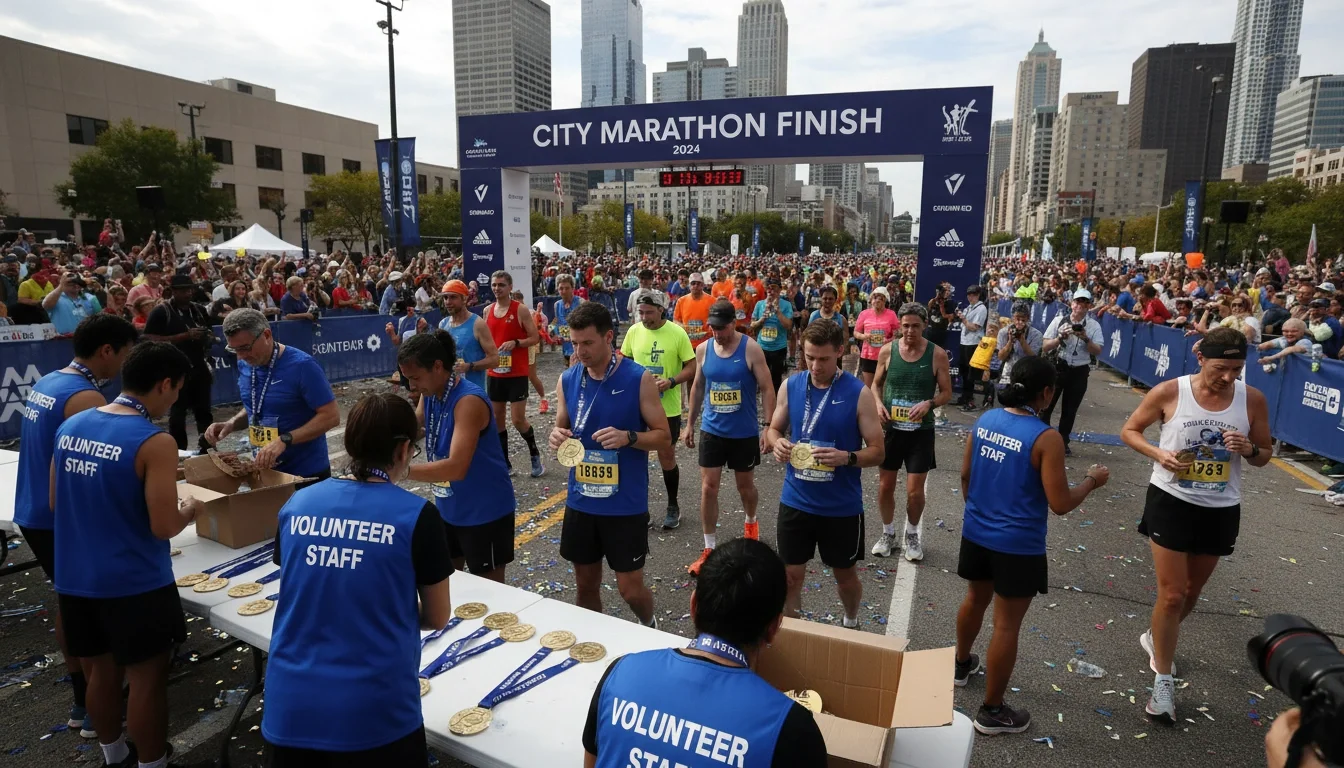
Professional staff coordinating medal distribution at marathon finish line
Sponsor Zone Staffing: Maximizing Brand Activation Impact
Understanding Sponsor Zone Objectives
Rock 'n' Roll Marathon sponsors invest thousands to hundreds of thousands of dollars in activations, each with specific marketing objectives that drive staffing requirements. Understanding these goals ensures you deploy staff who can execute the sponsor's vision effectively.
Brand awareness activations focus on impressions and visibility rather than deep engagement. These sponsors want maximum participant exposure through photo opportunities, branded giveaways, and high-traffic positioning. Staffing here prioritizes volume throughput, with friendly ambassadors who can hand out items efficiently while maintaining brand enthusiasm.
Lead generation activations aim to capture participant information for post-event follow-up. Sponsors implementing these strategies need staff proficient with tablet-based lead capture tools, capable of asking qualifying questions naturally, and trained to articulate specific product benefits that justify information sharing.
Product trial and sampling activations give participants hands-on brand experiences, often distributing samples or demonstrating product features. These booths require staff with product knowledge, the ability to explain benefits conversationally, and skills to manage inventory as samples deplete.
Experiential engagement activations create immersive brand experiences through games, challenges, or interactive technology. Staffing these requires coordinators who can explain activities clearly, manage participant flow through the experience, and reset elements between participants.
The most successful sponsor activations align staffing expertise with objectives. Don't assign general staff randomly; match backgrounds and skills to specific sponsor needs.
Critical Sponsor Zone Staff Roles
Brand Ambassadors and Product Specialists serve as the face of sponsor brands, requiring more than just enthusiasm. These staff need genuine product knowledge, the ability to answer questions beyond scripted talking points, and the interpersonal skills to create positive brand associations.
When recruiting brand ambassadors for Rock 'n' Roll Marathon sponsors, prioritize individuals with runner or fitness backgrounds. Participants connect more authentically with ambassadors who understand marathon culture and can discuss products from an informed perspective.
Engagement Coordinators manage participant flow through activation experiences, ensuring activities run smoothly without creating excessive wait times. These staff balance encouraging participation with maintaining reasonable throughput, a skill requiring both friendliness and assertiveness.
Prize and Giveaway Distribution Teams handle branded merchandise, managing inventory, preventing waste, and ensuring fair distribution. For high-value items like shoes or tech products, these staff must track distribution carefully, often using sign-in sheets or scanning systems.
Lead Capture Specialists focus exclusively on collecting participant information through tablets, forms, or contests. These staff need comfort with technology, the ability to explain value propositions that encourage information sharing, and attention to data accuracy.
Social Media Content Creators document activation experiences, capturing photos and videos that sponsors use for post-event marketing. These staff should understand basic composition, lighting, and the types of content that perform well on social platforms.
Setup and Breakdown Crews handle logistics before and after activation hours. While often overlooked, these teams ensure booths appear professional when participants arrive and equipment is properly stored or returned when the event concludes.
Staffing Different Sponsor Activation Types
Product Sampling Stations distributing items like energy gels, recovery drinks, or snacks need 2-3 staff members for optimal flow. Position one staff member to attract participants, one to hand out samples while delivering key product messages, and one to restock and manage inventory.
Calculate one sampling station staff member per 300 participants hourly. For a high-traffic location near the finish line, expect to engage 600-900 participants per hour, requiring three staff members to prevent overwhelming waits.
Interactive Experience Activations such as virtual reality demonstrations, fitness challenges, or game stations require more complex staffing. Plan for one activity coordinator, one technical operator if technology is involved, and one line manager for busy periods.
These activations often create bottlenecks because experience duration varies by participant. Staff must gently encourage reasonable participation times while making each person feel unhurried. This balance requires training and clear guidelines on polite transition phrasing.
Photo Activation Booths featuring branded backdrops, props, or digital filters need one photographer and one prop coordinator. For stations using instant print technology, add a third staff member to manage distribution and answer questions about digital image access.
Peak photo booth times align with finish waves, so plan staffing flexibility. A two-person team works during slower periods, but adding a third staff member during peak hours prevents excessive wait times that discourage participation.
Prize Wheel and Game Activations creating excitement through gamification need one game host and one prize fulfillment coordinator. The host maintains energy and explains rules, while the fulfillment coordinator manages prize inventory and ensures winners receive appropriate items.
For games with learning curves or safety considerations, add a demonstration specialist who shows new participants how to play before they begin. This prevents frustration and maintains engagement quality.
VIP Hospitality Areas offering exclusive experiences for sponsors' guests need premium service staff with hospitality backgrounds. These areas often require different staffing approaches than mass participant zones, emphasizing personalized attention, discretion, and upscale service standards.
Sponsor Zone Staff Training Essentials
Generic event staff training fails at Rock 'n' Roll Marathon sponsor activations. Professional execution requires specific preparation aligned with sponsor objectives.
Brand Messaging and Talking Points should be learned beyond memorization. Staff need to internalize key messages so they can adapt them conversationally rather than reciting scripts robotically. Provide talking points but also explain the "why" behind each message, enabling staff to communicate authentically.
Role-playing exercises during training prove invaluable. Have staff practice scenarios: answering challenging questions, handling skeptical participants, transitioning from engagement to lead capture, and managing long lines diplomatically.
Product Knowledge Requirements extend beyond basic features to benefits, competitive differentiators, and common use cases. For nutrition sponsors, staff should understand when runners would use the product. For tech sponsors, staff should explain how products integrate with training routines.
Provide product samples to staff before the event when possible. Personal experience creates genuine enthusiasm that participants recognize immediately. A brand ambassador who uses the product themselves speaks with credibility that transforms activations.
Lead Capture Technology Training must happen hands-on, not through verbal instruction. Staff should practice on actual tablets or devices, understanding the full process from initial greeting through information submission and confirmation.
Train on troubleshooting common technology issues: what to do when tablets freeze, how to reconnect to lost WiFi, backup paper processes if systems fail entirely. Technology failures during events are common; prepared staff handle them calmly.
Customer Service Protocols at sponsor activations differ from retail environments. Marathon participants are tired, sometimes emotional, and not always interested in brand messages. Staff need skills to read engagement levels, respect disinterest politely, and focus energy on receptive participants rather than forcing interactions.
Train staff to recognize when participants need medical attention, are becoming overheated, or require assistance beyond the activation scope. Brand ambassadors should know how to alert medical teams or race operations while maintaining their posts.
Problem Escalation Procedures clarify which issues staff handle independently and which require supervisor involvement. Define specific scenarios: angry participants, supply shortages, equipment malfunctions, safety concerns, and sponsor representative requests.
Strategic Staffing Timeline: 12 Weeks to Race Day
12-8 Weeks Before: Planning and Recruitment
Begin your staffing process three months before race day to secure the best talent, especially for events requiring specialized skills or large teams.
Assess total staffing needs by mapping every zone requiring personnel. Create a comprehensive list including finish line, sponsor activations, registration, merchandise, medical support, course marshaling, and setup/breakdown crews. Don't estimate; calculate specific needs based on expected participant volume and activation complexity.
For Rock 'n' Roll Marathon events, expect total staffing needs ranging from 300-500 people for half marathon events to 800-1200+ for full marathon weekends with expos. These numbers include all roles, from volunteers to premium brand ambassadors.
Define all role descriptions with clarity that attracts appropriate candidates. Vague postings like "event staff needed" generate unqualified applicants. Instead, specify requirements: "Brand Ambassador - Fitness Brand Activation: Must have running/fitness background, excellent interpersonal skills, able to stand 6+ hours, previous promotional experience preferred."
Include expected hours, physical requirements, compensation or volunteer benefits, and any special considerations. Transparency reduces last-minute dropouts from staff who didn't understand commitments.
Begin recruitment through multiple channels simultaneously. Professional event staffing agencies provide vetted talent quickly, particularly valuable for sponsor activations requiring experienced brand ambassadors. For Los Angeles-based Rock 'n' Roll events, local agencies with event marketing expertise deliver staff who need minimal training.
Supplement agency staff with direct recruitment through running clubs, university event management programs, and previous event staff databases. Rock 'n' Roll Marathon series benefits from recruiting participants who've run previous events; they understand race culture and typical participant needs.
Secure professional staffing agency partnerships early if your sponsor activations demand experienced brand ambassadors. Quality agencies book top talent months ahead, especially during spring and fall marathon seasons when multiple events compete for the same staff pool.
8-4 Weeks Before: Selection and Preparation
Complete hiring decisions by the eight-week mark for all specialized roles. Finish line coordinators, sponsor zone managers, and other supervisory positions need extended preparation time. General staff positions can be filled closer to the event, but leadership roles require longer lead times.
Screen candidates thoroughly for sponsor activation positions. Review previous event experience, check references, and conduct brief phone or video interviews. The cheapest staff often create the most expensive problems through poor performance or no-shows.
Distribute event information packets to confirmed staff containing event overview, their specific role description, parking and arrival instructions, dress code requirements, and emergency contact procedures. This packet should answer 90% of questions staff might have, reducing last-minute confusion.
Include a map showing staff check-in locations, break areas, and bathrooms. Many staff members will be unfamiliar with the venue; providing navigation resources demonstrates professionalism and reduces anxiety.
Schedule comprehensive training sessions for 3-4 weeks before the event. Separate training by role type; finish line staff need different preparation than sponsor zone brand ambassadors. General orientation covering all staff can happen first, followed by role-specific breakouts.
Make training mandatory for all staff, including those with previous experience. Each event has unique elements, and refreshers ensure consistency. Record training sessions when possible for staff unable to attend live, though in-person training builds team cohesion that video can't replicate.
Assign specific zones and roles rather than leaving assignments until event day. Staff who know their positions ahead of time arrive mentally prepared, can review specific responsibilities, and ask questions during training.
Create backup assignments for every position, identifying which staff can transition to different roles if no-shows occur. Cross-training adds flexibility that proves invaluable when unexpected gaps emerge.
4-1 Weeks Before: Training and Logistics
Conduct comprehensive training covering both general event protocols and role-specific skills. Structure training efficiently, respecting staff time while ensuring thorough preparation.
General training topics include event overview, schedule, communication systems, emergency procedures, customer service standards, and facility orientation. Budget 45-60 minutes for general content before breaking into specialized groups.
Role-specific training dives deeper into position responsibilities, common scenarios, and hands-on practice. Sponsor activation staff should receive brand-specific training ideally led by sponsor representatives who can share messaging priorities and answer product questions directly.
Finish line training should include medal presentation practice, communication radio protocols, crowd flow strategies, and medical emergency recognition. Consider conducting finish line training on-site if venue access allows, giving staff spatial awareness before race day.
Distribute uniforms and credentials ensuring staff look professional and are easily identifiable. Uniform consistency signals organization to participants; a mix of random clothing looks amateur.
For sponsor activations, uniforms may be brand-specific rather than general event staff apparel. Coordinate with sponsors early to ensure branded shirts or apparel arrive with time for distribution and any necessary exchanges.
Credentials should clearly indicate staff roles through color-coding, text, or both. This helps participants identify who to approach for specific needs and enables security to manage access to restricted areas.
Finalize communication protocols establishing how staff reach supervisors, how supervisors communicate with race directors, and how emergency situations are escalated. Radio channel assignments, mobile phone backup contacts, and physical check-in procedures all need clarity.
Test communication systems before race day. Verify radio functionality, ensure batteries are charged, and confirm cell phone coverage throughout the venue. Communication failures create cascading problems; prevention requires advance testing.
Create detailed deployment maps showing exactly where each staff member should position themselves. Maps should indicate not just zones but specific placement within those zones, preventing clusters in some areas while others remain understaffed.
Include break rotation schedules on deployment maps, so staff know when they'll receive relief and who covers their position during breaks. Unannounced break rotations create confusion and can leave critical positions unmanned.
Race Week: Final Coordination
Send final schedules and assignments 3-4 days before the event, giving staff time to plan logistics without the information being sent so early they misplace it. Include parking instructions, arrival times, check-in procedures, and what to bring.
Emphasize arrival times, making clear that start times listed are when they should be in position and ready, not when they should leave home. Staff underestimating travel time or arriving exactly at start time without buffer minutes create preventable delays.
Conduct brief refresher sessions during race week for complex roles or staff who seemed uncertain during initial training. These optional sessions provide additional support without requiring full re-training.
Virtual refreshers via video call work well during race week when in-person gatherings prove challenging. A 15-20 minute Q&A session can clarify confusion and boost confidence.
Verify all equipment and supplies are ordered, delivered, and organized for distribution. Create checklists for each staffing zone listing required items: radios, clipboards, pens, water, snacks, signage, product samples, branded materials, and backup supplies.
Assign specific staff members or supervisors to equipment distribution, ensuring items reach appropriate zones rather than creating a central pile staff must search through race morning.
Establish day-of emergency contacts and ensure all staff have this information. Designate an operations manager who serves as the communication hub for all issues requiring immediate attention.
Create a simple escalation tree: minor questions go to zone supervisors, operational issues go to the operations manager, emergencies go directly to race director and medical teams. Clear chains of command prevent everyone contacting everyone else chaotically.
Race Day: Deployment and Management
Early arrival check-in should begin 3-4 hours pre-race for setup crews and finish line staff, with sponsor activation teams arriving 90-120 minutes before activations open.
Stagger check-in times by role to prevent overwhelming bottlenecks. Setup crews first, finish line second, sponsor zones third creates orderly flow rather than hundreds of staff arriving simultaneously.
Zone-by-zone deployment follows check-in, with supervisors escorting staff groups to assigned areas. Walking staff to positions prevents getting lost and allows supervisors to conduct final position verification.
Do a final walkthrough with zone supervisors 30-45 minutes before participants arrive, confirming all positions are staffed, supplies are adequate, communication systems work, and everyone understands their roles.
Real-time communication systems must function flawlessly throughout the event. Establish regular check-in intervals where zone supervisors report status, even if everything runs smoothly. Scheduled check-ins identify problems earlier than waiting for issues to escalate.
Shift rotation protocols become critical during long events. Marathon finish areas operate 5-7 hours continuously; staff need breaks for food, water, and rest. Pre-planned rotations prevent burnout while maintaining coverage.
Build flexibility into rotations. If finisher volume exceeds projections, delay breaks until flow normalizes. Conversely, slower periods offer opportunities for extended breaks that re-energize staff for anticipated peak times.
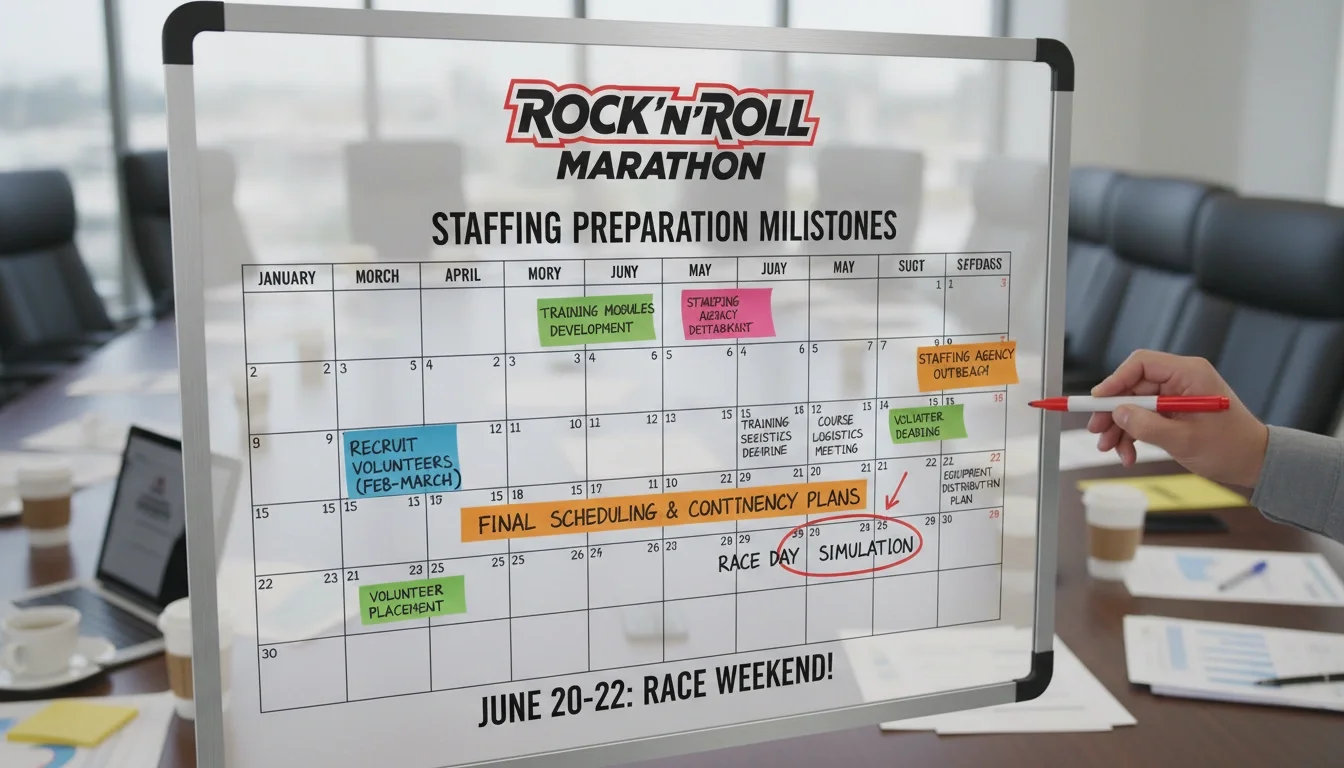
Planning calendar showing Rock 'n' Roll Marathon staffing preparation milestones
Professional Staffing vs. Volunteer Models: Making the Right Choice
When to Use Professional Event Staff
Budget constraints tempt event organizers to maximize volunteers, but certain positions demand paid professionals whose experience justifies the investment.
High-stakes sponsor activations representing significant sponsor investments require professional brand ambassadors. When sponsors pay $50,000+ for activation rights, staffing those zones with untrained volunteers risks damaging relationships worth far more than staff costs.
Professional brand ambassadors bring experience that volunteers typically lack: understanding how to capture leads efficiently, managing technology platforms smoothly, handling difficult interactions diplomatically, and representing brands with polish that reflects well on both the sponsor and event.
Complex brand ambassador programs involving product demonstrations, technical explanations, or lead qualification need staff with sales and marketing backgrounds. A volunteer can hand out samples; a professional can explain product benefits, answer technical questions, and identify high-value prospects for post-event follow-up.
Premium hospitality areas serving VIP guests, sponsor executives, or celebrity participants require staff with upscale service backgrounds. These environments demand discretion, refined service skills, and the ability to read subtle social cues that ensure guests feel valued.
Critical finish line positions including finish line coordinators, medical liaisons, and timing system managers need experienced event professionals. These roles require decision-making under pressure, understanding complex logistics, and managing emergencies that can't be delegated to well-meaning but inexperienced volunteers.
Professional staffing provides reliability that volunteer programs often can't guarantee. Paid staff honor commitments at higher rates than volunteers, reducing no-show risks for positions where gaps create serious operational problems.
Effective Volunteer Deployment Strategies
Volunteers provide tremendous value when deployed strategically to roles matching their capabilities and commitment levels.
Best volunteer roles include water station attendants, course marshals, participant cheerleaders, parking lot directors, and general finish area support. These positions impact participant experience significantly while having lower complexity and risk than sponsor activations or critical operational roles.
Hydration stations benefit from community group volunteers who bring natural enthusiasm. Running clubs, charity beneficiaries, and corporate community service teams often staff these areas excellently, creating memorable encouragement that professional staff might not replicate.
Course marshaling requires minimal training while providing important safety and guidance functions. Volunteers who understand basic responsibilities—directing runners at turns, watching for medical emergencies, cheering participants—fill these roles effectively.
Volunteer training requirements should match role complexity without overwhelming people donating their time. Hydration station volunteers need 15-20 minutes of training covering setup, distribution techniques, and who to contact for supplies or emergencies.
Course marshal training requires slightly more depth: route familiarization, emergency procedures, communication methods, and how to handle common runner questions. Budget 30-45 minutes for this training.
Keep training engaging and efficient. Volunteers appreciate professionalism but resent excessive time demands for relatively simple roles. Provide clear written materials they can reference during the event rather than expecting them to memorize every detail.
Retention and appreciation tactics transform one-time volunteers into reliable repeat staff. Recognition matters enormously to people donating their time and energy.
Provide volunteers with event t-shirts, access to post-race food and beverage, and sincere thanks both during and after the event. Personal appreciation from race directors or sponsor representatives creates connection that generic thank-you emails don't achieve.
Consider creating volunteer loyalty programs for multi-event series. Volunteers who staff three Rock 'n' Roll Marathon events might receive upgraded perks like race entry discounts, VIP viewing areas, or priority placement in desirable positions.
Document volunteer performance, building a database that identifies your best people. Invite proven volunteers to return for future events before opening general recruitment, ensuring you secure reliable staff before filling gaps with unknowns.
Hybrid Staffing Models for Budget Optimization
Most successful Rock 'n' Roll Marathon staffing strategies combine professional and volunteer staff strategically, optimizing quality while respecting budget constraints.
Strategic professional placement focuses paid staff where expertise matters most: sponsor activations, finish line coordination, technical positions, and supervisory roles. These positions might represent 20-30% of total staff but handle 70-80% of business-critical functions.
Volunteer support layers surround professional core teams with volunteers handling auxiliary functions. At sponsor activations, professional brand ambassadors manage engagement and lead capture while volunteers assist with line management, restocking supplies, and directing participants.
This hybrid approach delivers professional activation quality while reducing costs substantially compared to all-professional staffing.
Cost-benefit analysis should evaluate not just immediate staff expenses but also risks of inadequate staffing. Under-trained staff at sponsor activations can damage relationships worth tens of thousands of dollars in future sponsorships. Poor finish line coordination creates negative participant experiences that affect event reputation and future registration.
Calculate the true cost of staffing failures: lost sponsor renewals, reduced participant satisfaction, operational problems requiring expensive last-minute solutions. Often, investing in professional staff for critical positions costs far less than these potential consequences.
For a typical Rock 'n' Roll Marathon half marathon event, a balanced hybrid model might include:
50-75 professional staff (sponsor activations, finish line leads, operations managers)
200-300 trained volunteers (hydration stations, course marshals, general support)
Total budget approximately 60-70% lower than all-professional staffing while maintaining quality standards
Staff Management and Communication on Race Day
Communication Infrastructure
Effective race day communication prevents small issues from becoming major problems. Establish systems that enable rapid information flow without creating excessive noise.
Radio protocols and channels require clear organization. Assign separate channels for different functional areas: finish line operations, sponsor zones, course marshaling, medical team, and event leadership.
Establish radio etiquette during training: state your position and location before describing issues, keep messages concise, confirm receipt of important information, and avoid casual conversation on operational channels.
Test all radios before event day, labeling each with channel assignments and checking battery life. Program radios in advance rather than requiring staff to change channels manually, reducing user error.
Mobile apps and group messaging supplement radios for non-urgent communication and detailed information sharing. WhatsApp, Slack, or event-specific apps allow supervisors to share updates, schedule changes, or photos documenting situations requiring attention.
Create separate messaging groups for different teams: one for all finish line staff, another for sponsor zone supervisors, a third for event leadership. This prevents overwhelming everyone with information relevant only to specific groups.
Emergency escalation procedures must be obvious and practiced. All staff should know how to immediately alert medical teams, security, or race directors when serious situations arise.
Establish code words for situations requiring discreet emergency response. Rather than shouting "medical emergency" over radios, using a code like "we need medical assistance at the west hydration station" prevents panic among nearby participants while ensuring appropriate response.
Supervisor check-in schedules create regular touchpoints that identify issues proactively. Every 30-45 minutes, zone supervisors report status to operations managers: current staffing levels, supply needs, any developing concerns, and anticipated issues based on participant flow.
These scheduled check-ins feel routine rather than reactive, encouraging supervisors to mention minor concerns before they escalate. When check-ins happen only during problems, supervisors hesitate to "bother" leadership with small issues.
Managing Multiple Zones Simultaneously
Zone supervisor responsibilities extend beyond their specific areas to include awareness of overall event flow. Supervisors should understand how their zone impacts others; finish line congestion affects sponsor zone access, and expo overcrowding influences subsequent arrival patterns.
Equip supervisors with authority to make decisions within defined parameters. Clearly specify which decisions require approval versus those supervisors can execute independently. Supervisor autonomy enables faster response while maintaining appropriate oversight.
Cross-zone coordination strategies prevent siloed thinking that misses interdependencies. Regular supervisor meetings during event setup, mid-event check-ins, and scheduled briefings create information sharing that improves overall execution.
When one zone experiences unexpected challenges, adjacent zones should be notified immediately. Finish line delays backing up into sponsor zones, sponsor activation bottlenecks affecting participant flow, or weather situations requiring protective responses all demand cross-functional communication.
Resource reallocation protocols enable dynamic staffing adjustments based on real-time needs. Pre-identify flexible staff who can transition between zones when demand shifts unexpectedly.
If finish volume exceeds projections while sponsor traffic remains light, temporarily redirect sponsor zone staff to finish line support. Establishing reallocation authority and methods during planning prevents confusion when rapid changes become necessary.
Handling Common Race Day Challenges
Staff no-shows and backup protocols will happen despite careful planning. Expect 5-10% of staff to not arrive, with higher rates among volunteers than paid professionals.
Maintain a float pool of backup staff who arrive ready to fill gaps in any zone. Size this pool at 10-15% of total staff count, providing buffer that accommodates no-shows and unexpected needs.
Cross-train staff during preparation so multiple people understand each role, enabling rapid deployment to critical positions when primary assignees don't arrive.
Weather contingencies require advance planning for heat, rain, wind, or cold scenarios. Extreme heat demands more frequent staff breaks, additional hydration, and shade access. Rain necessitates waterproof storage for equipment, covered break areas, and contingency plans for outdoor activations that may need to modify operations.
Prepare weather response kits for each zone including extra water, sunscreen, rain ponchos, and hand warmers depending on seasonal considerations. Ensure supervisors can access these supplies quickly rather than requiring requests through central operations.
Medical emergencies involving participants or staff demand clear protocols that every team member understands. Staff should know how to recognize serious medical situations, immediately alert medical teams, and assist in clearing space or providing information without attempting medical intervention themselves.
Conduct emergency scenario walk-throughs during training. Practice radioing medical teams, clearing pathways, and managing bystander crowds so responses become automatic under stress.
Participant overflow management occurs when finisher volume exceeds planning assumptions or when participants arrive at zones faster than anticipated. Flexible deployment, pre-positioned backup supplies, and supervisor authority to adjust processes enable adaptation to unexpected demand.
Train staff to maintain composure and service quality even when overwhelmed. Rushed, stressed staff create negative impressions that far outlast temporary crowding. Calm, apologetic acknowledgment of wait times while maintaining professionalism preserves participant experience even during operational stress.
Post-Race Engagement Zone Staffing
Recovery Area Management
The participant experience extends well beyond the finish line. Recovery areas where runners reunite with families, rest, and enjoy post-race refreshments require thoughtful staffing that recognizes runners' physical and emotional states.
Medical tent support staff aren't medical professionals but assist medical teams with non-clinical functions: directing participants needing attention, managing medical tent access, communicating with families of runners receiving treatment, and ensuring medical teams can focus on care rather than logistics.
These positions require calm, empathetic people who remain composed during stressful situations. Runners arriving at medical tents may be in pain, frightened, or struggling with disappointing performances that affect their emotional state.
Family reunion area coordinators help participants locate family members in crowded post-race environments. This becomes particularly important at large events where thousands of finishers and spectators converge simultaneously.
Effective family reunion zones use clear signage organized alphabetically or numerically, with staff positioned to answer questions and direct people efficiently. Proactive assistance prevents frustrated searching that diminishes the celebration participants deserve.
Bag check return personnel manage reuniting runners with personal items stored during the race. This operation requires organization, attention to detail, and patient customer service as tired runners sometimes forget their bag numbers or claim tickets.
Staff these areas generously; long waits to retrieve belongings create negative final impressions that overshadow earlier positive experiences. Budget one bag check return staff member per 100 stored bags, with higher ratios during anticipated peak return times.
Participant services teams serve as general information resources, answering questions about results, photos, official merchandise, lost and found, and local amenities. Position these staff prominently near main exit routes where participants naturally congregate.
Equip participant services staff with comprehensive information including public transportation options, nearby restaurants accepting large groups, pharmacy locations, and directions to parking areas. Runners finishing in unfamiliar cities particularly appreciate this localized knowledge.
Extended Sponsor Engagement Opportunities
Smart sponsors recognize that post-race environments offer exceptional engagement opportunities with participants in celebratory moods, willing to spend time with brands that enhance their experience.
Post-finish sponsor activations targeting finishers specifically can outperform pre-race activations in engagement quality. Runners who've completed their goal often feel accomplished and receptive to brand interactions they might have rushed through before racing.
Nutrition and recovery brands find particular success in post-finish zones. Finishers actively seeking refueling options engage meaningfully with product demonstrations, sample distribution, and educational content about recovery nutrition.
Recovery product sampling areas should be staffed by brand ambassadors with nutritional knowledge who can explain product benefits specifically in post-marathon recovery contexts. Generic sampling generates less value than educated recommendations aligned with runners' immediate needs.
Position recovery product sponsors near exit routes where participant flow naturally channels, maximizing exposure while respecting that some runners want to leave immediately while others linger.
Celebration area entertainment creates extended dwell time that benefits nearby sponsor activations. Live music, results screens, and photo stations keep participants in the venue longer, increasing sponsor activation exposure and engagement opportunities.
Staff celebration areas with entertainment coordinators who maintain energy, make announcements highlighting sponsor activations, and encourage participants to explore the full post-race environment rather than leaving immediately.
Photo download stations offering digital access to finish line photos need staff who can troubleshoot technology, explain download processes, and upsell photo packages when applicable. These areas generate both revenue and engagement while creating tangible race memories participants cherish.
Staff photo stations with patient, tech-comfortable people who can assist runners unfamiliar with digital platforms while moving through lines efficiently.
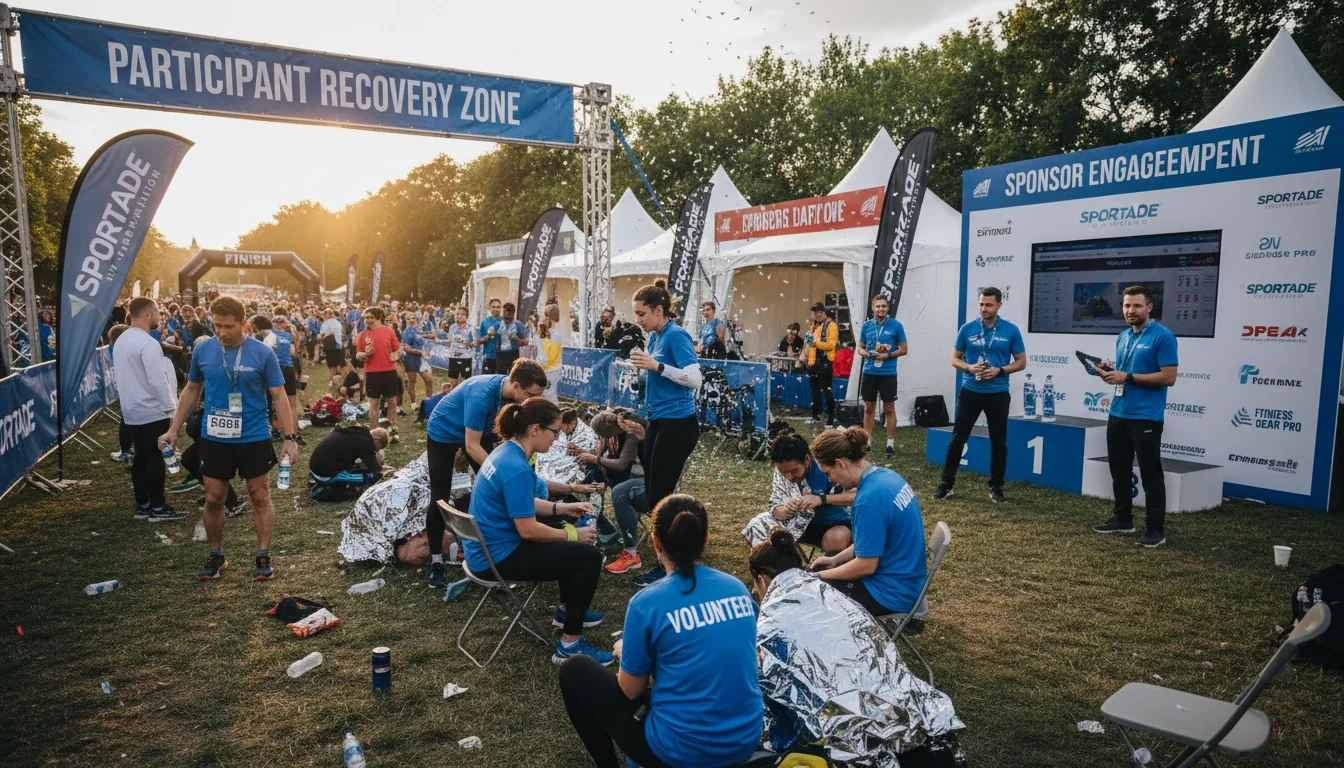
Staff managing participant recovery and sponsor engagement zones after race
Measuring Staffing Success and Continuous Improvement
Key Performance Indicators for Staff Evaluation
Evaluating staffing effectiveness requires metrics beyond simply "the event happened." Specific KPIs identify what worked, what needs improvement, and how to optimize future events.
Participant satisfaction metrics measured through post-event surveys should include questions specifically about staff interactions. Ask runners to rate staff friendliness, helpfulness, and professionalism at different event touchpoints: registration, finish line, sponsor areas, and general assistance.
Compare satisfaction scores across zones to identify where staff excelled and where improvement opportunities exist. Consistently lower scores in specific areas indicate training needs or role redesign requirements.
Sponsor activation engagement rates quantify how effectively sponsor zone staff drove participation. Track metrics including booth visits, samples distributed, leads captured, social media posts generated, and dwell time.
Compare these metrics against staffing levels to calculate efficiency: leads per staff hour, engagement rate per staff member, and cost per interaction. These calculations inform future staffing level decisions and budget allocations.
Staff punctuality and reliability impacts operational smoothness significantly. Track arrival times, no-show rates, and unplanned early departures by staff category (volunteers vs. professionals, agencies vs. direct hires).
Use this data to adjust future recruitment sources, improve screening processes, and potentially adjust arrival time communications to account for typical patterns.
Issue resolution effectiveness measures how quickly and successfully staff handled problems. Document incidents: what occurred, how staff responded, resolution time, and outcome quality.
Analyze patterns across incidents. Do certain types of issues consistently escalate unnecessarily? Do particular zones struggle with problem-solving? This analysis targets training improvements for future events.
Post-Event Staff Debriefing
Structured debriefing sessions capture insights while memories remain fresh, informing improvements that elevate subsequent events.
Gather feedback from all zones through multiple mechanisms. Immediately post-event, conduct brief supervisor debriefs capturing initial observations. Within a week, send detailed feedback surveys to all staff requesting specific input about their experience, challenges encountered, and improvement suggestions.
Schedule in-person or virtual debrief meetings with supervisory staff 1-2 weeks post-event. These discussions explore complex issues requiring dialogue beyond survey responses, enabling deeper understanding of operational dynamics.
Identify improvement opportunities systematically by categorizing feedback into themes: training needs, equipment issues, communication problems, scheduling challenges, and process inefficiencies.
Prioritize improvements based on impact and feasibility. Some issues require simple fixes implemented immediately; others demand significant planning or investment justified only for recurring events.
Recognize outstanding performance during debriefs and publicly where appropriate. Staff who exceeded expectations, handled difficult situations expertly, or demonstrated exceptional leadership deserve acknowledgment that reinforces behaviors you want repeated.
Personal recognition from event leadership carries more weight than generic appreciation. Specific feedback—"Your calm response when medical situations arose set exactly the right tone"—demonstrates genuine attention to individual contributions.
Plan for future events incorporating lessons learned. Document specific changes to implement: revised training content, adjusted staffing ratios, new communication protocols, or modified deployment strategies.
Create accountability by assigning owners to each improvement initiative with deadlines for implementation. Debriefings generate value only when insights translate into actual changes rather than forgotten good intentions.
Building a Reliable Event Staff Database
Effective staff database management transforms event staffing from scrambling before each event to maintaining a reliable talent pool eager to return.
Performance tracking systems should record not just attendance but quality metrics: supervisor ratings, specific skills demonstrated, reliability patterns, and participant feedback when available.
Simple database structures work fine for smaller events: spreadsheets tracking basic information. Larger series benefit from dedicated event management software that enables sophisticated filtering, communication, and scheduling.
Rehire prioritization rewards proven performers with early invitations to future events. Create tiered invitation schedules: top performers receive first opportunities, reliable staff get second-wave invitations, and acceptable but unremarkable staff enter general recruitment pools.
This approach builds loyalty among your best people who appreciate priority access while maintaining quality standards through selective rehiring.
Skills and certifications database enables precise matching of staff capabilities to position requirements. Track certifications including CPR, first aid, food handling, and specific technology platforms.
Document language capabilities, physical abilities, vehicle access, and specialized knowledge (nutrition expertise, technical product knowledge, photography skills). Detailed capability data enables sophisticated staffing decisions that match the right people to the right roles.
Partnering with Professional Event Staffing Agencies
Benefits of Agency Partnerships
Professional event staffing agencies provide value extending beyond simply supplying personnel, offering expertise and infrastructure that enhance execution while reducing organizational burden.
Pre-vetted, trained professionals arrive with foundational event skills that minimize training time and increase reliability. Quality agencies conduct background checks, verify previous experience, and maintain performance records that identify consistently excellent staff.
This vetting eliminates risks inherent in direct hiring where resume claims may not reflect reality and limited reference checking leaves gaps in knowledge about candidate reliability.
Scalability for multi-city series becomes far simpler through national or regional agencies with presence across Rock 'n' Roll Marathon Series locations. Rather than establishing recruitment infrastructure in each market, agency partnerships provide instant local access.
National agencies often maintain staff databases enabling the same excellent brand ambassadors to work events across multiple cities, creating consistency that benefits sponsors running multi-market campaigns.
Reduced administrative burden represents significant hidden value. Agencies handle payroll, insurance, compliance with labor regulations, and other administrative functions that consume substantial time and create liability exposure.
Calculate the true cost of direct hiring including HR time, payroll processing, insurance, and compliance risk. Agency markups often cost less than internal administration when comprehensive calculations include all factors.
Quality assurance and backup coverage mean agencies assume responsibility for no-shows and performance issues. If staff don't arrive, quality agencies immediately deploy replacements. If performance falls short, agencies provide solutions rather than leaving you managing problems.
This accountability protection particularly matters for critical sponsor activations where staffing failures damage valuable relationships.
What to Look for in a Staffing Partner
Not all event staffing agencies deliver equal quality. Selecting the right partner requires evaluating specific capabilities aligned with Rock 'n' Roll Marathon Series needs.
Event-specific experience demonstrates understanding of the unique dynamics marathon events create. Agencies specializing in corporate conferences may struggle with outdoor endurance events' physical demands and participant mindsets.
Request examples of previous marathon, running event, or outdoor endurance event staffing. Ask how they screen for physical ability to stand extended hours, weather tolerance, and understanding of athlete culture.
Los Angeles market knowledge matters for Southern California Rock 'n' Roll Marathon events. Agencies with established local presence understand traffic patterns affecting arrival logistics, know local labor market conditions, and maintain relationships with talent pools throughout the region.
Local agencies often provide better backup coverage because their entire staff pool lives nearby rather than requiring travel from distant locations when replacements become necessary.
Brand ambassador expertise separates agencies that simply provide bodies from partners who enhance sponsor activations. Quality brand ambassador agencies train staff in engagement techniques, lead capture, product demonstrations, and representing brands with polish that reflects well on sponsors.
Review brand ambassador portfolios showcasing previous work with recognizable brands. Agencies working with premium brands typically maintain higher standards than those focused primarily on general event staffing.
Rapid deployment capabilities enable responsiveness when staffing needs change suddenly. Can agencies provide additional staff with 48-72 hours notice if sponsor activation plans expand? Do they maintain reserve talent pools specifically for last-minute requests?
Test responsiveness during initial discussions. Agencies that take days to respond to simple questions during sales conversations will likely struggle with time-sensitive needs during events.
Maximizing Agency Relationships
Effective agency partnerships require clear communication, mutual respect, and collaborative approaches that recognize agencies as partners rather than vendors.
Clear communication of expectations begins with detailed briefing documents covering event overview, specific role requirements, brand messaging for sponsor activations, dress code, and performance standards.
Provide agencies with the same comprehensive information you'd give direct hires. Assumptions lead to disconnects; explicit communication creates alignment.
Advance booking for optimal selection enables agencies to assign their best staff rather than whoever remains available last-minute. Book 8-12 weeks ahead for major events, particularly during busy spring and fall marathon seasons.
Early booking often generates cost advantages as agencies may offer preferred pricing for advance commitments that help them plan capacity.
Collaborative planning approaches treat agencies as strategic advisors, not just order-takers. Quality agencies possess extensive event staffing expertise worth tapping during planning.
Ask agency input on staffing ratios, role definitions, deployment strategies, and training content. Experienced agencies have seen what works across hundreds of events and can identify potential issues before they materialize.
Invite agency supervisors to participate in planning meetings where their operational perspective adds value. This inclusion builds partnership relationships that enhance execution and problem-solving.
Conclusion
Successfully staffing a Rock 'n' Roll Marathon Series event requires strategic planning that addresses both operational excellence and exceptional participant experiences. From the emotional apex of finish line moments to engaging sponsor activations that drive brand value, every zone demands thoughtful staff deployment aligned with specific objectives.
The distinction between acceptable and outstanding marathon events often comes down to staffing decisions made months before race day. Professional staff in critical positions, comprehensive training programs, clear communication systems, and detailed deployment strategies create seamless execution that participants remember positively long after their finisher's high fades.
Whether you're organizing your first Rock 'n' Roll Marathon event or refining strategies for an established series, investing in quality staffing—through direct hiring, volunteer programs, or professional agency partnerships—delivers returns measured in participant satisfaction, sponsor renewal rates, and event reputation.
Ready to elevate your Rock 'n' Roll Marathon staffing strategy? Partner with experienced event professionals who understand the unique demands of marathon events and deliver the quality your participants and sponsors deserve.