The Rock 'n' Roll Marathon Series represents one of the most dynamic opportunities in experiential marketing. With events spanning major cities from San Diego to Nashville, Las Vegas to Washington D.C., this touring series attracts hundreds of thousands of runners, spectators, and fitness enthusiasts throughout the year. For brands looking to activate sponsorships or execute promotional campaigns across these events, staffing becomes the critical difference between a forgettable booth and a memorable brand experience.
Yet marathon activations present unique staffing challenges that generic promotional teams simply aren't equipped to handle. The combination of early morning start times, physically demanding environments, passionate running communities, and multi-city logistics requires a specialized approach that most brands underestimate. This comprehensive guide walks you through every stage of staffing brand activations across the Rock 'n' Roll Marathon Series, from initial planning to post-event optimization.
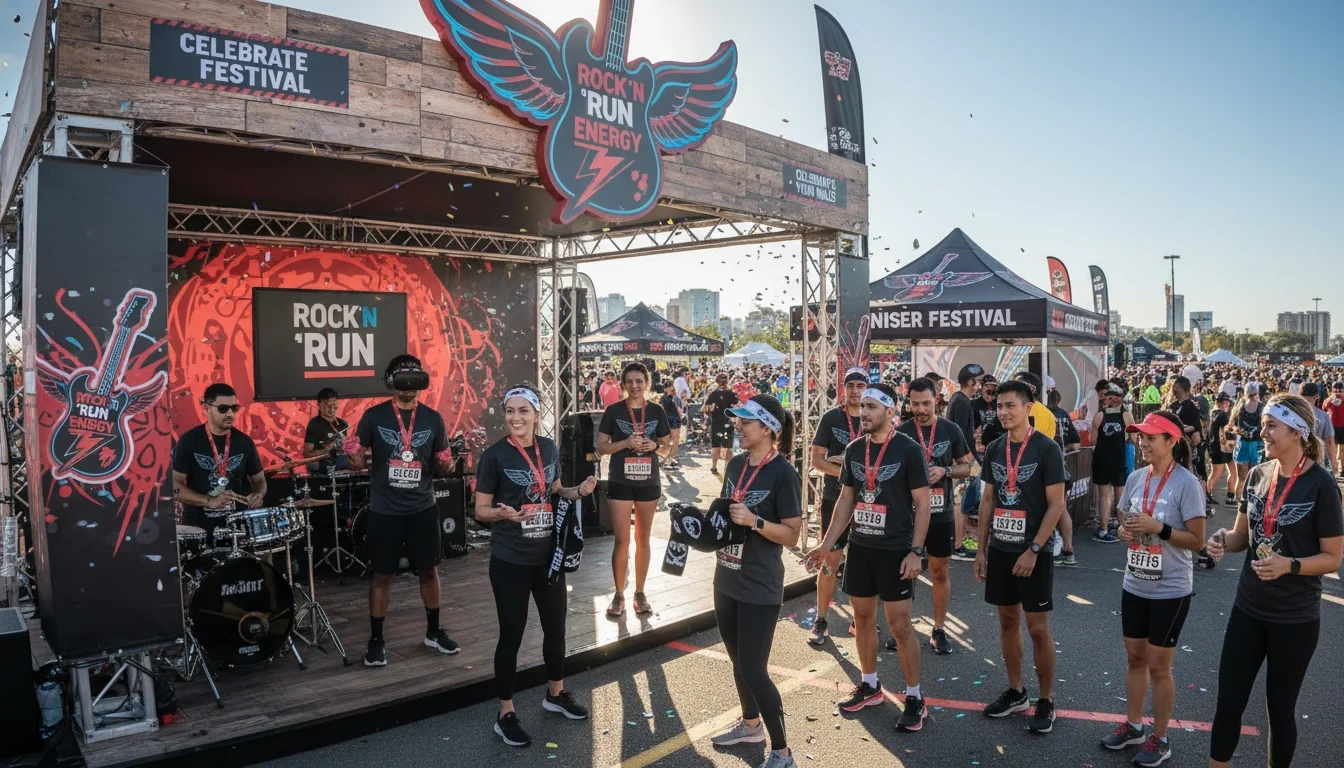
Brand activation booth at Rock 'n' Roll Marathon finish line area with engaged staff interacting with runners
Understanding the Rock 'n' Roll Marathon Series Landscape
Before diving into staffing logistics, you need to understand what makes the Rock 'n' Roll Running Series distinct from standalone marathon events. This knowledge directly impacts how you recruit, train, and deploy your activation teams.
What Makes the Rock 'n' Roll Series Unique
The Rock 'n' Roll Marathon Series revolutionized distance running by transforming traditional races into entertainment experiences. Founded on the concept of lining race routes with live bands, DJs, and cheerleaders, these events blur the line between athletic competition and music festival. This energetic atmosphere attracts a different demographic than austere, competition-focused marathons.
The series operates as a touring event circuit rather than individual races. This touring structure creates both challenges and opportunities for brand activations. Sponsors often commit to multiple cities within a season, allowing for refined messaging and staff performance optimization across events. Your staffing strategy must account for this multi-city approach, balancing consistency with local market adaptation.
Each Rock 'n' Roll Marathon typically includes multiple race distances: full marathon, half marathon, 10K, and 5K options. This variety means your activation reaches diverse fitness levels, from elite athletes to first-time fun-runners. Your staff needs versatility to connect authentically with both serious competitors focused on PRs (personal records) and casual participants celebrating the finish line with friends.
Key Cities and Event Characteristics
The Rock 'n' Roll Marathon Series rotates through approximately 8-12 major markets annually. While the specific lineup evolves, core markets historically include:
San Diego, CA - The flagship event and series birthplace
Las Vegas, NV - Evening race on the Strip with high tourist attendance
Nashville, TN - Music city integration with country music themes
Washington, D.C. - National monuments course attracting political and international crowds
Arizona (Phoenix/Scottsdale) - Early season event with destination appeal
Brooklyn, NY - Urban course through diverse neighborhoods
Each market brings distinct characteristics affecting staffing requirements. Las Vegas events, held at night, demand staff comfortable with extended evening hours and managing enthusiastic, sometimes inebriated spectators. San Diego's course includes challenging hills requiring staff stationed at strategic hydration points. Washington D.C. attracts significant international participation, making multilingual capabilities valuable.
Understanding these city-specific nuances helps you determine whether a single traveling core team or city-specific local staffing makes more sense for your activation goals.
Audience Demographics and Engagement Opportunities
Rock 'n' Roll Marathon participants skew younger and more socially engaged than traditional marathon fields. Approximately 70-80% of participants run the half marathon distance, indicating a fitness-conscious but not necessarily elite-athlete audience. This demographic typically includes:
Age range: 25-45 years old predominantly
Above-average household income
High social media activity and sharing behavior
Interest in fitness products, wellness, and active lifestyle brands
Significant female participation (often 55-60% of field)
Spectators and expo attendees expand your reach significantly beyond actual runners. Race expos typically draw 10,000-30,000 attendees depending on city size, providing prime brand sampling and product demonstration opportunities. Finish line areas become festival atmospheres where thousands gather to cheer finishers, creating extended engagement windows.
Your staffing strategy should leverage these engagement opportunities across three primary touchpoints: pre-race expo (typically Friday-Saturday), race day course activation (Sunday morning), and finish line festival (Sunday mid-morning through afternoon).
Planning Your Marathon Activation Staffing Strategy
Successful marathon activations begin with comprehensive planning six to twelve weeks before event day. This timeline allows for proper recruitment, training, and contingency preparation.
Defining Staffing Needs Based on Activation Type
Your activation format directly determines staffing requirements. Common Rock 'n' Roll Marathon activation types include:
Expo Booth Activations require staff for extended periods (typically 10+ hours across two days). Plan for 3-5 staff members working in shifts for a standard 10x10 booth, scaling up to 8-12 for larger footprints with multiple activity stations. These team members should excel at sustained engagement, product demonstrations, and lead capture.
Course-Side Brand Zones need enthusiastic, high-energy staff who can maintain excitement for 4-6 hour windows as thousands of runners pass by. Depending on activation complexity, plan 2-4 staff per station. If your brand operates multiple course locations (mile 3, mile 10, finish line), multiply accordingly.
Product Sampling Stations require staff comfortable with rapid distribution while maintaining brand messaging. A well-organized sampling team can distribute to 150-200 runners per hour. For a half marathon with 10,000 participants passing over a 3-hour window, plan for 4-6 sampling staff plus 1-2 restocking support personnel.
Finish Line Experiences benefit from 6-10 staff managing photo opportunities, recovery product distribution, or post-race engagement activities. These staff handle exhausted, emotional finishers requiring both empathy and energy.
Calculating Staff-to-Attendee Ratios
While exact ratios vary by activation complexity, use these industry benchmarks as starting points:
Expo booth engagement: 1 staff member per 50-75 attendees per hour
Product sampling: 1 staff member per 150 active distributions per hour
Interactive demonstrations: 1 staff member per 20 participants per hour
Registration/check-in: 1 staff member per 100 registrations per hour
Roving brand ambassadors: 1 ambassador per 500 attendees
Remember that marathon activations involve compressed timeframes with surge periods. Build 30-40% buffer capacity above minimum requirements to prevent staff burnout and maintain service quality during peak hours.
Budget Considerations: Local vs. Traveling Staff
Multi-city marathon tours present a strategic decision: invest in a core traveling team or recruit fresh local staff in each market. Most successful activations employ a hybrid approach.
Traveling Core Team Advantages:
Deep product knowledge and brand consistency
Refined activation execution through repeated practice
Team cohesion and communication efficiency
Trusted performers reducing execution risk
Traveling Core Team Costs:
Airfare, hotels, and per diem expenses
Travel time compensation
Scheduling commitments across multiple weekends
Typically 3-4 times more expensive per person than local staff
Local Staff Advantages:
Significantly lower costs (no travel expenses)
Market-specific knowledge and local credibility
Easier scheduling for single-event commitments
Larger recruitment pool per city
Local Staff Challenges:
Variable quality across markets
Limited brand knowledge requiring intensive training
Coordination complexity across multiple staffing sources
Higher no-show risk with less accountability
The optimal hybrid model typically includes 2-4 traveling core team members (team lead, activation manager, senior brand ambassadors) supplemented by 4-8 local staff recruited specifically for each city. This balances consistency with cost-efficiency.
For a three-city Rock 'n' Roll Marathon tour, budget approximately:
$8,000-$12,000 for traveling core team (4 people × 3 cities including travel)
$4,000-$6,000 for local staff across three markets (6 people × $25/hour × 12 hours average per city)
Total staffing budget: $12,000-$18,000 for three-city activation
Timeline: When to Start Your Staffing Process
Marathon activation staffing follows a critical timeline:
12 Weeks Before Event:
Define activation scope and staffing requirements
Determine traveling vs. local staff mix
Begin recruitment for traveling core team positions
8-10 Weeks Before Event:
Finalize traveling team contracts
Partner with local staffing agencies in target cities
Develop training materials and brand guidelines
6 Weeks Before Event:
Begin local staff recruitment for first event city
Conduct initial training for traveling team
Secure travel and accommodation for touring staff
4 Weeks Before Event:
Complete local staff hiring for first market
Conduct comprehensive team training sessions
Finalize logistics (uniforms, materials, schedules)
2 Weeks Before Event:
Send pre-event briefing materials to all staff
Confirm travel arrangements and check-in procedures
Conduct refresher training and Q&A sessions
1 Week Before Event:
Final headcount confirmation and backup planning
Distribute event-day contact information and emergency protocols
Ship activation materials to venue
This timeline compresses for subsequent tour stops as your traveling core team gains experience, but maintain at least 4-week lead time for local staff recruitment in each new city.
Staff Selection Criteria for Marathon Activations
Not all event staff succeed in marathon environments. The unique demands of running events require specific qualities beyond standard promotional staffing requirements.
Essential Qualities for Marathon Event Staff
The best marathon activation staff exhibit these characteristics:
Authentic Interest in Fitness and Running: Staff who genuinely appreciate the running community connect more authentically with participants. This doesn't require being elite athletes themselves, but understanding why someone trains for months to run 13.1 or 26.2 miles creates natural conversation starters and credibility.
High Energy Across Extended Periods: Marathon activations span 6-10 hour days starting as early as 5:30 AM for course setup. Staff must maintain enthusiasm from pre-dawn arrival through post-race tear-down, often while standing for hours. Look for candidates with demonstrated stamina from previous event experience, athletic backgrounds, or hospitality roles.
Adaptability and Problem-Solving: No marathon activation proceeds exactly as planned. Weather changes, equipment failures, material shortages, or unexpected crowd surges require quick thinking. Seek staff comfortable with ambiguity who can make smart decisions independently.
Crowd Engagement Skills: Marathon activations aren't passive information booths. Staff must proactively engage passing crowds, shout encouragement to runners, and create infectious energy that draws people in. Extroverted personalities with performance or sales backgrounds often excel here.
Professional Appearance Despite Casual Setting: While marathon activations occur in athletic environments, staff represent your brand. Seek team members who maintain polished, professional presentation even in branded athletic wear and outdoor settings.
Team-First Mentality: Multi-city touring creates intense working relationships. Prioritize candidates who work collaboratively, support teammates during challenging moments, and contribute to positive team culture over multiple events.
Why Generic Promotional Staff Fail at Running Events
Many brands make the costly mistake of treating marathon activations like standard promotional events, hiring from general promotional staffing pools. This approach typically fails for several reasons that industry professionals who've worked major marathon series can attest to.
Generic promotional staff often come from fashion, nightlife, or beauty product backgrounds. These environments prioritize polished appearance and sophisticated presentation over athletic credibility. When assigned to marathon activations, these team members often appear conspicuously out of place among sweat-soaked runners and athletic-wear-clad spectators.
The energy mismatch becomes particularly apparent. Promotional staff trained for controlled indoor environments struggle with the chaos of thousands of runners passing by, outdoor elements, and the physically demanding nature of course-side activations. What works at an upscale product launch fails dramatically when you're distributing samples at mile 10 of a half marathon.
Cultural disconnection represents the most damaging failure mode. Staff unfamiliar with running culture make innocent but glaring mistakes like asking what "13.1" means, suggesting people "just walk if they get tired," or focusing on appearance rather than performance. These disconnects signal to runners that your brand doesn't truly understand or respect their community.
Cultural Fit: Understanding the Running Community
The running community operates with specific values, language, and cultural touchstones that your staff should recognize:
Respect for the Distance: Never minimize the accomplishment of finishing a marathon or half marathon. Comments like "it's just a 5K" or "half marathons are easy" immediately alienate participants who've trained for months.
PR Culture: Runners obsess over Personal Records (PRs) - their fastest times at specific distances. Staff should understand this terminology and celebrate PR achievements.
Training Language: Familiarize staff with common running terms like tempo runs, long runs, taper weeks, negative splits, and bonking. You don't need to be running experts, but basic literacy prevents awkward conversations.
Inclusive Community: The running world celebrates everyone from elite competitors to back-of-the-pack finishers. Your staff should embody this inclusive spirit, offering equal enthusiasm to the 3-hour and 6-hour marathon finisher.
Recovery and Nutrition Awareness: Runners are highly educated about sports nutrition, hydration strategies, and recovery protocols. If sampling food or beverage products, staff should understand basic nutritional information and how products support athletic performance.
Provide all marathon activation staff with this cultural briefing as part of standard training. A thirty-minute running culture workshop prevents embarrassing mistakes and builds authentic connection.
Physical Requirements and Stamina Considerations
Be transparent about the physical demands during recruitment:
Early Start Times: Most marathon activations require 5:30-6:00 AM arrival for setup, with race starts at 7:00-7:30 AM. This means waking by 4:30-5:00 AM.
Extended Standing: Course-side and finish line staff stand for 4-6 continuous hours. Individuals with physical limitations may struggle.
Outdoor Elements: Activations proceed regardless of weather. Staff must be prepared for heat, cold, rain, or wind depending on city and season.
Heavy Lifting: Setup and tear-down often involves moving tents, tables, product boxes, and equipment weighing 30-50 pounds.
Fast-Paced Environments: During peak race hours, staff handle rapid-fire interactions with hundreds of runners per hour requiring sustained focus.
Screen candidates for physical capability and willingness to handle these demands. Mis-hiring staff who can't meet physical requirements creates preventable performance issues and potential injuries.
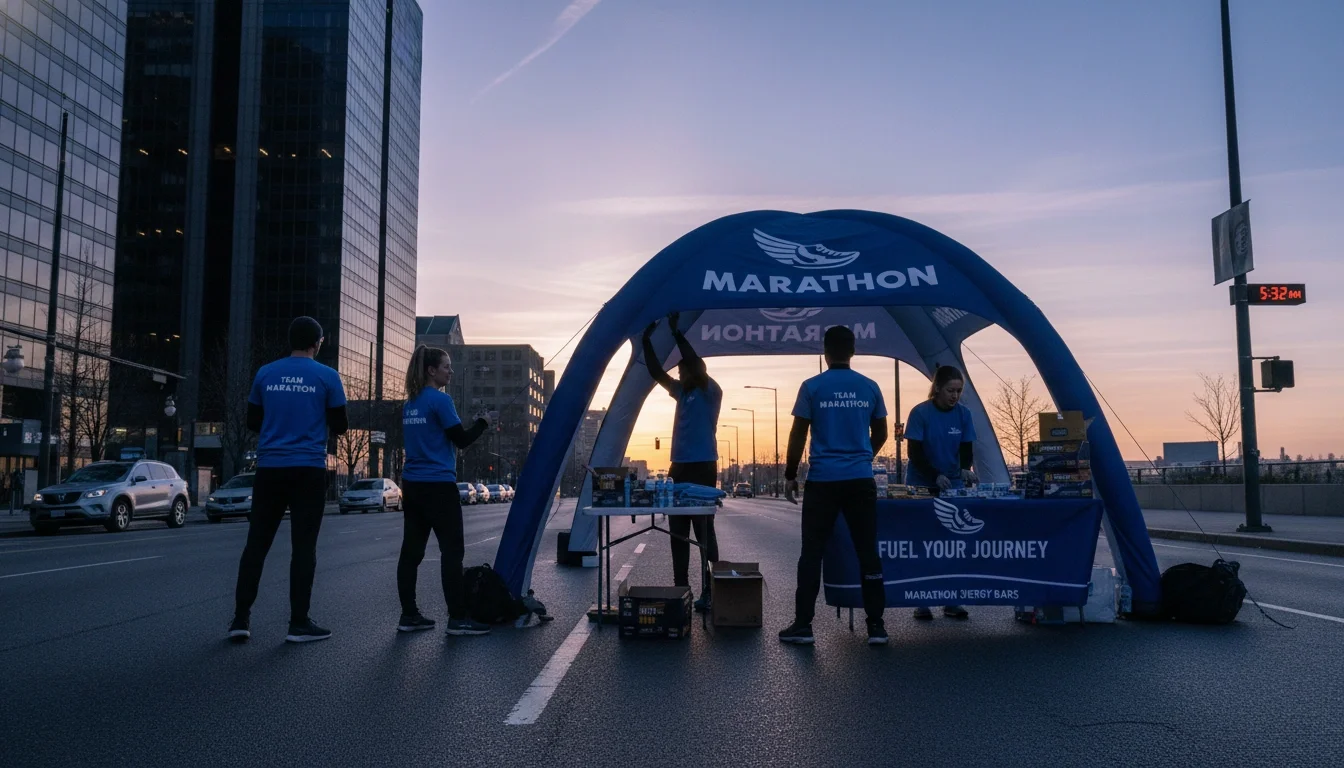
Marathon brand activation team setting up booth at early morning, demonstrating the early start requirements
Recruitment Strategies for Multi-City Marathon Tours
Recruiting quality staff across multiple cities requires systematic approaches combining traveling team stability with local market access.
Building a Hybrid Model: Core Touring Team + Local Staff
The most effective multi-city marathon staffing employs a hybrid structure:
Traveling Core Team (2-4 people):
Team Lead/Activation Manager - Oversees all operations, serves as brand point of contact, makes real-time decisions, manages local staff integration. This role requires the most experience and brand knowledge.
Senior Brand Ambassadors (1-2 people) - Execute core activation elements, train local staff on-site, maintain quality standards, handle complex participant interactions.
Operations/Logistics Coordinator (optional for large activations) - Manages materials, coordinates setup/teardown, handles vendor relationships, solves operational problems.
These traveling team members commit to the full tour (typically 3-6 cities over 8-16 weeks). Compensation should reflect this commitment: $200-$350/day plus travel expenses, depending on experience level and market.
Local Supplemental Staff (4-10 people per city):
Recruited specifically for each market event, these staff handle:
Product sampling and distribution
Booth staffing and participant engagement
Registration and check-in support
Crowd management and directional assistance
Setup and teardown support
Local staff typically work single events (or consecutive days if expo + race day activation). Pay competitive local event staffing rates: $20-$35/hour depending on role and market.
This hybrid approach provides consistency in leadership and brand representation while accessing local talent pools and controlling costs.
Leveraging Local Staffing Networks in Each City
Rather than recruiting from scratch in each Rock 'n' Roll Marathon city, partner with established local staffing agencies specializing in event and experiential marketing. Professional event staffing agencies maintain vetted talent pools and can deploy teams on short notice.
When selecting local staffing partners, prioritize agencies with:
Sports and Fitness Event Experience: Agencies that regularly staff running events, fitness expos, or active lifestyle activations understand the specific cultural nuances and physical demands.
Fast Deployment Capability: Marathon scheduling often firms up 4-6 weeks before events. Your staffing partner should confidently deliver qualified candidates within 2-3 week timelines.
Rigorous Vetting Standards: Request information about their screening process, acceptance rates, and staff retention. Agencies accepting the top 5-10% of applicants deliver significantly higher quality than those accepting 30-40%.
Local Market Presence: Choose agencies with physical offices and established reputations in each target city rather than national agencies subcontracting to local vendors.
Performance Guarantees: Professional staffing agencies should provide replacement staff for no-shows and guarantee minimum performance standards.
Building relationships with 2-3 preferred staffing partners in each major Rock 'n' Roll Marathon market creates efficiency for recurring annual activations. Many brands develop multi-city agreements with agencies that can staff across their entire tour schedule.
Vetting and Interview Process for Marathon Events
Whether hiring traveling core team or coordinating with local agencies, implement structured vetting to assess marathon-specific suitability.
Application Screening Criteria:
Create application questions targeting marathon activation fit:
"Describe your experience with athletic events or fitness brands"
"What does a typical marathon race day look like from a participant perspective?"
"How do you maintain energy and enthusiasm across 8-10 hour events?"
"Describe a time you worked in challenging outdoor conditions"
Red flags in applications include zero athletic event experience, scheduling inflexibility around early morning starts, or inability to work entire event weekends.
Interview Focus Areas:
Conduct 20-30 minute phone or video interviews addressing:
Brand and Product Knowledge Capability: Present a brief product overview and ask candidates to explain it back. Strong candidates absorb and articulate information quickly.
Cultural Fit Assessment: Ask about personal fitness activities, favorite active brands, and running event familiarity. While not everyone must be runners, some connection to active lifestyles improves authenticity.
Scenario Problem-Solving: Present realistic challenges: "You're distributing samples at mile 10, and runners are bypassing your station. What do you do?" or "A participant becomes upset that you've run out of promotional items. How do you handle it?"
Energy and Enthusiasm Check: Phone interviews reveal enthusiasm levels. Marathon activation staff should demonstrate natural high energy even in a phone conversation.
Schedule Commitment Confirmation: Explicitly confirm availability for full event hours including early arrivals, potential weather delays, and post-event wrap-up.
Reference Checks:
Contact at least two professional references focusing on:
Reliability and punctuality record
Performance in fast-paced, physically demanding environments
Team collaboration and attitude
How they handle stress and unexpected challenges
Reference checks for traveling core team positions warrant deeper investigation given the higher stakes of these roles across multiple markets.
Background Checks and Compliance Requirements
Professional marathon activations require proper background screening and compliance documentation:
Background Checks: Most major brands and event organizers require basic background checks for staff with expo or public-facing access. Work with staffing agencies that include this in their standard vetting, or budget $25-$40 per person for third-party screening.
Proper Worker Classification: Ensure all staff are correctly classified (W-2 employees vs. 1099 contractors). Many states have strict regulations, and misclassification creates significant liability. Professional staffing agencies handle this compliance.
Liability Insurance: Verify that your staffing agency or your company carries appropriate general liability insurance covering staff during event execution.
City-Specific Permits: Some Rock 'n' Roll Marathon cities require event worker permits or credentials. Confirm requirements 4-6 weeks before events and build permit acquisition into your timeline.
COVID-19 and Health Protocols: As health requirements evolve, maintain flexibility to implement testing, vaccination verification, or other health screening that event organizers mandate.
Working with professional event staffing agencies like Elev8 streamlines compliance since these organizations maintain proper insurance, worker classification, and background check infrastructure as standard operating procedure.
Training Your Marathon Activation Team
Comprehensive training transforms capable staff into effective brand representatives who understand your activation goals and execution requirements.
Product and Brand Knowledge Training
Marathon activation staff must become product experts quickly. Develop training modules covering:
Brand Story and Positioning: Staff should articulate your brand's purpose, target audience, and competitive differentiation in 30 seconds or less. Practice these elevator pitches during training.
Product Features and Benefits: Move beyond basic specifications to understand how products solve problems for runners. If promoting a recovery beverage, staff should know the specific electrolytes, why they matter post-marathon, and how timing affects absorption.
Competitor Landscape: Brief staff on major competing products they'll encounter. Understanding competitive differentiation prevents awkward moments when participants ask comparative questions.
Activation Messaging Priorities: Define the 2-3 key messages every interaction should communicate. Overwhelmed staff default to these core points when interactions become rushed.
Prohibited Claims: Especially for nutrition, supplements, or performance products, clearly outline what staff cannot say to avoid regulatory issues or misleading claims.
For traveling core teams, conduct comprehensive 2-4 hour training sessions. For local supplemental staff, create condensed 45-60 minute training modules focusing on essential knowledge, supplemented with reference cards they can consult during the event.
Understanding Runner Psychology and Engagement
Effective marathon activation staff understand how to engage runners at different race stages:
Pre-Race Expo Engagement: Runners browsing expos are in planning mode - gathering information, sampling products, and looking for race day advantages. They have time for conversations and demonstrations. Training should emphasize consultative approaches: asking questions about training, goals, and challenges before presenting product solutions.
Morning of Race (Pre-Start): Runners are nervous, excited, and mentally preparing. Interactions should be brief, encouraging, and non-intrusive. Staff should recognize pre-race rituals and not interrupt runners who appear focused or engaged in warm-ups.
Course-Side Engagement (During Race): Active runners have seconds, not minutes, for interaction. Training should emphasize high-energy encouragement, quick product handoffs, and memorable one-liners that stick with runners. Calling out bib numbers, recognizing costumes, and cheering by name creates positive brand associations.
Finish Line Area (Immediately Post-Race): Finishers are exhausted, emotional, and seeking recovery. Products positioned for recovery, celebration, or pain relief resonate strongly. Staff should be empathetic to physical distress while maintaining enthusiasm for accomplishments.
Post-Race Festival: As runners recover, they become receptive to longer engagement, photo opportunities, and social media sharing. This represents the prime window for deeper brand conversations and lead capture.
Train staff to recognize these psychological states and adjust engagement approaches accordingly. Role-playing exercises where team members practice each scenario build muscle memory for race day execution.
Handling High-Energy, Fast-Paced Environments
Marathon activations create sensory overload: thousands of runners, blasting music, loudspeaker announcements, and chaotic logistics. Training should prepare staff for this intensity:
Simulation Exercises: If possible, conduct training sessions in loud, busy environments rather than quiet conference rooms. This builds comfort with distraction.
Rapid-Fire Engagement Drills: Practice 15-second and 30-second interaction scripts. Set timers and role-play delivering key messages under time pressure.
Physical Stamina Preparation: Consider requiring training sessions to include 2-3 hours of standing, similar to event conditions. This surfaces potential issues before race day.
Crowd Management Techniques: Teach staff to manage clusters of participants waiting for samples or demonstrations without creating bottlenecks that block event flow.
Voice Preservation: Course-side activation requires hours of projecting voices over ambient noise. Train staff on voice preservation techniques: speaking from diaphragm, taking strategic voice breaks, staying hydrated.
Energy Management Across Long Days: Discuss practical strategies for maintaining enthusiasm from 6 AM to 2 PM: caffeine timing, snacking strategies, mental reset techniques.
The most effective training includes some form of dry run or smaller-scale practice event before the first major Rock 'n' Roll Marathon activation. This allows staff to experience controlled chaos before high-stakes execution.
Emergency Protocols and Problem-Solving
Despite comprehensive planning, marathon events generate unexpected situations. Training should equip staff to handle:
Medical Emergencies: Staff should know how to immediately identify event medical personnel, call for emergency assistance, and provide basic first aid while awaiting professional help. This is especially critical at finish line activations where exhausted runners occasionally collapse.
Weather Contingencies: Develop protocols for various weather scenarios: heat (additional hydration, shade breaks), rain (waterproofing materials, slip hazards), extreme cold (hand warming stations), or severe weather (event suspension or evacuation).
Equipment Failures: Train staff on backup plans when technology fails: mobile payment systems going offline, iPad lead capture tools losing connectivity, display elements collapsing in wind.
Product Shortages: Establish clear protocols for running out of samples or promotional materials early. Should staff conserve remaining inventory? Collect contact information for follow-up fulfillment? Redirect participants to retail partners?
Difficult Participant Interactions: Marathon environments occasionally create conflicts - runners upset about product availability, intoxicated spectators at evening events like Las Vegas, or activists protesting brand practices. Train staff on de-escalation techniques and when to involve activation managers or event security.
Communication Protocols: Establish clear chains of command and communication methods (radios, group text threads, designated check-in times) so staff always know how to reach leadership when problems arise.
Document emergency protocols in laminated quick-reference cards that staff carry throughout events. Include critical phone numbers, venue maps showing medical stations and security posts, and decision trees for common scenarios.
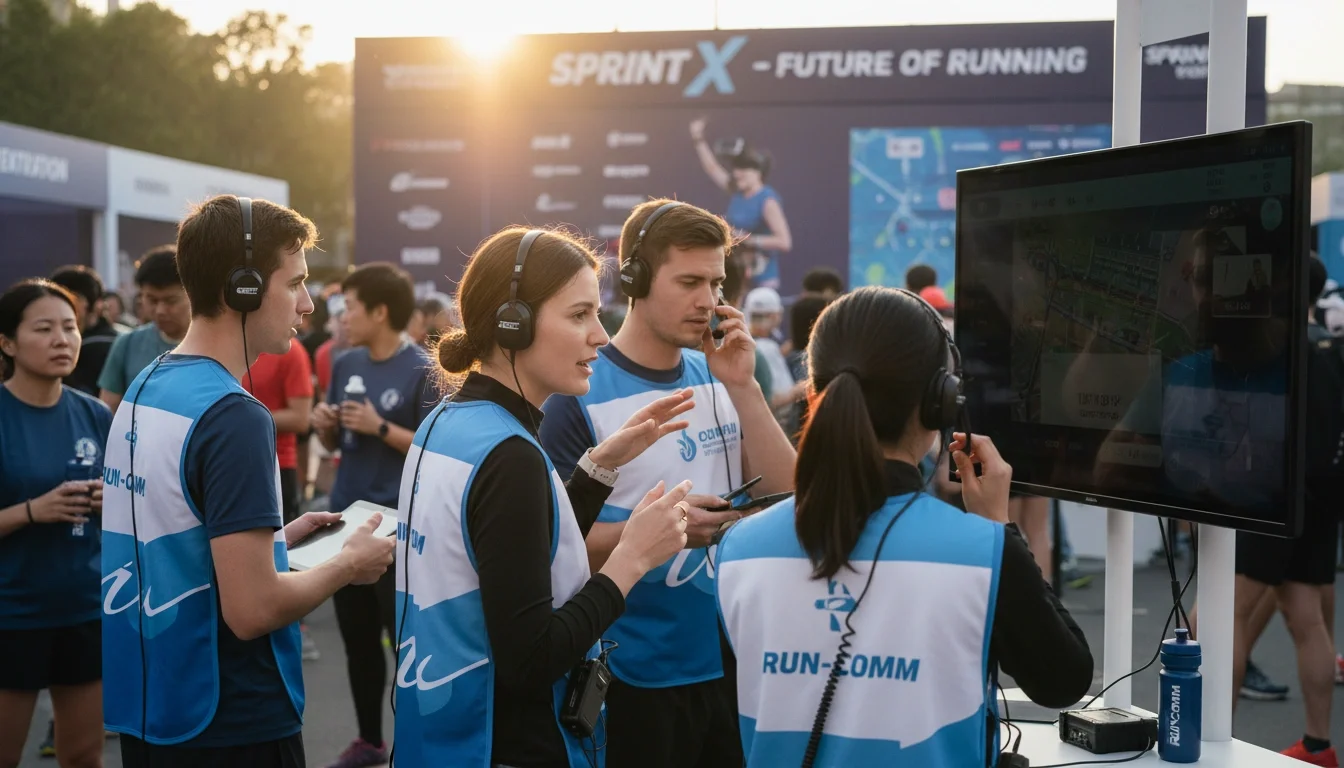
Event staff using headset communication system during marathon brand activation
Multi-City Logistics and Coordination
Successfully staffing across multiple Rock 'n' Roll Marathon cities requires systematic logistics management beyond standard single-event planning.
Managing Staff Across Different Time Zones
Rock 'n' Roll Marathon tours often span multiple time zones - San Diego (Pacific), Las Vegas (Pacific), Arizona (Mountain, no DST), Nashville (Central), Washington D.C. (Eastern). This creates coordination challenges:
Scheduling Confusion Prevention: Always specify time zones in communications. "6:00 AM arrival" is ambiguous; "6:00 AM EDT arrival" eliminates confusion. Use tools like World Time Buddy for scheduling cross-timezone team calls.
Travel Fatigue Management: When consecutive events occur in different time zones, build recovery time into schedules. Moving from a Sunday Las Vegas event directly to Saturday/Sunday Nashville event the following weekend (crossing two time zones) creates jet lag affecting performance.
Communication Windows: Establish core communication hours accounting for team distribution. If your activation manager operates from Los Angeles but coordinates staff across Eastern time cities, set expectations about response times for early morning or late evening inquiries.
Training Session Scheduling: When conducting pre-event training calls with mixed traveling team and local staff across time zones, schedule at times respectful of all participants. 2:00 PM Pacific allows morning-zone participants to join without excessive early starts.
Traveling team members working multiple time zones within compressed timeframes should receive additional per diem or hazard compensation recognizing the toll this takes.
Travel and Accommodation Arrangements
For traveling core teams working multiple Rock 'n' Roll Marathon cities:
Advance Hotel Bookings: Book accommodations 6-8 weeks out to secure reasonable rates in cities where marathons create hotel demand surges. Friday night and Saturday night rooms near expo and race start locations often sell out.
Strategic Hotel Selection: Choose hotels offering:
Proximity to event venues (reducing early morning transit time)
Breakfast service (staff can eat before 5-6 AM departures)
Storage areas for event materials if shipping to hotel
Reliable wifi for evening preparation and reporting
Flight Coordination: Book traveling team on the same flights when possible to simplify ground transportation and ensure everyone arrives for Friday morning setup. Build buffer time - if your Friday expo opens at noon, don't book flights landing at 9 AM that morning.
Ground Transportation: Determine whether rental cars, rideshare, or event shuttle services make sense in each city. Dense urban markets like Brooklyn or Washington D.C. often work better with rideshare, while sprawling markets like Phoenix or Las Vegas benefit from rental cars.
Expense Management: Establish clear per diem policies and expense reporting procedures. Typical per diem for marathon activations runs $50-$75/day covering meals beyond hotel breakfast and incidentals.
Equipment Transport: Decide whether traveling team carries essential materials (uniforms, tablets, signage) as checked baggage or ships separately to hotels. Each approach has trade-offs in cost versus reliability.
Create detailed travel documents for each city including hotel addresses, flight confirmations, ground transportation instructions, and venue directions with parking information. Distribute these at least 10 days before each event.
Shipping and Material Coordination
Marathon activations require substantial materials: tents, tables, product inventory, promotional items, signage, and branded elements. Coordinating these across multiple cities demands systematic planning:
Shipping Timelines: Ship materials to arrive Thursday before Friday expo setup. This builds one-day buffer for shipping delays. Use expedited shipping (2-3 day) for critical items rather than standard ground service.
Destination Determination: Options include shipping to:
Event venue (requires advance coordination with event operations)
Activation manager's hotel (verify hotel accepts and holds packages)
Local warehouse or fulfillment center (arrange pickup on event morning)
Each option has advantages. Shipping to venue eliminates transport logistics but requires coordination with event staff. Shipping to hotels provides control but creates vehicle loading requirements.
Return Shipping: Plan return logistics for reusable materials. Either:
Ship back to headquarters after each event
Ship directly to next tour city (requires precise timing)
Have traveling team transport essentials in checked baggage
Inventory Management: Track product inventory across multiple events. Running out of samples mid-tour requires emergency replenishment eating into budgets. Conversely, over-ordering creates excess inventory management.
Multi-City Material Strategy: Determine which materials ship between cities versus maintaining duplicate sets. Tents, tables, and heavy infrastructure often justify duplicate sets in each city (purchased or rented locally), while custom printed materials and branded uniforms travel with the team.
Create detailed shipping manifests and tracking systems ensuring nothing gets lost between cities. Assign your operations coordinator or activation manager responsibility for tracking all shipments and confirmating arrival.
City-Specific Regulations and Permits
Each Rock 'n' Roll Marathon city operates under different regulations affecting event activations:
Sampling Permits: Some cities require specific permits for food or beverage sampling in public spaces. Las Vegas, for instance, has strict regulations about alcohol sampling even at events. Research requirements 6-8 weeks before events.
Business Licenses: Certain cities mandate temporary business licenses for commercial activities at events. While event organizers may cover this through expo vendor agreements, confirm rather than assume.
Signage and Display Restrictions: Cities regulate signage sizes, placement, and anchoring methods. Coastal cities like San Diego often prohibit certain tent staking methods in beach areas. Urban markets regulate street-level signage differently than suburban venues.
Noise Ordinances: If your activation includes audio elements (music, announcements, demonstrations), verify compliance with local noise regulations, especially for evening events.
Insurance Requirements: Some venues require certificate of insurance with specific coverage amounts and naming them as additional insured. Coordinate with your insurance provider to issue venue-specific certificates in advance.
Health Department Compliance: Food or beverage sampling triggers health department oversight. Requirements for handler permits, refrigeration, and preparation vary dramatically by jurisdiction.
Partner with local event staffing agencies familiar with city-specific regulations. Professional agencies like Elev8 maintain compliance knowledge across major markets and can navigate permitting requirements efficiently.
Race Day Execution and Management
Marathon race day transforms months of planning into execution reality. Success depends on systematic management across compressed timeframes.
Pre-Event Staff Briefings
Conduct comprehensive team briefings 60-90 minutes before public activation begins. This timing allows for detailed orientation while staff are fresh and focused.
Briefing Agenda:
Welcome and Objectives Review (5 minutes): Set positive tone, review activation goals, emphasize team roles in achieving success.
Schedule Walk-Through (10 minutes): Detail timeline from setup through tear-down including break rotations, shift changes, and key milestone times (expo opening, race start, finish line rush).
Role Assignments and Station Allocations (10 minutes): Ensure every team member knows their specific responsibilities, assigned locations, and backup coverage during breaks.
Product/Brand Refresher (10 minutes): Quick review of key messages, sample protocols, and common participant questions. Address any last-minute product changes or special instructions.
Logistics Review (10 minutes): Cover materials locations, restocking procedures, communication protocols, emergency contacts, and bathroom/break locations.
Weather and Contingency Plans (5 minutes): Review day's forecast and how it affects operations. Confirm contingency protocols if conditions worsen.
Q&A and Energizer (10 minutes): Address staff questions, do team energizer activity, and send everyone to positions with enthusiasm.
For multi-day activations (Friday expo + Saturday/Sunday race days), conduct fresh briefings each morning rather than relying on previous day's session. Circumstances change overnight and teams need current information.
Role Assignments and Shift Scheduling
Clear role definitions prevent confusion and coverage gaps:
Primary Roles for Marathon Activations:
Activation Manager: Overall oversight, client communication, problem-solving, quality control. This role rarely rotates and typically belongs to your traveling team lead.
Station Leads: Manage specific areas (expo booth, course mile marker, finish line station). Coordinate staff at their location, manage inventory, report issues to activation manager.
Brand Ambassadors: Front-line engagement with participants. Deliver product education, sample distribution, lead capture, photo encouragement.
Product Demonstrators: Conduct specific demonstrations if activation includes interactive elements. Require specialized training beyond standard brand ambassador knowledge.
Registration/Check-In Staff: Manage participant sign-ups, prize wheel activities, or contest entries requiring data collection.
Operations/Logistics Support: Handle restocking, equipment troubleshooting, material movement, and behind-scenes coordination.
Shift Scheduling Strategies:
Marathon activations create uneven demand curves. Expo days see steady afternoon/evening traffic. Race mornings concentrate intense activity in 3-4 hour windows.
Structure shifts around these patterns:
Expo Day Example:
Setup shift: 8:00 AM - 12:00 PM (4 people)
First engagement shift: 11:30 AM - 4:00 PM (6 people, overlapping for briefing)
Second engagement shift: 3:30 PM - 8:00 PM (6 people)
Teardown shift: 7:30 PM - 9:00 PM (4 people)
Race Day Example:
Setup shift: 5:30 AM - 8:00 AM (4 people)
Peak hours shift: 7:30 AM - 12:30 PM (8-10 people, all hands on deck)
Teardown shift: 12:00 PM - 2:00 PM (4 people)
Build 30-minute overlap between shifts for briefings and knowledge transfer. Avoid scheduling individual breaks during peak hours - instead schedule entire positions to rotate (one brand ambassador takes break while another covers their location).
Create visual staffing boards showing who is assigned where at what times. Distribute individual schedule cards to each team member showing their specific assignments and break times.
Real-Time Communication Systems
Marathon activations span large physical areas - expo halls, multi-mile race courses, festival zones. Effective communication prevents small problems from becoming crises.
Communication Tool Options:
Two-Way Radios: Most reliable for large footprint activations. Radios work without cell service, provide instant communication, and create professional team coordination. Budget $30-$50/radio for rentals across a weekend. Ensure sufficient channels to separate management communication from operational chatter.
Group Messaging Apps: WhatsApp, GroupMe, or Slack create text-based coordination. Effective for updates that don't need immediate response. Less effective during fast-paced race hours when staff can't check phones.
Dedicated Phone Hotline: Provide activation manager's phone number as emergency escalation point. Use this for urgent issues requiring immediate manager intervention.
Regular Check-In Schedule: Establish standardized check-in times where station leads report status to activation manager (example: top of every hour during expo, every 30 minutes during race).
Communication Protocols:
Establish clear radio or messaging etiquette:
Identify yourself when initiating communication ("This is Sarah at the finish line station...")
Use clear, brief messages ("Need two cases of samples at booth 3")
Confirm message receipt ("Copy that, samples en route")
Reserve emergency/priority flags for genuine urgencies
Create laminated communication reference cards listing:
Activation manager contact information
Station lead assignments and contact methods
Venue security phone numbers
Event organizer contacts
Medical emergency procedures
Distribute these to all staff during morning briefings and conduct quick communication drill before public activation begins.
Handling No-Shows and Last-Minute Adjustments
Despite careful planning, marathon activations experience staffing disruptions:
No-Show Management:
Build 10-15% backup staff into plans from the start. This means hiring 11 people when you need 10, with the extra person on standby for the first hour. If no one no-shows, assign the backup to roving support or early teardown preparation.
Establish clear check-in deadlines (example: all staff must check in 30 minutes before activation opens). This creates time to identify no-shows and execute contingency plans before you're operating short-handed during peak hours.
Contingency Options for No-Shows:
Adjust Activation Footprint: Scale back to essential elements if running short-staffed. Close secondary sampling station and concentrate staff at primary booth.
Role Consolidation: Cross-train staff to handle multiple roles. Brand ambassadors who can also manage check-in registration create flexibility.
Manager Coverage: In emergencies, activation managers and traveling core team fill frontline positions temporarily while coordinating emergency replacement.
Agency On-Call Support: Professional staffing agencies maintain on-call rosters for exactly these situations. Communicate clearly with your staffing partner about backup availability and response times.
Last-Minute Adjustments:
Weather, venue changes, or activation element failures require real-time adaptation. Empower station leads to make immediate tactical decisions within defined parameters. For example, if rain begins, station leads can implement rain contingency plans (move materials under cover, deploy waterproof signage) without waiting for manager approval.
Create "adjustment authority levels" clarifying what decisions staff can make independently versus what requires manager consultation. This prevents both paralysis (staff afraid to act) and chaos (staff making incompatible decisions).
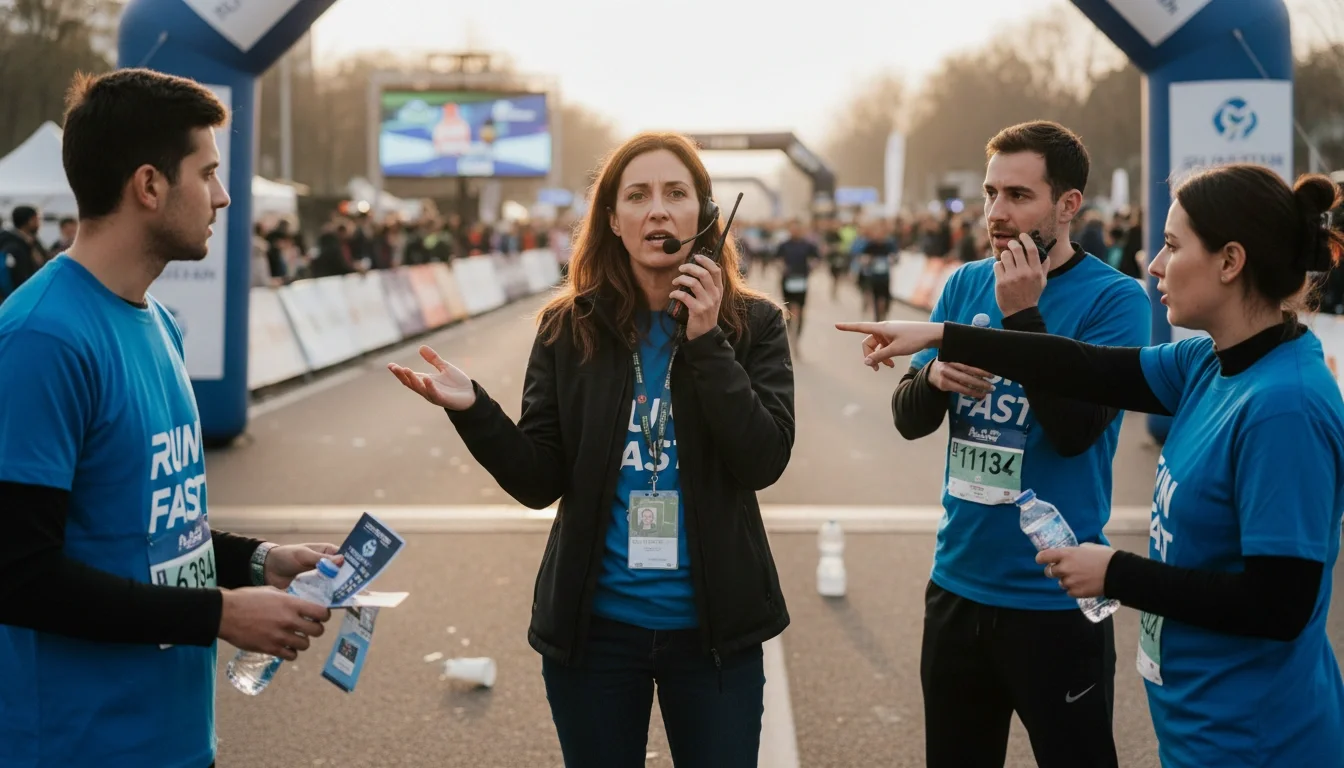
Event manager coordinating with brand activation staff using radio communication at marathon
Maximizing Engagement Through Proper Staffing
Strategic staff deployment across different marathon touchpoints amplifies activation effectiveness and ROI.
Pre-Race Expo Activation Strategies
Rock 'n' Roll Marathon expos typically run Friday afternoon/evening and all-day Saturday before Sunday races. These provide valuable brand exposure windows with less time pressure than race day.
Booth Positioning and Staff Deployment:
Request booth locations near high-traffic areas: entrance/exit pathways, bib pickup areas, or across from major sponsor displays. Strategic positioning allows smaller staff teams to engage more participants.
Deploy your most knowledgeable, consultative staff at expo booths. Unlike course-side positions requiring high energy and quick interactions, expo success depends on building rapport, demonstrating products thoroughly, and converting interest to leads or sales.
Optimal Expo Staffing Levels:
For standard 10x10 booth space: 3-4 staff working simultaneously prevents clusters while ensuring someone always engages arriving participants. 2-person minimum during slow periods, scaling to 4 during peak afternoon/evening hours.
For larger footprints (20x20 or island booths): 6-8 staff managing different station specializations - product demo area, lead capture, prize wheel activity, checkout/sales if permitted.
Engagement Tactics for Expo Success:
Proactive Greeting Approach: Train staff to engage participants walking past booth before they commit to continuing. "Quick question - are you running tomorrow or Sunday?" creates natural conversation openings.
Sampling Strategy: Expo sampling should emphasize trial over mass distribution. Offer samples with brief explanation rather than mindless distribution. This builds brand knowledge and connection.
Lead Capture Integration: Every meaningful interaction should result in lead capture (email, phone, social media follow). Use mobile forms, QR codes, or tablet-based systems for frictionless collection.
Product Demonstration Scheduling: If your activation includes complex demonstrations (running shoe analysis, nutrition consultations), schedule them at regular intervals (every 30 minutes) creating booth traffic spikes as crowds gather.
Expert Positioning: Staff members with genuine product expertise (certified nutritionists for food products, experienced runners for athletic gear) create credibility and differentiation.
Avoiding Common Expo Staffing Mistakes:
Don't station staff inside booth boundaries - this creates barriers. Position staff at booth edges engaging passersby before they walk past.
Don't allow staff to sit behind tables on phones during slow periods. Standing, energetic staff appear approachable and invested.
Don't deploy identical messaging from all staff members. Assign different specialization angles (one staff member focuses on nutrition benefits, another on flavor profiles, another on sustainable sourcing) creating richer participant experiences.
Course-Side Engagement Tactics
Course activations present different challenges than controlled expo environments. Runners stream past continuously over 3-5 hour windows with seconds available for engagement.
Strategic Mile Marker Selection:
Different course locations serve different engagement purposes:
Early Course (Miles 1-3): Runners are fresh, in good spirits, and responsive to encouragement. Great for high-energy brand presence and photo opportunities. Challenge: runners often ignore samples this early wanting to avoid digestive issues.
Mid-Course (Miles 6-10 for half marathon, Miles 10-16 for full): Prime sampling window. Runners appreciate nutrition, hydration, or pain relief products. Energy begins flagging, making encouragement impactful.
Late Course (Final miles before finish): Runners are exhausted but close to accomplishment. Motivational support resonates strongly. Practical products (ice packs, quick energy) provide immediate relief.
Finish Line Area: Post-finish celebrations create receptive audiences for photos, social media, recovery products, and extended engagement.
Work with event organizers to secure strategic locations aligned with your product positioning.
Staff Energy Management for Course Activations:
4-6 hours of continuous high-energy engagement drains even experienced staff. Implement systematic energy management:
Rotation Systems: If managing multiple course locations, rotate staff between high-intensity positions (active shouting and distribution) and lower-intensity support roles (restocking, social media capture) every 60-90 minutes.
Team Energy Maintenance: Create micro-breaks where staff step back for 3-5 minutes to hydrate, snack, and reset. Rotate these so the station never appears unmanned.
Energy Amplification Techniques: Call-and-response cheering, dance breaks, and coordinated staff routines maintain enthusiasm while engaging runners.
Music Integration: If permitted, music energizes both staff and runners. Coordinate with Rock 'n' Roll Marathon's music theme.
Course-Side Engagement Scripts:
Develop memorable, high-energy callouts:
"[Brand Name] hydration station ahead! Grab your recovery fuel!"
"Looking strong, runner! [Brand Name] keeps you going!"
"[Bib number callout] - that's YOUR number! Take a [product] for the final push!"
Personalization through bib number callouts, costume recognition, or name reading (many runners wear names on bibs) creates connection despite brief interactions.
Sample Distribution Efficiency:
Optimize distribution for continuous runner flow:
Assembly Line Setup: Pre-open products, arrange for grab-and-go efficiency, minimize runner stop time.
Both-Sides Distribution: Staff both sides of course preventing runners from crossing flow to reach your station.
Call-Ahead Strategy: Signal upcoming sampling point 20-30 yards in advance so runners can mentally prepare to grab samples.
Overflow Contingency: During peak hour surges (typical 90-120 minutes after start), double staff at distribution points preventing backups.
Finish Line and Recovery Zone Staff Deployment
Finish line areas represent prime engagement opportunities. Exhausted, emotional finishers are highly receptive to recovery products, celebration, and social media sharing.
Finish Line Staffing Considerations:
Timing the Arrival: Finish line staff must arrive early since runners complete marathons and half marathons in 3-6 hours. First finishers cross around 1.5-2 hours after start, with peak finish times 3-4 hours post-start.
Physical Positioning: Event organizers control finish line access. Work collaboratively to secure positions in runner flow patterns - typically just beyond medal distribution before family reunion areas.
Recovery-Focused Staffing: Deploy empathetic, patient staff who understand finishers' physical distress. High-pressure sales approaches fail dramatically here.
Finish Line Engagement Tactics:
Celebration Focus: Lead with congratulations, finish time acknowledgment, and celebration before introducing product or brand messaging.
Recovery Product Sampling: Products positioned for recovery (protein, electrolytes, ice packs, compression gear) find highly receptive audiences.
Photo Opportunities: Create Instagram-worthy photo backgrounds with brand elements. Tired finishers love documenting accomplishments.
Immediate Gratification: Fast-acting relief products (cooling sprays, blister care, massage) demonstrate brand value through immediate benefit.
Recovery Zone Configuration:
If your activation includes dedicated recovery zone:
Seating/Shade Provision: Physical comfort earns enormous goodwill from exhausted runners.
Multi-Station Layout: Separate stations for different activities (product sampling, photo booth, social media contest entry, purchase if permitted) prevent bottlenecks.
Extended Engagement Design: Unlike quick course-side interactions, finish areas allow 5-15 minute engagement windows. Design experiences that reward this investment of time and attention.
Staff Scheduling for Finish Peaks: Concentrate maximum staff during peak finish windows (hours 3-5 post-start for half marathons). Earlier and later periods need fewer personnel.
Social Media and Content Capture Coordination
Every marathon activation should capture content for post-event marketing, social media, and performance documentation.
Dedicated Content Roles:
Assign 1-2 staff specifically to content capture rather than making it secondary responsibility for engagement staff. This ensures quality, consistent documentation.
Content Capture Priorities:
Staff-Runner Interactions: Genuine engagement moments - staff handing out samples, cheering runners, conducting demonstrations.
Participant Testimonials: Quick video interviews with participants sharing experiences. Ask simple questions: "What brought you to our booth?" or "How will you use [product] in your training?"
Environment and Branding: Wide shots showing booth, signage, and brand presence at various race locations.
Team Culture: Behind-scenes content of staff setup, morning energy, team celebrations.
User-Generated Content Collection: Encourage participants to tag your brand in social posts, use event hashtags, and share photos at your activation.
Technical Considerations:
Equipment: Professional smartphone cameras suffice for most marathon content. Consider small portable lighting for early morning or evening events.
Cloud Storage: Upload content real-time to cloud storage ensuring nothing is lost if devices fail.
Immediate Social Sharing: Post content throughout event day maintaining real-time social media presence rather than waiting for post-event publishing.
Rights and Permissions: Brief staff on when to request photo/video permissions versus when ambient event photography doesn't require explicit consent.
Compile content from all tour cities creating comprehensive campaign documentation demonstrating activation reach and impact.
Post-Event Optimization
Marathon activation success extends beyond race day execution into systematic post-event analysis and continuous improvement.
Staff Performance Evaluation
Implement structured performance assessment for both traveling team and local staff:
Real-Time Performance Observation:
Activation managers should conduct systematic observation during events using evaluation rubrics:
Engagement Quality: Are staff actively engaging participants or passively waiting?
Brand Message Accuracy: Do interactions communicate priority messaging?
Energy Consistency: Does enthusiasm remain high throughout shifts?
Problem-Solving Initiative: How do staff handle unexpected situations?
Team Collaboration: Are staff supporting teammates proactively?
Document observations immediately while fresh using mobile note-taking apps.
Post-Event Debrief Sessions:
Conduct team debriefs within 24-48 hours after each event covering:
What worked exceptionally well
What challenges emerged
What staff would change for next activation
Logistical improvements needed
Training gaps identified
These sessions surface insights that formal evaluations miss while demonstrating that staff input matters.
Quantitative Performance Metrics:
Track measurable outcomes:
Samples distributed per staff hour
Leads captured per staff member
Social media mentions generated
Participant feedback scores
Activation traffic counts
Compare performance across staff members and cities identifying top performers for recognition and learning opportunities.
Performance-Based Retention:
For multi-city tours, performance evaluation determines which staff continue across markets. Top-performing local staff in early tour cities might be invited to join traveling team for subsequent events.
Systematic evaluation also identifies poor performers early, allowing replacement before they damage brand experience at multiple events.
Participant Feedback Collection
Gathering participant perspectives provides external validation of staff effectiveness:
Real-Time Feedback Mechanisms:
QR Code Surveys: Display QR codes at activations linking to brief 3-5 question surveys. Offer small incentives (prize drawing entry) for completion.
Staff Interaction Observation: Assign mystery shoppers or brand representatives to evaluate staff interactions from participant perspective.
Social Media Monitoring: Track event hashtags, brand mentions, and location tags capturing organic participant reactions.
Post-Event Survey Distribution:
Email surveys to participants who provided contact information. Focus questions on:
Activation awareness and recall
Staff interaction quality and knowledge
Product trial and purchase intent
Likelihood to recommend brand
Suggestions for improvement
Keep surveys brief (under 5 minutes) and mobile-friendly given runner demographics.
Feedback Integration:
Share participant feedback with staff teams demonstrating impact of their work and building investment in continuous improvement. Positive comments create recognition and motivation; constructive criticism guides training adjustments.
ROI Analysis and Reporting
Demonstrate activation value through comprehensive ROI analysis:
Cost Components to Track:
Staff compensation (wages, travel, accommodations)
Materials and inventory (samples, promotional items, signage)
Logistics (shipping, storage, vehicles)
Event fees (booth rental, permits, insurance)
Agency fees (if using staffing partners)
Value Metrics to Measure:
Direct Outcomes:
Leads captured with contact information
Product samples distributed
On-site sales (if permitted)
Email list growth
Social media following increases
Engagement Metrics:
Activation traffic (estimated participant interactions)
Average engagement time
Social media mentions and impressions
User-generated content pieces
Brand sentiment analysis
Conversion Metrics:
Lead-to-customer conversion rates
Coupon redemption rates
Post-event sales lift in activation cities
Website traffic increases from event markets
ROI Calculation Framework:
Calculate cost per outcome:
Cost per lead captured
Cost per sample distributed
Cost per social media mention
Cost per estimated brand impression
Compare these to alternative marketing channel costs (digital ads, influencer partnerships, traditional media) demonstrating relative efficiency.
For sponsor activations, demonstrate sponsorship value amplification:
Sponsorship investment: $100,000 across three cities Activation investment: $25,000 in staffing and execution Total value generated: $500,000 in media impressions, 5,000 qualified leads, 15,000 samples distributed Value multiplier: 4x return on combined investment
Reporting Best Practices:
Create standardized reporting templates updated after each event and compiled into comprehensive tour summaries. Include:
Executive summary with key metrics
City-by-city performance comparison
Staff performance highlights
Participant feedback themes
Photo documentation
Recommendations for future activations
Distribute reports to stakeholders within 1-2 weeks after event while momentum remains high.
Building a Preferred Staff Database for Future Events
Transform one-time staffing successes into long-term assets:
Staff Performance Database:
Create systematic records for every staff member worked with:
Contact information
Cities worked
Roles performed
Performance ratings
Special skills or certifications
Availability for future events
Compensation history
Professional staffing agencies maintain these databases as core business systems. If self-managing staffing, invest in simple CRM tools to organize this information.
Top Performer Retention:
Identify your top 20% performers and cultivate ongoing relationships:
Priority invitation to future tour stops
Small retention bonuses (extra $50-$100) recognizing exceptional work
Professional development opportunities
Public recognition in team communications and social media
High performers appreciate feeling valued beyond transactional event work. These relationships create reliable talent pipeline for future Rock 'n' Roll Marathon seasons or other event series.
Local Market Expertise Development:
For cities where you activate annually, develop stable local teams who work your activation year after year. These familiar faces build efficiency through experience and become brand ambassadors between formal events.
Consider annual retainer relationships with 2-3 core local staff in key markets, compensating them minimally to maintain priority availability and ongoing brand knowledge.
Knowledge Transfer Systems:
Document lessons learned from each event in accessible formats:
City-specific tip sheets (best hotels, logistics challenges, venue quirks)
Staff training refinements (what worked, what needs improvement)
Updated role descriptions and performance expectations
Revised timeline templates incorporating new insights
This institutional knowledge prevents repeating mistakes and accelerates onboarding for new staff as your program grows.
Professional event staffing team celebrating successful marathon brand activation
Common Staffing Challenges and Solutions
Even experienced activation teams encounter recurring challenges across marathon events. Anticipating these issues and preparing solutions minimizes disruption.
Weather-Related Contingencies
Marathon activations proceed regardless of weather, but conditions dramatically affect staff performance and participant engagement.
Heat Management:
Summer Rock 'n' Roll Marathons in cities like Phoenix, Las Vegas, or San Diego create dangerous heat exposure:
Staff Protection: Provide cooling towels, shade structures, extra water beyond standard hydration, and mandatory rotation breaks. Consider early morning shifts before peak heat.
Modified Engagement: Hot weather reduces participant tolerance for extended interactions. Adjust to quicker touchpoints and focus on hydration-related messaging.
Product Considerations: Refrigeration capacity for samples becomes critical. Budget for additional coolers and ice.
Rain and Storms:
Unexpected rain affects materials, equipment, and staff morale:
Waterproofing: Protect materials with plastic sheeting, waterproof tents, and covered storage. Brief staff on rain deployment procedures beforehand.
Safety Protocols: Establish severe weather evacuation plans. Know where staff should shelter if dangerous conditions develop.
Staff Comfort: Provide rain gear (ponchos, waterproof jackets) as part of standard supplies. Wet, uncomfortable staff cannot maintain energy.
Cold Weather:
Early season events (Washington D.C. in March, for example) bring cold challenges:
Layering Strategy: Allow staff to wear base layers under branded clothing. Provide hand warmers and hot beverage access.
Equipment Winterization: Tablets and phones drain batteries faster in cold. Provide backup power and warming pockets.
Reduced Capacity: Accept that cold weather decreases participant engagement. Don't penalize staff for lower interaction volumes during severe cold.
Weather Communication:
Monitor forecasts obsessively in the week before events. Communicate weather expectations and contingency plans in pre-event briefings so nothing surprises teams race morning.
Managing Staff Energy Across Long Event Days
Marathon activations demand sustained high energy from pre-dawn setup through afternoon teardown, often spanning 8-12 hours.
Energy Depletion Prevention:
Adequate Rest: Don't schedule late social events the night before early marathon mornings. Professional boundaries protect performance.
Nutrition Management: Provide substantial meal breaks, not just quick snacks. Budget for catered team lunch/breakfast or meal allowances.
Caffeine Strategy: Most staff rely on coffee for early starts. Ensure coffee access at arrival (hotel breakfast, provided coffee service, or allowance for purchase).
Physical Relief: Provide chairs or stools for periodic sitting during lower-intensity moments. Anti-fatigue mats at standing stations reduce leg strain.
Mental Breaks: Build 10-15 minute breaks where staff can step completely away from activation, not just rotate positions.
Recognizing Burnout Signs:
Watch for: declining enthusiasm, shorter participant interactions, irritability with teammates, frequent break requests, or physical distress complaints.
Address burnout immediately by redistributing workload, providing extended break, or adjusting role assignments. Never ignore these signals as they compound rapidly.
Multi-Day Event Energy:
When activations span Friday expo + Saturday + Sunday race days, cumulative fatigue becomes real. Consider:
Smaller staff teams working single days rather than everyone working all three days
Longer Saturday night rest (later Sunday arrival time if race schedule permits)
Financial incentives for multi-day commitment (pay premium for consecutive days)
Dealing with Staff Turnover Between Cities
Multi-city tours experience staff attrition as traveling team members face competing commitments or burnout.
Preventing Core Team Turnover:
Clear Expectations: Communicate full tour commitment expectations during recruitment. Surprises about schedule or demands create preventable attrition.
Fair Compensation: Underpaying traveling team members creates resentment and departure. Competitive compensation acknowledges their commitment.
Team Cohesion: Build genuine team culture through shared meals, recognition of individual contributions, and collaborative problem-solving. People stay for relationships.
Flexibility When Possible: If team members need to miss one city due to legitimate conflicts, accommodate when possible rather than forcing all-or-nothing ultimatums.
Managing Departures:
When traveling team members must leave mid-tour:
Succession Planning: Identify potential replacements among high-performing local staff from earlier tour cities who could step up.
Knowledge Transfer: Require departing team members to document their role thoroughly and conduct transition briefings with replacements.
Performance Continuity: Don't lower standards for replacement team members. Brief them that they're joining established high-performing team with existing expectations.
Local Staff Retention Across Years:
For annual Rock 'n' Roll Marathon activations, retain top local staff year-over-year:
Contact them 8-10 weeks before next year's event before they commit to other opportunities
Provide year-over-year pay increases recognizing experience
Give first preference on shift selection and role assignments
Feature them in team recognition and social media
Cultural Differences in Various Markets
Rock 'n' Roll Marathon cities each have distinct cultures affecting how participants engage with activations.
Regional Engagement Style Differences:
West Coast Markets (San Diego, Los Angeles): Tend toward health-conscious, laid-back engagement. Extended conversations about product benefits resonate.
Las Vegas: Party atmosphere creates high energy but shorter attention spans. Quick, entertaining interactions work better than detailed explanations.
Southern Markets (Nashville): Expect friendlier, more personal interactions. Staff should match this warmth rather than maintaining detached professionalism.
Northeast Markets (Brooklyn, D.C.): Faster-paced, efficiency-valued. Get to the point quickly. Respect participants' time.
Language Considerations:
Major markets include significant non-English-speaking populations. Washington D.C. and certain California markets attract international runners.
While requiring full bilingual teams is unrealistic, having 1-2 Spanish-speaking staff members in applicable markets significantly improves engagement and inclusion.
Local Knowledge Value:
Local staff bring insider knowledge about:
Traffic patterns and parking challenges
Neighborhood geography and directions
Local running clubs and community connections
Regional food and beverage preferences
Leverage this by pairing local staff with traveling team members, creating knowledge exchange benefiting both.
Cultural Sensitivity Training:
Brief teams on avoiding:
Regional stereotypes or jokes
Political comments (especially in Washington D.C.)
Sports team rivalries (unless activating around them intentionally)
Assumptions about participant backgrounds or capabilities
Professional, respectful engagement works everywhere. When in doubt, let participants lead conversations while staff listen and respond authentically.
Technology and Tools for Marathon Staffing
Strategic technology adoption streamlines marathon staffing logistics and performance tracking.
Staff Management Platforms
Dedicated staff management platforms solve coordination challenges across distributed teams and multiple markets:
Recommended Platform Capabilities:
Centralized Scheduling: Create and distribute schedules accessible via mobile apps rather than static spreadsheets emailed multiple times.
Shift Claiming Systems: Allow staff to claim open shifts from available options, reducing scheduling conflicts.
Time and Attendance Tracking: Digital check-in/check-out eliminates manual time tracking disputes and simplifies payroll.
Document Distribution: Share training materials, event briefings, maps, and emergency contacts through centralized platform.
Performance Evaluation Tools: Built-in evaluation forms streamline real-time performance documentation.
Popular platforms include When I Work, Deputy, Shiftboard, or Staffing HQ. Most cost $2-$5 per user per month with annual contracts.
For smaller activations or occasional events, Google Sheets combined with Google Calendar provides free alternatives, though with less functionality.
Communication Tools for Distributed Teams
Beyond race-day radio systems, effective multi-city coordination requires robust asynchronous communication:
Messaging Platform Selection:
Slack: Best for organized communication with channels for different topics (logistics, training, social, city-specific). Free tier handles most event team needs.
WhatsApp/GroupMe: More accessible for staff less comfortable with workplace tools. Better mobile experience. Limited organization features.
Microsoft Teams: If your organization uses Microsoft 365, Teams provides integrated communication and file storage.
Channel/Group Structure:
Organize communications to prevent overwhelming staff:
General announcements (activation manager only posts)
City-specific groups (just staff working that market)
Role-specific channels (brand ambassadors, operations team)
Social/team building (optional participation)
Communication Guidelines:
Establish expectations:
Response time requirements (within 4 hours for non-emergencies)
Hours when staff shouldn't expect communication (respecting off-hours)
Which topics go where (emergency vs. routine)
Professional tone requirements even in casual platforms
Real-Time Scheduling Apps
Marathon activations generate constant schedule adjustments as circumstances change.
Dynamic Scheduling Tools:
Apps like Shyft, Sling, or HotSchedules allow:
Self-Service Shift Swaps: Staff can trade shifts directly (with manager approval) when conflicts arise.
Last-Minute Coverage Requests: Quickly broadcast open shift needs to all qualified staff.
Automatic Notifications: Staff receive alerts about schedule changes rather than assuming they check platforms regularly.
Availability Management: Staff input their availability constraints so managers only schedule when people can work.
Integration with Time Tracking:
Combined scheduling and time tracking eliminates duplicate data entry and ensures accurate compensation.
Performance Tracking Systems
Systematic performance tracking identifies improvement opportunities and recognizes excellence:
Metrics to Track Per Staff Member:
Leads captured per hour
Samples distributed
Participant interaction counts
Social media content pieces created
Qualitative performance ratings from managers
Participant feedback scores
Simple Tracking Approaches:
Low-tech: Managers maintain Google Sheet with daily observations and quantitative counts per staff member.
Mid-tech: Use survey tools (Typeform, SurveyMonkey) for structured evaluation forms managers complete during events.
High-tech: Custom dashboards combining scheduling system data, POS/lead capture system data, and performance evaluations.
Performance Recognition:
Make tracking visible and positive:
Leaderboards showing top performers (with staff consent)
Public recognition in team communications
Performance bonuses for exceeding targets
Preferential scheduling or role assignments
Transparency about what you're tracking and why prevents surveillance concerns while motivating performance improvement.
Conclusion
Staffing brand activations across the Rock 'n' Roll Marathon Series demands far more than filling positions with warm bodies. The unique combination of multi-city touring logistics, early morning schedules, athletic event culture, and high-energy environments requires specialized recruitment, rigorous training, and systematic execution management.
The most successful marathon activations share common elements: hybrid staffing models balancing traveling core teams with local market expertise, comprehensive training addressing both product knowledge and runner psychology, proactive contingency planning for inevitable challenges, and commitment to post-event optimization that transforms each tour stop into learning opportunities.
By implementing the strategies outlined in this guide, brands can transform Rock 'n' Roll Marathon sponsorships from passive logo placements into dynamic engagement opportunities that build lasting connections with fitness-focused consumers. The investment in quality staffing pays dividends through higher participant satisfaction, increased sample-to-sale conversion, and brand experiences that runners remember long after crossing the finish line.
For brands seeking professional event staffing support across the Rock 'n' Roll Marathon Series or other multi-city activations, partnering with experienced staffing agencies eliminates common pitfalls while providing access to vetted, trained talent pools in every major market.