Bourbon, Country Ham, and Brand Sampling at the Kentucky State Fair
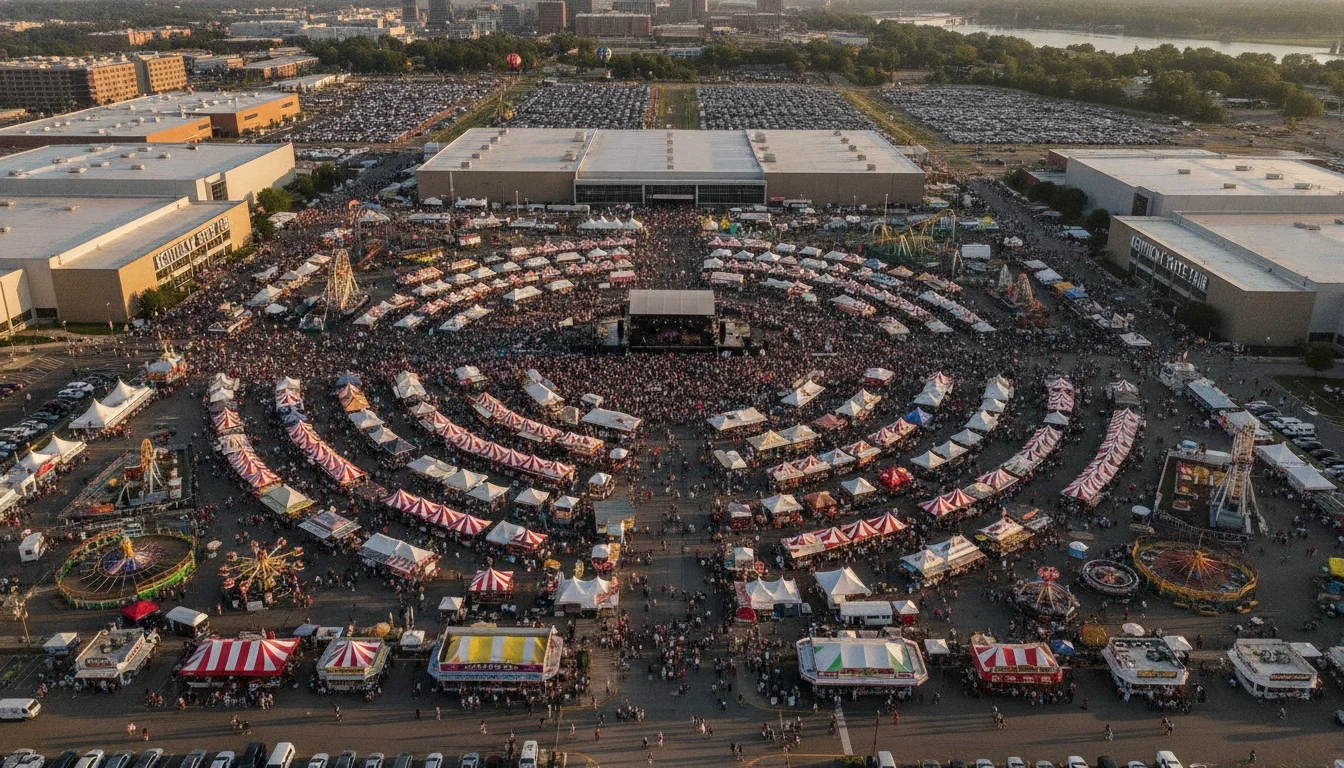
Aerial view of the Kentucky State Fair grounds at the Kentucky Exposition Center in Louisville, with vendor booths and fair crowds
Every August, roughly half a million people descend on the Kentucky Exposition Center in Louisville for one of the oldest and most culturally loaded state fairs in the country. They come for the rides, the livestock competitions, and the World's Championship Horse Show. But they also come for something distinctly Kentuckian: country ham, bourbon, and the long tradition of putting the state's best products in front of the people who love them most.
For brands — especially food, beverage, and spirits companies — the Kentucky State Fair is one of the most compelling brand activation stages available anywhere in the South. The audience is enormous, the cultural alignment is built in, and the appetite for sampling (literally) is as strong as anywhere you'll find. But showing up with a booth and a few trays of samples is not a strategy. Execution is everything.
This guide breaks down what makes the Kentucky State Fair uniquely suited to brand sampling, why bourbon and country ham brands have mastered the art of on-ground activation, and what the staffing infrastructure behind a successful sampling program actually looks like.
The Kentucky State Fair at a Glance
11 Days, 500,000 Attendees, and Kentucky's Finest
The Kentucky State Fair runs for 11 days in mid-August at the Kentucky Exposition Center — a 1.2 million square foot complex that is one of the largest convention and exposition facilities in the United States. The fair draws attendees from across Kentucky and neighboring states, with a demographic range that spans young families, bourbon enthusiasts, agricultural professionals, and lifelong fair-goers.
What makes the fair distinct from other large state fairs is its cultural specificity. Kentucky is not just a backdrop — it is the entire point. The fair is an explicit celebration of what the Bluegrass State grows, raises, cooks, distills, and crafts. That cultural gravity makes every sample, every tasting station, and every brand interaction feel more authentic than it would at a generic consumer event.
For brands positioned within the food, beverage, and spirits categories, this is an audience that already cares about provenance, about craft, about what something tastes like. That is a remarkably favorable starting condition for product sampling.
The Kentucky Exposition Center — Louisville's Event Anchor
The fair takes place at the Kentucky Exposition Center in Louisville, which also serves as the venue for major trade shows, conventions, and public events throughout the year. Louisville itself is a mid-sized city with strong regional event infrastructure, a robust hospitality workforce, and deep familiarity with large-scale food and beverage activations — including the staffing and logistics that support them.
For event planners and brand managers looking to activate in the broader Louisville market, the Kentucky State Fair represents one of the highest-attendance consumer touchpoints of the calendar year.
Country Ham: Kentucky's Most Competitive Product
If there is one food product that embodies the Kentucky State Fair, it is country ham. Dry-cured, hickory-smoked, and aged for months — sometimes over a year — Kentucky country ham is a culinary tradition with roots stretching back centuries. It is also, at the fair, a fiercely competitive sport.
The World's Championship Country Ham Competition
Each year, the Kentucky State Fair hosts the World's Championship Country Ham Competition, which draws entries from producers across the state. A panel of outside judges evaluates hundreds of hams on criteria including cure, smokiness, texture, and overall quality. The producer of the Grand Champion ham takes home one of the most coveted agricultural titles in the state.
Broadbent's B&B Food Products from Kuttawa, Kentucky, has been a perennial champion — the company has claimed the Grand Champion title more than two dozen times since 1967. In 2025, their 16.5-pound Grand Champion ham was judged from over 1,000 entries. That level of competition reflects how seriously Kentucky producers take the craft.
For brands producing country ham, aged meats, or complementary pairings (think mustards, biscuit mixes, or specialty cheeses), the Country Ham Competition section of the fair is an extraordinarily rich environment for product demonstration. Attendees in that area are self-selected — they are there because they care deeply about this particular food tradition. A well-staffed demonstration booth in that context does not feel like advertising. It feels like hospitality.
The Kentucky Farm Bureau Ham Breakfast and Charity Auction
The fair's annual Kentucky Farm Bureau Country Ham Breakfast and Charity Auction is among the most remarkable events at any state fair in the country. The breakfast — the largest farm-city event in Kentucky — features the auctioning of the Grand Champion ham for charity. In recent years, the auction has raised extraordinary sums: the 2024 winning bid was $10.5 million, and the 2025 auction raised $10 million, both placed by prominent Kentucky philanthropists.
Miss Kentucky ceremonially carries the Grand Champion ham into the breakfast each year — a tradition now in its third decade. Elected officials attend. Farm Bureau leadership speaks. It is not just a breakfast; it is a cultural and agricultural institution.
For brands connected to agriculture, food production, or Kentucky culture, the breakfast represents a high-visibility sponsorship and activation opportunity with a deeply engaged audience and significant media coverage.
What Country Ham Brand Activations Actually Look Like
For brands activating in and around the country ham section of the fair, the most effective formats typically include:
Tasting stations where staff walk guests through the curing process while offering small samples on biscuits or crackers
Pairing demonstrations that introduce guests to complementary products — classic bourbon pairings, specialty condiments, or cheese selections
Heritage storytelling activations where knowledgeable staff discuss the provenance and craftsmanship behind the product
Competition tie-in promotions that capitalize on the Grand Champion results to drive sampling traffic
In every case, the quality of the brand ambassador staffing the booth determines whether a sample becomes a memory — or just a free bite of food.
Bourbon Sampling at the Fair — What Brands Are Doing Right
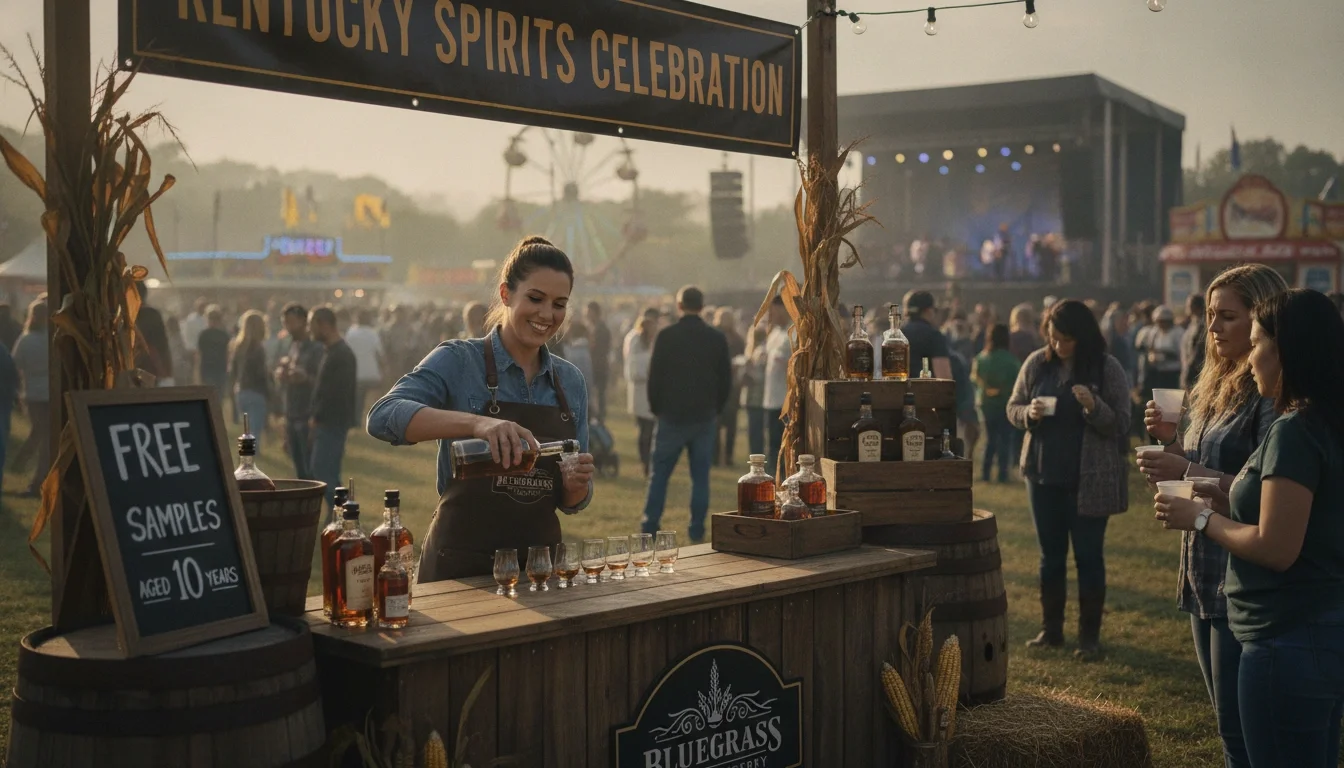
A brand ambassador pouring bourbon samples at a distillery booth at a Kentucky fair or festival event
Why Bourbon Brands Activate at State Fairs
Kentucky produces roughly 95% of the world's bourbon supply, and the Kentucky State Fair is one of the few consumer events where that fact is not just a marketing talking point — it is an ambient reality. Attendees walk in already predisposed toward bourbon. They are curious, open to trying new expressions, and more receptive to brand stories than they would be in a retail environment.
State fair activations also serve an important discovery function for smaller and craft distilleries. While heritage brands like Buffalo Trace, Maker's Mark, and Woodford Reserve carry name recognition that sells itself, newer and craft producers — which have multiplied rapidly in Kentucky over the past decade — use fair sampling to build the kind of personal connection with consumers that no billboard can replicate.
The Kentucky Bourbon Festival in Bardstown draws over 40 distilleries and has grown dramatically in recent years — but the State Fair reaches a far broader and more demographically diverse audience, including casual consumers who may not seek out a dedicated bourbon event but are open to a sample as they walk between exhibits.
What a Successful Bourbon Sampling Booth Looks Like
A well-executed bourbon sampling activation at a state fair is built around a few core operational principles:
Clear brand story, told conversationally: Consumers want to understand what makes this bourbon different. Staff needs to communicate a 30-second narrative that is memorable without being a sales pitch.
Guided tasting, not passive sample cups: The most effective bourbon sampling staff pour, explain, watch the reaction, and respond. They ask questions. They invite conversation about flavor notes.
Responsible service: Bourbon is a regulated product. Any activation serving alcohol requires staff who understand compliance, recognize signs of overconsumption, and manage portion control without disrupting flow.
Merchandise and conversion pathways: Great sampling staff know how to create natural handoffs — toward a bottle purchase, a QR code for a distillery tour, or a follow-on brand experience.
Compliance and Certification: What Every Bourbon Brand Needs to Know
Alcohol sampling at public events in Kentucky is governed by the Kentucky Department of Alcoholic Beverage Control (ABC). Any activation serving alcohol — even in small sample quantities — requires staff who hold appropriate certifications, and brands must understand event-specific licensing requirements.
At a minimum, bourbon sampling staff should hold:
TIPS (Training for Intervention Procedures) certification or equivalent responsible beverage service training
Kentucky RBS (Responsible Beverage Service) credentials, where applicable
Familiarity with the ABC's event sampling regulations and the specific permit requirements for the Kentucky State Fair
This is not an area where improvisation is appropriate. A compliance failure at a major public event carries brand, legal, and operational consequences. Professional event staffing agencies that specialize in alcohol and beverage activations handle certification verification as a standard part of the staffing process.
What Makes a State Fair Brand Sampling Program Work
The Right Staff Makes or Breaks a Sampling Activation
Here is a truth that every brand manager learns, often the hard way: the product quality determines the potential of a sampling activation. The staff determines the result.
A sample handed over silently is just free food. A sample delivered by someone who genuinely understands the product, reads the consumer's reaction, adapts their pitch in real time, and creates a moment of connection — that is a brand experience. The difference in conversion rate between these two scenarios is significant.
At a high-traffic event like the Kentucky State Fair, where attendees are moving quickly, distracted by competing stimuli, and physically tired by mid-afternoon, the energy, attentiveness, and product fluency of sampling staff are the single most important variable in activation performance.
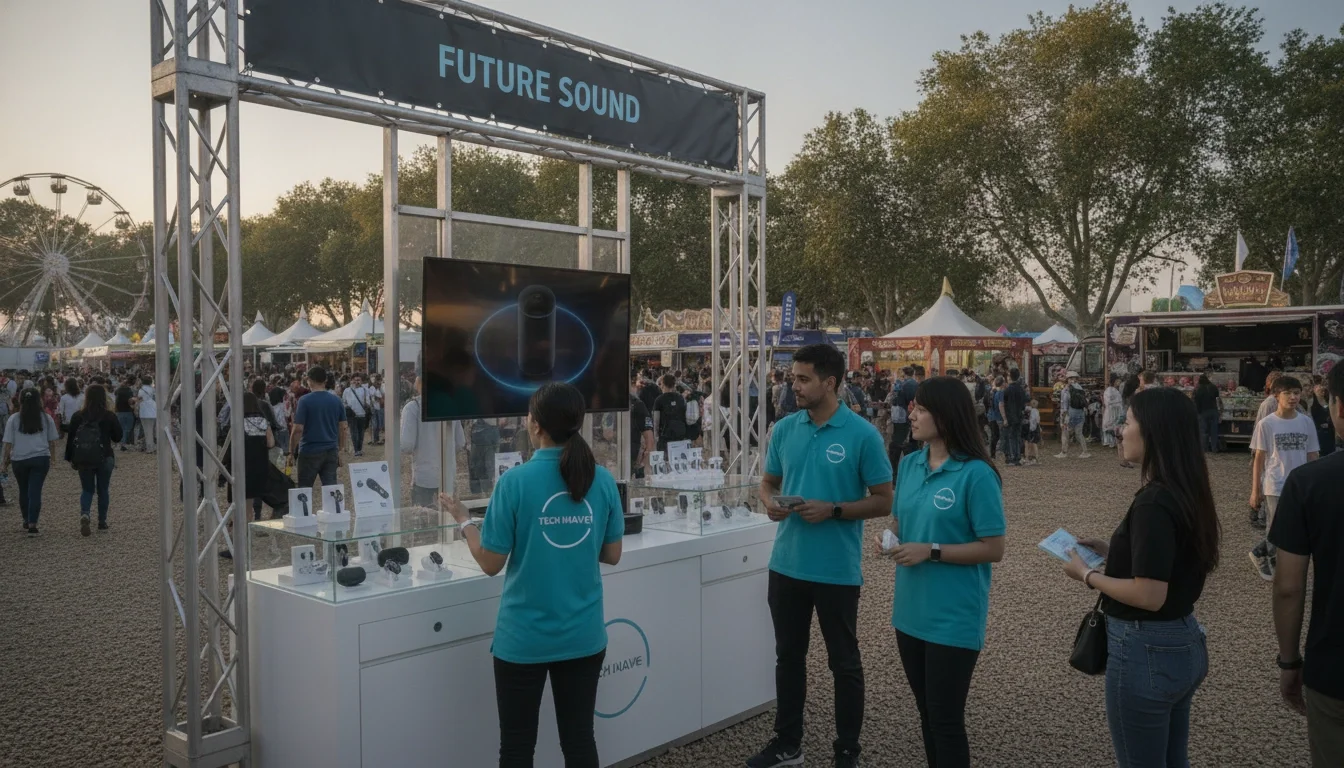
Professional event staff in branded uniforms staffing a product demonstration booth at a large outdoor fair
Staffing Roles for a State Fair Sampling Booth
A complete staffing plan for a bourbon or country ham sampling booth at the Kentucky State Fair typically requires a combination of the following roles:
Brand Ambassadors: The consumer-facing core of the activation. They welcome guests, deliver product narratives, offer samples, and manage the conversion conversation. For alcohol activations, they hold compliance certifications.
Product Demonstrators: For food products and more complex tastings, product demonstrators add a technical dimension — explaining production methods, walking through flavor profiles, and pairing suggestions.
Crowd Manager or Lead: For high-traffic booths, a lead staff member manages queue flow, ensures the station stays stocked, and coordinates communication between team members. This role prevents bottlenecks that erode the experience.
Certified Pourers (Alcohol Only): For bourbon and spirits activations, dedicated certified pourers ensure responsible service — controlling sample sizes, monitoring guest behavior, and adhering to ABC regulations throughout the activation.
Backup Staff: State fair days run 8–12 hours. Fatigue impacts performance. Any serious activation plan includes backup coverage — ideally, a briefed replacement for every 6–8 active staff members.
How Many Staff Do You Actually Need?
Staffing requirements scale with booth footprint, sample complexity, and expected traffic. As a general framework for state fair sampling activations:
Small booth (single product, 1 sample type, moderate traffic): 2–3 brand ambassadors + 1 lead
Medium booth (2–3 products, tasting format, high traffic): 4–6 staff, including pourers, demonstrators, and a lead
Large activation (full experiential build-out, bourbon + food pairing, brand storytelling): 8–15 staff depending on duration and footprint
For bourbon activations serving samples to the general public, a minimum staff-to-guest ratio of 1:20 during peak hours prevents overcrowding at the sample station and ensures guests receive sufficient attention. Crowd dynamics at the Kentucky State Fair peak in the early afternoon on weekends — brands activating for the first time should staff up rather than down for those windows.
Working with a professional event staffing agency removes the guesswork from these calculations. An experienced agency will have supported comparable activations and can provide staffing recommendations based on real operational data.
Preparing Your Team for the Kentucky State Fair
Pre-Event Briefing and Product Knowledge
Even the most capable brand ambassador cannot represent a product well without adequate preparation. For bourbon and country ham activations specifically, the pre-event briefing should cover:
The product's origin story — where it is made, how it is made, and what makes it distinctive within the category
Key flavor notes and how to communicate them accessibly to non-specialists
Compliance protocols — serving size, ID verification if required, signs to watch for with overconsumption
Brand messaging priorities — the 2–3 things every guest should walk away knowing
Conversion pathways — how to direct interested guests toward a purchase, a website, or a follow-on experience
The best staffing agencies conduct this briefing as a standard pre-shift process, not an afterthought. Staff who have been properly briefed perform measurably better and require less real-time oversight from the brand team.
Managing Crowd Flow at a High-Traffic Booth
The Kentucky State Fair's peak attendance hours create crowd conditions that can overwhelm an understaffed booth quickly. Effective crowd management at a sampling station involves:
A clear physical queue guide — guests who understand where to line up are more patient and more engaged
Active front-of-booth staff who engage people in the queue before they reach the sample station, building anticipation and delivering the brand narrative early
Clear handoff protocols between staff members to prevent guests from falling through the cracks
A designated overflow plan for peak surges — knowing when to pause sampling briefly to avoid a service quality collapse
For crowd-heavy activations and larger brand footprints at the fair, Eleven8 also provides dedicated crowd control staff who manage flow without disrupting the brand experience.
Keeping Samples Moving Without Losing Quality
High-volume sampling creates a tension: move too fast and the experience becomes transactional; move too slow, and the queue becomes a deterrent. The best sampling teams develop a rhythm — a natural conversational cadence that delivers the core brand message in 45–90 seconds while keeping the line moving.
For bourbon activations, this often means having one staff member pour the sample while another delivers the narrative, freeing each person to specialize rather than multitask. For food activations, clear sample prep protocols — portions pre-staged, replenishment schedules set — prevent the dead time that kills booth momentum.
Beyond the Booth — Experiential Opportunities at the Fair
The most effective brands at the Kentucky State Fair do not just run a booth. They create an environment — a distinct, branded space that gives attendees a reason to linger, share, and return.
Beyond standard sampling, brands at the fair have successfully executed:
Interactive pairing stations where guests discover bourbon and country ham flavor combinations through guided tasting
Heritage storytelling walls that use photography and narrative to communicate brand provenance in a way that earns genuine attention
Craft demonstrations — cooperage displays, curing process timelines, or distillation visuals — that turn a sample into an education
Sweepstakes and digital engagement touchpoints that convert booth visitors into CRM contacts
Branded photo moments that drive organic social sharing with the fair's hashtags
Each of these formats requires additional staff support — from experiential brand ambassadors and production assistants to registration staff capturing lead information. The more complex the activation, the more critical it becomes to have a staffing partner with deep experience in multi-role event execution.
Eleven8 Event Staff has supported activations across all of these formats — from intimate tasting experiences to large-scale experiential builds at festivals and fairs across the country. Our roster includes staff with specific food, beverage, and alcohol sampling experience, and our 11-step event process ensures every activation runs to plan from the first guest interaction to the final debrief.
[Image placeholder: Eleven8 Event Staff team members at a brand activation, smiling and engaging with event attendees.]
If you are planning a brand activation at the Kentucky State Fair — or any fair, festival, or large-scale sampling event in the region — our team can provide a custom staffing plan, headcount recommendations, and access to a pre-vetted roster of certified brand ambassadors, pourers, and event leads ready to represent your brand.
Reach out to Eleven8 Event Staff to get a staffing quote for your next state fair sampling activation.