Brand Activations and Hospitality at Fenway Park
There are a few places in American sports where a brand can plant its flag and genuinely mean something to the people in the room. Fenway Park is one of them.
Built in 1912, the home of the Boston Red Sox is not just the oldest active ballpark in Major League Baseball — it is a civic institution in a city with an exceptionally loyal sports culture. When a brand activates at Fenway, it is not simply renting square footage. It is borrowing the credibility, emotion, and community identity that generations of Red Sox fans have built here.
But sentiment alone does not execute an activation. The right staff does.
Whether you are running a branded hospitality suite for 40 corporate clients, deploying brand ambassadors along the concourse for a mid-inning sampling campaign, or hosting a sponsored pregame reception in the 521 Overlook, the quality of your event staff is what determines whether the experience lands or falls flat. This guide gives brand managers and marketing teams a complete operational playbook — from venue zones and staff roles to logistics timelines and hiring best practices.
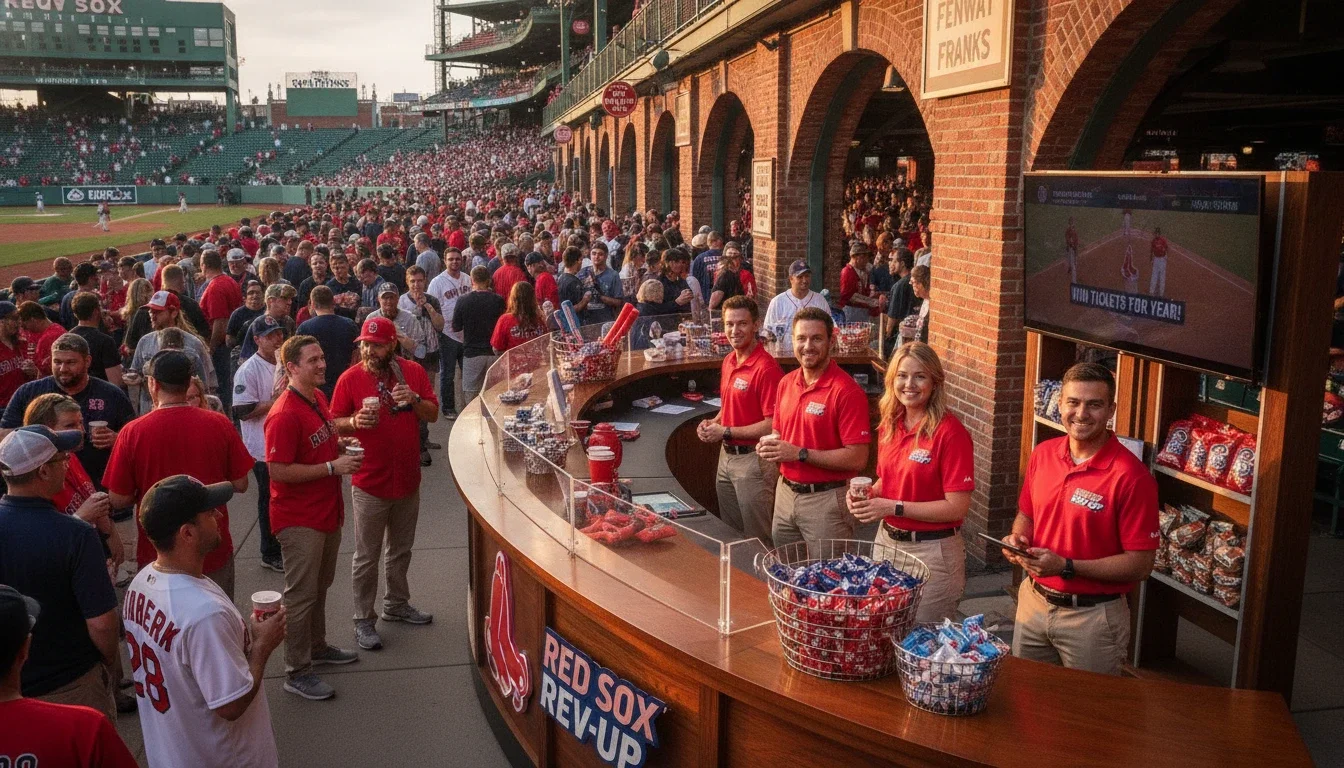
A brand activation setup along the Fenway Park concourse with staff in branded uniforms engaging fans before first pitch
Why Fenway Park Is a Premier Brand Activation Venue
More Than a Ballpark
Fenway Park hosts far more than 81 Red Sox home games each year. The venue — operated year-round through Evergreen, the event group of the Boston Red Sox — accommodates gatherings from 20 to 20,000 across 14-plus unique spaces. Concerts, college football bowl games, corporate conferences, nonprofit galas, private weddings, and trade show receptions have all been executed within these walls.
This range matters for brands. A summer activation during a Red Sox homestand operates under completely different conditions than a private product launch in the off-season. The staffing model, access requirements, and guest flow logistics shift considerably depending on the event format — and a team that has not executed at Fenway before will feel that difference quickly.
The Fenway Effect on Brand Recall
The ballpark's compressed, historic layout — the intimate sight lines, the Green Monster looming in left field, the distinctive smell of the concourse — creates sensory conditions that are simply not replicable at a generic convention center. Research on sports sponsorships has consistently shown that venue-embedded activations produce higher brand recall than standalone event marketing because the emotional state of the audience is already elevated before the brand even appears.
Brands like Dunkin', Budweiser, and Xfinity have built long-term sponsorship equity at Fenway precisely because that emotional environment amplifies brand signals. Even without a naming rights deal, a one-night activation inside Fenway Park carries an outsized impression value compared to a comparable investment at a neutral venue.
Your job — and your staff's job — is to be the bridge between that environment and your brand story.
Understanding the Fenway Park Activation Landscape
Before you can staff a Fenway activation correctly, you need to understand the physical and operational landscape. The venue is divided into distinct zones, each with its own access protocols, guest demographics, and staffing logic.
Gameday Concourse Activations
The main concourse is the highest-traffic environment in the building on a gameday. Fans arrive up to two hours before first pitch, navigate between food vendors and restrooms, and move through predictable chokepoints at the main gates, near Gate B on Yawkey Way (now Jersey Street), and along the lower concourse ring.
This is where brand ambassador deployments make the most sense for product sampling, fan engagement games, giveaway distribution, and awareness-building activations. The audience is broad and diverse, the dwell time is short, and the goal is volume of positive impressions. Staff need to be high-energy, quick on their feet, and trained to engage without blocking traffic flow.
Premium Club and Suite Hospitality
Fenway's premium spaces offer a completely different activation environment. The EMC Club behind home plate, the Dell Club, and the 521 Overlook — an indoor-outdoor space with sweeping ballpark views — host corporate hospitality groups in a controlled, curated setting. The Vineyard Vines Club provides a partially covered outdoor rooftop experience ideal for pregame receptions.
In these spaces, the guest experience is the product. Staff are not engaging a passing crowd — they are attending to guests who have paid for a premium experience and expect a level of service that matches the setting. The staffing model here shifts from brand ambassador energy to hospitality host professionalism: attentive, poised, anticipating needs rather than chasing attention.
Lansdowne Street and Perimeter Activations
The block of Lansdowne Street running behind the Green Monster is one of Boston's most iconic sports-adjacent corridors. On gamedays, it transforms into a pregame destination in its own right — with bars, pop-ups, and brand presence stretching from Kenmore Square toward the Fenway neighborhood.
Brands that secure permits for Lansdowne Street activations gain access to fans before they enter the ballpark — a distinct window where purchase intent and social sharing behavior are high. MGM Music Hall at Fenway, located directly adjacent to the ballpark, also serves as a major activation venue for concert and event-adjacent experiences. Perimeter activations typically require street team and brand ambassador staff who can work an outdoor, uncontrolled environment with self-direction and crowd comfort.
Non-Gameday Private Events
Through the Evergreen event program, Fenway Park is available year-round for private bookings — conferences, holiday parties, corporate dinners, product launches, and ballpark buyouts. These events can scale from a boardroom meeting to a full-stadium production. The staffing model for non-gameday events typically mirrors corporate event staffing: registration coordinators, hospitality hosts, catering professionals, and production assistants driving setup and breakdown logistics.
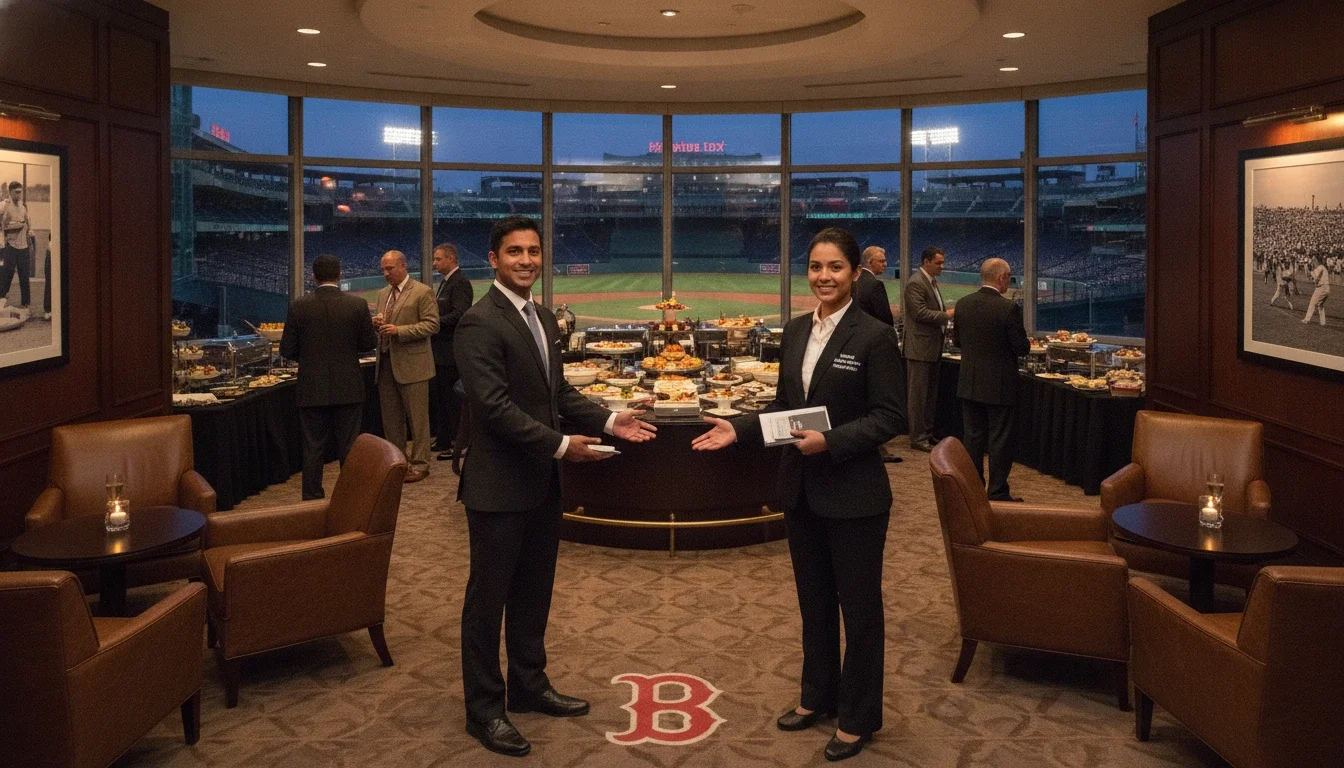
A corporate hospitality reception at a Fenway Park premium club space with professional event staff welcoming guests
The Staff Roles That Make a Fenway Activation Work
Every role at a Fenway Park activation has a specific function. Mixing them up — or under-staffing one category while over-staffing another — creates friction the guest notices even if they cannot name what is wrong. Here is how each role contributes to a successful event.
Brand Ambassadors
Brand ambassadors are the face of your activation on the concourse and at perimeter touchpoints. Their job is to attract attention, initiate interaction, represent your brand's personality authentically, and execute a specific engagement mechanic — whether that is distributing samples, running a game, capturing leads, or simply educating fans about your product.
At Fenway, the best brand ambassadors have prior stadium or high-volume event experience. The environment is loud, the crowd moves quickly, and a staff member who freezes in a crowd or struggles to project energy will not get results. Look for ambassadors who have worked outdoor festivals, concerts, or sporting event activations and can hit the ground running without a lengthy warm-up period.
Hospitality Hosts and Greeters
In the premium club and suite environment, the hospitality host is the person who sets the tone from the moment a guest walks through the door. Their responsibilities include greeting guests by name when rosters are available, orienting new arrivals to the space, handling any service issues before they become complaints, and maintaining the ambient quality of the experience throughout the event.
A greeter stationed at the entrance of a suite corridor or private club space is not just a logistical necessity — they signal to every arriving guest that this is a managed, intentional experience rather than a generic gathering. That first impression drives everything that follows.
Bartenders and Catering Staff
Food and beverage service is the structural backbone of any hospitality activation. Whether you are operating an open bar for 50 corporate guests in a private suite or running a branded cocktail station on the concourse, your bartenders and servers need to keep pace with demand without sacrificing quality or brand consistency.
At Fenway, the cadence of F&B demand follows the game schedule. There are predictable surge moments — the thirty minutes before first pitch, between innings, and the seventh-inning stretch — where bar and concession traffic spikes sharply. Experienced event bartenders know how to batch cocktails, streamline pour sequences, and manage a rush without turning the experience chaotic. Staff who lack stadium event experience frequently underestimate these surges and fall behind quickly.
Production Assistants
Production assistants are the operational infrastructure of any branded event. They manage load-in logistics, coordinate with venue operations staff, handle setup and breakdown of branded elements, run materials between staging areas and activation zones, and serve as real-time problem-solvers when something needs to be moved, fixed, or adjusted.
For Fenway activations, production assistants need to understand the venue's load-in windows — which are tightly controlled, especially on gamedays — and be comfortable navigating the ballpark's non-public corridors and service areas. A PA who has never worked a stadium venue will spend the first hour getting oriented rather than getting things done.
Ushers and Crowd Management Staff
For larger gameday activations, branded experiences in high-traffic zones, or events that include ticketed elements, ushers and crowd management staff provide essential guest flow control. They manage queue lines, direct guests to the correct activation station, prevent bottlenecks at entry points, and maintain safety compliance in a dense public environment.
Ushers in a premium hospitality context take on a softer role — guiding guests to their seats, ensuring suite access is managed correctly, and providing directional assistance throughout the space. Their calm, organized presence is as much about brand perception as it is about logistics.
How to Staff Each Fenway Park Venue Zone
The Concourse and Gate Entries
Gate entries are the highest-traffic single points in the venue during the ninety-minute pregame window. A brand that secures a concourse or gate-adjacent activation should plan for a minimum of four to six brand ambassadors to maintain an effective presence without creating congestion. Staff should be positioned in pairs — one to engage fans and one to manage materials — with a clear hand-off protocol when supplies run low.
Staffing ratio guideline: one brand ambassador per 300 to 400 expected guests in the activation zone during peak pregame flow.
Premium Clubs (Dell Club, EMC Club, 521 Overlook)
Club-level spaces operate as semi-private hospitality environments. For a hosted corporate event in one of Fenway's premium clubs, plan for at least one greeter or host per 25 guests, one bartender per 50 guests for a standard open-bar configuration, and one or two servers circulating with food if a passed reception menu is in play.
The 521 Overlook, which offers both indoor and outdoor viewing of the ballpark, has a particularly dynamic staff requirement — hosts need to manage guest flow between the interior reception space and the exterior overlook, especially as game action draws guests toward the windows and deck.
Suite Corridors
Suite-level activations are intimate by definition. Branded suite experiences typically involve six to twenty guests in a confined, premium space. A single dedicated host or hospitality coordinator is usually sufficient for suite management, supported by one bartender and one server if the suite includes full F&B service. The key at the suite level is attentiveness over volume — a staff member who is visibly present but not intrusive.
Vineyard Vines Club and Outdoor Spaces
The Vineyard Vines Club's outdoor rooftop format is well-suited to branded pregame receptions. The partially covered deck creates a relaxed, social atmosphere where guests mix freely. For this type of space, prioritize mobile servers and one or two roving bartenders over a static bar setup — guests in an outdoor lounge environment respond better to staff who come to them rather than forming a queue.
Gameday Activation Logistics: A Timeline
Timing is everything at a stadium activation. The venue's operations team is managing dozens of moving parts simultaneously, and a brand that arrives unprepared or misses a load-in window can find itself scrambling during the exact pregame window it planned to own. Here is a practical timeline framework.
Load-In and Setup (4–6 Hours Pre-Game)
Most Fenway Park activations have access to their designated spaces during a load-in window that opens four to six hours before first pitch. This window is when production assistants earn their fee — coordinating with venue operations, unloading branded materials, building displays or sampling stations, and ensuring everything is in place before the public access period begins.
Production assistant requirements during this phase: one lead PA to coordinate with venue contacts, plus one support PA per major setup zone. For a complex multi-zone activation, two to three PAs minimum.
Pre-Game Activation Window
The ninety minutes before first pitch is the highest-value window for concourse and gate activations. Guest arrival is staggered — early arrivals tend to be engaged fans willing to pause and interact, while the final thirty minutes before first pitch bring a faster-moving crowd more focused on reaching their seats. Smart activations front-load their highest-engagement mechanics in the sixty to ninety-minute window before the game and shift to quicker-interaction formats as the first pitch approaches.
Brand ambassadors should be fully deployed, briefed, and energized before gates open. A staff member who arrives at the venue twenty minutes before first pitch is not a brand ambassador at a gameday activation — they are a problem.
In-Game and Mid-Inning Engagement
In-game activation is governed more by the hospitality model than the concourse model. Brand ambassadors typically conclude concourse deployments once the game begins and spectators are in their seats. Hospitality hosts and catering staff shift into attentive service mode — ensuring premium club guests are comfortable, drinks are refreshed, and any service needs are handled without disrupting the game-viewing experience.
Brands with in-game activation rights — video board features, sponsored moments, or in-seat distribution programs — will need staff positioned for those specific windows, coordinated precisely with the venue's game presentation schedule.
Post-Game Wrap and Strike
Post-game is underestimated in almost every activation plan. Guests exit quickly, venue operations staff need to reclaim spaces for the next event, and branded materials need to be broken down and removed before the venue's deadline. A dedicated strike crew of two to four production assistants should be briefed specifically on post-event responsibilities, with a clear checklist and vehicle access confirmed in advance. Leaving branded materials behind or missing the venue's strike window creates real operational and relationship problems.
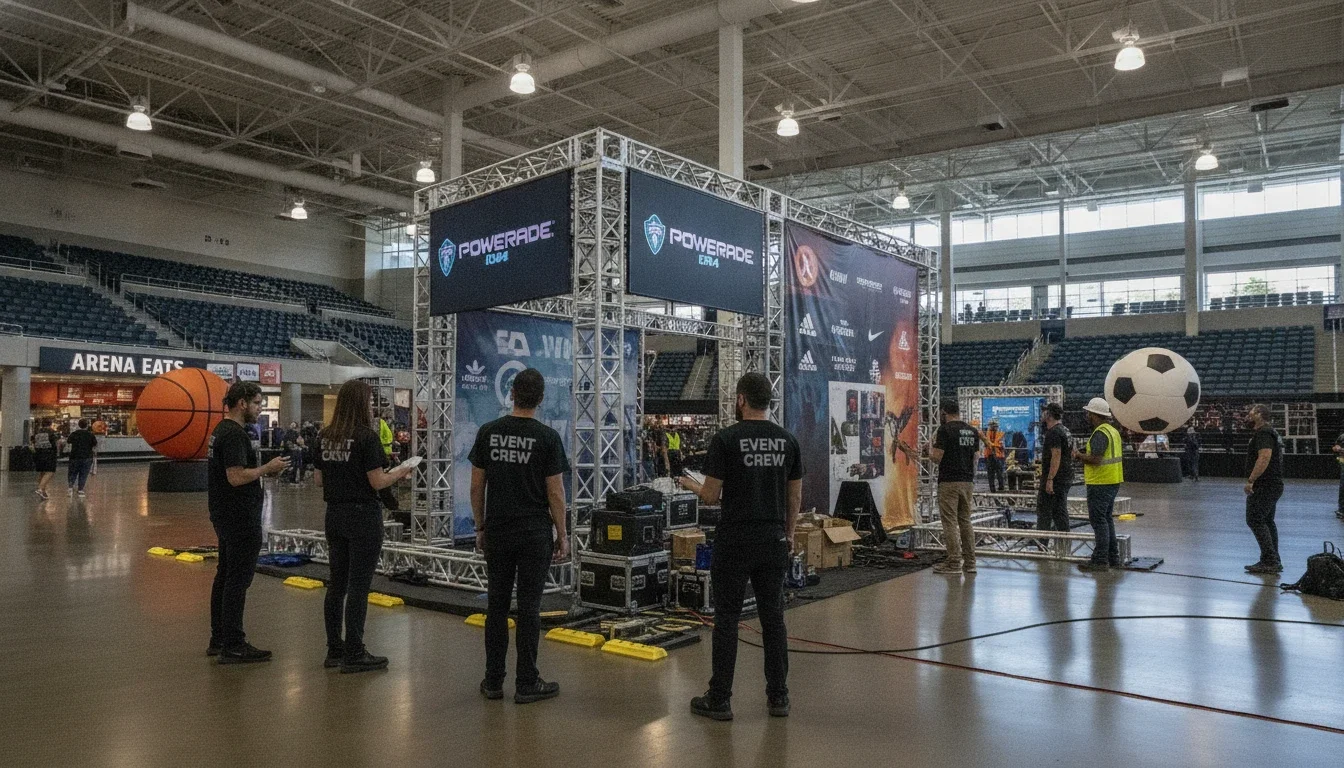
Event production assistants coordinating setup of a branded activation display inside a sports venue concourse
Building the Right Staffing Brief for Fenway
The quality of your staffing brief determines the quality of your staff on the day. A vague brief produces generic staff. A specific brief produces staff who show up knowing your brand, understanding their role, and ready to execute without hand-holding.
How Many Staff Do You Need?
There is no universal answer, but here is a practical framework for common Fenway Park activation formats:
Concourse sampling activation (1–2 zones): 4–8 brand ambassadors, 1–2 production assistants, 1 lead/captain
Pregame hospitality reception (50 guests): 2–3 hospitality hosts, 2 bartenders, 2 servers, 1 greeter
Premium club or suite buyout (20–40 guests): 1–2 hosts, 1–2 bartenders, 1 server or lead PA
Full gameday activation (multi-zone): 10–20 total staff, depending on zones and duration
As a general rule, do not staff an activation on a skeleton crew to save costs. In a high-traffic, time-compressed environment like Fenway Park, understaffing creates visible gaps in the guest experience that no amount of good branding can cover.
Uniform and Brand Standards
Your staff is a walking extension of your brand at the venue. The brief should specify uniform requirements with exact detail: branded polo shirts vs. branded tees, approved footwear, grooming standards, and whether staff are permitted to wear their own branded accessories. At a premium hospitality activation, consistent uniforms signal organizational quality. At a concourse activation, distinctive uniforms help guests find and identify your staff in a crowded environment.
Include a visual in the staff brief whenever possible — a photo reference eliminates ambiguity and ensures everyone arrives on-brand.
Venue Credential and Access Requirements
Fenway Park, like all major league venues, has credential and access protocols that vary by zone. Staff working the concourse need at a minimum a venue-issued staff credential. Staff accessing suite corridors or premium clubs may require an additional access tier. Production staff working during load-in before public access opens will need a separate early-entry credential.
Your staffing agency should coordinate with your activation agency or the venue's event operations team to confirm credential requirements well in advance — ideally two to three weeks before the event. A staff member who shows up without the correct credentials cannot enter the venue and cannot do their job. At major venue events, this problem is more common than brands expect.
Working with a Staffing Agency for Boston Activations
The most common mistake brands make when planning a Fenway Park activation is treating staffing as the last line item — something to be figured out in the final week before the event. In reality, the quality of your staffing agency determines the quality of your entire activation.
A staffing partner with an established Boston roster and stadium event experience brings three things a last-minute hire cannot: staff who already know how to work high-volume, credential-heavy, time-sensitive venue environments; an operations structure with built-in backup coverage; and the institutional relationships with the venue operations team that prevent the procedural missteps that derail activations.
Eleven8 Event Staff maintains an active Boston roster with dedicated brand ambassadors, hospitality professionals, bartenders, servers, production assistants, and event captains experienced in gameday activations across the city's major sports venues — including the Fenway corridor. With a fulfillment rate of 101.80%, built-in backup staffing coverage for every booking, and a dedicated account manager on every event, the team provides the operational reliability that a high-profile Boston activation demands.