Brand Activations and Hospitality at Footprint Center
There are arenas, and then there are arenas where your brand can genuinely make an impression. Footprint Center is firmly in the second category.
Located in the heart of downtown Phoenix at 201 East Jefferson Street, Footprint Center is home to the Phoenix Suns and Phoenix Mercury, and it draws a consistent calendar of concerts, fight nights, family shows, and high-profile corporate events year-round. With a basketball capacity of 17,071, four premium hospitality clubs, multiple suite levels, and a recently expanded main concourse, the venue offers brands and corporate hosts an enormous range of activation and hospitality real estate.
But venue access is only the starting point. What determines whether your activation lands or falls flat is the team you put on the floor — your brand ambassadors working the concourse, the hospitality staff managing your suite guests, the production assistants making sure the setup runs on schedule, and the on-site leads who keep everything coordinated when the doors open and the crowd surges in.
This playbook covers everything you need to know about running brand activations and hospitality programs at Footprint Center: the activation zones, the staffing roles, the logistics, and the details that separate a forgettable presence from one that people actually talk about.
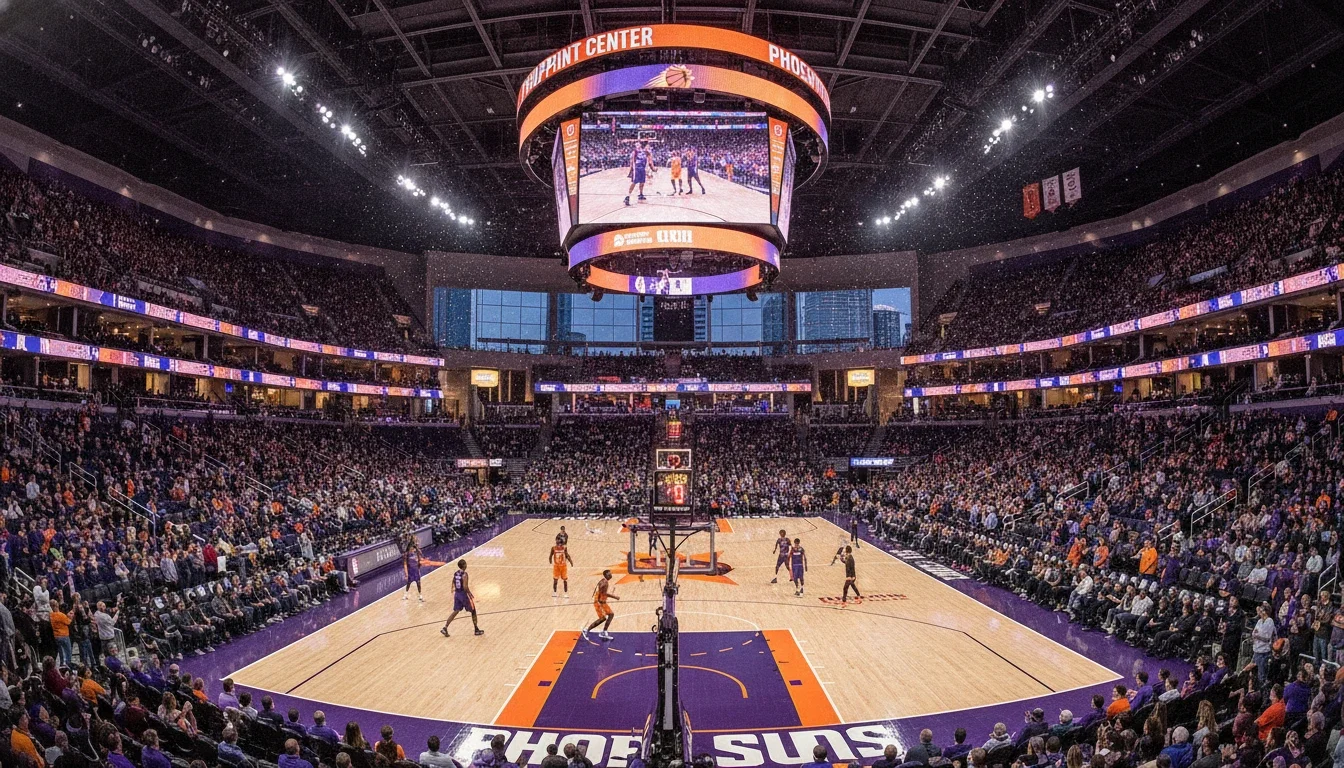
Footprint Center arena interior showcasing the renovated concourse and court atmosphere
Why Footprint Center Is a Premier Activation Venue in Phoenix
Phoenix has no shortage of event venues. State Farm Stadium, Chase Field, TPC Scottsdale, the Phoenix Convention Center — all are legitimate options depending on the event type. But Footprint Center occupies a unique position in the Phoenix market: it sits in the densely activated downtown core, draws both sports and live entertainment audiences throughout the year, and its renovated facility gives brands significantly more premium space to work with than older comparable arenas.
The recent renovation added a large bar overlooking the court, a FanDuel Sportsbook facing Jefferson Street, expanded concourse areas, and an upgraded center-hung videoboard. That physical investment matters for activations because it tells you something about the audience: Footprint Center attracts fans who are engaged, willing to spend, and accustomed to a premium experience. Your activation competes with a high baseline.
Beyond sports, the arena hosts arena-scale concerts, making it a venue where brands can reach a genuinely diverse Phoenix audience depending on the event calendar. The combination of consistent Suns and Mercury game-day traffic, a strong concert calendar, and downtown proximity to convention hotels makes Footprint Center one of the highest-ROI activation environments in Arizona when executed correctly.
Understanding the Activation Landscape Inside Footprint Center
Before you staff an activation at Footprint Center, you need a clear picture of where your footprint will actually live inside the building. The venue is a multi-level environment with distinct zones that carry different crowd densities, dwell times, and engagement characteristics.
Concourse-Level Activations
The main concourse is the highest-traffic zone in the arena during game days and concerts. Fans circulate here during pre-game, halftime, between sets, and post-event. For most sponsor and brand activations, the concourse is the primary footprint: a branded booth, sampling station, product demo area, or interactive experience positioned along the main traffic flow.
Concourse activations require brand ambassadors who can engage fans who are moving with purpose — people heading to their seats, grabbing food, or browsing. The skill set here is high-energy, approachable, and fast: quick pitches, strong product knowledge, and the ability to make a meaningful impression in a 45-second interaction window. High-traffic concourse positions typically run two to four brand ambassadors per booth, with an activation lead overseeing the full deployment.
Plaza and Exterior Pre-Event Zones
The exterior plaza and street-facing areas around Footprint Center offer a different activation environment — fans arriving, tailgating, or moving between nearby venues and restaurants. Pre-event exterior activations typically run street team-style, with mobile staff distributing product samples, branded materials, or directing fans toward an interior footprint. This zone is particularly effective for consumer goods brands targeting casual fans who are in a high-receptivity, relaxed mindset before the event starts.
Exterior activations often require two to six staff depending on the footprint size, and they need to be coordinated with venue access and load-out timing before doors open to the general public.
Club Level and Premium Areas
Footprint Center features four premium hospitality clubs — spaces designed for a more exclusive, curated attendee experience. Corporate sponsors and premium partners can activate within or adjacent to these areas, but the tone shifts significantly from concourse-level. Club and premium zone activations call for a polished, hospitality-forward staff who can hold conversation, maintain discretion, and represent a brand with the understated confidence that high-net-worth and corporate guests expect.
Staff for premium zone activations should be selected specifically for their hospitality aptitude, not just their outgoing personality. The difference between a good ambassador on a concourse and a good ambassador in a club lounge is significant — one is optimized for volume, the other for depth of engagement.
Corporate Hospitality at Footprint Center: Suites, Clubs, and Private Buyouts
Beyond traditional brand activations, Footprint Center is a leading destination for corporate hospitality in Phoenix. Companies routinely use the venue’s suite level to host clients, reward employees, and build relationships in a premium environment that is hard to replicate in a conference room or restaurant.
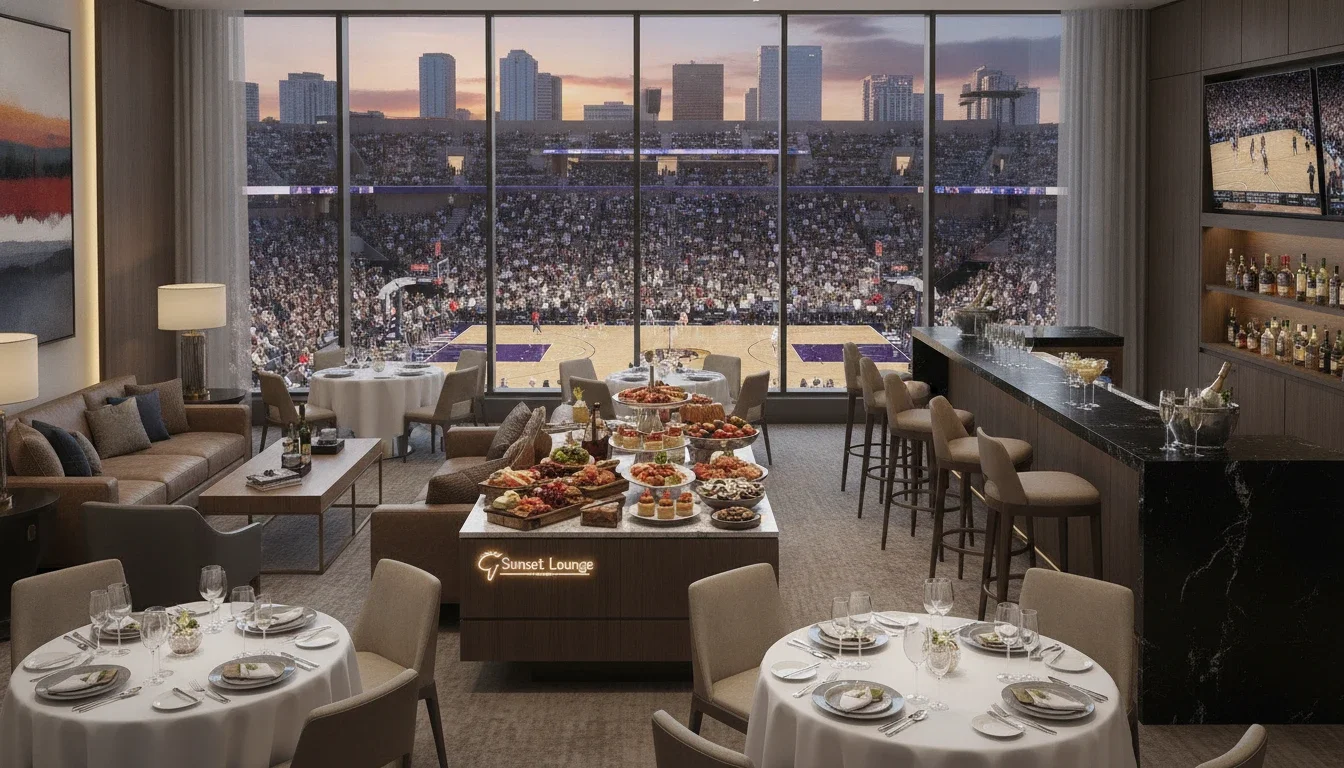
Premium suite level hospitality setup at a downtown Phoenix arena event
Luxury Suite Hospitality Programs
Footprint Center’s private luxury suites accommodate between 12 and 20 guests, with larger group spaces available for parties of 80 or more. Suite pricing for Phoenix Suns games averages $4,500, with premium games reaching up to $15,000. Concert suite pricing varies widely based on the performer, ranging from around $2,000 for smaller shows to $10,000 or more for high-demand artists.
Suites are climate-controlled with full catering access. For corporate hosts running a hospitality program — clients you want to impress, partners you want to deepen relationships with, or internal recognition events — the suite environment is a contained, controllable hospitality space that puts your brand at the center of a premium experience.
Catering and F&B Coordination
Suite-level catering at Footprint Center is handled by Levy Restaurants, a premium arena hospitality provider. In-suite food and beverage is not included in base suite rental pricing and must be arranged separately. For corporate hosts, working with your staffing agency to coordinate catering arrival, setup timing, and service delivery is essential — a suite with excellent food and a disorganized service experience still leaves guests with the wrong impression.
Having dedicated hospitality staff — even one or two service professionals specifically managing your suite — transforms a catered gathering into a genuine hosted experience. This is one area where corporate hosts consistently understaff, expecting the venue’s baseline service to cover what a dedicated attendant would do.
Staffing a Corporate Suite Group
For groups in the 20-guest range, a standard corporate suite staffing model typically includes one dedicated suite host or hospitality lead, one service staff member for food and beverage management, and optionally a greeter or registration coordinator if the group is large enough to require managed check-in. For larger group buyouts (80+ guests across multiple suites or club spaces), you will want a staffing captain coordinating across zones, dedicated hosts per suite, and full F&B service teams.
Staffing Roles for Brand Activations at Footprint Center
The specific roles you need depend on your activation type, footprint size, and event context. Here is a breakdown of the core staffing positions that Footprint Center activations typically require and what each one actually does on the ground.
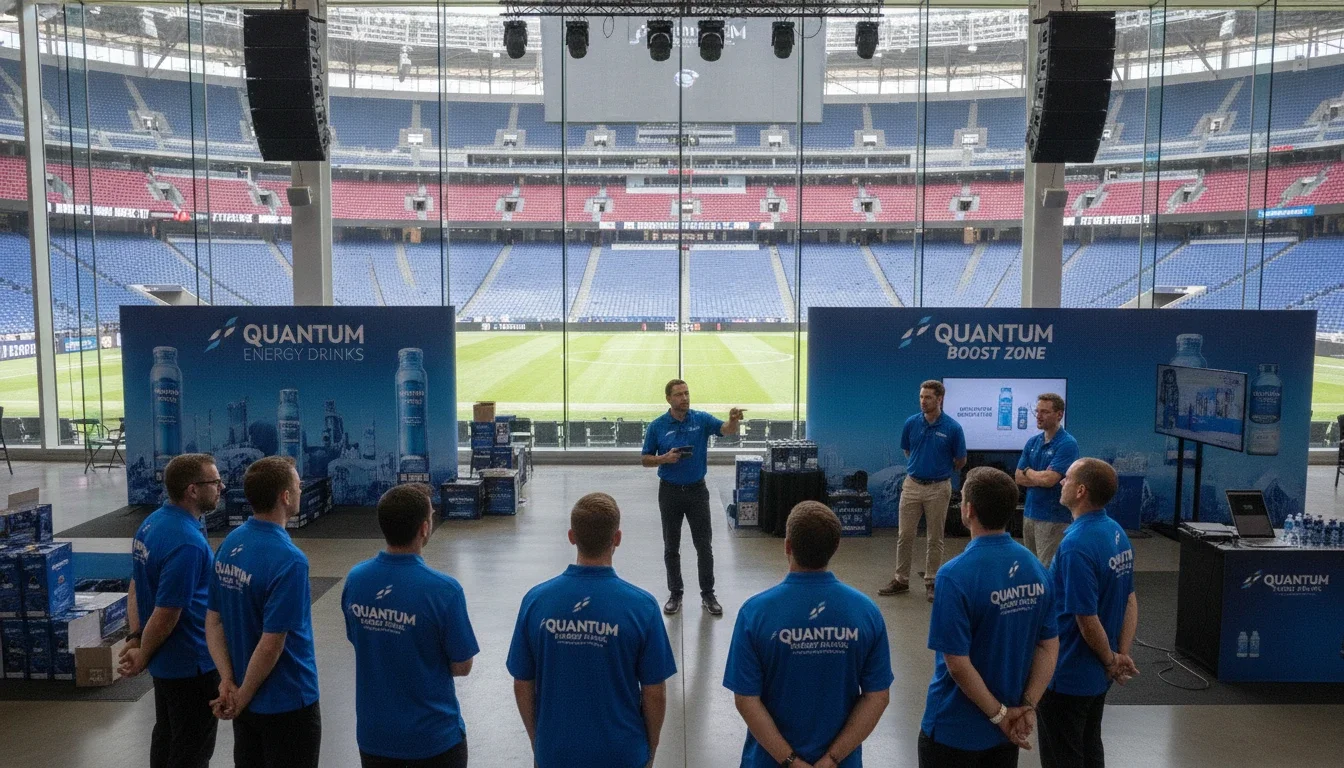
Event staff team briefing before a brand activation at a major sports arena
Brand Ambassadors
Brand ambassadors are the face of your activation. They engage fans directly, communicate your brand message, distribute samples or materials, drive interactions at the booth or experiential zone, and collect data if your activation includes a lead capture component. For a Footprint Center concourse activation, ambassadors need to be high-energy, comfortable initiating conversation with strangers, and deeply briefed on your brand story and talking points before the event starts.
The quality of the briefing process is often what separates a good ambassador from a generic one. At Eleven8, brand ambassadors are matched to your event type and brand profile before deployment — not assigned generically — and they go through brand-specific orientation before day one. For an internal link: see our Brand Ambassadors service page for full details on how we select and brief activation staff.
Hospitality and Service Staff
Hospitality staff in the suite or club context includes suite hosts, waitstaff, bartenders, and bar backs. Their job is to manage the service environment — ensuring guests are attended to, food and beverage are refreshed, and the hosting experience runs without friction. In a corporate hospitality context, these staff members are not just servers; they are extensions of your hosting brand. Presentation, demeanor, and judgment matter as much as functional service ability.
Bartenders at arena events work under significant volume pressure during peak periods — halftime or between-period rushes can compress a full service cycle into a narrow window. Staffing an extra bar back to support the bartender during those peak moments is often the difference between smooth service and a bottleneck that frustrates guests. (Bartenders service page)
Production Assistants and Logistics Roles
Any brand activation with physical setup — a booth structure, branded backdrop, product display, experiential installation, or technology component — requires production support before the event starts and strike support after it ends. Production assistants handle load-in, assembly, teardown, and on-site logistics coordination. At Footprint Center, this includes navigating venue load-in schedules, coordinating with venue operations on access windows, and making sure your footprint is build-complete before credentialed access periods end.
Many brands overlook production staffing until it’s too late in the planning process, then scramble with their activation team to cover load-in gaps. Booking dedicated production assistants in advance makes the whole activation more reliable. (Production Assistants service page)
Crowd Control and Guest Flow Management
For activations that generate significant queue — product giveaways, high-demand experiences, photo moments — you will need staff specifically managing guest flow. Crowd control at an arena activation is not security; it is queue management, line communication, and making sure the experience does not break down under volume pressure. Fans who wait too long without clear communication disengage. Staff who manage the queue well keep energy up and protect the brand experience from the physical constraints of a busy concourse. (Crowd Control service page)
Activation Types That Work at Footprint Center
Not every activation format works equally well at every venue. Footprint Center’s specific audience profile, traffic patterns, and physical environment favor certain activation approaches over others.
NBA and WNBA Game Day Activations
Phoenix Suns and Phoenix Mercury game days deliver a consistent, sports-engaged audience that skews toward local Phoenix residents and Valley-wide fans. The NBA audience at Footprint Center tends to be younger, tech-savvy, and brand-receptive — a strong fit for consumer tech launches, apparel activations, financial services sampling, and food and beverage introductions. Mercury game days attract a dedicated, loyal fan base that is often more intimate in scale and highly community-oriented.
Game day activations typically run from two to three hours pre-tip-off through halftime, with the pre-game window being the highest-value period for engagement. Fans arriving early are in exploratory mode; fans leaving at halftime are usually committed to returning to their seats. Structure your staffing deployment accordingly.
Concert and Live Event Activations
Concert audiences at Footprint Center are event-specific — their demographic profile shifts dramatically depending on the performer. A country act draws a very different audience than a hip-hop headliner or a pop tour. Brands activating around a specific concert should invest time in audience profiling before finalizing their ambassador brief and collateral.
The pre-event window is longer for concerts than for sports — fans often arrive 60 to 90 minutes early and are in a social, relaxed mood that is highly receptive to brand interaction. The post-show concourse is also an underutilized activation window for brands that can extend their footprint into the exit flow.
Sponsor and Partner Activations
Official team sponsors and arena partners often have the advantage of integrated placement — in-arena digital, courtside signage, and suite-level branding that works in concert with their physical activation footprint. If your organization holds a Phoenix Suns or Footprint Center sponsorship, your activation is working off a higher baseline of brand recognition. Your staffing should be calibrated to convert that awareness advantage into genuine engagement and data collection rather than simply standing behind a branded booth.
For non-sponsor brands activating in general concourse areas, the imperative is the opposite: your staff must work harder to establish brand relevance in a context the audience did not seek out. Engagement quality and ambassador training become the primary differentiators.
Logistics That Make or Break Your Footprint Center Activation
The strategic and creative elements of an activation often get the most planning attention. The logistics — the operational details that determine whether your great idea actually executes on the night — frequently get less. At a venue like Footprint Center, logistical precision is not optional.
Load-In and Credential Coordination
Every brand or activation team working at Footprint Center must work within the venue’s credentialing and load-in schedule. This means knowing which access points your team uses, what credential types are required for each staff role (back-of-house production access versus general floor credentials), and when your load-in window opens and closes relative to doors opening.
Venues of this size do not accommodate late arrivals or credential issues gracefully — a staff member who shows up without proper credentials at a Footprint Center event does not get improvised access. Your staffing agency should be tracking credential logistics alongside headcount, not leaving it to the brand team to manage on event day.
Staffing Timelines and Lead Time
For standard brand ambassador and hospitality staffing at Footprint Center, booking two to four weeks in advance is a reasonable floor for most event types. For larger deployments — a full-venue sponsor activation across multiple zones, a private buyout requiring extensive hospitality teams, or a high-demand game night where every vendor is competing for qualified staff — booking six to eight weeks out is more appropriate.
Arizona’s event staffing market has become increasingly competitive as Phoenix grows as a sports, convention, and entertainment destination. Last-minute bookings at major arenas risk getting unfilled roles or staff who were not the first-choice match for your brand profile.
Brand Standards and Uniform Compliance
Every brand ambassador and hospitality staff member working your Footprint Center activation is a walking extension of your brand. Uniform standards, grooming expectations, language guidelines, and escalation protocols need to be established before the event and enforced consistently across the team.
This sounds obvious, but it is the area where activations most commonly degrade in execution. A brief that exists in a slide deck but was never communicated to the staff actually on the floor is a brief that does not exist. Staffing teams that include a trained captain or activation lead — a senior staff member responsible for keeping the team aligned throughout the event — have measurably better on-site consistency than teams where every ambassador is self-managing.
How Eleven8 Event Staff Supports Activations at Footprint Center
Eleven8 Event Staff has an established presence in the Phoenix market, with a deployed staff roster that includes experience across Footprint Center, State Farm Stadium, Chase Field, WestWorld of Scottsdale, and the Phoenix Convention Center. The team staffs brand activations for major consumer brands, sports-adjacent sponsor campaigns, and corporate hospitality programs throughout the Valley.
What makes the Eleven8 approach suited for Footprint Center work is not just head count — it is the specificity of the match process. Staff are selected based on event type, brand profile, and audience fit, not assigned generically. Every booking at this scale includes a dedicated account manager who handles logistics coordination from briefing through post-event recap, and every deployment includes a trained captain for every eight staff members at no additional charge.
Backup coverage is built into every booking. For arena events where a no-show can leave a high-traffic concourse zone unmanned, a briefed backup on standby is not a luxury — it is a standard. Eleven8 includes this as part of the base service.
Whether you are staffing a single-booth concourse activation for a Suns game, running a multi-zone sponsor footprint across a concert weekend, or building a full corporate hospitality program in the suite level, the starting point is the same: a clear brief, the right staff, and a team that knows what a standout activation looks like from the inside.
To discuss staffing for your next Footprint Center event, visit elev8.la/book-now or explore our brand ambassador and hospitality services at elev8.la/services.