How to Staff a Trade Show in Indianapolis: A Complete Guide 2026
Exhibiting at a trade show is one of the highest-stakes marketing investments your company will make all year. The booth design gets the attention. The staff determines the outcome.
Indianapolis has grown into one of the most active convention cities in the Midwest, hosting hundreds of trade shows and industry events annually. Whether you're setting up at the Indiana Convention Center for FDIC International, the WWETT Show, or Gen Con, the question is the same: do you have the right people on your booth floor?
This guide covers everything you need to know about trade show staffing in Indianapolis — from choosing the right roles and calculating how many people you need, to training your team and deciding when to work with a professional staffing agency.
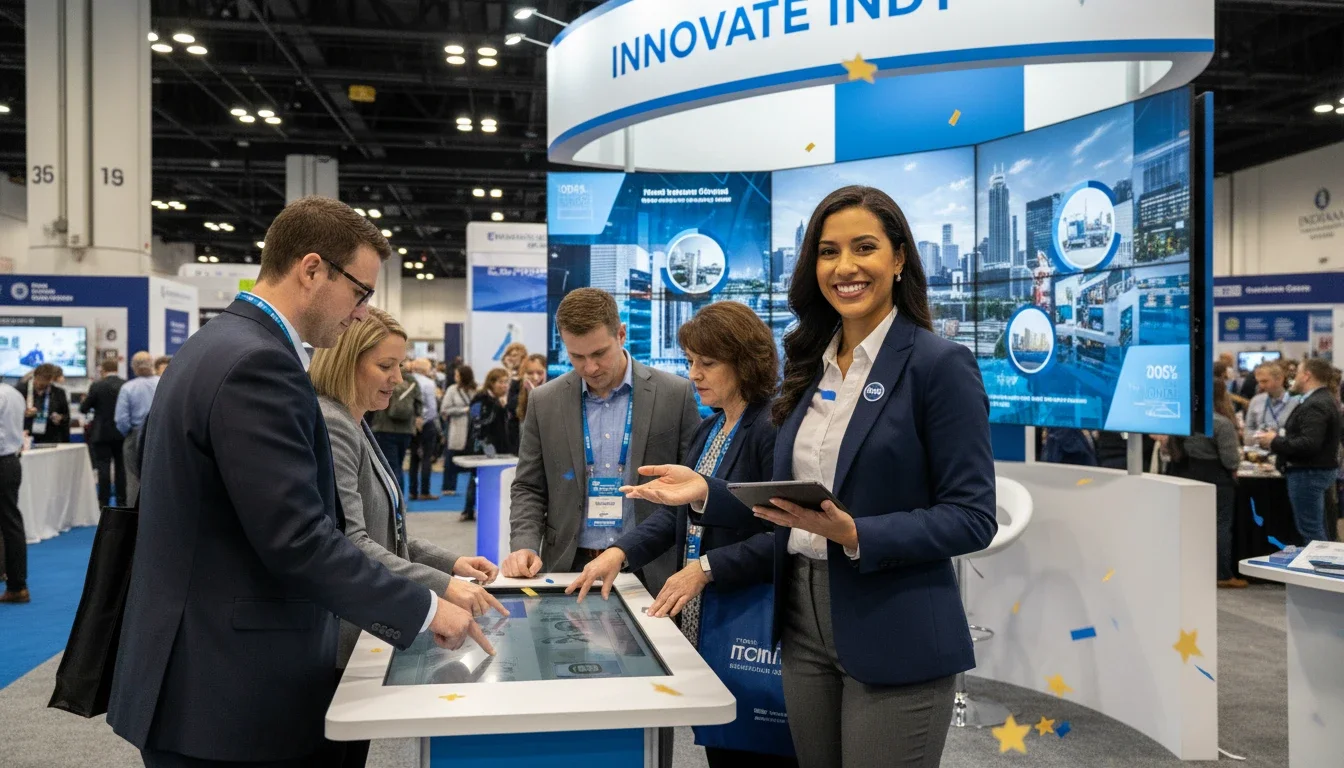
A professional brand ambassador engaging attendees at an Indianapolis trade show booth
Why Indianapolis Is a Serious Trade Show Market
Indianapolis doesn't just host trade shows — it attracts some of the largest industry gatherings in North America. The city's convention infrastructure, hotel proximity, and central Midwest location make it a go-to destination for exhibitors targeting customers from across the region and the country.
For exhibitors, that means competing on a floor where your booth neighbors may be Fortune 500 companies with polished teams, eye-catching displays, and experienced brand representatives.
Key Venues for Trade Shows in Indianapolis
Indiana Convention Center (ICC) is the anchor of Indianapolis' convention infrastructure, offering over 566,000 square feet of exhibit and meeting space connected directly to Lucas Oil Stadium. The ICC's campus setup means large-scale shows can run simultaneously across multiple halls, which has direct implications for foot traffic patterns and how aggressively your staff needs to work to attract visitors.
Lucas Oil Stadium periodically hosts overflow events and large-format activations alongside the Convention Center.
JW Marriott Indianapolis and the broader downtown hotel corridor support smaller trade shows, association events, and buyer-seller forums that require their own staffing strategies.
Understanding which venue your show occupies matters because each has different visitor flow, signage restrictions, and labor environment considerations.
Major Indianapolis Trade Shows Worth Knowing
The Indianapolis trade show calendar runs nearly year-round. Some of the most staffing-intensive events include:
FDIC International (Indiana Convention Center & Lucas Oil Stadium) — one of the largest fire and rescue industry expositions in the world, drawing tens of thousands of professionals
WWETT Show — water and wastewater equipment, drawing industry buyers from across the country
Gen Con — the largest tabletop gaming convention in North America, with 50,000+ attendees
Work Truck Week — a major commercial vehicle industry event
Sweets & Snacks Expo — the largest confectionery and snack trade event in North America
American Coatings Show — an international event for the coatings and adhesives industry
ATA Trade Show (Archery Trade Association) — a major sporting goods industry event
Performance Racing Industry Show — one of the motorsports industry's flagship events
M-PACT Show — the Midwest's premier fuel and convenience event
Each show has a different audience profile, and your staffing decisions should reflect that. A technical audience at an industrial trade show responds differently than buyers at a consumer goods expo.
Start With Strategy: What Does "Staffing a Trade Show" Actually Mean?
Before you post on a job board or call a staffing agency, you need a clear picture of what "staffing your trade show" actually requires.
At its core, trade show staffing means having the right people — with the right skills, energy levels, and brand knowledge — at your booth for every hour the show floor is open. That sounds simple, but most exhibitors underestimate what that requires in practice.
Internal Staff vs. Hired Event Professionals
Many companies default to sending their own sales reps or marketing staff to trade shows. This has real advantages: your internal team knows the product, understands the company culture, and can speak to technical questions with authority.
But internal staff have limitations. Trade show floors are exhausting. Eight hours of standing, engaging strangers, and staying "on" is genuinely demanding work. Sales professionals who are excellent over the phone or in one-on-one meetings don't always translate well to a loud, crowded show floor.
Supplementing your internal team with experienced event staff gives you the best of both: product-knowledgeable insiders managing qualified conversations, while trained event professionals handle booth traffic, initial engagement, lead scanning, and logistics.
The Real Cost of Getting Booth Staffing Wrong
Research consistently shows that most attendees form their impression of a brand within the first 15–20 seconds of encountering booth staff. A disengaged team — phones out, sitting down, talking to each other instead of visitors — is not just a missed opportunity. It actively damages your brand in front of the exact buyers you paid significant money to reach.
Consider what a typical trade show investment looks like: booth space fees, design and fabrication, shipping, travel and hotel for your team, registration costs. All of that investment rides on whether the people at your booth are actually performing.
What Types of Trade Show Staff Do You Actually Need?
Not all trade show staff do the same job. Clarity on roles before you start hiring — whether internally or through an agency — prevents coverage gaps and confusion on the show floor.
Brand Ambassadors
Brand ambassadors are the face of your booth. Their job is to stop traffic, open conversations, and qualify interest before handing off to your sales team. They need to be outgoing, polished, and quick to learn your brand messaging.
Brand ambassadors don't need to be technical product experts — but they need to know enough to ask the right questions, assess visitor interest, and deliver a compelling opening pitch. At Eleven8 Event Staff, brand ambassadors are matched to your event type and audience profile before day one, which cuts down on briefing time and improves floor performance.
Registration and Check-In Staff
For larger shows, especially those with private buyer events or VIP hospitality suites, registration and check-in staff are essential. They manage badge scanning, guest list verification, and first impressions at entry points.
At a busy convention like FDIC International or the WWETT Show, check-in bottlenecks can sour the attendee experience before they've even seen your product. Dedicated, trained check-in staff keep lines moving and guests welcomed.
Product Demonstrators
If your product requires a live demonstration, you need demonstrators who can walk attendees through the experience repeatedly, without losing energy or accuracy. This is one of the most specialized roles in trade show staffing — and one of the most valuable.
Effective product demonstrators combine technical understanding, presentation skills, and crowd engagement ability. They need to handle objections, manage group sizes, and transition seamlessly into a sales handoff.
Event Coordinators and On-Site Leads
For multi-day shows or large booth footprints, a dedicated on-site coordinator keeps your operation running. They manage staff schedules, handle logistics surprises, communicate with show management, and serve as the point of contact for your internal team.
Having a captain on the floor — someone whose full-time job is managing the show, not selling — significantly improves booth execution and staff morale.
Support and Logistics Staff
Booth setup and teardown, supply management, literature restocking, and sample handling are unglamorous but critical. Having support staff handle these tasks frees your sales and demonstration team to stay focused on attendees.
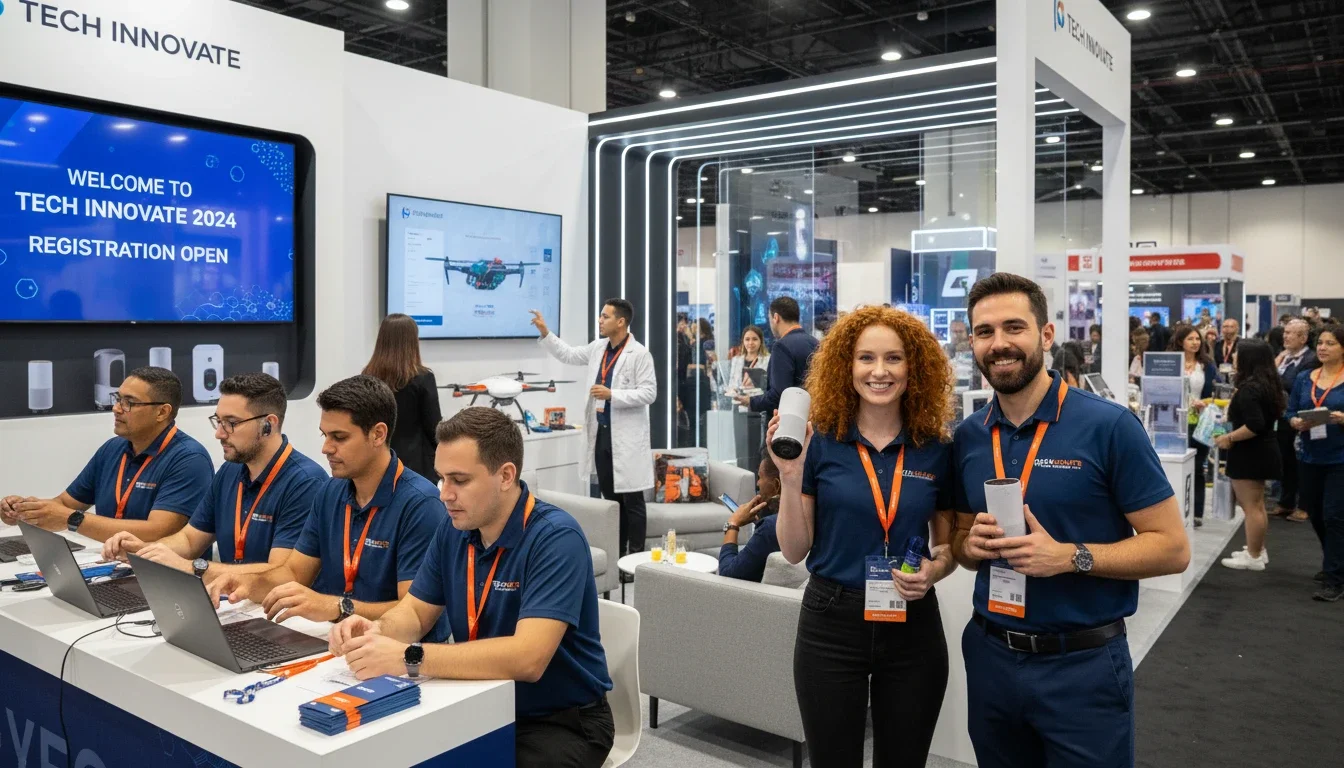
Different trade show staff roles — from brand ambassadors to registration teams — working at a convention booth
How Many Staff Members Does Your Booth Need?
One of the most common questions exhibitors ask — and one of the most frequently miscalculated.
The 50 Square Foot Rule
The industry standard is to plan for one staff member per 50 square feet of active booth space. A 10×10 booth (100 sq ft) supports two to three staff members comfortably. A 20×20 booth (400 sq ft) can accommodate eight to ten, depending on configuration and traffic flow.
This isn't just about space — it's about coverage. An understaffed booth means missed conversations. An overstaffed booth creates visual clutter and confusion about who to approach.
| Booth Size | Square Footage | Recommended Staff |
|---|---|---|
| 10×10 | 100 sq ft | 2–3 |
| 10×20 | 200 sq ft | 4–5 |
| 20×20 | 400 sq ft | 6–8 |
| 20×30 | 600 sq ft | 8–12 |
| 30×30+ | 900+ sq ft | 12+ (plan by zone) |
Staffing tip: Consider booth layout, traffic patterns, and peak hours when determining final staff count. For larger booths, zone planning helps ensure all areas remain covered.
Adjusting for Booth Traffic and Show Type
The 50 sq ft rule is a baseline, not a ceiling. High-traffic shows like Gen Con or the Sweets & Snacks Expo may require additional coverage during peak hours. Buyer-focused shows with pre-scheduled meeting programs may need fewer floor staff but more dedicated hosts for private meetings.
Think about your show's attendee profile. A show with 5,000 highly targeted buyers warrants different staffing intensity than one with 50,000 general attendees. Quality of engagement matters more than volume in most B2B contexts.
Scheduling Shifts for Multi-Day Shows
Trade show floors are physically demanding. A team that works every hour of a three-day show will fade badly by day two. Build in shift rotations so staff have time to eat, rest, and decompress.
A common approach for multi-day shows:
Split shifts (morning and afternoon teams that overlap by an hour)
Designated "floor breaks" every 90–120 minutes
At least one staff member always on the floor during open hours
Building Your Staffing Timeline: Planning 8+ Weeks Out
The biggest staffing mistake exhibitors make is starting too late. Here is a practical timeline to work backward from your show date.
8–12 Weeks Before the Show
This is when to confirm your staffing approach. If you're working with an agency, submit your inquiry now. Quality agencies — especially those with vetted, pre-trained staff — book out quickly for major Indianapolis shows. The FDIC show alone draws tens of thousands of professionals over several days; every exhibitor on that floor is competing for the same staffing pool.
Key decisions at this stage:
Determine booth footprint and calculate staff count
Identify which roles you'll fill internally vs. with hired staff
Define job descriptions for each role
Request proposals from one to three staffing agencies
4–6 Weeks Before the Show
Confirm your staffing selections and begin pre-show preparation.
Finalize staff roster and receive bios/profiles from agency
Send brand materials, product training resources, and messaging guides
Schedule virtual pre-show briefings
Confirm logistics: show hours, booth number, load-in times, dress code/uniforms
1–2 Weeks Before the Show
Focus on operational readiness.
Conduct live or virtual training sessions with all staff
Walk through the lead retrieval system (practice scanning, qualifying scripts)
Confirm contact details for your on-site coordinator
Share show floor map and booth layout
Review any venue-specific rules (ICC has specific labor and rigging regulations)
Show Days: Managing the Floor
Assign a daily pre-show meeting — even 10–15 minutes is enough — to set targets, share the previous day's wins, and address any issues. Establish clear hand-off protocols between demo staff and sales reps. Make sure everyone knows the lead qualification criteria so you're not chasing low-value contacts after the show.
Post-Show: Debrief and Measure
Within 48 hours of the show closing, conduct a brief staff debrief. What worked? What didn't? Where was traffic heaviest? Which messaging landed? This information improves your next show significantly and helps you give useful feedback to your staffing agency.
How to Train Your Trade Show Team for Indianapolis Events
Even experienced event staff need show-specific preparation. Never assume a hire knows how you want things done.
Brand Immersion Before the Show
Provide every staff member — agency-sourced or internal — with your brand guidelines, product overview, and a list of the five most common questions attendees ask. If you have a demo video, share it. If there's a tagline or brand voice, explain it.
For temp staff you've never worked with, conduct a dry run — even over a video call — so they're comfortable with the material before they're standing in front of live prospects.
Booth Etiquette and Engagement Techniques
The basics matter more than most exhibitors acknowledge:
Engage within 15–20 seconds of a visitor entering the booth — this is the window before they disengage
Stand, don't sit — sitting signals disinterest and creates physical distance
No phones during open show hours, except for approved lead capture tools
Open-ended questions open conversations; yes/no questions close them prematurely
Read body language — a visitor who slows down near your product display is a different opportunity than one walking past
Warm handoffs — when passing a qualified visitor to a sales rep, introduce them and provide context, don't just redirect
Lead Retrieval Training
If your team isn't comfortable with the lead retrieval system before the show, you'll lose leads on the floor. Practice the scanning workflow, confirm the qualification questions you'll ask at badge capture, and set expectations for follow-up categorization.
Daily Pre-Show Meetings
Short daily stand-ups — 10 to 15 minutes before the floor opens — keep teams aligned and motivated across multi-day shows. Share the previous day's lead count, call out standout performers, and set the day's focus. This builds team cohesion and maintains energy levels.
Should You Work With a Trade Show Staffing Agency in Indianapolis?
Working with a professional staffing agency is not just for brands without an internal team. It's a strategic decision that often improves booth performance even for companies with experienced staff.
When Hiring Agency Staff Makes Sense
You need more people than your internal team can provide
You want high-energy, trained booth professionals while your own staff handles qualified conversations
You're new to Indianapolis and don't have local contacts
The show is too long or demanding for your internal team to sustain without support
You want dedicated registration, lead scanning, or logistics staff so your sales team can focus on selling
What to Look for in an Indianapolis Event Staffing Agency
Not all staffing agencies are equal. Here's what separates professional-grade agencies from staffing marketplaces:
Pre-vetted talent: Look for agencies with rigorous selection processes. At Eleven8 Event Staff, only the top 3.5% of applicants are hired — staff are vetted, trained, and matched to your event type before you ever speak to them.
Trade show specialization: General temp staffing agencies often lack the domain experience that makes trade show staffing effective. Look for agencies with specific experience in convention and trade show environments.
On-site support and accountability: A reputable agency provides more than bodies. Look for geo-clocked attendance verification, an on-site point of contact, and a post-event debrief process.
Flexibility and scalability: Your staffing needs may shift as the show approaches. An agency with a pre-built, deployable roster — not one that recruits reactively after you book — gives you flexibility without the risk.
Local market knowledge: Staff who know Indianapolis, who have worked the Indiana Convention Center before, and who understand the flow of major Indianapolis shows provide an advantage over out-of-market talent deployed without context.
Questions to Ask Before You Book
Before signing with a staffing agency for your Indianapolis trade show, ask:
How do you select and vet your staff?
Do you have staff with prior experience at the Indiana Convention Center?
What happens if a staff member doesn't show?
Who is my point of contact on the day of the show?
How do you handle last-minute changes or additional staffing requests?
What is your policy on training — do your staff know my brand before arriving?
An agency that answers these questions with confidence and specificity is one worth booking.
Indianapolis-Specific Staffing Considerations
Staffing a show in Indianapolis isn't exactly like staffing one in a market you know well. Here are the factors that matter locally.
The Indiana Convention Center Labor Environment
The ICC has established relationships with various labor unions and service contractors. For certain setup and technical tasks — rigging, electrical, AV — you may be required to use in-house or union labor. However, for customer-facing booth staff — brand ambassadors, registration teams, product demonstrators — you are generally free to bring in the staffing partner of your choice.
Understanding the distinction between what must be handled by in-house contractors and what you can staff independently is critical for accurate budgeting.
Local Talent vs. Out-of-Market Staff
Hiring staff who are local to Indianapolis offers practical advantages: lower cost (no travel or accommodation fees), familiarity with the city and venues, and often better reliability (local staff don't have flight delays). For large shows, travel expenses for out-of-market staff can meaningfully inflate your staffing budget.
At the same time, not all local staffing agencies maintain the quality standards of national agencies with local networks. Look for a national agency with an established Indianapolis presence rather than defaulting to a local-only provider.
Logistics, Transportation, and Parking
The Indiana Convention Center connects to downtown Indianapolis via skywalks to most major hotels. For out-of-town staff, confirming hotel proximity to the ICC reduces tardiness and morning stress. For local staff, confirm parking options and consider whether the agency provides a transportation subsidy for early call times.
During major shows, downtown Indianapolis hotel rooms fill quickly. If you're booking staff accommodations as part of a package, start early — especially for events like FDIC International or the National FFA Convention, which can draw tens of thousands of attendees across multiple days.
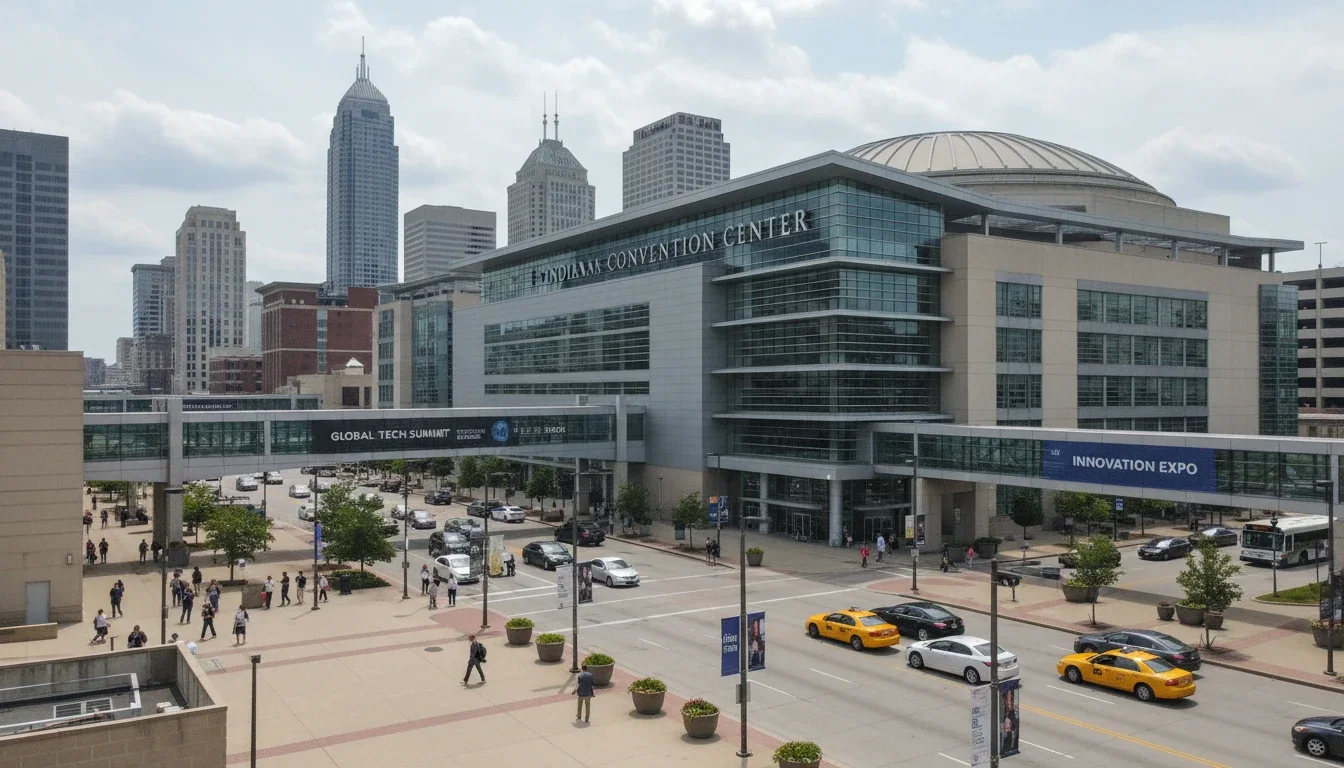
Downtown Indianapolis near the Indiana Convention Center — the hub of the city's trade show activity
Bringing It All Together
Staffing a trade show in Indianapolis requires more planning than most exhibitors expect — and more strategy than many budgets reflect. The good news is that the formula is repeatable once you get it right.
Start early. Define your roles clearly. Train everyone — even experienced staff — on your specific goals and brand. Use the 50 sq ft staffing ratio as a floor, not a ceiling. And if your internal team can't cover the show at the level your investment deserves, work with a professional agency that has a proven track record at scale.
The exhibitors who walk away from Indianapolis shows with strong lead lists and tangible ROI aren't necessarily the ones with the biggest booths. They're the ones with the best-prepared people on the floor.
If you're planning a trade show in Indianapolis and need professional, pre-vetted event staff — from brand ambassadors and registration teams to on-site coordinators — Eleven8 Event Staff provides nationwide staffing solutions with a rigorous selection process and a track record with major brands including Nike, Netflix, and Porsche.