Brand Activations and Hospitality at State Farm Stadium
State Farm Stadium sits in the heart of Glendale, Arizona as one of the most versatile large‑format event venues in the country. Home to the Arizona Cardinals, it has hosted three Super Bowls, the NCAA Final Four, the College Football Playoff National Championship, and over 200 events per year — from international concerts to championship wrestling. For brands and corporate sponsors, that kind of traffic is an activation opportunity at scale.
But executing a brand activation or premium hospitality event at a venue this size requires more than a tent and a logo. It requires a clear understanding of where you can activate, how the venue’s zones are structured, and — critically — who is staffing the experience on event day.
This guide breaks down everything brands, agencies, and event planners need to know about running activations and hospitality at State Farm Stadium: the zones, the logistics, the staffing roles, and how to build a guest experience that performs.
Why State Farm Stadium Is a Premier Activation Venue
Venue Scale and Audience Reach
State Farm Stadium seats between 63,400 and 73,000 depending on the event configuration. The retractable roof and natural grass playing field allow the venue to host everything from NFL football and international soccer to concerts, motorsports, and consumer expos — keeping the calendar active year‑round.
For brands, the scale matters. An activation at State Farm Stadium isn’t just reaching a few thousand fans — it’s reaching a captive, emotionally engaged audience over several hours with a long dwell time that few retail or outdoor environments can match. Sponsors who show up here with a well‑staffed presence tend to generate strong brand association and repeat impressions.
Year‑Round Event Calendar
The stadium’s event variety is a strategic asset for brands. The Arizona Cardinals NFL season runs from late summer through January. The annual Fiesta Bowl brings a college football audience. The Great Lawn hosts community and entertainment events throughout the year. Major concert tours — from stadium‑filling pop acts to country and Latin music headliners — fill the calendar between sports seasons.
That diversity means a brand activated here can reach NFL fans one week and a completely different demographic at a music festival the next. For sponsors with multi‑audience campaigns, State Farm Stadium is one of the few venues that delivers demographic range without requiring a location change.
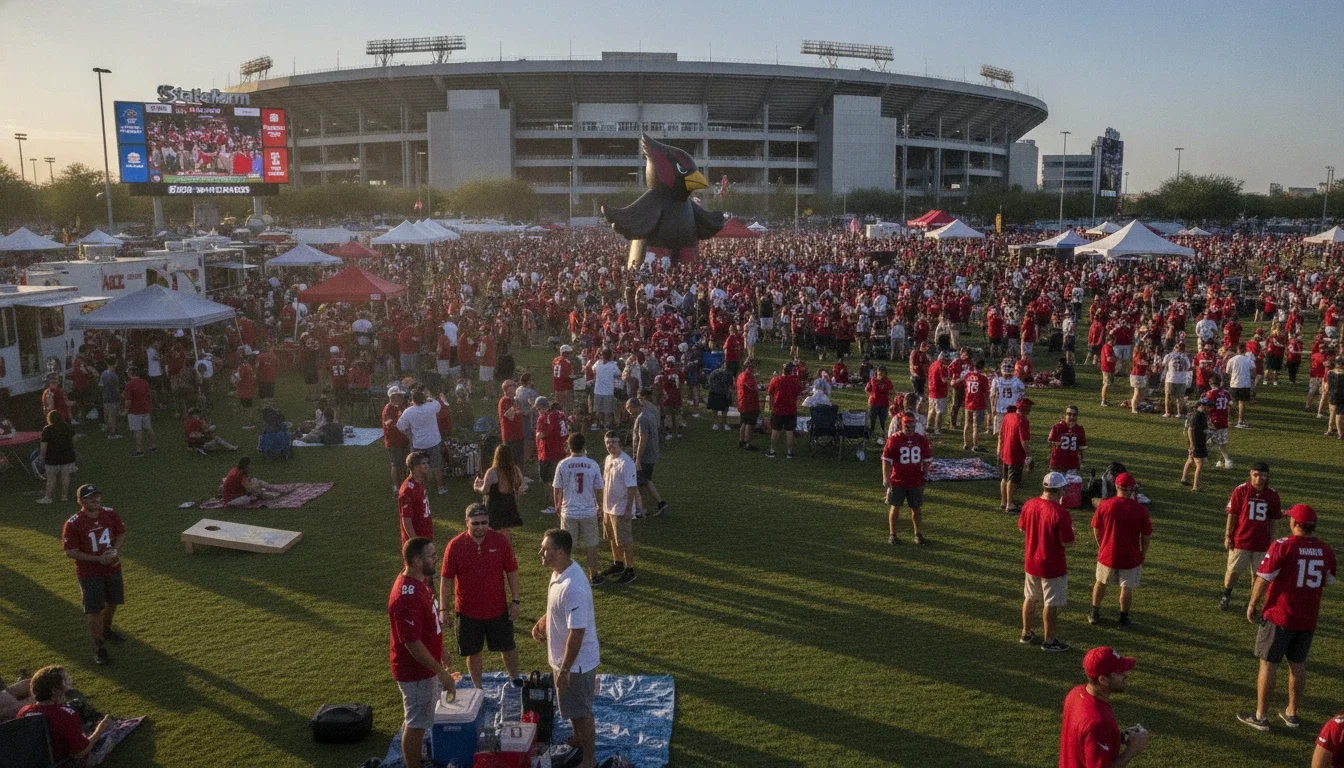
State Farm Stadium Great Lawn with fans during an Arizona Cardinals game day
Understanding Brand Activation Zones at State Farm Stadium
State Farm Stadium’s physical layout creates distinct zones, each with different activation potential, audience density, and logistical requirements. Understanding these zones is the starting point for any activation plan.
The Great Lawn and Outdoor Plaza
The Great Lawn is the centerpiece of the stadium’s exterior experience. Covering more than eight acres, it was designed as the heart of the game‑day environment for Cardinals fans. The space accommodates tailgating, live music on the Great Lawn Stage (presented by BetMGM and Gila River Resort & Casinos), the BetMGM Sportsbook, and Heritage at Sportsman’s Park — a venue within the venue that features a 500‑square‑foot beer garden.
For brand activations, the Great Lawn is the highest‑traffic exterior zone. Brands can set up experiential footprints here in conjunction with stadium sponsorship agreements, typically requiring coordination through the Cardinals’ corporate partnerships team. The open‑air format accommodates interactive installations, product sampling, branded games, and consumer engagement activations that benefit from natural dwell time before gates open.
Best for: Consumer brand sampling, interactive experiences, sponsor‑led fan engagement
Staffing needs: Brand ambassadors, product demonstrators, registration staff for lead capture
Key logistics: Early load‑in required; coordinate with stadium operations for footprint placement
Concourse Corridors and Interior Footprints
Inside the stadium, concourse corridors offer high‑density foot traffic during arrivals, halftime, and exits. Activation footprints in these zones tend to be more compact but benefit from forced pedestrian flow — fans are moving through, not choosing to approach. This works best for brands with a quick, high‑impact interaction model: a sampling moment, a digital engagement point, or a branded photo opportunity.
Interior activations also integrate naturally with the stadium’s existing partner presence. The venue features LED ribbon boards, scoreboards, and digital screens that can amplify on‑ground activations with synchronized content.
Cardinals Flight Deck and Experiential Zones
The Cardinals Flight Deck, presented by Desert Financial Credit Union, is a southeast plaza zone featuring a lounge with shade structure, an oversized LED video wall, and the Tillman Stage for live music. Mobile gourmet concessions anchor the space.
For brands aligned with the Cardinals’ sponsorship ecosystem, the Flight Deck and similar experiential zones offer a structured activation environment with built‑in audience draw. Brands not yet in a formal partnership can often negotiate event‑specific presence through the Cardinals’ corporate development team.
Sponsored Venue Zones and Partnership Activations
State Farm Stadium operates with a robust corporate partnership model. The stadium’s naming rights deal, gaming partnerships (BetMGM), financial partnerships (Desert Financial), and dozens of category‑exclusive sponsors mean that in‑venue brand presence is often activated through the partnership framework rather than ad‑hoc.
For brands entering the venue activation space for the first time, connecting with the Arizona Cardinals’ partnership marketing team early is essential. For existing sponsors, game‑day activation fulfillment — including promotional execution, on‑field fan contests, sponsored segments, and branded giveaways — requires a dedicated, well‑briefed event staff team that understands both the brand and the venue’s game‑day timeline.
Premium Hospitality at State Farm Stadium
Beyond the activation footprint, premium hospitality at State Farm Stadium is one of the most sophisticated client entertainment environments in the Southwest. The stadium’s 88‑plus luxury suites, multiple loft configurations, and dedicated club lounges cater to corporate entertaining at every scale.
Luxury Suite Experiences
State Farm Stadium’s suite inventory ranges from single‑game rentals to full‑season leases, with options including 50 East and 50 West Lofts at midfield, end‑zone Casitas with field‑level access and rooftop decks, and standard suites throughout the Club Level. Suite rental pricing typically ranges from approximately $9,000 to $20,000 depending on event type and suite category.
Each suite is serviced by a shared suite attendant, with in‑game catering available through the stadium’s food and beverage partner. For corporate hospitality events, in‑suite catering ordered in advance through the dedicated catering menu offers a more curated experience than game‑day walk‑up service.
Club Levels, Lofts, and Casa Roja Lounge
The Party Loft offers a premium shared suite experience for larger groups — an open, social atmosphere suited for corporate team events, client entertainment nights, or hospitality packages that don’t require total privacy but still offer elevated service. Studio Suites, the newest addition to the premium inventory, provide an intimate club‑level retreat for smaller groups who want a more exclusive feel.
Casa Roja Lounge is the stadium’s top‑tier premium hospitality destination, offering exclusive access and a high‑end lounge environment. It is not available during all events (notably excluded for Monster Jam and Supercross), so event selection matters for hospitality planners.
Corporate Entertaining and Client Hospitality
For corporate clients using State Farm Stadium as a client entertainment venue, the most successful executions treat the hospitality suite as a brand extension — not just a place to watch the game. That means pre‑event receptions, branded collateral in the suite on arrival, a coordinated food and beverage experience, and a staffing layer that handles guest arrival, suite management, and VIP concierge moments throughout the event.
What to Include in a Corporate Hospitality Package
Pre‑event reception with welcome staff and branded check‑in
VIP parking coordination and guest meet‑and‑greet
Suite concierge service for catering orders and guest requests
Branded suite setup (signage, collateral, welcome gifts)
Dedicated suite attendant or hospitality ambassador for full event duration
Post‑event guest escort and transportation coordination
Each of these touchpoints benefits from dedicated event staff who understand your brand’s service standard — not generic venue staff managing multiple suites simultaneously.
Staffing Roles for Brand Activations at State Farm Stadium
The staff you put on the floor at State Farm Stadium are the human face of your brand. Whether it’s a consumer sampling activation on the Great Lawn or a VIP hospitality suite on the Club Level, the quality, preparation, and presence of your team directly shapes how the experience lands.
Here is a breakdown of the key roles and what each one does in the context of a stadium activation.
Brand Ambassadors: Your Front‑Line Activation Crew
Brand ambassadors handle direct consumer engagement at the activation footprint. At a stadium like State Farm Stadium, they are fielding interactions in a noisy, high‑energy, time‑compressed environment. The best brand ambassadors for stadium activations are confident on their feet, deeply briefed on talking points, and able to create a genuine moment of connection in under 60 seconds.
For the Great Lawn and concourse activations, plan for a minimum of one ambassador per engagement station, plus a lead who manages the team, tracks engagement numbers, and coordinates with the brand’s on‑site point of contact.
Experiential and Promotional Staff
For more complex activations — interactive games, product trials, photo moments, or multi‑zone activations — experiential staff handle the operational components of the setup while maintaining the brand experience. They may operate specific equipment, guide participants through a multi‑step experience, or manage queue flow at a high‑demand activation.
In a stadium environment, experiential staff also serve a safety function: they understand venue traffic patterns and can adjust activation flow in real time to avoid congestion near exits or emergency routes.
Hospitality and Suite Attendants
Suite‑level events require a different staffing profile. Hospitality staff working premium suites at State Farm Stadium need to project warmth, discretion, and attentiveness simultaneously. They manage arrival sequences, handle catering coordination with the venue’s F&B team, maintain the suite environment throughout the event, and anticipate guest needs before being asked.
For corporate hospitality clients, having dedicated suite staff — distinct from the venue’s shared attendant — elevates the experience meaningfully. It signals to your guests that they are at a curated event, not simply a ticket package.
Registration and Guest Management Staff
Many corporate activations and partnership hospitality events involve a guest list with specific check‑in requirements. Registration staff manage credential verification, badge distribution, plus‑one lists, and any tiered access system (general hospitality vs. VIP suite vs. field access, for example).
At a venue as large as State Farm Stadium, guest flow at check‑in points can become a pressure point quickly. Having dedicated, well‑briefed registration staff who know how to move a line efficiently without sacrificing warmth is one of the most overlooked investments in corporate event staffing.
Production Assistants and Event Coordinators
Production assistants support the operational layer of any activation — handling setup and teardown, managing inventory and supplies, running items between zones, and providing on‑the‑ground support to the production team or brand team lead. For larger activations at State Farm Stadium, having a dedicated production support team allows brand managers to focus on the guest experience rather than logistics.
Crowd Control and Guest Flow Management
Stadium activations — particularly on the Great Lawn during high‑attendance events — can generate unexpected demand spikes. Crowd control staff manage queue formation, maintain safe egress around the activation footprint, and work in coordination with the venue’s stadium operations team. This is a compliance requirement at many activation levels and should be factored into any staffing plan for exterior or high‑traffic concourse placements.
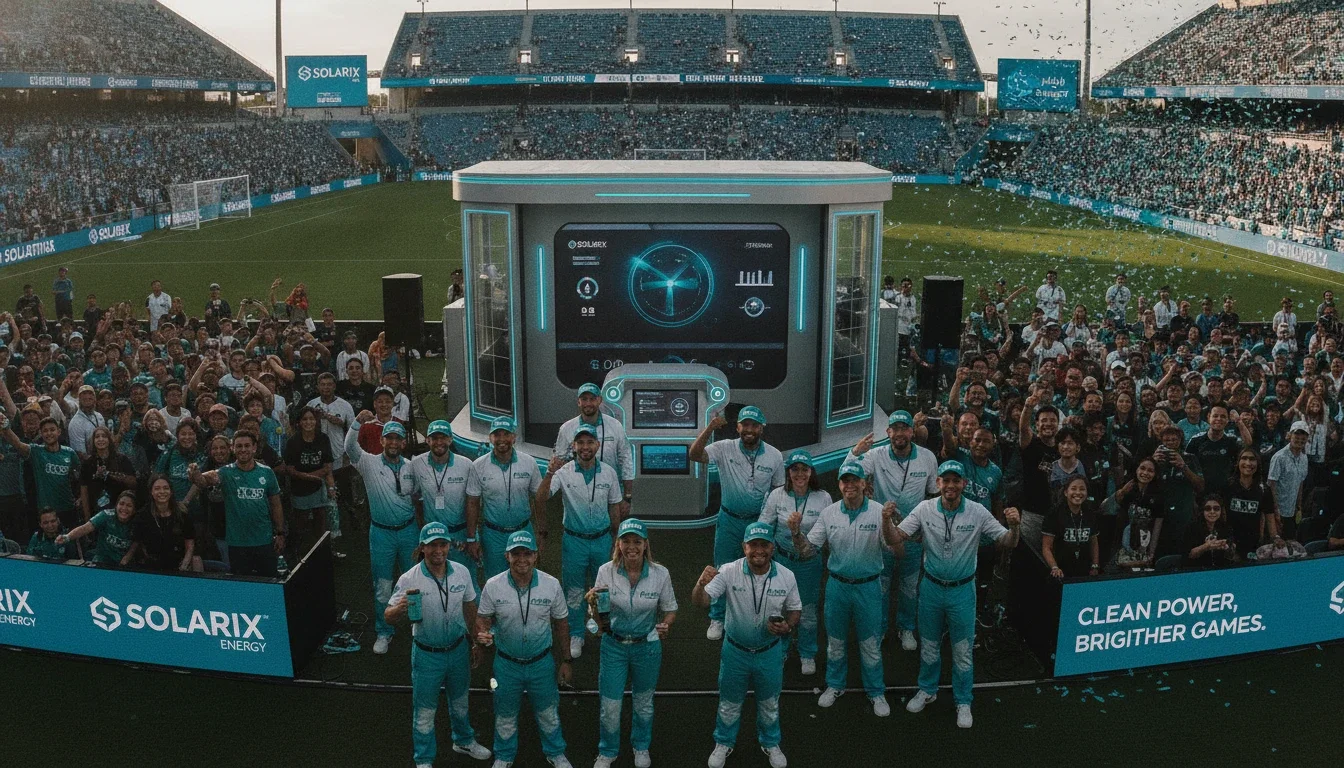
Professional brand ambassadors in matching uniforms engaging fans at a stadium brand activation event
Logistics: Planning a Successful Activation at State Farm Stadium
Venue Permits and Brand Partner Coordination
Brand activations at State Farm Stadium operate within the venue’s partnership and special events framework. Brands activating as part of a formal NFL or Cardinals sponsorship package coordinate through the Cardinals’ Partnership Marketing team. Brands activating during non‑football events (concerts, bowl games, or special events) may work directly with the stadium’s special events department.
Either way, the activation footprint, setup window, insurance requirements, and staffing protocols must be approved in advance. Plan for a minimum of 8 to 12 weeks of lead time for first‑time activations at the venue.
Load‑In, Setup, and Staff Briefing Timelines
Stadium operations at State Farm Stadium require activating brands to coordinate load‑in within a specific window — typically three to four hours before event start, depending on the activation location. For Great Lawn activations, earlier load‑in is usually available given the exterior footprint.
Staff briefings should happen at the activation site, not in a parking lot or off‑site. Allow a minimum of 45 minutes for an on‑site briefing that covers the brand story, talking points, guest engagement protocols, emergency procedures, and chain of communication on event day. Well‑briefed staff perform significantly better in the first 30 minutes of a live activation.
Technology and POS Integration at the Venue
State Farm Stadium operates a sophisticated POS and digital infrastructure, with over 580 fixed and handheld devices across concessions, premium levels, and luxury suites. For activations involving any transaction, sampling redemption, lead capture, or loyalty integration, coordinating with the venue’s technology layer in advance avoids costly day‑of surprises.
Brands running lead capture activations should have their own data collection infrastructure — tablets, badge scanners, or QR‑based systems — ready to operate independently of the venue’s network to avoid integration delays.
Transportation and Parking Logistics for Event Teams
State Farm Stadium sits at 1 Cardinals Drive, Glendale, AZ 85305, approximately 20 minutes from downtown Phoenix. The venue features 14,000 on‑site parking spaces, with VIP lots on the West, North, and East sides. Uber is the official rideshare partner, with a designated drop‑off and pick‑up zone at 95th Avenue and Bethany Home Road.
For event staff teams, coordinate staff arrival in the VIP or staff‑designated lot well in advance of the public parking crunch. A clear staff arrival protocol — including credential check, briefing location, and gear pickup — saves significant time on event day and prevents the late‑start scramble that undermines early activation momentum.
How to Staff a State Farm Stadium Brand Activation
How Many Staff Do You Need?
Staffing ratios for stadium activations depend heavily on activation type, footprint size, and expected throughput. As a general planning framework:
Small footprint activation (1 to 2 engagement stations, Great Lawn or concourse): 4 to 8 brand ambassadors plus 1 lead
Medium activation (multi‑station experiential, 500 to 1,000 sq ft footprint): 10 to 18 staff plus 1 to 2 leads
Large‑scale sponsored activation or multi‑zone presence: 20+ staff, multiple leads, production support team
Corporate hospitality suite (single suite, up to 20 guests): 1 to 2 dedicated hospitality staff plus registration lead
Corporate hospitality block (multiple suites or loft, 50+ guests): 4 to 6 dedicated staff plus suite leads
These are starting points. A reputable event staffing agency should help you pressure‑test these numbers against your specific activation goals and expected attendance data.
What to Look for in an Arizona Event Staffing Agency
Not all staffing agencies operate at the level that a State Farm Stadium activation demands. The venue, the audience, and the brand stakes are simply too high for a reactive, availability‑based model. When evaluating a staffing partner for a stadium activation in the Phoenix or Glendale market, look for:
An established local roster — staff who are already in market, not recruited after you book
A verifiable vetting process — background checks, live interviews, prior activation experience
Documented fulfillment reliability — fill rates, no‑show backup protocols, on‑site supervision
EEAT signals — case studies, client references, named experience with comparable venues and event types
Insurance coverage — workers’ comp, general liability, and the ability to provide a COI
A dedicated account manager for your specific event, not a shared inbox
Why Local Roster Depth Matters in the Phoenix Market
Phoenix and the greater Glendale market have a dense and active event calendar — the Super Bowl, CFP National Championship, Final Four, Fiesta Bowl, and a full NFL season all run through State Farm Stadium, alongside a continuous rotation of concerts and special events. Agencies without an established local roster tend to struggle with fulfillment during peak periods.
For brands activating at high‑profile events — particularly Super Bowl week, championship weekends, or major concert tours — booking a staffing partner with 90+ days of lead time and a proven Arizona market presence is non‑negotiable. The best staff get booked first.
At Eleven8 Event Staff, we maintain an established roster across the Phoenix and Glendale market — not assembled after your call, but ready to deploy. Whether you need 5 brand ambassadors for a concourse activation or 50 experiential staff for a multi‑zone Great Lawn presence, our team brings the same rigor we bring to every market: strict vetting, full insurance coverage, on‑site supervision, and a dedicated account manager for your event. Inquire now at elev8.la/book-now.