How to Plan an Event in Indianapolis: Venues, Vendors & Staffing Essentials
Planning an event in Indianapolis is one of the smartest decisions you can make in the Midwest. The Circle City has quietly become one of the most event-forward cities in the country — with world-class convention infrastructure, a growing hospitality scene, and a downtown that's walkable, affordable, and full of character.
But "event-ready city" doesn't automatically mean "effortless event." Even in the best markets, a great venue and a strong vendor lineup can still be undone by poor execution, mismanaged guest flow, or an understaffed team.
This guide covers everything you need to know about planning an event in Indianapolis — from locking in the right venue to building a vendor team to understanding why professional staffing is the difference between an event people enjoy and one they remember.
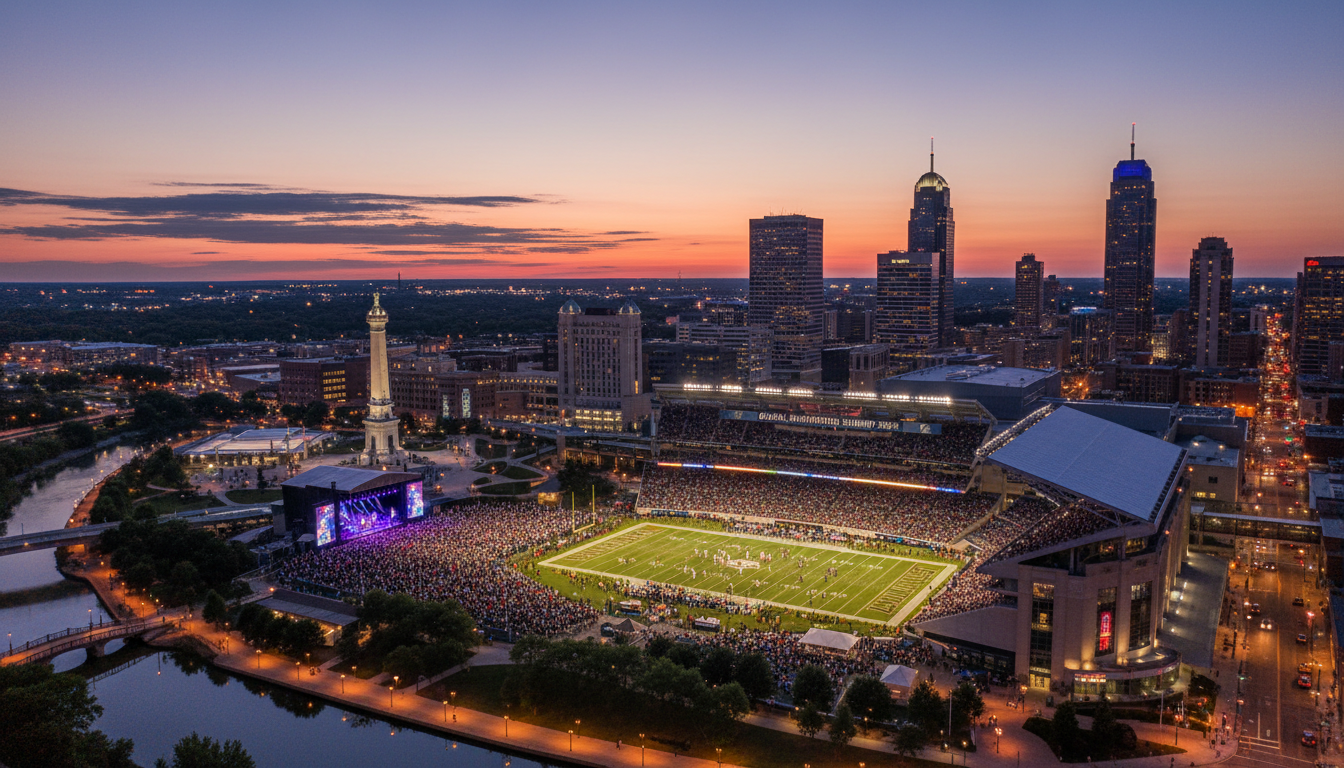
Indianapolis is one of the Midwest's most vibrant event destinations, offering world-class venues and a growing hospitality infrastructure
Why Indianapolis Is a Premier Event Destination
Indianapolis by the Numbers: A City Built for Events
Indianapolis isn't just a Midwestern stopover. It hosts the largest single-day sporting event in the world — the Indy 500 — and is home to one of the largest children's museums on the planet. The Indiana Convention Center offers over 566,000 square feet of exhibit space connected directly to a network of downtown hotels, making it one of the most logistically streamlined convention cities in the U.S.
For event planners, that infrastructure matters. It means your guests can walk from their hotel to your event without fighting for parking. It means your vendors have navigated the loading docks before. And it means the local hospitality industry — from caterers to AV companies to staffing agencies — is experienced, competitive, and calibrated for events of every scale.
Peak Event Season and Booking Timelines
Indianapolis has two distinct peak seasons for events:
Spring (April–June): Post-NCAA tournament energy, the Indy 500, and graduation season drive high venue and vendor demand.
Fall (September–November): Corporate conference season, fundraising galas, and holiday party planning all converge.
For events during peak season, book your venue six to twelve months in advance. Vendors — particularly top-tier caterers, AV companies, and professional staffing agencies — should be confirmed at least three to four months out. For large conventions or multi-day conferences at the Indiana Convention Center, begin planning up to eighteen months ahead.
Even outside peak windows, the most sought-after vendors in Indianapolis fill their calendars fast. The earlier you engage, the more options you have.
Building Your Event Planning Framewor
Start With Your Event Goals, Not Your Budget
The most common mistake event planners make — especially those new to Indianapolis's market — is leading with the budget before defining the objectives. Before you pull up a single venue website, answer these questions:
What outcome does this event need to produce? (Lead generation, team morale, brand awareness, fundraising?)
Who is the audience, and what experience do they expect?
What does success look like, and how will you measure it?
Is this event one-time or part of a recurring series?
Your answers will shape every decision that follows — from venue size and catering style to the type and number of staff you need.
The Essential Indianapolis Event Planning Checklist
Use this as your master framework and adapt it to your event type:
12+ Months Out
Define event objectives, audience, and success metrics
Establish preliminary budget with a 15% contingency buffer
Begin venue search and site visits
Identify key vendor categories needed
6–9 Months Out
Finalize and book venue
Issue RFPs to caterers, AV, and production vendors
Hire event planner or coordinator if needed
Confirm keynote speakers, entertainment, or special programming
3–6 Months Out
Finalize all vendor contracts
Book professional event staffing agency
Confirm staffing roles, ratios, and briefing timeline
Launch registration or guest communications
Develop run-of-show and event day timeline
4–6 Weeks Out
Conduct site walkthrough with vendors and staff lead
Confirm dietary restrictions and AV tech requirements
Finalize guest count and catering minimums
Brief event captain on timeline, VIP guests, and contingencies
1 Week Out
Confirm all vendor and staff arrival times
Distribute final run-of-show to all team leads
Verify parking, security, and load-in logistics
Prepare day-of emergency contacts and backup protocols
Event Day
Arrive early for venue walkthrough
Brief full staff team on-site before doors open
Designate one point of contact for each vendor
Capture post-event feedback from staff, vendors, and attendees
How to Set a Realistic Event Budget in Indianapolis
Indianapolis is genuinely more affordable than coastal markets — but "affordable" is relative when you're planning a large-scale event. Use these general benchmarks as starting points:
Venue rental: $2,000–$25,000+ depending on space and duration
Catering (per person): $40–$150+ for plated dinner; $20–$60 for heavy appetizers
AV and production: $1,500–$30,000 depending on complexity
Professional event staffing: $25–$60+ per staff hour depending on role and agency
Décor and florals: Highly variable; budget $1,500–$10,000 minimum for mid-sized events
Photography/videography: $1,500–$6,000 for professional coverage
Always build in a 10–15% contingency. Events have a habit of expanding in scope between the planning phase and the day itself.
Choosing the Right Indianapolis Event Venue
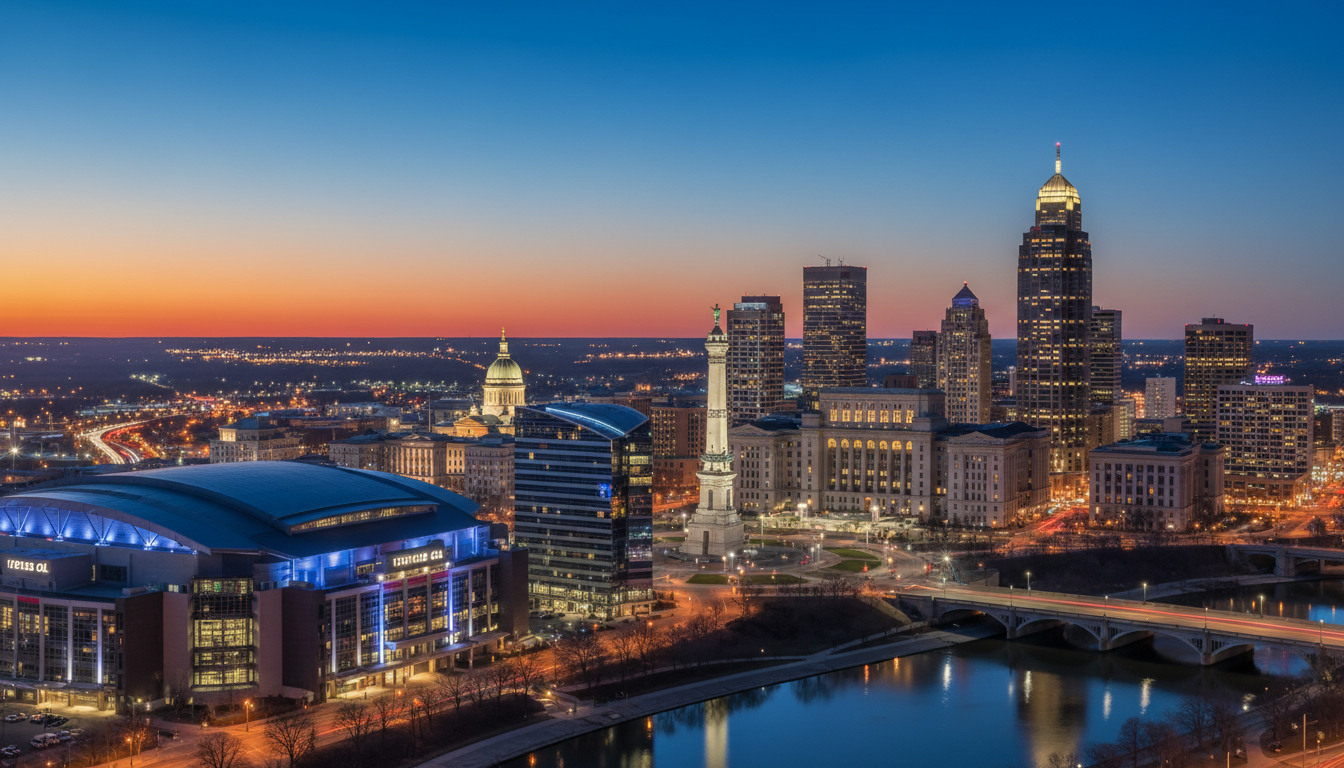
Indianapolis offers a wide range of event venues, from sleek modern spaces near Lucas Oil Stadium to elegant historic ballrooms in the heart of downtown
Downtown Indianapolis Venues for Corporate Events
Downtown Indianapolis offers the most concentrated collection of event-ready spaces, with easy hotel access, restaurant proximity, and walkable guest logistics.
Indiana Roof Ballroom is one of the city's most iconic event spaces. Located in the heart of downtown, its stately architectural design and multiple indoor and outdoor areas make it equally suited to galas, corporate dinners, and large-scale award ceremonies. The venue offers comprehensive event coordination, trusted vendor connections, and full logistical support from concept to completion.
Crane Bay and The Heirloom (operated by Crystal Signature Events) give planners access to two distinctly different atmospheres. Crane Bay offers industrial-chic waterfront views, while The Heirloom delivers a warm, intimate setting ideal for galas and fundraising dinners. Both benefit from Crystal's in-house event management team, established caterer relationships, and rental partnerships.
Radius and INDUSTRY (operated by 828 Venue Management) are versatile, modern spaces near Lucas Oil Stadium well-suited to corporate conferences, networking receptions, and team celebrations. INDUSTRY's open vendor policy gives planners flexibility, while its 6,800 square feet of space accommodates up to 300 seated guests.
The Indiana Convention Center remains the go-to for large conventions, trade shows, and multi-day conferences. With over half a million square feet of exhibit space and direct hotel connectivity, it's one of the most logistically capable convention venues in the country.
Unique and Non-Traditional Indianapolis Event Spaces
Cookie-cutter hotel ballrooms are rarely the most memorable choice. Indianapolis has a growing inventory of distinctive venues worth considering:
Tinker House Events — A warm, design-forward venue emphasizing guest experience and thoughtful vendor partnerships
Laurel Hall — A century-old historic property set on six acres, offering stately architecture and beautiful photo opportunities
White Willow Farms (Arcadia, IN) — A large converted granary on 14 acres, ideal for outdoor-adjacent events seeking a rural backdrop with urban-quality execution
Outdoor and Hybrid Venue Options
Indianapolis summers and falls offer excellent outdoor event windows. When considering outdoor or hybrid (indoor-outdoor) venues, factor in:
Tent and weather contingency costs
Extended staffing needs for outdoor flow management
Generator and power availability
Guest transportation and parking logistics
Noise ordinances and permit requirements
The White River State Park, located minutes from downtown, is the largest urban state park in the country and offers significant outdoor event potential for permitted activations and festivals.
What to Ask a Venue Before You Sign
Before committing to a contract, ask every venue these questions:
What is included in the base rental fee? (Tables, chairs, AV, linens, staffing?)
Is there a preferred or exclusive vendor list?
What is the cancellation and rescheduling policy?
Are there noise ordinances or hard end times?
What are the load-in and load-out windows?
Is the space accessible for guests with mobility needs?
What is the venue's emergency and security protocol?
Who is the day-of contact and how do they communicate with vendors?
Working With Indianapolis Event Vendors
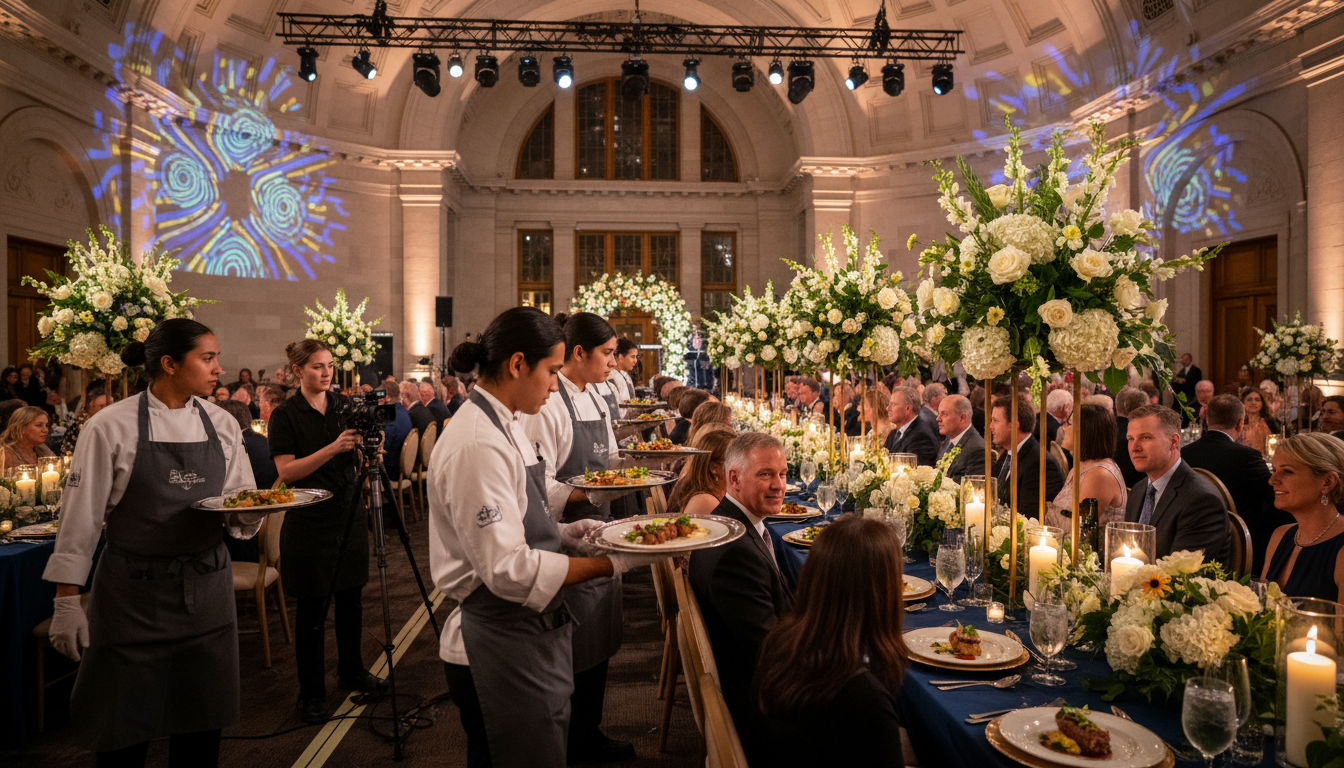
A well-coordinated vendor team — from catering to AV to floral design — is the backbone of a seamless Indianapolis event
Catering and Food & Beverage Vendors
Food is one of the highest-leverage investments at any event. A memorable dining experience elevates everything around it; a poor one lingers in guests' memory regardless of how beautiful the venue looked.
Indianapolis has a strong catering ecosystem. When evaluating caterers, look beyond the menu:
Service model: Do they provide full-service waitstaff, or is staffing your responsibility?
Menu flexibility: Can they accommodate dietary restrictions, themed menus, and multiple meal formats?
Logistics: Do they handle setup, breakdown, and rentals, or do you coordinate those separately?
References: Ask for references from events of comparable size and format.
Some Indianapolis caterers include their own waitstaff in their packages; others do not. If yours doesn't — or if you need a larger or more specialized front-of-house team — supplementing with a professional event staffing agency is the smart move.
AV, Lighting, and Production Companies
Audio-visual execution is where many otherwise excellent events fall apart. In Indianapolis, look for AV partners with:
Demonstrable experience with your venue (they'll know the loading dock, power situation, and acoustics)
In-house equipment rather than a brokerage model
A dedicated on-site technician for the full event duration
Clear contingency protocols for equipment failure
Markey's Rental and Staging is one of the most recognized AV and production vendors in Indianapolis, with an established relationship with Crystal Signature Events venues. For conference-scale productions, Meeting Tomorrow is known for complex, multi-faceted corporate events with white-glove AV service.
Floral, Décor, and Rental Vendors
Rental logistics in Indianapolis are generally well-organized. A Classic Party Rental is a widely used partner for tables, linens, and furniture across many Crystal Signature Events venues. For floral design, Indianapolis has a strong independent florist community — ask your venue or event planner for referrals based on your aesthetic and budget.
Key questions for rental vendors:
What is the delivery and pickup window relative to your venue's load-in policy?
What is the damage and replacement policy?
Do they coordinate directly with your venue or only with your planning team?
Photography and Videography
For corporate events, budget for at least one photographer dedicated to candid guest moments and a second for formal brand assets (signage, product shots, speakers). For galas and social events, video recap content has become an essential deliverable — particularly for social media and internal recap decks.
Brief your photographer and videographer with a shot list, a timeline, and VIP identifiers before the event begins. This is especially important at large events where they may not know who the key stakeholders are.
How to Vet and Manage a Vendor Team
Managing multiple vendors is one of the most demanding aspects of event planning. Use these principles:
Single point of contact: Designate one person on your team — or your event captain — as the primary contact for all vendors on event day.
Master vendor sheet: Maintain a document with every vendor's name, contact, arrival time, deliverables, and contract terms.
Rehearsal walkthrough: For larger events, conduct a walkthrough with all vendors 24–48 hours before the event. This surfaces logistical conflicts before they become day-of crises.
Escalation protocol: Every vendor should know who to contact if something goes wrong, and in what order.
The Most Overlooked Element of Event Planning: Professional Staffing
Most event planning guides spend considerable space on venues and caterers, then treat staffing as an afterthought. That's a mistake — and it's one that shows up clearly in guest feedback.
Your venue can be stunning. Your food can be exceptional. But if guests wait 20 minutes in a disorganized check-in line, if there's no one to direct them to their seats, or if the bar runs out because service was understaffed, those are the moments they take home.
Why Event Staffing Makes or Breaks Guest Experience
Professional event staff are the human infrastructure of your event. They're the first faces guests see when they arrive, the people managing flow throughout the evening, and the last impression guests carry with them when they leave.
The difference between a generic staffing solution and a professional event staffing agency is the difference between available bodies and trained, vetted professionals who understand hospitality at a high level. Agencies like Eleven8 / Elevate Event Staff bring a structured approach to every engagement — matching staff to your specific event type, audience, and brand rather than sending whoever is free.
Types of Event Staff You May Need
Depending on your event, you may need one or several of the following staff roles:
Event Captain / Supervisor: The on-site team lead who coordinates all staff, communicates with the planning team, and handles real-time problem-solving. Non-negotiable for events with five or more staff members.
Registration and Check-In Staff: Specialists in guest list management, credential verification, badge distribution, and welcoming VIPs. Critical for conferences, galas, and conventions.
Hospitality and Waitstaff: Table service, passed appetizers, buffet management, and general guest support.
Bartenders: Certified, experienced, and legally compliant. Look for agencies whose staff hold relevant certifications.
Brand Ambassadors: Staff trained to represent your brand, engage attendees, distribute materials, and generate interactions at activations and trade shows.
Convention and Trade Show Staff: Specialized in high-volume environments — registration, crowd management, exhibitor support, and attendee navigation.
Coat Check and Concierge Staff: Often overlooked; high-impact for upscale events where first and last impressions matter.
For events in Indianapolis involving trade shows or large conventions at the Indiana Convention Center, convention-specific staffing from an experienced agency ensures your team already understands the pace, layout, and demands of high-volume convention environments.
How Many Staff Do You Need? Staffing Ratios Explained
General staffing ratios for reference (adjust based on event format and service style):
| Event Type | Recommended Ratio |
|---|---|
| Plated dinner (formal) | 1 server per 8–10 guests |
| Buffet or stations | 1 server per 25–30 guests |
| Cocktail reception | 1 server per 25 guests (passed apps); 1 bartender per 50 guests |
| Conference registration | 1 check-in staff per 50–75 expected arrivals per hour |
| Trade show / exhibition booth | 2–4 brand ambassadors per booth (scale to traffic) |
| Large convention (500+ attendees) | Event captain + department leads + floor staff (consult your agency) |
Note: These ratios are general guidelines. Actual staffing needs may vary based on event complexity, service expectations, and venue layout.
These are starting points. An experienced staffing agency will refine ratios based on your timeline, flow, venue layout, and guest profile.
What Is an Event Captain and Why You Need One
An event captain is the on-site team lead responsible for managing all event staff, coordinating with vendors, maintaining the run-of-show timeline, and escalating issues to the event planner when needed.
Think of the event captain as your operational commander. While you're greeting guests and managing the big picture, the captain is making sure the bar is stocked, the check-in line is moving, the caterer is on schedule, and the AV team has what they need.
For any event with more than three or four staff members, an event captain is not a luxury — it's a necessity. Without one, you become the coordinator, which means you can't be the host.
Eleven8's staffing model includes a dedicated event captain introduction 24 hours before your event, along with geo-clocked arrivals and post-event debriefs to ensure quality on both sides.
How to Hire Professional Event Staff in Indianapolis
Indianapolis is served by both local temp agencies and national professional staffing agencies. The distinction matters.
Local temp agencies often fill event roles as an afterthought to their core workforce businesses. Staff may have limited event-specific training and little experience in brand representation or hospitality nuance.
Professional event staffing agencies like Eleven8 / Elevate Event Staff operate exclusively in the event space. Their rosters are pre-vetted, event-specific, and built for deployment — not recruited after you book. This distinction directly affects reliability, presentation, and performance under pressure.
When evaluating an event staffing agency, ask:
How are staff recruited, screened, and trained?
What is your backup protocol for no-shows?
Do staff receive event-specific briefings before each assignment?
Who is my day-of point of contact?
How quickly can you fulfill staffing requests? (For Indianapolis events, 24–48 hours is achievable with a national agency)
Are your staff insured and legally certified for their roles?
For events in Indianapolis and across the Midwest, a national staffing agency with an established nationwide roster and proven infrastructure eliminates the risk of last-minute scrambles that local-only agencies can't always cover.
Event Day Execution: Tips From the Field
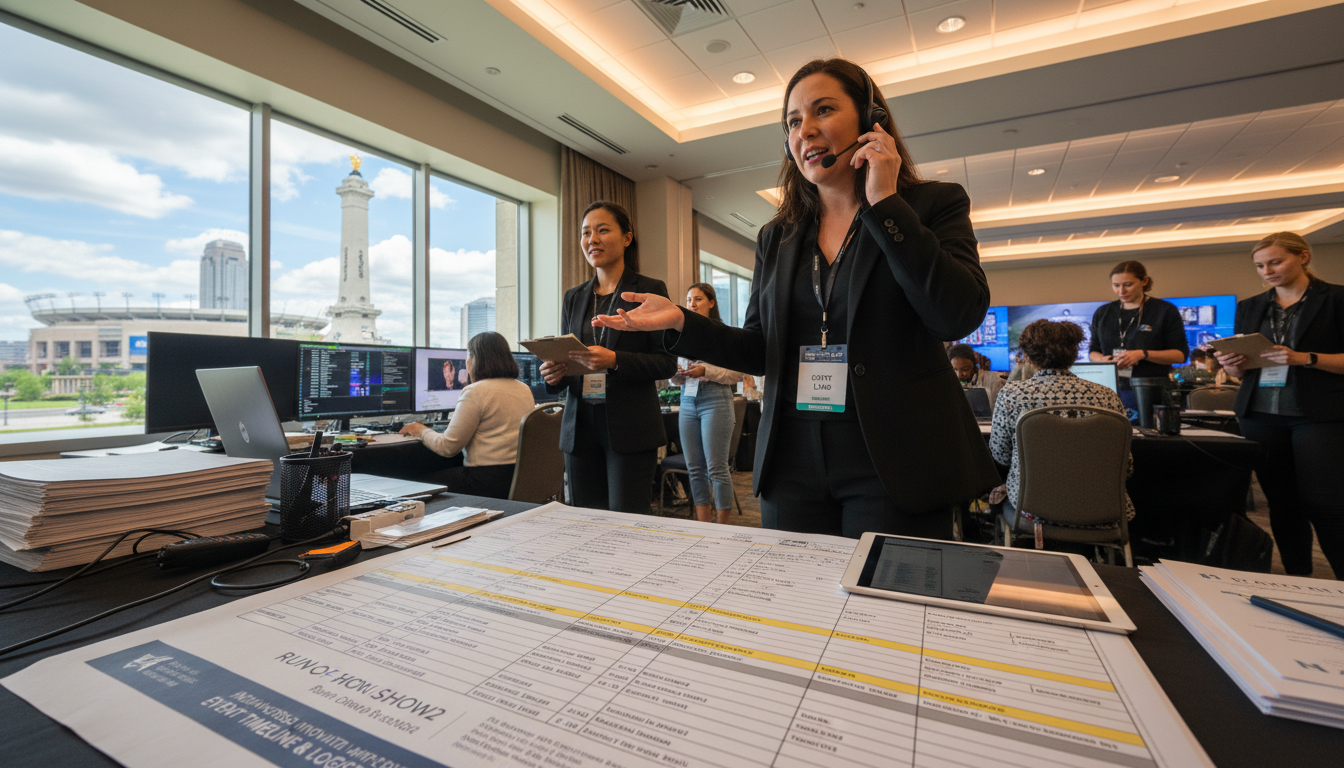
A well-prepared run-of-show document and a strong event captain are the two tools that keep every moving part of your Indianapolis event on track
Creating a Run-of-Show Timeline
The run-of-show (ROS) is the document that governs your event day. Every vendor, staff member, and planning team contact should receive a copy no later than 48 hours before the event.
A strong ROS includes:
Minute-by-minute timeline from load-in to load-out
Vendor arrival and departure windows with designated entry points
Staff deployment assignments (who is where and when)
Guest-facing moments (doors open, dinner service, program start, etc.)
AV and tech cues (when microphones go live, when presentations begin)
Emergency contacts for every vendor and staff lead
Contingency notes for predictable problems (late arrivals, weather, tech failure)
The more specific your ROS, the less improvisation you need on the day — and the more confident your staff and vendors will be in executing it.
Managing Vendors and Staff on the Day
Your event captain is the operational hub on event day. To set them up for success:
Brief them privately before doors open. Walk them through the venue, introduce them to the catering lead, AV tech, and venue contact.
Establish communication channels. Use a group text or walkie-talkie for real-time coordination.
Give them authority. An event captain who has to ask permission for every decision creates bottlenecks. Define the scope of their decision-making authority upfront.
Stay off the floor during service if you can. Let your captain manage the staff. Your job is to be present for guests, speakers, and stakeholders.
Handling Last-Minute Changes Like a Pro
In 35+ years of event operations, one constant remains: something will change. The keynote speaker runs long. A vendor arrives late. The head count shifts by 20% the morning of. Your ability to adapt without panicking is what separates professional event execution from amateur hour.
Build these habits:
Never share a single point of failure. Have backup contacts for every vendor.
Keep a cash reserve on hand for day-of incidentals (valet tips, last-minute supplies, etc.).
Maintain a 10% buffer in staffing requests. If you think you need 10 staff, request 11. The extra person is cheap insurance.
Communicate changes quickly and calmly. Your staff and vendors follow your energy. If you're controlled and clear, they'll be too.
A professional event staffing agency that maintains backup rosters — not reactive recruiting — is your best hedge against last-minute staff changes. Eleven8's model includes briefed standby replacements for every assignment, so a no-show doesn't become your problem to solve on the day.