Charleston Trade Show Staffing: Roles, Tips & How to Build Your Booth Team
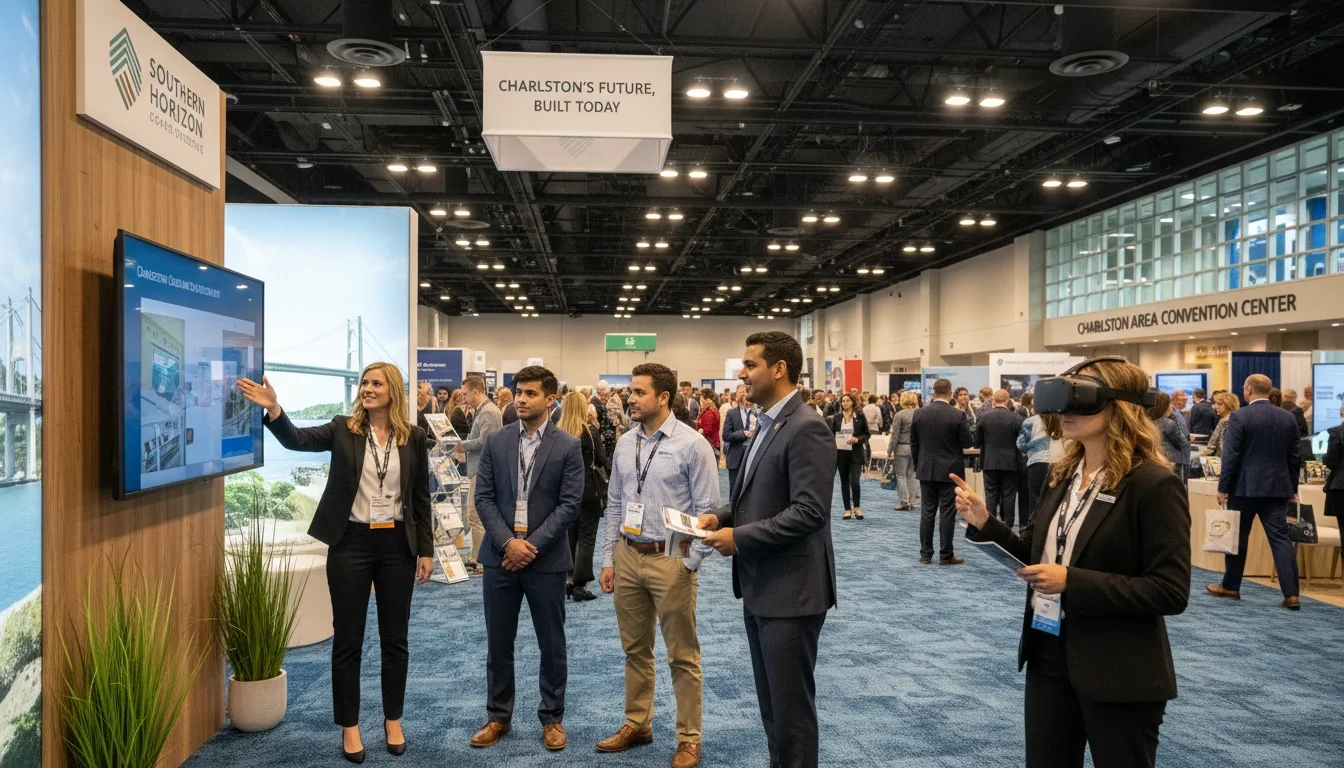
Professional trade show booth staff engaging with attendees at the Charleston Area Convention Center
Trade shows can be one of the highest-ROI marketing investments a company makes — or one of the most expensive ways to hand out free pens. The difference almost always comes down to your staff.
In Charleston, SC, exhibitors compete for attention at venues like the Charleston Area Convention Center, a 77,000 sq. ft. facility that hosts everything from industrial expos to lifestyle conventions. With hundreds of booths and a limited window to make an impression, the people standing in your exhibit space are your single greatest competitive advantage.
This guide walks you through everything you need to know about trade show staffing in Charleston — from calculating how many people you need, to defining the right roles, to deciding whether to hire in-house or partner with a professional staffing agency.
Why Trade Show Staffing Makes or Breaks Your Charleston Exhibit
The Trade Show Landscape in Charleston, SC
Charleston has emerged as one of the Southeast's most active trade show markets. The Charleston Area Convention Center — owned by the City of North Charleston and managed by ASM Global — offers three divisible exhibit halls with easy access from Charleston International Airport and the Historic District. Throughout the year, it hosts manufacturing expos, remodeling shows, healthcare conferences, and more.
Beyond the convention center, events take place at Exchange Park Fairgrounds and upscale hotel conference spaces like The Charleston Place. This range means exhibitors can be facing everything from a high-foot-traffic consumer expo to an intimate B2B professional conference — and each requires a different staffing approach.
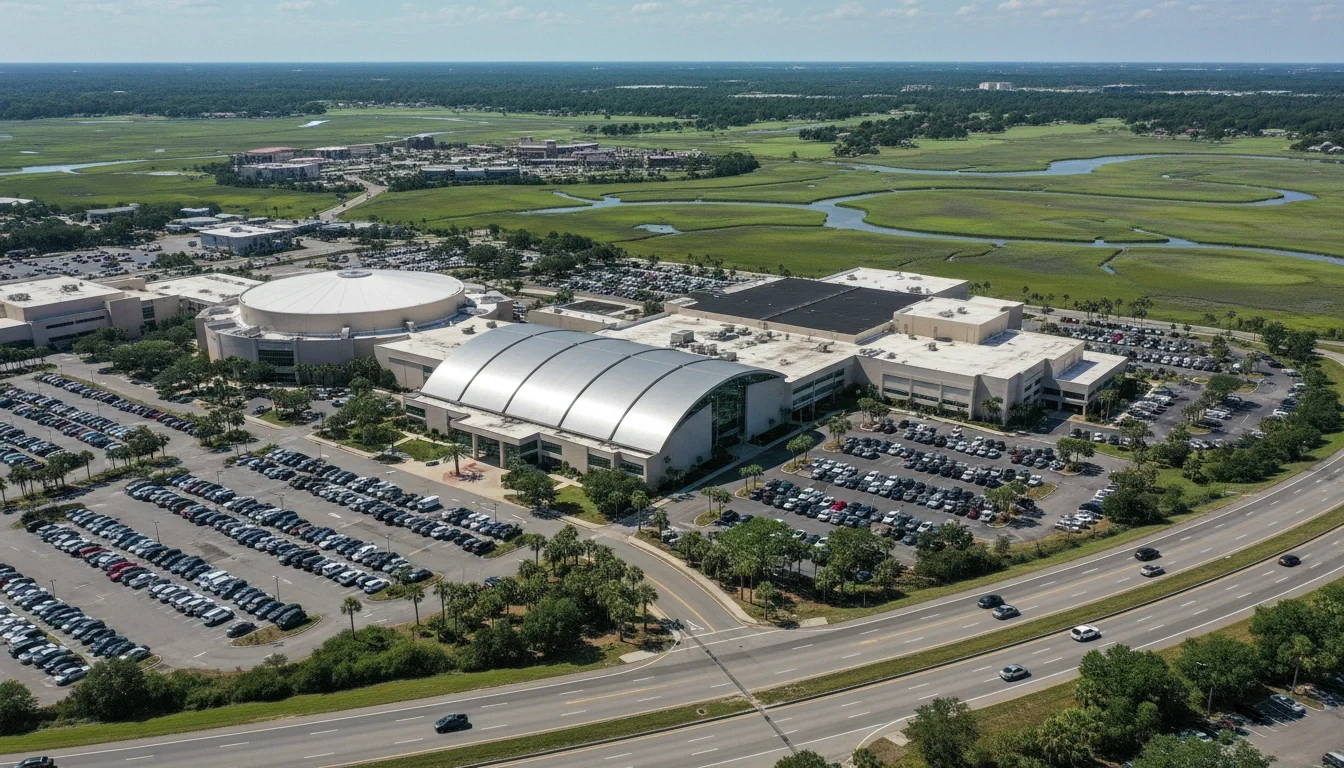
Aerial view of the Charleston Area Convention Center in North Charleston, SC
Why Most Booths Underperform (And How Staffing Fixes It)
Research from the Center for Exhibition Industry Research (CEIR) consistently shows that booth staff interaction is the number-one factor trade show attendees use to judge a company. Yet staffing is often the last budget item considered and the first cut when costs rise.
Common problems include overstaffing a small booth (which feels intimidating to visitors), understaffing a large one (which loses leads during peak traffic), and bringing the wrong people — employees who know the product but can't engage strangers effectively on a show floor.
Industry insight: A well-trained, properly staffed booth can generate 3–5 qualified lead interactions per staffer per hour. That number collapses when staffing is reactive rather than strategic.
How Many Staff Do You Need for a Trade Show Booth?
The 50-Square-Foot Staffing Rule
The most widely used industry benchmark is one staff member per 50 square feet of booth space. For a standard 10x10 booth (100 sq. ft.), that translates to two, maybe three people. A 20x20 exhibit (400 sq. ft.) warrants 6–8 staffers. For a larger island booth or peninsula display, scale accordingly — and always factor in scheduled breaks and shift rotations.
If your booth includes a demo area, product theater, or interactive element, you may need dedicated staffers for that zone regardless of overall square footage.
Staffing by Show Hours: The Formula
To build a staffing plan by the numbers, use this simple formula:
Total exhibiting hours × Staff on duty per shift = Total staff hours needed
Target 3–5 attendee interactions per staffer per hour (3 = conservative; 5 = aggressive)
Build in one relief/backup staffer for every 8 active staff for multi-day shows
For a two-day show with 8-hour days and 4 staff on duty, that's 64 total staff hours — enough to support 192–320 meaningful lead interactions across the event if your team is trained and engaged.
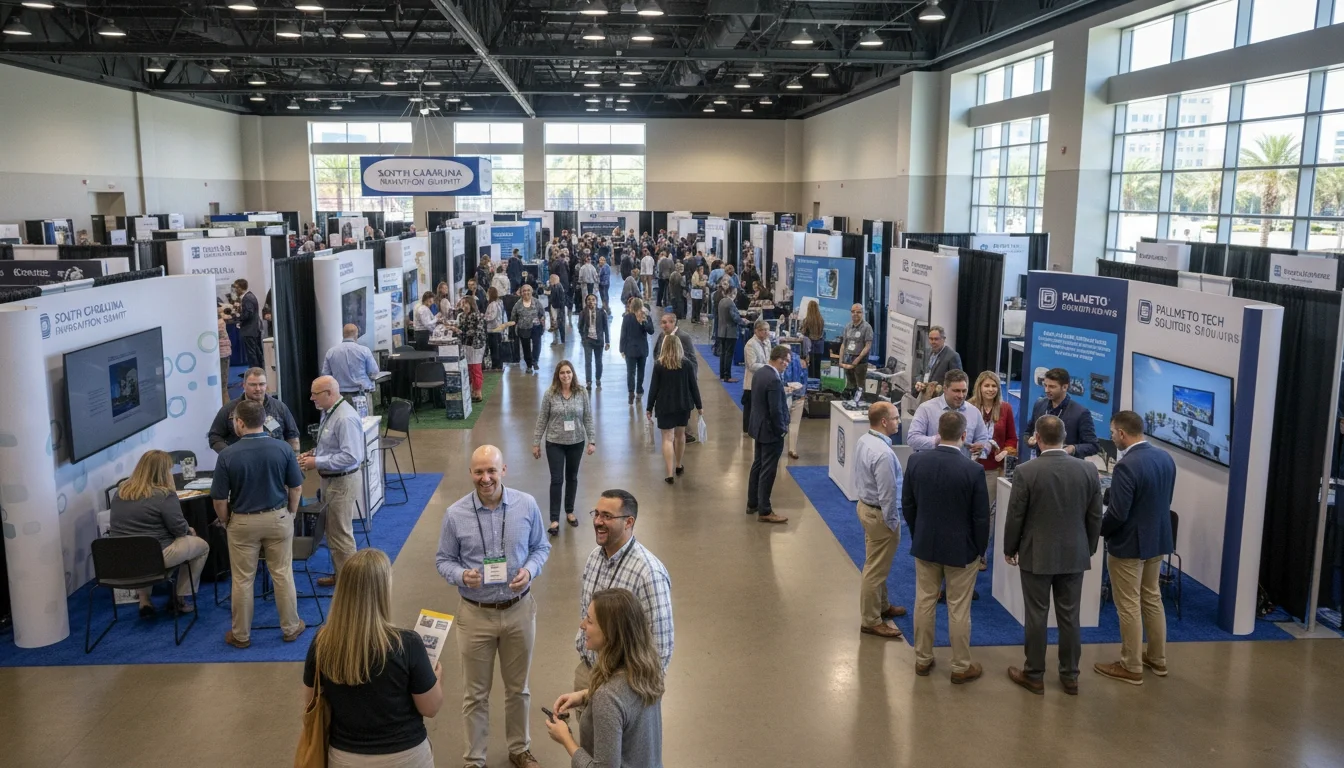
Trade show floor with busy booths and engaged attendees at a South Carolina convention event
The Key Trade Show Booth Staff Roles You Need to Fill
Not every person at your booth should be doing the same thing. A clearly defined role structure keeps traffic flowing, prevents bottlenecks, and ensures no qualified lead slips through the cracks.
Booth Host / Greeter
The host is typically the first face a visitor sees. Their job is to welcome attendees, get them oriented, and connect them with the right person inside the booth. A great host has natural warmth, quick judgment, and a comfort with high-volume interaction. They should be at or near booth entry points at all times.
Lead Capture Specialist
This is your sales-minded team member — the person who qualifies visitors, asks the right discovery questions, collects contact information, and ranks lead quality. They shouldn't be doubling as a greeter or presenter; their focus is on the pipeline. In Charleston's B2B trade show environments, this role is especially critical for maximizing ROI.
Product Demonstrator / Presenter
Presenters run live demos, keep product theater content on schedule, and answer technical or product-specific questions. They need deep product knowledge and the ability to hold an audience. At larger booths, you may want a dedicated tech person to manage AV and digital elements alongside the presenter.
Crowd Gatherer / Brand Ambassador
Working the aisles outside your booth footprint, crowd gatherers stop foot traffic, spark interest, and direct people into your space. This role is particularly valuable at high-traffic shows where competition for attendee attention is fierce. Brand ambassadors from a professional staffing agency are often ideal here — they're trained to engage strangers confidently and represent brands consistently.
Eleven8's brand ambassador team in Charleston is specifically trained for trade show environments, with experience drawing crowds, qualifying visitors, and handing off warm leads to your internal sales team.
Booth Supervisor / Captain
At shows with five or more staffers, you need a designated on-site lead. The captain manages shift rotations, resolves issues, keeps staff energized throughout a long day, and serves as the point of contact for your staffing agency or event management team. At Eleven8, every booking includes a trained captain as standard.
Choosing the Right People: Internal Team vs. Staffing Agency
When to Use Your Internal Sales Team
Internal employees are unmatched when it comes to deep product knowledge and executive relationship-building. If your primary show goal is to service existing accounts or close high-value deals requiring nuanced conversations, your internal team should anchor the booth.
The challenge? Most salespeople don't enjoy standing in a booth for eight hours, and many lack the natural outbound energy required for high-volume trade show engagement. A hybrid model — internal experts backed by professional staffers handling greeting, crowd gathering, and lead capture — typically outperforms either approach in isolation.
When to Hire a Professional Event Staffing Agency
Hiring a professional staffing agency for your Charleston trade show makes sense when:
You don't have enough internal team to staff the booth for the full show duration
You need high-energy, visitor-facing roles like greeters and brand ambassadors
Your internal team has traveled to Charleston and needs support without further taxing your staff budget
You need demonstrators for a specific product or technology who can learn quickly
You want reliable backup coverage without managing last-minute logistics yourself
What to Look for in a Charleston Event Staffing Agency
Not all agencies are built the same. When evaluating a partner for your Charleston trade show, look for:
A rigorous vetting process — not open-marketplace signups
An existing local or deployable roster (not recruited after you book)
A dedicated account manager, not a shared inbox
Built-in backup coverage as part of the booking
Proof of performance — show-specific experience, client case studies, and ratings
Full insurance coverage, including workers' comp and general liability
Eleven8 Event Staff's Charleston event staffing team is drawn from a pre-vetted national roster. With a 101.8% fill rate, built-in backups, and a dedicated account manager on every event, they remove the logistical risk that too often derails exhibitor results.
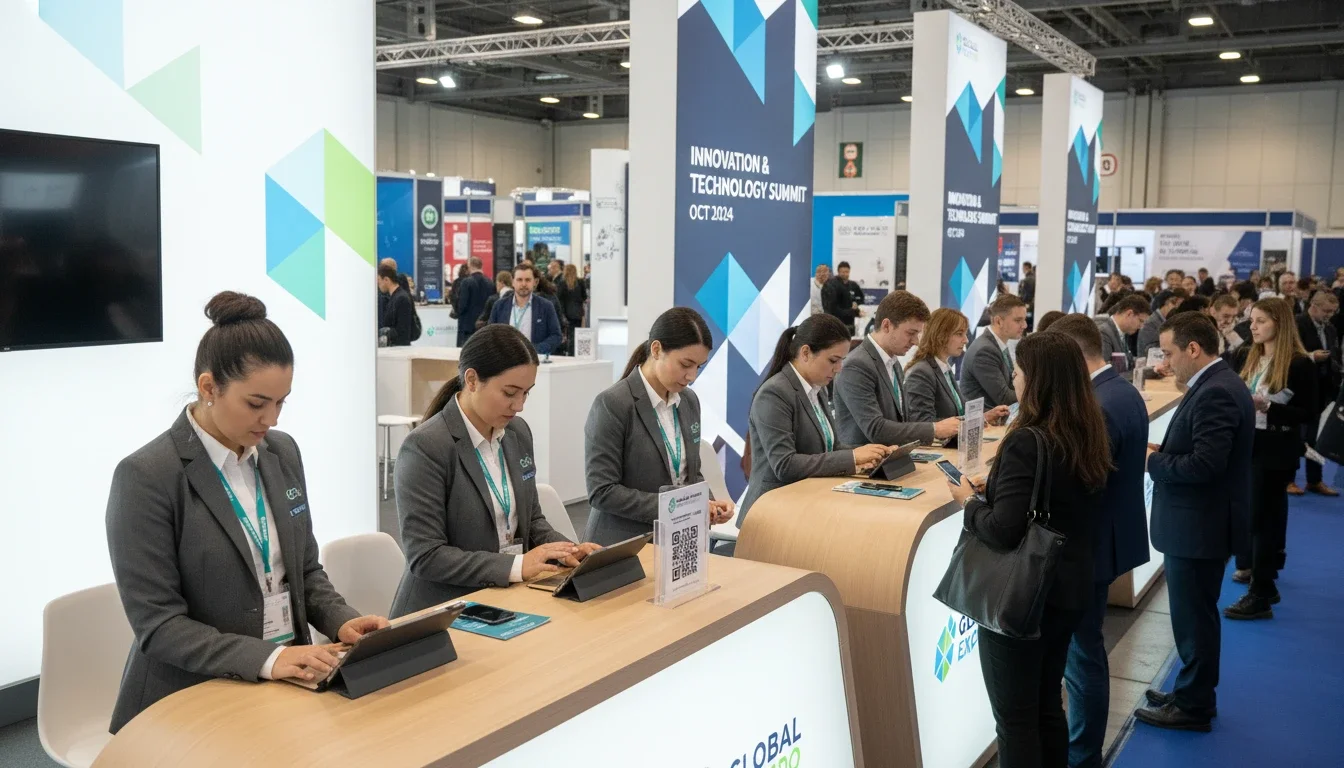
Professional event staff in branded uniforms managing a trade show booth registration desk
How to Train Your Trade Show Staff Before the Show
Pre-Show Briefing Checklist
Whether you're using internal staff, agency talent, or a mix of both, run a pre-show briefing at least 24–48 hours before the show opens. Cover:
Company overview, key messages, and show objectives
Product or service highlights and common questions
Role assignments and shift schedule
Booth layout, traffic flow, and demo zones
Lead capture process and qualifying questions
Dress code and uniform logistics
Emergency protocols, break procedures, and contact escalation
The 60-Second Booth Pitch
Every staffer should be able to deliver a confident, natural 60-second intro: who you are, what you do, and one compelling reason an attendee should care. This isn't a script to recite — it's a framework to internalize. Practice it in scenarios where the attendee is interested, skeptical, or in a hurry.
Setting Shift Schedules and Rotations
At a multi-day show in Charleston, energy management is everything. Rotate staff every 60–90 minutes for the highest-pressure roles (crowd gathering, greeting). Allow scheduled breaks away from the booth floor — never let a staffer eat, sit, or check their phone where attendees can see.
For a 10x10 booth running two 8-hour show days, a rotation schedule of 2 active staff + 1 relief staffer per shift ensures consistent coverage without burnout.
Show-Day Execution: Running a High-Performing Trade Show Booth
Morning Setup and Briefing
Arrive early. Load-in at the Charleston Area Convention Center is managed through the rear loading dock off Montague Avenue, so build extra time into your arrival plan. Use the first 30–45 minutes to complete booth setup, do a team walkthrough, confirm lead capture technology is working, and run through any last-minute role updates.
Managing Traffic Peaks
Most trade shows experience sharp traffic peaks — typically 30–60 minutes after opening, just before lunch, and in mid-afternoon. Shift your most experienced crowd gatherers and greeters to peak positions during these windows. If traffic is lighter, use that time for deep conversations with qualified leads, not idle standing.
Lead Capture Best Practices
Never rely on business cards alone. Use badge scanning, a digital lead form, or a staffing-specific CRM to capture contact information in real time. Have your lead capture specialist annotate each entry with a brief qualifier — interest level, timeline, specific product interest, so your post-show follow-up is targeted rather than generic.
Pro tip: Set a lead target per staffer per shift. Even a modest goal of 10 qualified leads per shift per lead specialist creates accountability and keeps energy focused throughout the day.
Major Trade Show Venues in Charleston, SC
Charleston Area Convention Center
Located in North Charleston at 5000 Coliseum Drive, the Charleston Area Convention Center is the city's primary trade show facility. With 77,000 sq. ft. of divisible exhibit space, three separate hall configurations, and proximity to both the airport and downtown, it's the go-to venue for large expos, conventions, and trade shows in the region. All rigging must be coordinated through union staff, and all freight must move through the rear loading dock.
Exchange Park Fairgrounds
Located in Ladson, SC, Exchange Park offers a more flexible outdoor and indoor event venue used for consumer-oriented shows, automotive expos, and community trade events. Staffing needs here skew toward high-energy crowd engagement and traffic management rather than B2B lead capture.
The Charleston Place
For high-end corporate shows and boutique B2B events, The Charleston Place hotel in the Historic District offers elegant ballroom and conference space. These settings call for polished, hospitality-trained staff with experience in upscale settings — a different profile than a large convention center environment.
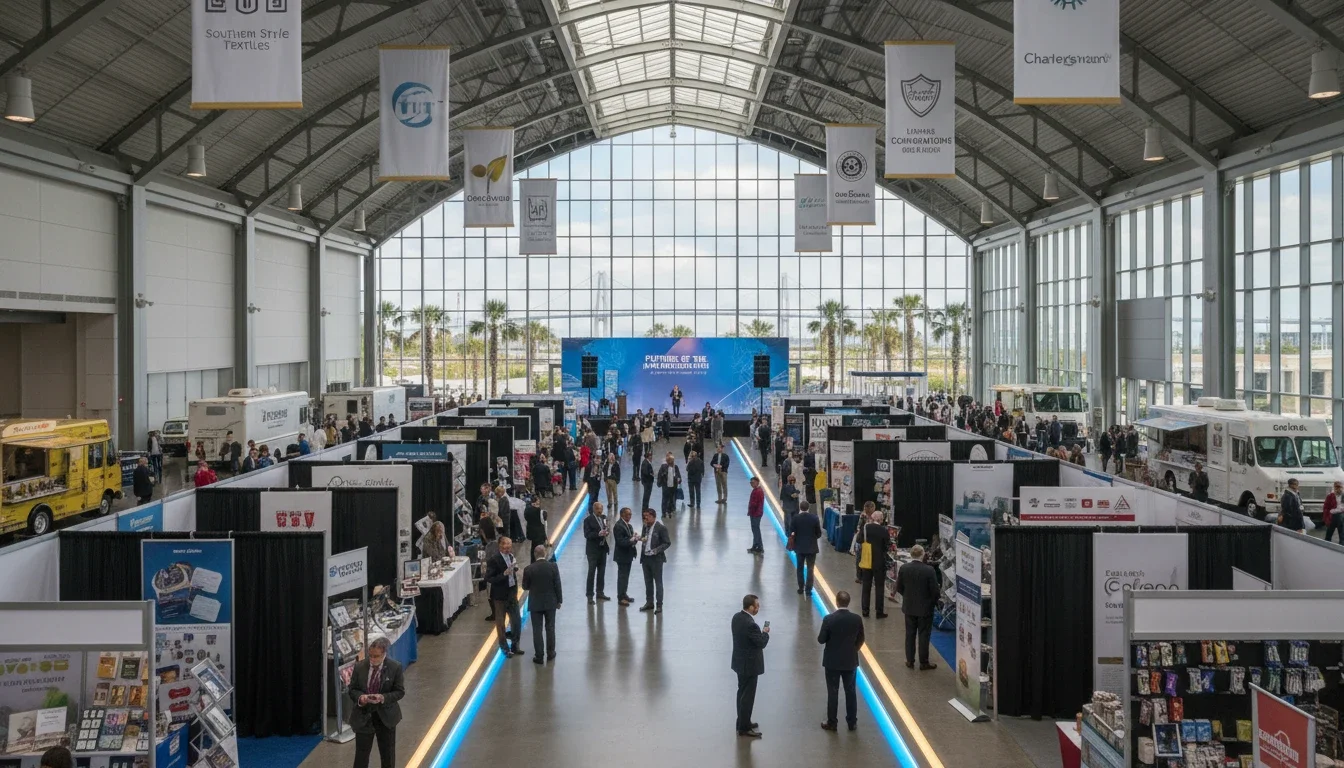
Inside view of a large trade show convention hall in Charleston, South Carolina
Post-Show Staffing Debrief & Follow-Up
The show closing bell is not the end of your staffing work — it's the beginning of the follow-up cycle. Within 24 hours of the show:
Conduct a brief debrief with your staffing team or agency captain to capture what worked and what didn't
Review lead data for completeness and prioritize high-interest contacts for immediate outreach
Submit any staff performance feedback to your agency — this data improves future bookings
Begin personalized follow-up sequences for qualified leads while your brand is still top of mind
If you're working with Eleven8, your dedicated account manager will initiate a post-event recap as part of the standard 11-step process. Staff ratings collected after each event feed directly into roster development, so your next Charleston event benefits from what was learned at this one.
Looking to staff your next Charleston trade show with a team that's vetted, trained, and backed by built-in coverage? Get a free estimate from Eleven8 Event Staff in Charleston and let a dedicated account manager build your team from the ground up.