Salt Lake City has quietly become one of the most capable event markets in the American West — and planners who overlook it are missing something real. Surrounded by the Wasatch Mountains, connected to a major international airport, and anchored by world-class convention infrastructure, SLC consistently punches above its weight for corporate events, trade shows, brand activations, and large-scale conferences.
Whether you're organizing a 5,000-person convention at the Salt Palace, a brand activation in the Granary District, or a corporate retreat with views of the Cottonwood Canyons, this guide covers everything you need: where to host it, which vendors to work with, how to staff it correctly, and how to build a planning timeline that actually holds up.
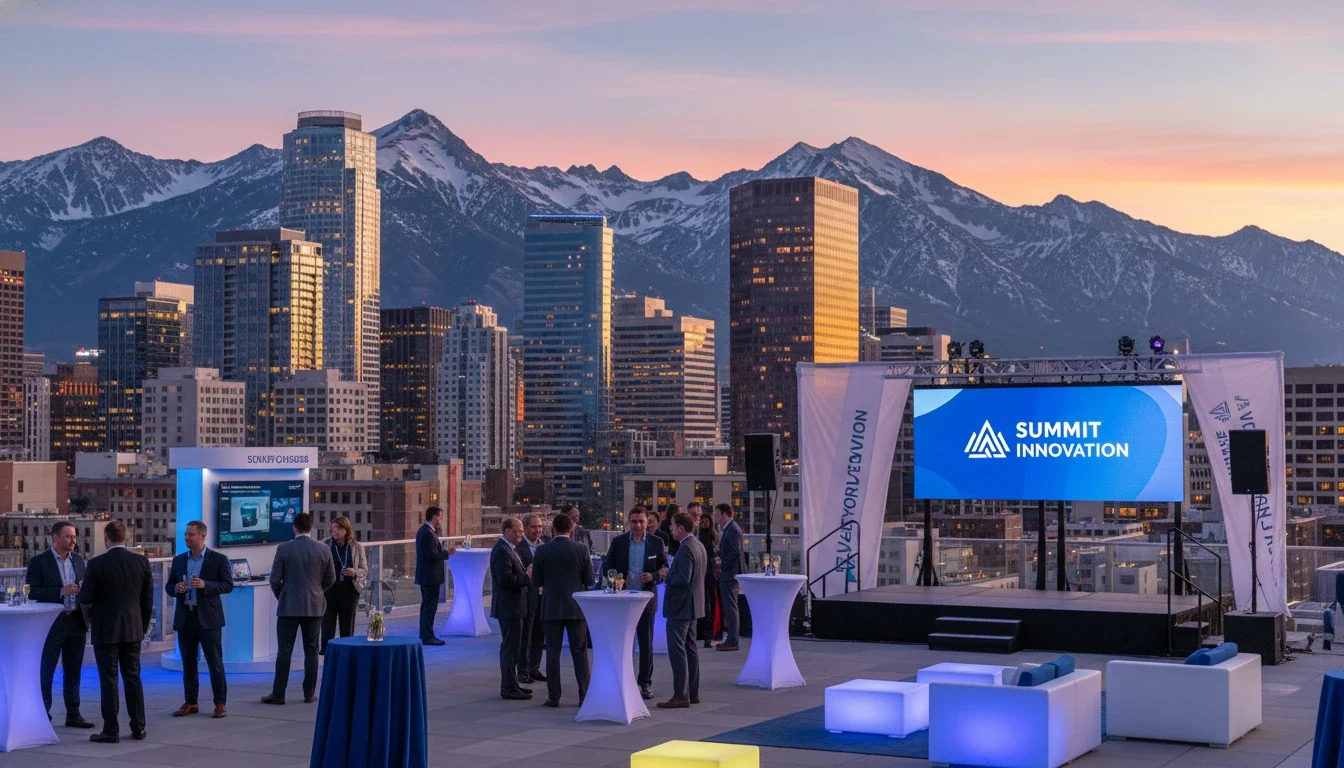
The Salt Lake City skyline with the Wasatch Mountains in the background — a distinctive backdrop for corporate events and brand activations
Why Salt Lake City Is a Premier Event Destination
Event professionals familiar with Denver, Las Vegas, and Phoenix often overlook Salt Lake City — and that's a competitive advantage for planners who know better. SLC delivers the infrastructure of a major convention market at a slightly more accessible price point, and its geographic position in the Mountain West makes it a natural hub for regional and national gatherings alike.
Year-Round Accessibility
Salt Lake City International Airport (SLC) is a Delta hub with direct flights from virtually every major U.S. city. Average flight times from Los Angeles, San Francisco, Phoenix, and Denver are all under two hours. The expanded airport terminal, which completed its final phase in 2024, now handles higher passenger volumes with far better efficiency — a meaningful quality-of-life upgrade for large groups arriving for multi-day events.
The city's climate adds to its appeal. Low humidity keeps even summer events comfortable by mountain standards, and Utah's famously dry air makes outdoor activations workable across most of the calendar. The one variable to plan around is late-spring weather, which can shift quickly — more on that in the seasonal section below.
Convention Infrastructure
Salt Lake City's event ecosystem is anchored by the Calvin L. Rampton Salt Palace Convention Center, one of the most capable mid-size convention facilities in the country. With 515,000 square feet of contiguous exhibit hall space, a 45,000-square-foot Grand Ballroom, and underground parking for 1,000+ vehicles, the Salt Palace can comfortably handle conventions, expos, and trade shows that would max out many comparable cities. The adjacent Hyatt Regency Salt Lake City — the city's newest convention-class hotel — adds another 60,000 square feet of flexible meeting and event space directly connected to the convention center block.
Beyond the convention center, the city's hotel inventory is solid. The Grand America Hotel alone offers 75,000 square feet of meeting and event space on 10 acres in the heart of downtown. The Salt Lake Marriott Downtown, Hilton Salt Lake City Center, and Little America round out a competitive downtown hotel block capable of housing and hosting groups of nearly any size.
Top Venues for Events in Salt Lake City
Selecting the right venue is the single most consequential decision in the event planning process. It sets the ceiling on capacity, shapes the guest experience, constrains your catering and vendor options, and significantly affects your budget. Here's a practical breakdown of what SLC offers across venue categories.
Large-Scale Convention & Conference Venues
Salt Palace Convention Center is the default answer for anything exceeding 1,000 attendees. Planners appreciate the WiFi infrastructure (capable of supporting 10,000+ simultaneous devices), in-house catering and AV options, and the sheer contiguous floor space that allows large expos to operate without awkward room splits. For staffing purposes, budget for a high volume of registration staff, ushers, and booth support — a convention of 2,000+ attendees will realistically require 20–40 event staff, depending on the programming density.
Hyatt Regency Salt Lake City is the preferred choice for conventions that need hotel room blocks and meeting space under one roof. It's 60,000 square feet of function space includes multiple ballrooms and breakout rooms, making it well-suited for conferences with parallel programming tracks.
Grand America Hotel brings an elevated hospitality experience to large gatherings. The 75,000 square feet of event space skews toward formal galas, awards ceremonies, and executive conferences where aesthetics matter as much as capacity.
Unique & Creative Venues
Salt Lake City's creative venue scene has grown substantially over the past several years. These spaces work particularly well for brand activations, product launches, networking events, and company celebrations where differentiation matters.
The Depot — A live music venue in the heart of downtown SLC, The Depot has hosted product launches, corporate parties, and fundraising galas with great results. State-of-the-art sound and lighting systems are already in-house, which can meaningfully reduce AV rental costs.
McCune Mansion — A historic 1900 landmark on North Main Street, the McCune Mansion is one of the most photographed event venues in Utah. The combination of original architecture and modern amenities makes it a natural fit for executive dinners, launch parties, and high-end receptions.
Natural History Museum of Utah (NHMU) — The museum's dramatic architecture and rotating exhibits create an instantly memorable environment. Private events at the NHMU accommodate up to 1,000 guests and feel entirely different from a hotel ballroom.
Wasatch Brewery (Sugar House) — Award-winning craft beer credentials, exposed ceilings, and modern barn wood accents make this a popular choice for tech company events, networking nights, and team celebrations with a relaxed, creative energy.
The Salt Mine — An upscale coworking space in downtown SLC that doubles as a refined event venue. Well-suited for conferences, demo days, investor events, and client dinners of 50–200 attendees.
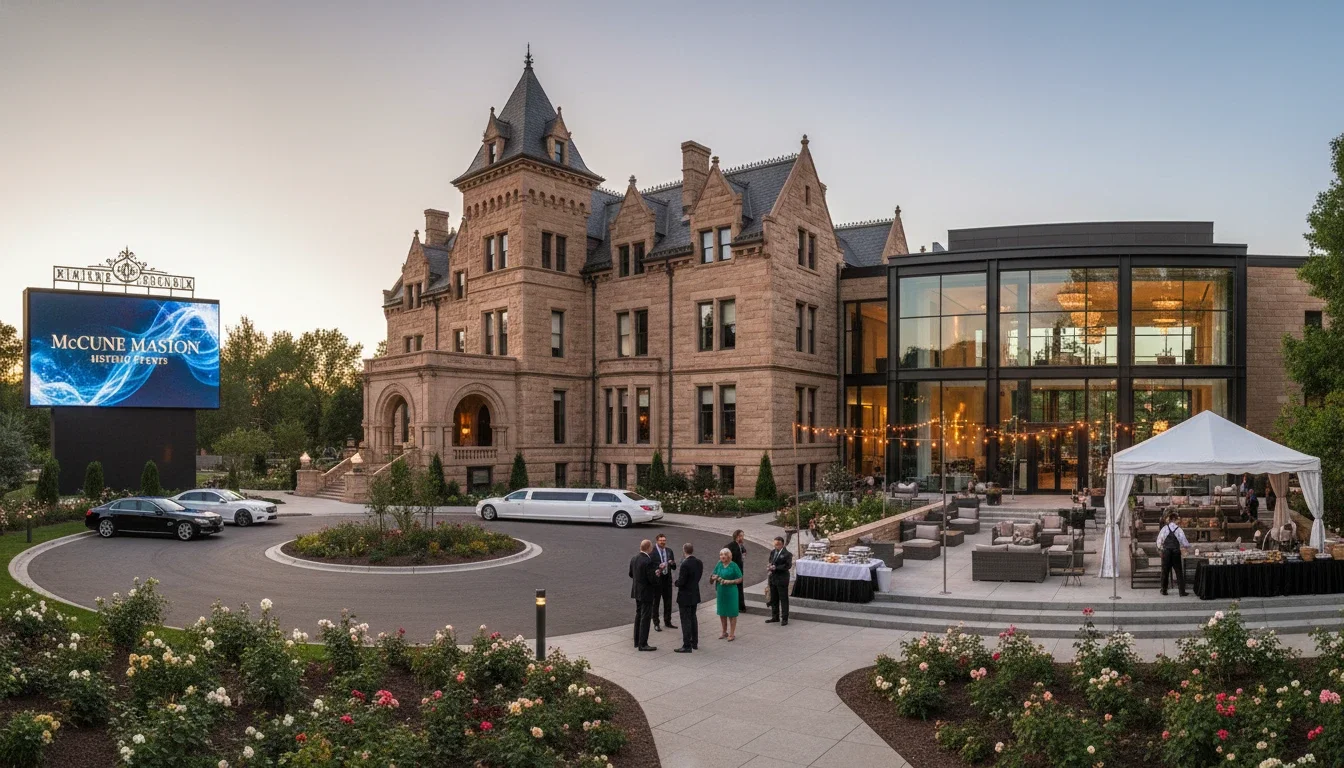
The McCune Mansion in Salt Lake City — a historic event venue blending old-world architecture with modern event amenities
Hotels with Event Space
Beyond the Grand America and Hyatt Regency, several mid-tier hotels offer functional event space worth considering for smaller corporate gatherings and team off-sites:
Little America Hotel — 25,000 sq. ft. of event space with a classic, formal aesthetic
Hilton Salt Lake City Center — 24,000 sq. ft., centrally located, accommodates up to 1,080 guests
Sheraton Salt Lake City Hotel — Downtown location, flexible setup options, experienced in-house events, team
Salt Lake City Marriott Downtown at City Creek — 21,000+ sq. ft. adjacent to the City Creek Center mall and the Gallivan Center
Outdoor & Mountain-Backdrop Venues
Few event markets in the U.S. offer outdoor settings as dramatic as Salt Lake City's. Within 30–45 minutes of downtown, planners can access:
Red Butte Garden (University of Utah) — A beloved outdoor venue for receptions and outdoor ceremonies, with natural botanical gardens as the backdrop.
Log Haven Restaurant — Nestled in Millcreek Canyon within the Wasatch National Forest, Log Haven is consistently rated one of America's most scenic restaurant venues. Waterfalls, wildflowers, and fine dining make it ideal for executive dinners and intimate executive retreats.
Wheeler Historic Farm — Indoor/outdoor flexibility in an agricultural setting just 20 minutes from downtown. Excellent for farm-to-table brand experiences or company celebrations with a relaxed, organic aesthetic.
Essential Event Vendors in Salt Lake City
Venues handle four walls and a floor. Everything else — the guest experience, the food and drink, the production, the look and feel — comes from your vendor team. Here's how to approach each vendor category for a Salt Lake City event.
Catering & Food & Beverage
Food and beverage is consistently the category that makes or breaks guest experience scores. In Salt Lake City, you have three main options: venue-provided catering (common at hotels and the Salt Palace), exclusive caterer arrangements (required at many creative venues), or open-vendor policies (available at some independent spaces).
When vetting catering vendors, ask explicitly about:
Experience with your event format (plated dinners vs. buffet vs. passed hors d'oeuvres)
Staffing included in their quotes vs. what you need to supplement
Liquor licensing — Utah has specific alcohol service regulations that some out-of-state caterers underestimate
Note that food and beverage staffing — waitstaff, bartenders, bar backs, and bussers — is often quoted separately from the catering contract itself. Having a professional event staffing agency supply your F&B service team gives you more control over staff quality and ensures accountability regardless of what the caterer brings.
AV & Production
Audio-visual is the category where cutting corners is most visibly punished. A great venue with poor sound or unreliable screen transitions derails presentations and frustrates attendees within the first 10 minutes.
SLC has a solid local AV market, and several corporate event production companies operate full-time in the market. Key considerations:
Always conduct a room walk with your AV vendor before the event
Confirm WiFi bandwidth separately from the venue — never assume the house WiFi is sufficient for a working conference
Budget AV at roughly 10–15% of total event spend for a corporate conference with multiple presentation rooms
Consider production assistants as a staffing layer on top of the AV team — PAs handle load-in, runner tasks, session transitions, and everything in between
Décor & Floral
Salt Lake City has a growing number of full-service décor and floral studios that serve both weddings and corporate events. When briefing décor vendors, bring a clear brand guide if it's a corporate event — SLC décor studios work well with brand standards but will default to local mountain-inspired aesthetics if left without direction.
Photography & Videography
The Mountain West backdrop gives SLC events a natural visual advantage. Photography and videography vendors in this market tend to be experienced with both indoor conference work and dramatic outdoor environments, which is useful if your event spans multiple settings.
Book photographers 3–6 months in advance for peak conference season (spring and fall). For trade shows and brand activations, make sure your photography brief specifically includes booth/activation coverage — generic event photographers don't always know how to shoot for marketing assets.
Transportation & Logistics
For multi-day conferences with off-site activities, group transportation is worth budgeting explicitly. SLC's layout makes charter buses practical for moving 100–500+ attendees between the convention district, downtown hotels, and outdoor venues in the Wasatch foothills. The TRAX light rail is also surprisingly useful for downtown-only movement and can reduce ground transportation costs for nearby venues.
Event Staffing in Salt Lake City: What You Actually Need
Every other vendor on your list provides a service. Event staff are the human interface between all those services and your attendees. They're the first face guests see at registration, the last voice they hear at the bar, and the people who absorb problems before guests ever notice them. Getting staffing right is foundational — not optional.
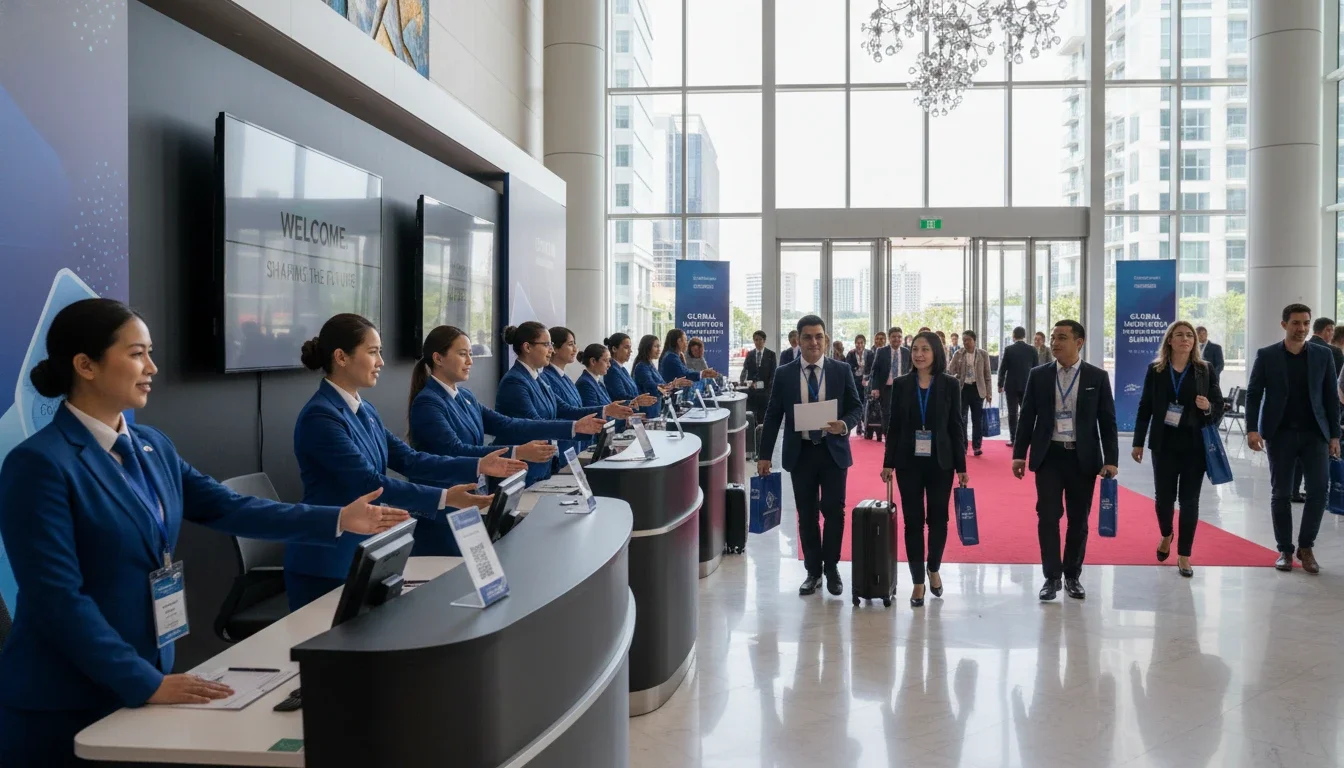
Professional event staff greeting attendees at a corporate conference — the first impression that sets the tone for the entire experience
Matching Staff Roles to Your Event Type
Not all events need the same staff mix. Here's a practical starting framework:
Trade Shows & Conventions (Salt Palace, Hyatt Regency)
Registration/check-in staff at all entry points
Trade show booth staff for exhibitors needing additional coverage
Brand ambassadors for floor activation and lead capture
Ushers for session management and wayfinding
Corporate Conferences & Galas
Registration and greeter staff for arrival management
Hospitality hosts for VIP management
Bartenders and catering staff for food & beverage service
Production assistants for load-in, session support, and vendor coordination
Brand Activations & Experiential Events
Brand ambassadors for consumer engagement
Promotional models for high-visibility brand representation
Pop-up staff for sampling, demos, and product distribution
Festivals & Consumer Events
Gate attendants and ticket checkers
Crowd management and wayfinding staff
Bartenders and barbacks for beverage service points
How Many Staff Do You Need? (Ratio Guide)
One of the most common planning errors is understaffing an event and realizing it too late. These are practical ratios to start with — adjust based on event flow and format:
| Event Type | Recommended Staff Ratio |
|---|---|
| Conference registration | 1 staff per 50–75 expected arrivals per hour |
| Seated dinner/gala | 1 server per 10–12 guests 1 bartender per 50–75 guests |
| Standing cocktail reception | 1 server per 25 guests 1 bartender per 40–50 guests |
| Trade show booth | 1–2 brand ambassadors per 10×10 booth, depending on traffic |
| Brand activation (consumer-facing) | 1 ambassador per 200–300 expected daily foot traffic |
When in doubt, it is almost always more cost-effective to have a slightly larger team and a smooth event than to understaff and face bottlenecks. The cost of one additional staff member is a fraction of what a bad guest experience costs in reputation.
What to Look for in an Event Staffing Agency
With a growing number of staffing platforms operating in the Utah market, the quality difference between agencies is significant. Here's what separates reliable event staffing partners from availability-based platforms that send whoever's free:
Pre-vetted, trained staff — Agencies should have a documented hiring process, not just an open marketplace. Eleven8, for example, accepts only the top 3.5% of applicants through an 8-step process including live interviews, background checks, and trial shifts.
Dedicated account management — You should have a single point of contact from booking through post-event recap. Platforms that route requests through shared inboxes create confusion when you need fast answers.
Built-in backup coverage — A professional agency includes briefed backup staff for every shift. No-shows happen. The difference is whether you find out at the event or never find out because a replacement is already in place.
Insurance documentation — Always request a Certificate of Insurance. Event staffing carries real liability, and insured agencies protect both their staff and your event.
Industry-specific experience — A brand ambassador with trade show experience performs fundamentally differently from a generic promotional model. Ask agencies to match staff based on your event format, not just availability.
Eleven8's nationwide event staffing services cover all of these bases and deploy staff across 36+ U.S. cities, including the Mountain West market, where SLC events draw regional and national talent.
Common Staffing Mistakes to Avoid
Booking too late: For peak SLC conference season (March–May, September–November), staffing agencies book out 3–6 weeks in advance for large requests. Same-week booking means getting whoever's left.
Skipping the pre-event brief: Staff who don't understand the event's goals, floor plan, or brand standards deliver generic service. A 30-minute pre-event briefing is the single highest-ROI preparation step.
Conflating caterer's staff with event staff: Your caterer's kitchen crew is not the same as front-of-house event staff. Clarify the scope with both vendors in writing.
Ignoring backup plans: Ask every staffing vendor what happens if someone doesn't show. If they don't have a clear answer, that's your answer.
Salt Lake City Event Planning Timeline & Checklist
The single biggest predictor of event execution quality is how far in advance the key decisions were made. SLC venues and vendors book competitively, especially for the spring and fall conference seasons. Here's a practical working timeline.
6–12 Months Out
Define event objectives, format, expected attendance, and budget range
Research and shortlist venues; conduct site visits
Issue RFPs to catering, AV, and production vendors
Confirm venue contract and deposit
Identify staffing needs by role and approximate headcount
Book keynote speakers and featured entertainment
3–6 Months Out
Finalize catering, AV, and décor vendors
Begin outreach to your preferred event staffing agency with a full event brief
Confirm hotel room blocks for attendees
Launch event registration
Finalize event branding and signage requirements
Confirm transportation logistics for multi-site events
4–8 Weeks Out
Confirm all vendor contracts and final counts
Share floor plans, run-of-show, and brand standards with all vendors, including the staffing agency
Confirm staff roster and begin reviewing bios/profiles (premium staffing agencies allow you to select your preferred team)
Conduct venue walk-through with AV and production teams
Prepare staff briefing documents and post to all vendor teams
Event Week
Confirm staff call times, parking, uniform requirements, and check-in procedures
Conduct final briefing with on-site team lead/staffing agency account manager
Walk venue on day-of arrival; confirm setup against floor plan
Maintain an open communication channel with your staffing agency's account manager throughout the event
Document any issues in real time for post-event recap
Seasonal Considerations for SLC Events
Salt Lake City's event calendar has clear peaks and softer periods, and understanding them helps both with availability and budget:
Spring (March–May): Peak corporate conference season. The Salt Palace is heavily booked, hotel rates climb, and vendor availability tightens. Book 6+ months out for any event over 500 attendees.
Summer (June–August): Shoulder season for conferences, but excellent for outdoor activations and brand experiences. The mountain proximity makes summer corporate retreats and outdoor receptions extremely popular. Afternoon thunderstorms are possible from mid-July onward — build contingencies into outdoor event plans.
Fall (September–November): Second peak season, arguably the most sought-after for corporate events thanks to mild temperatures and the mountain foliage backdrop. Plan staffing requests at least 4–6 weeks in advance.
Winter (December–February): Conference activity slows, but SLC transforms into a world-class ski resort destination. Park City (45 minutes from downtown), Alta, Snowbird, Brighton, and Solitude all offer unique venue options for corporate retreats, incentive trips, and executive off-sites. This is a differentiated event product that few other cities can match.
Budget Allocation Framework for SLC Events
Budget structure varies by event type, but for a standard corporate conference or gala in Salt Lake City, the following allocation provides a useful starting framework:
| Category | Typical % of Total Budget |
|---|---|
| Venue/space rental | 20–30% |
| Food & beverage | 25–35% |
| AV & production | 10–15% |
| Event staffing | 8–12% |
| Décor & experiential design | 5–10% |
| Photography/videography | 3–5% |
| Transportation & logistics | 2–5% |
| Marketing & signage | 3–5% |
| Contingency | 5–10% |
• Staffing typically represents: 8–12% of total event budget
• Contingency reserve: Always allocate 5–10% for unexpected expenses
• Note: Percentages may vary based on event type, location, and scale
One note on staffing: the 8–12% figure reflects direct event staff costs. If you're running a brand activation or trade show where staff are the experience (brand ambassadors, demo staff, promotional teams), that line can reasonably climb to 15–20% of total activation budget. Underinvesting in staffing for experiential programs is one of the most common — and most expensive — planning mistakes.