How to Staff a Trade Show in Baltimore: A Complete Guide
Trade shows are one of the highest-stakes marketing investments a business can make. You've booked your booth space, designed your exhibit, and shipped your materials to Baltimore. Now comes the part that determines whether any of it actually works: the people standing in your booth.
Booth staff are the single most influential factor in whether attendees stop, engage, and convert into leads. According to the Center for Exhibition Industry Research (CEIR), trade show attendees rank their interaction with booth staff above every other element of the exhibit experience — above the display design, the giveaways, and the demos. Despite this, most companies spend less than 2% of their total trade show budget on staff training and selection.
This guide covers everything you need to know about staffing a trade show in Baltimore — from calculating how many people you need and defining each role, to briefing your team and deciding whether to bring in a professional staffing agency. Whether you're exhibiting at the Baltimore Convention Center for the first time or you're a seasoned exhibitor looking to sharpen your approach, this is the resource you need.
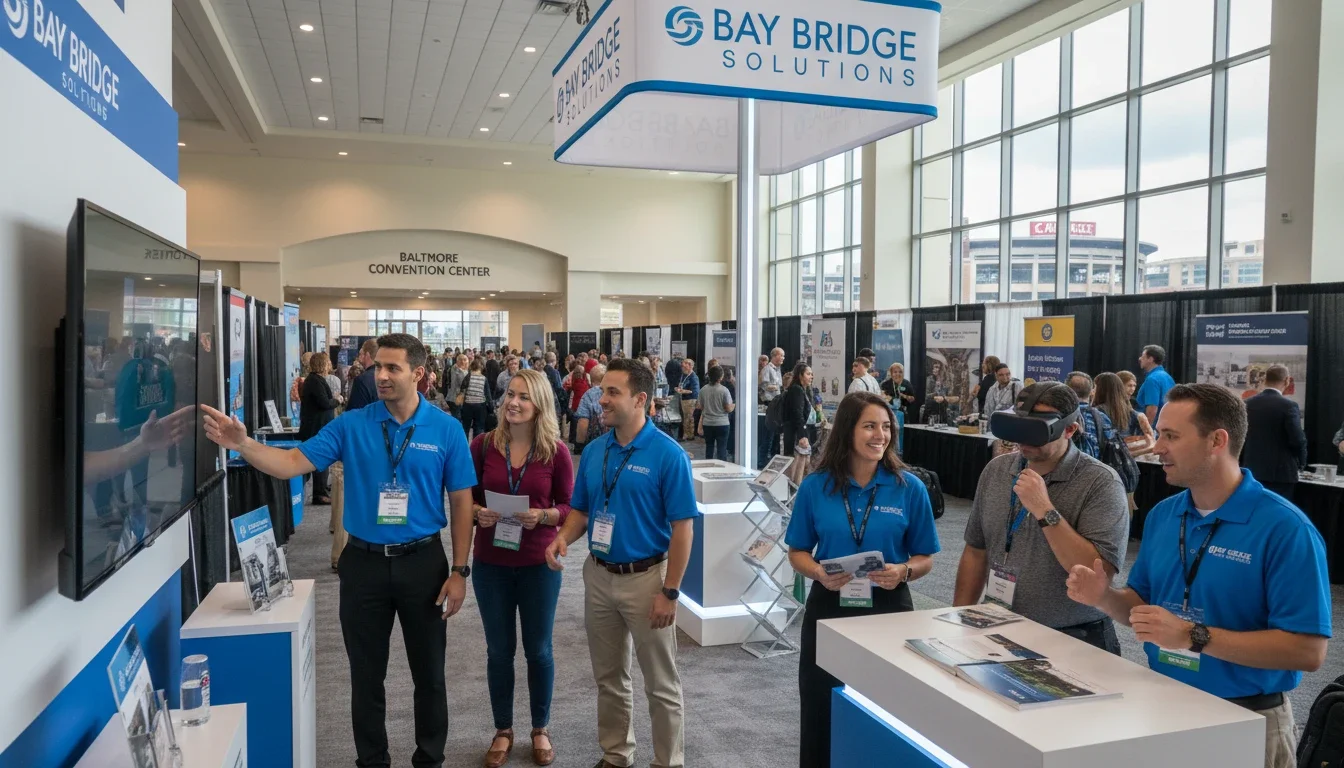
A professional trade show booth team engaging attendees on the floor of the Baltimore Convention Center.
Why Trade Show Staffing Can Make or Break Your Exhibit
Think of your trade show booth as a retail storefront — but one you only get to open for two or three days a year. Every person who walks past is a potential customer. Your booth design gets them to slow down. Your staff gets them to stop.
An unprepared team can undo months of planning in seconds. Staff members who sit in the back of the booth scrolling their phones, who can't answer basic product questions, or who engage awkwardly with passing attendees will damage your brand perception and cost you leads. Research from Exhibit Studios found that roughly 80% of visitors form their impression of a brand based on the brief encounter they have with the team at the booth.
The Stakes at Baltimore Trade Shows
Baltimore is not a minor-market trade show city. It's a strategic hub on the East Coast — less than an hour from Washington, DC, about 90 minutes from Philadelphia, and within driving distance of New York City. That geographic positioning means Baltimore trade shows attract a genuinely regional and often national audience, including government buyers, healthcare executives, biotech leaders, and corporate decision-makers from across the mid-Atlantic corridor.
When high-value attendees walk your aisle, a well-staffed booth isn't just nice to have. It's the difference between a show that generates ROI and one that just generates a receipt.
Understanding the Baltimore Trade Show Landscape
Before you build your staffing plan, it helps to understand the market you're walking into.
Key Venues and Major Shows in Baltimore
The Baltimore Convention Center (located at One West Pratt Street in the Inner Harbor) is the city's primary exhibition hub and hosts hundreds of events annually, from large industry trade shows to government procurement expos. It offers over 300,000 square feet of exhibit space across multiple halls.
Other notable venues include:
Martin's West — a popular venue for mid-sized trade events and corporate expos
The Hilton Baltimore Inner Harbor — frequently used for association conferences and medical conventions
Baltimore Marriott Waterfront — hosts corporate and technology-focused events
Some of Baltimore's most attended annual trade shows include the Mid-Atlantic Nursery Trade Show (MANTS) — one of the largest green industry trade shows in the country, drawing over 11,000 industry professionals each January — along with health sciences expos, cybersecurity conferences, and federal contracting events driven by Baltimore's proximity to DC and Aberdeen Proving Ground.
The Industries That Drive Baltimore's Trade Show Scene
Baltimore's economy is anchored by healthcare and life sciences (Johns Hopkins Medicine, University of Maryland Medical System), cybersecurity (given the proximity to Fort Meade and NSA), biotech, defense contracting, and education. Understanding these dominant sectors matters for staffing because the type of attendee walking your aisle shapes the profile of staff you should deploy.
A federal government buyer expects a crisp, buttoned-up interaction. A biotech innovator wants to talk technical details with someone who can keep up. A retail buyer at a consumer goods show responds to energy and enthusiasm. Your staff needs to match the room.
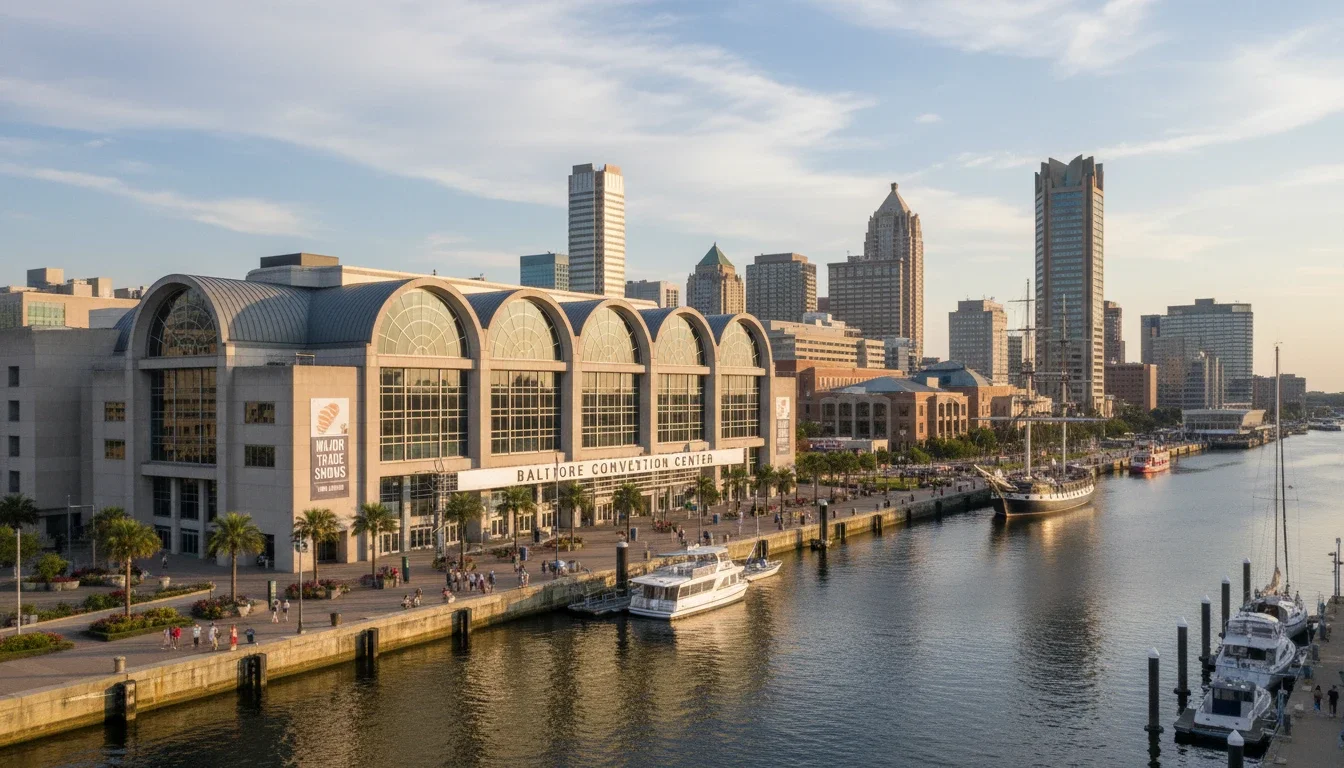
The Baltimore Convention Center's Inner Harbor location hosts major trade shows year-round.
Step 1 — Define Your Goals Before You Build Your Team
The most common mistake exhibitors make is building a staffing plan before they've defined what success actually looks like. Before you hire a single person, answer these questions:
Are you primarily focused on lead generation, or is this a brand awareness play?
Are you launching a new product that requires demonstrations?
Do you have scheduled meetings or VIP appointments that require dedicated hospitality support?
What is your target number of qualified leads for the show?
Are you competing directly with other exhibitors in the same aisle?
Your answers to these questions will shape how many people you need, what roles matter most, and what knowledge and personality profile each staff member should have. A brand awareness exhibit might prioritize high-energy brand ambassadors working the aisle. A lead-gen-focused booth might lean more heavily on salespeople and lead capture staff with less emphasis on outbound crowd gathering.
Step 2 — Calculate How Many Staff You Actually Need
One of the most practical and frequently referenced rules in trade show staffing is the 50-square-foot rule: plan for one staff member for every 50 square feet of exhibit space. A standard 10×10 booth (100 sq ft) supports a maximum of two to three staffers. A 20×20 booth can accommodate up to eight.
This is a starting point, not a ceiling. Booth traffic density matters just as much as square footage.
The 50 Square Foot Rule
Here's how to apply it:
10×10 booth: 2–3 staff members
10×20 booth: 4–5 staff members
20×20 booth: 6–8 staff members
20×40 booth or larger: 8–12+ staff members (often with rotating shifts)
For very high-footfall shows — like MANTS, which draws over 11,000 attendees — it's worth staffing toward the higher end of the range, especially during peak morning hours.
Estimating Interactions Per Hour
For a more precise calculation:
Start with your total exhibiting hours (e.g., 3 days × 8 hours = 24 hours)
Multiply by the number of on-duty staff to get total staff hours
Multiply by your target interactions per hour per staff member (3 = conservative, 4 = moderate, 5 = aggressive)
If the resulting total number of interactions falls short of your qualified lead goal, add staff accordingly
This formula ensures your headcount is driven by business outcomes rather than guesswork.
Step 3 — Know the Key Trade Show Staffing Roles
Not everyone at your booth should be doing the same job. A well-structured trade show team assigns distinct responsibilities to distinct roles — and each role feeds the next like stations on an assembly line.
Greeters and Hosts
Greeters and hosts are the first human touchpoint in the attendee experience. They welcome visitors to the booth, scan badges, hand out materials, and direct people toward areas of interest — demos, meeting tables, or product displays. They set the tone and pace for everything that follows.
A good host is warm, confident, and organized. They're not trying to close a sale — they're creating an inviting first impression and ensuring nobody falls through the cracks when the booth gets busy. For high-traffic shows, Eleven8's trade show staff includes experienced hosts and greeters specifically trained for fast-paced floor environments.
Brand Ambassadors and Crowd Gatherers
Brand ambassadors operate both inside and outside the booth. Crowd gatherers — a subset of ambassador work — take their position in the aisle, stopping attendee foot traffic before they've made the decision to enter. They ask qualifying questions, spark curiosity, and guide interested prospects into the booth.
This outbound role is one of the most ROI-positive investments at a trade show. Rather than waiting for attendees to wander in, crowd gatherers actively increase traffic. At busy Baltimore expos, a skilled brand ambassador working the aisle can meaningfully increase lead counts over the course of a multi-day show.
Product Demonstrators and Presenters
If your product or service requires explanation, you need presenters — staff members who are trained to deliver live, repeatable demonstrations with clarity and energy. Presenters are especially valuable at healthcare, technology, and biotech expos where complex offerings need to be simplified for an attendee in a 90-second window.
Presenters should know your product inside and out before they step on the floor. They don't need to be your internal product managers — but they do need to be thoroughly briefed and comfortable handling follow-up questions.
Lead Capture and Sales Staff
Lead capture staff are focused on one thing: collecting quality contact information and qualifying each prospect before handing them off. In a high-footfall scenario, they often serve as the connector between a greeter who welcomed the attendee and a sales rep who will follow up post-show.
Sales staff go further — they're skilled at on-the-spot pitching, objection handling, and sometimes closing. At B2B-heavy Baltimore trade shows (particularly in government contracting and healthcare), sales staff may spend extended time with a small number of very high-value prospects rather than touching a high volume of leads.
Registration and Check-In Staff
Not all trade show staffing roles are inside the booth. If your company is hosting a branded session, VIP dinner, product launch, or satellite event during the show, you'll need registration and check-in staff to manage entry, distribute materials, and keep the flow moving.
Registration staff need to be detail-oriented, quick, and composed under pressure — especially during the rush when a session starts filling up at once.
Logistics and Support Staff
Behind-the-scenes support staff manage the operational mechanics of your exhibit: booth setup and teardown coordination, replenishing giveaway inventory, managing AV equipment, and handling any logistical issues that arise during show hours. They're essential for larger exhibits and multi-day shows where the booth needs to stay polished and functional throughout.
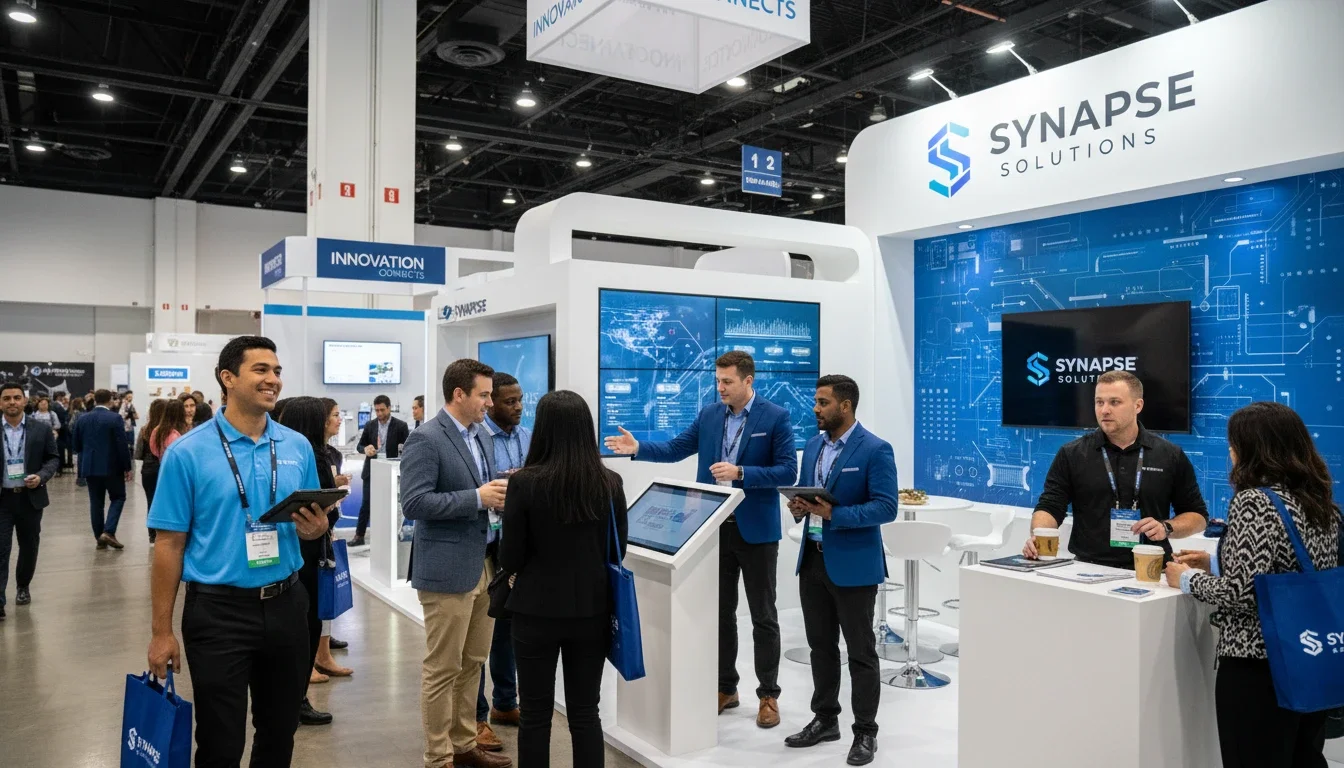
Trade show staff roles from greeter to lead capture all work together to maximize booth performance.
Step 4 — Decide: Internal Employees or an External Staffing Agency?
This is the decision most exhibitors wrestle with, and the honest answer is: it depends on what you need each role to do.
When Your Internal Team Is Enough
Your internal team is the right choice for:
Sales roles that require deep product knowledge, relationship history, or authority to negotiate
Executive presentations or keynote sessions where seniority and credibility matter
VIP client meetings that require personalized attention and institutional knowledge
Media engagement if press or analysts are attending
Nobody knows your product or company story better than the people who work there every day.
When to Hire a Professional Staffing Agency
External staffing becomes essential — and often more cost-effective — for:
Greeters, hosts, and crowd gatherers where energy, presentation, and professionalism matter more than product expertise
Lead scanning and registration where you need reliable, trained operators without pulling internal employees off selling
Brand ambassador coverage across a long show floor where stamina and consistent engagement are required all day
Surge coverage during peak hours when your core team can't absorb the traffic volume alone
Situations where your internal team can't travel or is needed elsewhere
A staffing agency with trade show experience brings pre-vetted, trained professionals who understand booth etiquette, know how to engage strangers confidently, and can be briefed specifically on your brand and goals before show day. Eleven8's Baltimore event staff includes professionals with direct trade show and expo experience, backed by a built-in backup system to prevent no-shows from derailing your show.
Step 5 — Brief and Train Your Team Before the Show
The number-one differentiator between booths that generate leads and booths that generate foot traffic statistics is preparation. A thorough pre-show briefing turns good staff into great brand representatives.
What Every Booth Staff Member Should Know
Before anyone walks onto the show floor, every team member — internal or external — should be fully informed on:
Your company overview: What does your company do, and what's your core value proposition?
Key products or services being showcased: What are you highlighting at this particular show, and what are the top 3 messages?
Target attendee profile: Who are you trying to talk to, and what problems are you solving for them?
Lead qualification criteria: What makes a visitor worth a follow-up vs. a polite exit?
The booth layout: Where are the demo stations, meeting tables, storage, and exits?
The show schedule: What time does the floor open and close? Are there any show-organized events that might affect traffic patterns?
Lead capture process: How are leads being collected — badge scanning, forms, business cards? Who reviews them?
Dress code and uniform: What are they wearing, and what are the grooming standards?
Hard rules: No phones out, no eating in the booth, no sitting, no bad-mouthing competitors
Running a Pre-Show Briefing
The pre-show briefing should happen the morning of the show (or the evening before for a morning open). Keep it focused and practical — 20 to 30 minutes is enough if the team is well-prepared. Walk through the booth layout, run a quick role-play of common attendee interactions, confirm roles and schedules, and answer any last-minute questions.
For multi-day shows, run a shorter 5–10 minute stand-up each morning. It builds team cohesion and keeps energy high on day two and three, when fatigue tends to set in.
Step 6 — Set Expectations for On-Site Conduct
Booth etiquette isn't just professional courtesy. It directly affects your brand perception and your ability to attract and hold attendee attention.
Booth Etiquette Essentials
Every staff member should:
Stand, not sit. Seated staff signal disengagement and are less visible to passing attendees.
Face the aisle. Staff clustered at the back of the booth looking inward are invisible to foot traffic.
Keep phones put away. Nothing signals disinterest to an approaching attendee faster than a staff member staring at a screen.
Never eat or drink in the booth. Step out for breaks.
Wear their badge high — on the chest or right shoulder — so it's visible during a handshake.
Open conversations proactively. Have a few natural icebreaker questions ready. "What brings you to the show today?" beats "Can I help you?" every time.
Hand off gracefully. Know when a conversation is better suited to a colleague and make the introduction cleanly.
Managing Rotations and Breaks
Trade show floors are genuinely exhausting. Staff working back-to-back eight-hour days without breaks become less effective — their energy flags, their engagement suffers, and their lead quality drops. Plan rotations so each person gets a real break every 90 to 120 minutes. For larger booths, stagger break times so coverage never drops below minimum.
If you're working with an agency like Eleven8, your account manager will handle scheduling logistics and ensure coverage stays consistent throughout the show.
Step 7 — Plan for the Unexpected
No-shows happen. Equipment fails. Show floors get more crowded than expected. Your staffing plan needs to account for what can go wrong, not just what should go right.
Backup Coverage and No-Show Protection
One of the most commonly overlooked aspects of trade show staffing is backup coverage. If a staff member doesn't show, you're either short-handed for the day — reducing your lead capacity — or scrambling to replace them with someone who hasn't been briefed.
Professional staffing agencies with strong operational systems solve this at the infrastructure level. Eleven8, for example, includes a briefed backup staff member for every eight on the roster at no additional charge. If someone can't make it, a qualified replacement who already knows your event is deployed before your show opens.
This kind of built-in redundancy is particularly valuable for multi-day Baltimore trade shows where losing a team member on day two — after the briefing and setup work is complete — would otherwise be a significant disruption.
Step 8 — Follow Up After the Show
What happens after the show is just as important as what happens on the floor. Build your post-show plan before you exhibit, not after.
Designate who follows up with which leads. Divide by geography, industry, role in the sales funnel, or level of expressed interest. Make sure two people are never contacting the same prospect.
Set a follow-up window. The industry standard is within five business days of the show close. The faster, the better — especially in competitive industries where multiple vendors were pitching the same attendees.
Document your staffing performance. Which roles generated the most leads? Were there peak hours when you were understaffed? Did any team members stand out? This information makes your next Baltimore show significantly better.
Review your ROI. Total cost of exhibit (space, booth, travel, staffing) vs. total qualified leads generated and deals closed gives you a cost-per-lead and a cost-per-acquisition benchmark for future planning.
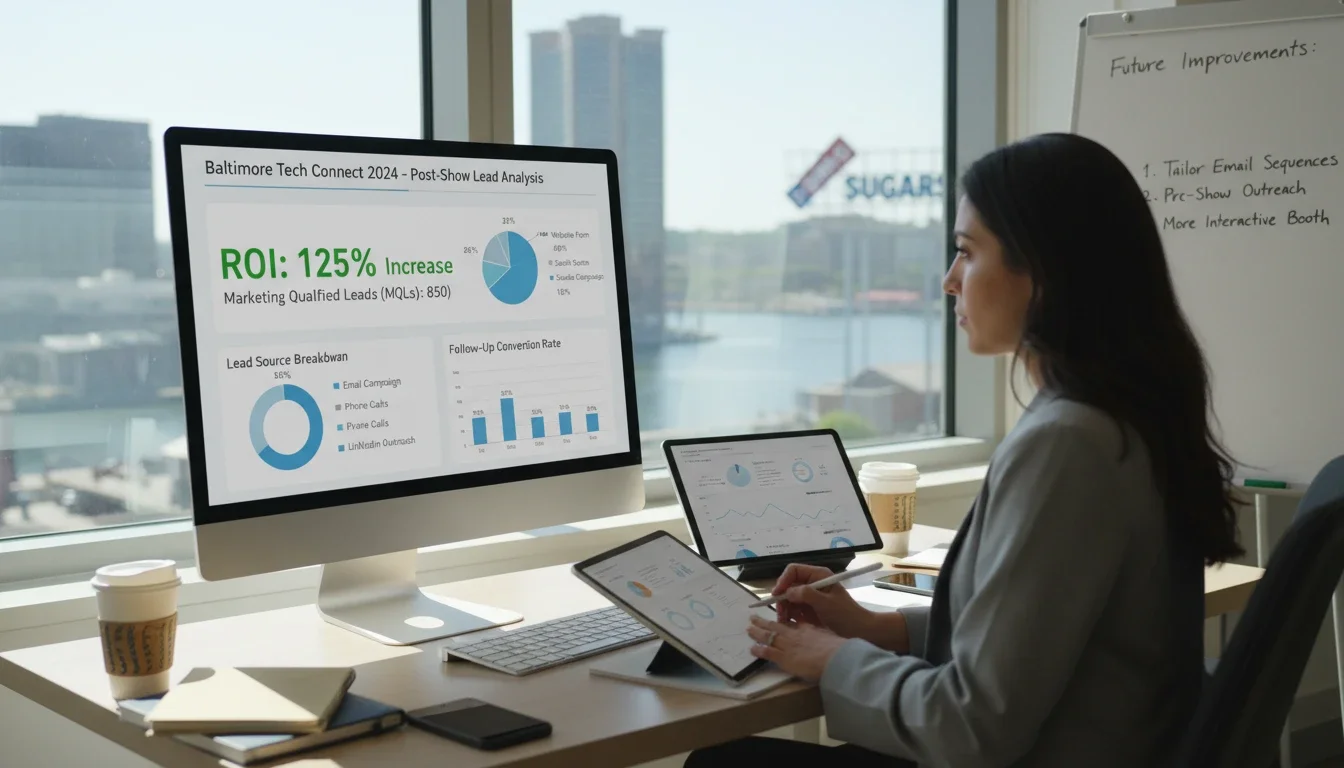
Reviewing lead data after a Baltimore trade show is essential to measuring ROI and improving future performance.
How Eleven8 Event Staff Helps Exhibitors in Baltimore
Staffing a trade show well requires people who've done it before. Exhibitors in Baltimore who partner with Eleven8 Event Staff get access to a pre-vetted roster of professionals with direct trade show and convention experience — matched to their specific event, booth type, and audience before day one.
Every booking includes a dedicated account manager, built-in backup coverage, and 24/7 event-day support. Staff are briefed on client goals, dress codes, and lead capture processes in advance — so they walk onto the convention floor ready to represent your brand, not just fill a slot.
Eleven8 has staffed over 34,000 events for clients including Nike, Netflix, and Porsche, maintaining a 101.8% fulfillment rate across a national roster of 24,000+ active staff members. Their Baltimore event staff team covers the full range of trade show roles — from greeters and brand ambassadors to convention staff and expo staff — making them a single-source solution for exhibitors who want to focus on selling, not logistics.
For exhibitors planning to attend nearby shows in Washington, DC — which shares Baltimore's mid-Atlantic trade show calendar — Eleven8's DC event staff is available for regional event coverage as well.
What Sets Professional Trade Show Staffing Apart
The difference between a generic temp hire and a professionally placed trade show staff member is preparation and accountability. A good staffing agency:
Vets candidates specifically for trade show aptitude — engagement, stamina, professionalism under pressure
Briefs staff on your brand, goals, and booth layout before show day
Provides supervisory oversight, not just headcount
Has a no-show mitigation system, not just a "we'll try our best" policy
Communicates proactively, not reactively
Eleven8 accepts only the top 3.5% of applicants, puts every hire through an 8-step vetting process, and maintains ongoing performance tracking through post-event feedback. When you book through them, you're not getting whoever was available — you're getting someone specifically matched to your event type, industry, and audience.
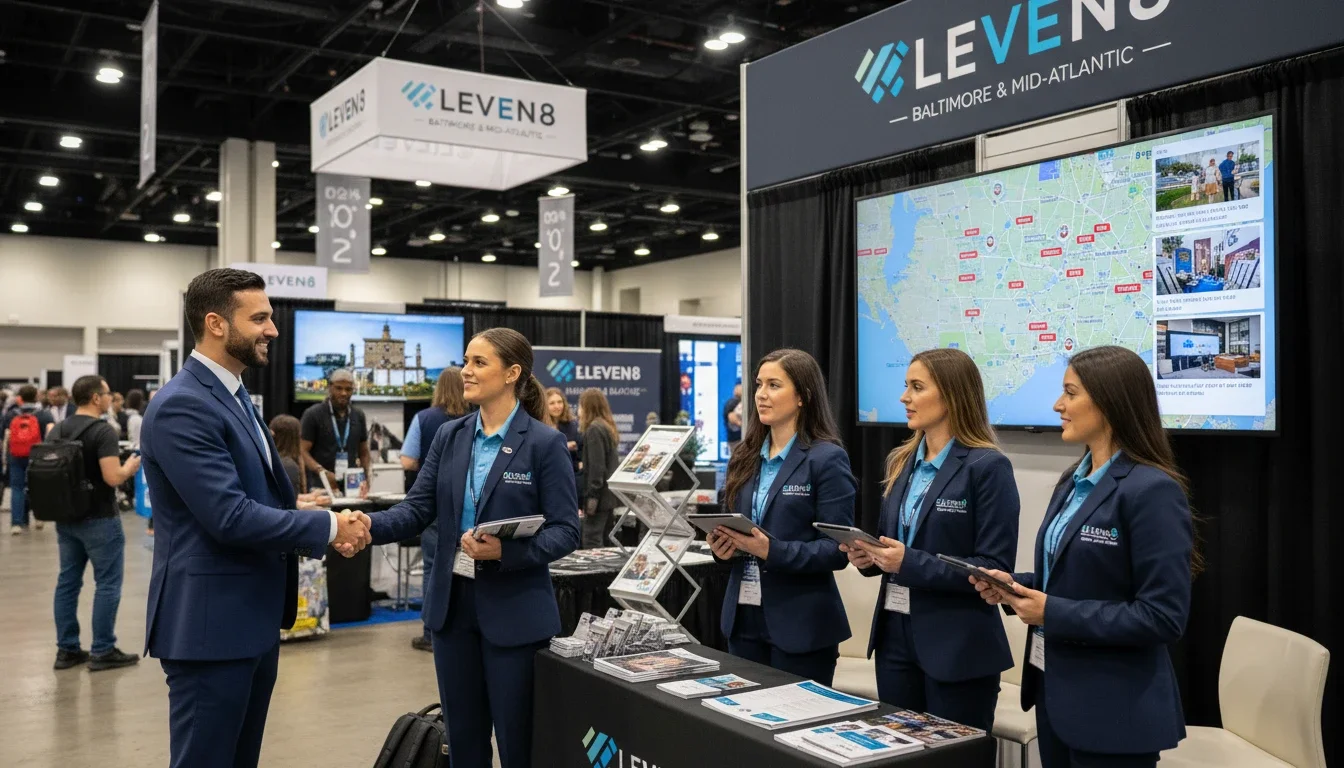
Eleven8 Event Staff deploys professional trade show staff across Baltimore and the entire mid-Atlantic region.