Lincoln, Land, and Local Brands: Storytelling at the Illinois State Fair
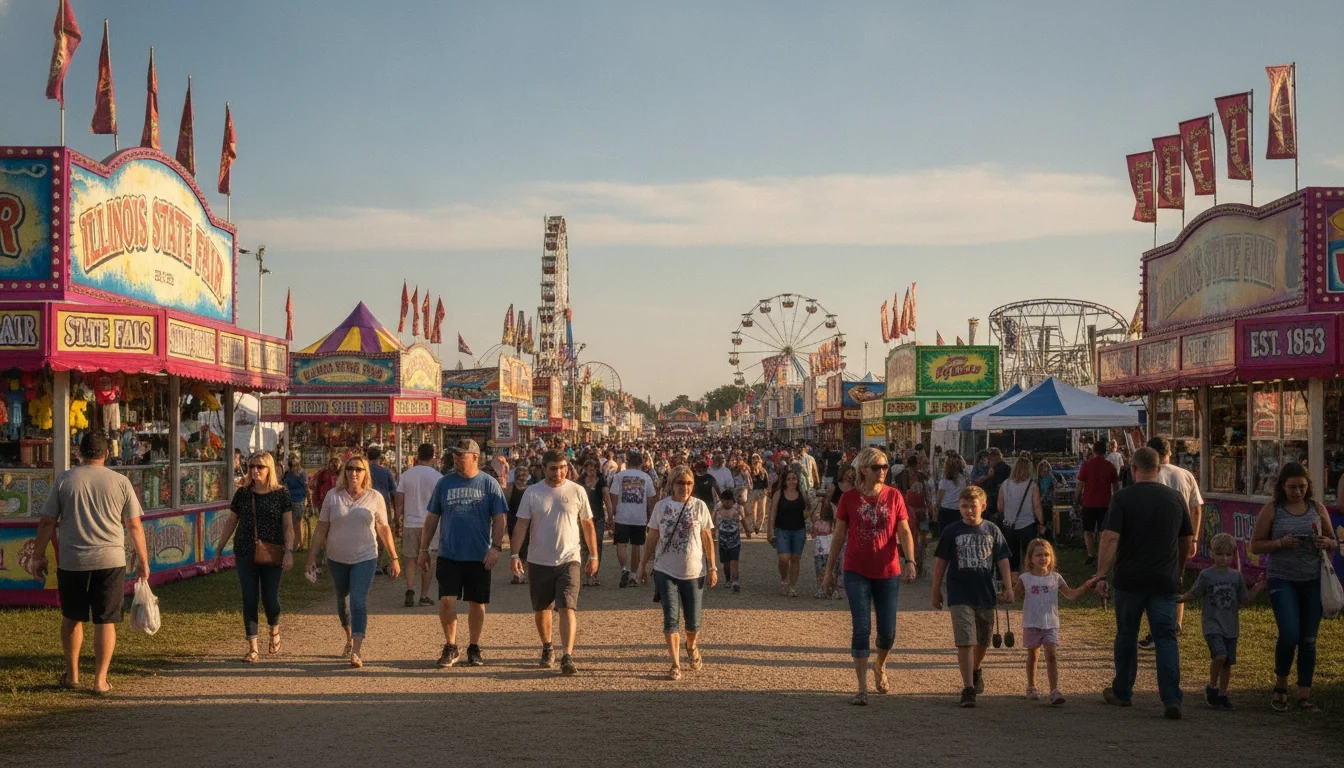
Crowds gather along a sunlit midway at the Illinois State Fairgrounds in Springfield
Every August, more than 700,000 people converge on Springfield, Illinois for eleven days of livestock shows, grandstand concerts, fried food, and something harder to name — a feeling of shared identity. The Illinois State Fair is not merely a summer event. It is, in many ways, a living portrait of the state itself: its agricultural roots, its working families, its civic pride.
For brands, that context is extraordinary.
In a media environment saturated with digital noise, the state fair offers something genuinely rare: a captive, curious, emotionally open audience with nowhere to be and nothing in their hands except a corn dog. The question is not whether your brand should be there. The question is whether you know how to tell your story once you arrive.
This guide covers exactly that — the history, the audience, the activation framework, and the staffing strategy that separates brands that connect from brands that get walked past.
Why the Illinois State Fair Is One of America's Most Powerful Brand Activation Platforms
170 Years of Footfall: A Fair Built on Story
The Illinois State Fair first opened in Springfield in 1853. Admission was twenty-five cents. Twenty thousand people attended on its third day alone. That same year — and for much of the decade that followed — a young lawyer named Abraham Lincoln was a familiar presence in Springfield's civic life, debating, persuading, and building an identity through the power of language.
It is no coincidence that the fair and Lincoln share the same soil. Both are products of a culture that understood something fundamental: people do not respond to information as much as they respond to meaning. The fair was never just about livestock or crop yields. It was about community pride, forward progress, and the belief that what Illinois grew — in its fields and in its people — was worth celebrating.
Today, the fair retains that original charge. The Illinois State Fairgrounds in Springfield spans 366 acres and is listed on the National Register of Historic Places. The fair runs for eleven days each mid-August and has recorded attendance figures in the hundreds of thousands annually — with the 2025 edition drawing 723,079 visitors, the second-best in the fair's entire history.
That is not a niche audience. That is a state.
Who Attends — and Why It Matters for Marketers
State fair demographics are often misunderstood. Marketers conditioned to think about digital targeting — age brackets, behavioral signals, device types — can underestimate how rich the live fair audience actually is.
The Illinois State Fair draws from across the state: families from Chicago's suburbs, multigenerational farming households from Bloomington and Decatur, young professionals from Champaign-Urbana, retirees from the collar counties, and tourists from out of state. It is one of the few events in Illinois where a brand can legitimately reach a cross-section of the entire state in a single location.
Critically, fairgoers arrive in a specific psychological state. They have chosen to be there. They are not commuting, not scrolling, not multitasking. The fair is a destination — and the mindset of a destination visitor is fundamentally different from the mindset of someone who sees a banner ad between emails. Openness, leisure, and curiosity are the dominant emotional registers. For experiential marketing, that is as good as conditions get.
The Storytelling Advantage: Why Narrative Wins at Fairs
The Lincoln Parallel: Authenticity as a Strategy
Abraham Lincoln understood something that still holds: audiences trust the person in front of them more than the institution behind them. His power as a communicator came not from credentials or spectacle, but from his ability to speak plainly, specifically, and honestly about things that actually mattered to the people listening.
The best brand activations at state fairs operate on the same principle.
Brands that show up at the Illinois State Fair with polished banners and a canned script will get polite glances. Brands that show up with a genuine story — why they exist, what they make, who they serve, and what they believe — will earn conversations. And at a fair, conversations are currency.
This is not abstract. It is the operational difference between deploying staff who hand out samples and deploying staff who can articulate why the product matters, connect it to something local, and leave the fairgoer with a feeling they want to carry home.
From Product to Purpose: Crafting a Fair-Ready Brand Narrative
A fair-ready brand narrative has three components:
Rooted in Place: Using Illinois Heritage to Connect
The most effective brand stories at a state fair are the ones that acknowledge where they are. Illinois is not a backdrop — it is a character. Brands that can honestly say 'we were born here,' 'we source from here,' or 'this is what we believe about this place' activate a familiarity and pride that generic national campaigns cannot replicate.
Even national brands can find a local thread. A food brand can speak to Illinois agriculture. A technology company can reference the state's manufacturing heritage or its academic institutions. An automotive brand can connect to the race-day culture that has lived at the Springfield Mile — one of the oldest dirt tracks in the country — since 1910.
The connection does not need to be deep. It needs to be genuine.
Human First: Why People Are the Medium
At the fair, the staff your brand deploys are not supporting your story. They ARE your story. A fairgoer will not remember your booth design six months from now. They will remember the person who told them something interesting, made them laugh, answered their question clearly, or simply made them feel welcomed.
This is why staffing decisions for fair activations are not logistical — they are strategic. The right brand ambassador at the Illinois State Fair is someone who can hold an authentic conversation with a grandmother from Galesburg and a college student from DeKalb within the same thirty minutes, and make both feel like the brand was made for them.
That requires more than availability. It requires training, alignment, and selection.
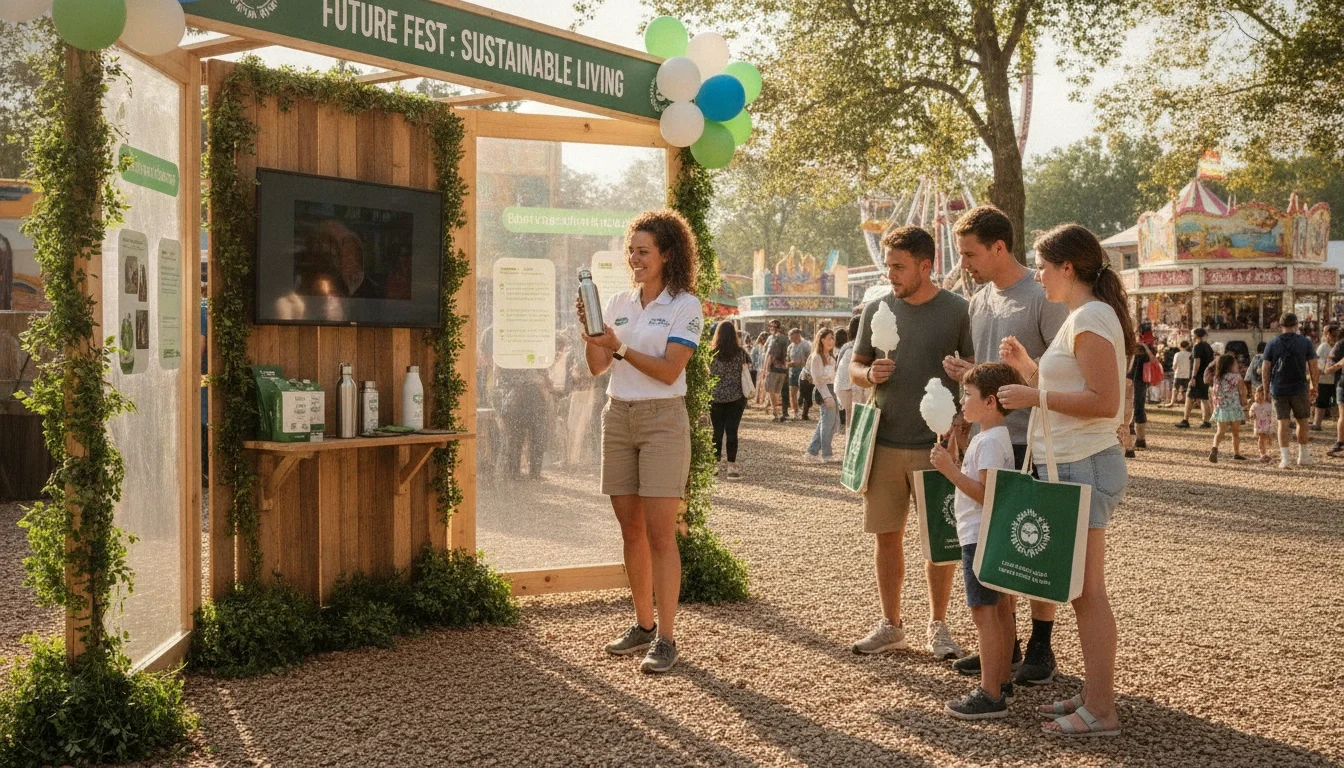
A brand ambassador engages fairgoers at an outdoor activation booth
How to Structure a Brand Activation at the Illinois State Fair
Stage 1 — Know Your Fairgoer
Before you plan your booth, your giveaway, or your staff count, you need a clear picture of who you are trying to reach and what they care about when they walk onto those fairgrounds.
Ask yourself: Are your target customers the families who arrive opening weekend for the junior livestock competitions? The young adults who pack the grandstand for the Saturday night concert? The retired farmers who spend an afternoon at the machinery and agricultural exhibit halls? The answer shapes everything — your activation design, your messaging, your sampling strategy, and who you hire to represent the brand.
State fair audiences reward specificity. A narrower, more intentional activation almost always outperforms a broad, generic one.
Stage 2 — Design the Experience, Not Just the Booth
A booth is a container. An experience is what happens inside it — and outside it, and around it.
The most effective Illinois State Fair activations tend to share a few common design principles:
They give people something to do, not just something to look at
They create a shareable moment — a photo opportunity, a personalized item, a memorable interaction
They tie the experience to a story that the brand can consistently tell across the event
They make engagement easy — no lengthy sign-ups, no complicated entry mechanisms
They are staffed generously enough that nobody waits long
The fair's pace matters here. Fairgoers are moving, exploring, and grazing. Your activation needs to be compelling enough to stop them and frictionless enough to hold them for two to five minutes. That window is your entire story — use it deliberately.
Stage 3 — Staff for Story, Not Just Service
What Makes a Good Brand Ambassador at a State Fair?
The qualities that define strong brand ambassador performance at a state fair are slightly different from those needed at a trade show or corporate conference. At the fair, the environment is louder, more unpredictable, more physically demanding, and more emotionally diverse.
The best fair brand ambassadors share these characteristics:
Genuine warmth and ease with strangers — this is not a trainable trait; it has to be there
Physical and mental endurance for long outdoor shifts in varying weather
Adaptability — the ability to shift tone and approach based on the person in front of them
Product and brand knowledge delivered conversationally, not as a recitation
The confidence to initiate conversations and the judgment to know when not to
Staffing Roles Brands Typically Need at the Fair
A well-staffed state fair activation typically requires a combination of:
Brand Ambassadors: primary engagement, sampling, product storytelling, and lead capture
Product Demonstrators: hands-on demos, especially for food, beverage, and consumer goods
Registration/Check-In Staff: managing contests, giveaways, or high-volume entry points
Event Captains or Leads: supervising the activation, managing flow, and resolving issues in real time
Sampling Staff: for high-volume product trials where speed and consistency are essential
The ratio of staff to expected foot traffic is one of the most commonly underestimated planning variables. A booth that draws strong interest but is understaffed creates frustration — and frustrated fairgoers do not return to the booth and do not remember the brand positively.
Lessons from Local Brands at the Illinois State Fair
Food & Beverage: Where Sampling Becomes Story
No category activates better at a state fair than food and beverage. The Illinois State Fair hosts a competitive vendor culture — the Golden Abe's Fantastic Fair Food Contest sees vendors compete annually for the best offerings — and fairgoers arrive expecting to discover something new to eat.
For food and beverage brands, this is an extraordinarily high-intent environment. The fair is one of the few places where someone will genuinely stop, sample your product, ask who made it, and want to find it again. The trick is ensuring that what they find again is your brand — not a generic memory of something they tasted somewhere once.
That means sampling staff need to be able to tell the product's story in thirty seconds. Where it comes from. What makes it different? Why does it belong at this fair, in this state? The product demo becomes a brand conversation, and the brand conversation becomes a purchase driver.
Agricultural Brands: Pride as a Positioning Strategy
Illinois is one of the top agricultural states in the country — a major producer of corn, soybeans, pork, and dairy. For agricultural brands, the Illinois State Fair is practically sacred ground.
The brands that perform best in this space are not the ones with the biggest booths. They are the ones whose story is most honest. Pride of origin, transparency about process, and genuine respect for the agricultural community are not marketing tactics here — they are table stakes. Fairgoers in this category can tell the difference between a brand that understands farming and one that is performing it, and they respond accordingly.
Consumer Brands: Turning the Fairground Into a Stage
For consumer brands without an obvious connection to Illinois agriculture, the opportunity at the fair lies in cultural integration rather than product alignment. The fair itself — its atmosphere, its history, its particular brand of midwestern joy — is a stage that any brand can borrow if they approach it with respect and creativity.
A technology brand can celebrate the ingenuity of Illinois makers. A financial services company can run a genuine community engagement initiative. A beverage brand can lean into the heat, the celebration, the shared experience of being at the fair. The through-line is always the same: connect your brand to something real about this place and these people, and do it through the staff who bring that story to life in person.
Common Brand Activation Mistakes at Fairs (And How to Avoid Them)
Even experienced marketing teams make predictable errors when bringing brand activations to state fairs. The most common:
UNDERSTAFFING: The most expensive mistake. Every missed conversation at peak foot traffic hours is a lost impression. Always staff for maximum capacity, not average flow.
UNTRAINED STAFF: Deploying staff who have not been briefed on the brand, its story, or its talking points creates an incoherent brand experience. At the fair, inconsistency is visible and immediate.
OVER-COMPLICATED ACTIVATIONS: Multi-step experiences that require form-filling, QR code scanning, or lengthy explanations lose the majority of fair audiences. Simplicity wins.
IGNORING THE ENVIRONMENT: Indoor marketing sensibilities do not translate to outdoor fairs. Noise, heat, foot traffic flow, and competing stimuli require a different activation design philosophy.
NO NARRATIVE ANCHOR: Activations that feel like product demonstrations without a brand story do not create brand recall. Always know what emotional impression you want a fairgoer to leave with — and staff for that impression.
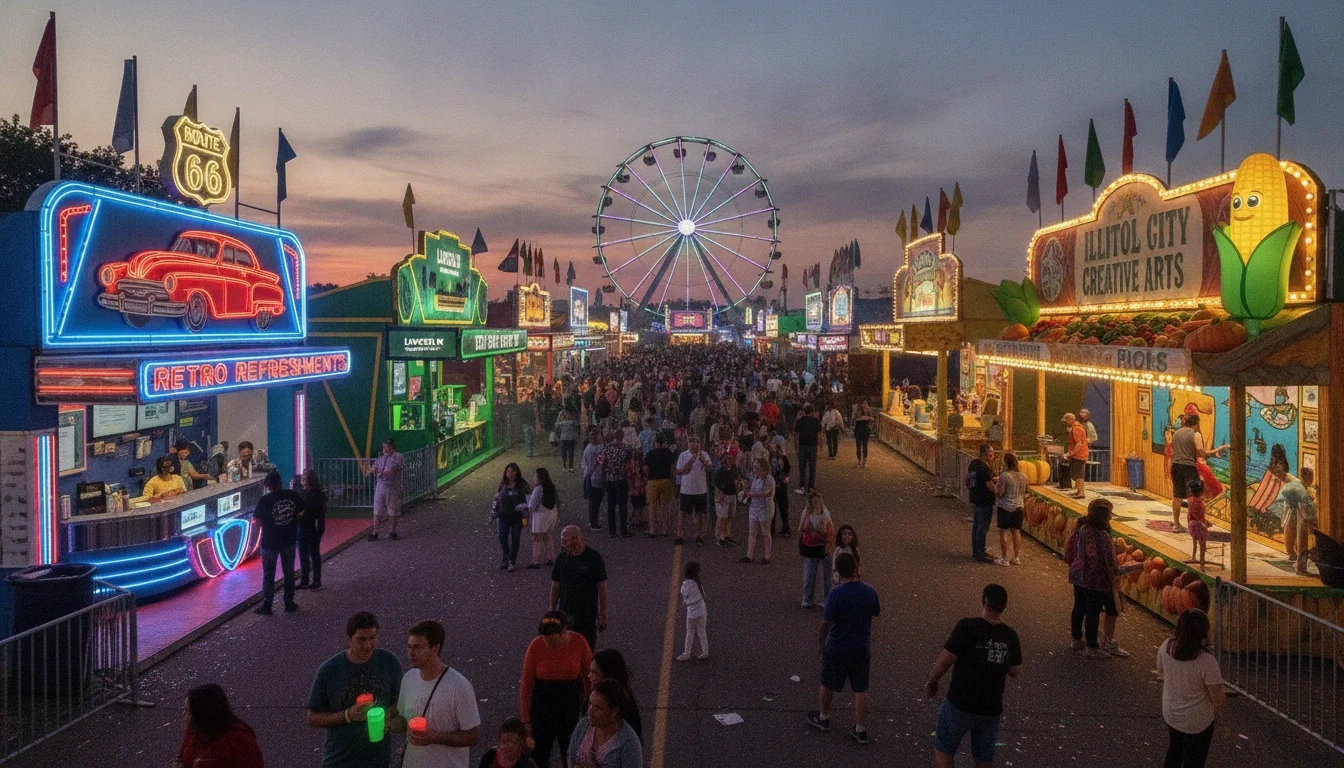
Colorful brand activation booths line a busy fair midway in Springfield Illinois
How Eleven8 Event Staff Supports Brand Activations at the Illinois State Fair
For brands planning activations at the Illinois State Fair, staff selection and preparation are the single highest-leverage decisions in the entire production.
Eleven8 Event Staff has spent over three decades building the infrastructure to get this right. With an active roster of nearly 25,000 staff members and operations across 36 cities — including a Chicago presence that directly serves Illinois and Midwest markets — Eleven8 brings pre-vetted, trained, briefed talent to brand activations at every scale.
What sets Eleven8 apart in a fair environment specifically:
Staff are matched to event type and brand profile, not simply assigned by availability — critical when brand fit is as important as capability
Every booking includes a briefed backup per 8 staff, ensuring full activation strength regardless of day-of changes
Dedicated account managers oversee the entire activation from booking through post-event recap, with 24/7 support on event day
Staff arrive geo-clocked, uniformed, and pre-briefed on the brand story they are there to tell
Eleven8's experience spans brand ambassadors, sampling staff, product demonstrators, registration staff, event captains, and catering personnel — the full spectrum of fair activation needs
Whether a brand is deploying a single product demo team or a multi-zone activation across the fairgrounds, the quality of the staff determines whether the activation becomes a story the brand tells, or one the brand tries to forget.