Pittsburgh Trade Show Staffing: Roles, Tips & How to Build Your Booth Team
Exhibiting at a Pittsburgh trade show is a serious investment. Between booth fees, travel, displays, and marketing materials, the budget adds up fast — and every dollar is riding on the performance of the people standing in your booth.
That's the part most exhibitors underestimate.
Your trade show staff are the single biggest variable between a booth that generates real leads and one that gets politely walked past. The right team turns visitors into conversations. The wrong team turns a $15,000 exhibitor investment into an expensive brochure stand.
This guide covers everything you need to know about staffing a trade show in Pittsburgh — from understanding the venues to calculating how many people you need, defining roles, training your team, and deciding whether to use your own employees or work with a professional event staffing agency.
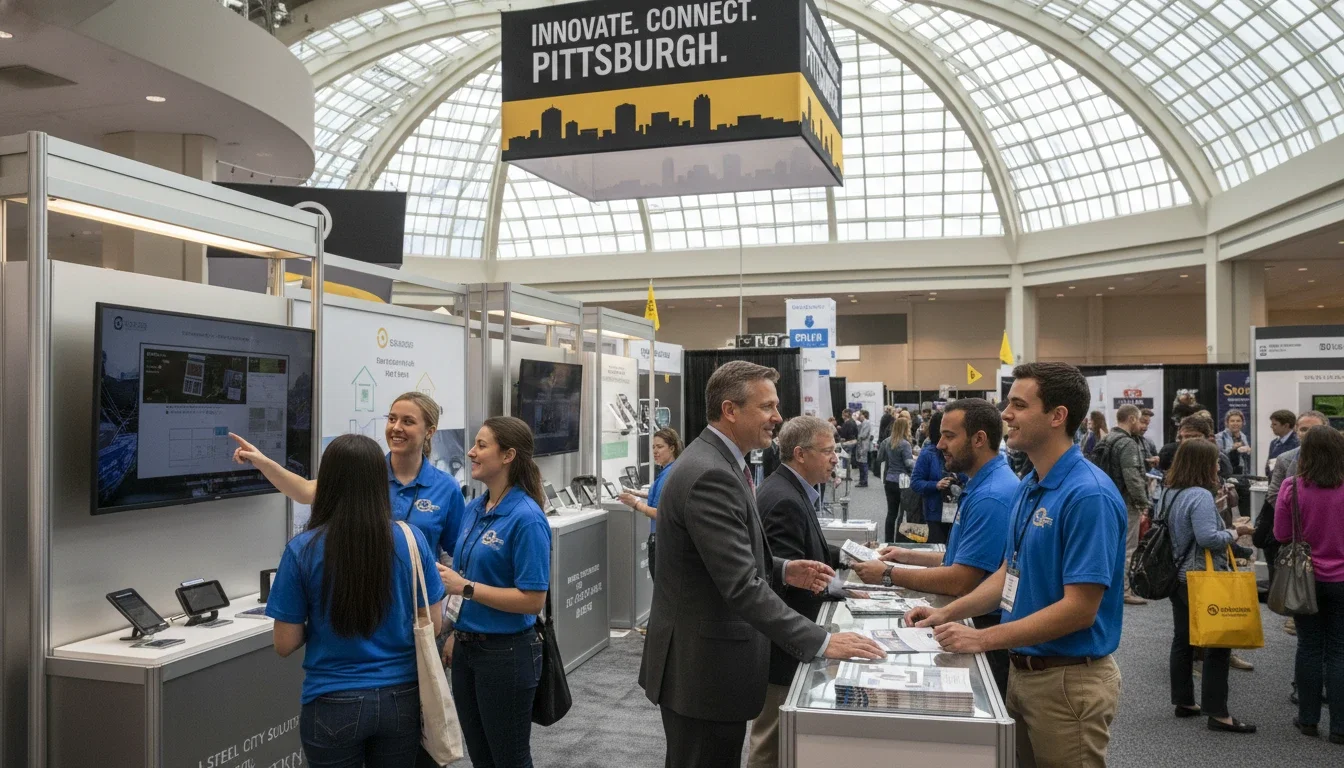
Professional trade show booth staff engaging attendees at a Pittsburgh convention
Why Trade Show Staffing Can Make or Break Your Pittsburgh Exhibit
The Real Cost of Underprepared Booth Staff
Research from the Center for Exhibition Industry Research (CEIR) shows that most companies spend as little as 1–2% of their total trade show budget on staff training. That figure is startling when you consider that 80% of attendees form their impression of a brand based on a brief interaction with booth staff, according to data cited by Exhibit Studios.
Bad booth staffing doesn't just cost leads — it actively damages brand perception. An attendee who walks up and finds a staffer on their phone, unable to answer questions, or too pushy in their pitch, doesn't just leave. They leave with a negative impression they'll carry to their next buying decision.
What Pittsburgh Exhibitors Are Up Against
Pittsburgh's trade show market is active and competitive. The city draws exhibitors from across the Mid-Atlantic and Midwest, many of whom come prepared with polished teams, professional-grade displays, and brand ambassadors who know their product cold.
If your booth team isn't matching that level of preparation, you're giving away the floor to competitors who are.
Know Your Venue: Pittsburgh's Top Trade Show Locations
Understanding where you're exhibiting shapes your entire staffing strategy — from how many people you need, to how early they need to arrive, to what load-in logistics look like.
David L. Lawrence Convention Center (DLCC)
The David L. Lawrence Convention Center is Pittsburgh's flagship trade show and convention venue. Located at 1000 Fort Duquesne Blvd along the Allegheny River in downtown Pittsburgh, it's a 1.5 million-square-foot facility and the first LEED-certified convention center in North America. The DLCC's column-free exhibit halls offer enormous flexibility for large-scale trade shows and multi-day expos.
Major recurring events at the DLCC include the Pittsburgh International Auto Show, the Pittsburgh Home and Garden Show, the Pittsburgh RV Show, and a wide calendar of industry-specific trade shows throughout the year.
Staffing considerations for the DLCC:
Downtown Pittsburgh location means staff should plan for traffic and parking — build in extra arrival buffer time
Large, column-free halls mean booth visibility is high, so staff appearance and engagement quality matters even more than at smaller venues
The venue has an on-site exhibitor services team; coordinate with them on load-in schedules so your staff is on-floor when the doors open, not still setting up
For multi-day shows, plan for shift rotations to prevent staff fatigue
Monroeville Convention Center
The Monroeville Convention Center, located about 12 miles east of downtown Pittsburgh, is a popular venue for regional trade shows, home expos, and business-oriented conventions. Its suburban location makes it accessible for attendees coming from the eastern Pittsburgh metro area.
Staffing at Monroeville tends to require fewer people for a similar booth footprint than at the DLCC simply because foot traffic is more concentrated during peak hours. However, energy management is still critical — the mid-afternoon lull at suburban shows is real, and your team needs the motivation to stay sharp.
Other Pittsburgh-Area Venues Worth Knowing
Depending on your industry and event type, you may also exhibit at:
PPG Paints Arena — For consumer expos and large fan-facing events
Pittsburgh Expo Mart (Monroeville) — Regional consumer and specialty shows
DoubleTree by Hilton Pittsburgh and other downtown hotel convention spaces — For smaller, conference-style trade shows
Each venue has different load-in windows, union labor considerations, and floor-traffic dynamics that affect how you schedule and deploy your team.
How Many Staff Do You Actually Need?
This is one of the most common questions exhibitors get wrong — and either direction creates problems. Too few staff and visitors can't get served. Too many and you're paying for people who are just standing around, creating a crowded, claustrophobic booth experience.
The 50 Sq Ft Rule Explained
The industry standard is one staff member per 50 square feet of active booth space. This accounts for demo areas, conversation space, and the natural flow of visitors through the exhibit.
Keep in mind that "active space" doesn't include storage areas, furniture clusters, or display structures visitors can't enter. Calculate your usable floor space, then apply the ratio.
Staffing by Booth Size
| Booth Size | Sq Footage | Recommended Staff |
|---|---|---|
| 10×10 (inline) | 100 sq ft | 1–2 staff |
| 10×20 (inline) | 200 sq ft | 2–4 staff |
| 20×20 (island) | 400 sq ft | 4–6 staff |
| 30×30 (island) | 900 sq ft | 6–10 staff |
| 40×40+ (large island) | 1,600+ sq ft | 10–20+ staff |
Staffing tip: Inline booths typically have one open side and require fewer staff. Island booths are open on all 4 sides and need more coverage. For island booths, consider zone-based staffing to ensure all sides remain engaged with attendees. Add floaters during peak traffic hours.
For multi-day shows at the DLCC or similar large venues, also factor in:
Shift coverage — If the show runs 8+ hours per day, plan for at least two shift rotations to maintain energy
Dedicated lead capture — At minimum one person focused solely on capturing and qualifying leads
Supervisor/Captain — For teams of 5 or more, a designated on-site captain streamlines coordination significantly
The Core Trade Show Staff Roles You Need to Fill
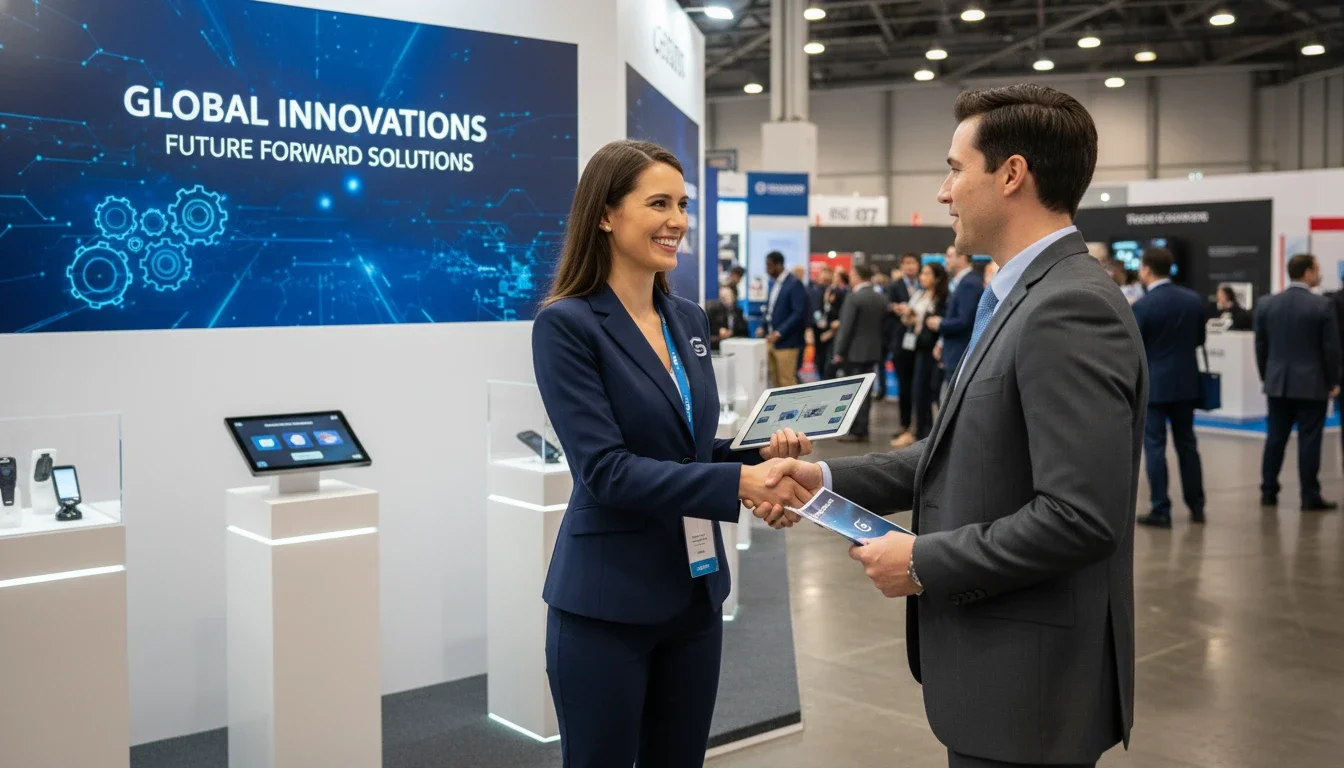
Brand ambassador engaging a trade show visitor at a professional exhibit booth
Not all trade show staff serve the same function. A high-performing booth team is built from specific roles, each with a defined purpose. Understanding these roles before you start recruiting — internally or through an agency — helps you build the right team for your show.
Hosts and Greeters
Hosts are your frontline. They're the first face visitors see, responsible for making people feel welcomed rather than ambushed. A great host reads body language quickly, opens conversations naturally, and knows when to engage and when to give someone space to browse.
For Pittsburgh trade shows — especially larger shows at the DLCC where attendees are moving through dozens of booths — a strong greeter can be the difference between someone stopping and someone walking straight past.
Key qualities: Warm, confident, approachable, quick to read a room
Brand Ambassadors and Promotional Staff
Brand ambassadors go beyond greeting — they actively promote your products, communicate your value proposition, and create a lasting impression of your brand. They need to know your story, understand your differentiators, and be able to articulate them clearly and conversationally.
At experiential and product-launch-style trade shows, brand ambassadors are the energy of your booth. They drive the vibe, handle demonstrations, and keep the crowd engaged.
Key qualities: Product knowledge, outgoing personality, strong verbal communication, brand alignment
Lead Capture Specialists
One of the most overlooked roles. Lead capture specialists are focused on qualifying visitors, collecting contact information, and ensuring that every promising conversation becomes a documented lead. They typically operate the lead retrieval system and work in coordination with sales staff.
Without a dedicated person in this role, leads fall through the cracks — conversations that seemed promising evaporate because no one captured the details in the moment.
Key qualities: Organized, detail-oriented, quick qualifier, comfortable with lead retrieval tech
Product Demonstrators
For tech, industrial, consumer goods, or anything that benefits from hands-on experience, product demonstrators are essential. They run live demos, explain product features, and answer the technical questions that your sales staff might not be able to handle on the fly.
At Pittsburgh shows, demonstrators are particularly valuable in industries like manufacturing, technology, and healthcare — all strong sectors in the regional business community.
Key qualities: Technical knowledge, presentation skills, patience, ability to simplify complex topics
Registration and Check-In Staff
If your company is hosting any ancillary events at the trade show — a private dinner, a product launch session, a seminar — you need dedicated registration staff. These are the people managing guest lists, printing badges, directing attendees, and handling any last-minute additions or changes.
Registration staff are also valuable at large booth experiences where visitors need to sign up for giveaways, demos, or consultations.
Key qualities: Calm under pressure, organized, friendly, tech-comfortable
On-Site Coordinators and Supervisors
For any team of five or more, a dedicated on-site coordinator (sometimes called a Captain) is essential. This person doesn't necessarily staff the booth — they manage the team. They track attendance, handle any issues that arise, communicate with your account manager or internal event team, and make real-time adjustments to how the booth is operating.
A good captain is invisible to attendees but indispensable to you.
Key qualities: Leadership, problem-solving, event experience, cool-headed under pressure
Internal Team vs. Professional Staffing Agency: Which Is Right for You?
This is the question most exhibitors face eventually. Your own employees know the product. A professional staffing agency knows how to work a room. The right answer depends on your show, your booth, and your objectives.
When to Use Your Own Employees
Your internal team is the right choice when:
Your product is highly technical and requires deep institutional knowledge
You're hosting high-value client meetings where relationship continuity matters
Your team includes strong presenters who have done trade shows before
The show is small enough that 1–2 internal people can handle the booth comfortably
The challenge with relying entirely on internal staff is two-fold: it pulls key employees away from their regular work for multiple days, and most employees don't have the specific trade show engagement skills that experienced booth staff bring.
When to Hire a Trade Show Staffing Agency
A professional event staffing agency is the right call when:
You need more staff than your internal team can supply
You want dedicated hosts, greeters, or brand ambassadors who can drive booth traffic
Your team is strong on sales and product knowledge, but needs support on the floor
You're exhibiting in a city where you don't have a local team
You want backup coverage built in from the start
For Pittsburgh exhibitors coming from out of state, a local staffing agency like Eleven8 Event Staff is particularly valuable — we have active staff rosters across the country, including the Pittsburgh market, meaning you're working with people who know the city, the venues, and the regional professional culture.
What to Look for in a Pittsburgh Event Staffing Partner
Not all staffing agencies are built the same. When evaluating a partner for your Pittsburgh trade show, look for:
Vetting standards — Do they screen for professionalism, not just availability? Eleven8 accepts only the top 3.5% of applicants through an 8-step process including background checks, live interviews, and trial shifts.
Backup coverage — What happens if someone doesn't show? Eleven8 provides one briefed backup per every eight staff at no additional charge.
Dedicated account management — You should have one person overseeing your event, not a shared inbox.
Proven track record — Look for documented experience, client reviews, and measurable performance data.
Insurance — Confirm the agency carries workers' comp and general liability coverage, and can provide a COI on request.
How to Brief and Train Your Trade Show Staff
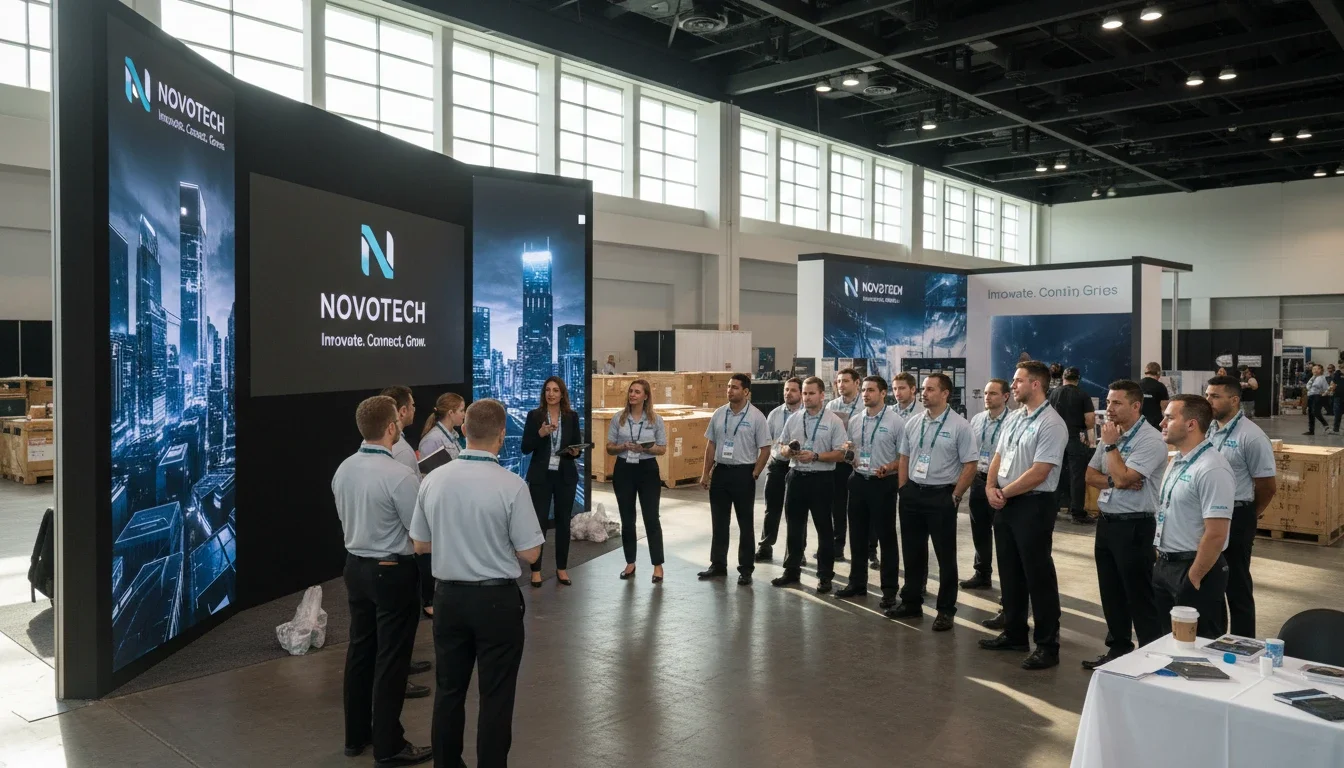
Trade show staff receiving a pre-show brand briefing before the exhibit floor opens
Whether you're bringing in your own team or working with an agency, training is non-negotiable. Research consistently shows that most companies invest almost nothing in booth staff training — and it shows on the floor.
Pre-Show Brand Immersion
Every person working your booth — regardless of whether they're an employee or a temp — needs to understand:
What your company does and who it serves
Your key products or services and their primary differentiators
Who your target customer is at this specific show
What a qualified lead looks like
What they should not say (common pitfalls, competitor comparisons, pricing commitments)
For staffing agency temps, provide a brand brief at least 48–72 hours before the show. Include your website, marketing materials, product sheets, and any brand guidelines. If they're doing scripted demos or presentations, run dry-run rehearsals — ideally in person, or via video call if you're in a different city.
Setting Goals and KPIs for Booth Staff
Ambiguity kills performance. Before the show opens, make sure every staff member knows:
Daily lead capture target
Number of product demos to complete per day
Which product or campaign to prioritize
How to grade a lead (hot, warm, cold) using your lead retrieval system
Daily pre-show meetings — even 10–15 minutes before doors open — reinforce goals, address the previous day's issues, and build team momentum.
Dress Codes, Appearance Standards, and Uniform Policies
Trade show floors are visually competitive. Your team's appearance is part of your brand presentation. Define your dress code clearly before the event — branded uniforms, business casual with specific colors, or custom attire are all common approaches.
If you're working with an agency, communicate your uniform requirements during booking. Eleven8, for example, allows clients to specify custom attire or branded uniforms for all placed staff.
The 15-Second Rule and Engagement Protocols
Booth staff should make contact with visitors within 15–20 seconds of them entering the booth space. Not a hard sell — a natural acknowledgment. Something as simple as eye contact and a genuine greeting creates the psychological opening for a real conversation.
Train your team on:
How to open a conversation without being pushy
How to qualify a visitor in the first 60 seconds (are they a buyer, a browser, or a competitor?)
How to handle objections and off-topic questions gracefully
How to execute a proper hand-off when transferring a visitor to a product specialist or salesperson
Body language matters as much as words. Staff who are visibly disengaged — checking phones, talking to each other, sitting down — actively repel foot traffic.
Day-of Logistics: Running a Tight Operation
Staff Scheduling and Shift Management
For multi-day shows or events running more than 6 hours, plan shift rotations. Fatigue is the enemy of engagement — a staff member who's been on their feet for 9 hours in hour 10 is not the same person as the one who showed up at 8 a.m.
A typical shift structure for a full-day Pittsburgh trade show:
Opening shift: 7:30 a.m. (setup) → Noon
Closing shift: Noon → 30 minutes after show close
For large teams, stagger breaks to ensure full coverage at all times.
Post your daily schedule inside the booth storage area so all staff can review it before hitting the floor. Keep a physical backup copy with your on-site coordinator.
Lead Capture Systems and Hand-Off Protocols
Most large Pittsburgh trade shows (particularly those at the DLCC) use badge-scanning lead retrieval systems. Ensure all relevant staff are trained on the system before the show opens — not during it.
Establish a clear hand-off protocol: when a lead capture specialist qualifies a visitor as "hot," they should be immediately introduced to a salesperson or product specialist rather than handed a business card and wished well.
Backup Staffing and No-Show Contingencies
No-shows happen. Even well-managed staffing operations see occasional last-minute cancellations due to illness or emergencies. The question isn't if this will happen — it's whether you have a plan when it does.
When working with a professional staffing agency, confirm their backup policy before booking. Eleven8's approach includes a briefed backup for every eight staff members at no additional charge — so your booth is never caught understaffed at the worst possible moment.
If you're relying entirely on internal staff, build a contact list of people who can step in on short notice, and brief them on booth basics in advance even if you don't expect to need them.
End-of-Day Debrief
At the close of each show day, gather your team for a 10–15 minute debrief. Cover:
What went well today?
What wasn't working on the floor?
Were there any recurring visitor questions we weren't prepared to answer?
Adjustments for tomorrow (booth positioning, talking points, flow)
This habit compounds across a multi-day show. Small adjustments each evening produce noticeably better results by day two or three.
Post-Show: Evaluating Your Staff's Performance
Metrics That Matter
Once the show closes and the booth is packed down, your work isn't done. Evaluate staff performance against the KPIs you set before the show:
Total leads captured (vs. target)
Lead quality breakdown (hot/warm/cold)
Number of product demos completed
Visitor feedback and any documented complaints or compliments
Staff punctuality and adherence to the schedule
If you worked with an agency, provide feedback on individual staff members. Good agencies use this data to improve future placements and give you the option to request the same team for your next event.
Staff Feedback and Future Planning
Send a brief post-show survey to your team members asking what tools, training, or resources would have helped them perform better. Their on-the-ground perspective often surfaces issues that weren't visible from a management vantage point.
Document what worked and what didn't. Your next Pittsburgh trade show will run smoother if you're not rebuilding your staffing strategy from scratch.
Trade Show Staffing Checklist for Pittsburgh Exhibitors
Use this checklist to make sure nothing falls through the cracks.
8–12 Weeks Before the Show
Confirm your booth size and calculate staffing needs (1 per 50 sq ft)
Decide: internal team, staffing agency, or hybrid approach
If using an agency, request quotes and book early — top agencies fill quickly for major Pittsburgh shows
Define all staff roles for your booth
Set your lead capture goals and select a lead retrieval system
2–4 Weeks Before the Show
Send brand brief and training materials to all staff (internal and external)
Confirm uniform/attire requirements with all team members
Confirm load-in times and parking logistics with the venue (DLCC exhibitor services: exhibitorservices@pittsburghcc.com)
Create daily schedules for all staff
Confirm backup coverage plan with your staffing agency
Show Week
Conduct pre-show briefing with the full team
Review daily goals and lead capture protocols
Post the daily schedule inside the booth
Run the 15-second greeting drill if time allows
Day of Show
Staff arrives 30–60 minutes before doors open
Lead retrieval system is tested and working
All staff know their shift times, roles, and hand-off protocols
End-of-day debrief is scheduled
Post-Show
Pull lead capture data and sort by quality
Review staff performance vs. KPIs
Provide feedback to staffing agency
Document what to do differently next show
Ready to Staff Your Pittsburgh Trade Show?
Staffing a trade show well isn't complicated — but it does require the right planning, the right people, and the right support structure. For Pittsburgh exhibitors, that means understanding your venue, calculating your needs, defining clear roles, and either training your team thoroughly or working with a staffing partner that has already done the hard vetting work for you.
At Eleven8 Event Staff, we've staffed over 34,000 events nationwide — including trade shows, conventions, and brand activations for companies like Nike, Netflix, Porsche, and Sotheby's. Our team is ready to deploy trained, vetted staff to your Pittsburgh exhibit with dedicated account management, built-in backup coverage, and 24/7 on-event support.
Whether you need two brand ambassadors or a team of twenty, we'll build the right roster for your show — and back it with a fill rate of 101.8%.
Get a quote for your Pittsburgh trade show →