Staffing Tips for Multi-City Brand Tours That Deliver Consistency
Your brand tour visits ten cities in thirty days. The activation concept is dialed in. The creative is sharp. But if the staff in Dallas delivers a different experience than the team in Chicago — different energy, different messaging, different professionalism — the whole campaign loses its cohesive impact.
That's the quiet risk most brands underestimate: the people executing your activation are the activation.
This guide breaks down the core staffing strategies that keep multi-city brand tours consistent, professional, and on-brand at every single stop, from structuring your teams to briefing, training, and managing staff across markets.
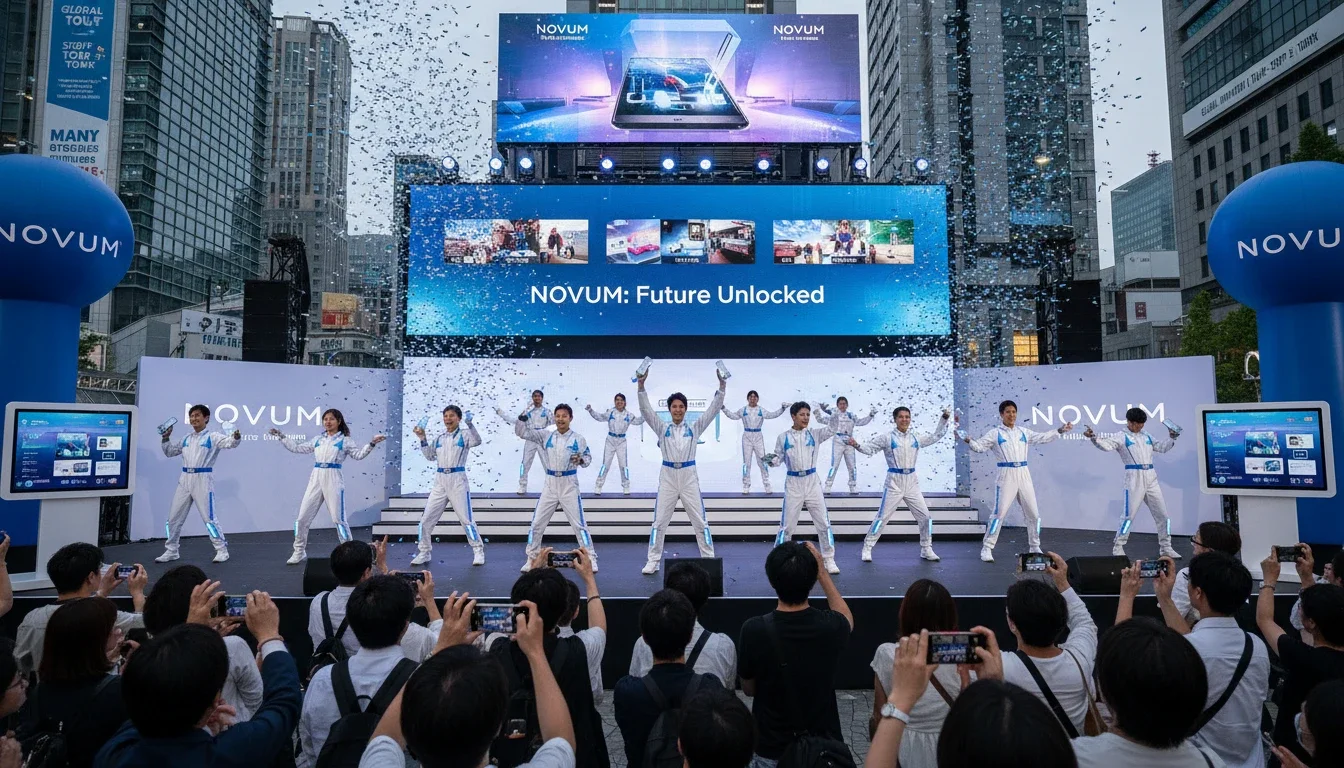
A brand ambassador team executing a coordinated activation at a multi-city product launch tour
Why Staffing Is the #1 Consistency Risk on Multi-City Tours
Brands spend months perfecting their event design, booth experience, and messaging. But on activation day, all of that effort gets filtered through the people on the floor.
When you operate across multiple cities, you face compounding risks that a single-market event doesn't have:
Different local vendors or sub-agencies with varying quality standards
Market-to-market variations in staff talent, experience, and brand familiarity
Briefing gaps created by distance, time zone differences, or decentralized coordination
No-show risks with no pre-briefed backup in place
Fragmented reporting that makes it hard to course-correct mid-tour
A disjointed staff experience doesn't just underperform — it actively undermines trust in your brand. Consumers who interact with your team in Miami expect the same quality they'd receive from your team in Seattle. Inconsistency breaks that expectation.
This is why staffing strategy — not just staffing logistics — needs to be the first conversation when planning a multi-city tour.
Start With a Unified Staffing Plan Before the First Stop
The biggest mistake brands make is treating each tour stop as a separate staffing event. They book local vendors city by city, brief each team independently, and hope the output looks the same. It rarely does.
A unified staffing plan treats your entire tour as one campaign — with a centralized structure, shared standards, and one chain of accountability from city one through city ten.
Define Your Staff Roles for Every Market
Before you book a single person, map out every staff role needed at each stop:
Brand ambassadors — consumer-facing engagement, sampling, and lead capture
Street teams — pre-event or surrounding-area foot traffic and buzz
Tour leads / on-site captains — supervisor-level staff managing the team at each activation
Production assistants — setup, breakdown, and logistical support
Check-in and registration staff — if your activation includes a structured arrival flow
Product demonstrators — for tech, CPG, or sample-driven campaigns
Not every tour stop will need the same mix. But mapping roles in advance prevents last-minute scrambles and ensures nothing gets overlooked in smaller markets.
👉 Explore Eleven8's full range of brand ambassadors, street teams, and production assistants available nationwide.
Build Your Team Structure Around a Lead Staff Model
One of the most underused tools in multi-city tour staffing is the lead staff role — a dedicated on-site captain who serves as the point of accountability at each activation.
Your lead staff member should:
Arrive earlier than the general team to set up and confirm logistics
Conduct the final on-site briefing before doors open
Manage the team's energy, positioning, and messaging throughout the day
Communicate in real time with your agency or central operations contact
Complete a post-event debrief and performance recap
With a briefed, experienced lead at every stop, you create a replicable layer of accountability that doesn't depend entirely on remote oversight. Your central team can manage ten cities at once because each city has a qualified person holding the standard on the ground.
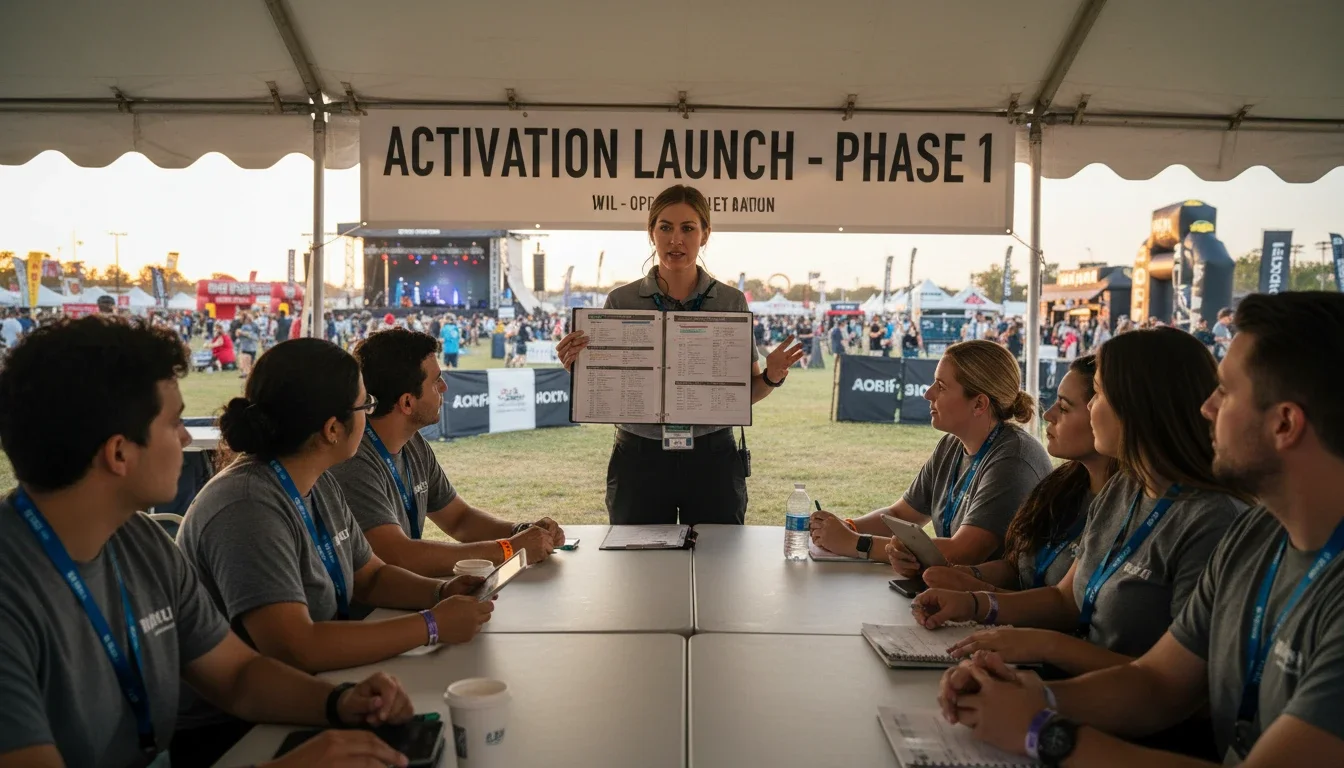
On-site tour captain reviewing briefing materials with event staff before activation launch
How to Train Staff for Brand Consistency Across Cities
Training is where most multi-city staffing efforts succeed or fail. Generic onboarding creates generic results. Brand-specific, activation-specific training creates ambassadors who actually represent what your brand stands for.
Create a Master Briefing Document
Every staff member across every city should receive the same core briefing before your tour begins. This document should include:
Brand background and campaign overview
Key messaging points and approved talking points
Prohibited statements or competitor references to avoid
Uniform and appearance standards
Interaction flow — how to approach, engage, and close a consumer interaction
What to do if something goes wrong
Contact information for the lead, account manager, and emergency line
This document becomes your brand standard in written form. Update it between stops if the campaign evolves, and ensure every team — regardless of market — is working from the latest version.
Use a Train-the-Trainer Approach for Simultaneous Markets
When your tour activates in multiple cities at the same time, running individual in-person trainings isn't realistic. A train-the-trainer model solves this.
The approach works like this: your agency's national training team briefs your tour leads and city-level supervisors on the full campaign. Those supervisors then conduct the final briefings with their local teams, using standardized materials and scripts. This creates a consistent briefing experience without requiring your central team to be in twelve cities at once.
The key is that the materials — the script, the demos, the approved answers to common consumer questions — are identical across all markets. What changes is the person delivering them locally.
Standardize Appearance, Tone, and Messaging
Consistency is visual as much as it is verbal. Across a multi-city tour, enforce:
Uniform standards: Same attire, grooming expectations, and presentation across every city. If you're providing branded gear, ship it in advance with clear sizing and wear instructions.
Tone guidelines: Define whether your brand voice is energetic and high-touch, informative and consultative, or premium and reserved. Give staff examples of what on-brand and off-brand interactions look like.
Messaging hierarchy: Which points are must-says? Which are nice-to-say? What are the top three things every consumer should leave knowing?
These standards sound basic, but they're frequently not written down — which means they get interpreted differently in every market.
Navigating Local Market Differences Without Losing Brand Voice
Consistency doesn't mean ignoring the local environment. The best multi-city tours maintain a unified brand presence while allowing small, intentional adaptations for each market.
Why Local Market Knowledge Matters
A brand activation in New York City runs differently from one in Nashville. Foot traffic patterns, consumer behavior, venue dynamics, and even the pace of interaction vary by city. Staff who understand their local environment can move with it rather than against it.
This is one reason why working with a staffing partner that has an established local presence in each market — rather than flying in talent from a central hub — tends to produce stronger results. Local staff already understand the venue, the crowd, and the rhythm of the city.
👉 Eleven8 has event staff teams ready to deploy inLos Angeles, New York City, Chicago, Miami, Atlanta, Las Vegas, Houston, and 20+ additional U.S. markets.
How to Balance Local Nuance With Brand Standards
The rule of thumb: let local knowledge inform the how, not the what.
Your brand messaging stays fixed. Your product demonstration stays consistent. What can flex is how staff engage based on the specific venue, crowd density, or cultural context of that city.
Brief staff on this distinction explicitly. Tell them: "The core talking points never change. But if you're working an outdoor activation in Houston heat versus an indoor booth in Boston, use your judgment on pacing and energy."
This empowers local teams to perform well without letting individual interpretation dilute your brand standards.
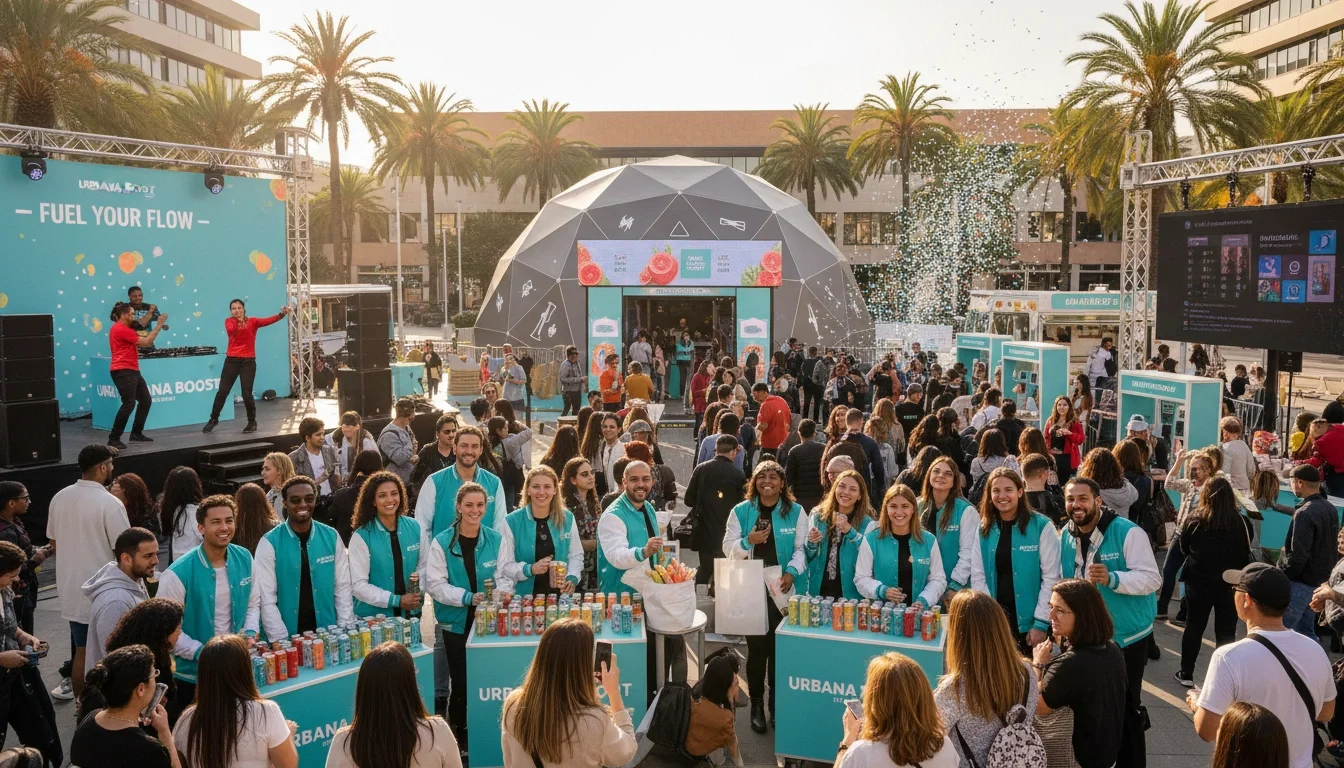
Brand ambassador team engaging consumers at a multi-city experiential marketing activation
Logistics and Backup Planning for Multi-City Tours
Operational execution is where well-planned tours fall apart. The most polished staffing strategy is worthless if someone doesn't show up or if there's no system in place when something goes sideways.
Build Backup Staffing Into Every Market
No-shows happen. At a single-market event, a no-show is painful but manageable. Across a 10-city tour, the same no-show rate becomes a statistical certainty — and in any given stop, it can derail the entire activation.
The solution is pre-briefed backup staff, not reactive replacement. Your backup staff should:
Be briefed on the campaign in advance, exactly like the confirmed team
Be on standby and reachable on the morning of the event
Be able to step in without a catch-up briefing, slowing down setup
Some agencies build this into their standard offering. Eleven8, for example, includes a briefed backup for every eight staff members at no additional charge — a structural guarantee that tour stops run at full strength even when the unexpected happens.
Use Real-Time Communication Systems
Across a multi-city tour, your central team needs visibility into what's happening at every stop in real time — not in a post-event report three days later.
Set up a communication system that includes:
A dedicated channel (Slack, group text, or your agency's platform) for each city's team
Check-in protocols — geo-clocked arrival confirmation, setup status updates, and a go/no-go before doors open
A direct line to your agency's operations team for immediate issue escalation
Real-time attendance tracking so you know immediately if a position goes unfilled
The goal isn't micromanagement. It's visibility. When you can see what's happening across all markets at once, you can respond to problems before they become incidents.
Performance Tracking Across Tour Stops
Consistency isn't just about what happens during the activation. It's about learning from each stop so the next one performs better.
What to Measure at Each Activation
At every tour stop, collect consistent data points:
Consumer engagements and interactions (volume and duration)
Samples distributed or product demonstrations completed
Lead capture volume and quality
Staff arrival and compliance (on time, in uniform, briefed)
Consumer sentiment feedback from on-site staff observations
Track these metrics in a standardized format across every city so you can compare performance, identify outliers, and spot patterns — which markets over-performed? Which formats drove the most engagement?
Post-Event Reporting and Iteration
Build a structured post-event debrief into your process at every stop. Your on-site lead should complete a standardized recap that captures what worked, what didn't, and what the next city's team should know.
This is how great tour teams get better mid-campaign rather than waiting until the final stop to realize there was a consistent briefing gap in the interaction flow.
A staffing partner with a formal performance tracking system — one that rates staff after each shift and maintains a centralized performance record — makes this significantly easier. You're not starting from scratch, evaluating staff quality at every stop.
When to Partner With a Nationwide Event Staffing Agency
At a certain scale of tour complexity, the operational overhead of managing multi-city staffing in-house becomes a liability. A missed briefing in one city, a no-show in another, and a communication breakdown with a local vendor in a third — and suddenly your brand's biggest campaign of the year is running ragged.
A specialized nationwide event staffing agency absorbs that risk.
What to look for in a multi-city tour staffing partner:
An established local presence in every market on your tour — not reactive recruiting, but an existing roster ready to deploy
A centralized account structure — one point of contact managing all markets, not ten vendor relationships to juggle
Proven training infrastructure — a system for delivering consistent briefings across simultaneous markets
Built-in backup coverage — pre-briefed, not recruited-after-the-fact
Transparent performance tracking — post-shift ratings, attendance records, and recaps you can actually use
Comprehensive insurance — workers' comp, general liability, and COI on request
Eleven8 operates in 25+ U.S. cities with a roster of 24,821 active staff, a 101.8% fulfillment rate, and a dedicated account manager assigned to every booking. Whether your tour hits five cities or fifteen, the operational infrastructure is already in place.
👉 Request a quote for your next brand tour and let our team build a staffing plan around your specific markets and activation format.