Standing Out at Google Cloud Next: Event Staffing Tips for a Competitive Show Floor
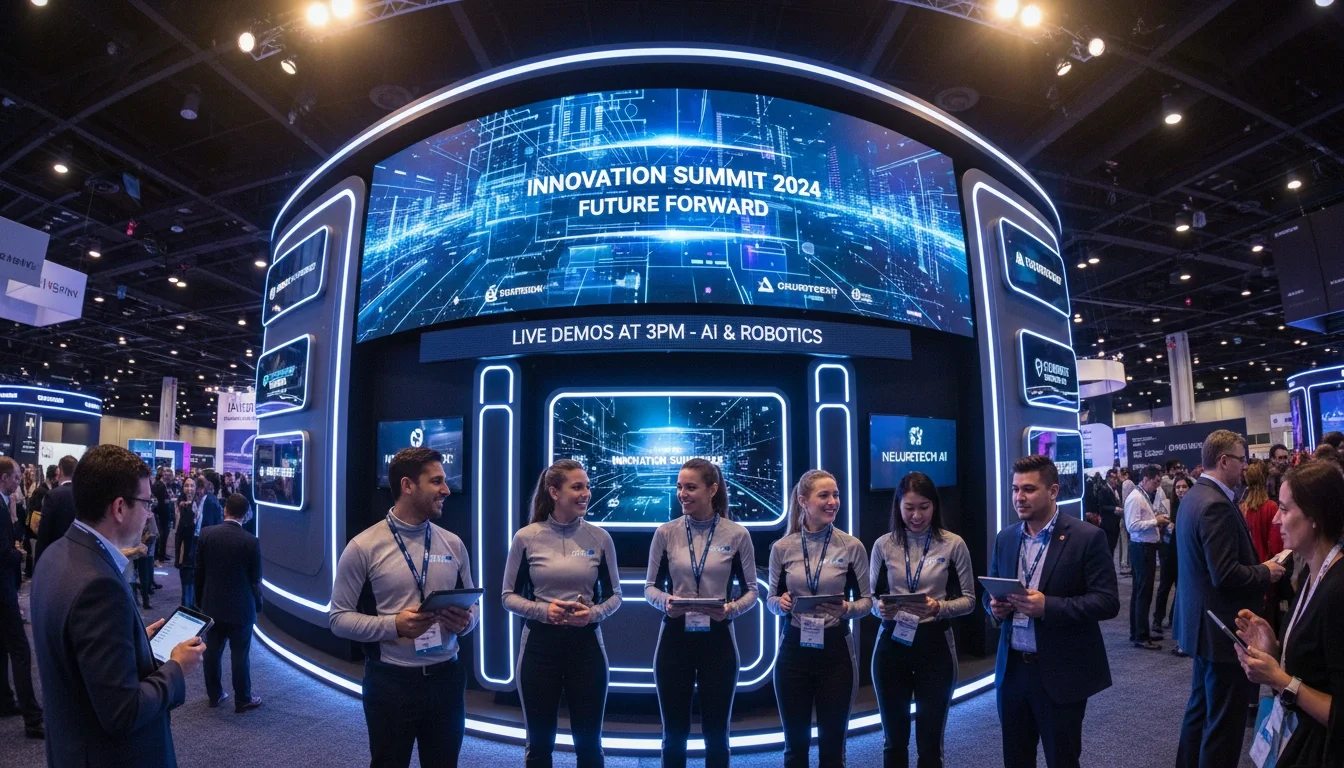
A professional event staffing team engaging with attendees at a large-scale tech conference booth, with bright branding and LED displays visible in the background
Why Your Booth Staff Is Your Most Important Exhibit Element
Google Cloud Next draws more than 35,000 attendees — including enterprise IT decision-makers, cloud architects, developers, and C-suite leaders who have seen everything the tech industry has to offer. The competition for their attention on the show floor is fierce. Booths compete with immersive installations, interactive demos, free coffee, and years of brand-building investment. Yet even the most impressive exhibit can fall flat without the right people running it.
Your booth staff is the human interface between your brand and your audience. They determine who stops, who stays, and — most importantly — who converts into a real business conversation. The best booth design in the hall means very little if the people inside it are looking at their phones, struggling to explain your product, or failing to qualify the right leads.
This guide is built for event marketers, exhibit managers, and business development teams who want to show up at Google Cloud Next not just to exhibit — but to dominate their corner of the floor. These are the staffing strategies that make that happen.
Know the Room: Understanding the Google Cloud Next Audience
Staffing strategy doesn't start with headcount — it starts with audience intelligence. Before you decide how many people to put in your booth and what roles to fill, you need to understand who you're staffing for.
Who Attends Google Cloud Next?
Google Cloud Next is one of the most influential enterprise tech conferences in the world. The attendee mix skews heavily toward technical and business decision-makers: cloud engineers, data scientists, IT directors, security professionals, and the executives who sign off on multi-year cloud contracts. Industry data suggests that a significant majority of attendees hold enterprise roles, and many arrive actively evaluating vendors and solutions.
This isn't a consumer trade show. The people walking your aisle have deep product knowledge, limited time, and a low tolerance for surface-level pitches.
What Attendees Expect from Exhibitor Booths
At an event like Google Cloud Next, attendees expect to be engaged — not sold to. The most effective booths create a conversation, not a presentation. Attendees want to see a demo that's relevant to their specific use case, talk to someone who understands their technical environment, and leave with a clear sense of what sets your product apart from the six similar vendors they visited that morning.
Meeting this expectation requires staff who are confident, technically literate, and genuinely curious about the visitor's challenges — not scripted product-pushers reading from a talking-points sheet.
Why Generic Staffing Fails at Tech Conferences
The most common mistake exhibitors make at conferences like Google Cloud Next is treating booth staffing like a generic event task — grabbing whoever's available from the sales team and filling shifts. This approach fails for several reasons: internal teams fatigue quickly across multi-day shows, salespeople aren't trained for high-volume engagement flow, and without dedicated greeters and traffic drivers, qualified visitors walk past without stopping.
High-performing exhibitors treat booth staffing as a disciplined operation — with defined roles, trained professionals, and a clear system for moving people from the aisle to the conversation to the calendar.
The Staff Roles You Need for a High-Performing Booth
Every effective trade show team at a conference like Google Cloud Next requires at least five distinct functional roles. These can be filled by a mix of your internal team and professional event staff — and at a show of this scale, the combination almost always outperforms either approach alone.
The Greeter / Traffic Driver
The greeter's job is to make eye contact, stop foot traffic, and open a conversation — all within the first five to ten seconds of an attendee passing the booth. At Google Cloud Next, where every major cloud vendor has a visible presence, the greeter is your first competitive advantage. They should be approachable, energetic, and trained with a single opening line that sparks curiosity rather than triggering a defensive "just browsing" response.
This role is ideal for a professional brand ambassador from a specialized event staffing agency. They're trained for high-volume engagement, they don't carry the cognitive load of knowing your entire product suite, and they excel at the one job that determines whether anyone enters your booth.
The Product Expert / Demo Specialist
Once a visitor is inside the booth, the product expert takes over. At a tech conference, this person needs at least working-level familiarity with your product — enough to run a demo, answer basic technical questions, and know when to hand off to a deeper technical resource. They don't need to be engineers, but they do need to have been briefed thoroughly before the show opens.
The Lead Qualifier
Not every person who walks into your booth is the right buyer. The lead qualifier's job is to quickly assess a visitor's role, company size, buying timeline, and current tech stack — gathering the information that determines whether this person goes to the closer, gets a follow-up email, or is politely disengaged. A skilled qualifier can process dozens of visitors per hour without making anyone feel like they're being interrogated.
The Closer / Account Executive
Closers are your internal salespeople — the ones who can take a warm, qualified lead and advance it toward a specific next step. At Google Cloud Next, that next step might be a scheduled demo, a follow-up call, or an introduction to a solutions engineer. Closers should be protected from logistical tasks. If they're scanning badges or handling giveaways, they're not doing what they're there to do.
The Logistics Coordinator
Every booth needs someone managing the operational layer: ensuring giveaway stock is replenished, coordinating break rotations, troubleshooting demo equipment, and maintaining the physical booth environment. At a three-day show like Google Cloud Next, small operational failures compound quickly. A dedicated logistics role keeps everything running so the rest of the team can focus on people.
When to Supplement Internal Teams with Event Staffing Professionals
Most exhibitors at Google Cloud Next use a mix of internal staff and professional event staff — and for good reason. Internal teams bring product depth; professional event staff bring engagement energy, show-floor endurance, and trained execution that doesn't degrade across a nine-hour day. If your internal team is covering product demos and sales conversations, consider filling greeter, lead qualifier, logistics, and registration roles with professionals from a specialized event staffing agency.
How Many Staff Do You Actually Need? A Practical Formula
One of the most common questions exhibit managers ask before a major show is: "How many people do we actually need?" The honest answer depends on your booth size, expected traffic volume, and session schedule — but there's a reliable framework to work from.
Booth Size and Traffic Volume
As a baseline starting point for Google Cloud Next:
10x10 booth: 2–3 staff during peak hours (one greeter, one presenter/qualifier)
10x20 booth: 3–4 staff (dedicated greeter, demo specialist, qualifier/closer)
20x20 island booth: 5–7 staff (multiple greeters, two demo stations, qualifier, logistics support)
Larger custom installs: Scale proportionally — one greeter per 10 linear feet of open aisle exposure
These are minimum baselines. For a show drawing 35,000 attendees with peak traffic windows around keynote breaks and lunchtime, lean toward the higher end.
Peak Hours and Shift Planning
Google Cloud Next runs a three-day main program with predictable traffic rhythms: attendance surges after morning keynotes, drops during concurrent breakout sessions, and peaks again during afternoon networking hours. Plan your highest-staffing coverage for the 90-minute windows following keynotes and the lunch hour. Use those low-traffic session windows for team rotations, briefings, and equipment resets.
Building in Backup Coverage
No-shows and sudden illness happen at every event. For multi-day shows, plan for at least one backup staff member per eight positions. This is standard practice for professional event staffing agencies — Eleven8, for example, includes a briefed backup for every eight staff members at no additional charge, ensuring full strength without last-minute scrambling.
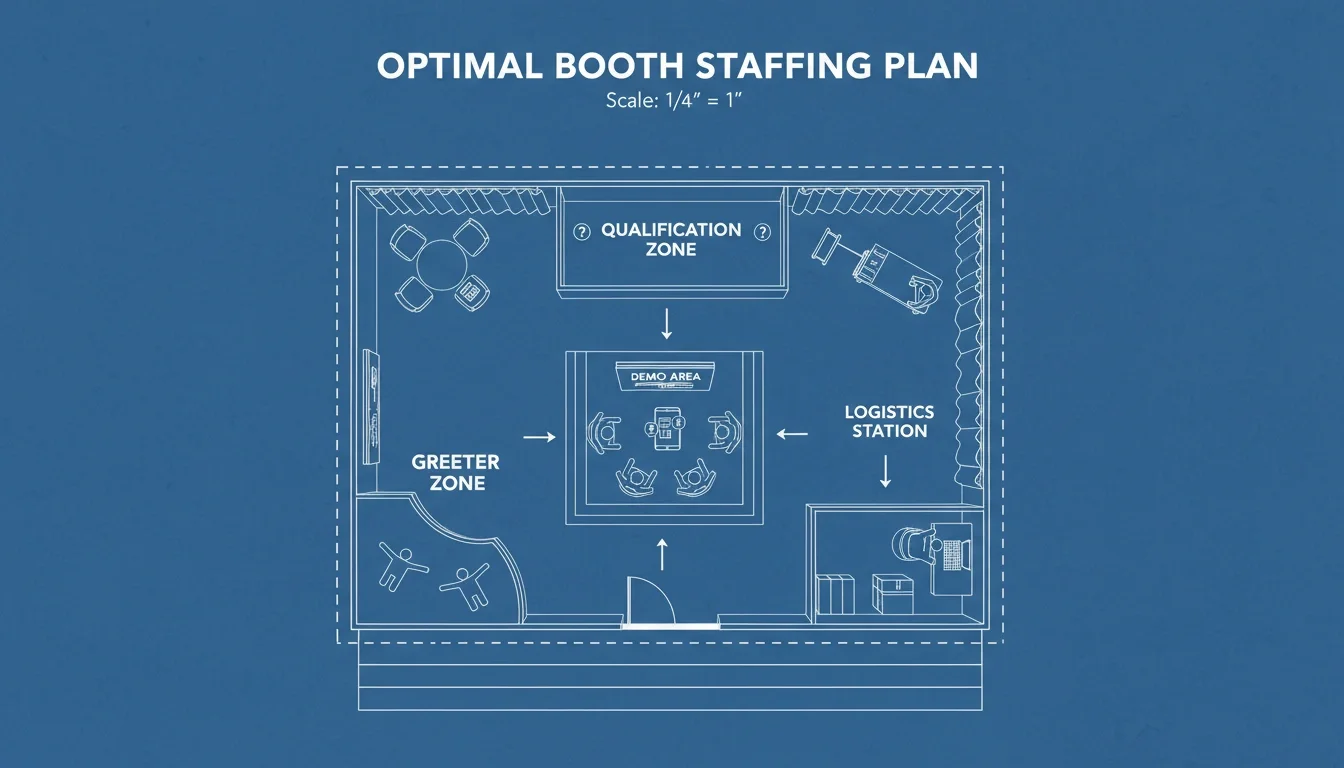
A booth floor plan diagram showing optimal staff positioning zones — greeter zone at the aisle, demo area in the center, qualification zone at the rear, and logistics station off to the side
How to Brief Temporary Event Staff on a Complex Tech Product
The most common objection to using temporary event staff at tech conferences is this: "Our product is too complex. We need people who really understand it." This is understandable — and largely addressable with the right briefing process.
A well-briefed professional event staffer doesn't need to know everything about your product. They need to know enough to start the right conversations and route them to the right people. That's a very different bar, and it's achievable.
The Pre-Show Briefing Checklist
At a minimum, your temporary event staff should be briefed on:
The company name, one-sentence product description, and core value proposition
The target customer profile ("We typically work with IT directors at companies with 500+ employees")
The two or three problems the product solves — in plain language, not marketing jargon
The five most common visitor questions and the approved answers
What to do when a visitor asks a technical question beyond their knowledge ("That's a great question — let me grab our solutions engineer")
Lead capture process: which tool, what fields to fill in, and how to tag a lead
Booth etiquette: positioning, phone policy, language to avoid
This briefing can be conducted the evening before the show opens and reinforced with a 15-minute team standup each morning. Professional event staff who specialize in tech conferences often arrive already comfortable with the briefing format — they've done this before.
Message Clarity: What to Say and What to Avoid
Train your booth staff to open with a question, not a pitch. "What brings you to the show this year?" or "Are you currently managing multi-cloud environments?" opens a conversation. "Can I tell you about our AI-powered data integration platform?" closes it.
Avoid jargon-heavy openers that overwhelm visitors before they've decided they're interested. Save the technical depth for the demo station, once a visitor has indicated genuine interest.
Handling Deep Technical Questions Gracefully
Professional event staff should be empowered to say: "That's exactly the kind of question our technical team loves to dig into — let me bring them into the conversation." This isn't a failure; it's a handoff. Train your internal technical staff to expect and welcome these handoffs, and make sure the transition is warm and confident rather than awkward.
Turning Foot Traffic into Pipeline: Lead Capture That Works
At Google Cloud Next, attendees carry badge scanners, business cards, and QR codes. But raw badge scans don't become pipeline — qualified conversations do. The difference between a 200-scan day and a 200-opportunity day is entirely in how your staff handles the interaction before and after the scan.
Qualifying Visitors in 30 Seconds
Train your lead qualifiers to gather four data points in a natural conversation within 30 seconds of engagement:
Role: Are they a technical evaluator, an economic buyer, or an end user?
Company: Size, industry, and whether they're currently in the Google Cloud ecosystem
Problem: Are they actively solving a problem your product addresses?
Timeline: Are they evaluating now, in the next quarter, or just exploring?
This information shapes everything from the conversation route to the follow-up priority. Lead qualifiers should capture a brief note in the CRM immediately after the interaction while the context is fresh.
Lead Capture Tools and CRM Integration
Most large conference lead capture tools (such as those provided by Google Cloud Next's official exhibitor program) allow badge scanning with custom fields. Work with your marketing ops team before the show to configure those fields to capture the qualification data your sales team actually needs — not just name and email. A lead tagged "IT Director / 2,000-person company / active multi-cloud migration / Q2 decision" is worth dramatically more than a raw scan.
Post-Show Follow-Up Strategy
Brief your staff on follow-up framing before the show, not after. When closing a booth conversation, your team should set a specific next step: "I'll send you a comparison doc this week" or "Our solutions engineer will reach out for a technical deep-dive." This gives your follow-up email a reference point that gets it opened. Leads followed up with a specific promised action convert at dramatically higher rates than cold re-introductions three days after the show.
Show-Day Execution: Keeping Your Team Sharp Across Three Days
Google Cloud Next runs across three main show days. By day two, even experienced booth teams start to show fatigue — slower engagement, lower energy, and declining qualification quality. Managing your team's performance arc is as important as staffing the right roles.
Morning Briefings and Energy Management
Start each show day with a 10–15 minute team standup. Review the previous day's lead count, highlight what worked and what didn't, update the team on any messaging pivots, and bring collective energy up before the floor opens. This daily reset is one of the highest-leverage investments you can make in three-day show performance.
Ensure adequate break coverage so no staff member is on the floor for more than 90–120 minutes without a rest. Booth fatigue is real, and a tired greeter who stops making eye contact is worse than a short-staffed booth.
Managing Rotations Without Dead Zones
Never rotate your entire team simultaneously. Stagger breaks so the booth always has at least one greeter and one product-aware staff member present. Plan rotation schedules in advance and build them into your logistics coordinator's responsibilities. If you're using an event staffing agency, ensure break coverage is explicitly included in the booking — agencies like Eleven8 include built-in backup coverage to prevent exactly this issue.
Real-Time Feedback and Adjustments
Encourage on-the-spot feedback between your team. If a particular opening question isn't working, change it at lunch. If demo station two is consistently more popular than station one, staff it more heavily in the afternoon. Flexibility and real-time adaptation separate elite booth teams from average ones.
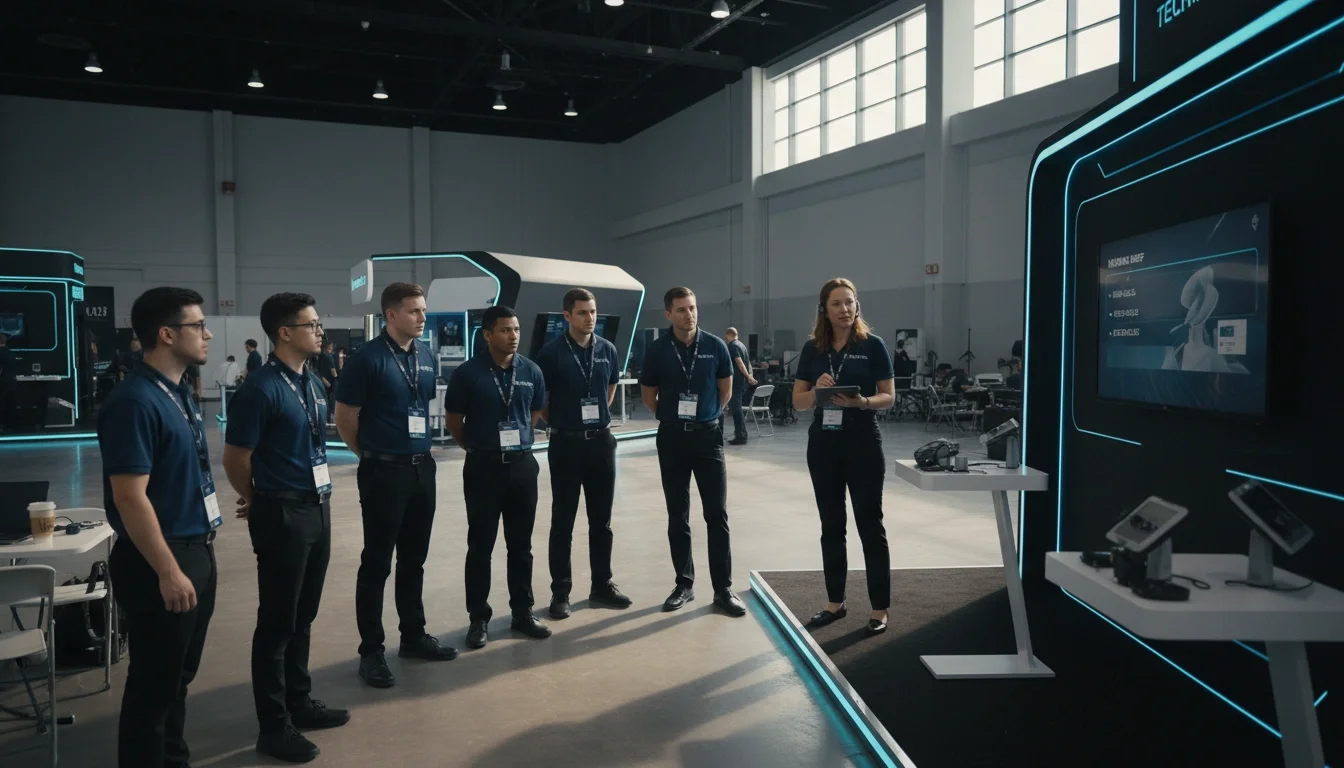
A booth team conducting a morning standup briefing before the trade show floor opens — led by a team captain with a small group of professional event staff in branded uniforms
Why Tech Companies Partner with Professional Event Staffing Agencies for Google Cloud Next
The companies that consistently perform well at major tech conferences — year after year, show after show — share a common pattern: they treat staffing as a strategic function, not a logistical afterthought. And most of them don't try to do it alone.
Professional event staffing agencies exist precisely because filling a trade show booth with qualified, trained, show-ready staff on a compressed timeline is genuinely hard. The alternatives — asking the sales team to cover everything, recruiting from internal headcount, or searching for freelancers at the last minute — carry consistent risks: fatigue, no-shows, inconsistent brand representation, and missed leads.
What to Look for in an Event Staffing Partner
When evaluating a staffing agency for Google Cloud Next, prioritize:
Vetting rigor: What percentage of applicants are accepted? Are staff background-checked and reference-verified?
Event specialization: Does the agency have direct experience staffing tech conferences and trade shows?
Backup guarantees: What happens if a staff member can't make it on show day?
Briefing integration: Will the agency work with your team to brief staff on your product and brand before the event?
On-site support: Is there a dedicated account manager or on-site supervisor managing the team?
Geographic capability: Can they staff in Las Vegas (the Google Cloud Next 2026 venue) without last-minute recruiting?
How Eleven8 Supports Tech Exhibitors
Eleven8 Event Staff has staffed over 34,000 events for clients, including Nike, Netflix, Porsche, and Sotheby's, and tech conference activations represent one of the agency's fastest-growing verticals. With an active roster of more than 24,000 vetted staff nationwide and a dedicated presence in Las Vegas, Eleven8 deploys conference staff, brand ambassadors, trade show staff, and event coordinators who are ready to represent your brand from day one.
Every booking includes a dedicated account manager, built-in backup coverage for every eight staff members, and 24/7 on-call support throughout the event — so if anything changes on the show floor, you're not handling it alone.
Your Staff Is Your Brand on the Show Floor
At Google Cloud Next, you're not just competing for booth traffic — you're competing for attention, trust, and pipeline in one of the most sophisticated buying environments in enterprise tech. Every conversation that starts at your booth is a direct reflection of your brand.
The difference between a forgettable booth and a booth that drives real business outcomes almost always comes down to the same thing: the people in it. The right team — with the right roles, the right training, and the right support structure — turns a three-day conference into months of qualified follow-up.
Whether you're building that team entirely in-house or supplementing with professional event staff, the principles are the same: know your audience, define your roles, brief your team, qualify aggressively, and stay sharp for all three days.
If you need event staff for Google Cloud Next — brand ambassadors, trade show specialists, registration staff, or full-booth coverage — Eleven8 Event Staff is ready to help. Our Las Vegas roster is in place, our briefing process is proven, and your dedicated account manager will be with you from inquiry through post-show recap.
Get a quote for Google Cloud Next staffing: elev8.la/book-now