How to Staff a Brand Activation at Google Cloud Next in San Francisco
Google Cloud Next draws tens of thousands of cloud engineers, IT decision-makers, enterprise buyers, and technology executives to San Francisco each year. It is one of the most concentrated gatherings of technically sophisticated, professionally ambitious attendees in the entire conference calendar — and for the brands exhibiting there, the stakes are high.
A polished activation concept and a well-designed booth can only carry you so far. The people representing your brand on the expo floor are the ones who determine whether attendees stop, stay, engage, and convert — or walk right past. Staffing a brand activation at Google Cloud Next is not the same as staffing a consumer festival or a retail pop-up. The audience is different. The environment is different. The expectations are different.
This guide breaks down exactly how to do it right: which roles to hire, how many people you actually need, how to brief your team, and what to look for in a staffing partner before you sign anything.
Why Google Cloud Next Is One of the Most Competitive Brand Activation Environments in Tech
Google Cloud Next is not your average industry conference. It is Google's flagship cloud and AI event, attracting cloud architects, CTOs, DevOps engineers, data scientists, and enterprise procurement leaders — all in one building, across multiple days, moving quickly through a massive expo floor filled with brands competing for the same 30-second window of attention.
For exhibiting brands and partners, the expo is both an extraordinary opportunity and a demanding operational environment. Booths range from small partner tables to multi-zone experiential installations. Networking events, side sessions, and keynote draws mean foot traffic shifts dramatically by hour. Your staff need to match the rhythm of the event floor — and the sophistication of the people walking it.
Who Attends Google Cloud Next — and Why It Matters for Staffing
The attendee profile at Google Cloud Next is overwhelmingly professional, technically literate, and goal-oriented. These are not casual consumers browsing a trade show floor out of curiosity. They are evaluating vendors, comparing solutions, and making or influencing purchasing decisions worth hundreds of thousands of dollars.
That means the staff you place at your activation cannot be generic promotional talent. They need to be articulate, confident, and capable of quickly qualifying a conversation — knowing when to go deeper on a product demo and when to capture a lead and pass someone to a sales representative. The ability to hold a credible conversation in a B2B context is non-negotiable at an event like this.
What Makes Moscone Center Unique for Brand Activations
The Moscone Center in San Francisco's SoMa district is one of the most versatile convention venues in the United States, but it comes with its own operational dynamics. The space is large, multi-level, and high-traffic. Activations are typically clustered in the expo halls, which can become noisy and visually overwhelming within the first hour of doors opening.
Staff need to be physically prepared for long days on their feet, and they need to be good at cutting through the noise — both literally and figuratively. Knowing how to project confidence and create a natural stopping point for a passing attendee in a crowded expo hall is a specific skill, not a given.
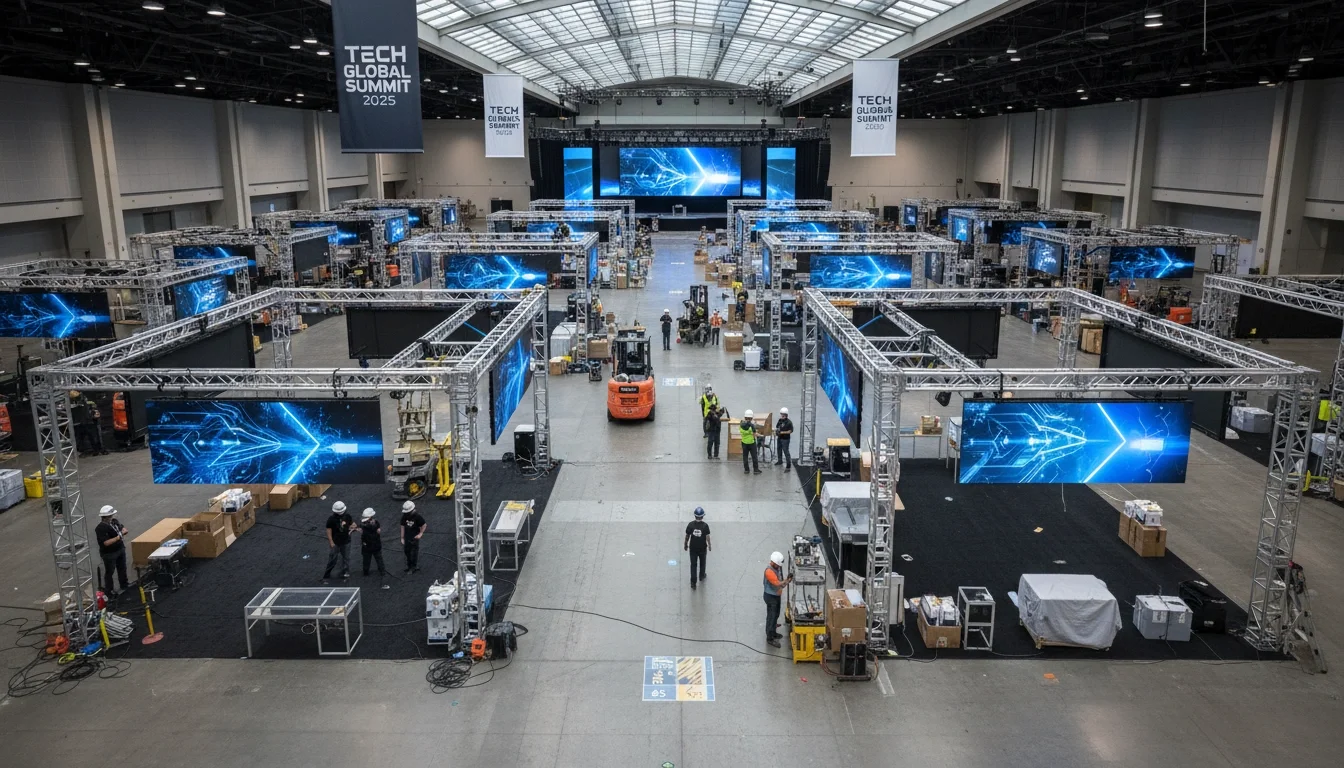
Moscone Center South Hall expo floor setup for a major technology conference
The Staff Roles You Need at a Google Cloud Next Activation
A brand activation at Google Cloud Next is typically staffed with a defined team of complementary roles. The exact mix depends on the size of your booth, the nature of your activation experience, and your goals — but most successful activations at this level include some combination of the following.
Brand Ambassadors
Brand ambassadors are the frontline of your activation. They create the first human interaction with anyone who slows down near your booth — initiating conversations, explaining your value proposition in plain language, and routing attendees into the right engagement path. At a tech conference, the best brand ambassadors are outgoing without being aggressive, curious without being scripted, and calm enough to handle a busy expo floor hour after hour.
For a B2B tech audience, your brand ambassadors should be articulate communicators who can quickly grasp your product's core differentiator and explain it simply. They do not need to be software engineers. They need to be intelligent, professional, and credible.
Demo Specialists / Technical Staff
If your activation includes a product demonstration — a live software walkthrough, an AI tool experience, or any kind of interactive tech component — you need demo-capable staff who can operate the experience smoothly under pressure. Demo specialists field the deeper questions that come from technically sophisticated attendees, keep the experience moving efficiently, and prevent the "the demo crashed" moment that destroys booth momentum.
This is one of the most commonly overlooked roles in brand activation staffing. Teams over-invest in visual design and under-invest in the people running the actual experience. At Google Cloud Next, where attendees evaluate technology for a living, this gap shows immediately.
Registration and Lead Capture Staff
Not every person who engages with your activation needs a full conversation. Many attendees want to quickly scan a badge, receive something of value, and move on. Registration and check-in staff manage this flow — operating badge scanners or lead capture tablets, collecting contact information efficiently, and keeping traffic moving so your brand ambassadors can focus on higher-value engagements.
Lead capture staff are the data integrity layer of your activation. A clean lead list after a three-day conference is worth more than the entire cost of your booth. Dedicating a specific person to this role, rather than asking a brand ambassador to do both, produces dramatically better results.
Production Assistants
Production assistants handle the operational logistics that keep everything else functioning: managing collateral and giveaway inventory, resetting demo stations, coordinating with venue operations, handling setup and teardown shifts, and acting as a general resource for whatever comes up during a multi-day event. At a large, multi-day conference like Google Cloud Next, PAs are the infrastructure the rest of your team depends on.
On-Site Team Captain / Supervisor
Any activation staffed with five or more people should have a designated on-site captain — an experienced team lead who manages the staff, communicates with your brand team, escalates issues, oversees breaks and rotations, and maintains quality throughout the event day. The captain is your single point of contact on the floor, so your marketing team does not have to be.
A well-chosen captain can be the difference between a team that performs at nine in the morning the same way it performs at four in the afternoon — and one that gradually loses energy, misses engagements, and becomes difficult to manage from a distance.
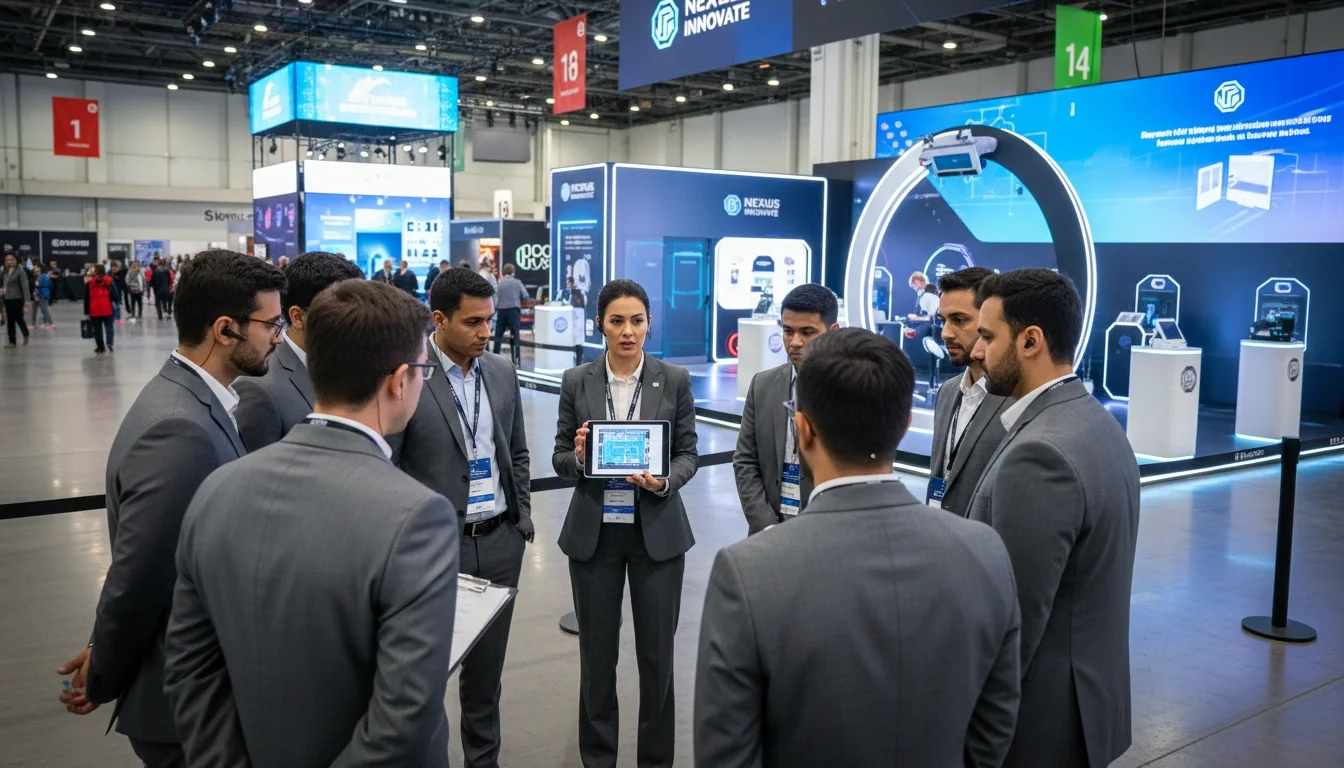
Professional event staff team briefing before an expo hall brand activation at a major conference
How Many Staff Do You Actually Need?
There is no universal headcount formula, but there are smart ratios to work from based on your booth footprint and expected traffic volume.
Staffing Ratios for a Conference Booth Activation
As a general starting point:
Small booth (10×10, low-to-moderate traffic): 2–3 staff — 1–2 brand ambassadors + 1 lead capture/PA
Mid-size booth (20×20, moderate traffic, demo element): 4–6 staff — 2–3 brand ambassadors + 1 demo specialist + 1 lead capture + captain
Large activation or experiential installation (400+ sq ft, high traffic): 8–15+ staff — multiple ambassador rotations + dedicated demo team + lead capture + PAs + on-site captain
For traffic flow specifically, a practical benchmark is one active brand ambassador for every 75–100 expected visitors per hour during peak periods. This keeps engagement quality high without creating queues that attendees abandon.
Scaling Up for Multi-Day Events
Google Cloud Next runs across multiple days. Staff fatigue is real, and it compounds. For multi-day activations, plan overlapping shift rotations so no single staff member is working a full expo floor for eight-plus hours. Maintaining the same energy level on day three as day one is only possible with structured breaks and reasonable shift lengths — and it requires booking enough total staff to support rotation.
Most experienced staffing agencies will help you build a multi-day roster. If a staffing partner proposes the exact same headcount for every day of a three-day conference with no rotation plan, that is a red flag.
What to Look for When Hiring Activation Staff for a Tech Conference
The criteria for hiring event staff at Google Cloud Next are more specific than at most events. Here is what actually matters.
Tech Fluency and Audience Awareness
Your staff do not need engineering degrees, but they do need to be comfortable in a tech-forward environment. They should be able to hold a conversation with a software architect without shutting down, navigate a tablet or interactive screen confidently, and understand at a basic level what your product does and why it matters to the people in the room.
Staff who are visibly uncomfortable with the subject matter or the professional audience undermine your brand's credibility instantly. Screen for this specifically when briefing and selecting your team.
Professionalism at the Enterprise Level
Google Cloud Next attracts enterprise buyers. Your booth staff are brand representatives in a professional context where first impressions carry real commercial weight. Presentation, communication style, and composure under a busy expo floor all matter.
Professional does not mean stiff or cold. It means polished, attentive, and capable of calibrating their energy to a B2B conversation — engaging without being performative, informative without being overwhelming.
Reliability and No-Show Protection
Multi-day, high-stakes activations have zero tolerance for staffing gaps. A no-show on the expo floor at Google Cloud Next — particularly during a morning keynote break when foot traffic peaks — is a direct, measurable loss. When evaluating a staffing agency, ask specifically about their fulfillment rate, their backup staffing protocol, and how they handle day-of issues.
At Eleven8, every booking includes a briefed backup for every eight staff as a standard. That means a qualified replacement is already prepared before the event starts — not recruited after someone calls out.
The Pre-Event Staffing Checklist: 8 Weeks to Event Day
Timing is the most common mistake brands make when staffing major conference activations. Below is a practical timeline built for an event at Google Cloud Next's scale.
6–8 Weeks Out
Confirm booth size, activation concept, and staff role needs
Contact your staffing agency and submit a request with event details, date range, and estimated headcount
Review staff profiles, bios, and any available portfolio information
Lock in your team — top-tier agencies deploy from an existing roster, not last-minute recruiting
3–4 Weeks Out
Confirm uniforms or branded attire requirements with your staffing partner
Draft your event brief: brand overview, product messaging, talking points, and engagement protocol
Confirm shift schedule and multi-day rotation plan
Share any technology or platform your demo staff will need to be trained on
1–2 Weeks Out
Conduct a staff briefing (virtual or in-person) covering brand voice, audience profile, lead capture process, and key messages
Confirm logistics: staff arrival time, check-in location at Moscone Center, parking or transit instructions
Verify backup coverage is in place and briefed
Event Day
Arrive early for a quick team walkthrough before doors open
Confirm lead capture tools are functioning and synced
Establish a clear communication channel between your on-site captain and your marketing team
Debrief at the end of each day — small adjustments between days dramatically improve overall results
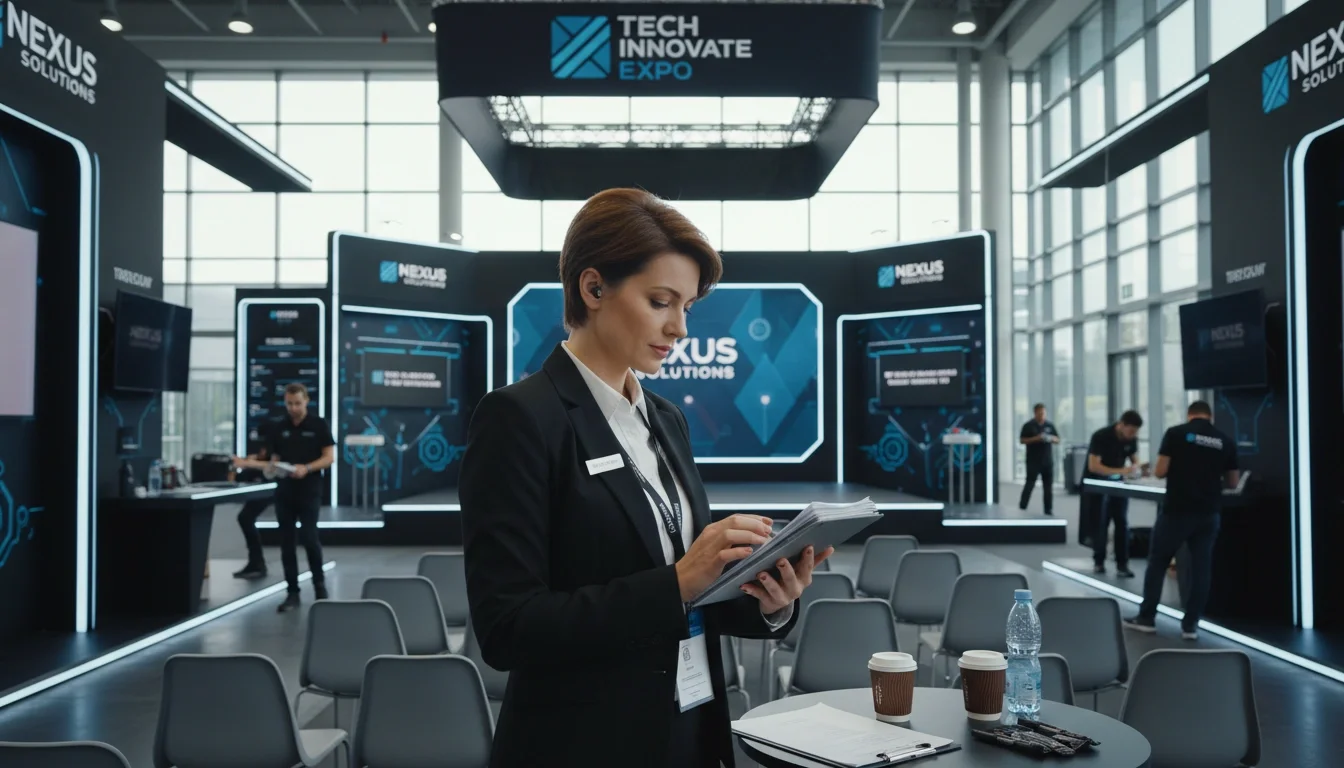
Brand activation team captain reviewing daily briefing notes on the expo floor before doors open
How to Brief Your Staff for Google Cloud Next
A staff briefing is not optional at a conference like Google Cloud Next. It is the difference between a team that represents your brand with confidence and a team that improvises their way through three days on the floor.
Brand Messaging and Product Knowledge
Your brief should cover: what your company does, who your ideal customer is, the one or two key messages you want every attendee to walk away with, and the most common questions your booth is likely to receive. Keep it concise. Staff should be able to deliver your core value proposition in 30 seconds and handle a follow-up question without freezing.
Share product demo materials in advance so your demo staff have time to practice, not just observe.
Audience Engagement Protocol
Set clear expectations for how staff should initiate conversations, qualify interest, handle skeptical or disengaged attendees, and transition someone toward a lead capture or a deeper conversation with a sales representative. This protocol does not have to be a rigid script — in fact, rigid scripts almost never work at a sophisticated professional conference — but it should give your team a clear framework and confident starting point.
Lead Capture and Reporting
Define how leads are captured, what information is required, and how data is synced or submitted at the end of each shift. Brief your lead capture staff specifically on this workflow before day one. A messy or incomplete lead list after a major conference is a failure that costs far more than the staffing investment.
Why San Francisco Staffing Requires Local Expertise
Sourcing event staff for a San Francisco conference from out of market is a risk that most brands underestimate. Local staff understand the city's logistical realities — transit routes to Moscone Center, parking constraints in SoMa, how to arrive on time in a city with notoriously variable traffic. They are also familiar with the Bay Area's tech culture, which helps enormously when engaging a tech-industry audience.
Eleven8 maintains an active roster of San Francisco event staff, including conference staff, brand ambassadors, and convention staff experienced in major Moscone Center events. When you book with a local staffing agency that has active San Francisco operations, you eliminate the reliability risks that come with deploying unfamiliar talent in an unfamiliar city.
How Eleven8 Staffs Tech Activations at Major Conferences
Eleven8 Event Staff is a nationwide event staffing agency with specific expertise in the tech and innovation vertical — staffing product demos, conference activations, trade show booths, and experiential installations for brands ranging from emerging startups to Fortune 500 technology companies.
Every Eleven8 booking includes a dedicated account manager who oversees your entire activation from initial inquiry through post-event wrap. Staff are selected from a pre-vetted roster — not recruited after you sign — and every booking includes briefed backup coverage as a standard feature, not an add-on.
For a major conference like Google Cloud Next, Eleven8 provides:
Brand ambassadors with professional, tech-competent communication styles
Registration and lead capture staff experienced in conference badge scanning and CRM integrations
Production assistants to manage operational logistics across multi-day events
Trade show staff with conference floor experience at major U.S. venues
On-site team captains to manage daily operations so your brand team stays focused on strategy
To get a quote for your Google Cloud Next activation, submit a staffing request here.