What Is an Event Production Assistant and Why Your Event Needs One
Every great event has one thing in common: an invisible army working behind the scenes to make everything run on time. The lights are positioned perfectly. Vendors arrive at the right loading dock. Supplies are replenished before anyone notices they're running low. Tables are flipped between sessions without a hitch. None of that happens by accident.
At the center of that behind-the-scenes operation is the event production assistant — one of the most underappreciated, and most essential, roles in the events industry.
Whether you're planning a corporate conference, a large convention, or an exclusive brand activation, understanding what a production assistant does — and when you need one — can mean the difference between a smooth event and an avoidable disaster.
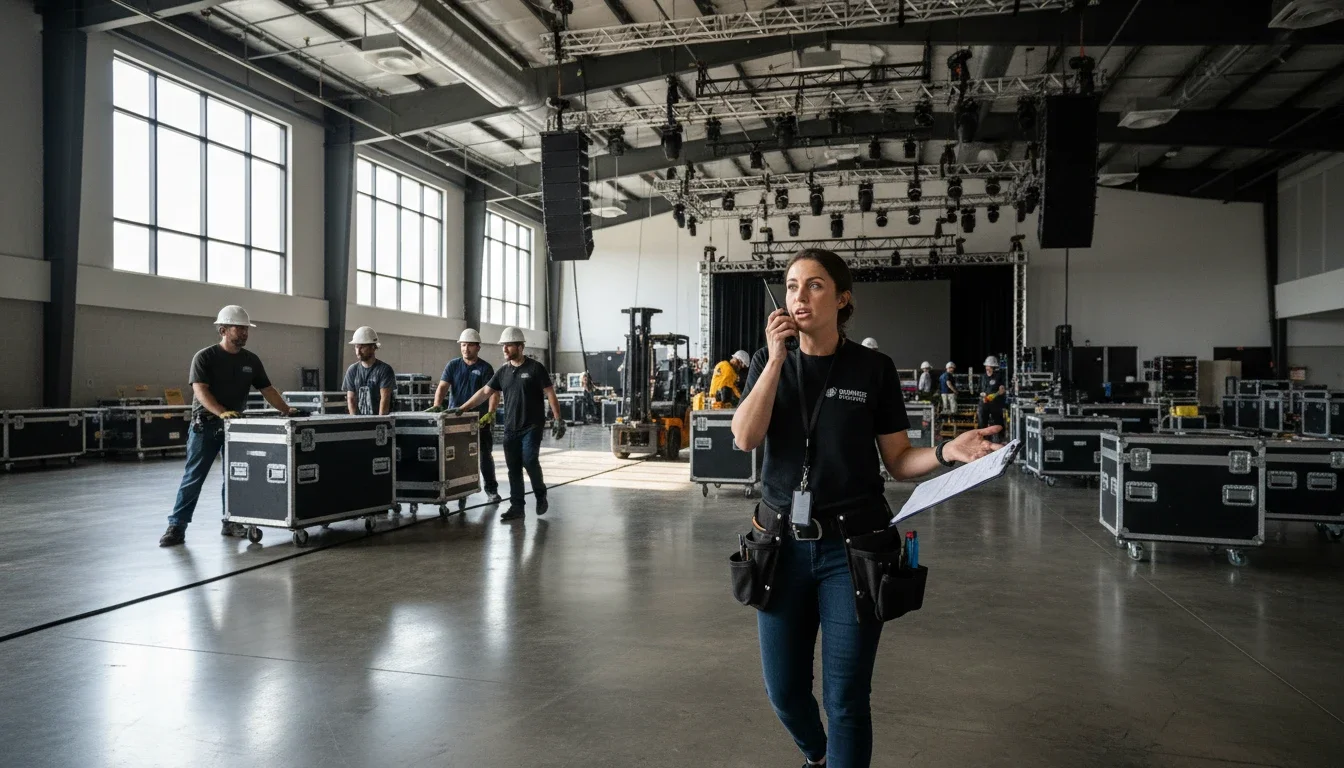
An event production assistant coordinating load-in at a corporate event venue
What Is an Event Production Assistant?
An event production assistant (commonly called an event PA) is a hands-on, operational support professional who assists event managers, producers, and coordinators before, during, and after an event. Their job is to handle the physical, logistical, and on-the-ground tasks that keep an event running on schedule.
Unlike planners who design the strategy, or coordinators who manage vendor relationships, production assistants are the ones executing the work. They carry equipment, direct deliveries, manage supplies, assist guests, and ensure every detail of the production environment stays organized and on track.
Think of them as the operational backbone of your event team — the people who make sure the decisions made in pre-production actually happen in real life.
Event Production Assistant vs. Film Production Assistant
The title "production assistant" appears in both the live events world and in film and television — but the roles are meaningfully different.
A film production assistant typically reports to an assistant director and handles tasks like distributing call sheets, running scripts to crew members, assisting with set preparation, and supporting talent logistics. Their work is tied to the rhythm of a production shoot.
An event production assistant, by contrast, is focused on the operational reality of a live event: load-in and setup, real-time guest and vendor support, supply management during the event, and post-event breakdown and strike. The live nature of events means event PAs need to be adaptable, fast-thinking, and comfortable making judgment calls without stopping to consult a supervisor.
Both roles are entry-level, but event PAs operate in a higher-pressure, more unpredictable environment.
How a PA Fits Into the Event Team Hierarchy
On most events, the team structure looks something like this:
Event Producer / Event Director — Sets the overall vision and strategy
Event Manager / Event Coordinator — Manages vendors, timelines, and logistics
Event Captain / Lead PA — On-site point of contact for the PA team
Event Production Assistants — Execute operational tasks throughout the event lifecycle
PAs report to the event captain or event manager and are deployed across the areas where physical or logistical support is needed most. On larger productions, multiple PAs are assigned to specific zones — staging, registration, catering, A/V, or VIP areas.
What Does an Event Production Assistant Do?
The scope of an event PA's responsibilities spans the entire event lifecycle. Here's a breakdown of what the role looks like across each phase:
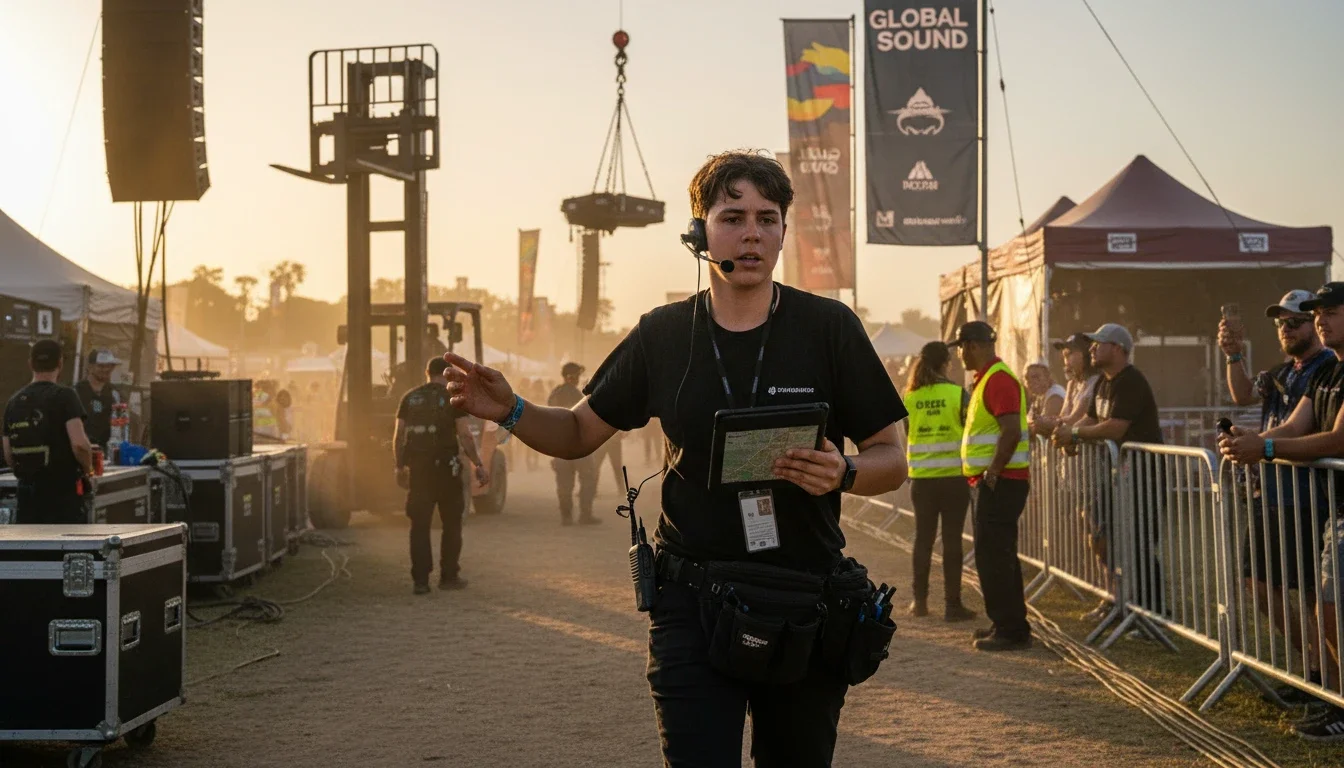
A production assistant handling on-site logistics during an event
Pre-Event Preparation and Load-In
Load-in is often the most physically demanding and logistically complex phase of any event. Production assistants are on the ground early, handling:
Equipment transport and positioning — Moving staging, A/V equipment, furniture, décor, and signage to designated areas
Vendor coordination — Directing suppliers and delivery teams to the correct loading areas and ensuring deliveries match the production schedule
Setup execution — Assembling booths, arranging seating, placing branded materials, and building step-and-repeat backdrops or branded installations
Pre-event walkthroughs — Doing final checks to confirm all zones are ready, supplies are stocked, and setup meets the approved layout
Production schedule support — Distributing run-of-show documents to crew and flagging anything that's off-schedule before doors open
At a well-run event, load-in is a tightly choreographed process. A skilled PA doesn't wait to be told what to do next — they identify what needs to happen and move on it.
On-Site Support During the Event
Once the event is live, the PA's role shifts from physical setup to dynamic operational support:
Guest assistance — Answering questions, providing directions, assisting with accessibility accommodations, and resolving minor guest issues before they escalate
Vendor management — Ensuring service providers are operating in their designated areas and that deliveries or restocking happen on time
Supply replenishment — Monitoring food, beverage, printed materials, and event supplies to ensure nothing runs dry during peak attendance
Space management — Keeping event areas clean, organized, and aligned with the approved layout as traffic moves through the space
Problem-solving — Responding quickly when the unexpected happens. The best event PAs are characterized by their ability to stay calm and effective when the run-of-show doesn't survive contact with reality
It's common for PAs in the live event world to be referred to as "runners" — a nod to the fact that they're constantly moving, adapting, and executing across multiple areas simultaneously.
Post-Event Breakdown and Strike
When the last guest leaves, the PA's work isn't over. The post-event strike is often as demanding as load-in:
Equipment breakdown — Dismantling staging, A/V equipment, signage, and branded installations
Rental coordination — Organizing items for vendor pickup and ensuring rental inventories are accounted for
Venue restoration — Returning the space to its original condition, including cleaning and removing all event materials
Load-out support — Helping the production team pack, load, and transport equipment efficiently
A thorough strike matters — especially when a venue has back-to-back bookings or when equipment costs are on the line.
Event Production Assistant vs. Event Coordinator: What's the Difference?
This is one of the most common points of confusion for clients who are staffing an event for the first time.
An event coordinator is primarily a planning and communication role. Coordinators manage vendor contracts, build timelines, communicate with clients, and ensure that all the pieces of an event are aligned leading up to execution. Their work is often heaviest in the weeks before the event.
An event production assistant is primarily an execution role. PAs are the ones physically making things happen on the ground — moving equipment, managing the space, and solving operational problems in real time. Their work is heaviest on the day of the event.
In practical terms: the coordinator builds the plan, and the PA helps execute it. Both roles are necessary for a well-run event — and they're most effective when they work in tandem.
On larger productions, a lead event captain bridges the two roles, managing the PA team on-site while staying in close contact with the coordinator or producer. At Elevate Event Staff, a dedicated event captain is assigned 24 hours before each event to serve as the primary on-site point of contact — giving clients a single, accountable lead for all ground-level operations.
What Types of Events Benefit Most from a Production Assistant?
The honest answer is: most events with more than a handful of moving parts benefit from having at least one PA. But some event types have a particularly strong need:
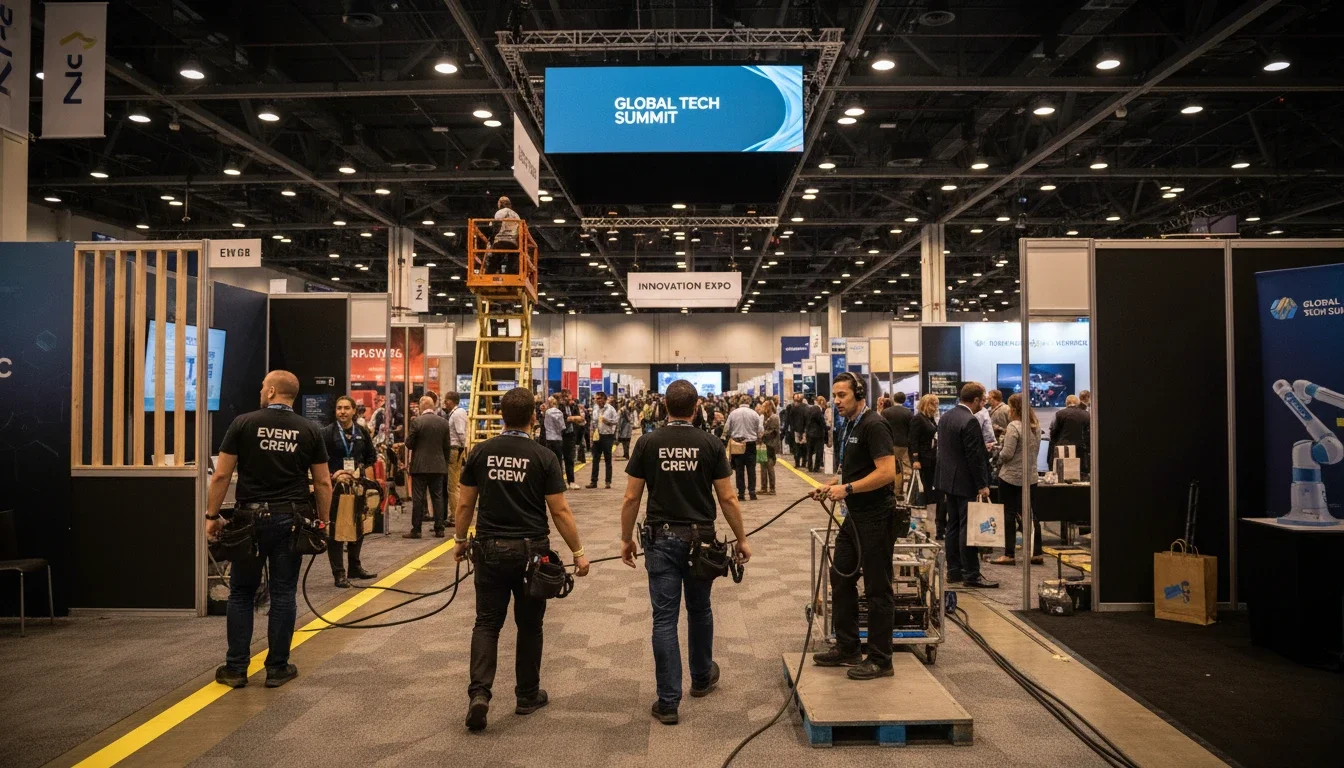
Event production assistants working at a convention and trade show
Corporate Events and Brand Activations
Corporate events — from product launches to company-wide conferences — involve complex logistics, tight schedules, and high-profile attendees who expect a flawless experience. Production assistants keep the operational machinery running so that event managers and coordinators can focus on the program itself.
For brand activations, PAs support the build and strike of branded installations, manage supplies for demonstrations, and ensure the activation space stays engaging and organized throughout the day.
Conventions and Trade Shows
Conventions are among the most PA-intensive events in the industry. The sheer scale of a multi-day convention — multiple exhibitor halls, thousands of attendees, complex load-in logistics, and non-stop operational demands — means that experienced PAs aren't just helpful; they're essential.
Elevate Event Staff's convention staffing team has supported events like KCON at the LA Convention Center, Comic-Con, and large-scale corporate expos, deploying PAs who understand the fast-paced rhythm of trade show environments.
Awards Shows and Red Carpet Events
Awards season events in Los Angeles demand a particular combination of physical capability and discretion. PAs at these events handle everything from step-and-repeat setup and red carpet installation to backstage logistics support — all while maintaining the composure and professionalism that high-profile environments require.
Private Events and Galas
At luxury private events, the standard for execution is uncompromising. Production assistants at galas, charity events, and high-end private parties ensure that the physical environment reflects the caliber of the occasion — from immaculate setup to seamless transitions between event segments.
The Key Skills and Qualities to Look for in an Event PA
Not everyone is cut out for the demands of event production. When evaluating candidates or working with a professional event staffing agency, look for these core qualities:
Physical stamina — PAs spend long hours on their feet, regularly lifting and moving heavy equipment. This isn't a desk role.
Adaptability — Events are dynamic environments. The best PAs adjust quickly when the plan changes, without losing their footing.
Proactive attitude — A great PA doesn't wait to be told what needs to happen next. They scan the environment, identify gaps, and move to fill them.
Strong communication — PAs interface with vendors, guests, and the production team simultaneously. Clear, professional communication prevents small issues from becoming big ones.
Reliability and punctuality — An event PA who arrives late isn't just inconveniencing the team — they're creating a chain reaction that can affect the entire event schedule. At Elevate Event Staff, PAs arrive 15 minutes before their scheduled call time, briefed and ready.
Professionalism under pressure — High-stakes events don't leave room for panic. PAs need to maintain composure when things go sideways, because they always do at some point.
When Should You Hire an Event Production Assistant?
Here's a practical framework for deciding whether your event needs PA support:
You likely need at least one PA if:
Your event has a load-in and strike that involves significant equipment or décor
You have multiple vendors arriving at staggered times that need on-site coordination
Your event lasts more than a few hours and requires supply replenishment or space maintenance
Your event manager or coordinator is focused on program logistics and can't personally handle ground-level operations
Guest volume is high enough that wayfinding and assistance needs are ongoing
You may need multiple PAs if:
You're running a multi-room or multi-zone event
You're hosting a convention, trade show, or multi-day activation
Your event involves complex branded installations or A/V setups
You have a VIP segment that requires separate operational support
As a general rule of thumb in the events industry: it's better to have one more PA than you think you need than to realize mid-event that you're a person short.
How to Find and Hire the Right Event Production Assistant
There are several ways to source event production assistants, and the right approach depends on your timeline, event size, and quality standards.
Freelance and staffing platforms can work for casual or low-stakes events, but vet candidates carefully. Event PA work is physically demanding and operationally complex — an unreliable PA on a high-profile event is a significant risk.
Working with a professional event staffing agency is the most reliable option for events where quality and consistency matter. A reputable agency pre-vets candidates, handles scheduling contingencies, carries appropriate insurance, and can scale your PA team up or down based on event scope.
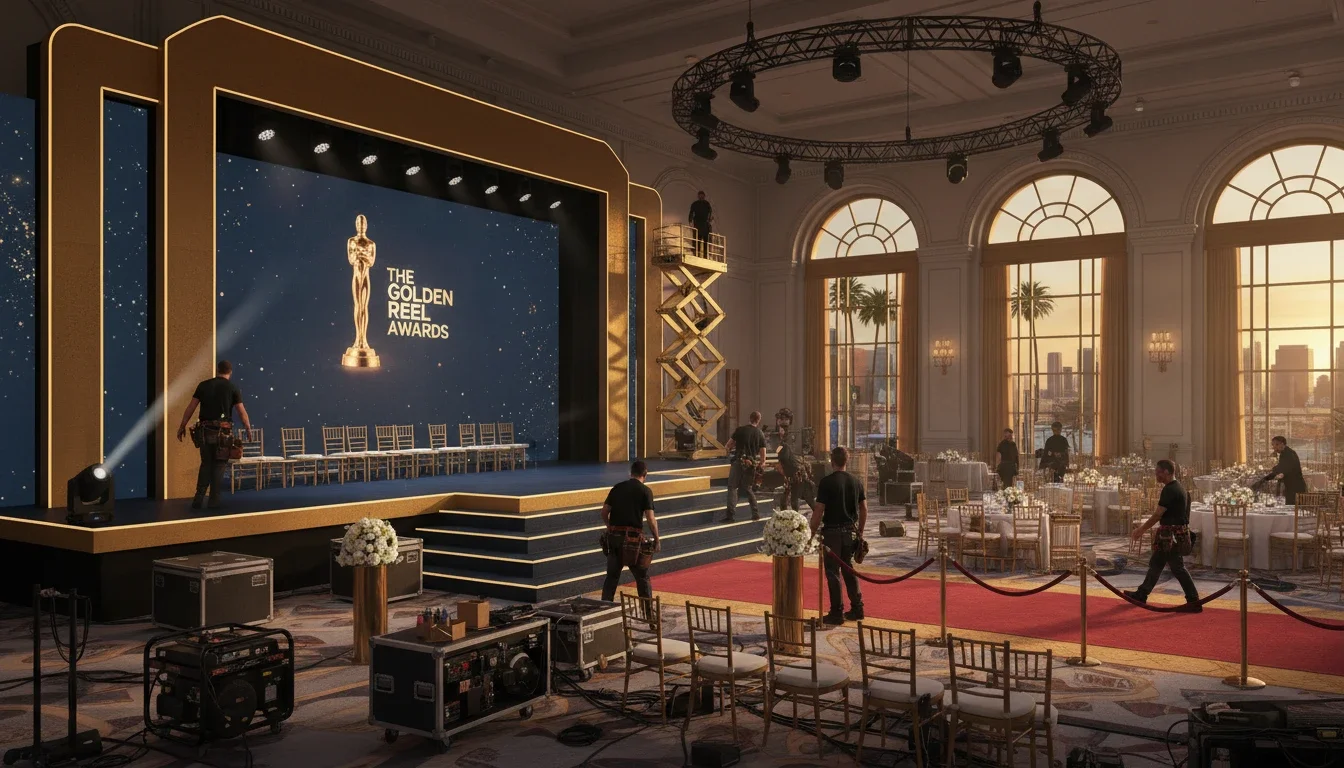
Event production assistants setting up for an awards ceremony in Los Angeles
At Elevate Event Staff, production assistants for hire in Los Angeles are selected from the top 3.5% of applicants — screened for professionalism, physical capability, and experience in live event environments. Every assignment comes with a dedicated event captain and 24/7 management support, so you're never managing logistics alone.
For events outside of LA, Elevate's nationwide event staffing services cover major markets across the United States, with a fulfillment network capable of deploying vetted production teams within 24 to 48 hours for most requests.
What to ask when hiring a PA through an agency:
Are your PAs pre-briefed with event-specific information before arrival?
What is your backup protocol if a PA becomes unavailable last-minute?
Do your PAs carry liability insurance?
How do you handle late arrivals or performance issues on-site?
The answers to those questions tell you a lot about an agency's operational standards.