Wheat State Marketing: Connecting With KS Ag Communities at the Fair
Kansas has earned its nickname. The Wheat State produces more wheat than any other state in the nation, and its agricultural identity runs far deeper than any single crop. Farming families, ranchers, grain elevator operators, agronomists, equipment dealers, and rural business owners are the backbone of the Kansas economy — and every September, a huge share of that community gathers in one place.
The Kansas State Fair, held annually in Hutchinson, is the largest single event in the state. It draws approximately 350,000 visitors over 10 consecutive days, filling 280 acres of fairgrounds with livestock exhibitions, commercial exhibits, entertainment, competitions, agricultural education, and more. For brands and marketers looking to reach Kansas agricultural communities with genuine impact, it represents one of the most concentrated and authentic opportunities in the Midwest.
But reaching this audience effectively requires more than a banner, a booth, and a box of branded pens. Kansas ag communities have high standards for the brands that show up in their spaces — and they can tell the difference between a company that understands their world and one that's simply passing through.
This guide breaks down how to approach the Kansas State Fair as a serious marketing platform, what the agricultural audience actually responds to, and what brands need to get right in terms of presence, engagement, and staffing.
Why the Kansas State Fair Is a Serious Marketing Opportunity
Not all state fairs are created equal. Some are primarily entertainment-focused, drawing urban and suburban families for rides and concerts. The Kansas State Fair is something different — it's a genuine agricultural institution with a history stretching back to 1913, and its audience reflects that.
Scale, Reach, and Visitor Demographics
The numbers are significant. Approximately 350,000 people pass through the Hutchinson fairgrounds during the 10-day run, which starts the Friday following Labor Day in September. The fairgrounds span over 70 buildings across 280 acres, accommodating livestock barns, commercial exhibit halls, a midway, performance venues, and agricultural education spaces.
The visitor mix is meaningfully different from a general consumer expo. Families from rural counties drive hours to attend. 4-H members and FFA participants bring livestock and compete in agricultural contests. Farmers and ranchers walk the commercial building floors evaluating equipment, inputs, and services. Agricultural professionals network with peers they may only see once or twice a year.
For brands targeting agricultural consumers, agribusiness buyers, or rural households, that demographic density is difficult to replicate at any other single event in Kansas.
The Agricultural Heartbeat of the Event
The Kansas State Fair is organized around agriculture in a way that shapes the entire culture of attendance. The Grand Drive livestock exhibition, 4-H and FFA competitions, crop displays, horticulture contests, and agricultural mechanics exhibits are not sideshows — they are the reason many attendees come.
The Kansas Department of Agriculture's Agriculture Marketing, Advocacy, and Outreach division actively uses the fair as a promotional and education platform, connecting with farmers, ranchers, and agribusiness operators across the state. The "From the Land of Kansas" program engages fairgoers while celebrating the contributions of Kansas agricultural producers.
This context matters for brands. Exhibiting at the Kansas State Fair means operating within a deeply agricultural cultural environment. That's an advantage — if the approach is right.
Understanding the Kansas Agricultural Audience
The single biggest mistake brands make when activating at agricultural fairs is applying a general consumer marketing playbook to an audience that operates by different social and professional norms.
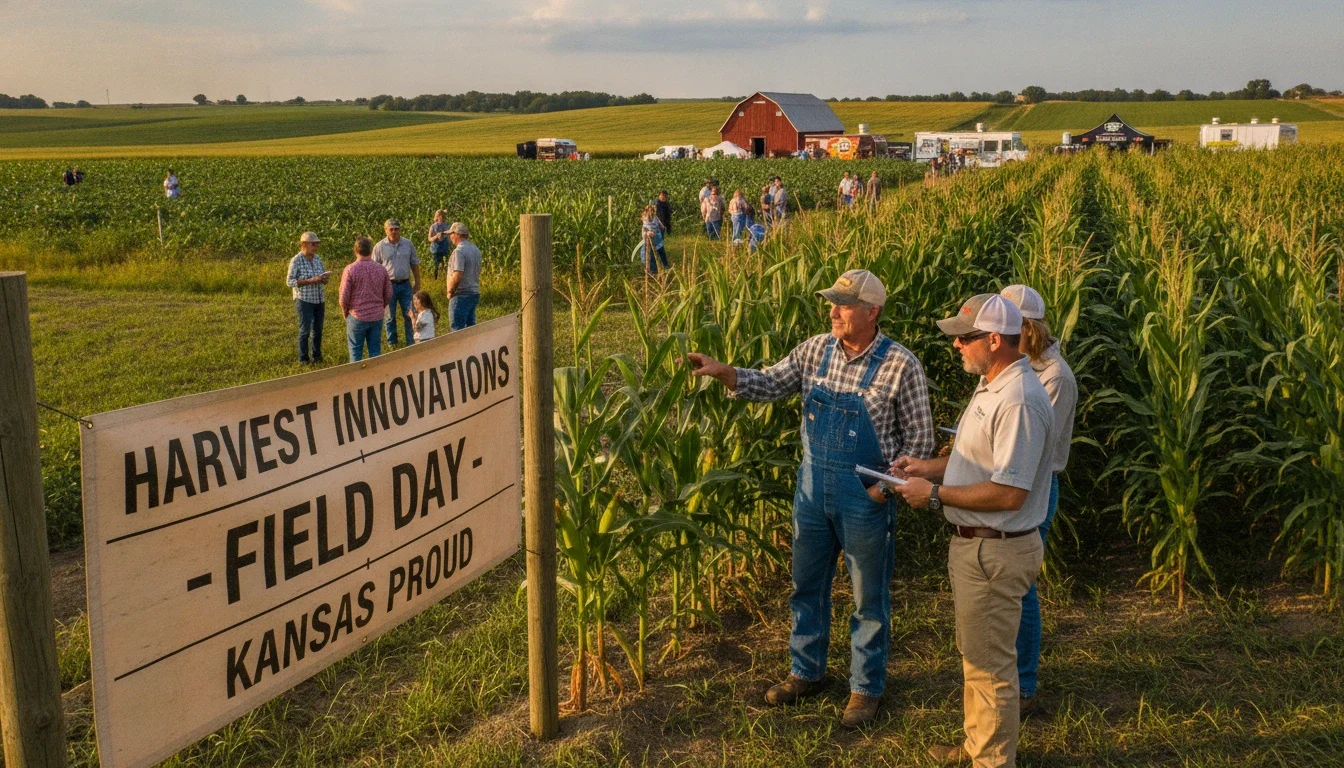
Kansas ag audiences respond to authenticity, expertise, and community credibility — not just brand messaging
Trust-First, Transaction-Second
Agricultural consumers — particularly farmers and ranchers — are experienced buyers who make significant financial decisions based on product performance and professional relationships. They've heard plenty of sales pitches. What earns their attention is demonstrated knowledge, genuine interest in their operation, and consistency over time.
At the fair, that translates to engagement built around conversation and education rather than promotional volume. A booth that opens with "What are you growing this year?" will outperform one that opens with "Have you heard about our product?" every time.
The brands that build loyal relationships with Kansas ag audiences are usually the ones that show up consistently — at the fair, at local extension events, through ag publications, and at farm bureau meetings — rather than the ones that make a single, high-spend appearance.
Community Credibility Matters More Than Brand Recognition
In agricultural communities, peer validation carries more weight than national advertising. Farmers talk to other farmers. Ranchers trust the recommendations of neighbors who've used a product through a full season. Agribusiness professionals evaluate vendors based on how they're known in the community.
This means brand presence at the Kansas State Fair is only partly about direct consumer reach. It's also about signaling that your brand is part of the Kansas agricultural ecosystem — that you show up where farmers show up, understand what producers care about, and have a relationship with the community that extends beyond the transaction.
The Influence of Farmers, Ranchers, and Agribusiness Networks
Kansas agriculture is organized around a dense network of relationships: county extension offices, farm bureaus, cooperative associations, commodity groups like the Kansas Wheat Commission, FFA chapters, and local co-ops. These networks amplify or mute brand perception at the community level.
Earning positive recognition within these networks — through educational partnership, sponsorship of competitions, or simply professional, knowledgeable representation at the fair — can have reach far beyond what direct attendance numbers suggest.
Brands That Win at the Kansas State Fair
Not every brand category is equally suited to the Kansas State Fair, but the range of brands that can build a meaningful presence there is broader than most marketers assume.
Agricultural Inputs and Equipment
This is the most natural fit. Seed companies, fertilizer and crop protection brands, equipment manufacturers, and precision agriculture technology providers have a built-in audience of buyers actively evaluating products. The commercial exhibit halls are full of brands in this space, and serious buyers spend significant time on the floor.
Success here requires knowledgeable staff who can engage in substantive conversations about agronomics, equipment specs, or technology ROI — not just hand out brochures.
Food, Beverage, and Consumer Products
Consumer packaged goods brands — particularly food and beverage products with agricultural connections — have strong reach at the fair's general consumer audience. Sampling activations, cooking demonstrations, and product tastings perform well across demographic segments and are a proven way to drive trial at scale.
Brands with a "made in Kansas" or "supports American farmers" story have a built-in advantage with the agricultural audience.
Financial and Insurance Services
Farm lenders, crop insurance providers, equipment financing companies, and rural bank brands regularly exhibit at the Kansas State Fair and generate meaningful leads. Ag audiences are active financial decision-makers, and the fair environment is one where they have time to stop, listen, and ask questions.
Technology and Precision Agriculture
Drone technology, soil sensing systems, farm management software, and other precision ag tools are increasingly prominent at state fairs as agricultural technology adoption accelerates. Kansas farmers are pragmatic early adopters when the ROI case is clear — and a live demonstration at the fair is one of the most effective ways to make that case.
Lifestyle and Outdoor Brands
Brands in western wear, outdoor apparel, hunting and fishing equipment, ATV and utility vehicle categories, and home and garden have a natural match with the Kansas State Fair audience. Rural lifestyle brands that reflect the values and aesthetics of Kansas communities can build strong brand affinity through a well-executed fair presence.
How to Plan a Successful Kansas State Fair Activation
Choosing the Right Space: Commercial Buildings vs. Outdoor Footprint
The Kansas State Fair offers different exhibit environments, each with distinct audience flow characteristics. The climate-controlled commercial buildings draw high traffic from visitors seeking relief from the September heat while browsing products and services. Outdoor exhibit space is better suited for equipment demonstrations, vehicle displays, or experiential builds that benefit from an open area.
Brands should align space selection with their activation format. A product sampling campaign runs better in a high-traffic indoor corridor. A tillage equipment demonstration clearly belongs outdoors. Understanding the fairgrounds layout before committing to a space will prevent a mismatch between format and environment.
For exhibit and sponsorship opportunities, contact the Kansas State Fair partnership team at kansasstatefair.com.
Exhibit Design for Agricultural Audiences
Practical and purposeful design outperforms elaborate spectacle with agricultural audiences. A clean, organized booth that makes it easy to understand what a product does and why it matters will hold attention longer than a flashy display that prioritizes aesthetics over information.
That said, quality matters. Agricultural professionals visiting a commercial exhibit are evaluating not just the product but the company behind it. A professional, well-maintained booth signals that the brand is serious about the market and invested in a long-term relationship with Kansas producers.
Physical comfort counts, too. Sitting areas, shade, and cold water at outdoor exhibits are practical touches that can extend dwell time and open the door to longer conversations.
Sampling, Demonstrations, and Hands-On Engagement
The most effective activations at agricultural fairs put products in people's hands. Live product demonstrations, side-by-side comparisons, and working equipment displays give visitors a concrete experience that outperforms verbal or printed claims every time.
For consumer products, on-site sampling is a powerful conversion driver. For agricultural technology, live demonstrations against real conditions (soil samples, crop data, field simulations) create credibility that no brochure can replicate.
Why Product Demos Work Especially Well With Ag Audiences
Farmers and ranchers are empirical by nature. They make decisions based on evidence from their own fields and from trusted peers. A demonstration that shows a product working — rather than just claiming to work — bypasses the skepticism that marketing messaging often triggers. Hands-on engagement transforms a booth visit into a meaningful brand experience and dramatically increases the likelihood of post-fair follow-up.
This is why the quality of product demo staff is so consequential at agricultural events. Staff who can explain agronomic relevance, answer technical questions confidently, and adapt their communication style to a range of visitor types — from experienced producers to curious younger attendees — are a direct performance multiplier for the activation.
The Staffing Dimension: Why Your Team Makes or Breaks the Activation
The Kansas State Fair runs for 10 consecutive days. That is not a short-format pop-up event. Sustaining consistent, high-quality visitor engagement across the full fair run requires a staffing strategy that most brands underestimate.
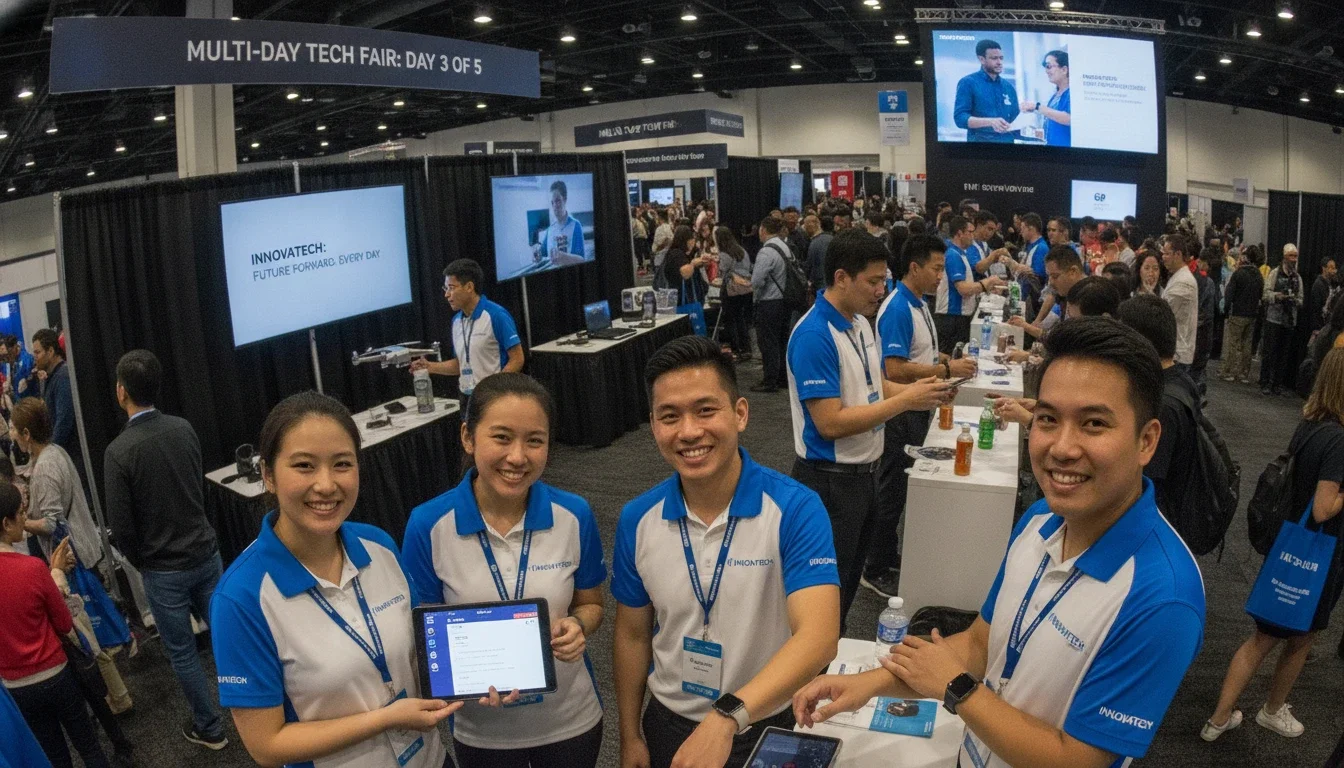
Professional brand ambassadors and product demo staff sustain engagement across multi-day fair activations where consistency is as important as enthusiasm
What Brand Ambassadors Look Like in an Ag Context
Brand ambassadors working in agricultural fair environments need a different profile than those staffing a downtown consumer activation or a tech conference. With Kansas ag audiences, the most effective representatives share a few characteristics:
Genuine familiarity with agricultural contexts — they don't have to be farmers, but they need to understand the basic landscape of farming, ranching, and rural life well enough to speak credibly and listen intelligently.
Conversational intelligence — the ability to read a visitor's level of expertise and adjust the conversation accordingly, whether that person is a veteran wheat farmer or a 4-H student attending their first fair.
Patience and endurance — a 10-day event with multi-hour shifts demands physical stamina and consistent professionalism, day eight as much as day one.
Brand alignment — representing an agribusiness or rural lifestyle brand requires staff who can authentically reflect those values, rather than feeling out of place in the environment.
Well-briefed brand ambassadors who genuinely engage with visitors will generate more leads, more data captures, and more memorable impressions than a larger number of disengaged or unprepared staff.
Briefing Staff on Agricultural Audience Sensitivities
Pre-event briefing is especially important in agricultural environments. Staff should understand:
The core values of the target audience (self-reliance, practicality, community loyalty, skepticism of corporate messaging)
The specific product or service they're representing and why it matters to a Kansas farmer or rancher
How to open conversations that feel genuine rather than scripted
What questions can they answer, and what questions should be escalated to a technical expert
The competitive landscape and what objections or comparisons might come up
A brand that invests in thorough staff briefing will see a measurable difference in booth engagement quality versus one that hands out a one-pager on arrival day.
Pop-Up Staff, Demo Staff, and Coverage at Scale
A 10-day fair presents coverage challenges that a weekend activation does not. Brands need enough pop-up staff to maintain full coverage across peak traffic days (weekends and opening day are typically the highest-traffic periods) while also managing the mid-week lower-volume days strategically.
Working with a professional staffing partner who can provide trade show staff and product demonstrators with genuine fair-environment experience — and who can flex coverage levels by day — prevents the common problem of either overstaffing slow days or running short on high-traffic days.
Backup Coverage and Fulfillment at a 10-Day Event
At an event spanning 10 days, no-shows are not a hypothetical risk — they are a near-certainty at some point during the run. A single staffing gap on a busy Saturday can mean hundreds of missed visitor interactions and a materially worse activation outcome.
Working with an agency that builds backup coverage into every booking — rather than scrambling reactively when someone calls out — is a basic operational requirement for a fair of this scale. Eleven8 includes a brief backup for every eight staff on every booking, at no additional charge, precisely because events of this length and scale require proactive fulfillment guarantees rather than reactive problem-solving.
Integrating Fair Activations Into a Broader Kansas Marketing Strategy
The Kansas State Fair is not just a single touchpoint — it's the most visible moment in a year-round agricultural marketing calendar. Brands that treat it as part of a longer relationship-building strategy with Kansas ag communities will outperform those that treat it as a standalone event.
Before the Fair: Building Anticipation in KS Ag Communities
Start reaching Kansas agricultural audiences before the fair opens. Regional ag media — farm publications, county extension newsletters, ag radio programs, and the Kansas Wheat Commission's Wheat Scoop feature — are channels that reach the exact audiences who show up at the fair. A pre-fair presence in these channels signals that your brand understands the Kansas ag ecosystem and isn't just parachuting in for 10 days.
Social media targeting in Kansas agricultural counties, particularly on Facebook and YouTube where rural audiences over-index, can drive fair-week booth traffic with pre-announced demonstrations, giveaways, or special events.
The Kansas Department of Agriculture's "From the Land of Kansas" program and other state agricultural promotion initiatives are worth exploring as partnership opportunities for brands with relevant product stories.
At the Fair: Capturing Data and Growing Your List
A brand activation without a data capture strategy is a missed opportunity. Every visitor conversation should have a pathway to follow-up — whether through a contest entry, an email list sign-up, a product sample request form, or a direct sales inquiry.
Staff should be briefed on how to naturally transition engaged conversations toward data capture without making fairgoers feel like they're being processed. The key is making the value exchange clear: in exchange for contact information, the visitor gets something useful — a product sample, access to a resource, or entry into a meaningful giveaway.
Check-in staff and registration personnel can support structured data capture at higher-traffic exhibits, ensuring nothing gets missed during peak periods.
After the Fair: Following Up With Rural and Agricultural Audiences
Agricultural buying cycles are longer than consumer product cycles. A farmer who takes your brochure in September may not make a buying decision until planting season in March. That's not disinterested — that's how agricultural procurement works.
Follow-up communication should reflect that timeline. Immediate post-fair outreach should be light and value-focused (a thank-you, a resource, a product sample). Deeper engagement — case studies, technical comparisons, ROI analysis — should come closer to decision-making windows.
Regional agricultural media placements in the months following the fair can reinforce fair-week impressions and sustain brand presence through the off-season.
Key Operational Considerations for Kansas State Fair Exhibitors
Logistics, Permits, and Fair Policies
The Kansas State Fair has specific exhibitor requirements covering booth setup timelines, vehicle access, utility connections, noise levels, product sampling regulations, and promotional activity rules. Brands should review the official exhibitor guidelines at kansasstatefair.com well in advance and build setup and teardown time into the overall budget and staffing plan.
Sampling activities, in particular, may require coordination with the fair administration depending on product category and distribution format. Food product sampling typically involves additional food safety certifications. Brands handling alcohol tastings need to confirm state and fair-specific permitting requirements.
Timing Your Presence Across the 10-Day Run
Not every day of the fair carries equal traffic weight. Opening weekend and the following weekend are typically the highest-attendance days, drawing the broadest cross-section of fairgoers. Weekdays — particularly early in the week — tend to attract more focused, purpose-driven visitors: agricultural professionals, exhibitors moving between booths, educators, and serious buyers with specific intent.
A staffing strategy that mirrors this traffic pattern — higher coverage on high-traffic days, more technically oriented staff mid-week — can improve both the efficiency and the quality of visitor engagement across the full run.
Working With a Staffing Partner Who Knows Event Execution
A brand's investment in space, design, and product collateral can be undermined by staffing that doesn't perform. Brands entering the Kansas State Fair for the first time, or scaling up their presence from previous years, benefit from working with anevent staffing agency that has experience executing multi-day, multi-shift activations with rigorous fulfillment standards.
The right staffing partner will handle briefing coordination, shift scheduling, real-time coverage management, and post-event performance feedback — leaving the brand team free to focus on visitor experience and business outcomes rather than workforce logistics.
Eleven8 Event Staff serves Kansas City and the broader Kansas market, deploying brand ambassadors, product demo staff, pop-up staff, trade show staff, and event support personnel to activations of all sizes. With a 101.8% fill rate and built-in backup coverage on every booking, Eleven8 is built for events where consistency over a long run matters as much as performance on day one.
Get a staffing quote for your Kansas State Fair activation →
Closing Thoughts
The Kansas State Fair isn't just a state institution — it's one of the most direct access points to the agricultural communities that define Kansas identity and economic life. For brands that understand how to show up authentically, engage meaningfully, and staff their presence professionally, it's a marketing opportunity with reach and relationship depth that few other events in the Midwest can match.
The Wheat State's agricultural communities are not a hard audience to reach. But they are a discerning one. They respond to brands that demonstrate a genuine understanding of their world, show up consistently over time, and put knowledgeable, personable people in front of them at the moments that matter.
Get those elements right, and the Kansas State Fair becomes more than an event line item — it becomes the cornerstone of a marketing relationship that compounds year after year.