San Antonio Trade Show Staffing Guide: From Booth Roles to Hiring an Agency
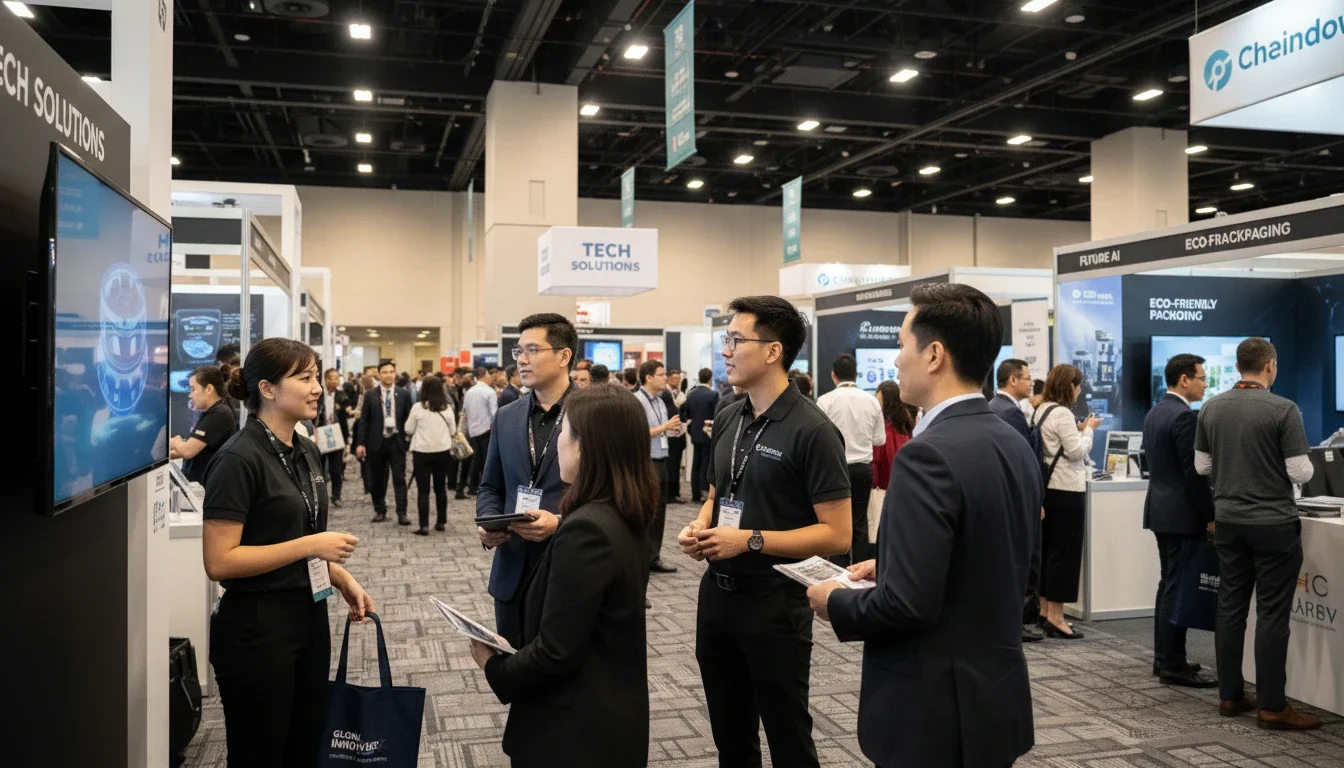
Professional event staff engaging attendees on a busy trade show floor
Your booth display might be flawless. Your signage might stop people in the aisle. But if the people staffing that booth aren't prepared, engaging, and in the right roles, none of it matters.
Trade shows are won or lost at the human level — and nowhere is that more true than in San Antonio, one of Texas's most active convention markets. Whether you're exhibiting at the Henry B. González Convention Center for the first time or you've done dozens of shows across the city, getting your staffing strategy right is the single most controllable factor in your results.
This guide covers everything you need to know: how many people you need, which roles to fill, how to prepare them, and when it makes sense to work with a professional trade show staffing agency in San Antonio.
Why San Antonio Is a Major Trade Show Market
San Antonio consistently ranks among the top convention destinations in the United States — and for good reason. The city offers a combination of world-class infrastructure, an accessible airport, walkable downtown amenities, and a growing economy that spans military, healthcare, technology, government, and tourism.
Key Venues: Henry B. González Convention Center and Beyond
The Henry B. González Convention Center is the heart of San Antonio's trade show scene. Located in the downtown core — steps from the iconic River Walk — it offers approximately 514,000 square feet of contiguous exhibit space across five halls. The venue is currently undergoing a $2.5 billion expansion, expected to be completed in 2028, which will increase its capacity further.
Other major venues include:
The Alamodome — a 65,000-seat multi-purpose facility that hosts large-scale conventions and sporting events
Freeman Coliseum — a historic venue in the east side frequently used for consumer expos and rodeo-adjacent shows
JW Marriott San Antonio Hill Country Resort & Spa — popular for corporate conferences and smaller trade events
Top Industries & Show Types in San Antonio
San Antonio's economic mix shapes its trade show calendar. Exhibitors most commonly encounter shows in:
Healthcare and military technology
Agriculture and ranching (including CattleCon/NCBA Trade Show)
Government and defense contracting
Tourism, hospitality, and food service
Construction and real estate
Knowing the audience profile of your specific show helps you hire staff who can connect authentically with attendees — a critical factor when evaluating candidates.
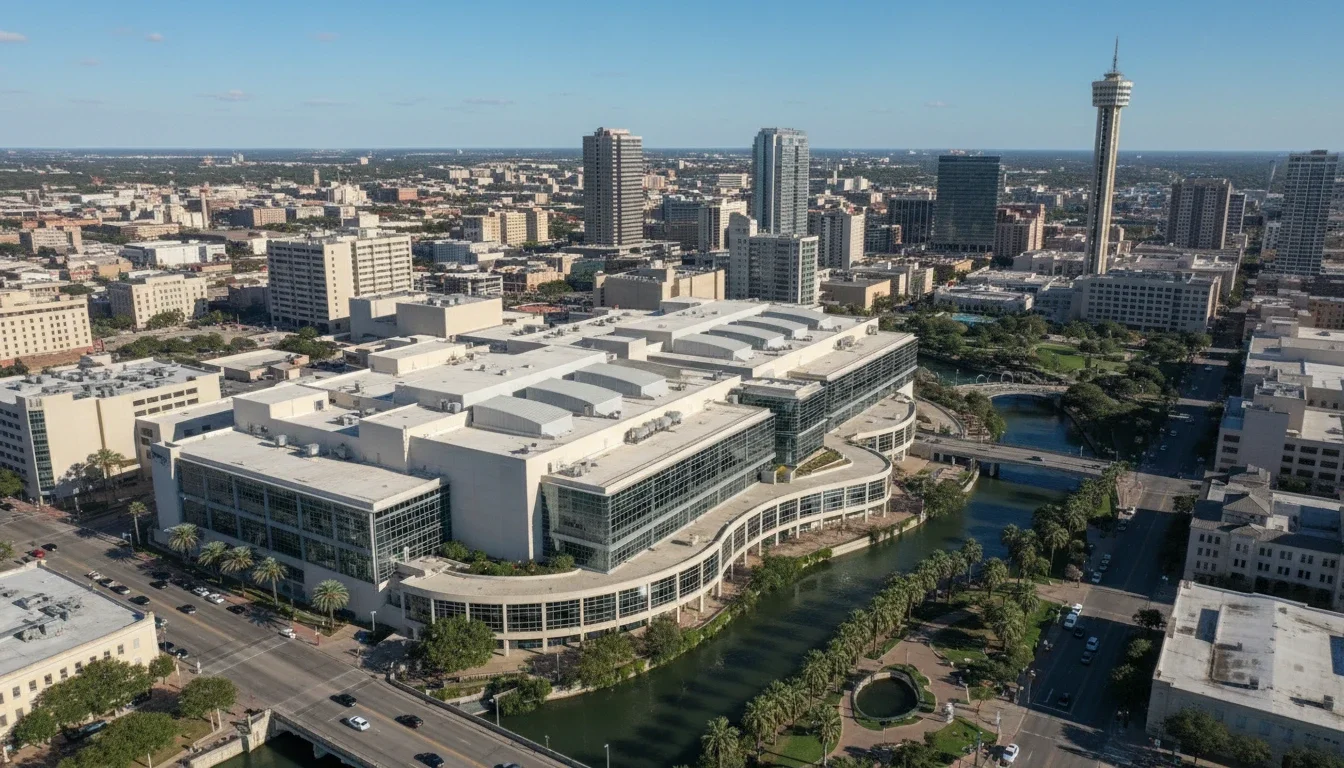
Aerial view of the Henry B. González Convention Center in downtown San Antonio
How Many Staff Does Your Trade Show Booth Need?
One of the most common exhibitor mistakes is over- or understaffing a booth. Too many people create a crowded, unapproachable feel. Too few means leads slip away during busy periods.
The 50 Square Feet Rule
A widely-cited industry guideline is to allocate at least 50 square feet of booth space per staff member. For a standard 10×10 booth (100 sq ft), that means a maximum of 2–3 staff members actively working the floor at any one time. For a 20×20 booth (400 sq ft), you can comfortably staff 6–8 people.
This rule keeps your booth from feeling claustrophobic and ensures each staffer has enough room to engage visitors without crowding them out.
Calculating Interaction Capacity
Beyond booth size, think in terms of interaction hours. If your show runs 8 hours per day across 3 days, and you have 3 staff members, you have 72 total staffed hours. If each staffer realistically engages 3–5 visitors per hour, your interaction capacity is 216–360 total qualified conversations across the show.
Set a lead target before the show and work backward from that number to determine your minimum staffing requirement.
The 5 Core Trade Show Staff Roles
Not everyone on your booth team should be doing the same thing. A high-performing trade show team is built around complementary roles that cover every step of the attendee journey.
1. Hosts / Greeters
Hosts are the face of your booth. Their job is to create a welcoming first impression, introduce visitors to your space, and direct them to the right person or area based on their interest. The quality of your greeter has an outsized impact on how many people step into your booth versus walk past.
For San Antonio shows — where hospitality and warmth are part of the local culture — hosts who lead with genuine friendliness (rather than a scripted pitch) tend to perform best.
2. Crowd Gatherers
Crowd gatherers work outside the booth perimeter, typically in the aisle. Their role is to stop foot traffic, spark curiosity, and direct qualified visitors toward the booth. They might offer a small promotional item, invite attendees to a demo, or simply start a conversation.
This role is especially valuable at large conventions like those hosted at the Henry B. González Convention Center, where a booth can get lost in hundreds of competing exhibitors.
3. Product Presenters & Demonstrators
Presenters deliver live product demonstrations, run scheduled presentations, and keep any tech, video, or interactive displays running. They need to know your product deeply and be comfortable speaking in front of small groups.
If your in-house team doesn't have someone comfortable in this role, product demonstrators from a local staffing agency can be trained on your offering in advance — often cutting down on presentation prep time while raising the energy level of your demo.
4. Lead Capture & Sales Staff
These are your closers. While other roles funnel people into the booth and keep them engaged, lead capture staff qualify prospects, gather contact information, and advance the conversation toward a sale or follow-up. They should be fluent in your lead retrieval system — whether that's a badge scanner, a form, or a CRM app.
The CEIR (Center for Exhibition Industry Research) has found that 85% of an exhibitor's success depends on booth staff performance. Lead capture is where that metric becomes tangible.
5. Activity Coordinators
If your booth includes a game, raffle, contest, or interactive activation, an activity coordinator manages it. They keep the energy up, ensure the activity runs smoothly, distribute prizes, and use the activity as a bridge to a sales conversation.
This role also helps draw a crowd, which in turn makes your booth look popular and drives organic foot traffic.
Internal Team vs. External Staffing Agency — Which Is Right for You?
Most exhibitors use some combination of internal team members and external hires. The key is knowing when each makes sense.
When to Use Your Internal Team
Your own employees are the right choice when:
The product requires deep technical knowledge that's hard to transfer quickly
Relationship continuity matters (key accounts or repeat attendees who know your team)
Executive presence is needed for high-level conversations
Your budget is constrained, and you have willing, qualified internal staff available
When to Hire a Trade Show Staffing Agency in San Antonio
External staffing is worth serious consideration when:
You need more bodies than your internal team can supply without depleting other operations
Your show is in San Antonio, but your company is headquartered elsewhere — local staff reduces travel costs and brings regional familiarity
You need specialized roles (bilingual staff, product demo specialists, crowd gatherers) not available in-house
You want backup coverage — agencies can replace no-shows quickly, something an internal-only team cannot do
You're exhibiting at multiple shows simultaneously and need to scale
A professional agency like Eleven8 Event Staff maintains a pre-vetted, trained roster and can deploy staff across Texas markets — including Houston, Dallas, and Austin — so you're working with the same agency across your full show schedule.
What to Look for in a San Antonio Trade Show Staffing Agency
Not all staffing agencies are equal. When evaluating agencies for your San Antonio show, ask about the following:
Vetting and Hiring Standards
How selective is the agency's hiring process? Agencies that accept nearly every applicant produce inconsistent results. Look for agencies that conduct background checks, live interviews, reference checks, and skills assessments before placing a candidate.
Eleven8, for example, accepts only the top 3.5% of applicants through an 8-step hiring process — so the staff you receive have already been filtered for professionalism, presentation, and reliability.
Fulfillment Reliability and Backup Coverage
The most common complaint about event staffing agencies is no-shows. Ask any agency you're considering: What is your fill rate, and what backup coverage do you provide?
A reputable agency should offer built-in backup staff for every booking — ideally one backup briefed and ready for every 8 staff members — so a last-minute cancellation doesn't leave your booth undermanned during peak hours.
Local Market Knowledge
A San Antonio-based or Texas-market-experienced agency brings logistical advantages: familiarity with the Henry B. González Convention Center's layout and load-in procedures, knowledge of local labor dynamics, and an existing roster of staff who know the city.
When evaluating agencies, also ask whether they offer a dedicated account manager per booking — a single point of contact who manages coordination from initial inquiry through post-event wrap-up. This eliminates the confusion of dealing with shared inboxes or rotating representatives.
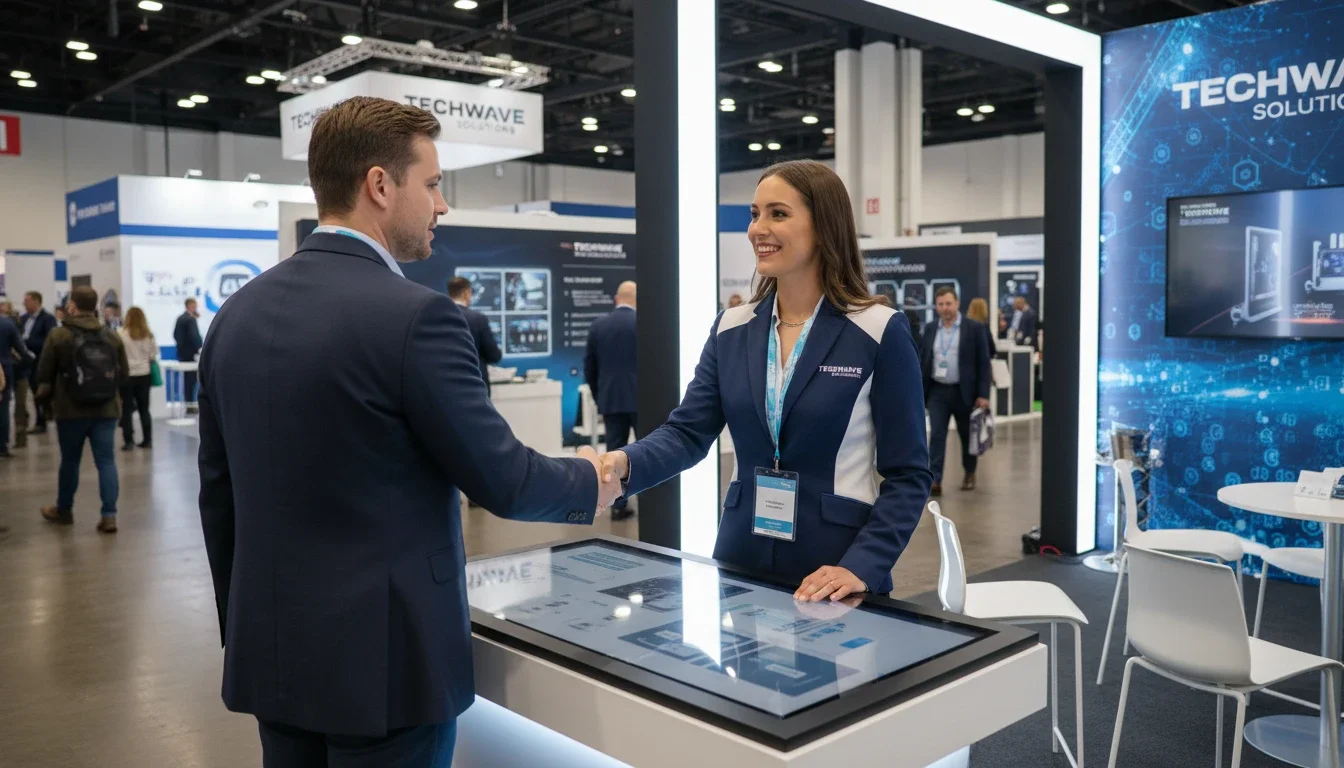
Brand ambassador in branded attire greeting a trade show attendee at a booth
How to Prepare Your Trade Show Staff
Whether you're using internal team members, hired temps, or a mix of both, preparation is what separates a good showing from a great one.
Pre-Show Briefing Essentials
Hold a pre-show meeting — in person or via video — at least 48 hours before doors open. Cover:
The show's audience profile and what they care about
Your booth layout, demo areas, and traffic flow
VIP attendees to watch for and how to handle them
Lead capture process and the system being used
Shift schedule, break rotations, and where to go for support
What not to do: avoid phones, avoid eating in the booth, avoid sitting when traffic is live
Brand Immersion and Product Knowledge
External staff need to pass as part of your team. Provide them with your website, core marketing materials, product one-pagers, and brand guidelines in advance. If they're giving a scripted demo or presentation, run practice sessions before show day.
For complex products, create a quick-reference sheet they can consult during setup. The more comfortable staff are with your offering, the more naturally they'll connect with attendees.
Dress Code, Uniforms, and Presentation
First impressions are visual. Establish your dress code in writing and confirm it with all staff — including external hires — before the show. Options include:
Branded uniforms or shirts supplied by you
A specified professional attire standard (e.g., business casual in navy and white)
Specific footwear and grooming guidelines
Most professional staffing agencies will communicate your dress code to their staff as part of the booking confirmation, but always verify this directly with your agency contact.
Day-Of Trade Show Staff Management
Even the best-prepared team needs active management on show day. The show floor is loud, fast-paced, and unpredictable.
Scheduling Shifts and Breaks
Post your full shift schedule inside the booth's storage or prep area so every team member can reference it. A typical 8-hour show floor day should include:
A 15-minute break for every 2 hours of floor time
Staggered breaks so the booth is never understaffed
A designated off-floor zone where staff can decompress between engagements
The goal is to keep every staffer fresh and 'on' when they're on the floor. Fatigue is visible to attendees and quietly damages conversion rates.
Managing Lead Capture
Designate one person as the lead capture lead — responsible for ensuring the badge scanner or lead form is being used consistently and that follow-up notes are being captured in real time.
End each show day with a brief team debrief: what worked, what felt off, what VIPs came through, and any issues with the lead system. These daily check-ins prevent small problems from becoming show-day disasters.
Real-Time Problem Solving
Things go wrong. A staff member calls out sick. The demo tech malfunctions. Foot traffic surges unexpectedly during a lunch break.
If you're working with a staffing agency, this is where their on-call support earns its value. An agency with 24/7 event-day operations management can resolve a no-show in real time — dispatching a backup staff member who's already been briefed on your event.
Post-Show Evaluation and Follow-Up
The show isn't over when the floor closes. How you evaluate and follow up determines the ROI of your staffing investment.
Within 24 hours of the show:
Collect feedback from every staff member (short survey or verbal debrief)
Review lead counts against your pre-show targets
Identify which staff performed best and document them for future bookings
Note any issues — booth layout, lead capture, visitor flow — to address at the next show
If you used an external agency, request post-event performance data if they track it. Agencies that rate and track individual staff member performance (as opposed to treating every shift the same) are significantly more valuable for repeat engagements.
How to Book Trade Show Staff in San Antonio
The timeline for booking trade show staff matters. Here's a general guide:
8–12 weeks out: Confirm your exhibitor space, determine booth size, and estimate your staffing needs by role
6–8 weeks out: Contact agencies, request quotes, and review available staff profiles
4–6 weeks out: Confirm your booking, select preferred staff, and submit uniform/dress code requirements
1–2 weeks out: Share briefing materials, product information, and the shift schedule
48 hours out: Pre-show meeting with all staff
Show day: Execute, manage, and document
For San Antonio shows specifically, lead time is particularly important during peak event seasons — spring (March–May, when major conventions overlap with Fiesta San Antonio) and fall (September–November). Staff rosters fill up quickly in high-demand periods.
Ready to staff your next San Antonio trade show? Request a quote from Eleven8 Event Staff — a dedicated account manager will respond with available staff profiles, a flat-rate quote, and everything you need to move forward.