Why Cyber Security Audiences Demand a Different Kind of Convention Staff
Walk the floor of RSA Conference or Black Hat USA, and you'll immediately notice something: the energy is different from a consumer expo or a standard corporate trade show. The badge-holders aren't casually scanning booths — they're evaluating everything, making snap judgments, and holding every interaction to a high standard. These are professionals whose jobs are literally to detect inauthenticity, social engineering, and weak systems.
That dynamic changes everything when it comes to staffing the event.
Convention organizers and exhibitors who treat a cybersecurity conference like any other trade show often pay for that mistake in lost leads, awkward interactions, and a brand reputation that takes longer to rebuild than the event itself.
This guide breaks down why cybersecurity audiences are unlike any other convention crowd, what that means for every staffing role on the floor, and what event planners need to look for when hiring staff for infosec events.
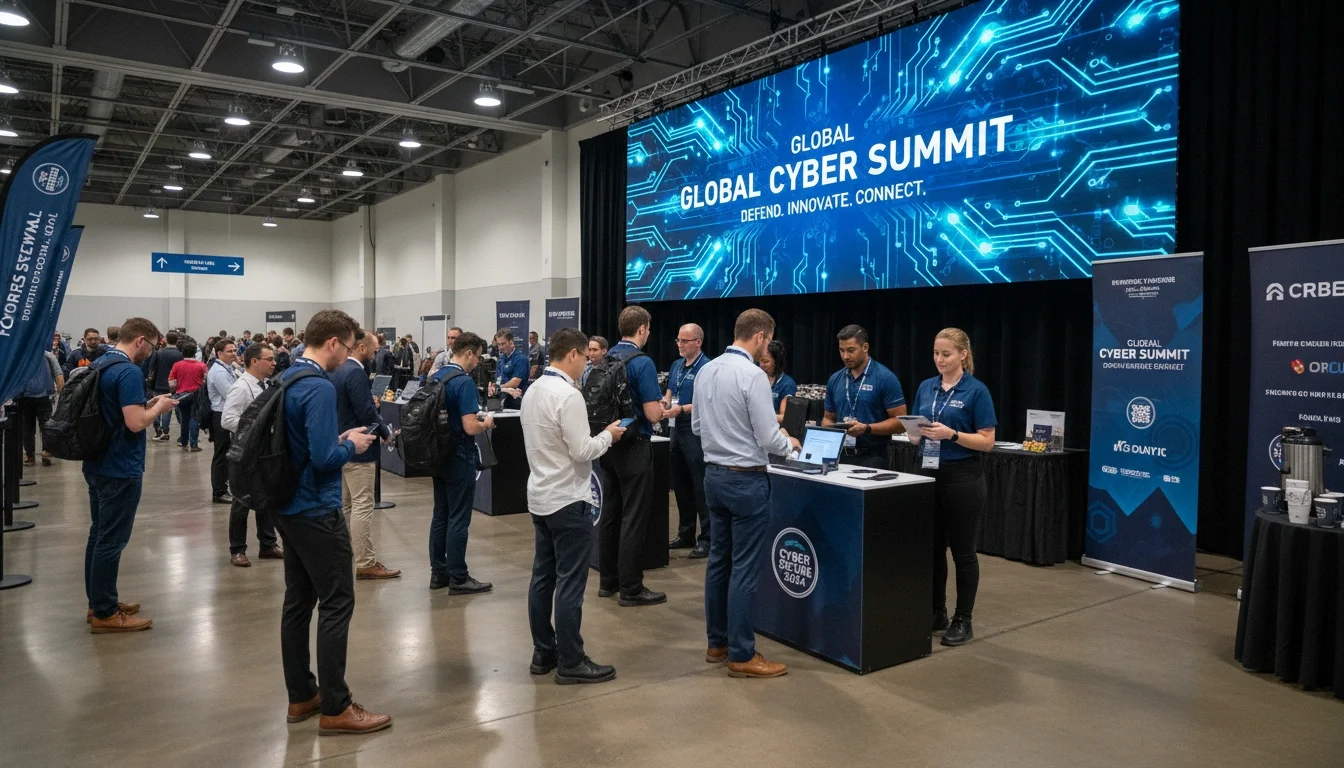
Professional event staff checking in attendees at a large cybersecurity conference
The Cybersecurity Audience Is Unlike Any Other Convention Crowd
Before you can staff a cybersecurity convention well, you have to understand who's walking through the doors.
Events like RSA Conference, Black Hat USA, DEF CON, and the Gartner Security & Risk Management Summit attract CISOs, security architects, penetration testers, threat intelligence analysts, CTOs, and government cybersecurity officials. These aren't passive attendees absorbing a trade show — they're active, analytical, and often deeply protective of their time and personal data.
Understanding these people is the first step toward deploying staff who can actually serve them.
Skepticism Is Baked Into Their Professional DNA
Cybersecurity professionals spend their careers thinking about manipulation, deception, and information exploitation. Social engineering — the practice of manipulating people into revealing sensitive information or taking unintended actions — is a core focus area of their work. They study it, they defend against it, and they recognize it immediately when it's poorly disguised.
An over-scripted, overly friendly event ambassador who launches into a memorized product pitch the moment someone approaches their booth is going to trigger exactly the kind of suspicion these professionals are trained to act on. The interaction will end quickly, the attendee will walk away with a negative impression, and the brand at that booth will have a harder time at the next interaction.
Staff who understand this dynamic — who know to be genuine, responsive, and restrained — perform dramatically better with this audience.
Privacy Awareness Changes How They Interact with Staff
Most convention attendees are relatively comfortable handing over a business card, getting badge-scanned, or signing up for a mailing list. Cybersecurity professionals are a different story.
Many are acutely aware of data collection practices, uncomfortable with being photographed without consent, and selective about what contact information they share. This is especially pronounced at events like DEF CON, where no-filming policies and OPSEC culture run deep, but it applies across the infosec community more broadly.
Event staff who understand and respect this culture — who don't make aggressive lead-capture attempts, who don't pressure attendees for personal information, and who treat every interaction as one between professionals — build far more goodwill than staff who follow a standard promotional playbook.
What This Means for Every Staffing Role on the Floor
The behavioral expectations above apply differently depending on which role your event staff are filling. Here's what to look for, role by role.
Registration and Check-In Staff
First impressions at a cybersecurity convention start at registration — and this audience will judge the entire event based on how smoothly and professionally it goes.
Check-in staff at cybersecurity events need to be comfortable with credentialing systems, badge verification, and attendee data workflows. They should never ask for more personal information than required, handle badge scanning with discretion, and manage the flow of a technically demanding crowd without fumbling.
What sets great check-in staff apart at infosec events: composure under pressure, familiarity with event technology, and the ability to move high volumes of sophisticated professionals through registration without delays or errors.
Greeters and Session Coordinators
At a general convention, greeters can be warm, enthusiastic, and directive. At a cybersecurity event, the tone needs to be professional and peer-level — not performatively welcoming. These attendees are collegial, not in need of hand-holding.
Conference staff serving as session coordinators — managing room capacity, directing attendees to talks, distributing materials — need to be organized and competent. Competence is the quality that this audience responds to. A flustered, uninformed greeter who doesn't know the session schedule or can't answer basic directional questions will erode trust in the event's overall organization faster than almost anything else.
Booth Staff and Brand Ambassadors
This is where the gap between generic and specialized event staffing is most visible.
Brand ambassadors at cybersecurity booths are often asked to explain products and services that carry significant technical complexity — endpoint detection and response (EDR) platforms, threat intelligence feeds, zero-trust architectures, incident response services, and more. Staff don't need to be security engineers. But they do need to be fast learners, comfortable saying "let me get someone who can answer that," and capable of having an intelligent first-level conversation without overselling, misrepresenting, or resorting to marketing speak that sets off every alarm bell in the room.
The best booth staff at cybersecurity events are genuinely curious, well-briefed on the exhibitor's core message, and skilled at facilitating introductions to technical team members rather than trying to close everything themselves.
Hospitality and VIP Event Staff
Cybersecurity conferences frequently include evening receptions, executive dinners, private briefings, and VIP networking events — and these settings require a different kind of professionalism again.
Hospitality staff at these events are often operating in proximity to government officials, Fortune 500 CISOs, and senior executives. The expectation is seamless, discreet, impeccable service. Staff who understand how to be present without being intrusive, and how to manage high-end hospitality without drawing attention to themselves, are worth their weight in event success metrics.
The 5 Traits Your Cybersecurity Convention Staff Must Have
If you're evaluating candidates or vetting a staffing agency for a cybersecurity event, these are the qualities that matter most:
Genuine composure under scrutiny. This audience evaluates every person they interact with. Staff who are visibly nervous, over-rehearsed, or inauthentic will struggle. Look for naturally steady people.
Situational awareness and discretion. Staff should recognize when attendees want space and when they're looking for assistance — and should never push the latter when the former is clearly the case.
Intellectual curiosity. Staff who have done even basic preparation — who understand roughly what the company does, why attendees are there, and what the event is about — stand out immediately and reflect well on the brand they're representing.
Comfort with a technically sophisticated crowd. This doesn't mean technical expertise. It means not being intimidated by jargon, not pretending to understand things they don't, and not over-explaining basic concepts to senior professionals.
Professionalism in privacy-conscious environments. Staff should understand and respect the culture of this community — no unsolicited data collection, no photographing attendees without consent, no aggressive lead-generation tactics.
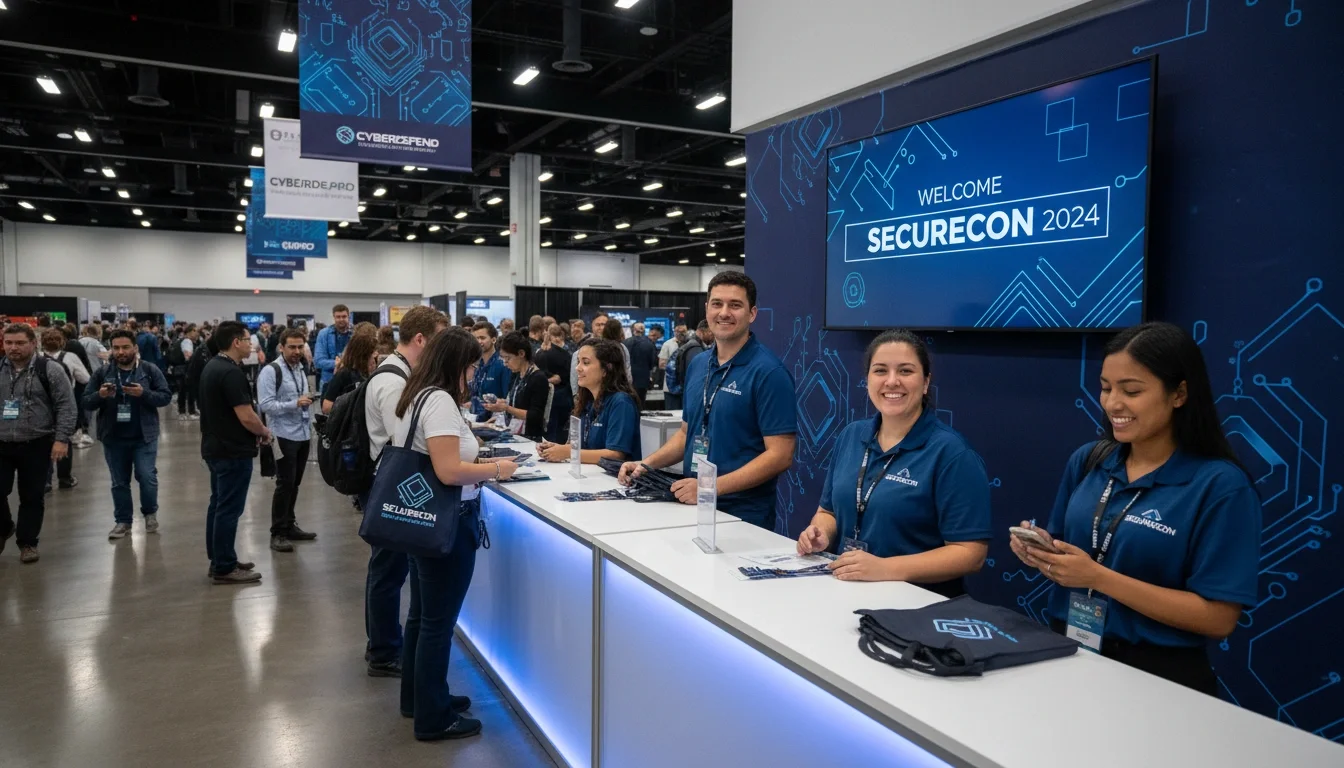
Trained convention staff greeting attendees at an infosec event registration desk
Common Staffing Mistakes at Cybersecurity Events (And How to Avoid Them)
Even experienced event planners make predictable mistakes when staffing cybersecurity conventions for the first time. Here are the ones that show up most often — and why they're particularly costly with this audience.
Over-Scripted Pitches That Trigger Skepticism
Nothing shuts down a conversation with a cybersecurity professional faster than a scripted product pitch delivered verbatim. These are people who recognize patterns and manipulation — they'll spot a memorized script immediately and disengage just as fast.
The fix: brief your booth staff on the company's value proposition and the top three to five questions they're likely to receive, but let them speak naturally. An authentic conversation will always outperform a polished script with this crowd.
Staff Who Can't Handle Technical Questions Gracefully
When a CISO asks your booth ambassador about your product's approach to zero-trust segmentation, the wrong answer is a blank stare followed by a pivot to a brochure. The right answer is a confident, non-defensive redirect: "That's a great question for our solutions architect — let me make that introduction."
Train staff to see the hand-off as a win, not a failure. Knowing your limits and escalating appropriately is respected, not penalized, in technical communities.
Treating It Like a Consumer Trade Show
High-energy music, game show tactics, spinning prize wheels, and novelty giveaways may drive foot traffic at a consumer expo. At a cybersecurity convention, they often have the opposite effect — signaling that a vendor doesn't understand their audience.
Staff tone, booth design, and engagement strategy should all be calibrated for a B2B professional audience. Substance over spectacle.
Staffing the Biggest Names in Cybersecurity Events
Understanding the specific culture of the major cybersecurity conventions helps you staff them more intelligently.
RSA Conference
RSA Conference is one of the world's largest cybersecurity gatherings, drawing tens of thousands of security professionals to its expo hall, keynote stages, and networking events. Staffing RSA requires a team that can handle enormous volume — thousands of badge scans per day, dozens of concurrent sessions, and a bustling expo floor — while maintaining the professionalism that the audience expects.
Event staff in San Francisco supporting RSA need stamina, organization, and the kind of polished demeanor that holds up through multi-day events without flagging.
Black Hat USA & DEF CON
Black Hat and DEF CON together form what the security community calls "Hacker Summer Camp" in Las Vegas — the most concentrated gathering of information security practitioners anywhere in the world.
DEF CON in particular has a strong counter-culture ethos. Staff working these events need to understand that low-key, authentic engagement is valued above everything else. The audience here is acutely sensitive to anything that reads as corporate or performative.
Convention staff in Las Vegas for Black Hat and DEF CON should be selected for genuine composure, adaptability, and the ability to support a technically demanding crowd without any of the fanfare that would work at a consumer expo.
Gartner Security & Risk Management Summit
The Gartner Security Summit draws a more executive audience — CISOs, risk officers, and senior technology leaders attending strategic briefings and vendor evaluations. This event calls for the most polished, discreet event staff of all the major infosec gatherings.
Attendees at Gartner events are making high-stakes purchasing decisions. Staff supporting this event — registration teams, hospitality coordinators, session staff — represent the overall professionalism of the event to a deeply discerning audience.
Washington DC convention staff and staff in other Gartner host cities should be selected for presentation, composure, and an understanding of how to serve a senior professional audience.
Regional CISO Summits and Infosec Meetups
Beyond the flagship events, hundreds of regional cybersecurity summits, CISO roundtables, and infosec meetups take place across the country every year. These events are often more intimate — 50 to 500 attendees — and the expectation of staff professionalism is proportionally higher.
At a smaller summit, every staff member is more visible. A single poor interaction is more likely to be noticed. Staffing these events well requires the same quality of personnel as a large convention, often with fewer people to deploy.
How Vetting Makes the Difference at a Cybersecurity Convention
Staffing agencies take very different approaches to vetting, and the difference becomes extremely apparent in demanding professional environments.
A high-quality trade show staffing agency doesn't send whoever is available — they match staff to your event based on verified experience, demonstrable professionalism, and specific skill alignment with your audience.
At Eleven8, fewer than 3% of applicants are accepted into the roster. Every team member goes through a structured interview, background check, and reference verification process before ever being placed on a booking. When you're staffing an event for cybersecurity professionals, that filter matters enormously.
The ability to preview staff bios, review prior event experience, and select your preferred team before the event begins is something that the best agencies offer — and something that's particularly valuable when you're staffing for a discerning professional audience that will notice the difference between generic and genuinely vetted staff.
How to Hire the Right Convention Staff for a Cybersecurity Event
If you're planning to staff an upcoming cybersecurity conference or infosec convention, here's how to approach the process:
Define every role you need. Work through the full event flow — from pre-registration to post-show breakdown — and map out every touchpoint where staff are needed. Don't just think about the booth; think about registration, wayfinding, hospitality, and session support.
Choose a staffing agency with a real vetting process. Ask how they screen candidates, what their fulfillment rate is, and whether they offer backup staff. Vague answers about "our quality team" are a red flag.
Brief the staff on your audience specifically. Don't just describe your product — describe your attendees. Explain who comes to this event, what they care about, and how they respond to different kinds of interactions. Specificity at this stage dramatically changes staff performance.
Request staff with relevant experience. Ask whether any roster members have worked cybersecurity, technology, or similarly sophisticated professional events before. Prior industry exposure accelerates the learning curve significantly.
Build in communication checkpoints. Great agencies provide a dedicated account manager and real-time on-site support. At a multi-day cybersecurity event, the ability to adjust, troubleshoot, and escalate in real time is worth more than any other feature.
Review and debrief. After the event, request a performance summary. The best staffing agencies track individual staff ratings across every event — which means you can build a preferred team over time rather than starting over at every show.
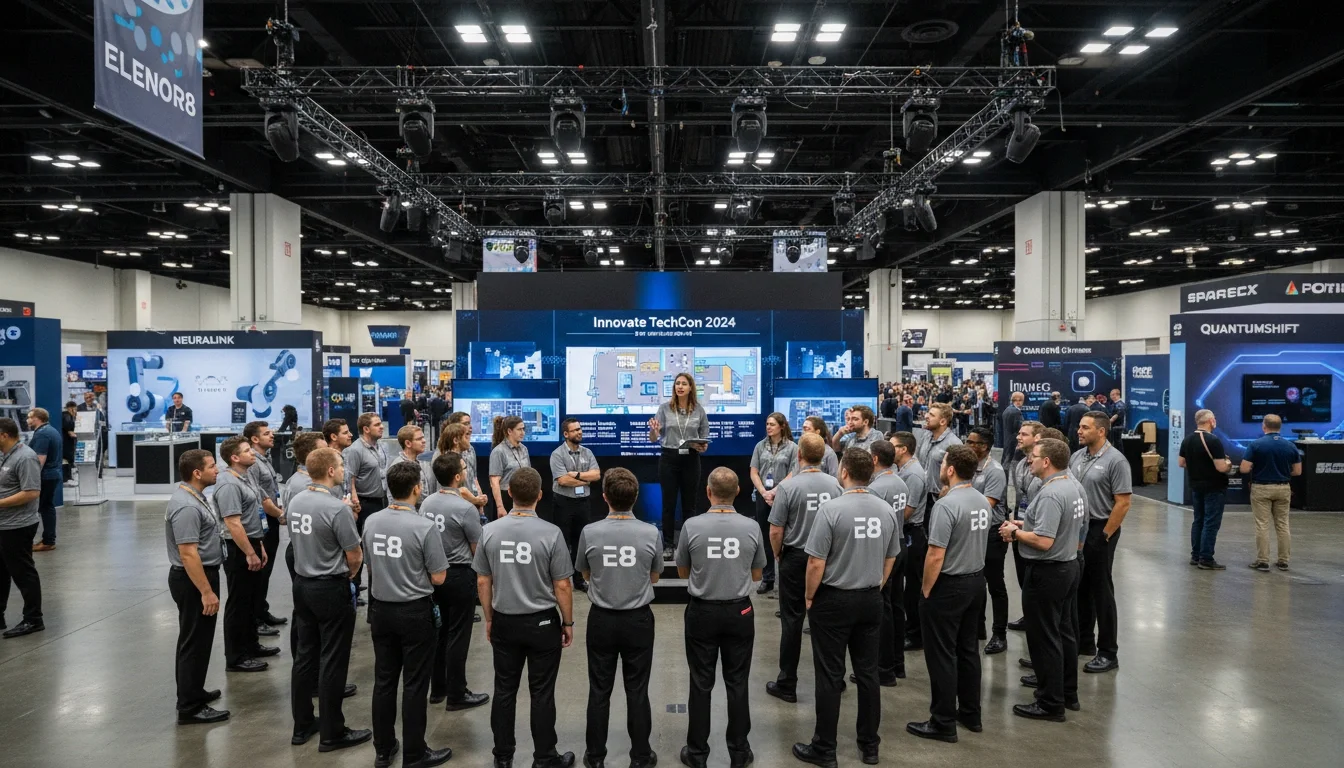
Eleven8 event staff team briefed and deployed at a large tech convention
Final Thoughts: First Impressions Matter More in High-Stakes Industries
In every industry, event staff shape attendees' first impressions of a brand. In the cybersecurity world, that principle is amplified by an audience that makes snap judgments for a living.
The professionals who attend RSA Conference, Black Hat, or a CISO summit aren't just evaluating the products on the floor — they're evaluating every piece of the experience. The ease of registration, the knowledge of the staff at the booth, and the quality of the hospitality service at the networking dinner. All of it becomes part of how they remember the brand.
Getting the staffing right at a cybersecurity convention is not a minor operational detail. It's a meaningful part of your event's success.
If you're planning an upcoming infosec event and want a staffing team that understands how to show up for a demanding professional audience, contact Eleven8 Event Staff to get a custom quote and see who's available for your dates.