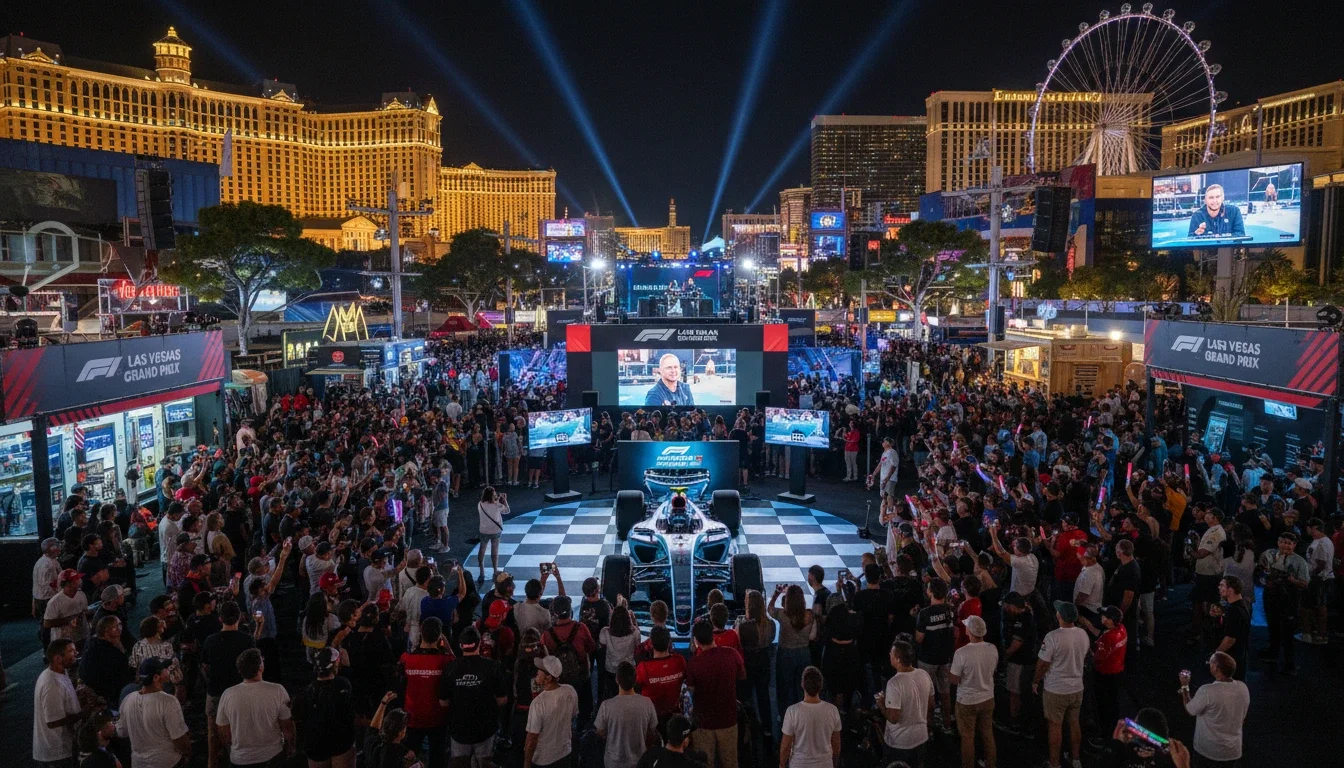
Formula 1 fans at the Las Vegas Grand Prix fan zone during race week
A decade ago, Formula 1 was an afterthought in the American sports landscape. Today, it's one of the fastest-growing live sports properties in the country — and one of the most valuable experiential marketing platforms in the world.
Three US race weekends. Tens of thousands of fans on-site. Millions more watching globally. And a brand ecosystem that extends far beyond the track into fan zones, city-wide takeovers, VIP hospitality suites, and immersive pop-up experiences. For brands that want to connect with an affluent, engaged, and culturally-tuned-in audience, F1's expansion into America isn't just a sports story. It's a brand activation gold rush.
This guide breaks down exactly why — and how brands can seize the moment.
The Rise of Formula 1 in America: By the Numbers
Understanding the scale of F1's US growth is the first step in understanding the commercial opportunity. The numbers are significant — and they've moved fast.
From Niche Motorsport to Cultural Phenomenon
Formula 1's transformation in the US is largely attributed to three forces: Liberty Media's strategic expansion into American markets, the Netflix docuseries Drive to Survive, and a deliberate pivot toward lifestyle and entertainment programming around race weekends.
The result has been remarkable. US viewership has grown by over 40% since Drive to Survive launched. The sport now counts more than 52 million fans in the United States — a figure that grew 11% year-over-year as of the most recent data. Season attendance globally surpassed 6.5 million in 2024, with US events consistently selling out. The 2025 Austin Grand Prix alone drove a single-day departure record of 45,048 passengers through Austin-Bergstrom International Airport the Monday after race day.
This isn't a niche anymore. This is mainstream.
The Audience Shift That Changes Everything for Marketers
The demographic story is even more compelling for brand marketers. Formula 1's global fan base is now 41% female — a massive shift from the sport's traditionally male-dominated audience. Additionally, 42% of fans worldwide are under 35 years old, with Gen Z and millennial audiences increasingly driving engagement.
This combination — affluent, young, diverse, and highly engaged — is virtually impossible to find at this scale in any other live sports environment. It explains why brands far outside the traditional motorsport category have flooded into the F1 space: beauty, fashion, luxury lifestyle, food and beverage, fintech, and wellness brands are all activating at race weekends. One in three F1 fans say they are more likely to purchase from a brand they see sponsoring or activating at the sport. Among Gen Z, that number is even higher.
For brands with experiential budgets, this is not a moment to sit on the sidelines.
What Experiential Brand Activation at F1 Actually Looks Like
Experiential brand activation at Formula 1 has evolved well beyond trackside signage and hospitality tents. Today's most effective activations create memorable, shareable, emotion-driven experiences that fans seek out — not just stumble upon.
Fan Zones: Where Brands Come to Life
Fan zones are the high-traffic epicenters of any F1 race weekend. Positioned inside and around the circuit, they host branded experiences that draw thousands of attendees over multiple days. Brands that execute well in the fan zone environment — with interactive games, product sampling, photo opportunities, and live entertainment — consistently earn the highest earned media value of any activation type at race weekends.
Examples from recent US Grand Prix weekends include:
American Express running a two-story interactive fan experience at COTA, complete with car livery design stations, driver intro video creation, and exclusive cardholder merchandise
Lego operating family-friendly Build the Thrill play zones across multiple US race stops, featuring wind tunnel aerodynamics testing and miniature racecar tracks
AT&T's Speed of Light visual installation on Sands Avenue in Las Vegas, paired with branded street teams distributing premium limited-edition Oracle Red Bull Racing merchandise
What makes fan zone activations succeed? Dwell time, interactivity, social sharability — and crucially, the quality of brand ambassadors staffing those activations. The best fan zone moments are driven by people who know how to engage a crowd, communicate brand messaging, and create genuine connection rather than scripted sales pitches.
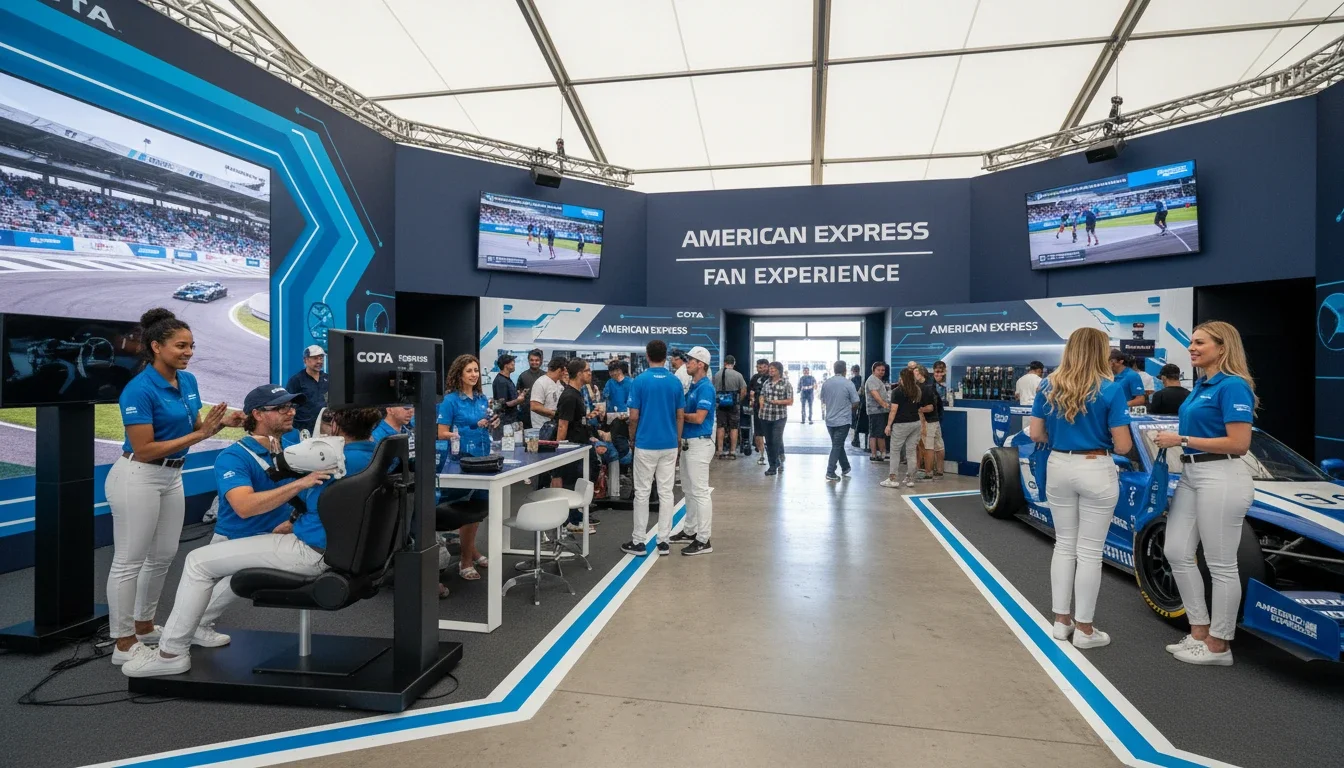
Brand ambassadors engaging fans inside the American Express fan experience at COTA, Austin
VIP Hospitality & Paddock Experiences
At the premium end of the activation spectrum, VIP hospitality has become one of Formula 1's most coveted brand assets. Paddock Club access, branded sponsor suites, and curated VIP experiences allow brands to build relationships with high-value guests in an intimate, exclusive setting.
Glenfiddich's luxury VIP watch party at Las Vegas — hosted on the Ocean Prime rooftop overlooking turns 14-16 — is a perfect example. With 200 invited guests, a replica F1 car photo opportunity, and curated whisky pairings, the brand created a high-end touchpoint that reinforced its premium positioning while delivering genuine entertainment value.
MSC Cruises similarly activated at Las Vegas by creating a floating schedule of "onboard activities" in a hospitality setting — chocolate and wine pairings, champagne bars, and exclusive viewing access. These weren't just logo placements. They were full lifestyle experiences.
Executing at this level requires staff who understand premium service, VIP guest management, and the discretion that luxury brand environments demand. That's not something you can improvise with last-minute hires.
Eleven8's hospitality staffing services are designed specifically for luxury event environments where every guest interaction matters.
Off-Track City Takeovers
Some of the most impactful F1 brand moments happen miles from the circuit. As race weekends have grown into multi-day cultural events, smart brands are extending their activations into the broader city — reaching both ticketed attendees and locals who may not be inside the venue at all.
Adidas' Miami activation is the gold standard for this approach. Instead of limiting the campaign to the paddock, the brand launched a Miami-specific collection inspired by local mangrove trees, with a pop-up on South Beach and takeovers across Miami Adidas retail locations. Multiple touchpoints, multiple audiences, one coherent brand story.
In Austin, Barilla's pasta-delivering scooter teams covered the city in the days leading up to the race — distributing 5,513 pasta meal kits (one for every meter of the COTA circuit) to fans and locals alike. The activation was inherently social, inherently sharable, and entirely on-brand.
The Three US Grand Prix Markets — And What Makes Each Unique
Not all F1 race weekends are created equal. The three US host markets — Austin, Miami, and Las Vegas — each offer a distinct audience profile, venue environment, and activation opportunity. Understanding the differences is critical for any brand planning a race-week campaign.
Austin, Texas: Circuit of the Americas (COTA)
COTA is F1's original US home — and its most established race weekend. The Austin Grand Prix draws a deeply passionate, globally diverse crowd with strong local Texas flavor. It's also the most family-friendly of the three US events, making it ideal for brands targeting broader consumer demographics.
The Austin race recently had its calendar stay confirmed through 2034, signaling long-term stability for brand partners investing in multi-year activations here. Brands that have found success at COTA include Coca-Cola (with a branded fan zone returning for multiple years), American Express (two-story interactive experience), ESPN, Pacsun, and Barilla.
Activation strategy for Austin: Think local-meets-global. Activations that acknowledge Texas identity while celebrating the international character of F1 resonate most strongly. Families, long-stay visitors, and a mix of casual fans and die-hard enthusiasts make this a high-volume, high-diversity environment.
Miami: The Luxury and Lifestyle Capital
The Miami Grand Prix — held at the Miami International Autodrome at Hard Rock Stadium — has quickly established itself as F1's most glamorous US event. The guest profile skews toward luxury lifestyle consumers, celebrities, and high-net-worth individuals. It's become a genuine destination event, with race tickets selling out quickly and surrounding activations drawing attendees from across the country.
Miami attracts beauty brands, fashion houses, premium food and wellness companies, and fintech players. Alo Yoga, TAG Heuer, Jack Daniel's (with a Wynwood District music experience), and American Express have all built sophisticated multi-year presence at Miami. The Paddock Club and surrounding Wynwood arts district create a natural luxury brand environment.
Activation strategy for Miami: Lead with aspirational lifestyle, premium experiences, and cultural cool. Activations that tap into Miami's design, music, and nightlife DNA perform best here. High-end hospitality staffing and polished brand ambassadors are non-negotiable in this environment.
Las Vegas: The Festival That Became a Race
Las Vegas is F1's most ambitious US race weekend — and perhaps its most electrifying. The street circuit winds through the Strip itself, with the Bellagio, Sphere, and the city's most iconic landmarks as the backdrop. Las Vegas Race Week isn't just a sporting event; it's a full-scale entertainment festival that rivals any standalone concert or convention.
Brand activations in Las Vegas have reflected that scale. Disney's 'Fuel the Magic' campaign brought beloved characters into the paddock. Hello Kitty partnered with F1 Academy for a sold-out merchandise collection and branded fan zones. AT&T's Speed of Light visual experience and TikTok Clubhouse brought creator culture into the mix. The Las Vegas GP has confirmed its place on the calendar and has become the benchmark for large-scale, multi-brand activation weekends.
Activation strategy for Las Vegas: Go big, go theatrical, go shareable. Las Vegas rewards brands that commit fully — immersive installations, live entertainment integrations, VIP spectacles, and city-wide touchpoints. The fan energy is electric, the social media amplification is enormous, and the activation playbook is wide open.
Real Brands, Real Results: Activation Case Studies
The best way to understand what works — and why — is to look at specific brand activations that have delivered measurable results at US race weekends.
Adidas x Mercedes-AMG Petronas: Miami 2025
Adidas didn't just sponsor a car. They created a Miami-specific summer collection inspired by local natural landscapes, built a team pop-up on South Beach, and took over Miami's central Adidas retail locations during race week. Every touchpoint told a consistent story — motorsport meets coastal lifestyle.
The result was an activation that lived in the city, not just in the paddock — reaching both race attendees and Miami residents who had never purchased a race-day ticket.
AT&T's Speed of Light: Las Vegas 2025
AT&T leveraged its Oracle Red Bull Racing partnership to create a street-level visual experience on Sands Avenue — open to the public throughout race week. They simultaneously deployed branded street teams across the Strip to distribute premium race-branded merchandise. Their partnership with TikTok also powered the TikTok Clubhouse, drawing over 150 creators, athletes, and public figures to a content-first space with immersive zones and interactive challenges.
This was multi-layered activation at its most effective: visual installation + street activation + creator economy + digital amplification, all working together.
Barilla's Pasta Pit Stop: Austin 2025
As Formula 1's Official Pasta Partner, Barilla deployed Italian-inspired motorized scooter teams across Austin from Thursday through Sunday of race week — distributing 5,513 complimentary pasta meal kits (one for every meter of the COTA circuit). They simultaneously activated a Barilla Bodega inside a local H-E-B supermarket, distributing 3,000 samples and 435 branded tote bags.
This activation was grassroots, joyful, and brand-authentic — it didn't feel like advertising. It felt like participation. That's the hallmark of the best F1 experiential campaigns.
The Staffing Advantage: Why On-the-Ground Talent Makes or Breaks F1 Activations
Strategy and creative direction get an activation into the race weekend. But the people on the ground determine whether it succeeds or fails.
Every brand ambassador, hospitality team member, registration staffer, and VIP concierge is a direct representation of your brand in front of thousands of fans. In a high-energy, fast-paced, multi-day environment like an F1 race weekend, staffing quality isn't a back-office consideration — it's a frontline competitive advantage.
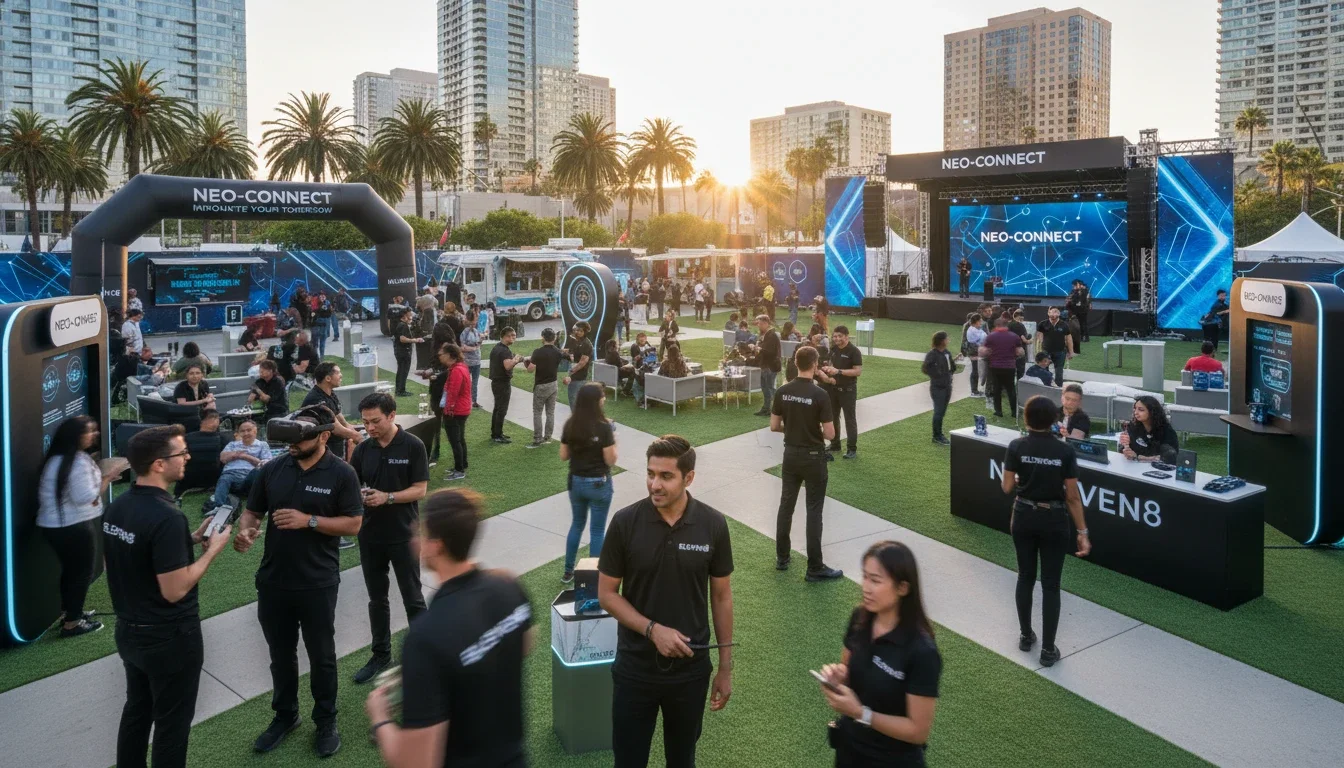
Eleven8 event staff deployed at a large-scale brand activation in Los Angeles
Brand Ambassadors: The Face of Your Activation
Brand ambassadors are the human infrastructure of any fan zone or off-track activation. They engage fans, communicate brand messaging, manage queue flow, facilitate interactive experiences, and generate the shareable moments that fuel social media coverage.
The difference between good and great brand ambassadors is measurable. Engaged, personable, brand-aligned ambassadors generate longer dwell times, more social photo moments, and more genuine brand conversations. Ambivalent, poorly briefed, or mismatched staff produce exactly the opposite.
At the scale of an F1 race weekend, where brands are competing for attention with dozens of other activations, the standard of your ambassadors is visible — and it matters.
Eleven8's brand ambassador program selects only the top 3.5% of applicants and matches each team member to your brand's specific audience, tone, and event environment.
VIP Hospitality Staff: Delivering the Premium Experience
For brands activating in paddock clubs, sponsor suites, or bespoke VIP hospitality environments, the standard of service must be flawless. High-net-worth guests and celebrity attendees expect a level of discretion, professionalism, and attention to detail that most general staffing agencies simply cannot consistently provide.
Hospitality staff at premium F1 activations need to understand luxury service standards, VIP guest management protocols, food and beverage service (with proper certification), and the specific brand language and values of the sponsor. This isn't a job for untrained or undervetted staff.
Explore Eleven8's hospitality staffing services — a team with over 30 years serving luxury brands, The Academy, and Fortune 500 clients across Los Angeles and nationally.
Convention & Registration Teams: Managing the Crowd
Fan zones, sponsor experiences, and VIP activations also require seamless crowd management and registration. Efficient check-in operations, line management, and guest flow coordination are what turn a high-traffic space from chaotic to professional.
At events drawing tens of thousands of attendees over multiple days, registration and check-in staff are often the first human touchpoint a fan encounters with your brand. That first impression needs to be excellent.
Eleven8's convention and check-in staffing teams have managed guest flows for events of up to 10,000 attendees — the exact scale required at F1 race weekend fan zones.
How to Plan a Winning F1 Brand Activation Strategy
Whether you're a global sponsor or a challenger brand exploring your first F1 partnership, the fundamentals of a strong activation strategy are consistent.
Step 1: Define Your Activation Objective
Before choosing a market, designing an experience, or booking staff, be clear about what you want the activation to achieve. Is the goal brand awareness? Lead generation? Fan community building? Social media amplification? VIP client entertainment? Each objective requires a fundamentally different activation format and staffing model.
Step 2: Choose Your Race Market
Austin, Miami, and Las Vegas are three distinct environments with different audience profiles, venue configurations, and activation landscapes. Choose the market that best matches your target audience and activation format. A luxury fashion brand belongs in Miami. A family-oriented consumer product belongs in Austin. A theatrical, entertainment-first brand belongs in Las Vegas.
Step 3: Map Your Touchpoints
The best F1 activations don't live in a single location. Think about the full fan journey — from pre-event hype online, to city-level activations before and after race day, to trackside fan zone experiences, to VIP hospitality, to social amplification post-event. Map every touchpoint and ensure each one has consistent brand messaging and experience quality.
Step 4: Build Your On-Ground Team
This is where strategy meets execution. Identify how many brand ambassadors, hospitality staff, registration team members, and event managers you need for each day of the activation. Brief them thoroughly on brand values, key messaging, and guest experience expectations. And source them from a staffing partner with verified experience in high-volume, high-profile event environments.
Working with a premium event staffing agency for F1 activations ensures your on-ground team is vetted, trained, and deployment-ready before race week begins — not recruited reactively after something goes wrong.
Connect with Eleven8 Event Staff (elev8.la) to discuss your F1 activation staffing needs nationally. Our team has experience staffing brand activations for global sponsors across major sports and entertainment events.
The Future of F1 Brand Activations in the US
The runway for F1 brand activation in America is long and growing. COTA is confirmed through 2034. Las Vegas and Miami are entrenched as marquee events. And the sport's cultural reach continues to expand — with a Brad Pitt film (F1: The Movie), an all-female F1 Academy series gaining mainstream coverage, and an audience that is increasingly mainstream rather than niche.
Looking ahead, several trends will define the next generation of F1 activations:
Physical-digital integration: AR activations, virtual paddock access, and digital collectibles will extend physical fan zone experiences into the online world
Creator and influencer economy: TikTok Clubhouse-style activations that center content creators will become a standard component of race-week campaigns
Category disruption: Brands from unexpected sectors — beauty, fintech, wellness, gaming — will continue to break into the F1 space, creating fresh and culturally relevant storytelling opportunities
Longer activation windows: Race weekends are now three-to-five day events. Brands that plan activations across the full week — not just race day — will capture more audience time and earn better ROI
Staffing quality as a differentiator: As the activation landscape becomes more crowded, the quality of on-ground brand ambassadors and hospitality staff will increasingly separate memorable activations from forgettable ones
Formula 1's US expansion is not slowing down. For brands with the vision to see experiential marketing as a strategic asset — and the operational capability to execute flawlessly on the ground — the opportunity is massive.
The race is on. The brands that act now will build audience relationships and earned media momentum that compounds across multiple race seasons. Those that wait may find the space more crowded and more expensive.