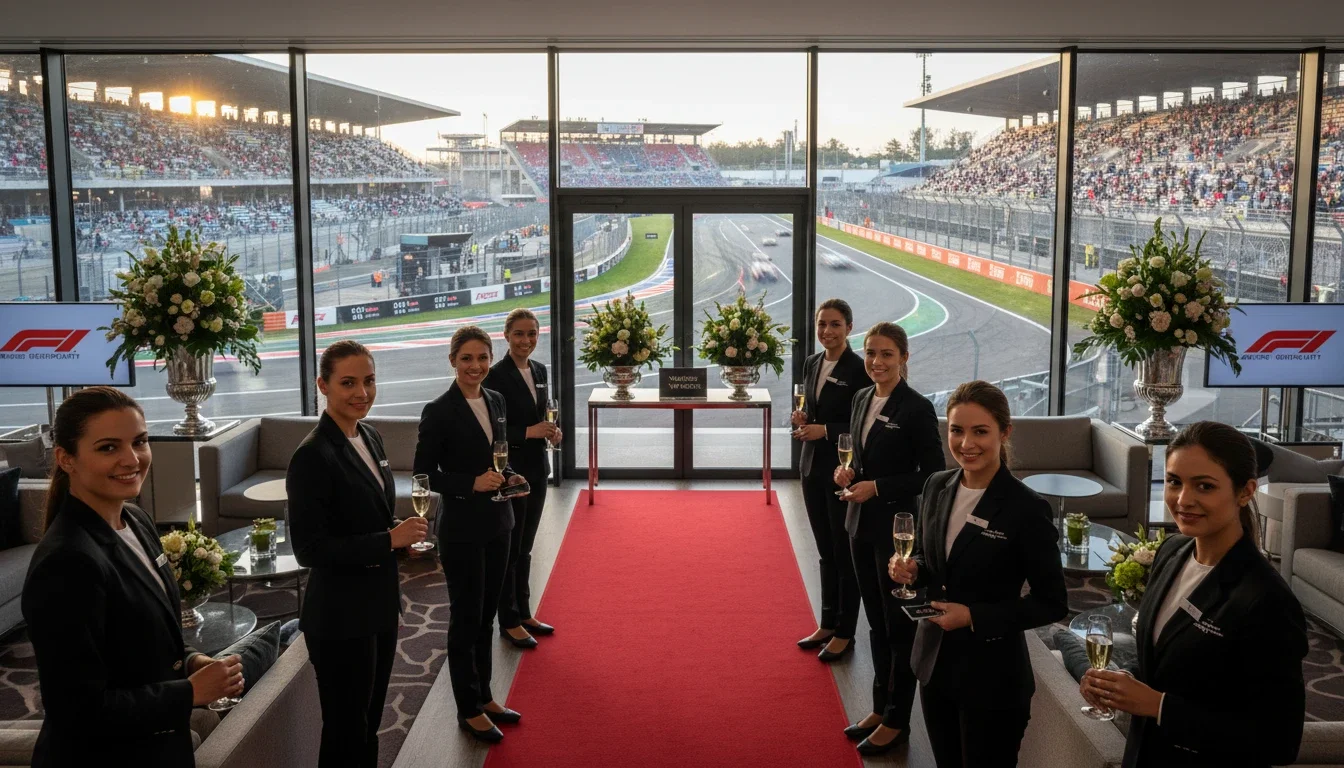
A professional event staff team welcoming VIP guests at an F1 hospitality suite overlooking the track
Formula 1 is no longer just a race. In the United States, it is a three-city, multi-weekend spectacle that draws a global audience of executives, celebrities, sponsors, and fans who expect an experience worthy of the sport itself. Miami, Austin, and Las Vegas have each become marquee entertainment events in their own right — and for brands activating in the hospitality space, the pressure to execute perfectly has never been greater.
The suite, the activation, the sponsor lounge — these spaces are where deals are made, relationships are deepened, and brand impressions are formed. And none of that happens without the right people in the room running it.
This guide is for corporate sponsors, event producers, and marketing teams responsible for staffing F1 hospitality suites and sponsor experiences across the US Grand Prix calendar. It covers what each race demands, which roles you need, how to plan across multiple events, and what separates world-class event staff from everyone else.
Why F1 Hospitality Demands a Different Standard of Staffing
The Stakes Are Higher Than Any Other Sporting Event
An F1 Grand Prix weekend attracts some of the world's most discerning guests. Guests inside hospitality suites include senior corporate executives, title sponsors, global media, and high-net-worth individuals who routinely attend the most exclusive events in the world. Many have experienced hospitality at Wimbledon, the Monaco Grand Prix, or private Davos-adjacent gatherings.
In this environment, "good" hospitality is not a compliment — it is a baseline expectation. What gets noticed is the exceptional: a server who remembered that a guest doesn't drink, a brand ambassador who knew the guest's name before they stepped through the door, a VIP host who resolved a credential issue before the guest was even aware it existed.
That level of service requires staff who are not just trained — they are selected for it.
What Guests Expect Inside an F1 Hospitality Suite
Whether your guests are in a Paddock Club suite, a privately branded sponsor lounge, or a trackside activation space, their baseline expectations are consistent:
Seamless arrival and credential management — no confusion, no queues
Attentive beverage and F&B service that anticipates, not reacts
Hosts who feel like personal concierges, not venue employees
A team that represents the brand's identity in every interaction
Discretion — especially when conversations at the table are confidential
The staff in your suite are not just delivering food and drinks. They are the living expression of your brand's investment in that weekend. Every interaction is a brand touchpoint.
The Three US Races — And What Each One Requires
The US F1 calendar currently consists of three distinct Grand Prix events, each with its own city character, venue layout, and hospitality culture. Staffing for Miami is not the same as staffing for Las Vegas — and treating them as interchangeable is one of the most common and costly mistakes corporate hospitality teams make.
| Race | 2026 Dates | Venue Character | Staffing Priority |
|---|---|---|---|
| Miami GP | May 1–3 | Indoor/outdoor stadium venue, high energy, celebrity-heavy | Crowd flow management, brand ambassador coverage, polished F&B staff |
| US GP (Austin) | Oct 23–25 | Large-scale circuit, multi-day, intense heat, diverse crowd | Scale, endurance, multi-day staffing continuity, Spanish bilingual advantage |
| Las Vegas GP | Nov 19–21 | Strip circuit, night race, ultra-luxury, late-night logistics | Late-night service experience, premium presentation, VIP discretion |
Staffing strategy note: Each F1 race presents unique staffing challenges based on venue, climate, timing, and audience demographics. Miami requires polished service for celebrity-heavy crowds; Austin demands endurance and bilingual skills for Texas heat and diverse attendees; Las Vegas needs night-adapted staff with premium hospitality experience. Book agency staff 3–6 months in advance for these premium events.
Miami Grand Prix: South Beach Energy Meets Corporate Precision
The Miami International Autodrome wraps around Hard Rock Stadium in Miami Gardens. The venue is a blend of high-energy entertainment and serious corporate hospitality — hospitality units are housed within the stadium complex itself, creating a unique indoor-outdoor dynamic that few other F1 venues match.
Miami draws a younger, trend-conscious corporate audience with a significant celebrity presence. Brand activations here need to feel current, energetic, and visually polished. Staff who present with confidence, move with urgency, and engage guests authentically are essential. The crowd expects high-touch service but delivered with Miami's characteristic warmth rather than stiff formality.
Miami is also a Sprint weekend, meaning the race schedule is compressed and guest traffic patterns are more unpredictable. Your staff need to handle high-velocity service windows without a drop in quality.
Key staffing considerations for Miami:
High guest volume across all three days — scale your team accordingly
Celebrity and influencer adjacency requires media-savvy, discreet staff
Bilingual staff (English/Spanish) is a genuine advantage given South Florida's demographics
Heat and humidity make outdoor activation shifts physically demanding — factor staff rotation into your plan
United States Grand Prix in Austin: Scale, Heat, and Southern Hospitality
The Circuit of the Americas in Austin is one of the most complete motorsport venues in the world, and the US Grand Prix is one of the most attended events on the calendar. The scale of the event is significant — well over 100,000 spectators attend across the weekend, creating a stadium-level logistics challenge even within the hospitality zones.
Austin's corporate hospitality culture blends Texas warmth with serious business entertainment. Guests at COTA's hospitality suites range from Fortune 500 executives hosting client groups to racing enthusiasts who know every corner of the circuit. Staff here need range — they must be equally comfortable in elevated service environments and in high-energy moments when a podium finish sends the crowd into celebration mode.
Austin is also the final US race before the season closes out in Las Vegas, making it a critical opportunity for sponsors to consolidate relationships built across the year. The stakes for hospitality delivery are high.
Key staffing considerations for Austin:
Multi-day events require staffing continuity — a preferred team that returns each day outperforms a fresh crew unfamiliar with your space
Texas heat in late October can still be intense — hydration, rest rotation, and shaded staging areas for staff matter
Large-scale guest counts may require tiered service zones managed by a head captain
Austin's diverse entertainment programming (live music, fan activations) means staff should be briefed on the full event schedule, not just the suite
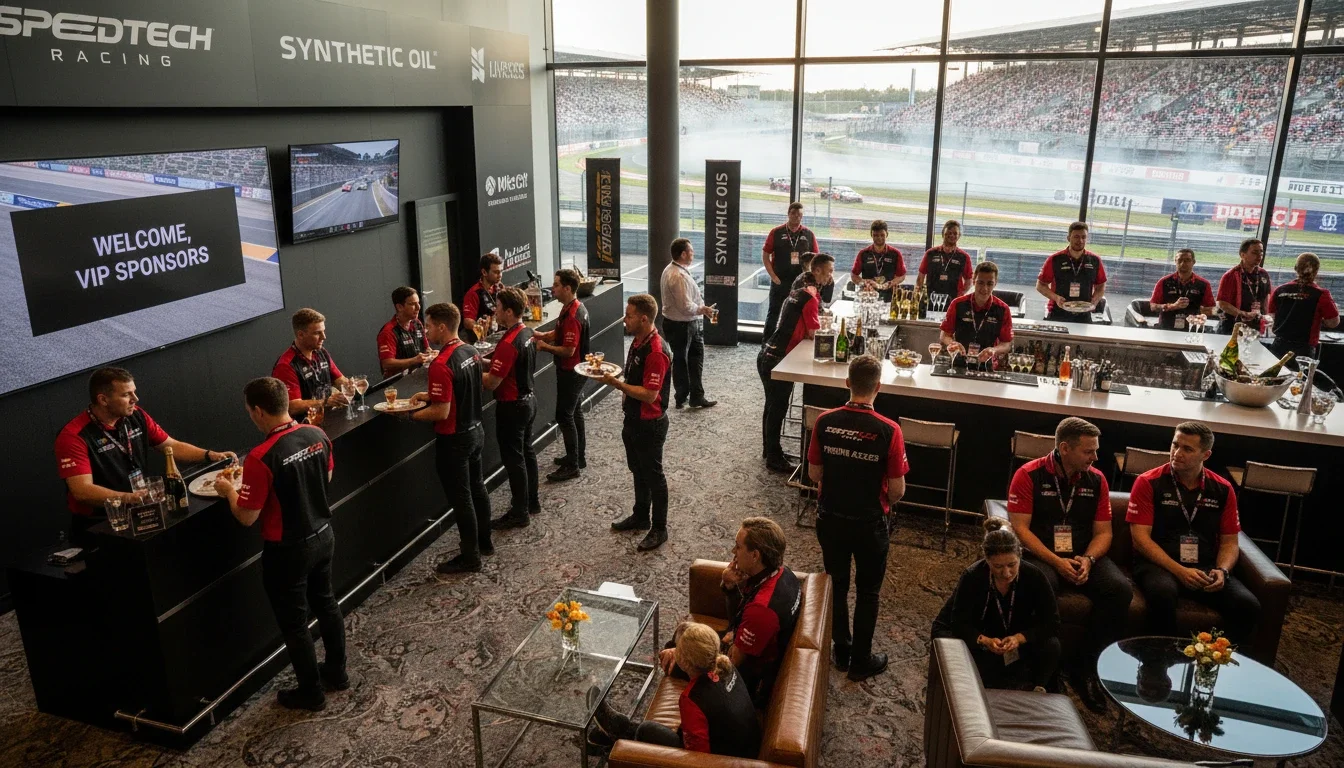
An event staff team in branded uniforms managing a VIP sponsor lounge at a major motorsport event
Las Vegas Grand Prix: Strip-Level Spectacle and Late-Night Logistics
The Las Vegas Grand Prix is unlike any other Formula 1 race in the world. The circuit runs through the heart of the Las Vegas Strip, the race starts at 10 PM local time, and the entire event is as much an entertainment production as it is a sporting competition. For sponsors and hospitality operators, that presents extraordinary opportunities — and equally extraordinary logistical complexity.
Las Vegas hospitality spaces attract ultra-high-net-worth guests who are accustomed to the finest experiences Las Vegas has to offer. When your competition for guest attention includes the Bellagio and the Venetian, your suite needs to deliver something that competes. Staff presentation, service fluency, and genuine warmth are non-negotiable differentiators.
The night race format means your team is working late — often well past midnight when the race concludes and post-race hospitality begins. This requires staff with genuine stamina, experience in late-night service environments, and the professional composure to maintain quality at 1 AM as effectively as they did at 7 PM.
Key staffing considerations for Las Vegas:
Late-night race format demands staff with nightlife service experience — not just day-event backgrounds
Luxury bar and beverage service is the centerpiece of the Las Vegas experience — invest in premium bartending talent
Guest security and discretion are particularly critical given the profile of attendees
The multi-venue entertainment environment means guest itineraries are complex — hospitality staff should function as personal concierges
Book staff significantly in advance — Las Vegas during the Grand Prix is one of the most competitive labor markets in the country
The Staff Roles Every F1 Sponsor Suite Needs
A well-run F1 hospitality operation requires a team of distinct roles, each contributing to a seamless guest experience. Here is a breakdown of the core positions and what they do in a motorsport hospitality context.
VIP Hosts and Guest Relations Staff
VIP hosts are the face of your hospitality operation. They greet guests by name when possible, manage the guest experience from arrival to departure, handle special requests before they become problems, and ensure that high-value guests feel personally attended to throughout the day. At an F1 event, this means coordinating with paddock access teams, managing timing for pit lane walks, and staying ahead of the race schedule to brief guests on key moments.
These are not generic greeters. The best VIP hosts combine the situational intelligence of a concierge with the relational warmth of a genuine host. They read rooms, remember names, and resolve friction invisibly.
Bartenders and Beverage Service Teams
Premium beverage service is the centerpiece of most F1 hospitality activations. Whether you are serving Champagne in a Paddock Club suite or craft cocktails at a brand lounge on the Las Vegas Strip, your bartenders define the quality of the experience.
F1 hospitality bartenders need to be fast, clean, and compelling — crafting drinks efficiently during high-demand service windows while engaging guests with the kind of personality that adds to the atmosphere rather than detracting from it. Certifications in food and beverage handling, experience in upscale environments, and knowledge of premium spirits and wine are baseline requirements.
Servers and F&B Support Staff
The back-of-house and floor service team keeps the hospitality operation running. Servers manage table service, tray passing, station management, and the constant replenishment that keeps premium hospitality feeling effortless. In larger suites, F&B support staff handle the logistics that allow the guest-facing team to focus entirely on the guest.
In a motorsport context, servers must also be aware of the race schedule — knowing when a strategic moment is about to happen on track allows them to manage service timing so that guests are not interrupted during the moments they came to see.
Brand Ambassadors and Activation Staff
For sponsors running branded activations — merchandise areas, interactive experiences, fan engagement zones, or experiential marketing spaces — brand ambassadors are essential. These are staff who understand your brand's messaging, can communicate it fluently with guests and media, and create the kind of genuine enthusiasm that converts passive attendees into active brand advocates.
At F1 events, brand ambassador roles often sit at the intersection of hospitality and marketing. The best activation staff can shift between explaining a product feature to an executive and creating a social media moment for a brand influencer within the same conversation.
Registration and Credential Management Staff
At F1 events, credential management is a high-stakes operation. Access tiers vary by zone — general admission, suite access, Paddock Club, pit lane — and guests arriving with the wrong credential, a lost wristband, or an unclear pass create exactly the kind of friction that a premium hospitality experience cannot afford.
Registration staff must be organized, fast, calm under pressure, and fluent in the access protocol for your specific hospitality package. At multi-day events like Austin and Las Vegas, this team manages new arrivals across multiple sessions while tracking returning guests and handling inevitable last-minute changes to the guest list.
Staffing the Full US Calendar: Planning Across Three Events
For brands activating across all three US Grand Prix races, staffing is not three separate exercises — it is a single, integrated program. The teams, processes, and brand standards that work in Miami need to be portable enough to adapt to Austin and Las Vegas without starting from scratch each time.
Building a Preferred Team for Multi-Race Continuity
One of the most significant advantages a sponsor can create is a preferred team — a group of staff who have worked with your brand, know your protocols, and can deliver consistent service across multiple events. This is how elite brands approach it. Instead of briefing a new team at every race, you build a core of staff who carry institutional knowledge of your brand's standards from city to city.
This approach requires an agency with a genuine national roster — not one that recruits locally for each event but one that maintains established teams in each market and can coordinate consistency across cities. When your lead VIP host in Miami has worked with your team before, and your head bartender in Las Vegas has the same product knowledge as the one who impressed your guests in Austin, the cumulative guest experience is meaningfully elevated.
Internal link opportunity: Learn more about Elevate's national event staffing capabilities and how we build preferred teams for recurring clients.
Booking Timelines: When to Confirm Staff for Each Race
F1 events are among the most competitive staffing environments in the country, particularly in Las Vegas. The best staff in any given market are booked months in advance for race weekend. Waiting until 30 or 60 days out significantly limits your options and forces you into the second tier of available talent.
Miami Grand Prix: Secure staffing 3–4 months in advance. Miami race week draws competing events citywide, creating a compressed labor market.
US Grand Prix (Austin): Book 3–5 months out. Austin's relatively smaller hospitality talent pool means top-tier staff fill quickly for a 100,000+ person event.
Las Vegas Grand Prix: Confirm staff 5–6 months in advance. Las Vegas during race week is the most competitive staffing environment on the US calendar. The Strip hospitality industry operates at full capacity; demand for experienced, premium staff dramatically outpaces supply.
Briefing Your Team on Brand and Sponsor Protocols
Even the best staff cannot deliver a brand-aligned experience without proper briefing. A thorough pre-event brief should include:
Brand overview: who you are, who your key clients are, and what the weekend is designed to achieve
Guest VIP list with any relevant context (names, titles, relationships, preferences if known)
Access zones, schedule, and any credential or protocol details
F&B menu and service standards specific to your suite
Communication chain: who on your team is the staff's primary point of contact on-site
Contingency protocols: what staff should do if a guest has a problem, if a VIP is running late, or if the race schedule changes
The best staffing agencies facilitate this briefing process proactively — they do not wait for the client to provide everything. At Elevate, every team member is briefed before arrival, not on the morning of the event.
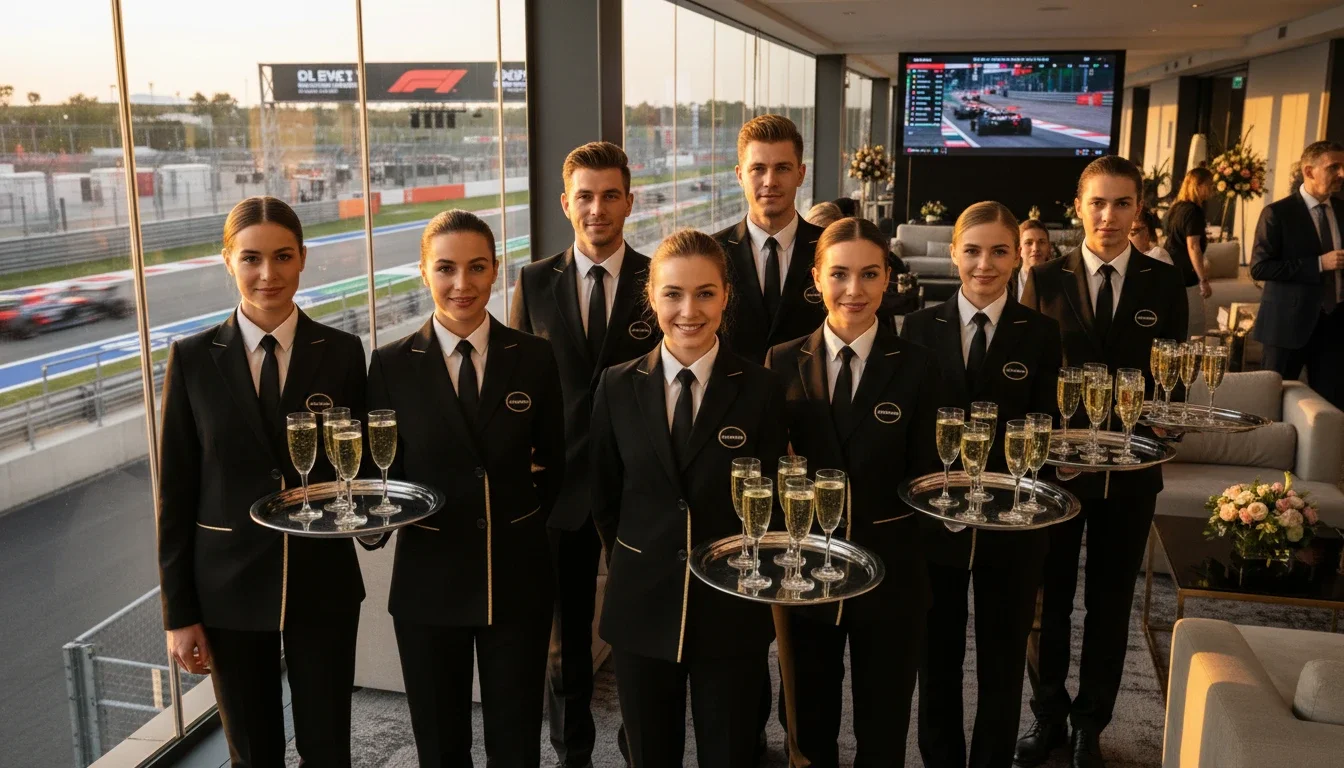
A confident, polished Elevate event staff team in formal uniforms ready to serve at a premium F1 event
What Separates Elite F1 Event Staff from the Rest
At this level of event, the difference between good and exceptional is not skill — it is character. Here are the qualities that separate world-class F1 hospitality staff from the broader market.
Discretion and Brand Sensitivity
Inside an F1 hospitality suite, conversations are not casual. Business relationships are discussed, competitive intelligence is shared, and personal relationships are navigated. The staff in the room are part of the furniture — they should hear everything and repeat nothing. This level of professional discretion is not something that can be taught in a shift briefing. It is developed through experience in high-stakes environments and reinforced by an agency culture that takes it seriously.
Composure Under Pressure
F1 events are beautiful chaos. Race schedules shift, VIP guests arrive unexpectedly, suites fill faster than anticipated, and the race itself creates surges of emotional energy that no logistics plan fully accounts for. Staff who have only worked structured corporate events can struggle with the pace and unpredictability.
The staff you want for Formula 1 have worked environments where the unexpected is routine — premium nightlife, major entertainment productions, multi-day award shows. They adapt without panic and solve problems without escalating every issue to management.
Vetting Standards That Match the Caliber of the Event
F1 hospitality is not the right environment to discover whether a staff member is as professional as they claimed on their application. By race weekend, you need certainty. That certainty comes from an agency that runs a genuinely rigorous vetting process — background checks, live interviews, training evaluations, and a track record of performance across prior events — not from an agency that recruits reactively and sends whoever is available.
Eleven8's Vetting Standard
Eleven8 Event Staff accepts only the top 3.5% of applicants. Every team member undergoes an 8-step evaluation process including references, background check, live interview, and a training and trial shift before they join our permanent roster. You are never receiving a new hire — you are receiving a proven professional.
How Elevate Staffs F1 Hospitality Across the US Calendar
Eleven8 Event Staff has built its reputation over 30 years and more than 10,000 events by staffing exactly the kind of high-pressure, high-profile environments that Formula 1 hospitality represents. Our clients include global names across entertainment, luxury goods, and technology — brands that do not compromise on the guest experience and expect the same standard from every staff member we place.
For F1 hospitality specifically, our approach is built around four principles:
Established rosters, not reactive recruiting: We maintain pre-vetted, rated staff in every US market. When you book with us for Miami, Austin, or Las Vegas, we are deploying from an existing team — not recruiting in response to your request.
Preferred team continuity: For sponsors activating across multiple US races, we build and maintain a preferred team that travels your activation's standards from city to city.
Dedicated account management: Every client has a single point of contact from booking through post-event recap. You are never navigating a staffing operation alone.
Built-in contingency: Every activation comes with backup coverage. If a team member cannot make it, a briefed replacement is already on standby — before the event starts.
Whether you are staffing a 20-person Paddock Club suite in Miami or a 200-person branded hospitality lounge in Las Vegas, the staffing infrastructure behind your experience should be as refined as the experience itself.
Ready to discuss staffing for your F1 hospitality program? Contact Elevate Event Staff to request a custom quote for your US Grand Prix activations.