World's Championship Horse Show: Marketing Around KY's Premier Equine Event
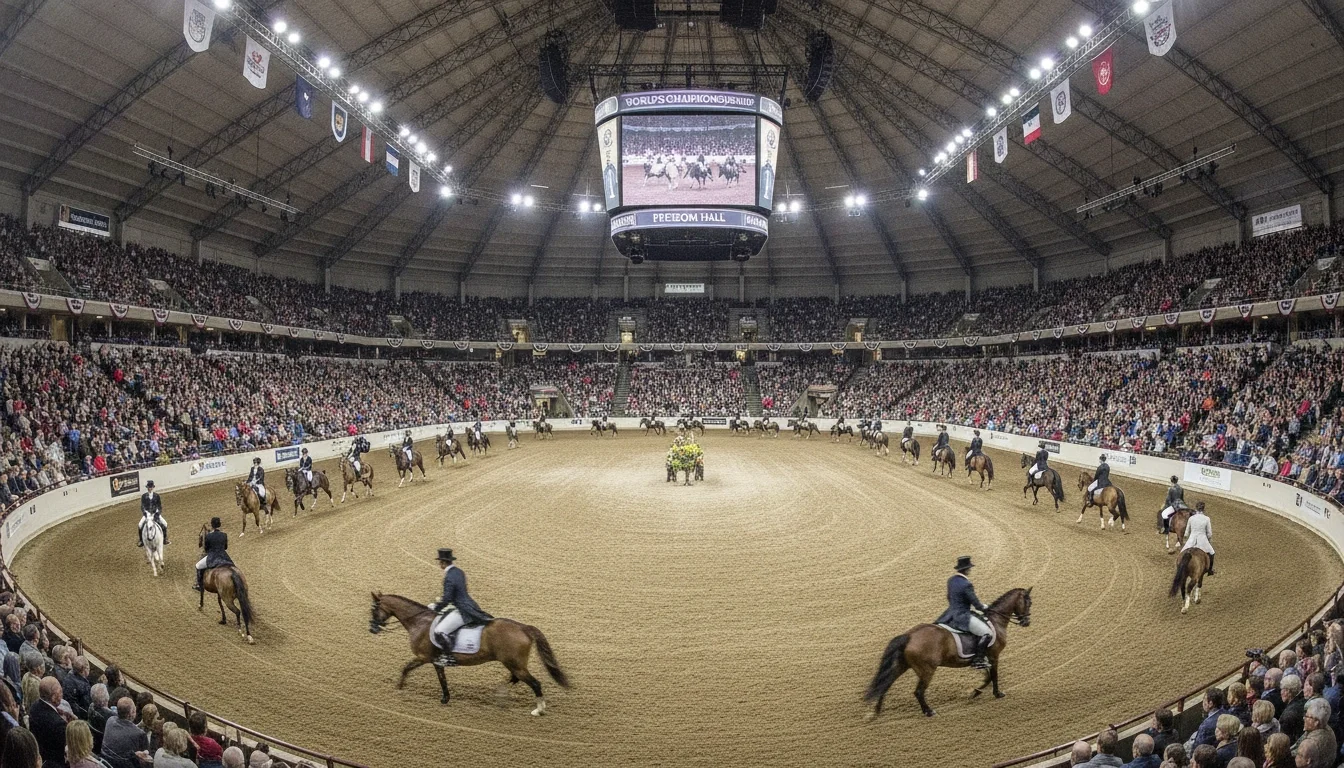
The main arena at Freedom Hall during the World's Championship Horse Show, Louisville, KY
Every August, Freedom Hall inside the Kentucky Exposition Center transforms into one of the most electrifying equestrian venues in the world. The World's Championship Horse Show draws thousands of competitors, trainers, owners, and spectators from across the globe — but for marketers and brand strategists, it represents something else entirely: an underutilized activation opportunity sitting at the intersection of heritage, affluence, and community.
If your brand has ever considered entering the equine marketing space — or if you're already active in sponsorships but looking for a high-impact regional venue — this guide is built for you. We'll walk through everything from the event's history and audience profile to sponsorship structures, staffing strategy, and how to measure what your investment actually returns.
What Is the World's Championship Horse Show?
A Century of Competition in Louisville
The World's Championship Horse Show has been held continuously since 1902, making it one of the oldest and most prestigious equine competitions in the United States. Sanctioned by both the American Saddlebred Horse Association (ASHA) and the United States Equestrian Federation (USEF), the event is held annually in late August at the Kentucky Exposition Center in Louisville — coinciding with the Kentucky State Fair.
Competitors earn the coveted title of World's Champion (WC), Reserve World's Champion (RWC), or the highest distinction, the World's Grand Championship (WGC). Divisions span a wide range of disciplines including Five-Gaited, Three-Gaited, Fine Harness, Hackney/Harness Ponies, Roadster, Saddle Seat Equitation, and In-Hand classes.
Event Scale, Audience, and Economic Impact
The scale of this event is not something most marketers are aware of until they see the numbers. Over 2,000 horses compete for more than $1.5 million in prizes across the eight-day run. Competitors arrive from all 50 states and several international markets. The event's economic impact on Louisville alone has been estimated at $8 million annually — a figure driven by hotel stays, dining, merchandise, travel, and vendor activity.
Because the WCHS runs concurrently with the 11-day Kentucky State Fair — itself drawing hundreds of thousands of visitors for live music, agricultural exhibits, carnival rides, and food — the event creates a layered audience that very few equine competitions can claim.
Why the WCHS Is a Hidden Gem for Brand Marketers
The Dual Audience Advantage: Equestrians + State Fair Crowds
Most equine events draw a narrow, deeply specialized audience. The WCHS is different. Because it runs inside the Kentucky State Fair, brands activating on-site have access to two very distinct audience segments simultaneously:
The Equestrian Community — owners, trainers, breeders, riders, and enthusiasts who are among the most brand-loyal consumers in any sport. A 2017 USEF survey found that 86% of equestrian enthusiasts are more likely to purchase from brands that sponsor events they attend. This is an audience that associates brand presence with endorsement.
The General State Fair Crowd — families, couples, community members, and tourists attending the broader Kentucky State Fair who represent mainstream consumer demographics. These attendees are more receptive to discovery-based brand experiences and sampling activations.
Few events in the country let a single brand activation speak to a legacy-minded equestrian buyer and a general consumer simultaneously. That overlap is the WCHS's secret weapon for marketers who know how to leverage it.
Audience Demographics That Brands Can't Ignore
The equestrian audience skews toward higher household incomes, advanced education levels, and significant discretionary spending. Research consistently places the sport's core demographic in the top income brackets, with a strong female majority (particularly in the amateur and junior divisions) and a growing youth participation segment. For luxury goods, financial services, automotive, lifestyle, and agricultural brands, the fit is near-perfect.
Meanwhile, the State Fair overlay brings in a broader, family-oriented demographic — ideal for CPG brands, food and beverage activations, family entertainment, and consumer electronics sampling campaigns.
Marketing and Sponsorship Opportunities at the World's Championship Horse Show
Official Sponsorship Tiers and Naming Rights
The WCHS offers formal sponsorship structures through the Kentucky State Fair and the event's organizing bodies. Major sponsorship tiers typically include naming rights for individual championship classes, which are announced throughout each evening session to audiences both in Freedom Hall and via the event's livestream. Class sponsorships can be particularly effective for niche brands targeting equestrian consumers because the announcement ties your brand name directly to the moment of winning — an emotionally charged association.
Larger presenting sponsorships may include branded signage in Freedom Hall, logo placement on the official event program, mention in pre-event press releases distributed to equestrian media outlets, and recognition on the official WCHS website and social channels.
On-Site Brand Activations and Experiential Booths
Beyond formal sponsorship, the vendor and activation footprint at the Kentucky Exposition Center during the State Fair is expansive. Brands can secure booth space in the exhibit halls adjacent to Freedom Hall, allowing for product demonstrations, sampling, lead capture, and direct consumer engagement throughout the day.
Equine-adjacent activations — equine health and nutrition brands, tack suppliers, western lifestyle labels, veterinary services — naturally resonate with the WCHS crowd. But premium lifestyle brands in hospitality, automotive, real estate, insurance, and finance have also found strong response rates when their activation is thoughtfully tailored to the audience.
The key to a successful activation at this event is having the right people running it. Brand ambassadors who understand the equestrian world — or who are briefed thoroughly before the event — dramatically outperform generic promotional staff. The audience is knowledgeable, discerning, and can tell immediately when a brand representative doesn't know the product or the space.
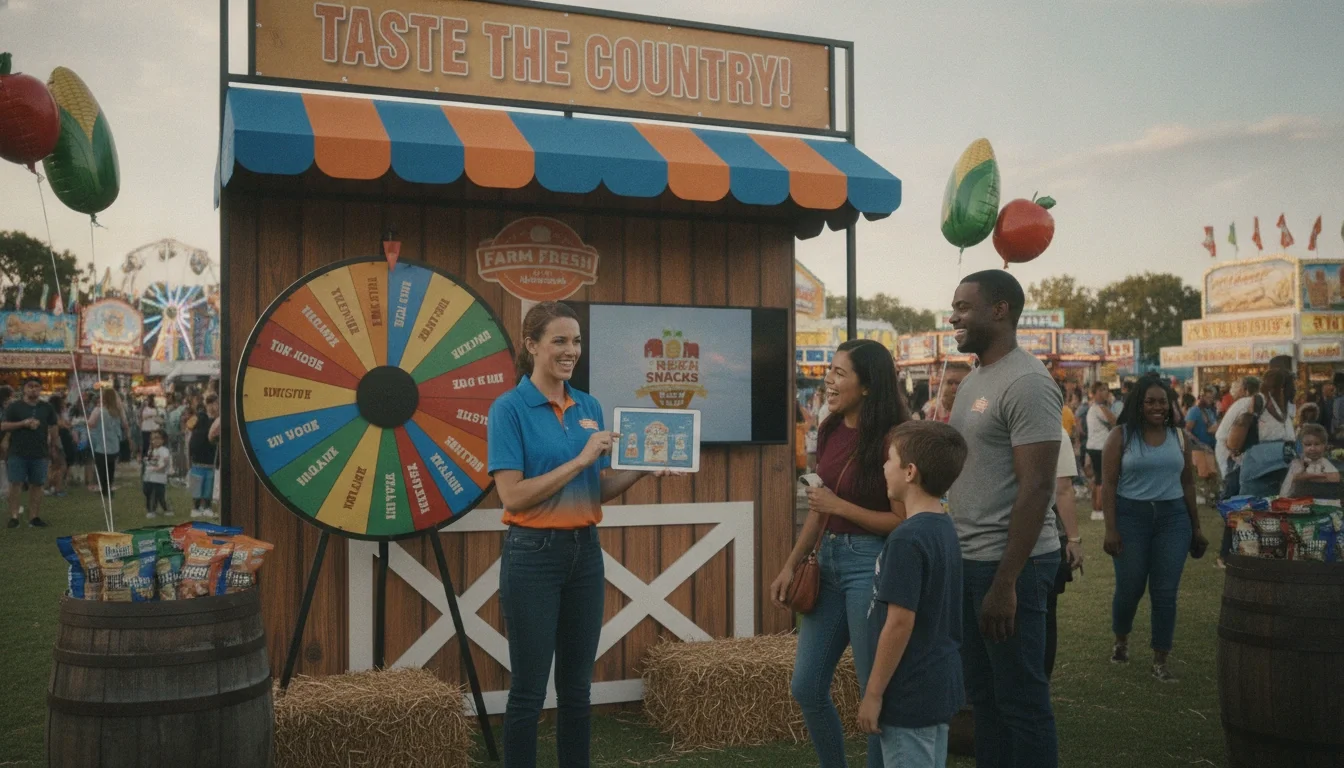
Brand ambassador engaging with visitors at an experiential marketing booth at a state fair event
Digital and Social Media Marketing Around the Event
Pre-Event Social Media Strategy
The WCHS builds significant anticipation in the equestrian community months before August. Brands with even a small presence in the equine space can begin publishing content tied to the event 6 to 8 weeks in advance. This includes rider spotlights, countdown content, behind-the-scenes stable previews (if you have partner access), and audience anticipation polls. Hashtags tied to #WorldsChampionshipHorseShow and #WCHS generates organic reach within equestrian communities on Instagram and Facebook — the dominant platforms for this demographic.
Live Event Content and Hashtag Campaigns
During the eight-day event, real-time social content outperforms pre-produced campaigns significantly. Assigning a dedicated content creator or social media ambassador to the event — someone capturing authentic moments in the arena, in the barn areas, and at your brand's activation — creates a stream of organic, relatable content that resonates far beyond the event's physical attendees. Partnering with equestrian influencers attending the show for coverage can extend reach into communities your brand may not otherwise access.
Post-Event Retargeting and Recap Content
Many brands underinvest in the post-event window, which is a mistake. A well-produced recap reel, a highlight article, or a roundup of champion horses and riders your brand recognized creates a second content cycle that extends visibility for weeks. Retargeting audiences who engaged with your event content — or who visited your booth and were captured digitally — with a follow-up campaign significantly improves conversion rates from event-driven brand awareness.
Event Staffing Strategy for Activations at the WCHS
No matter how strong your creative concept is, a brand activation is only as effective as the people executing it on the ground. At an event the scale of the World's Championship Horse Show — running eight full days with morning, afternoon, and evening sessions — staffing is not a detail. It is the execution.
How Many Staff Do You Need?
The answer depends on your activation footprint and session schedule, but a useful baseline for a mid-size brand booth at an eight-day equine event includes:
2–4 brand ambassadors per active session for consumer-facing engagement
1 lead capture or registration specialist at any data-collection point
1 team lead or on-site supervisor per shift for quality control and real-time problem-solving
Backup coverage built into your staffing plan — no-shows at multi-day events are an operational reality, not an exception
For activations that span both daytime State Fair hours and evening WCHS sessions, staffing needs may double. Working with an agency that provides pre-briefed backup for every block of staff eliminates the single biggest execution risk: arriving at your activation a person short.
Types of Event Staff for an Equine Activation
The staff roles most relevant to a WCHS brand activation include:
Brand Ambassadors — consumer-facing representatives trained on your product, messaging, and brand voice. The quality of your brand ambassadors directly determines the quality of your audience conversations.
Product Demonstrators — for brands with tangible products, hands-on demo staff who can explain features and handle the product confidently.
Registration and Lead Capture Staff — dedicated to managing sign-up stations, sweepstakes entries, digital capture tools, or CRM integrations.
Hospitality Staff — for private brand lounges, VIP areas, or hosted experiences within the event footprint.
Production Assistants — for brands managing complex set-up, teardown, or multi-day installation requirements.
Working with a Professional Event Staffing Agency in Louisville
For a multi-day event in Louisville, working with a staffing agency that already has an established roster in Kentucky — rather than scrambling to source last-minute local hires — is the difference between consistent brand representation and an unpredictable experience.
Eleven8's Louisville roster gives brands direct access to pre-vetted, event-ready staff with dedicated account management from inquiry through post-event recap. With 101.8% fulfillment rates and built-in backup coverage, activations run at full strength regardless of last-minute changes.
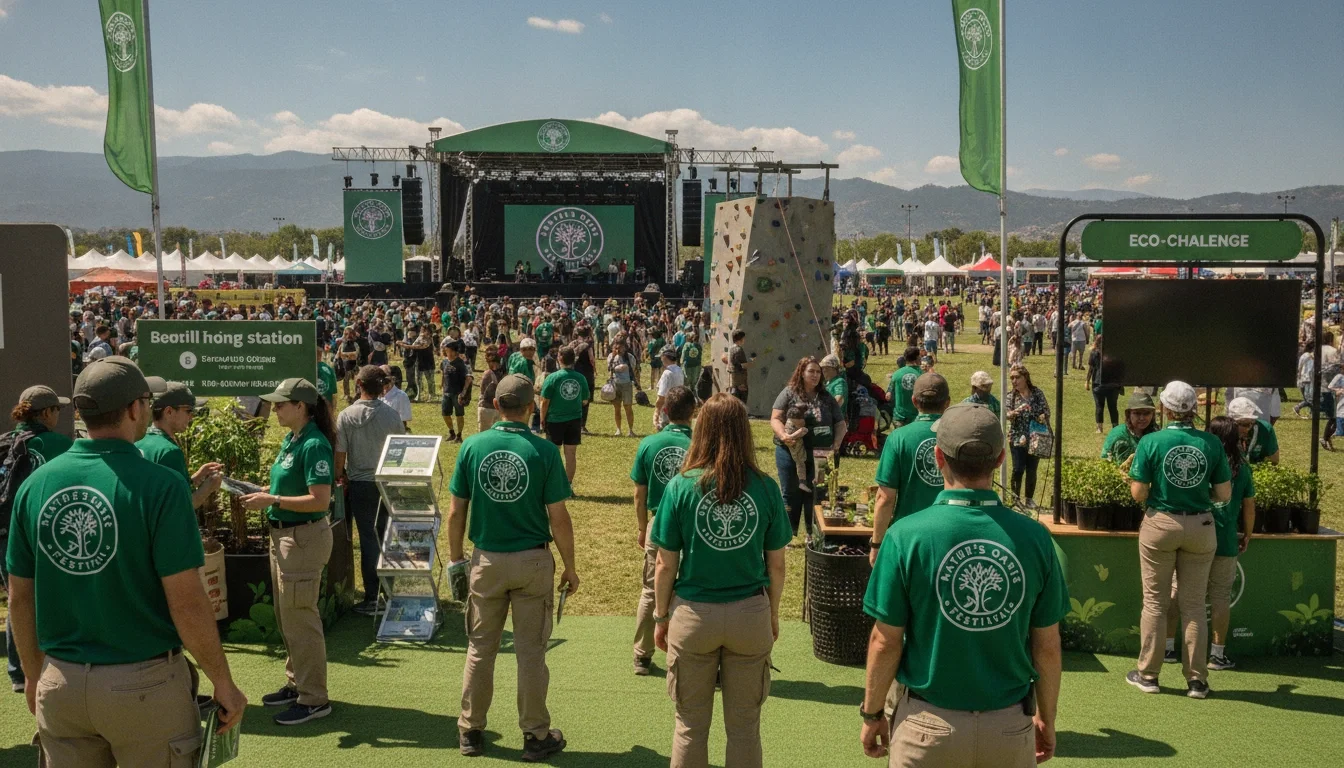
Professional event staff in branded uniforms working at a large-scale outdoor event activation
Operational Logistics for Brand Activations at Freedom Hall
Venue Layout and Foot Traffic Flow
Freedom Hall is a large indoor arena with surrounding concourse space and adjacent exhibit halls connected to the broader Kentucky Exposition Center campus. Understanding where spectator foot traffic flows — particularly the transition between the main arena and the State Fair grounds — is critical for positioning your activation. The highest-traffic windows typically occur in the 30 to 45 minutes before and after evening championship sessions, when the arena fills and empties with its most engaged audience.
Daytime hours on the fairgrounds attract a more diverse, general consumer audience. Brands with dual-audience messaging can effectively run distinct activation modes — a premium equestrian-focused experience during evening sessions and a broader consumer engagement during daytime hours.
Timing Your Activation with Competition Sessions
The WCHS schedules morning, afternoon, and evening sessions across eight days, with the most prestigious championship classes held during evening sessions in Freedom Hall. Planning your peak staffing and activation intensity around evening sessions — particularly the World's Grand Championship night — ensures your brand is present when the most invested, passionate audience is in the building.
During morning sessions, the barn areas become one of the most authentic access points to the equestrian community. Brands willing to establish a presence in the working environment (not just the spectator areas) often build deeper relationships with trainers, owners, and serious competitors than traditional sponsorship visibility alone achieves.
Permits, Insurance, and Compliance
Activations on Kentucky Exposition Center grounds require coordination with the venue's event management office for booth permits, electrical access, and vendor compliance documentation. If your brand is serving food, beverages, or operating any kind of promotional sweepstakes or giveaway, additional state and local compliance steps apply. Work with your event staffing partner and legal team well in advance of the event. Most professional event staffing agencies — including those with 35+ years of national experience — can provide Certificates of Insurance on request, which many venues require before granting vendor access.
Measuring ROI from Your World's Championship Horse Show Activation
KPIs to Track at Equine Events
The metrics that matter at an event like the WCHS vary by activation type, but a core measurement framework should include:
Total consumer engagements (conversations initiated, samples distributed, demos conducted)
Leads captured (name, email, or CRM data collected at the booth)
Branded impressions (foot traffic counts, social media reach during event tagging)
Conversion rate from event leads to downstream sales or app downloads
Brand lift (tracked via pre/post surveys if you have the infrastructure)
Staff performance scores (critical for multi-day activations — knowing which team members drove the best outcomes informs future staffing decisions)
Post-Event Reporting and Follow-Up Strategy
The most common failure point in event marketing is treating the event as the endpoint rather than the beginning of a customer relationship. Every lead captured at your WCHS activation should enter a post-event email sequence within 48 hours. The window of brand recall after a live event interaction is narrow — high-intent leads captured on Tuesday that don't receive follow-up until the following week have significantly lower conversion rates than those contacted within 24 to 48 hours.
For sponsorship-level investments, formal post-event reporting to your internal stakeholders should include documented impressions, lead data, social metrics, and a qualitative assessment from your on-site team. This documentation builds the business case for renewing or expanding your presence the following year.
Working with Eleven8 for Your Louisville Event Staffing Needs
Executing a multi-day brand activation at a flagship event like the World's Championship Horse Show requires more than enthusiasm — it requires operational infrastructure. Eleven8 Event Staff brings 35+ years of nationwide event staffing experience and a dedicated Louisville roster to ensure your activation runs seamlessly from day one through final teardown.
Every Eleven8 booking includes a dedicated account manager, pre-briefed staff matched to your brand and event type, built-in backup coverage, and 24/7 on-event-day support. Whether you need two brand ambassadors for a boutique sponsorship presence or 20 staff managing a large-scale experiential footprint, the operational framework is the same.