A Day in the Life of an Event Production Assistant: Real Insights + Career Tips
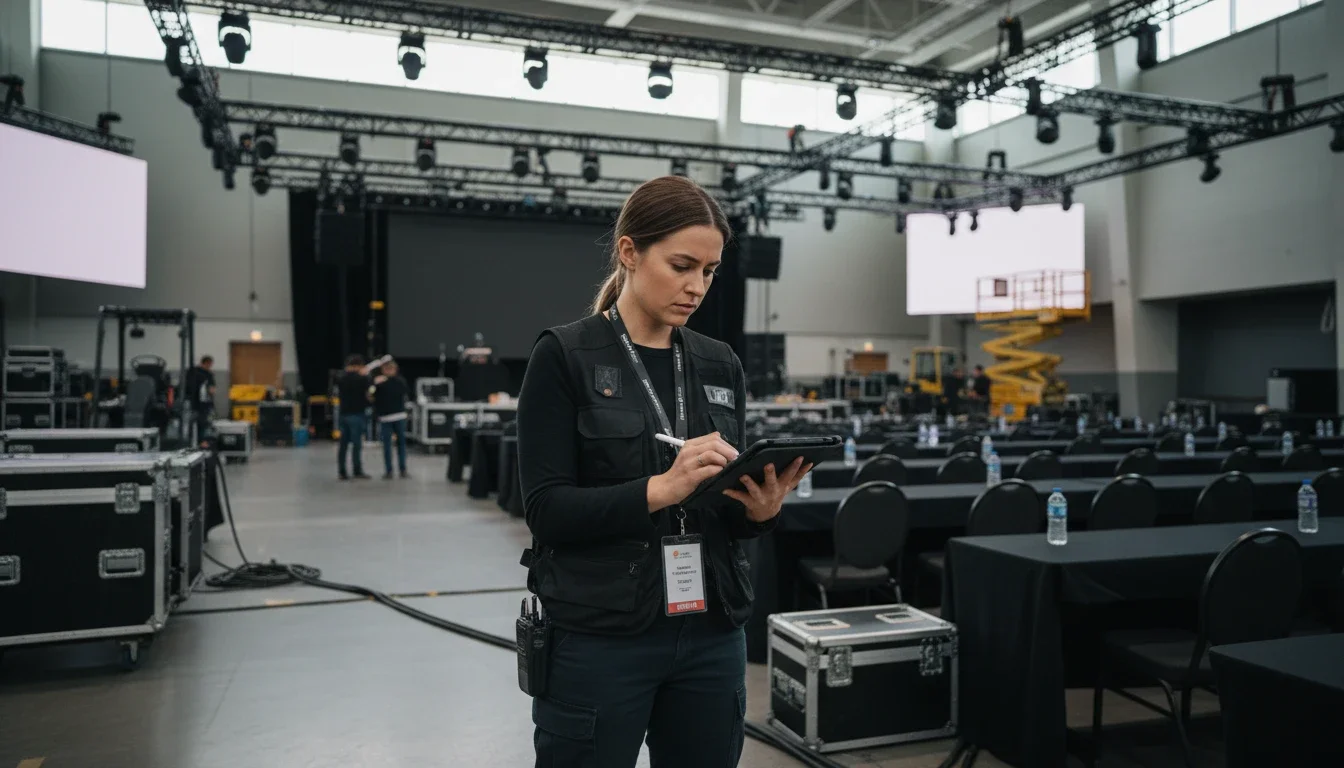
A professional event production assistant reviewing a run-of-show document during setup at a large corporate event venue
If you've ever attended a seamlessly run corporate gala, an electric brand activation, or a large-scale convention and thought 'how does this all come together?' — the answer usually starts with an event production assistant.
This role sits at the heartbeat of live events. It's hands-on, fast-moving, and rarely glamorous in the Instagram sense of the word — but for people who thrive on problem-solving, teamwork, and the electric energy of event day, it can be one of the most rewarding entry points into the events industry.
In this guide, we're pulling back the curtain on what this role actually looks like from first alarm to final breakdown. Whether you're considering a career in event production, trying to understand the staffing structure behind the events you plan, or simply curious about who keeps things running smoothly behind the scenes — this is the real, unfiltered picture.
What Is an Event Production Assistant?
An event production assistant is an entry-level professional who supports the execution of live events by assisting with logistics, setup, communication, and breakdown. They typically report to an event manager, event coordinator, or event captain — and they're responsible for making sure every moving part gets where it needs to be, when it needs to be there.
Unlike a general administrative assistant, a production PA is a physical, on-the-ground role. Think less desk, more headset. You're transporting equipment, communicating across departments, keeping vendor relationships on track, and being the calm presence that prevents small issues from becoming big ones.
According to Eleven8 Events, event production assistants are 'versatile, hands-on, and essential to ensuring the smooth execution of events from load-in to breakdown.' On complex events, a great PA is the glue holding the whole day together.
Event Production Assistant vs. Film/TV PA: Key Differences
A common source of confusion: when people search for 'day in the life of a production assistant,' much of the content they find relates to film and television production assistants — a completely different role in a completely different industry. Here's how the two compare:
| Dimension | Event Production PA | Film / TV PA |
|---|---|---|
| Reports to | Event Manager / Captain | Assistant Director (AD) |
| Work environment | Venues, conventions, outdoor activations | Film sets, TV studios, location shoots |
| Schedule | Event-based (weekends/evenings) | Production schedule (early mornings) |
| Key tasks | Setup, logistics, guest management, breakdown | Scripts, background artists, errands |
| Career path | Event coordinator, production manager, agency director | AD, director, producer |
Who Does a Production Assistant Report To?
On most events, the PA reports directly to an event coordinator or event captain. At larger productions, there may be a production manager overseeing multiple coordinators, each with their own PA support.
Staffing agencies like Elevate Event Staff typically assign an event captain to each activation — a seasoned team leader introduced to clients 24 hours before the event. PAs are expected to be briefed in advance and arrive ready to execute without needing constant direction.
The Night Before: Preparation Starts Before Day One
One of the clearest markers between a good event PA and a great one? Preparation. The day doesn't start at load-in — it starts the evening before.
Here's what experienced PAs do the night before an event:
Review the run-of-show document in full (know every scheduled segment, transition, and vendor cue)
Confirm call time, venue address, and parking logistics
Review uniform requirements and prepare clothing accordingly
Charge all personal devices (phone, walkie-talkie if issued in advance)
Pack a go-bag: comfortable shoes, water bottle, snacks, a small notepad, pens, portable charger
Re-read any briefing documents from the client or agency
Pro Tip: If you've been provided a vendor sheet or floor plan, study it. Arriving with spatial awareness of the venue layout can save you 30 minutes of confusion on the day — and makes you look extremely competent in front of your event captain.
Morning (6 AM-8 AM): Arrival, Load-In & Setup
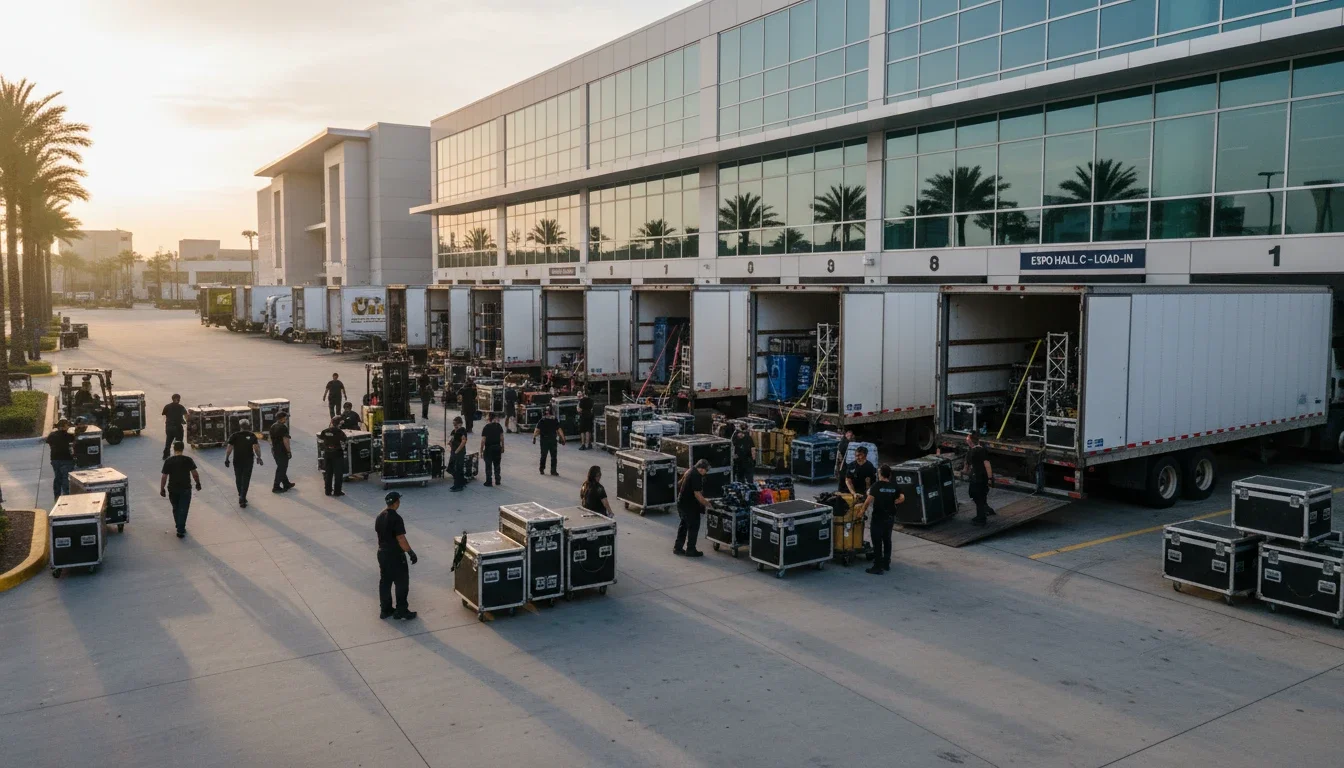
Event production staff unloading equipment from trucks during early morning load-in at a convention center
Most event PAs arrive 15-30 minutes before their official call time. This isn't mandated — it's just what the best ones do. Those first minutes before the rest of the team arrives are invaluable for getting oriented.
What 'Load-In' Actually Means
Load-in is the process of physically transporting all event equipment, furniture, staging, AV gear, branding materials, and supplies from delivery vehicles into the venue. It's physical work. Plan for it.
Typical load-in tasks for a PA include:
Directing freight elevator usage and managing traffic flow between loading dock and venue floor
Assisting with furniture placement according to the floor plan
Helping set up pipe-and-drape, signage, and step-and-repeat backdrops
Moving catering equipment into position for the F&B team
Coordinating with AV vendors on cable runs and staging placement
Your First Priorities on Arrival
The moment you walk in, there are a few things to do immediately:
Check in with your event captain or coordinator and confirm your assignments for the morning
Do a quick walk of the venue to orient yourself — know where restrooms, loading docks, green rooms, and back-of-house areas are
Locate your radio/walkie-talkie if applicable and test it on the correct channel
Identify any vendor contacts who will need to be checked in during load-in
Review the morning schedule and flag any immediate questions before things get busy
Pro Tip: Physical stamina is a real factor. You may be on your feet for 10-12 hours, regularly lifting 30-40 pounds. Invest in supportive footwear. This isn't a detail — it's a career decision.
Mid-Morning (8 AM-12 PM): Supporting the Production Machine
Once load-in is underway, the event PA becomes a critical communication and logistics hub. The event isn't open yet, but behind the scenes, dozens of decisions are being made per hour.
Communication & Logistics During Setup
Expect to be the person who:
Receives and redirects vendors arriving at the loading dock
Communicates room-readiness updates to the coordinator as each setup milestone is completed
Tracks which deliveries have arrived and flags missing items
Liaisons between the AV team, catering team, and decor vendors to prevent scheduling conflicts
Handles last-minute supply runs (extra extension cords, tape, printed signage, etc.)
Clear, calm communication is the skill most valued in this phase. You will be pulled in five directions simultaneously. The PAs who excel are the ones who stay quiet when things are calm, and crisp when things are chaotic.
Working with the Event Captain and Staffing Team
On events staffed through an agency like Eleven8 Events, the PA often works alongside a team of brand ambassadors, hospitality staff, and specialized crew. The event captain oversees this team and is your primary point of escalation.
Your job in this phase is to make the event captain's job easier. If you can solve a problem without escalating it, do. If you can't, escalate clearly and quickly with context ('The florals haven't arrived and we're 90 minutes from doors' is more useful than 'Something's wrong with the flowers').
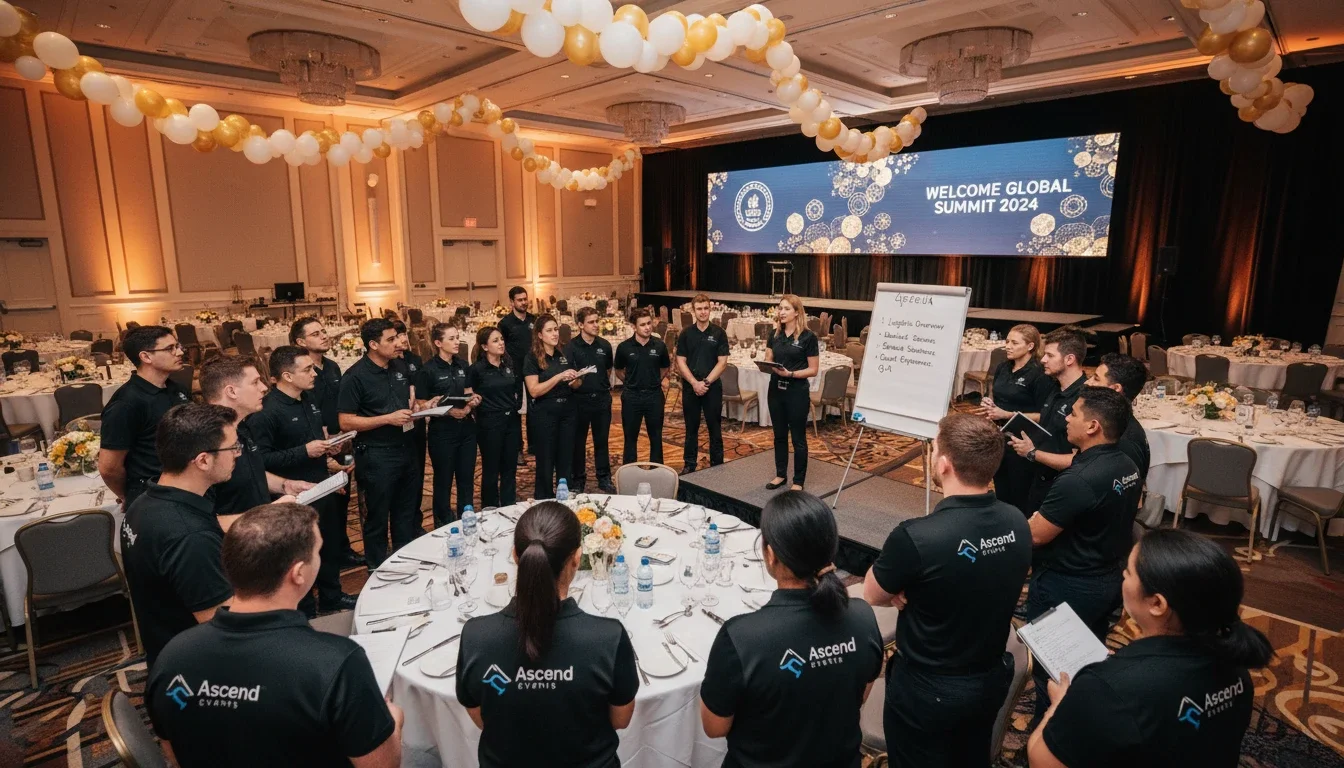
Event staffing team gathered for a pre-event briefing inside a decorated corporate event ballroom
Event Showtime (12 PM-6 PM): Staying Calm When Everything Happens at Once
Doors open. Guests arrive. And suddenly, all that preparation gets tested in real time.
This is the phase that separates experienced PAs from first-timers. The key isn't knowing everything — it's knowing what to prioritize and maintaining composure when things don't go according to plan (because something always does).
Guest-Facing Responsibilities
Depending on the event type, the PA may have direct guest interaction. Common responsibilities include:
Welcoming and directing guests at entry points
Assisting with registration and check-in alongside dedicated registration staff
Providing wayfinding support (pointing guests toward restrooms, coat check, session rooms)
Supporting accessibility accommodations for guests with specific needs
Handling general inquiries that registration staff may escalate
On events managed by Elevate Event Staff, the standard expectation is that all staff — including PAs — are briefed in advance and arrive prepared to represent the client's brand with professionalism. The PA role during show hours is often invisible in the best possible way: guests should feel like everything is effortless.
Backstage Support Duties
Even when guests are present, most of the PA's work remains behind the scenes:
Monitoring the run-of-show and alerting the coordinator to upcoming transitions
Managing the speaker or talent green room (water, printing speaker bios, coordinating AV cues)
Coordinating with catering on meal service timing
Supporting the stage manager with prop and equipment movement between sessions
Tracking attendee numbers or guest badges if requested by the client
Managing vendor strike times and supervising dock activity during the event
How to Handle On-Site Problems Like a Pro
Equipment fails. A speaker runs long. A sponsor's branded materials arrive at the wrong entrance. These aren't emergencies — they're just event production.
The mental model that works: slow down your thinking to speed up your response. When something goes wrong, pause for three seconds, identify who needs to know and what resource can fix it, then execute. Panic is contagious. Calm problem-solving is, too.
Industry Insight: The most reliable agencies — like Eleven8 Events — build backup coverage directly into their staffing plans. Experienced PAs know to mirror this behavior individually: always have a plan B, always know who to call, and never present a problem to a client without at least an outline of a solution.
Post-Event (6 PM+): Breakdown, Wrap-Up & What Comes Next
The event ends. The work doesn't.
Post-event breakdown — also called 'strike' — is often as physically demanding as load-in, and it happens when the entire team is already tired. This is where professional PAs distinguish themselves through grit and attention to detail.
Load-Out and Strike
Strike responsibilities typically include:
Dismantling furniture, staging, and decor according to venue reset requirements
Returning borrowed or rented equipment to the appropriate vendors
Supervising the packing and loading of the client's materials
Ensuring the venue is returned to its original condition — including removing all event signage, tape residue, and trash
Completing any required vendor sign-offs or load-out documentation
Strike is not the time to disappear. Experienced coordinators and staffing agencies actively notice who sees the event through to the end. It's one of the most reliable signals of professionalism in this industry.
Debrief and Documentation
After the physical work wraps, a few administrative tasks remain:
Update any production spreadsheets or run-of-show logs with notes on what changed
Flag any vendor issues, missing items, or equipment damage in a post-event report
Confirm your hours with your event captain for accurate payroll processing
Send a brief wrap-up email to your coordinator if requested — including observations that would improve the next event
Pro Tip: That last step — the post-event note — is something few PAs actually do. Those who do it consistently become the first call for the next event. Agencies remember who makes their coordinators' lives easier.
The Skills That Make a Great Event Production Assistant
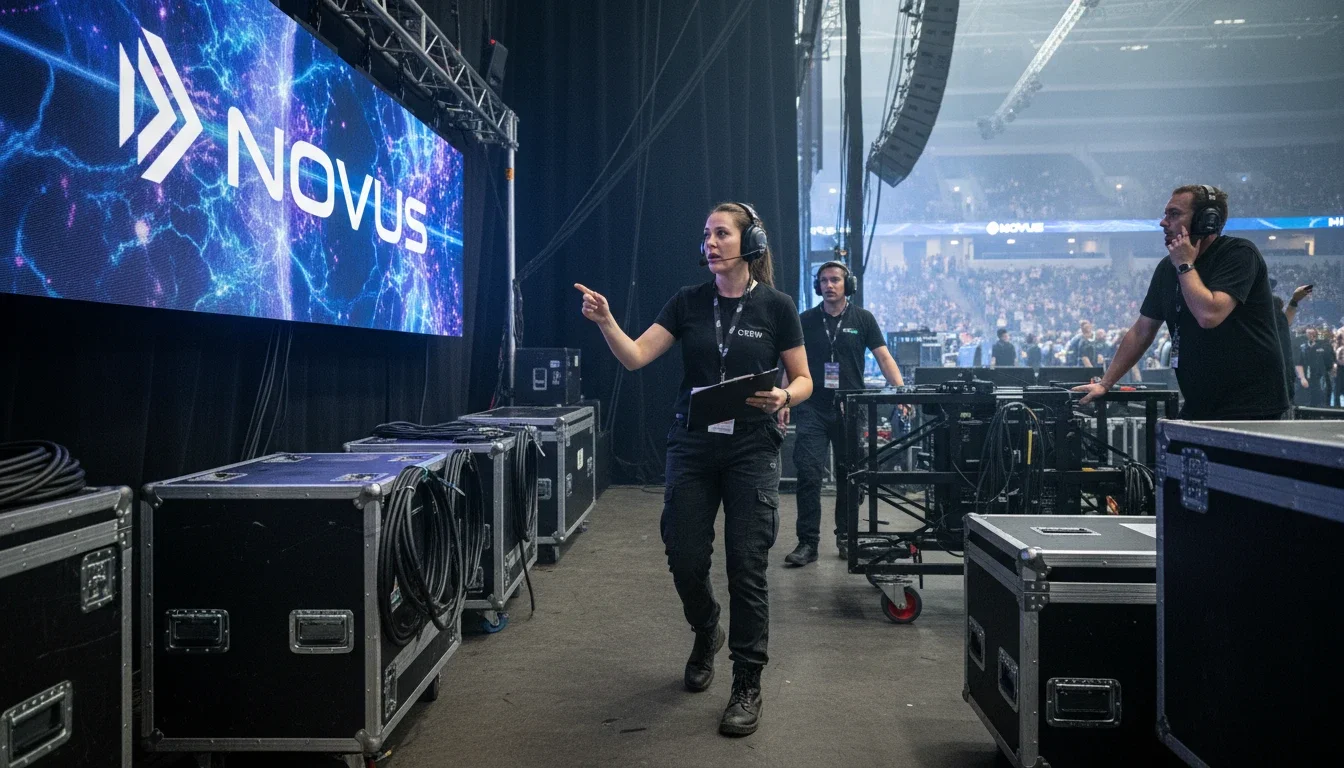
Event production assistant with a headset coordinating logistics backstage during a live brand activation event
Hard Skills
Reading and working from a run-of-show or production schedule
Basic AV literacy (understanding stage monitors vs. FOH audio, cable types, signal flow)
Floor plan interpretation
Vendor coordination and communication
Basic event software familiarity (planning tools, shared scheduling docs)
Physical stamina and safe lifting technique (often lifting 30-50 lbs repeatedly)
Soft Skills That Agencies Actually Look For
When staffing agencies evaluate candidates for event production roles, technical knowledge is secondary to behavioral traits. The most consistently cited qualities include:
Adaptability — the ability to shift tasks instantly without losing focus
Proactivity — identifying what needs to be done before being asked
Communication clarity — short, specific, calm verbal updates under pressure
Discretion — respecting client confidentiality and guest privacy at high-profile events
Dependability — arriving on time (or early), fully prepared, every single time
Positive attitude — which sounds obvious until you're 10 hours into a 14-hour event day
Agencies like Elevate Event Staff admit only the top 3.5% of applicants to their roster. The screening is built around these behavioral signals — not resumes.
How to Land Your First Event Production Assistant Role
Working with a Staffing Agency
One of the most direct paths into event production is through a professional staffing agency. Agencies like Eleven8 Events place pre-vetted staff at events ranging from intimate private gatherings to conventions with 140,000+ attendees. For candidates, the benefits are significant:
Immediate exposure to a variety of event types (corporate, brand activation, convention, awards)
Mentorship through experienced event captains
A resume-building portfolio without needing to know a specific client directly
The ability to demonstrate reliability before pursuing full-time coordinator roles
Building Your Resume for Event Production
If you're starting from zero, prioritize experience over credentials. A few ways to build your portfolio:
Volunteer as a production assistant at local festivals, nonprofit galas, or university events
Assist event coordinators at catering companies or wedding planners — the skills transfer directly
Complete a certificate program through Meeting Professionals International (MPI) or the International Live Events Association (ILEA)
Document experience in specific, results-driven language: 'Assisted with load-in and setup for a 400-person corporate gala across 3 venue spaces' beats 'Helped with events' every time
Career Path: Where Can This Role Take You?
The event production assistant role is intentionally a stepping stone. The industry values hands-on experience above almost everything else, and PAs who show initiative tend to move quickly.
A typical progression:
Event Production Assistant (entry level, 0-2 years)
Event Coordinator / Event Captain (2-4 years)
Senior Event Coordinator / Production Manager (4-7 years)
Director of Events or VP of Event Production (7+ years)
Independent Event Producer / Agency Owner
Specializations along the way might include brand activation management, experiential marketing production, or luxury hospitality coordination — each commanding significantly higher earning potential than the entry-level role.
The U.S. Bureau of Labor Statistics reports that meeting, convention, and event planners earn a median annual salary of approximately $58,000, with the top 10% earning well above $90,000. That trajectory starts exactly where this article does — with a 6 AM call time and a walkie-talkie. For more on the industry, the Events Industry Council publishes annual workforce and compensation data.