How to Budget for a Production Assistant on Your Next Event
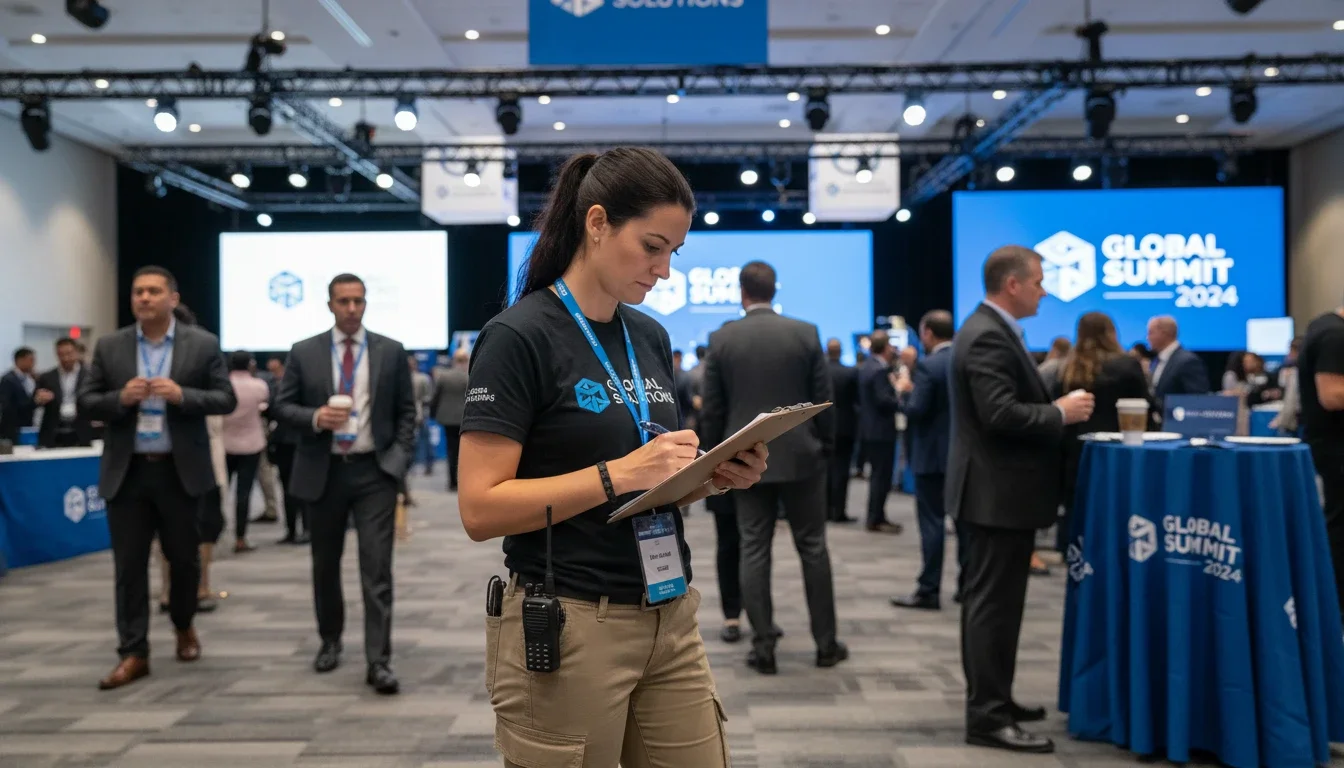
A professional production assistant reviewing a run-of-show clipboard at a branded corporate event
You've got the venue locked. The caterers are confirmed. The brand activation looks flawless on paper. But as the event date closes in, one question keeps surfacing: do you have the right people behind the scenes to actually pull this off?
For many event producers, corporate planners, and marketing teams, a production assistant (PA) is the unsung hero who keeps everything moving. But budgeting for that role — especially if you've never hired one before — can feel like guesswork.
This guide strips away the ambiguity. You'll learn exactly what a production assistant does at a live event, what drives the cost up or down, and how to build a realistic budget before you start making calls to staffing agencies.
What Does a Production Assistant Do at an Event?
A production assistant at a live event is the person who bridges the gap between planning and execution. While the event producer focuses on the big picture, the PA handles the granular tasks that keep the machine running.
Typical responsibilities include:
Coordinating vendor arrivals and load-in/load-out logistics
Managing the event timeline (run of show) and flagging delays
Communicating between departments — AV, catering, venue staff, talent
Setting up and striking event materials, signage, and branded elements
Escorting guests, speakers, or VIPs to designated areas
Troubleshooting on-the-fly when things go sideways
Supporting the lead event producer or event director with any tasks
In short, a PA is a Swiss Army knife. They're not the person who designed the event — they're the person who makes sure every moving part is where it needs to be when it needs to be there.
Production Assistant vs. Event Lead: Know the Difference
These two roles are often confused, and the distinction matters for your budget. A production assistant supports the event and executes specific tasks as directed. An event lead (sometimes called a production lead or event captain) carries broader authority — they manage the staff team, make real-time decisions, and serve as the primary point of contact for the producer.
For smaller events, a strong PA can fill both roles. For larger productions, you'll want to budget for at least one event lead plus additional PAs underneath them. At Elev8.la, for example, clients are introduced to a designated event captain 24 hours before their event — a single point of command who keeps the entire crew aligned.
Why Getting the Budget Right Matters
Understaffing is one of the most common and costly event mistakes. When you bring in fewer production assistants than the event actually requires, the gaps show up fast — delayed setup, confused vendors, missed cues, and a guest experience that feels chaotic rather than seamless.
Overstaffing has its own costs too. Unnecessary personnel on a tight event floor create congestion and inflate your labor line without adding value.
"The standard rule of staffing is providing at least 1 assistant for every 12 guests for smooth event operations." — vFairs Event Budget Guide
Getting the PA budget right means you're building for the event you're actually running — not a best-case scenario or a worst-case panic. The sections below give you the framework to do exactly that.
What Factors Drive Production Assistant Costs?
PA pricing isn't one-size-fits-all. Several variables will push the number up or down, and understanding them puts you in control of your budget.
Event Size and Duration
The bigger and longer the event, the more you'll spend on production support. A two-hour product launch with 75 guests has very different staffing demands than a three-day convention with 2,000 attendees. Duration also matters — PA billing is time-based, and pre-event prep, load-in, the event itself, and strike can add up to 10 to 14 hours for what feels like a 5-hour event.
Scope of Responsibilities
A PA running a single department (say, vendor coordination) costs less than one wearing six hats across the entire production. Before you contact a staffing agency, take the time to scope the role clearly. What does this person own? Which departments do they interface with? Are they needed for setup only, or the full event lifecycle? A defined scope protects your budget and ensures the PA you hire is the right fit.
Direct Hire vs. Staffing Agency
Hiring a PA directly through job boards or freelance networks can look cheaper at first glance. But factor in the time spent vetting candidates, coordinating logistics, managing payroll compliance, and carrying the risk of a no-show — and a staffing agency often delivers better value. A reputable agency like Elev8.la not only pre-vets every PA but also guarantees backup coverage, handles contracts, and provides an event captain to oversee performance on the day.
Geography and Market Rates
PA rates vary meaningfully by city. Los Angeles and New York typically command higher rates than markets like Atlanta or Phoenix — reflecting both cost of living and higher demand from the entertainment, tech, and brand activation industries. For events in LA specifically, budget for market-rate pricing rather than national averages.
Timing and Lead Time
Booking late costs money. Staffing agencies frequently apply premium pricing for short-notice requests. Booking within two weeks of your event can add 20 to 30% to your hourly rate compared to booking three to six weeks out. For peak seasons — awards season in LA, conference season in spring and fall, or major brand tentpole activations — book even earlier.
Production Assistant Cost Ranges: A Practical Breakdown
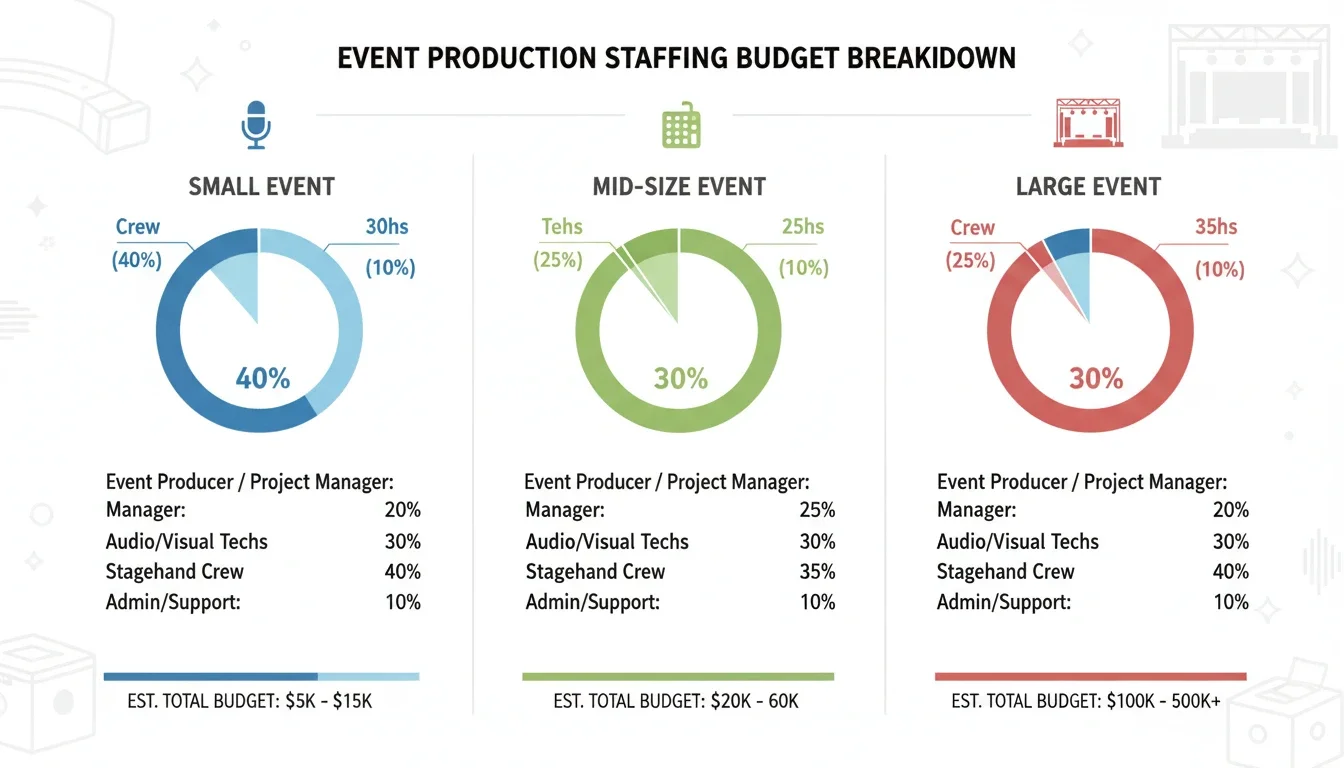
Infographic showing event production staffing budget breakdown: small, mid-size, and large event scenarios
Hourly Rate Ranges
Production assistants for live events typically bill on an hourly basis. Based on current market data across major U.S. markets:
Entry-level / general PA: $18 to $25 per hour
Experienced event PA: $25 to $40 per hour
Senior PA / production lead: $40 to $65+ per hour
Specialized PA (AV-familiar, bilingual, brand-experienced): $45 to $75+ per hour
Most staffing agencies also apply a service or placement fee of 15 to 25% on top of the PA's hourly rate. This fee covers vetting, management, insurance, backup coverage, and coordination — costs you'd otherwise absorb if hiring direct.
Day Rate Expectations
For longer events, some agencies and freelance PAs quote a day rate rather than an hourly figure. Day rates typically assume an 8 to 10 hour shift, with overtime kicking in thereafter. A common freelance PA day rate ranges from $150 to $300 per day depending on market and experience. Agency-placed PAs in LA will typically sit at the higher end of that range, reflecting the premium market.
Small Intimate Events (Under 100 guests)
For a product launch, private dinner, or intimate corporate reception, budget for 1 to 2 production assistants at approximately 6 to 8 hours each. Including setup and breakdown, a realistic PA labor budget for this event type falls between $300 and $700 total, depending on scope and the agency or freelance route you take.
Mid-Size Corporate or Brand Events (100–500 guests)
A branded activation, conference breakout, or corporate gala at this scale typically requires 2 to 4 PAs plus at least one event lead. Budget $1,200 to $3,500 in PA labor, inclusive of agency fees. If the event runs multiple days or requires significant pre-event logistics, add proportionally.
Large-Scale Productions (500+ guests or multi-day)
Convention staffing, major brand activations, award season events, or festivals at this scale require a full production team. Budget $4,000 to $15,000 or more in PA and event lead labor depending on scope, event length, and specialization needs. A senior staffing partner will help you right-size the team for your actual run-of-show.
Hidden Costs and Budget Killers to Watch For
The hourly rate is only part of the story. Before finalizing your budget, make sure you've accounted for the following:
Overtime rates: Most markets bill time-and-a-half after 8 hours. A 12-hour event day gets expensive quickly.
Meal and break requirements: Depending on jurisdiction and shift length, you may be required to factor in paid meal breaks.
Travel and parking: In LA especially, if the event venue is outside a central metro zone, travel time or mileage may be billed.
Clarify this upfront: Some agencies charge for branded uniforms or event-specific attire.
Last-minute change fees: Adding PAs within 48 to 72 hours of the event often triggers a rush fee.
Contingency buffer: Industry best practice is to set aside 10 to 15% of your total staffing budget for unexpected needs. Don't skip this line item.
Pro Tip: Ask your staffing agency for a fully loaded quote — not just the hourly rate. The real number includes service fees, overtime assumptions, and any extras. A transparent agency will provide this without hesitation.
How to Scope the Role Before You Budget
The single best thing you can do before requesting a quote is to define the PA's scope of work. A vague "general event assistant" request will return a vague quote. A defined role returns a precise budget.
Pre-Event Prep Hours
How many hours does the PA need before the event day? Consider: venue walkthroughs, vendor briefings, material prep, load-in coordination. These hours are billable and often overlooked in initial budgets.
Day-of Duties
Map out your run of show and identify every task that needs human support. Assign each task to a role. This exercise frequently reveals that you need more hands than you initially thought — or that certain tasks require a more specialized person than a general PA.
Post-Event Wrap
Strike, return logistics, vendor check-out, and final walkthroughs can add 1 to 3 hours after the event ends. Include this in your PA's scheduled shift. Events that run long without planning for overtime create billing surprises.
Budgeting Framework: A Step-by-Step Approach

Event planner and staffing coordinator reviewing event logistics plan at a Los Angeles brand activation
Follow this five-step framework to build a production assistant budget you can actually stand behind:
Map your run of show and identify every task requiring hands-on support. Note total hours including setup and strike. Define your event scope.
Determine whether you need general PAs, a production lead, or both. The distinction affects your rate range significantly. Categorize role complexity.
Multiply expected hours by the appropriate rate range for your market. Use the higher end of the range for LA events. Estimate total hours per role.
Apply a 20% buffer to cover service fees, last-minute changes, or unexpected overtime. This is not optional — it's standard practice. Add agency fees and contingency.
Contact your staffing partners with your scoped brief, not just a headcount request. Itemized quotes allow genuine comparison. Request itemized quotes.
When to Use a Staffing Agency vs. Hiring Direct
Both routes have legitimate use cases. Here's how to decide:
Use a staffing agency when:
You need vetted, experienced professionals without spending hours screening candidates
Your event is high-stakes or client-facing — no room for no-shows or underperformers
You want built-in backup coverage if a PA cancels day-of
You need a coordinated team (lead + multiple PAs) rather than a single hire
You're working in a market like Los Angeles where the talent pool and event standards are competitive
Consider direct hire when:
The event is internal and low-stakes
You have an existing freelance relationship and the person is proven
Budget is extremely constrained and you can absorb the vetting and coordination risk
For most professional events — especially brand activations, corporate galas, conventions, or any event where guest experience is the product — a staffing agency is the smarter financial decision when total risk and coordination costs are factored in.
How Many Production Assistants Do You Actually Need?
There's no universal formula, but there are practical benchmarks that experienced producers rely on:
One PA per 50 to 75 guests for general event support
One dedicated PA per major vendor type (AV, catering, décor, entertainment) for complex productions
One event lead for every 3 to 5 PAs on larger teams
At least one PA whose only job is guest experience/flow for VIP or high-profile events
When in doubt, right-sizing slightly upward is almost always worth it. The cost of one additional PA is far smaller than the cost of a visible operational failure in front of clients, guests, or brand partners.
Working With a Staffing Partner in Los Angeles
Los Angeles is one of the most demanding event markets in the country. Between award season, major brand activations, entertainment premieres, and a year-round convention calendar, the competition for premium event talent is real.
Working with an established LA-based staffing partner means you're not rolling the dice on talent quality. At Elev8.la, every production assistant and event lead is vetted through a rigorous process that admits only the top 3.5% of applicants. Clients working with brands like Nike, Porsche, Versace, The Academy, and Netflix trust that standard — and your guests will feel the difference.
The agency model also means you get dedicated account management, 24/7 availability, and a named event captain introduced 24 hours before your event. These aren't nice-to-haves for high-stakes events — they're the infrastructure that makes execution possible.
Whether you're staffing an intimate product launch in Silver Lake or a 5,000-person convention at the LA Convention Center, the right production assistant budget starts with the right staffing partner. Request a quote from Elev8.la and get a custom staffing plan built around your exact event needs.