Avenue of States Activations: Borrowing Buzz From the State Buildings
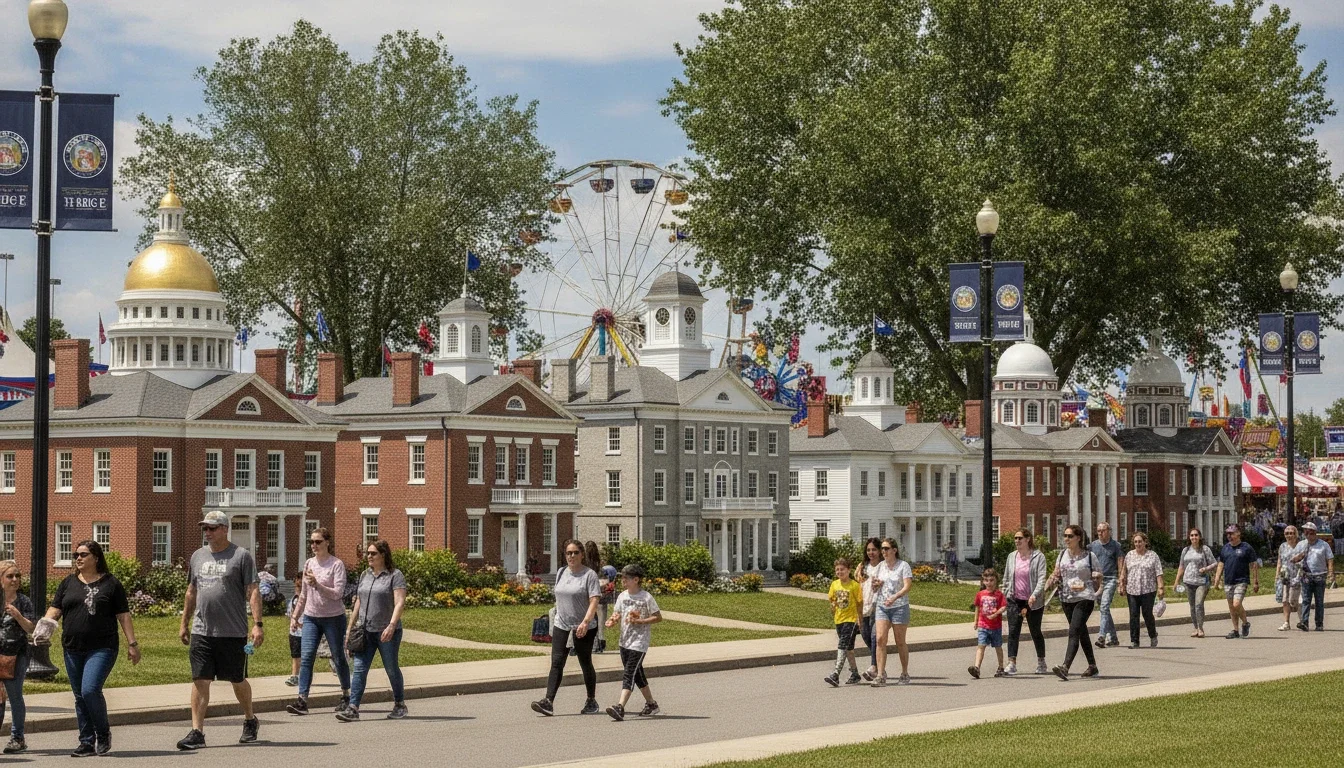
The Avenue of States at The Big E, showing New England state house replicas lined along the fairgrounds in West Springfield, MA
Every September, 1.5 million people walk through the gates of the Eastern States Exposition in West Springfield, Massachusetts. They come for the fried dough, the livestock shows, the nightly Mardi Gras parade — and inevitably, they walk the Avenue of States.
For brands willing to look beyond the midway, the Avenue of States is one of the most underutilized activation environments in American experiential marketing. Six full-scale New England statehouse replicas, each representing a state and operated by that state's government, drawing enormous daily foot traffic from loyal, regionally proud audiences who arrive with time to browse and money to spend.
This article breaks down exactly how brands can leverage state-building activations at The Big E, what makes the Avenue of States uniquely effective as an experiential marketing canvas, and what it takes to staff these activations so they actually convert.
What Is the Avenue of States?
A Venue Built on Regional Pride and Foot Traffic
The Avenue of States is the centerpiece of The Big E's fairground layout. It contains life-size replicas of the six original New England statehouses — Massachusetts, Maine, Vermont, New Hampshire, Connecticut, and Rhode Island — along with the New England Grange House.
The Massachusetts Building, which was the first state house replica built on the grounds, was constructed in 1918 and dedicated in 1919 by then-Governor Calvin Coolidge. By 1958, all six New England states had a presence on the Avenue. Each building is operated by that state's government and used to showcase regional agriculture, industry, food products, and tourism. Vendors, state agencies, and local brands lease exhibit space inside the buildings to reach fairgoers at peak engagement.
The Big E itself attracts over 1.5 million visitors annually during its 17-day September run, making it the largest fair in the Northeast and one of the top ten fairs in North America. On peak days — especially state-specific "day" events like Massachusetts Day or Connecticut Day — foot traffic through the Avenue of States spikes dramatically as locals rally behind their home state building.
Why the State Buildings Are a Marketer's Secret Weapon
Most brands at state fairs compete for attention on the midway or inside sponsor villages. They're fighting the rides, the food vendors, the entertainment stages, and a dozen other activations simultaneously.
The state buildings are different. Inside them, attendees enter a curated environment that signals trust, regional authenticity, and community belonging. They slow down. They browse. They engage with vendors in a way they simply don't at a sponsor tent on a busy fairground thoroughfare.
This is the key insight: the state building itself does part of your brand's trust-building work before your ambassador even says hello.
The Activation Opportunity Inside Each State Building
The Trust Transfer Effect
When a brand appears inside the Connecticut Building or the Vermont Building, it inherits a layer of implicit endorsement from the state's presence. For regional food brands, wellness companies, insurance providers, financial services firms, agricultural brands, and tourism-adjacent businesses, this is enormously valuable positioning.
A consumer who might walk past a brand activation tent on the midway will stop and genuinely engage with the same brand's products inside the New Hampshire Building — because they're already in a mindset of regional discovery and community pride. This "trust transfer" effect is well understood by state government agencies and savvy CPG marketers, but remains largely unexplored by national brands who could use it to establish local credibility at scale.
State-by-State Activation Scenarios
Each building presents slightly different activation opportunities based on its visitor profile and the state's cultural identity:
Massachusetts Building: Highest foot traffic of any state building; ideal for consumer brands seeking maximum impressions. Think food and beverage sampling, financial services awareness, and insurance brand activations targeting the large Massachusetts attendee base.
Connecticut Building: Strong agricultural mission; best suited for farm-to-table food brands, wellness products, and sustainability-forward companies aligning with Connecticut's agriculture story.
Maine Building: Attracts thousands of visitors daily; well-suited for outdoor lifestyle brands, seafood and food brands, and tourism-adjacent companies capitalizing on Maine's powerful regional identity.
Vermont Building: Niche but loyal audience of Vermont-proud fairgoers; craft food and beverage, artisan brands, and outdoor recreation companies find strong engagement here.
New Hampshire and Rhode Island Buildings: Smaller but highly targeted; ideal for precision activations, lead capture programs, and regional B2C brands with a specific New England demographic target.
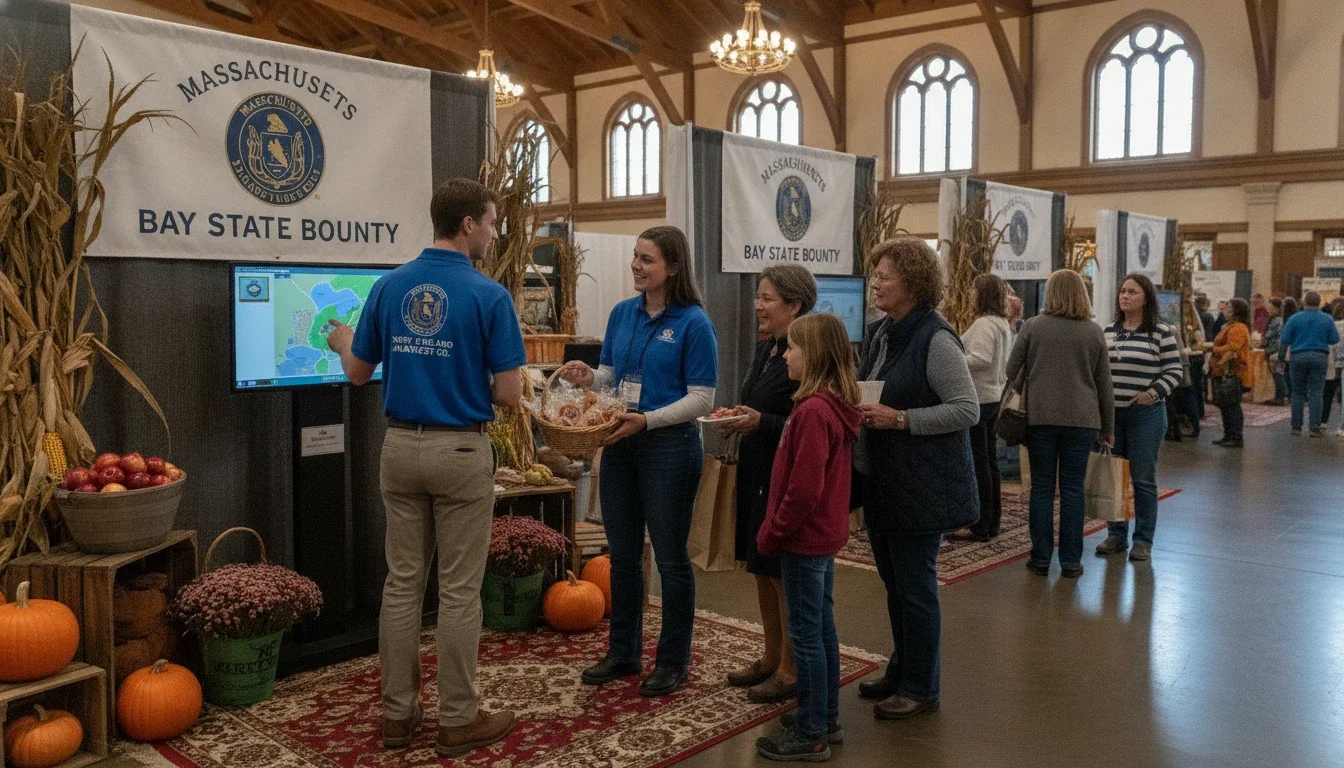
Brand ambassadors engaging fairgoers inside a state building exhibit hall at an Eastern States Exposition event
What a Successful Avenue of States Activation Looks Like
Step 1 — Secure Your Space in the Right Building
Each state building has its own application process managed by that state's government agency. For example, the Maine Building is managed through the Maine Department of Agriculture, Conservation, and Forestry. Connecticut's building is overseen by the Connecticut Department of Agriculture. Applications typically open months before the fair and involve a review of product alignment, state connection, and exhibit plan.
Brands without a direct state connection aren't necessarily excluded, but a clear rationale — regional distribution, local partnerships, agriculture, or tourism tie-ins — strengthens an application significantly. Some buildings also offer day-rental or short-term vendor spaces for brands that can't commit to the full 17-day run.
Step 2 — Design for Dwell Time, Not Just Foot Traffic
The most common mistake brands make at state fair activations is designing for impressions instead of engagement. At the Avenue of States, the goal should be dwell time: how long does a visitor spend at your exhibit, and what does that time produce?
Effective design principles for state-building activations include:
Interactive elements that invite participation rather than passive viewing
Sampling that creates a sensory reason to stop and stay
Seating or semi-enclosed spaces that invite visitors to slow down
Clear visual hierarchy that communicates your brand's story in 3 seconds from 10 feet away
A single, frictionless call-to-action — a QR code scan, a sweepstakes entry, a product purchase — rather than multiple competing asks
Step 3 — Staff the Activation Correctly
This is where most activations win or lose. The physical space and the product can be perfect, but if the people representing the brand don't understand the audience, can't manage crowd flow, and aren't trained on the product, the activation underperforms.
State fair attendees are fundamentally different from trade show attendees or conference participants. They're often families, they're in exploration mode, they're emotionally open to discovery — but they're also managing kids, watching time, and easily distracted. The brand ambassadors and event staff you deploy need to be warm, approachable, quick to engage, and expert at creating positive short interactions that leave a memorable impression.
For a 17-day run like The Big E, you also need to think about staffing consistency across every day. The energy your team brings on day two needs to be indistinguishable from day fourteen. That requires experienced staff management, clear daily briefings, backup coverage, and account-level oversight — not just a roster of warm bodies scheduled on a spreadsheet.
Step 4 — Create a Capture Mechanism
The Avenue of States activation that doesn't capture anything beyond impressions is a missed opportunity. Build a lead capture mechanism into every exhibit from day one:
Sweepstakes or giveaway entries tied to email or SMS opt-in
QR code scans that trigger digital coupons or product offers
Product sampling linked to a post-sample survey via tablet
In-building coupon distribution trackable at the point of sale
State fair audiences skew toward families and older demographics with strong purchase intent and brand loyalty, making them valuable data points for future remarketing — if you build the capture system before you open your doors on day one.
Event Staffing Roles That Drive Results at State Fair Activations
Brand Ambassadors
Brand ambassadors are the front line of any state-building activation. At the Avenue of States, the best brand ambassadors combine product knowledge with genuine warmth and strong crowd-reading ability. They need to identify who is browsing casually versus who is genuinely interested, initiate conversations naturally without being pushy, and keep energy levels consistent through long eight-to-twelve-hour fair days.
Eleven8 Event Staff's brand ambassadors are vetted through a strict hiring process that accepts only the top 3.5% of applicants, ensuring that the people representing your brand at The Big E are trained professionals — not last-minute hires.
Product Demonstrators
State building activations centered on food, beverage, or physical products benefit enormously from skilled product demonstrators — staff trained specifically to walk visitors through a product's story, deliver concise tasting notes or feature explanations, and convert curiosity into purchase decisions on the spot.
Registration and Lead Capture Staff
For activations running sweepstakes or lead generation programs, dedicated registration staff is essential. These team members manage the mechanics of data capture — tablet entry, paper forms, QR scans — keeping lines moving, privacy concerns addressed, and data quality high across a 17-day run.
Eleven8's registration and check-in staff are experienced in high-volume data capture environments and can be briefed on your specific sweepstakes platform before day one.
Pop-Up and Sampling Staff
Sampling activations inside and around state buildings — particularly for food, beverage, and personal care brands — require staff who are confident in food-safe handling, portion control, and rapid turnaround of sample stations. When your exhibit has a sampling component, these roles define the attendee experience more than any display element.
See Eleven8's pop-up staff services for sampling-specific staffing capabilities.
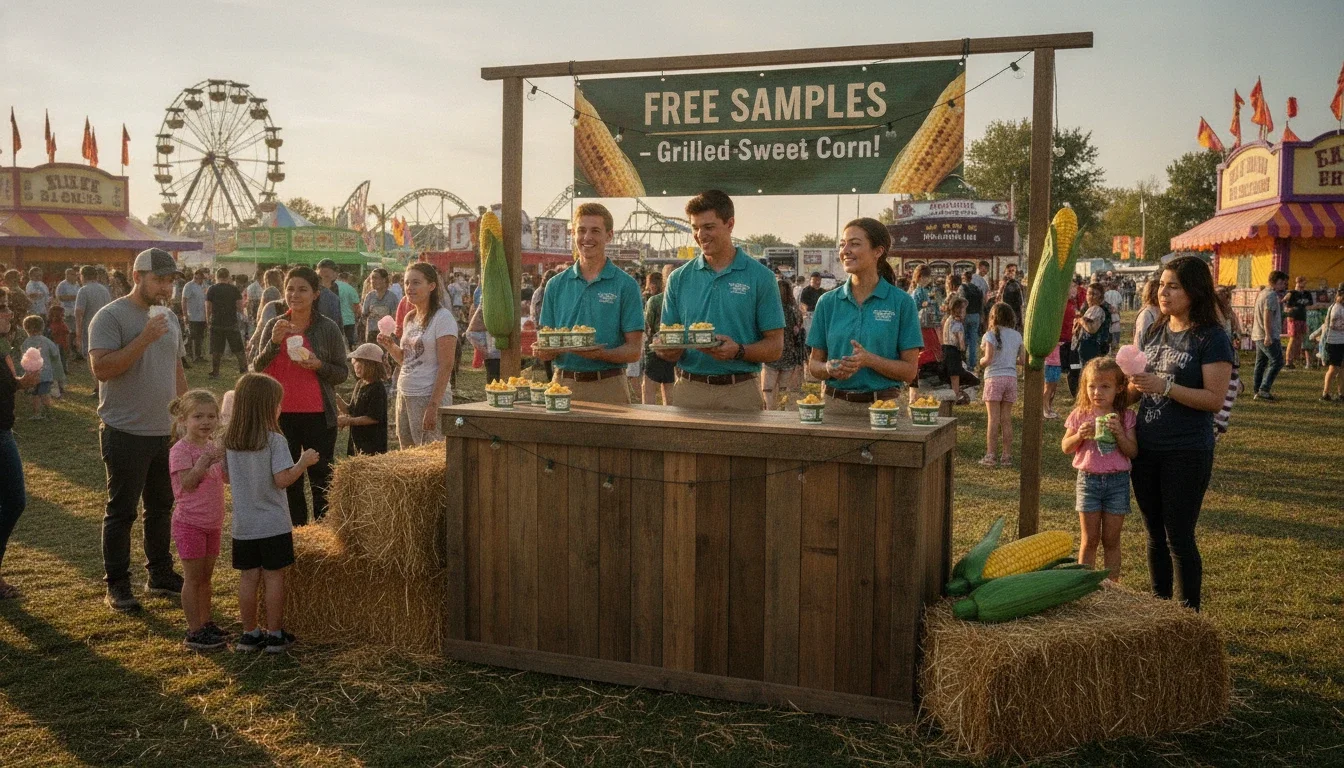
Professional event sampling staff at a state fair food brand activation, handing out samples to fairgoers
Logistics You Can't Ignore at The Big E
Peak Days and Crowd Patterns
The Big E's 17-day run has clear attendance peaks that any brand activating on the Avenue of States needs to plan around. State-specific "day" events — Massachusetts Day, Connecticut Day, and similar — drive disproportionate foot traffic from attendees who are specifically there to celebrate their home state. These days represent your highest-value sampling windows but also your highest-pressure staffing moments.
Weekend days and the fair's opening and closing weekends consistently see the largest overall attendance. Plan your full-strength staffing roster for these dates and build in backup coverage — because a fairground activation with an understaffed exhibit on its busiest day is a significant missed opportunity.
Venue Access and Load-In Rules
Each state building has its own vendor access protocols for load-in, load-out, restocking, and emergency product replacement. Coordinate with your state building contact well before the fair opens to understand delivery windows, vehicle access restrictions, and storage limitations. State buildings are not traditional event venues; they operate under government agency guidelines that can differ meaningfully from what brands are used to at trade shows or private event spaces.
Weather Contingencies for Outdoor Overflow
While the state buildings themselves are enclosed structures, the Avenue of States corridor is an outdoor walkway, and much of the fair experience happens outdoors. September weather in Western Massachusetts can range from summer heat in early weeks to early-fall rain and wind by the close of the fair.
Build a weather contingency into your staffing plan — specifically for brand ambassadors or sampling staff stationed outside the building entrance to capture walk-by traffic. Having indoor fallback positions and a plan for shifting outdoor team members to indoor roles ensures your activation doesn't lose momentum on rainy days.
How Eleven8 Event Staff Supports Avenue of States Activations
Eleven8 Event Staff is a nationwide event staffing agency with over 35 years of experience and an active roster of 24,821 pre-vetted staff members ready to deploy across the United States. For Avenue of States activations at The Big E, Eleven8 provides end-to-end staffing support, including:
Brand ambassadors matched to your brand voice, product category, and target demographic
Product demonstrators and sampling staff are trained on your specific exhibit before day one
Registration and lead capture staff experienced in high-volume fairground environments
On-site supervisors (Captains) who manage daily briefings, team energy, and real-time issue resolution
Built-in backup coverage for every 8 staff members at no additional charge
A dedicated account manager overseeing your entire 17-day run — not a different contact for every shift
24/7 event-day support with offsite operations management included in every booking
With a 101.80% fulfillment rate and 83% client retention, Eleven8 is built for the kind of sustained, multi-day activation that The Big E demands. Explore Eleven8's full service offering or submit an inquiry for your next activation.