Planning an Event in Tampa? Your Complete Guide to Venues, Vendors & Staffing
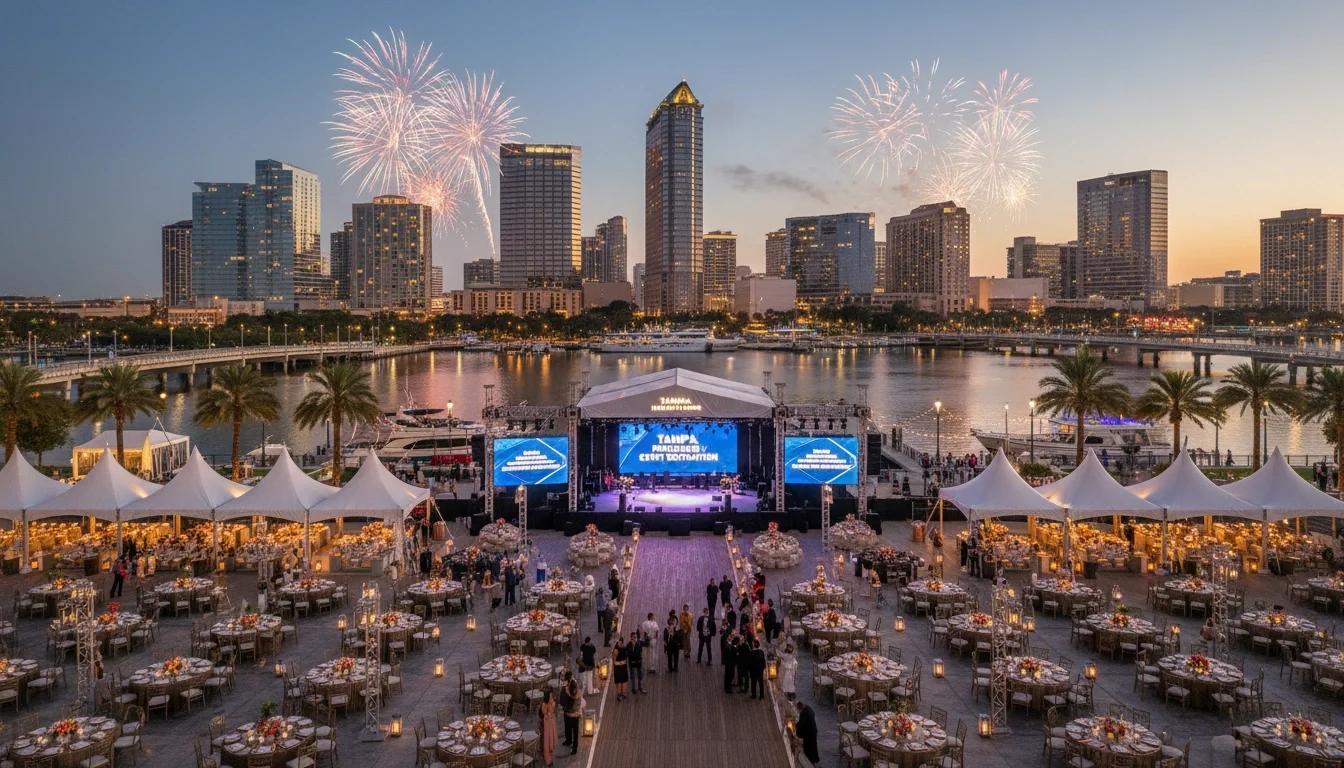
Tampa skyline and waterfront with event setup visible — illustrating Tampa as a premier event destination
Tampa has quietly become one of the Southeast's most compelling event cities. With a stunning waterfront, a diverse network of venues, a thriving hospitality scene, and a convention infrastructure built for scale, the Tampa Bay area can handle everything from an intimate 50-person product launch to a multi-day trade show drawing tens of thousands of attendees.
But pulling off a successful event here — like anywhere — comes down to three things: the right venue, the right vendors, and the right people on the floor. This guide covers all three in depth, giving you a practical, field-tested framework for planning events in Tampa from first concept to final breakdown.
Whether you're a corporate event manager, a marketing director planning a brand activation, or an independent planner organizing a major conference, this guide is built for you.
Why Tampa Is One of the Best Event Cities in the Southeast
Tampa often gets overshadowed by Miami and Orlando in Florida event conversations, but that's changing fast. The city's combination of affordability (relative to coastal markets), geographic accessibility, and genuine hospitality infrastructure makes it a strong choice for planners at every scale.
Tampa's Event Landscape at a Glance
Tampa sits at the heart of the Tampa–St. Petersburg–Clearwater metro area, home to roughly 3.1 million residents and one of the Southeast's most active convention and hospitality markets. The city benefits from two major airports (Tampa International and St. Pete-Clearwater), a growing downtown hotel inventory, and a distinctive mix of cultural districts — from the Latin heritage of Ybor City to the waterfront energy of the Riverwalk.
For corporate and conference planners, Tampa's cost structure is notably attractive. Hotel room blocks, venue rental fees, and F&B minimums tend to run meaningfully lower than Miami or Atlanta, allowing planners to reallocate budget toward higher-quality vendors and staffing.
Top Event Venues in Tampa for Every Occasion
Venue selection shapes everything else — your vendor options, your staffing needs, your permit requirements, and your guest experience. Here's how Tampa's venue landscape breaks down.
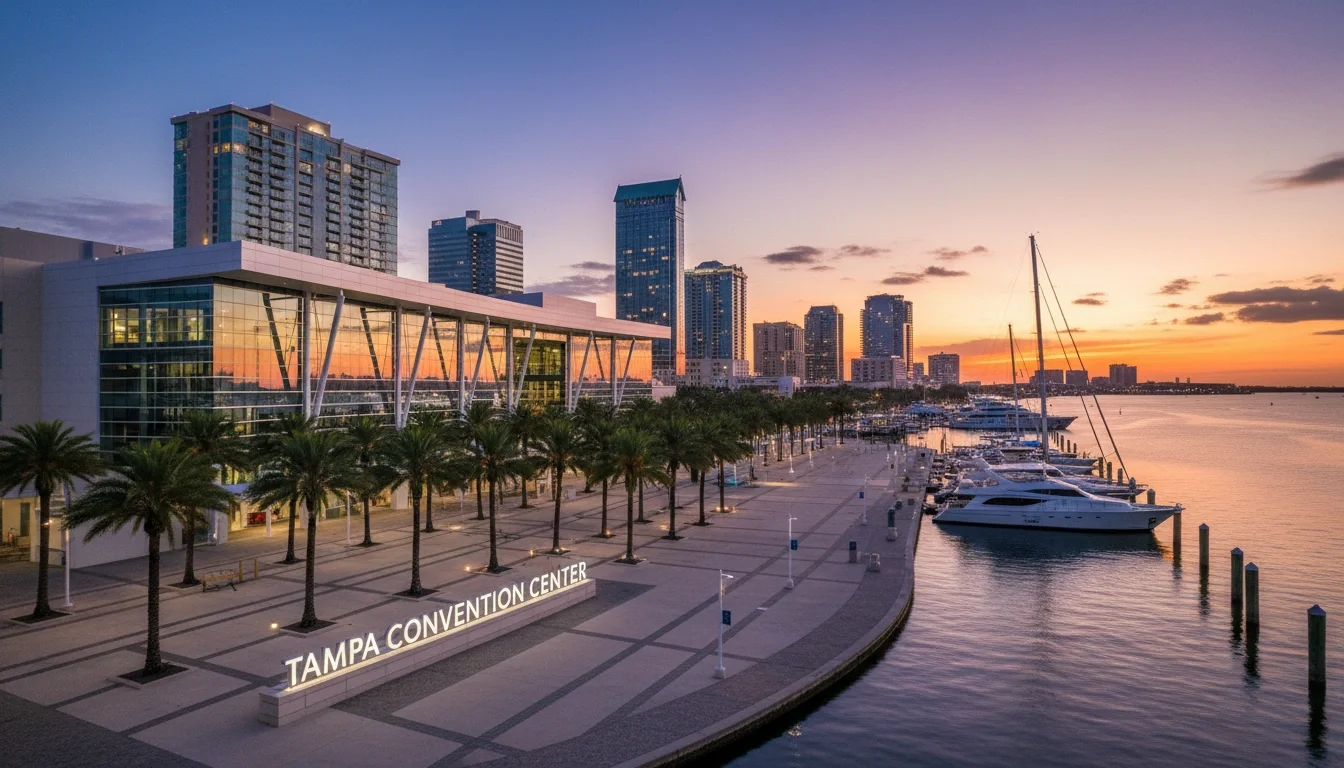
Tampa Convention Center exterior at dusk with the waterfront visible — ideal for large-scale corporate events and trade shows
Large-Scale & Convention Venues
Tampa Convention Center — The anchor of Tampa's convention infrastructure, offering approximately 600,000 square feet of flexible meeting and exhibition space, including a large ballroom and roughly 200,000 square feet of exhibit hall. Its waterfront location on the Hillsborough River adds a unique visual backdrop. Well-suited to trade shows, multi-day conferences, and large galas. Managed by the Tampa Convention Center authority; plan 12–18 months for peak dates.
Amalie Arena — Home of the NHL's Tampa Bay Lightning, Amalie offers extraordinary event versatility with floor capacity reaching 21,000 for large concerts and activation events. For corporate formats, breakout configurations can be arranged in premium club and suite areas. Ideal for launch events, award shows, and entertainment-driven corporate experiences.
Raymond James Stadium — Home of the Tampa Bay Buccaneers, the stadium has hosted Super Bowls and major concerts and offers premium event space for organizations seeking high-impact corporate gatherings or sponsorship activations with sports tie-ins.
Corporate & Boutique Event Spaces
Grand Hyatt Tampa Bay — A waterfront property with extensive meeting space, multiple ballrooms, and strong catering infrastructure. A reliable choice for corporate conferences, awards dinners, and multi-day executive retreats.
JW Marriott Water Street Tampa — A newer property that anchors the Water Street Tampa development, offering over 30,000 sq ft of flexible meeting and ballroom space. Rooftop and terrace options are available for cocktail receptions with city views.
The Current Hotel — Boutique waterfront hotel with 5,392 sq ft of event space across multiple rooms, a private beach ceremony option, and poolside reception capability. Well-suited to mid-sized corporate events, product launches, and hospitality events.
The Vault Tampa — A historic, sophisticated venue in downtown Tampa's Arts District on N. Franklin St. Perfect for upscale galas, private receptions, and brand experiences where ambiance matters as much as capacity.
Unique & Outdoor Venues
The Cuban Club (El Círculo Cubano) — A historic 100-year-old landmark in Ybor City with four distinct event spaces, including a 350-seat ballroom and theater, a cantina, and a 40,000-square-foot outdoor courtyard accommodating receptions of up to 4,500 people. A standout for cultural events, galas, and immersive brand experiences.
Florida Aquarium — A unique choice for private corporate events and product launches, offering buyout opportunities with marine life as your backdrop. Guest capacities vary by space.
Busch Gardens Tampa Bay — For brands seeking an unforgettable experiential event, Busch Gardens offers group event packages with access to park facilities and ride experiences. Particularly effective for consumer-facing product activations and team-building events.
Bayshore Boulevard — Often called 'the world's longest continuous sidewalk,' Bayshore can serve as the route or backdrop for walkathons, 5K runs, outdoor activations, and community events. Note: City of Tampa permits required.
How to Choose the Right Tampa Event Venue
Venue selection isn't just about capacity and aesthetics — it's a strategic decision that affects your budget, vendor flexibility, and operational complexity. Before you sign anything, work through these questions:
Key Questions to Ask Before Signing a Venue Contract
What is the maximum and minimum guest capacity, and how does that affect pricing tiers?
Is catering exclusive (venue-only), or can you bring outside vendors?
What AV equipment is provided vs. what must you rent or bring in?
What are the load-in and load-out windows for your vendors and staff?
What are the parking and public transit options for guests?
Is the venue ADA compliant for all areas your guests will use?
What insurance requirements does the venue impose on vendors and event organizers?
Are there noise ordinances or curfews that affect entertainment planning?
What backup plans exist for outdoor spaces in the event of Florida's notoriously unpredictable weather?
Tampa's afternoon thunderstorm season (roughly June through September) deserves particular attention for any outdoor component. Always secure a covered contingency space or tent option.
Essential Vendors for Tampa Events
A successful Tampa event depends on a coordinated vendor ecosystem. Here's how to approach each major vendor category.
Catering & Food Service
Tampa's culinary scene is genuinely diverse — Spanish-Cuban influence from Ybor City, fresh Gulf Coast seafood, and an increasingly sophisticated fine dining environment give planners real menu options beyond generic banquet food.
When evaluating caterers, go beyond the tasting and ask about their experience with your event format. A caterer excellent at seated dinners may struggle with high-volume festival service. Request references from events of similar scale and style, confirm their staffing ratios (servers per guest), and clarify who owns cleanup.
For large events, separate your catering vendor from your event staffing vendor — catering companies provide the food; staffing agencies provide the people to serve it. This gives you independent quality control over both.
AV, Lighting & Production
AV is one of the most common event failure points. Tampa has a solid base of AV production companies with convention center experience, but the best ones book early — especially for Q1 and Q4, which align with heavy conference and gala seasons.
For trade shows and conventions at the Tampa Convention Center, confirm whether the venue has an exclusive AV provider or allows outside vendors. Many convention centers have preferred vendor relationships with different pricing tiers for each.
Always request a walkthrough with your AV team before event day. Sightlines, ceiling height, column placement, and loading dock access will all affect your production plan.
Photography & Videography
For corporate events, your photography brief should specify deliverables: candid coverage, executive headshots, product shots, sponsor logo visibility, and audience scale shots. These images become marketing assets, so treat the photographer's brief with the same rigor you'd give a creative brief.
Request RAW file delivery rights, turnaround timelines, and licensing terms in writing before signing any contract.
Floral, Decor & Design
Tampa has a growing cohort of event designers who blend traditional Florida aesthetics with contemporary experiential design. For brand activations and corporate events, prioritize vendors with a portfolio of non-wedding work — the skill sets differ meaningfully. Confirm load-in timing, breakdown timelines, and whether they have experience working around AV and production setups.
Entertainment
From DJs and live bands to interactive performers, experiential artists, and brand-specific entertainment, Tampa's entertainment vendor ecosystem is well-developed. For public events and outdoor activations in city parks or streets, music licensing is your responsibility — the City of Tampa does not provide it. Work with your entertainment vendor to confirm compliance with the Federal Copyright Act and confirm permitting requirements well in advance.
Navigating Tampa Permits & Regulations
Tampa's permitting framework is manageable, but it rewards planners who engage early. Rushing permits is one of the most common — and most avoidable — causes of event day complications.
When Do You Need a Special Event Permit?
According to the City of Tampa's Special Events Coordination office, a Special Event or Facility Use Permit is required for any outdoor activity on City property — including streets, rights-of-way, and City parks — with anticipated attendance of 25 or more people. For events on private property, permits for special use (including alcohol) are obtained through the Zoning office.
Your permit application must include a detailed site plan showing the layout of all physical elements: stages, vendor booths, tents, signs, barricades, portable toilets, and vehicles. The City will review submissions across multiple departments, and a dedicated Special Events Coordinator will guide you through the process.
Key logistical elements your site plan must address: electrical plans for vendors and stages (specifying amps and volts per site), ADA compliance, street closure requirements if applicable, and music/entertainment licensing.
Alcohol Service & Licensing in Tampa
Alcohol permits for outdoor public events in Tampa are processed through the Zoning office for private property events or incorporated into the special events permit for City property. Your staffing agency should provide bartenders with Florida RBS (Responsible Beverage Service) certification — confirm this before booking any F&B staff.
For events serving alcohol, liability insurance requirements are significant. Reputable staffing agencies carry both general liability and liquor liability coverage, and your event insurance should reflect the nature of alcohol service. Always request a Certificate of Insurance from every vendor involved in alcohol service.
Event Staffing in Tampa: What You Need to Know
Staffing is the layer of event planning most often underestimated — and the one most visible to your guests. A venue can be stunning, catering can be impeccable, and AV can be flawless, but if your staff is unprepared, disengaged, or simply not there, the guest experience falls apart. This section covers the practical side of Tampa event staffing.
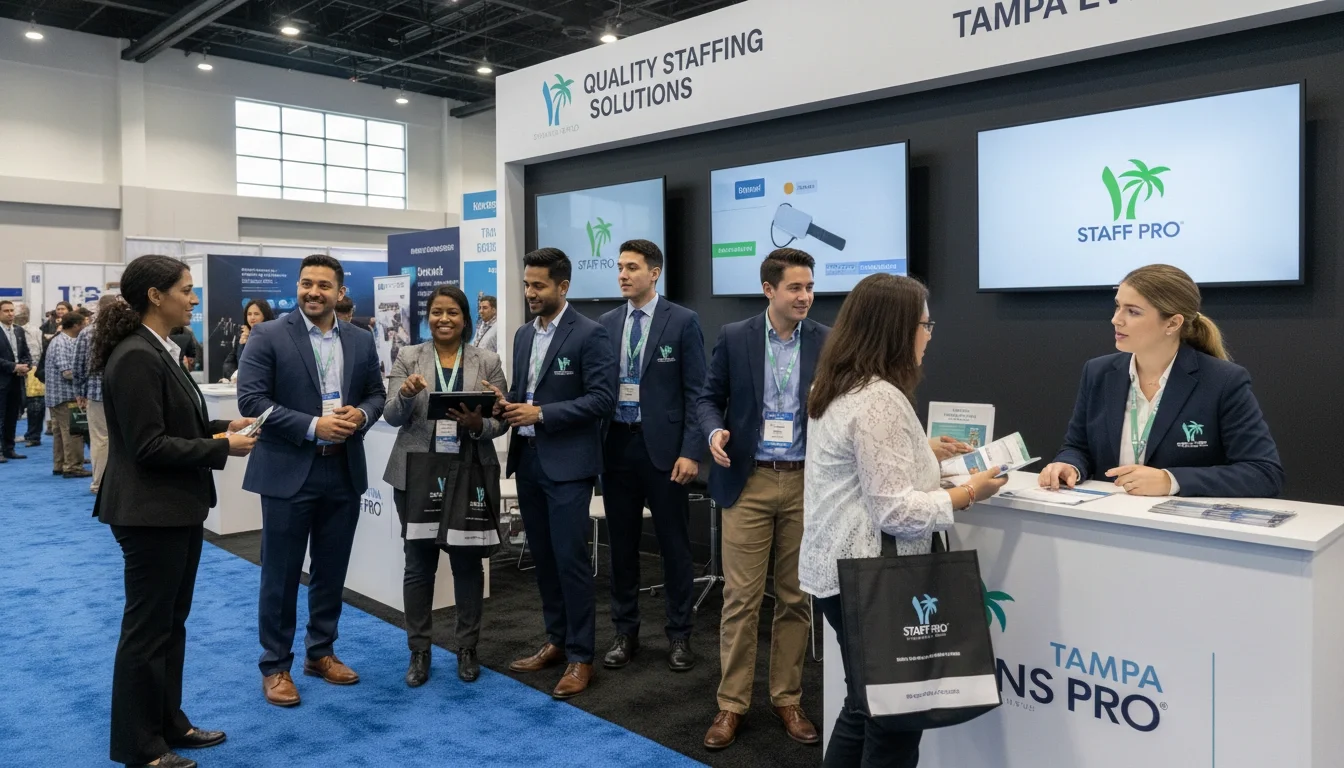
Professional event staff in uniform at a Tampa trade show booth, engaging with attendees — showcasing the importance of quality staffing
Types of Event Staff for Tampa Events
Different event formats require different staff profiles. Here's how the major roles break down:
Brand Ambassadors: Front-line representatives who engage guests, communicate brand messaging, distribute samples, and generate leads. Essential for trade shows, activations, pop-up events, and experiential campaigns. Should be selected for personality, communication skills, and relevant industry experience — not just appearance.
Trade Show & Conference Staff: Includes registration staff, greeters, expo attendants, lead capture specialists, and convention floor support. For Tampa Convention Center events, these roles are the organizational backbone that determines attendee flow and first impressions.
Bartenders & Bar Staff: Professional bartenders, bar backs, and cocktail servers. For events in Tampa, Florida, RBS certification is expected, and liquor liability insurance coverage from the staffing agency is non-negotiable.
Catering & Waitstaff: Servers, bussers, and buffet attendants. Staffing ratios matter: generally plan for one server per 8–10 guests for plated dinners, one per 25–30 for buffet service.
Production Assistants: Behind-the-scenes support for load-in, load-out, stage management, green room support, and vendor coordination. Often overlooked in budgets, but critical for keeping large events on time.
Hosts, Ushers & Greeters: Guest-facing directional staff who manage seating, guide arrivals, and maintain crowd flow. Particularly important for conferences, concerts, and multi-room corporate events.
Promotional Models & Spokesmodels: Specialized staff for product launches, automotive shows, and luxury brand events where physical presentation and product knowledge are equally weighted requirements.
How Many Staff Do You Need?
Staffing ratios depend on event format, service style, and venue layout. Use these as baseline planning figures:
Plated dinner service: 1 server per 8–10 guests
Buffet/cocktail reception: 1 server per 25–30 guests
Bar service: 1 bartender per 50–75 guests (adjust down for high-volume cocktail receptions)
Trade show booth: 1–2 brand ambassadors per 100 sq ft of activation footprint
Conference registration: 1 staff per 50–75 expected arrivals in the first hour
General event support/ushers: 1 per 100 guests for basic flow management
For complex events with multiple zones, build in team leads (often called captains or supervisors) at a ratio of 1 per 8–10 front-line staff. A quality staffing agency will include briefed backups for every 8 staff as standard — if yours doesn't, ask why.
What to Look for in a Tampa Event Staffing Agency
Not all staffing agencies operate at the same standard. The Tampa Bay event market has local operators, gig-work platforms, and national agencies all competing for your booking — and the differences in quality, accountability, and coverage are significant.
When evaluating any staffing partner for a Tampa event, these factors separate professional agencies from availability-based platforms:
Vetting rigor: What percentage of applicants are accepted? Agencies accepting everyone lack quality control. Top-tier agencies maintain acceptance rates below 5% through multi-stage screening.
Training protocols: Are staff briefed on your specific event, brand, and guest expectations before they arrive? Generic 'show up and figure it out' deployment is a red flag.
Fulfillment guarantee: Does the agency carry briefed backups? A 101%+ fill rate isn't marketing language — it's an operational commitment that protects your event from no-shows.
Insurance: Confirm general liability, workers' compensation, and liquor liability (if applicable). Request a Certificate of Insurance. This protects you, your venue, and your guests.
Account management: You need a dedicated human point of contact, not a shared inbox. Real-time communication on event day is non-negotiable.
Local deployment capability: For Tampa specifically, confirm whether the agency has an existing local roster or recruits reactively when you book.
Vetting Questions for Staffing Agencies
What is your acceptance rate for new staff applicants?
How are staff briefed and matched to specific event types and client brands?
What is your fulfillment rate, and how do you handle no-shows?
Do you carry workers' compensation and general liability insurance? Can you provide a COI?
Who is my dedicated point of contact on event day?
How quickly can you deploy staff for a Tampa event?
Can I select specific staff members in advance based on their profiles and experience?
Eleven8 Event Staff operates in Florida with deployment capability across the Tampa Bay area, including access to Orlando-area staffing resources. With a 101.8% fulfillment rate and a roster of over 24,000 active staff nationally, they deploy pre-vetted teams with briefed backups and dedicated account management — the operational standard your Tampa event deserves.
Tampa Event Planning Timeline & Checklist
The most common cause of avoidable event problems is timing — specifically, critical decisions made too late. Use this planning timeline as your anchor.
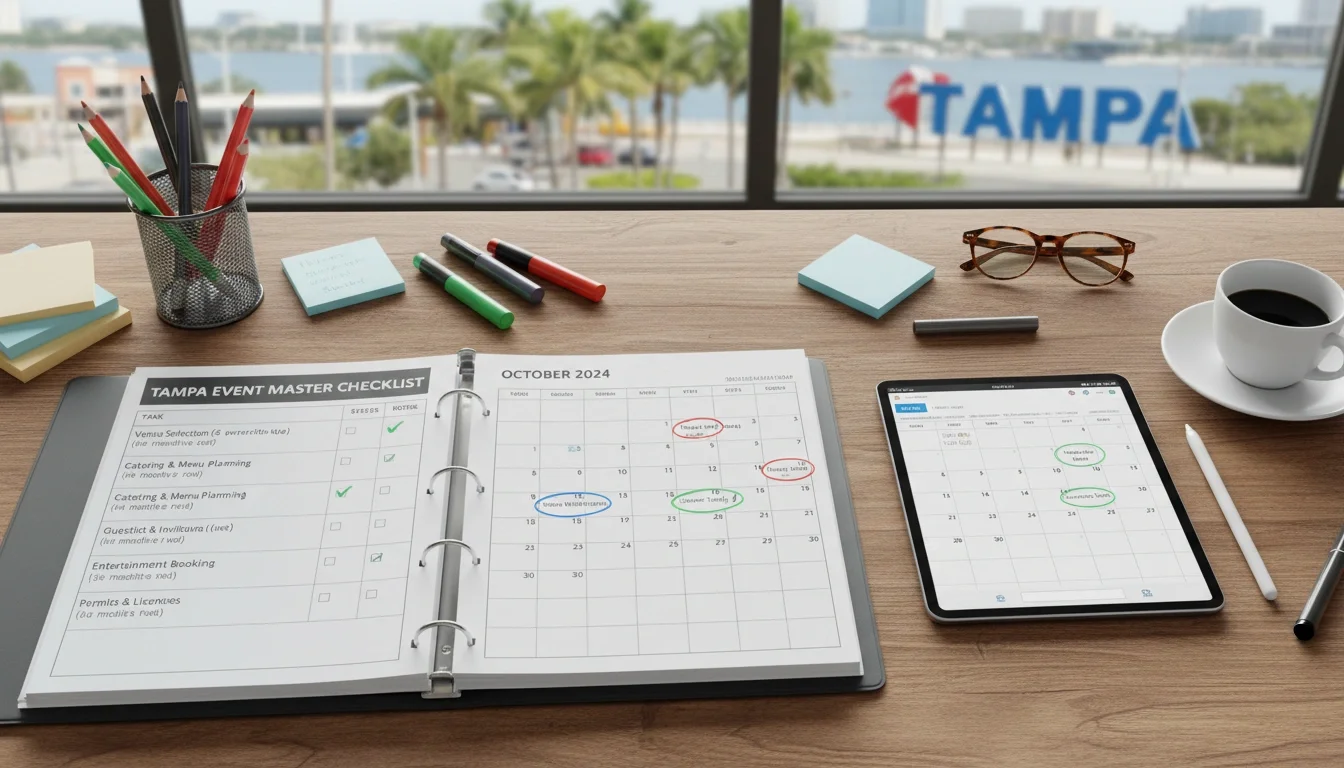
Event planning checklist and calendar on a desk — representing the detailed timeline approach to organizing a Tampa event
12+ Months Out
Define event objectives, success metrics, and target audience
Set preliminary budget parameters
Research and shortlist Tampa venues
Secure venue and negotiate contract terms
Begin RFP process for anchor vendors (catering, AV, staffing)
6–9 Months Out
Finalize catering contract and initial menu direction
Book AV and production vendors
Select an event staffing agency and confirm the staffing plan
Begin hotel room block negotiations for out-of-town attendees
Initiate the City of Tampa permit process if the event involves public property
Book key entertainment and specialty vendors
3–6 Months Out
Confirm guest count estimates and adjust vendor contracts
Submit special event permit application to the City of Tampa (allow processing time)
Confirm staffing types, uniform requirements, and staff briefing plan with the agency
Finalize decor and floral vendors
Develop a detailed run-of-show timeline
Arrange transportation and parking logistics
30–60 Days Out
Confirm all vendor COIs and insurance documents
Finalize guest counts and communicate to all vendors
Confirm staffing numbers and receive roster with staff profiles
Conduct venue walkthrough with AV team, caterer, and staffing supervisor
Finalize run-of-show and distribute to all vendor leads
Confirm backup staff roster with the staffing agency
Arrange vendor meal breaks and parking access
Event Week
Confirm all staff arrivals, load-in times, and emergency contacts
Conduct a pre-event briefing with on-site supervisors
Walk venue and verify AV, lighting, and signage
Ensure the weather contingency plan is activated if necessary
Confirm the dedicated account manager is reachable throughout the event
Execute post-event debrief with vendor leads
Budget Planning for Tampa Events
Budgeting for a Tampa event is more art than science at the outset — but certain cost structures are consistent enough to plan around.
Venue rental will typically represent the single largest fixed cost, ranging from a few thousand dollars for boutique spaces to $50,000+ for Tampa Convention Center bookings. Catering (food and beverage combined with service) commonly accounts for 30–40% of a total event budget. AV and production can range widely from $5,000 for a simple corporate meeting to $100,000+ for full stage productions.
Staffing is often the most underestimated line item. A common mistake is treating staff as a last-minute budget filler rather than a core investment. For a 500-person gala with full food and beverage service, expect to budget for 30–50 staff, depending on service style — that's before adding brand ambassadors, registration personnel, or production assistants.
Tampa-specific budget considerations:
Weather contingency (tent rentals, rain plans) adds 5–10% to outdoor event budgets
Ybor City and downtown venues may carry historic building surcharges for certain load-in configurations
City permit fees are relatively modest, but should be budgeted alongside insurance requirements
Summer events (June–August) may benefit from lower venue rates due to reduced demand, but weather contingency planning becomes more critical
Common Tampa Event Planning Mistakes to Avoid
Underestimating weather impact. Florida's afternoon storm pattern (most intense June–September) can devastate outdoor events without a proper contingency plan. Always have a covered alternative for any outdoor component.
Booking staff reactively instead of strategically. Staffing decisions made in the final weeks often result in undertrained or mismatched personnel. Build your staffing plan into the event design phase, not the logistics phase.
Ignoring the City of Tampa permit timelines. Permit applications require review from multiple city departments. Late applications risk rejection or restrictions that change your event design.
Selecting venues with exclusive vendor restrictions without fully modeling costs. Some Tampa venues require you to use their in-house catering and AV services, which can be significantly more expensive than independent vendors. Factor this into your venue comparison before committing.
Treating alcohol service casually. Liability exposure around alcohol service is significant. Confirm insurance, RBS certification for bar staff, and permit compliance well in advance.
Underestimating load-in time. Tampa's largest venues have complex load-in logistics. A corporate gala that takes 4 hours to set up at a simple hotel ballroom can take 8–10 hours at a convention center. Build this into your timeline and staff accordingly.