Event Production Assistant Duties: What They Do from Setup to Breakdown
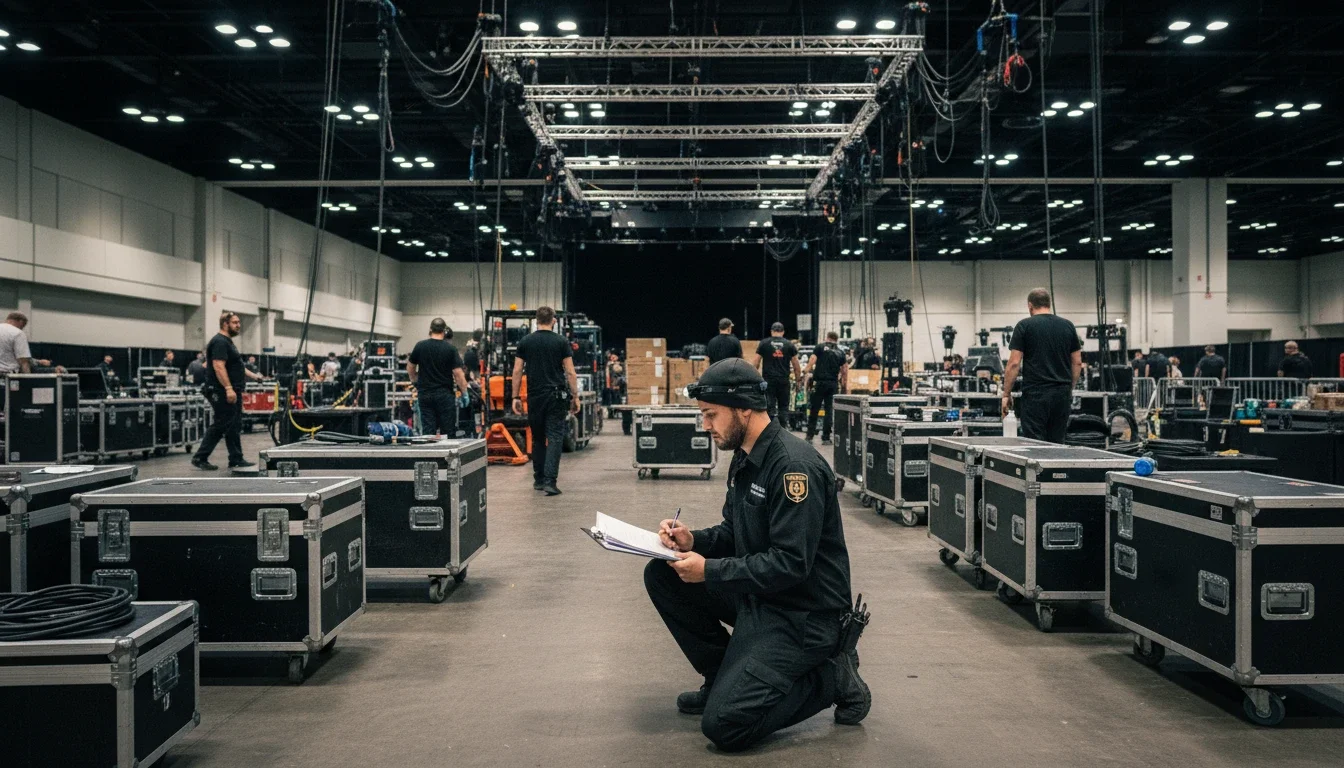
A production assistant in a black uniform reviewing a clipboard on the floor of a busy convention hall during load-in, surrounded by equipment cases and crew members
Every flawless event has one thing in common: a production team working hard before the first guest arrives and long after the last one leaves. At the center of that team is the event production assistant — the role that keeps everything moving, from the first equipment truck at the loading dock to the final sweep of the venue floor.
Understanding event production assistant duties isn't just useful for aspiring PAs. It's essential knowledge for any event planner, production company, or brand looking to staff their events correctly. When you know exactly what a PA handles, you can build a smarter team, set clearer expectations, and run better events.
This guide walks through every phase of a production assistant's day — from pre-event prep and venue load-in to live show support and post-event breakdown — so you know precisely what this role contributes and how to get the most out of it.
Quick Reference: Event Production Assistant Core Duties
Assist with equipment transport and staging during load-in
Support AV, lighting, and tech setup crews
Execute decor, signage, and furniture placement per floor plans
Follow the run-of-show and relay cues across departments
Provide on-site logistics support during live event execution
Act as a communication link between production departments, vendors, and talent
Manage credentials, paperwork, and supply distribution
Lead equipment breakdown and load-out during strike
Restore the venue to its original condition post-event
Complete post-event admin tasks and inventory reconciliation
What Is an Event Production Assistant?
An event production assistant (often called a PA or event PA) is an entry-level to mid-level support role responsible for assisting event managers, producers, and technical crews across all phases of an event — from initial setup through final breakdown.
Unlike specialized crew members who own a specific technical domain (such as an audio engineer or lighting designer), a production assistant is intentionally versatile. They work across departments, completing assigned tasks as needed, running materials between teams, and filling operational gaps that keep everything on schedule.
In the live event industry, PAs are sometimes called "runners" — a nickname that captures both their physical pace and their function as the connective tissue of a production team. As one industry resource puts it, they are the jack-of-all-trades of live events, ready to assist any department at any moment.
At Eleven8, our production assistants are recruited from the top 3.5% of applicants and arrive pre-briefed on your specific event requirements, venue layout, and production schedule — so they're productive from the moment they check in.
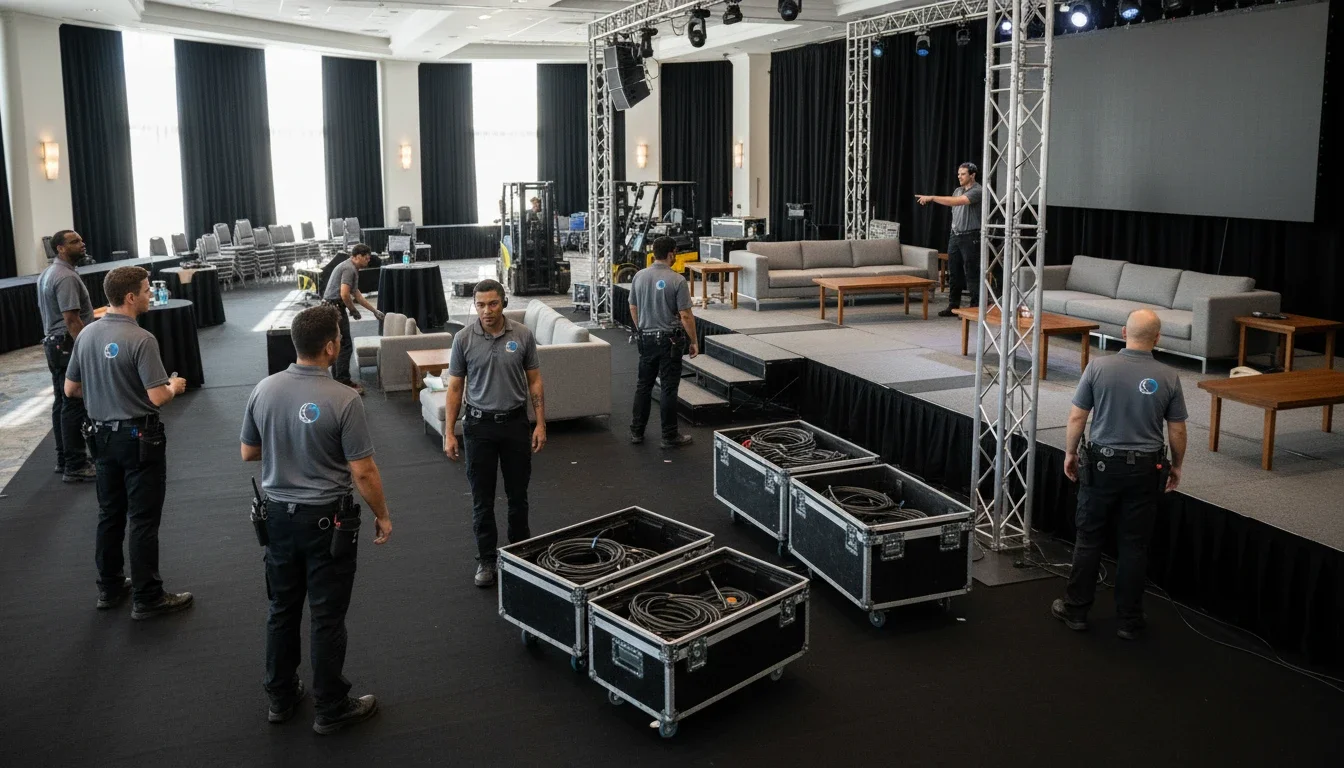
A team of event production assistants in matching uniforms coordinating during a corporate event setup, arranging furniture and checking equipment cases
The Complete Event Production Timeline: Where PAs Fit In
Production assistants don't just show up on event day. Their involvement spans five distinct phases, each with its own set of responsibilities and skill demands.
Phase 1 — Pre-Event Preparation
Before anything is physically set up, the groundwork happens in planning meetings, briefings, and logistics reviews. During this phase, a production assistant may:
Attend pre-production meetings with the event manager or production coordinator to review the run-of-show
Review floor plans, load-in schedules, and vendor arrival timelines
Prepare and organize supply checklists, credential packets, and printed materials
Coordinate with the production manager on specific task assignments for load-in day
Confirm equipment inventories and flag any missing items in advance
Familiarize themselves with the venue layout, including dock locations, service entrances, and department staging areas
Strong pre-event preparation by a PA reduces chaos during load-in and ensures the entire crew starts execution with a shared understanding of priorities and timelines.
Phase 2 — Venue Load-In and Setup
Load-in is where physical production work begins. This is typically the longest and most physically demanding phase for a production assistant, involving heavy lifting, precise logistics coordination, and the ability to juggle multiple concurrent tasks.
Equipment Transport and Staging
On load-in day, PAs are responsible for helping move equipment, decor, and production materials from transport vehicles into the venue. This includes:
Unloading trucks and directing materials to the correct staging areas
Transporting road cases, AV equipment, furniture, and decor pieces to their designated zones
Coordinating with stagehands and technical crews on where specific items should be placed
Maintaining organized staging areas so equipment is accessible when crews need it
Tracking items against inventory lists to confirm all materials have arrived
Physical stamina is non-negotiable here. A PA may be on their feet for 8–12 hours during a multi-day convention load-in, moving between dock operations and the show floor continuously.
Decor, Signage, and Furniture Layout
Once materials are on-site, PAs work from venue diagrams and floor plans to place event elements accurately. Duties include:
Positioning tables, chairs, and furniture arrangements per the event designer's layout
Hanging or installing signage and branded elements in designated locations
Placing linens, centerpieces, and decorative props per the styling plan
Making real-time adjustments when physical dimensions don't match schematic plans
Keeping detailed notes or photos of any deviations from the original layout for post-event reporting
AV and Technical Setup Support
While certified AV technicians handle the actual programming and operation of audio, video, and lighting systems, production assistants provide critical support throughout this process:
Running cable through troughs, conduit, or under flooring as directed by the AV team
Positioning speaker arrays, monitors, screens, and lighting fixtures per rigging plans
Carrying and staging AV road cases to the appropriate positions on the show floor
Relaying real-time communication between the AV lead and production manager during setup
Assisting with the setup and testing of livestream or recording equipment when applicable
For large-scale conventions — like the KCON events Eleven8 has staffed at the LA Convention Center — this phase can span multiple days across several buildings, requiring PAs with strong venue familiarity and physical endurance.
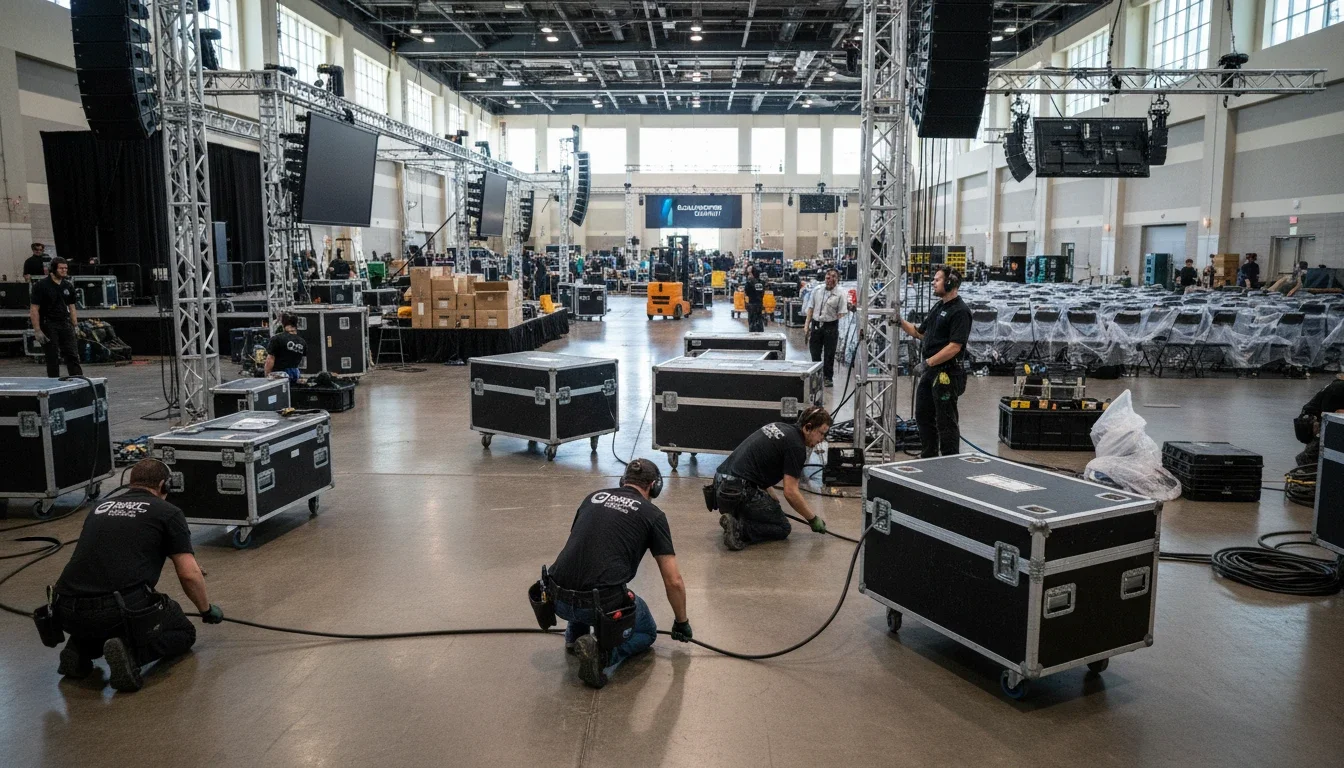
Production assistants working alongside AV technicians during venue setup, running cable and positioning equipment cases on a large convention center show floor
Phase 3 — Live Event Execution
Once the event opens, a production assistant transitions from physical setup work to operational support. This phase requires sharp communication skills, calm under pressure, and the ability to anticipate problems before they escalate.
Run-of-Show and Cue Sheet Management
The run-of-show (ROS) is the master timeline document that sequences every element of an event. The cue sheet is its technical counterpart — a precise list of triggers for lighting changes, AV transitions, speaker introductions, and other production moments. PAs play a key role in keeping these documents alive throughout the event:
Distributing updated versions of the run-of-show to all department leads and crew members
Relaying timing updates and schedule changes to relevant teams in real time
Confirming each cue or segment is on track and flagging delays to the production manager
Maintaining a physical or digital copy of the cue sheet as a reference throughout the show
This work may sound administrative, but during a live event with hundreds of moving parts, accurate cue management is what prevents a speaker introduction from falling in silence or a lighting transition from hitting a beat too late.
On-Site Logistics and Problem Solving
No event runs perfectly from script. PAs are the first line of response when something goes wrong or needs to be adjusted on the fly:
Locating missing supplies or materials and sourcing replacements quickly
Coordinating last-minute vendor or delivery arrivals with venue staff
Managing crowd flow or guest direction when signage is insufficient
Running urgent communications between front-of-house and back-of-house teams
Handling unexpected space configuration issues as attendee patterns emerge
Supporting registration and check-in staff during peak arrival windows
Adaptability is the defining quality of a great event PA during show execution. Plans change, and the best production assistants are already three steps ahead when they do.
Supporting Production Crew and Talent
During live programming, PAs often serve as a direct support resource for key personnel backstage and on the floor:
Escorting speakers, performers, or VIP guests to staging areas and green rooms
Providing refreshments and basic hospitality to talent and crew during the event
Assisting the wardrobe or styling team with quick-change logistics if applicable
Standing in for blocking and camera rehearsals when needed
Relaying messages between talent managers, producers, and AV directors
Phase 4 — Event Breakdown and Strike
"Strike" is the industry term for post-event breakdown — and it is often the phase that separates an experienced production team from an amateur one. An efficient strike protects the venue relationship, ensures equipment is properly inventoried, and gets the client's materials shipped or stored correctly.
Dismantling and Equipment Load-Out
Once the event concludes and guests have cleared, production assistants shift back into physical mode:
Dismantling staging, pipe-and-drape, truss systems, and rigging elements as directed by the technical crew
Carefully packing AV equipment, decor, and props into their designated cases or containers
Loading vehicles and transport trucks in the correct sequence for efficient unpacking at the destination
Coordinating with rental companies and vendors to confirm all rented items are accounted for and ready for pickup
Conducting physical inventory checks against the load-in manifest to confirm nothing is missing
Speed matters here, but accuracy matters more. A missing road case of AV equipment discovered days after the event is far more costly than taking an extra hour to double-check the strike inventory.
Venue Restoration
Every event venue has restoration requirements built into its rental agreement. Failing to meet them results in additional fees or damaged client relationships. PAs are responsible for:
Removing all event-related materials including signage, linens, decor, and supplies
Sweeping or cleaning production areas to return them to their pre-event condition
Checking bathrooms, storage rooms, and service areas for any left-behind materials
Completing venue-specific pre- and post-event checklists required by venue management
Confirming with the venue coordinator that the space has been restored to an acceptable standard before departure
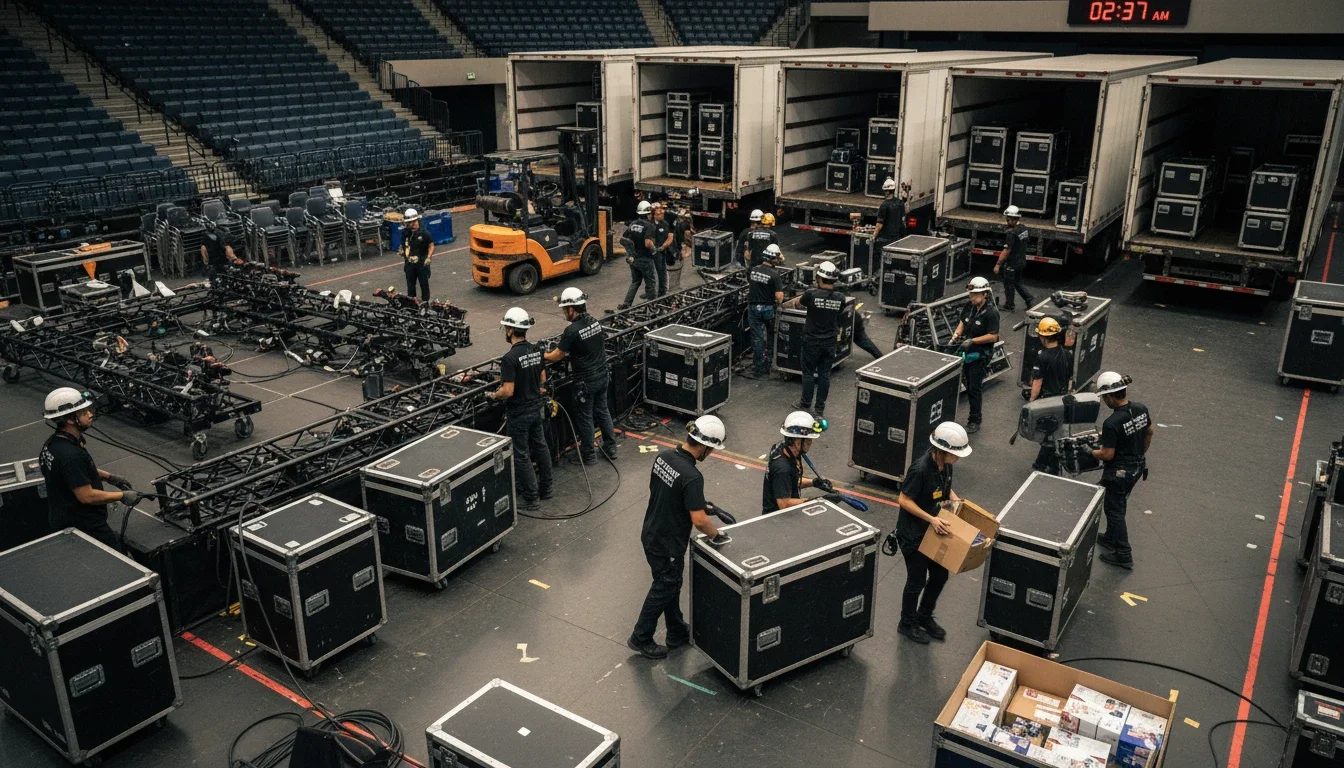
Event production assistants working efficiently during venue strike, packing equipment cases and loading materials onto trucks after a large-scale corporate event
Phase 5 — Post-Event Wrap-Up
The event is over, but a PA's responsibilities don't always end when the last box leaves the loading dock. Depending on the event scope, post-event duties may include:
Reconciling equipment and supply inventories against the original manifest
Filing event documentation, photos, and incident reports for the production record
Assisting the production manager with post-event recap documentation
Returning rented materials to vendors or storage facilities
Participating in brief post-event debriefs to note what worked and what should be adjusted for future events
Thorough post-event admin work supports better future planning and protects all parties in cases of disputed vendor charges or equipment damage claims.
Core Skills Every Event Production Assistant Needs
While the specific tasks vary by event type and venue, the qualities that define a high-performing production assistant remain consistent across all event environments:
Physical Stamina: The ability to lift, carry, and move heavy items while remaining on-site for 8–14 hour shifts during load-in and strike. Most PA roles require the ability to lift up to 50 lbs.
Attention to Detail: Accurately following floor plans, cue sheets, and production schedules without errors. A misplaced speaker or an unchecked inventory item can cascade into larger problems during the show.
Communication Skills: Serving as a real-time relay between departments, vendors, and leadership requires clear, concise verbal communication and the ability to receive direction quickly under pressure.
Adaptability: Events rarely execute exactly as planned. The best PAs respond to changes in the run-of-show, unexpected vendor issues, or weather complications with calm efficiency.
Customer Service Orientation: Even in a behind-the-scenes role, PAs frequently interact with attendees, vendors, and VIP guests. A professional, friendly demeanor reflects directly on the event brand.
Organizational Skills: Managing supplies, tracking inventory, distributing credentials, and maintaining production documentation all require strong organizational habits.
Teamwork: Production assistants work within a larger crew structure where independent decision-making must be balanced with clear deference to the production manager and department leads.
Technical Awareness: While PAs aren't expected to operate specialized AV or lighting systems, a working familiarity with common event technology helps them support technical crews more effectively.
Event Production Assistant vs. Event Coordinator: What's the Difference?
These two roles are often confused, but they operate at very different levels of responsibility within an event team.
An event coordinator oversees the strategic execution of the event — they manage the vendor relationships, own the master timeline, communicate with clients, and make judgment calls about changes to the event plan. They are accountable for the overall outcome.
An event production assistant executes assigned tasks within the plan the coordinator has established. They don't own the vendor relationships or the budget; they focus on completing specific operational tasks quickly and accurately under direction from the coordinator, production manager, or department leads.
Think of it this way: the coordinator is the architect of the event experience. The production assistant is the skilled builder who makes the blueprints real, from the first nail to the final coat of paint.
As event teams grow in complexity — especially for conventions, award shows, and large-scale brand activations — the distinction becomes even more important. A coordinator simply cannot be everywhere at once. PAs extend the coordinator's capacity by handling the physical and logistical layer of execution while the coordinator maintains strategic oversight.
Types of Events That Rely on Production Assistants
Event production assistants are valuable across virtually every event category, but their impact is most pronounced in high-complexity, high-footprint environments:
Conventions and Trade Shows: Multi-day, multi-building events with hundreds of exhibitors, complex AV rigs, and thousands of attendees require large PA teams for coordinated load-in, real-time logistics, and organized strike.
Corporate Events and Product Launches: Brand activations and product launches demand seamless execution. PAs ensure the experiential environment is built precisely to specification and runs flawlessly during the event window.
Award Shows and Galas: High-profile entertainment events like the Grammy Awards or major industry galas require discreet, experienced PAs capable of working around A-list talent and maintaining the highest standards of professionalism.
Concerts and Live Performances: Stage builds, equipment-heavy setups, and tight production schedules make PAs indispensable for concert and performance events.
Brand Activations: Pop-up experiences and branded installations require frequent setup and teardown, often across multiple locations — exactly the kind of work production assistants excel at.
Festivals and Large-Scale Outdoor Events: The scale and physical demands of festival production make experienced, reliable PAs one of the most critical staffing elements for event operators.
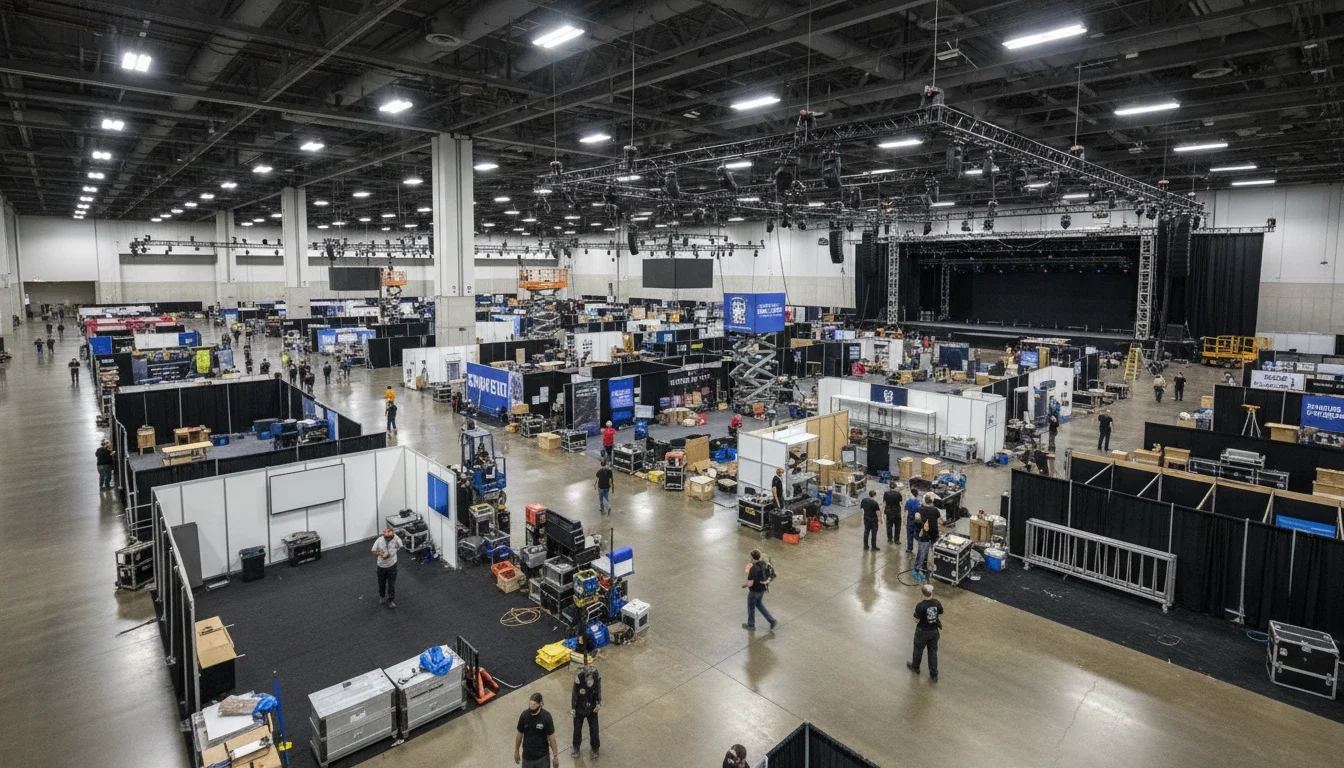
A wide-angle view of a large convention hall mid-setup with event production assistants and crew working across multiple exhibit booths, with staging and AV rigs visible
How to Hire Event Production Assistants in Los Angeles
Los Angeles is one of the most event-dense cities in the world, hosting everything from international trade shows at the LA Convention Center to Grammy weekend activations in Hollywood. Finding production assistants who already understand LA's venues, traffic patterns, and production culture is a significant operational advantage.
When evaluating event PA staffing options, here's what to look for:
Prior experience with similar event types and comparable production scales
Familiarity with your specific venues and their load-in/out protocols
A clear briefing and orientation process so PAs arrive event-ready
Backup staffing coverage in case of last-minute availability changes
Full insurance coverage for on-site work
A dedicated account manager who coordinates scheduling and communication
At Eleven8, our event production assistants are sourced from a highly selective roster developed over more than 30 years of staffing Los Angeles events. Every PA is briefed on your production schedule, venue layout, and specific task assignments 24 hours before their call time — so they arrive prepared, not figuring things out on the fly.
From early-morning load-ins at the Staples Center to late-night strikes after gala dinners in Beverly Hills, our team is built to handle the full spectrum of production support LA events demand.
Ready to staff your next event with experienced, reliable production assistants? Contact the Eleven8 team to receive a custom quote and staffing proposal tailored to your production schedule.