How Many People Will Actually Attend the LA 2028 Olympics — and What That Means for Brands
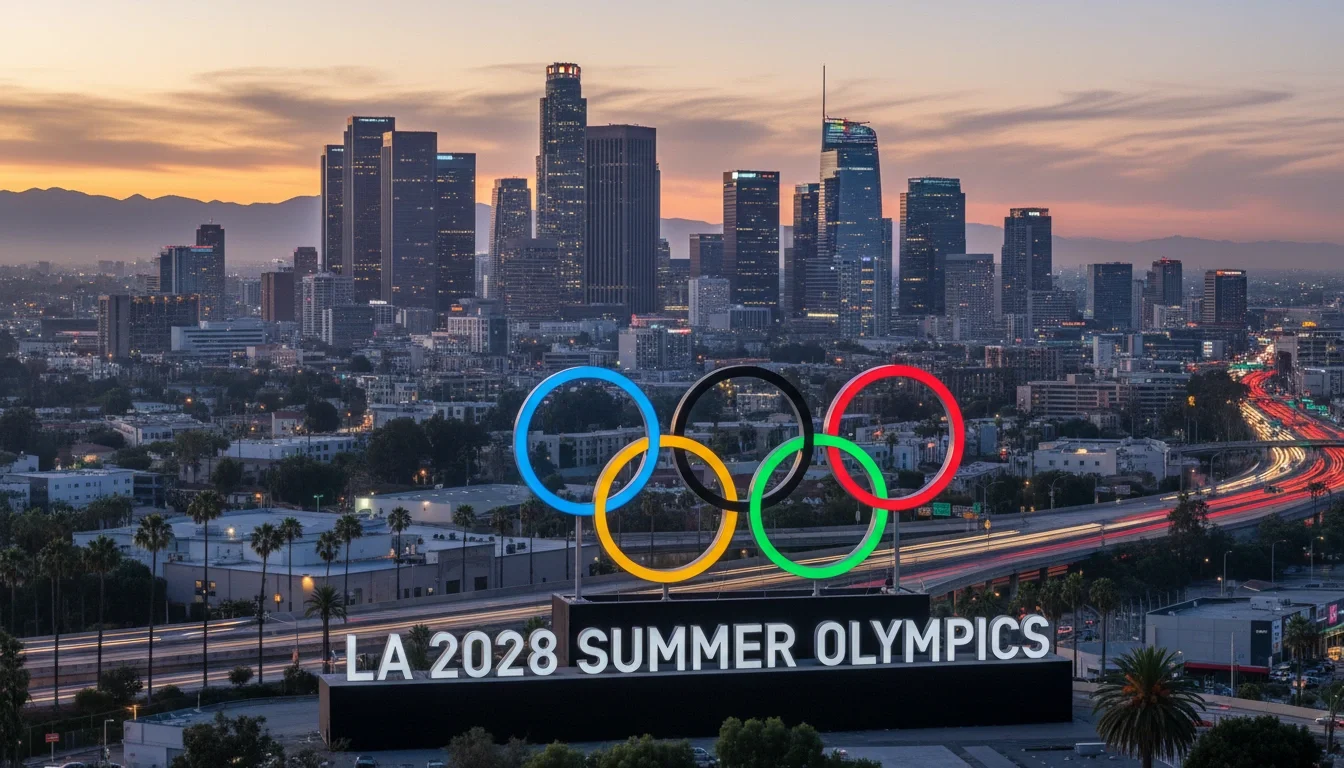
Los Angeles skyline with Olympic rings — LA 2028 Summer Olympics.
If you work in brand marketing, event production, or corporate experiential activations, the question isn't whether the LA 2028 Olympics will be big. It's how big — and whether your business is prepared for what that scale actually demands on the ground.
The numbers are beginning to come into focus. Los Angeles is gearing up for what organizers are calling the largest Olympic Games ever staged in the United States, and potentially the most-watched sporting event in modern history. Ticket draws are already open. Sponsors are locked in. Venue plans are set. And businesses across every sector — from hospitality to logistics to brand activation — are starting to feel the pressure of that 2028 countdown.
This piece breaks down exactly what the attendance projections look like, how they compare to recent Games, and what that volume of human traffic means for brands with eyes on the most valuable marketing window of the decade.
Setting the Stage: LA 2028 by the Numbers
Before getting into crowd projections, it helps to understand the raw scale of what Los Angeles is hosting. This is not a typical international sporting event. The 2028 Games are structured differently from any prior Olympics, and the scope reflects it.
When Are the Games? Dates and Duration
The Olympic Games run July 14–30, 2028 — a 17-day window that will dominate the global sports calendar. The opening ceremony is co-hosted by the Los Angeles Memorial Coliseum and SoFi Stadium on July 14. The Paralympic Games follow from August 15–27, 2028.
That's over seven weeks of sustained global focus on a single city. For brands, that's not a two-week sprint — it's a multi-phase marketing and operational marathon.
How Many Athletes, Sports, and Events
Organizers expect more than 15,000 athletes to compete across both the Olympic and Paralympic Games, representing approximately 200 countries. The program includes 36 sports with 353 medal events — 22 more than Paris 2024. New additions include flag football, squash, cricket (T20), lacrosse, and the return of baseball/softball.
The LA28 organizing committee has also confirmed over 800 total competition sessions and more than 3,000 hours of live action — a programming density that far exceeds any prior Summer Games.
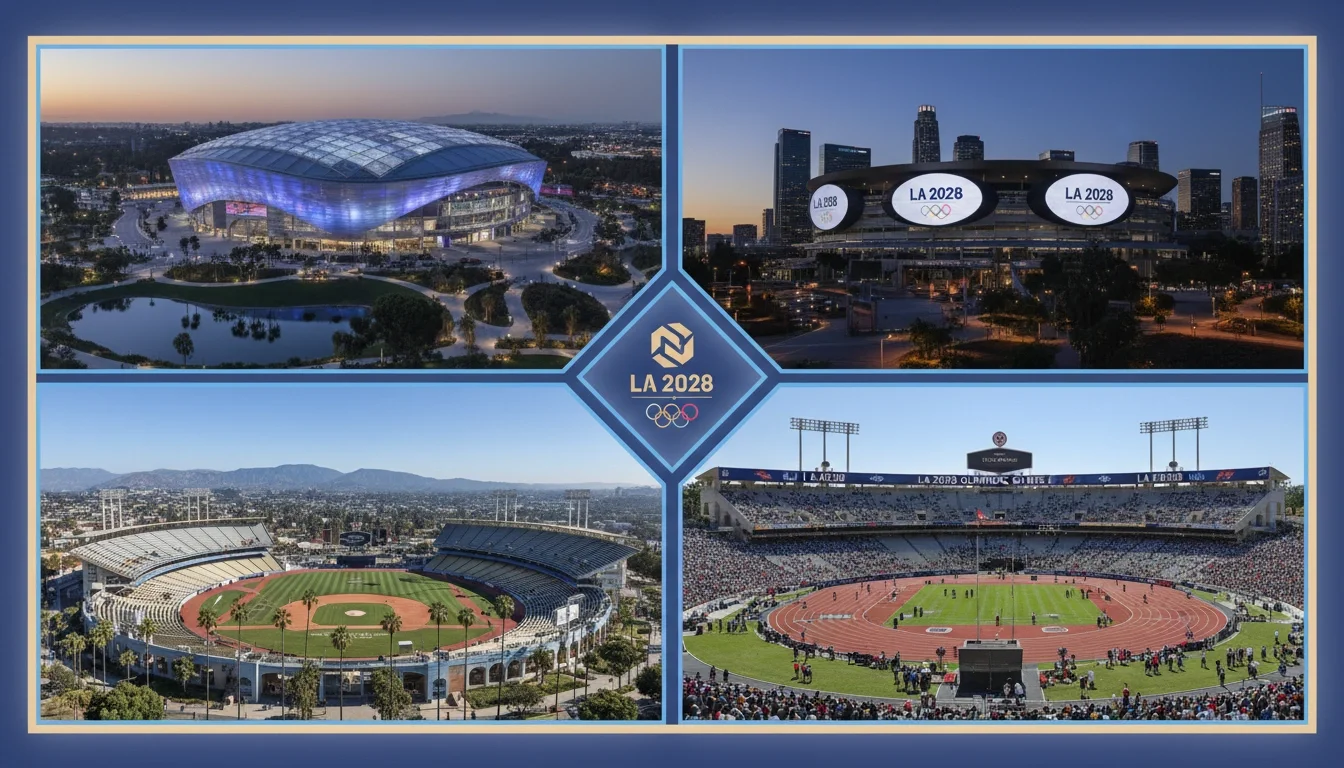
LA 2028 venues: SoFi Stadium, Crypto.com Arena, Dodger Stadium, LA Coliseum.
How Many People Are Expected to Attend the LA 2028 Olympics?
This is the question most brands and event planners actually want answered — and it's harder to pin down than it looks. Here's what the data and analogues tell us.
In-Venue Attendance Projections
With 49 competition venues spread across the Los Angeles region — from Dodger Stadium and Crypto.com Arena to the Intuit Dome, the Riviera Country Club, and temporary beach venues in Santa Monica — in-venue capacity across all events will reach into the millions of individual ticket sessions.
A fiscal impact analysis conducted for Santa Monica, which is expected to host Olympic beach volleyball, found that beach volleyball events alone were projected to draw over 450,000 attendees to that single city across the two-week window. That's one venue, one sport.
Metro LA has projected an additional 1 million more boardings per day on the public transit system during the Games — a figure that captures both ticketed event-goers and the broader wave of people moving through the city to experience the Olympic atmosphere.
Total Visitor Volume to Los Angeles
LA28 has not published a single official visitor projection number, but the available data paints a clear picture. The 2016 Rio Olympics drew approximately 1.2 million tourists to Brazil, with around 410,000 international visitors. London 2012 saw a net 4% increase in visitor traffic. Paris 2024 outperformed both, attracting record numbers across multiple nights.
Los Angeles enters this conversation with structural advantages no prior host city has matched: a global reputation as the entertainment capital of the world, an airport infrastructure overhaul at LAX adding terminals and an Automated People Mover, and a transit system undergoing its largest expansion in history under the Twenty-Eight by '28 infrastructure plan.
Conservative estimates suggest a minimum of 1–1.5 million domestic and international visitors to Los Angeles during the Olympic period, with the broader spillover impact reaching Southern California as a region across the entire summer.
Comparing to Past Olympics: A Quick Reference
Attendance Comparison: Recent Olympic GamesRio 2016: ~1.2M tourists | ~410K international visitors | 7.7M tickets soldTokyo 2020: Closed to spectators (COVID)Paris 2024: Record viewership | ~9.5M tickets sold | 33M daily viewers on NBCLA 2028 (projected): 1M+ daily Metro boardings | 1–1.5M+ visitors | Highest U.S. viewership since 1996
The Tokyo comparison is instructive for a different reason: it reset audience baselines. NBC's viewership jumped 82% from Tokyo to Paris. With LA 2028 scheduled largely in prime time for American audiences and a U.S. team coming off a strong 2026 Winter Games performance, that trajectory is expected to continue upward.
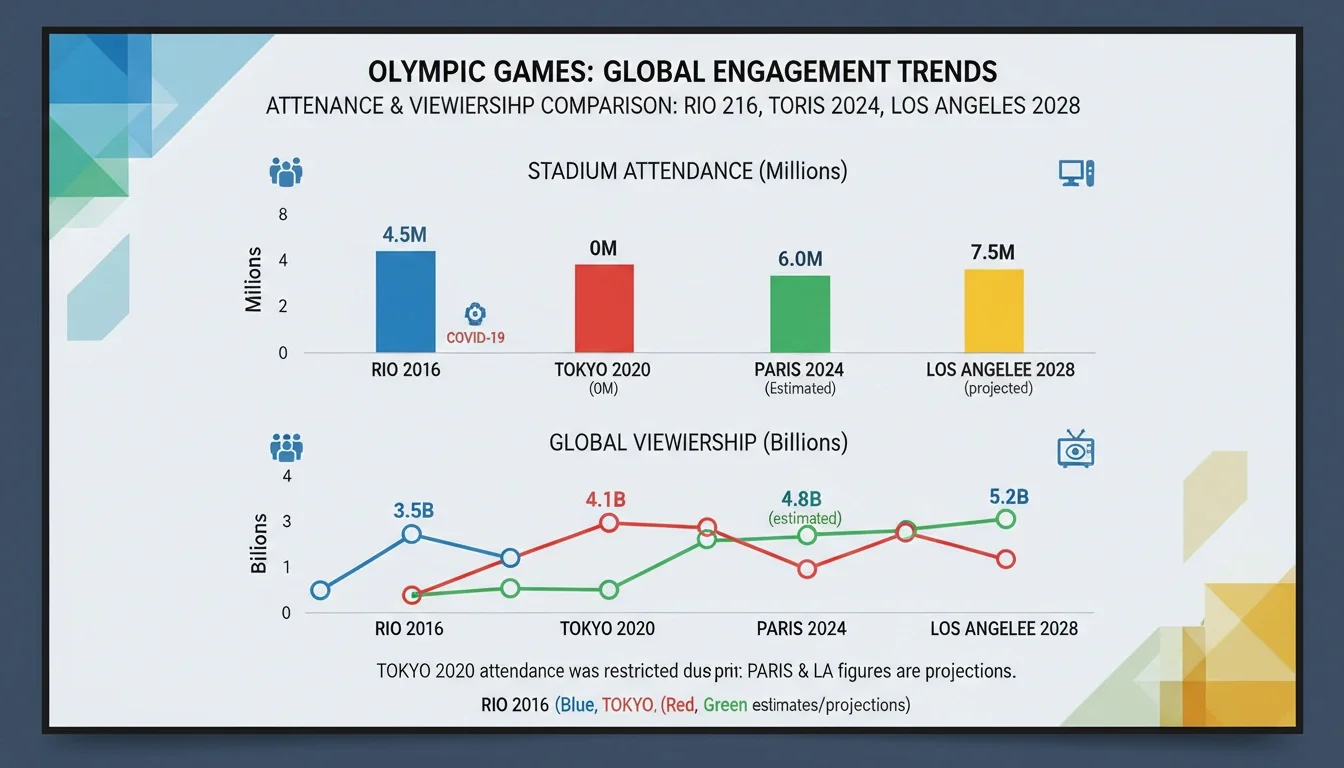
Olympic Games attendance and viewership comparison — Rio, Tokyo, Paris, LA 2028
Why These Numbers Matter for Brands
Raw attendance numbers are only part of the story. The real question is what that volume of people, attention, and global focus means for your brand — whether you're an official Olympic sponsor or a business with no formal Games relationship at all.
17 Days of Captive Global Audiences
NBC averaged 32 million viewers per day during Paris 2024 across digital and linear platforms. There were 412 billion engagements with Olympic content on social media during the Games. With LA 2028 competitions timed for prime-time American viewing and the host city effect driving domestic interest to historic levels, those figures are expected to climb substantially.
That audience isn't passive. They're booking hotels, visiting restaurants, attending fan events, and engaging with brand experiences in person — across 49 venues in one of the world's most entertainment-rich cities.
The Spillover Economy: Brand Activations Beyond the Venues
The most interesting brand opportunity at LA 2028 isn't necessarily inside the stadiums. It's in the city itself — in the fan zones, the brand houses, the pop-up activations, the sponsored events, the hospitality suites, and the cultural programming that runs parallel to the competition calendar.
Paris 2024 demonstrated what this looks like at scale: Louis Vuitton's involvement in the opening ceremony, product placements woven into broadcast coverage, and brand activations at iconic city landmarks generated massive organic reach that outperformed traditional advertising. Los Angeles — the entertainment capital of the world — is arguably even better positioned to deliver those kinds of moments.
Fan Zones and Sponsor Activations
Fan zones, which are free public spaces that create a festival-like atmosphere around the Games, will attract tens of thousands of daily visitors who may not hold event tickets. These spaces are prime real estate for brand activations, product sampling, experiential installations, and interactive campaigns. Staffing these activations with professional, brand-aligned personnel is critical to execution.
Hospitality Houses and VIP Experiences
Every major sponsor category at the Olympics involves some form of private hospitality programming — VIP suites, client entertainment events, media dinners, and brand-specific 'houses' set up in the city. These are high-stakes events where the quality of on-site staff directly reflects the brand's image.
Brands like Delta (official volunteer program sponsor), NBCUniversal (founding media partner), and Comcast are already building hospitality frameworks around the Games. Dozens more sponsors will need professional hospitality staff to execute these experiences at the level the Games demand.
The Digital Multiplier Effect
LA 2028 is expected to be what industry observers are calling the first true 'AI Olympics' — with fragmented, algorithm-driven content distribution pushing Olympic moments across every major platform simultaneously. Paris 2024 was the first TikTok Olympics; by 2028, the content landscape will be even more distributed.
For brands, this means every in-person touchpoint is also a content opportunity. The brand ambassador who hands a product sample to an attendee at a fan zone might be in 50 social posts within the hour. The event staff who handles a VIP check-in flawlessly becomes part of the brand's story. The quality of your on-the-ground team isn't just an operational detail — it's a marketing asset.
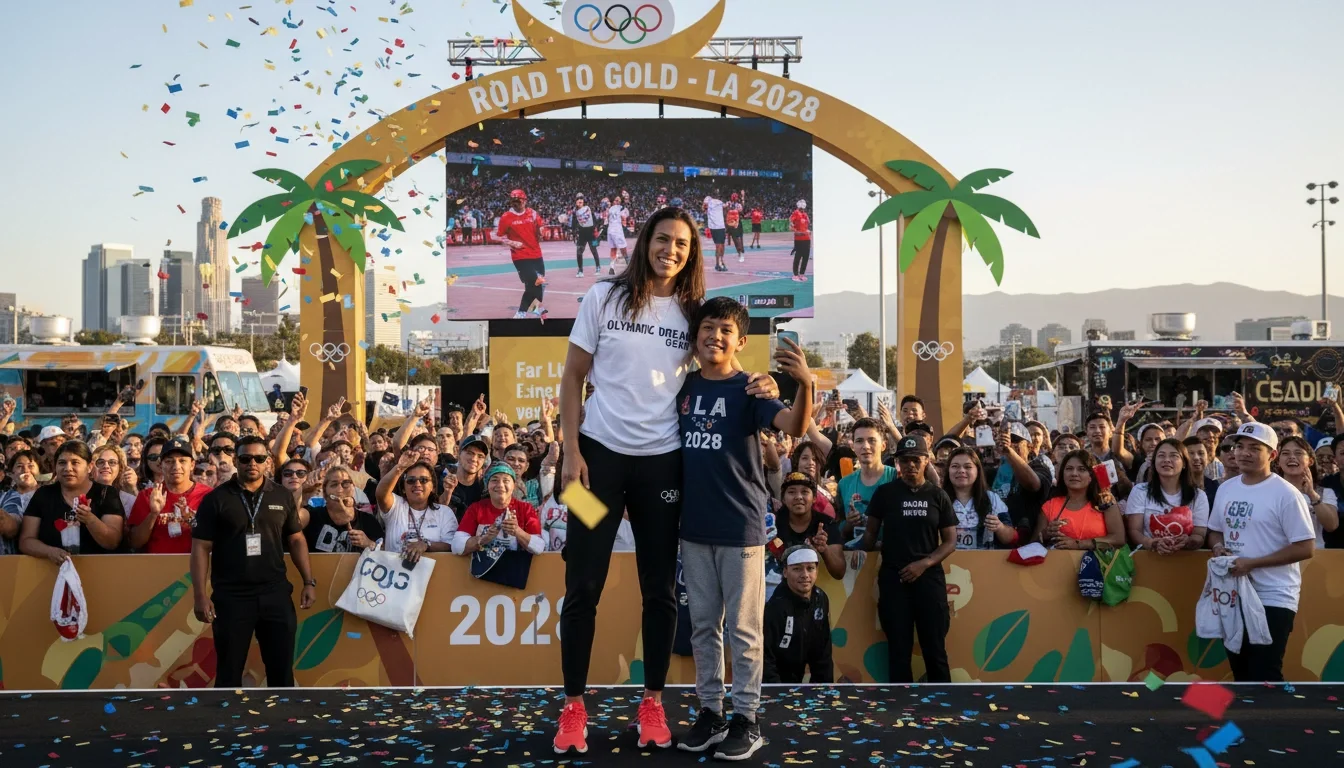
Brand ambassador engaging with fans at an outdoor Olympic activation in Los Angeles.
What the Scale Means for Operational Readiness
There's a gap between understanding the opportunity and being ready to execute on it. For any brand planning to activate around LA 2028, operational readiness is the critical variable — and it has to be addressed long before the Olympic torch is lit.
Staffing Challenges at Olympic Scale
Large-scale events have a way of revealing where a brand's human infrastructure is weakest. At the scale of an Olympic Games — with 800+ events, 49 venues spread across a geographically sprawling metro area, and millions of visitors moving through the city simultaneously — those weaknesses get amplified fast.
The staffing requirements for Olympic-adjacent brand activations include:
Brand ambassadors who can represent your values accurately under high-volume, high-pressure conditions
Bilingual and multilingual staff who can engage international visitors in their own language
Hospitality professionals trained in VIP guest management for sponsor suites and client entertainment events
Registration and logistics staff who can handle complex check-in flows and crowd management
On-call coordinator support to manage last-minute changes across multiple simultaneous activations
Eleven8 Event Staff is already positioned for this challenge. As a confirmed preferred staffing partner for the LA 2028 Olympic Games, the agency has been building Olympic-specific staffing frameworks across multiple prior mega-events, including the FIFA World Cup 2026 in Los Angeles and Super Bowl 2027.
Why LA's Infrastructure Makes Staffing Complex — and Critical
Unlike Paris, which operates on a dense, walkable urban core, Los Angeles is a sprawling, car-centric metropolis where venues are distributed across multiple cities and neighborhoods — from Inglewood and Downtown LA to Malibu, Long Beach, and Pasadena.
Metro LA is planning to add approximately 2,700 buses during the Games — effectively doubling its current fleet — while deploying new transit routes specifically for Olympic venue connections. This logistical complexity means that getting the right staff to the right place at the right time requires planning, reliable coordination, and an agency that knows the city at the operational level.
For brands unfamiliar with LA's geography and hospitality ecosystem, partnering with an agency that has 30+ years of local event operations experience isn't a nice-to-have. It's a prerequisite for activation success.
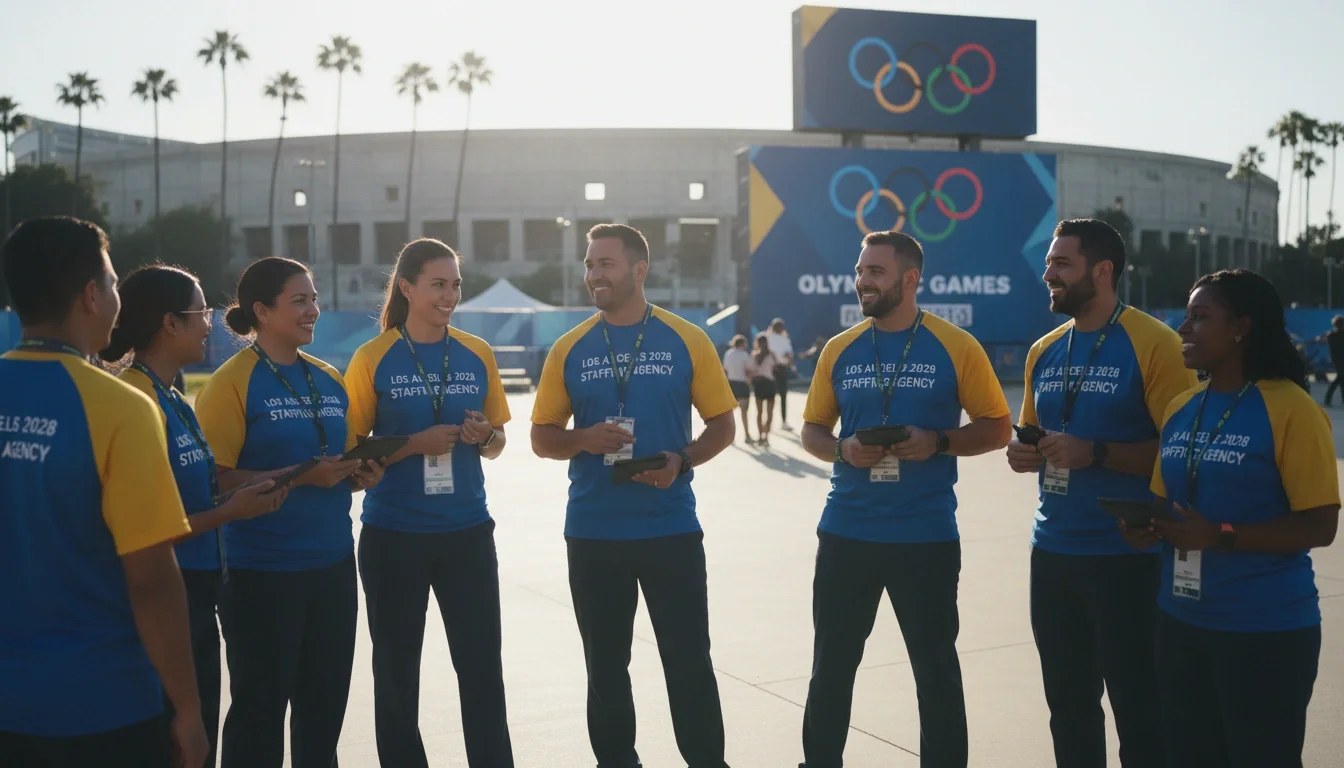
Professional event staff Los Angeles Olympic Games staffing agency.
How to Position Your Brand Before the Games Begin
The brands that win at the Olympics are not the ones that show up six months out with a campaign idea. They're the ones that start locking in assets, relationships, and operational partners two to three years in advance.
As Stephen Hall, global CEO of Sid Lee Sport — a sponsorship marketing agency with ten Olympic Games of experience — has noted, extracting full value from an Olympic investment requires the whole business to be involved, and the brands that leave planning to the last moment risk leaving significant value on the table.
Start Planning Now — Not in 2027
The planning window for LA 2028 is not measured in months. It's measured in years. Activation logistics in a complex city like Los Angeles take time to develop. Venue permits, local partnerships, talent sourcing, staffing contracts — all of these have lead times that only increase as the Games approach.
Brands participating in LA 2028 — whether as TOP sponsors, Founding Partners, national sponsors, or independent activators in the public urban space — should be in active planning mode now. The brands booking early get the best staff, the best venues, and the best operational support. Those booking late pay a premium for whatever remains.
Choosing the Right Staffing Partner
Not every event staffing agency is equipped for Olympic-scale operations. The difference between an agency that staffs 200-person corporate dinners and one that manages 500+ person deployments across multiple simultaneous activations is significant.
For LA 2028, the staffing criteria that matter most include:
Proven experience at mega-events (World Cups, Super Bowls, Conventions with 50,000+ attendees)
Multilingual staff pools for international audience engagement
Same-day scalability to handle last-minute volume changes
Existing relationships with LA venues and local logistics networks
Brand alignment and aesthetic matching for premium client experiences
24/7 coordinator availability during the Games window
These are precisely the capabilities that Eleven8 Event Staff has spent 30+ years building. Whether your brand needs brand ambassadors for a fan zone activation, hospitality staff for a VIP sponsor suite, or registration professionals for a multi-day conference running alongside the Games, Eleven8's Olympic staffing framework is ready to support your vision.
The question isn't whether LA 2028 will be big. It will be the biggest Summer Games on American soil in a generation. The only real question is whether your brand will be part of the story — or watching from the outside.