The Difference Between Official Olympic Sponsors and Ambush Marketers at LA 2028
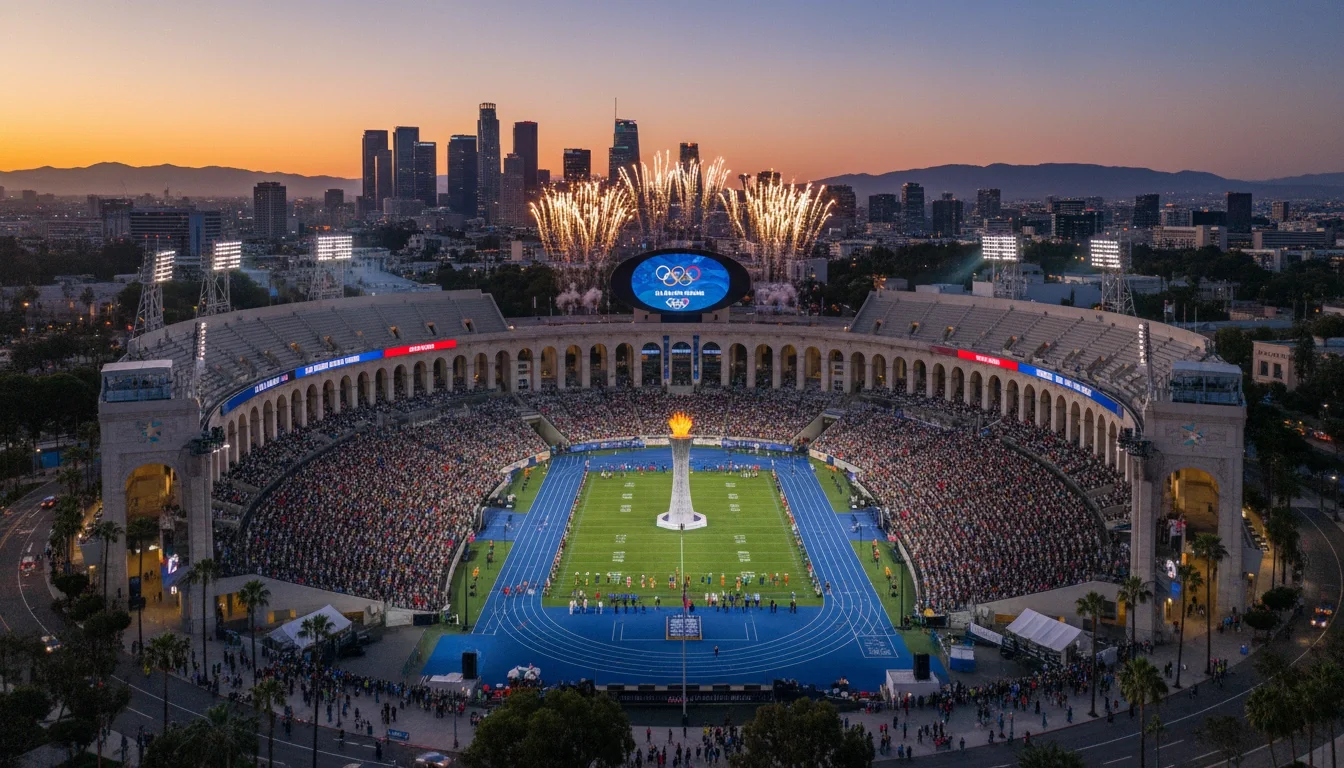
Los Angeles Memorial Coliseum — a centerpiece venue for the 2028 Olympic Games.
The 2028 Los Angeles Olympics will be one of the most commercially significant sporting events in modern history — and for brands, the pressure to capitalize on it is already intense. With Opening Ceremonies scheduled for July 14, 2028, marketing teams are making multi-million dollar decisions right now about how to show up.
Some will pay for official sponsorship. Others will try to engineer the appearance of association without the price tag. The latter strategy has a name — ambush marketing, and it's become one of the most legally fraught, strategically misunderstood plays in modern sports marketing.
Understanding the real difference between these two paths isn't just an academic exercise. It's the difference between a campaign that builds brand equity over the years and a lawsuit that lands on the front page. Whether your brand is planning a seven-figure sponsorship deal or a scrappy guerrilla campaign in Silver Lake, here's what you need to know.
(For a broader look at the LA 2028 opportunity, see our earlier breakdown of 10 Emerging Marketing Strategies for the LA 2028 Olympics.)
What Makes a Brand an Official Olympic Sponsor?
Official Olympic sponsorship is a formal, licensed commercial relationship governed by contracts between a brand, the International Olympic Committee (IOC), the United States Olympic and Paralympic Committee (USOPC), and/or the LA28 Organizing Committee. In exchange for significant investment, official sponsors receive exclusive rights to use Olympic intellectual property — the rings, the torch, the "Team USA" designation, official Games imagery — in their marketing.
These rights are not just symbolic. They represent a legally enforced exclusivity that prevents competitors from making equivalent claims. When a brand becomes an official partner of LA28, they're purchasing a moat as much as a megaphone.
The Three Tiers of LA28 Sponsorship
LA28's commercial structure operates across three primary partnership levels:
Worldwide Olympic Partners (WOP/TOP) sit at the top of the hierarchy. These brands hold IOC-level rights across all Olympic Games globally, not just LA 2028. Their investment is typically reported at $200 million or more per four-year cycle.
LA28 Official Partners hold rights specific to the 2028 Games, including access to the Summer Olympics, the Paralympic Games, and U.S. Olympic and Paralympic team marketing rights starting from the 2026 Milan-Cortina Winter Games. This gives official partners a multi-year runway to build association before the opening ceremony.
Team USA Sponsors focus specifically on the U.S. Olympic and Paralympic teams, aligning with athletes rather than the Games themselves. This tier allows for meaningful Olympic adjacency at a lower investment level — but still with licensed rights.
In a first for Olympic history, LA28 is also allowing qualified naming rights partners to brand venues during the Games — but only if they are Worldwide Olympic Partners or LA28 Founding Partners. This gives official sponsors an unprecedented level of physical, on-site visibility that no ambush marketer can replicate.
Who Are the Confirmed Official Partners of LA28?
As of early 2026, confirmed official partners of the LA 2028 Games include some of the most recognized brands in the world: Coca-Cola (celebrating 100 years of Olympic partnership in 2028), Ralph Lauren (Official Outfitter of Team USA for a 20th consecutive year), Deloitte, Delta Air Lines, Honda (replacing Toyota as the Team USA automotive sponsor), Saatva, and Snowflake, among others. NBCUniversal/Comcast holds the broadcast rights and has been designated as a Founding Partner.
The full and updated list of official partners can be found at la28.org/en/our-partners.
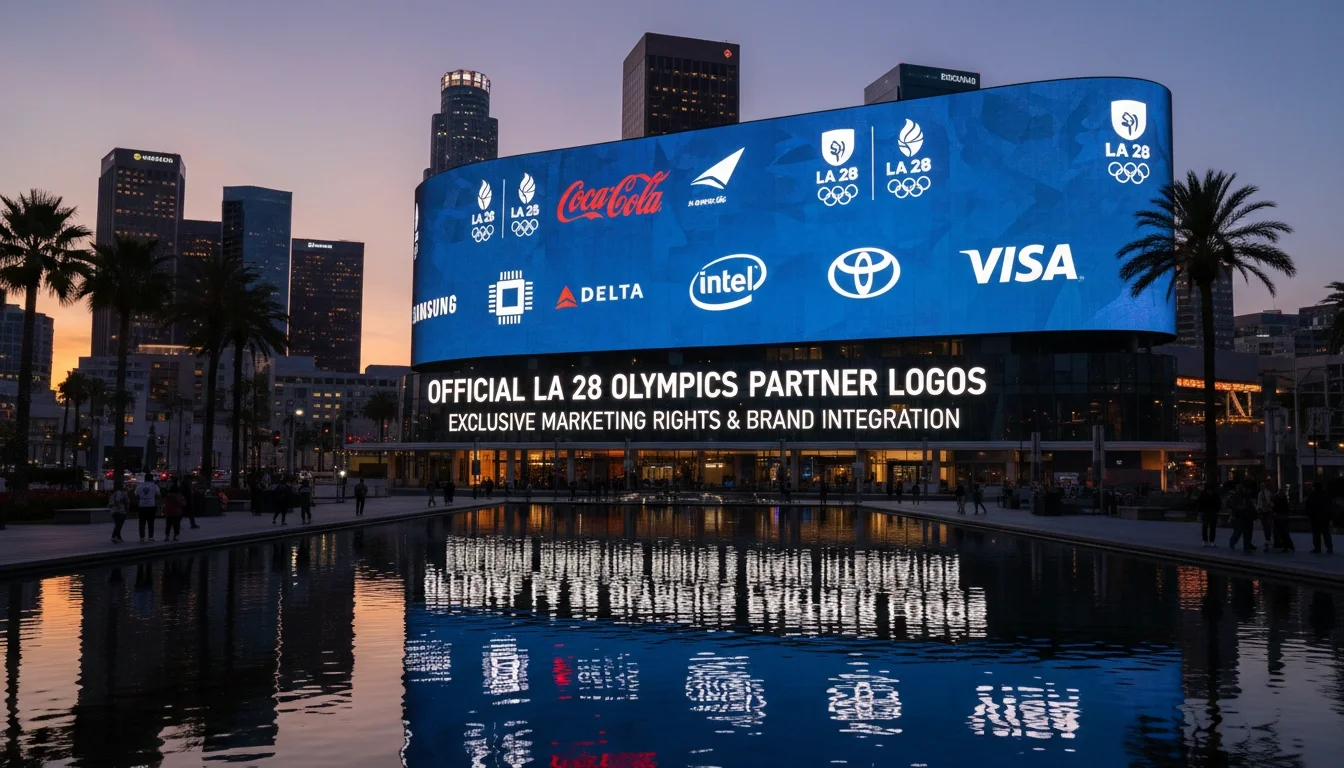
Official LA28 partner logos represent exclusive marketing rights and brand integration.
What Is Ambush Marketing at the Olympics?
Ambush marketing occurs when a brand that has not paid for official sponsorship creates marketing campaigns that generate the impression — intentionally or not — that it is an official partner of the Games. The goal is simple: harvest the cultural goodwill and massive audience of the Olympics without paying the sponsorship fee.
It's a practice as old as modern Olympic commercialism, and it has become increasingly sophisticated. Legal scholars, the IOC, and the USOPC divide ambush marketing into two distinct categories.
Ambush by Association
This is the more common — and more legally dangerous — form. Ambush by association involves using imagery, language, or symbolism that implies a connection to the Olympics without directly reproducing protected trademarks. Examples include:
Using the words "Olympic," "Olympian," "Team USA," "Going for Gold," or "2028 Games" in advertising without a license
Creating campaigns around "summer sports," athletic excellence, or peak performance timed to coincide with the Games
Associating a brand with athletes who are competing in the Games, in ways that imply official endorsement of the Olympic organization
Using visual motifs (five interlocking rings of any kind, torch imagery, gold medals) that evoke the Games
The USOPC's protections under the Ted Stevens Olympic and Amateur Sports Act go significantly further than standard trademark law in the United States. The USOPC doesn't need to prove consumer confusion — only that the use evokes the Olympics in a commercial context.
Ambush by Intrusion
Ambush by intrusion is more physical and tactical. It involves non-sponsor brands gaining visibility at or around Olympic venues or broadcast contexts without authorization. Classic examples include:
Buying out-of-home advertising (billboards, transit ads, airport displays) in the immediate vicinity of competition venues
Distributing branded merchandise to athletes or spectators near venues
Sponsoring media coverage that surrounds Olympic broadcasts without being an official broadcast partner
Staging street-level activations, pop-ups, or stunts that pull attention from the official event footprint
Famous Examples of Olympic Ambush Marketing
The most instructive lessons in Olympic marketing don't come from textbooks — they come from campaigns that either defined a generation or ended in a courtroom.
Nike at the 1996 Atlanta Games
Reebok was the official athletic footwear sponsor of the 1996 Atlanta Olympics. Nike was not. But Nike dominated the cultural conversation. The brand set up a massive branded pavilion just outside the official Olympic venue perimeter, blanketed Atlanta with "Just Do It" advertising, and ensured its logo was visible on athletes through equipment endorsement deals. Many consumers walked away from the Games believing Nike was an official sponsor.
Nike never used the Olympic rings. It never said "Olympic." It stayed just outside the legal boundaries while completely undermining Reebok's paid exclusivity. It remains one of the most studied examples of strategic ambush by intrusion in sports marketing history.
Beats by Dre at the London 2012
For the London 2012 Games, Beats Electronics — not an official sponsor — sent branded headphones to dozens of high-profile athletes as "gifts" before competition. Athletes wore them during warm-ups, in the athletes' village, and in post-event interviews, generating enormous TV and social media exposure. The IOC tightened restrictions, but the damage was done. Beats had achieved massive Olympic-scale visibility for the cost of a seeding campaign.
Prime Hydration vs. USOPC (2024)
The most recent and most legally significant example came just before the Paris 2024 Olympics. Prime Hydration, co-founded by Logan Paul and KSI, launched a campaign featuring NBA star Kevin Durant — a Team USA athlete — using Olympic-themed language and imagery, including the terms "Olympic" and "Team USA."
The USOPC filed suit in the U.S. District Court for the District of Colorado on July 19, 2024, alleging trademark infringement. Prime had not obtained a license from the USOPC or LA28. The case serves as the clearest recent signal that enforcement is not theoretical — it is active, fast, and expensive.
For brands considering any form of Olympic adjacency at LA 2028, the Prime case is required reading. The full legal analysis from Haug Partners is worth reviewing: haugpartners.com.
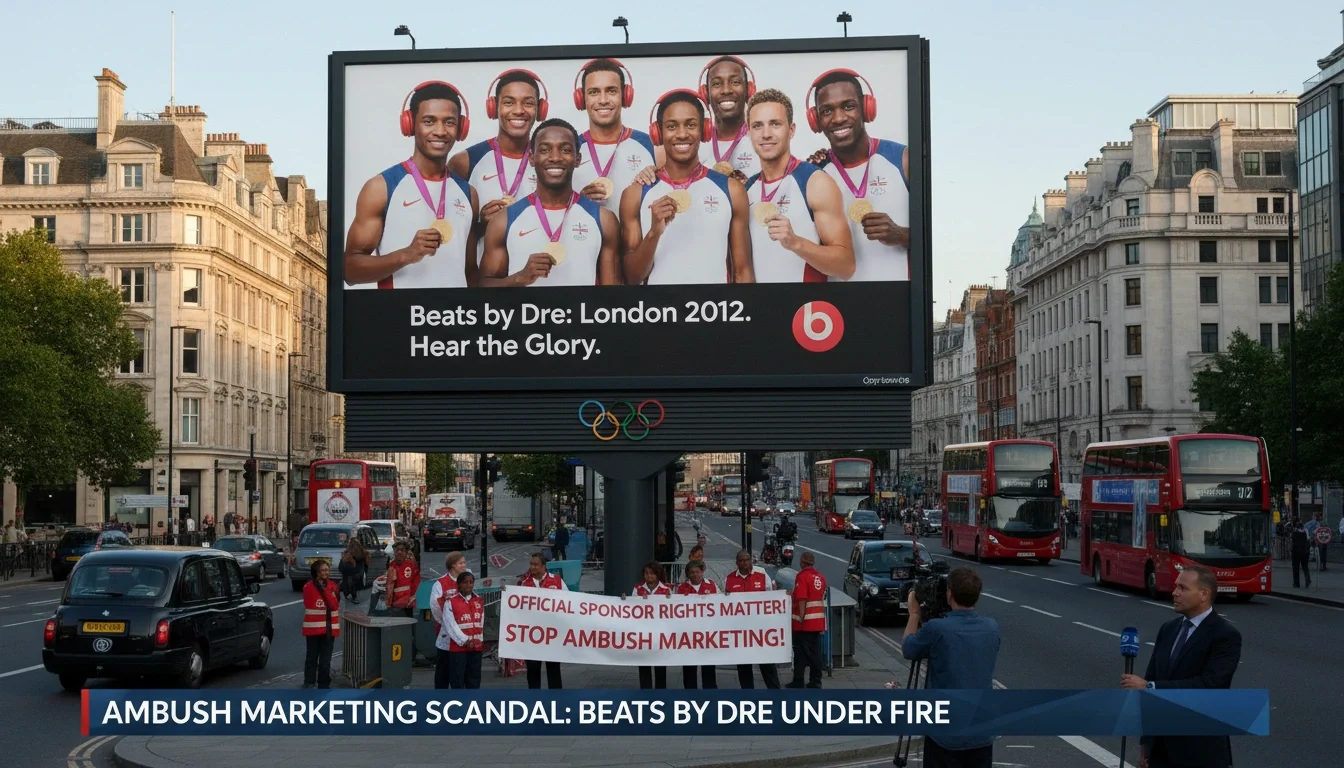
Beats by Dre's London 2012 athlete gifting campaign became a textbook case of ambush marketing by intrusion.
The Legal Consequences of Ambush Marketing at LA 2028
USOPC Trademark Protections and Federal Law
The legal environment around Olympic IP in the United States is uniquely powerful. The Ted Stevens Olympic and Amateur Sports Act grants the USOPC exclusive rights to control commercial use of a specific list of protected terms and symbols — including "Olympic," "Olympiad," "Citius Altius Fortius," the Olympic rings, and variations thereof — without needing to satisfy the standard trademark infringement test for consumer confusion.
This means a brand can be liable even if its campaign is clearly not intended to deceive anyone. A commercial association alone is enough.
The USOPC has demonstrated it will pursue enforcement aggressively. Alongside the Prime Hydration lawsuit, the organization has historically sent cease-and-desist letters to small businesses using "Olympic" in their names or promotions, regardless of intent or awareness.
What Brands Can and Cannot Say or Show
Protected (do not use without a license):
"Olympic," "Olympian," "Olympiad," "Paralympics"
"Team USA" (in commercial contexts)
The five-ring symbol in any configuration
The Olympic torch, flame, or motto
"LA28" branding and marks
Language clearly evoking official sponsorship ("proud supporter of the Games," "official partner," etc.)
Generally permitted (but consult legal counsel):
Celebrating athletic achievement in general terms
Advertising in public spaces near (but not within) restricted zones
Endorsement deals with Olympic athletes, provided Olympic-specific marks are avoided
"Summer" or "sports" themed campaigns without direct Olympic reference
Social media content that engages with general sports culture without using protected terms
The International Trademark Association provides a comprehensive breakdown of protections across multiple jurisdictions for brands operating internationally: inta.org.
What Official Sponsors Get That Ambush Marketers Don't
The price gap between official sponsorship and ambush marketing is enormous. But so is the gap in what brands actually receive.
IP Access and Exclusivity Rights
Official sponsors can use the Olympic rings, Team USA branding, LA28 marks, athlete images in official contexts, and the full visual language of the Games in their advertising. They can call themselves "Official Partners" and have that claim backed by the prestige and legal authority of the IOC and USOPC. That exclusivity is enforceable — meaning their investment is actively protected against competitors trying to muddy the waters.
Venue Access, Naming Rights, and On-Site Activation
As noted earlier, LA28's new naming rights policy gives official partners the ability to brand actual competition venues — a first in Olympic history. Beyond naming rights, official partners gain access to on-site activation footprints, hospitality suites, athlete meet-and-greets, and integrated experiences within the official Games perimeter. These are spaces entirely off-limits to non-sponsors.
This is where premium event staffing becomes critical. The most flawlessly designed brand activation in history falls apart without the right team executing it in real time. Elev8.la's event staffing services are specifically built for high-stakes environments — VIP hospitality, brand ambassador activations, registration and coordination — the full spectrum of what official sponsors need to bring their investment to life.
Media Integration with NBC and Peacock
Official sponsors gain integrated advertising access across NBC's Olympic broadcast and Peacock's streaming platform, with coordinated placement that non-sponsors cannot purchase in an officially linked context. With NBC averaging 32 million viewers per day across its platforms during Paris 2024, the media reach available to official sponsors dwarfs what any guerrilla campaign can achieve in an equivalent time window.
How Non-Sponsors Can Market Legally During LA 2028
Not every brand has a nine-figure sponsorship budget. But there are legitimate, creative, legally sound ways to build brand relevance during the Olympic period without touching restricted IP.
Athlete Partnerships (With Caution)
Partnering with Olympic athletes through direct endorsement deals is permitted — but with important caveats. Brands must avoid using any Olympic marks, Team USA branding, or language that implies official affiliation with the Games. Athletes can wear your gear; you cannot call it the "Official Athletic Shoe of Team USA" unless you've paid for that right.
The IOC's Rule 40 (now relaxed somewhat since the Tokyo Games) governs what athletes can post on social media and what non-sponsor brands can say about their athlete partners during the "blackout period" surrounding the Games. Understanding the current version of Rule 40 is essential for any brand planning an athlete partnership.
Thematic Campaigns That Avoid Restricted Terminology
Brands can celebrate excellence, perseverance, teamwork, and achievement — core Olympic values — without referencing the Games directly. "This summer, we're going for it" is different from "This summer, at the Olympics." The former is open; the latter risks enforcement.
The most effective non-sponsor campaigns in Olympic history have worked on emotion rather than association — connecting deeply with the cultural moment without claiming to own a piece of it.
Experiential and Guerrilla Marketing Near (But Not In) Venues
Public spaces, streets, transit hubs, and neighborhoods surrounding Olympic venues are not protected. Strategic out-of-home advertising, pop-up activations, sampling campaigns, and brand experiences positioned along athlete and spectator traffic routes can generate significant impressions legally.
Los Angeles's geography creates particularly rich opportunities here. From Venice Beach to Downtown to Inglewood, the city's fabric of public spaces gives creative marketers enormous room to operate. The brands that do this well invest not just in creative concepts but in professional, on-brand execution — the people who show up in the right uniform, with the right energy, delivering the right experience to every passerby.
Why Event Execution Is the Difference-Maker for Both Camps
There's a detail that often gets lost in the debate between official sponsors and ambush marketers: neither strategy works without world-class execution on the ground.
An official sponsor that has spent $50 million on a partnership and then staffs their hospitality suite with undertrained, off-brand personnel has wasted their investment. A non-sponsor running a guerrilla activation in a public square that's staffed by disengaged brand ambassadors makes no impression at all.
The single variable that consistently separates memorable Olympic activations from forgettable ones is the quality of the people delivering the experience. Brand ambassadors who understand the product, read the crowd, and create genuine human moments. Event staff who can handle the chaos of 50,000 people flowing through a venue corridor. Hospitality teams that make VIP guests feel like the Games were designed specifically for them.
Elev8.la has staffed everything from intimate 20-person executive events to outdoor festivals with 50,000+ attendees. For brands — official sponsors or creative non-sponsors — planning any kind of presence around LA 2028, the execution partner matters as much as the marketing strategy itself.
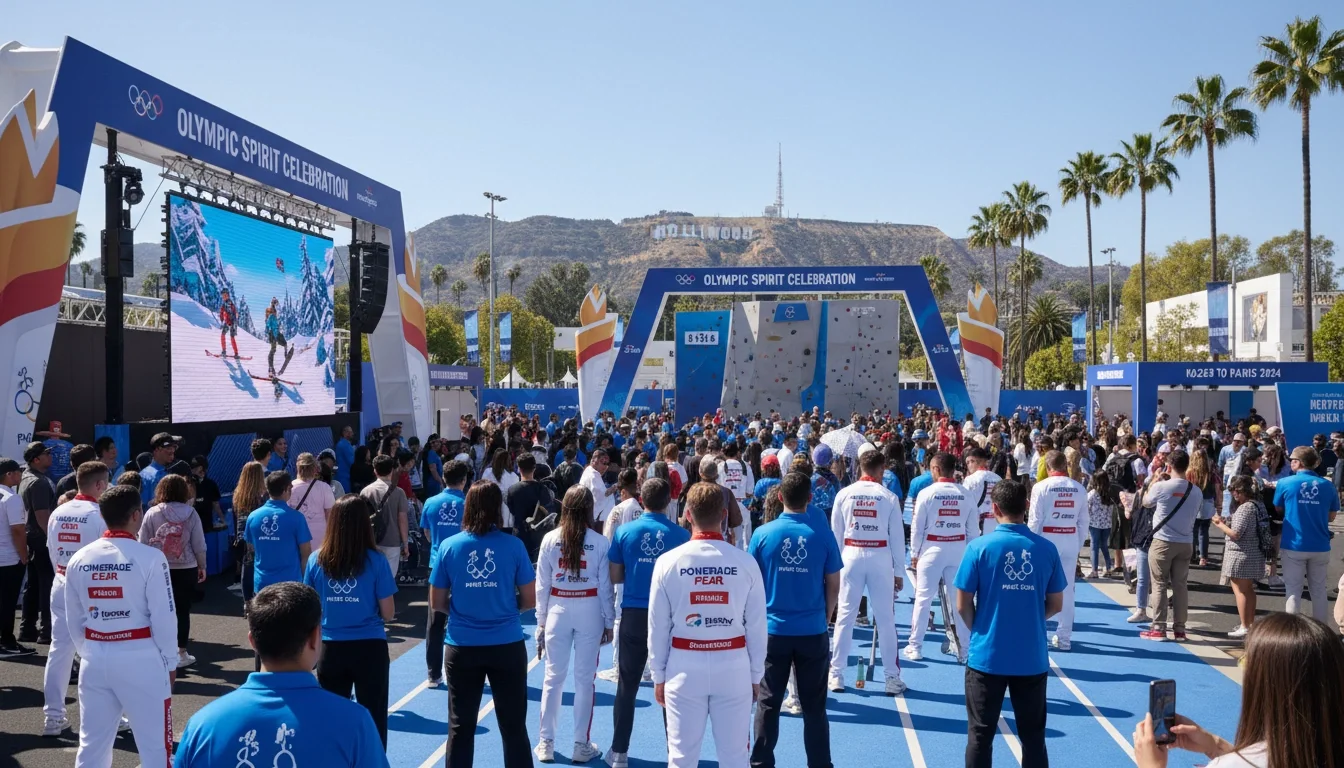
Professional event staff and brand ambassadors bring Olympic sponsor activations to life on the ground in Los Angeles.