How Production Assistants Improve Event Logistics and Guest Experience
There's a version of your event that runs like clockwork — where vendors arrive on schedule, guests move through the venue without friction, and your team isn't scrambling to solve problems that should never have happened. Then there's the version where small coordination failures compound into something guests notice, and remember.
The difference often comes down to who's working behind the scenes.
Event production assistants are among the most underappreciated roles in the industry. They carry equipment, direct deliveries, manage transitions, and keep an eye on everything happening at ground level — while your event manager focuses on the bigger picture. When they're skilled and well-deployed, your event flows. When they're absent or undertrained, the cracks show quickly.
This guide explores exactly how production assistants improve event logistics from the first truck arriving at the loading dock to the last chair stacked after the night ends — and why their presence has a direct, measurable impact on how your guests experience your event.
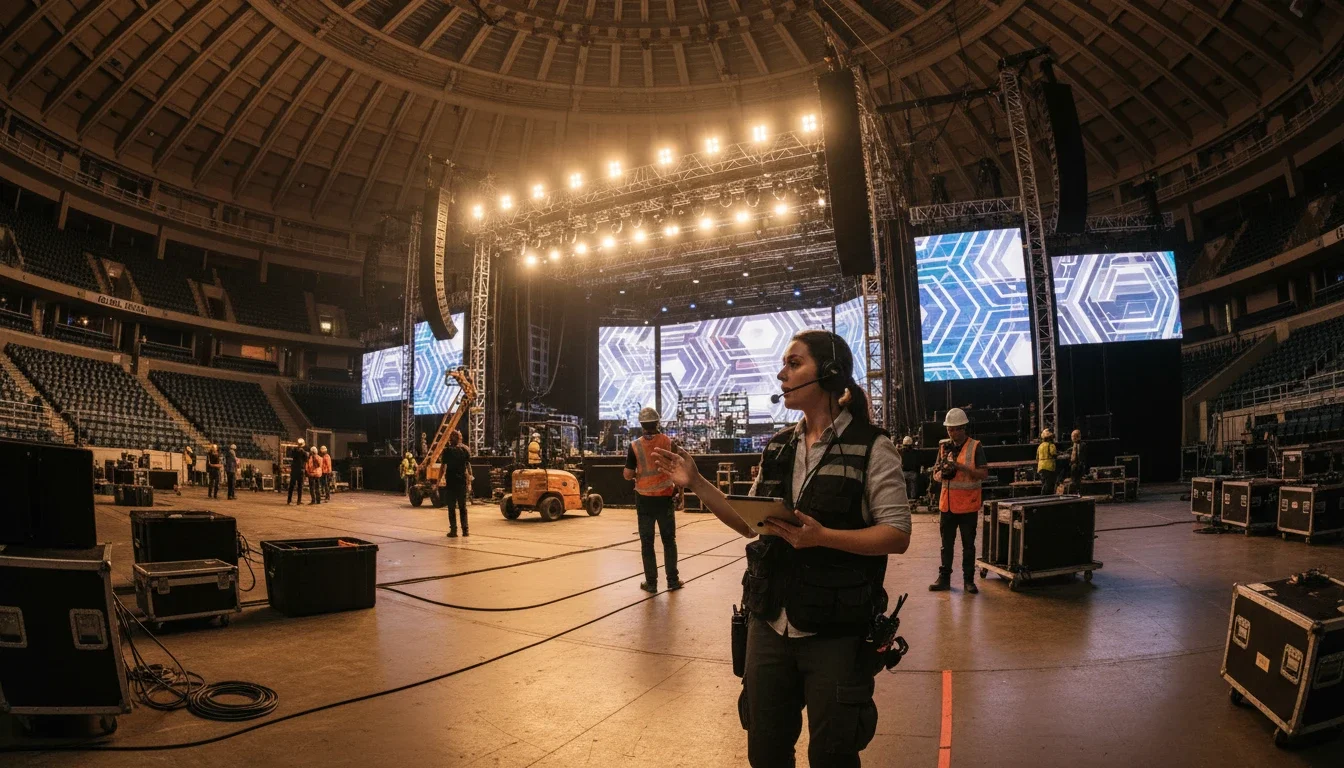
A professional event production assistant coordinating setup at a large-scale venue
What Is an Event Production Assistant?
A production assistant (PA) in the event industry is an on-the-ground support professional responsible for assisting with setup, execution, and teardown across every phase of an event. They work at the direction of event managers and coordinators, handling the hands-on tasks that keep logistics moving.
The title sounds entry-level, but that framing undersells the role considerably. The best production assistants are the operational backbone of any well-run event. They're the ones who notice when a delivery is going to the wrong entrance, who restock a bar station before it runs dry, who quietly redirect a confused guest before that confusion becomes frustration.
Event Production Assistants vs. Film Production Assistants
Both share a title, but they operate in entirely different environments. Film PAs typically report to an assistant director and handle set-related tasks: managing crafty, coordinating crew communication, supporting equipment logistics, and assisting talent on a film or TV production.
Event production assistants are embedded in live event environments. Their responsibilities are tied to physical venue preparation, real-time logistics management, vendor coordination, and guest flow. The pace and unpredictability of a live event — where there are no second takes — demands a different kind of readiness.
For a deeper look at the distinction, see Elev8's overview of what a production assistant does.
Where PAs Fit Within the Event Production Team
Understanding the team hierarchy clarifies the PA's role. A typical event production team includes:
Event Producer or Director — holds strategic oversight of the entire event
Event Manager / Coordinator — manages scheduling, vendor relationships, and client communication
Event Captain — the on-site point of contact who supervises the team during the event
Production Assistants — execute logistics, support setup/teardown, assist guests, and handle real-time problem solving
PAs report up through this chain. Their effectiveness is only as good as their briefing, their training, and the clarity of their assignments going in.
The Logistics Challenge: Why Events Fall Apart Without the Right Support
Even well-planned events face real operational pressure on execution day. Vendors show up at different times. Layouts change at the last minute. AV equipment needs to be repositioned. A keynote speaker needs an escort to the green room. A sponsor wants their signage adjusted fifteen minutes before doors open.
Each of these is a small task. Collectively, they can overwhelm a team that doesn't have enough hands to manage them.
Common Event Logistics Pain Points
Event planners consistently identify the following as their most disruptive logistics challenges:
Uncoordinated load-in — multiple vendors arriving simultaneously with no one directing traffic at the dock
Setup delays cascading into the timeline — a late AV rig means delayed doors-open, which means guests waiting outside before the event has started
Insufficient on-site communication — teams that can't reach each other quickly enough to course-correct in real time
Reactive rather than proactive problem-solving — issues caught too late to resolve cleanly
Understaffed transitions — the gaps between segments when furniture moves, stages reset, and catering shifts over
Every one of these is a staffing problem before it becomes a logistics problem.
How Understaffing Affects the Guest Experience
Guests rarely see the logistics breakdown directly. What they experience is its downstream effect: a long line at check-in, a room that isn't quite ready when they arrive, a staff member who looks overwhelmed instead of welcoming.
Research in the events industry consistently shows that guest perceptions are formed in the first few minutes of arrival — before any programming has started. That window is entirely a staffing and logistics story.
Production assistants close the gap between what's planned and what guests actually experience.
How Production Assistants Improve Event Logistics at Every Stage
A skilled PA's contribution isn't limited to one phase of the event. They add value across all three operational stages, each with different responsibilities and different effects on outcome.
Pre-Event: Setup, Venue Prep, and Vendor Coordination
The hours before doors open are the most logistically complex part of any event. Multiple vendors — catering, AV, florals, furniture, lighting — are working in the same space on overlapping timelines.
Production assistants support this phase by:
Directing load-in — positioning staff at dock entrances and designated delivery zones to route vendors efficiently and prevent bottlenecks
Assisting with physical setup — transporting furniture, equipment, and décor to designated areas per the floor plan
Cross-checking setup against the run-of-show — catching discrepancies before they become problems (a table in the wrong position, a missing piece of equipment)
Supporting AV and lighting crews — handling cable runs, marking positions, and keeping untrained staff out of active setup zones
Preparing guest-facing areas — ensuring registration stations are stocked, signage is correctly placed, and guest pathways are clear and accessible
This pre-event work is invisible to guests when it's done well — which is exactly the point. Guests should walk into a space that feels finished and effortless, with no visible sign of the complex coordination that got it there.
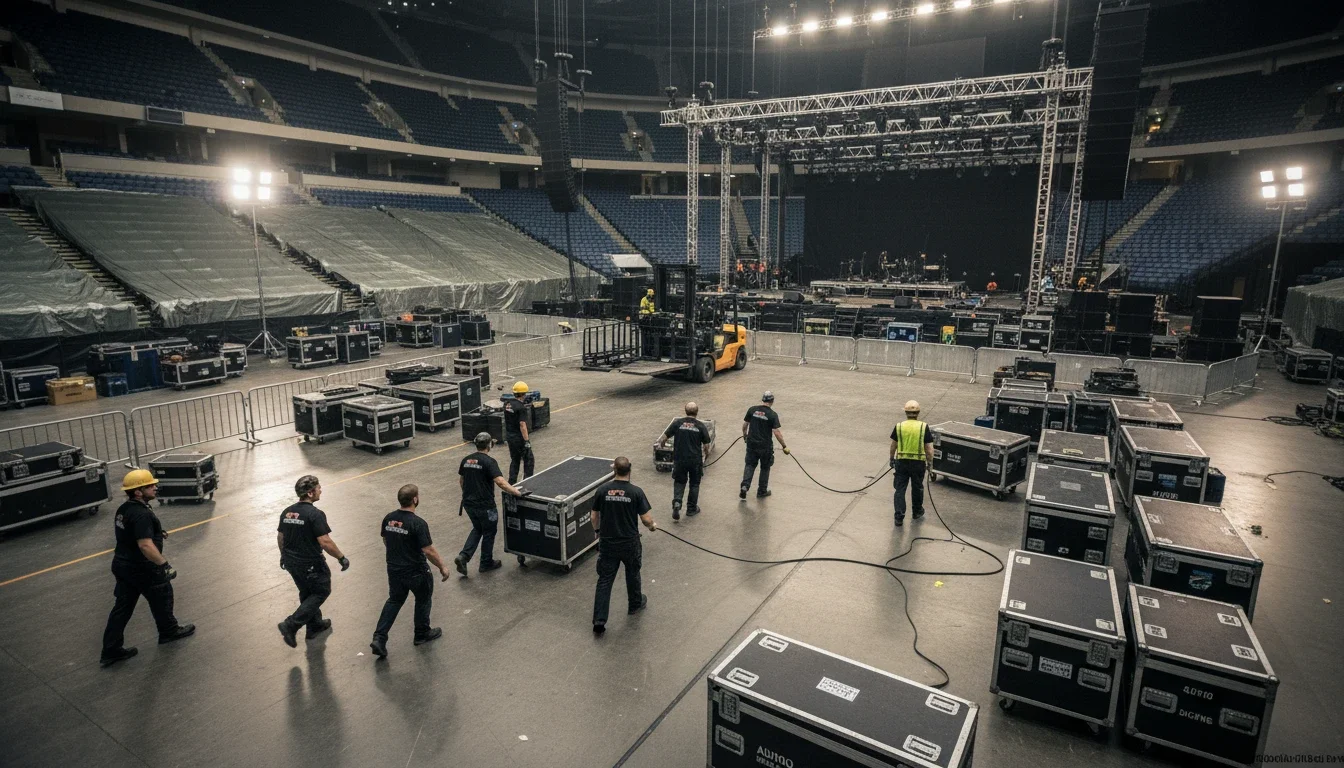
Production assistants managing equipment load-in and venue preparation
During the Event: Real-Time Problem Solving and Flow Management
Once doors open, PAs shift into support and monitoring mode. Their primary job is to keep the event running as planned — and to respond quickly when it doesn't.
This includes:
Managing vendor deliveries and backstage traffic — ensuring vendors accessing the venue mid-event don't disrupt guest areas
Replenishing supplies — from bar stations to restroom materials to registration collateral
Monitoring venue layout integrity — noticing when chairs get displaced, signage gets knocked over, or pathways get blocked
Supporting transitions — managing room flips, stage resets, or catering changeovers between program segments
Serving as a guest-facing resource — answering questions, providing directions, and escorting guests to specific areas
That last point deserves particular emphasis. Production assistants are often the first staff member a guest approaches when they need help. Their ability to respond clearly, warmly, and accurately is a direct reflection of the event's hospitality standards.
Post-Event: Teardown, Debrief, and Transition
Teardown is physically demanding and operationally complex — especially at venues with strict time windows. Production assistants lead the hands-on work of striking décor, packing equipment, coordinating vendor pickup logistics, and returning the venue to its original condition.
A well-managed teardown protects the client's relationship with the venue, ensuring future access and maintaining strong vendor relationships. It's the last impression an event makes — on the venue, the vendors, and the client's operations budget.
The Guest Experience Connection: What Guests Actually Notice
Event logistics is often framed as a behind-the-scenes discipline. In reality, guests experience its effects constantly — they just don't usually have the vocabulary to name it. They say the event "felt organized" or "flowed really well." What they're describing is the downstream output of good logistics, executed by good people.
First Impressions Start at Arrival
Before a guest enters the main event space, they've already formed an impression. The parking approach, the entrance, the first person who acknowledges them — all of this happens within a PA's jurisdiction.
Production assistants positioned at entry points do more than manage crowd flow. They set the hospitality tone. A confident, warm greeting from a well-briefed staff member signals to guests that this event is professionally run and that their presence is genuinely welcomed.
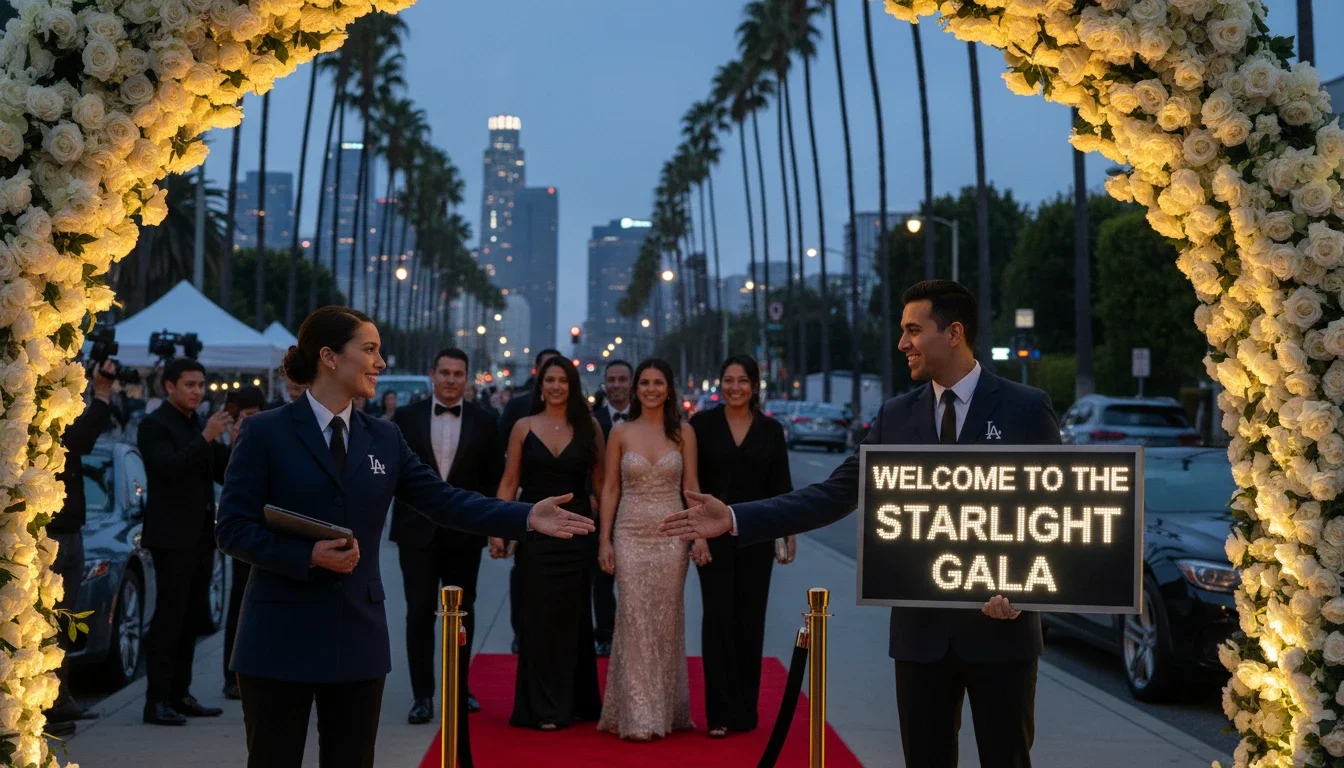
Event staff greeting and directing guests at a high-profile Los Angeles event
Seamless Registration and Check-In
Registration is the first operational test of any event. Lines that move slowly, check-in staff who can't locate names, or confusion around credentials and wristbands all produce guest frustration before the event has technically started.
Production assistants supporting registration can:
Staff multiple check-in lanes simultaneously to reduce wait times
Handle physical badge and materials distribution efficiently
Manage guest flow between check-in stations and the main entrance
Troubleshoot walk-ins and last-minute attendee additions
Support guests with accessibility needs or special accommodations
A streamlined registration experience communicates, before anything else happens, that this event is professionally managed. Elev8's event registration and convention staff are specifically trained for these high-traffic, high-pressure moments — including large-scale events like KCON at the LA Convention Center.
Navigating the Venue with Confidence
Large venues — convention centers, hotel ballrooms, multi-building campuses — can be genuinely disorienting. When guests spend time wandering to find the right room or exit, they're not networking, not engaging with programming, and not having a good time.
Production assistants stationed at key decision points — hallways, elevator banks, floor transitions — serve as human wayfinding tools. This isn't a passive role. An attentive PA anticipates confusion before a guest has to ask. That's the difference between reactive service and genuinely elevated hospitality.
VIP and Special Guest Handling
High-profile events carry heightened expectations. VIP guests, executives, talent, media representatives, and sponsors require precision — not more intrusion, but more thoughtful care.
Production assistants assigned to VIP areas should be briefed on:
Guest names, roles, and any specific preferences or protocols
Access restrictions — which areas are open vs. restricted
Escort procedures for talent or keynote speakers
Privacy expectations and appropriate discretion standards
The ability to handle these interactions gracefully — attentive without being intrusive — is what distinguishes professional event staff from general event labor. It's a standard that Elev8's hospitality staffing team maintains at events for clients including The Academy, Versace, and Netflix.
Key Skills That Make a Production Assistant Exceptional
Not every production assistant brings the same level of value. The difference between a capable PA and an exceptional one comes down to a combination of soft skills, physical preparedness, and professional instinct — qualities that can't be faked on a day-of basis.
Communication and Adaptability
The best production assistants are clear communicators who don't wait to be told about a problem — they surface it. In a live event environment where conditions shift constantly, the ability to escalate quickly and accurately is essential.
Adaptability is equally critical. An event PA might spend their morning moving furniture, their afternoon briefing vendor teams, and their evening guiding VIP guests through a gala entrance. The ability to shift modes while staying calm and professional throughout is a skill that develops through genuine, varied experience.
Physical Readiness and Venue Awareness
Event production work is physically demanding. PAs lift and carry equipment, stand for extended periods, and navigate complex venues under time pressure. Physical readiness is a baseline requirement.
Equally important is venue awareness — the ability to read a space, notice when something is off, and understand how a layout affects crowd behavior and guest movement. Experienced PAs develop this instinct through exposure to many different types of events.
Brand Alignment and Professionalism
For branded events, production assistants are part of the client's public presentation. Their appearance, demeanor, and behavior reflect directly on the brand being represented. This is why agencies like Elev8 invest heavily in their hiring and vetting process. By admitting only the top 3.5% of applicants, the agency ensures clients receive service from highly qualified professionals. Eleven8 Event Staff
Production Assistants vs. Event Coordinators: Understanding the Difference
These two roles are frequently confused, particularly by clients who are newer to large-scale event production. Here's a clear breakdown:
Event Coordinator:
Manages the planning process, vendor contracts, and client communication
Creates and maintains the run-of-show and production schedule
Serves as the primary strategic decision-maker on the day of the event
Focused on the what and when of the event
Production Assistant:
Executes the logistics determined by the coordinator and producer
Handles physical setup, teardown, and real-time operational tasks
Works on the ground, not from a central command position
Focused on the how and right now of the event
Both roles are essential. A skilled coordinator without sufficient PA support is a plan without execution. PAs without strong coordination are execution without direction. The best events resource both intelligently and proportionately.
Why the Quality of Your Event Staff Determines Your Event's Success
Event planners sometimes treat staffing as a commodity — a headcount problem to solve rather than a quality decision to deliberate over. That framing is expensive.
Undertrained or improperly vetted staff introduce risk at every touchpoint: vendors given incorrect directions during load-in, guests who receive confused or dismissive answers to basic questions, teardown that runs past the venue's contracted window and triggers penalty fees.
The return on investment of high-quality event staffing appears in:
Fewer on-site escalations that require manager intervention
Faster setup and teardown that protects venue relationships and reduces overtime costs
Higher guest satisfaction — guests who feel genuinely cared for remember the event and recommend it
Brand protection — especially for corporate or luxury events where a single poor interaction can undermine months of planning
At Elev8, clients are introduced to their designated event captain 24 hours before the event, and a management team is available 24/7 to address any concerns that on-site staff cannot resolve. Eleven8 Event Staff Every staff member is vetted, insured, and event-specifically trained before assignment.
The difference between a forgettable event and an unforgettable one is rarely the venue or the florals. It's the people.
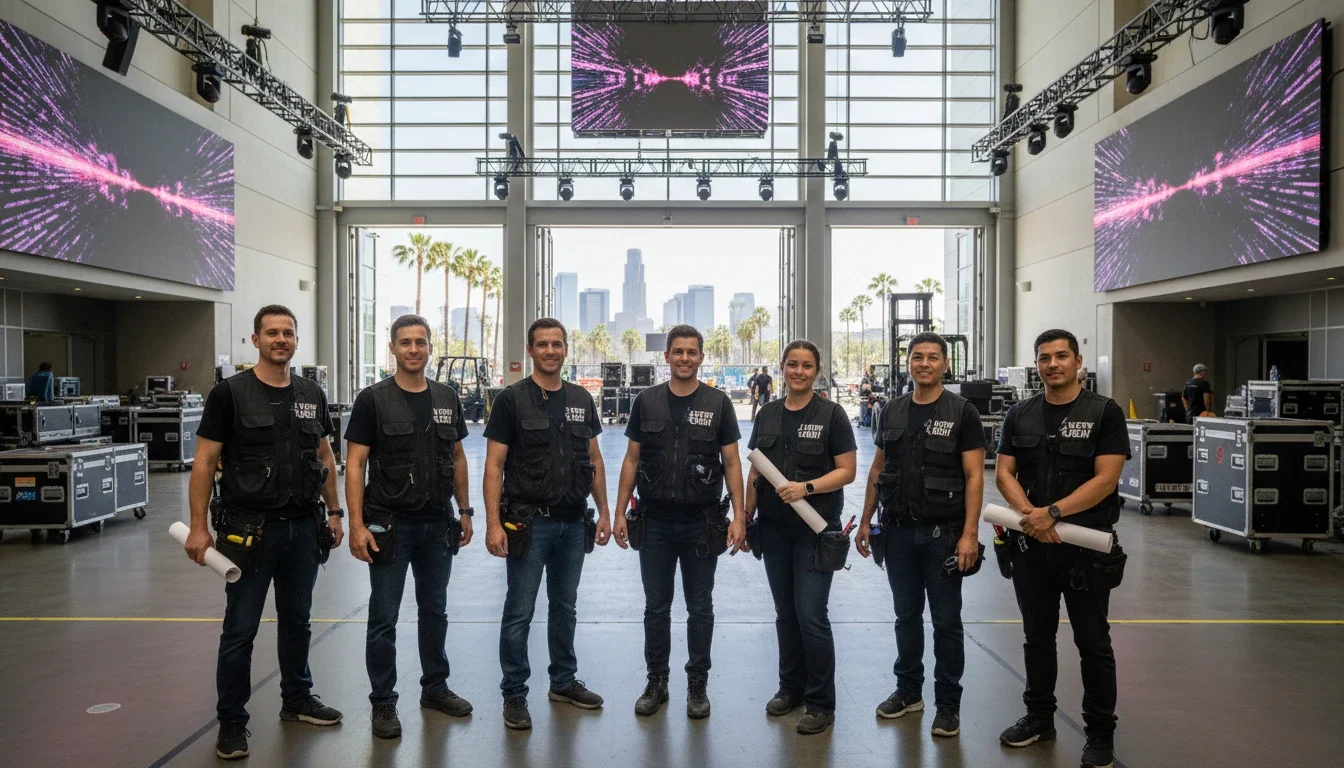
Professional production assistants ready for event day at Los Angeles venue
How to Find and Hire Qualified Production Assistants
If your event requires production assistance, the first decision is whether to source staff independently or work with an established event staffing agency.
Hiring independently gives you direct selection control, but requires significant lead time for screening and comes without built-in backup coverage if a staff member cancels last minute.
Working with a professional event staffing agency means accessing a pre-vetted talent pool, with established training standards and contingency systems already in place. For events where quality is non-negotiable, this is the difference between a guaranteed professional presence and a gamble.
When evaluating agencies, look for:
Demonstrated experience with your event type — corporate, entertainment, convention, experiential, and luxury events each require different skill sets and professional instincts
A verifiable vetting and training process — top agencies will explain exactly how staff are screened and briefed before each assignment
Backup coverage protocols — the best agencies have briefed replacements ready before event day even starts
A dedicated account manager — someone who understands your specific event, not just your staffing order
Client references from comparable events — the caliber of brands they've worked with is a reliable signal of operational quality
Elev8's event staffing services cover all of these requirements, with a roster built over 30+ years and client partnerships including Nike, Porsche, Instagram, and Adidas across Los Angeles and nationwide.
For convention staffing, brand ambassador support, or specialized hospitality staff, reach out to the Elev8 team for a customized staffing proposal tailored to your event.