How to Land Your First Event Production Assistant Role
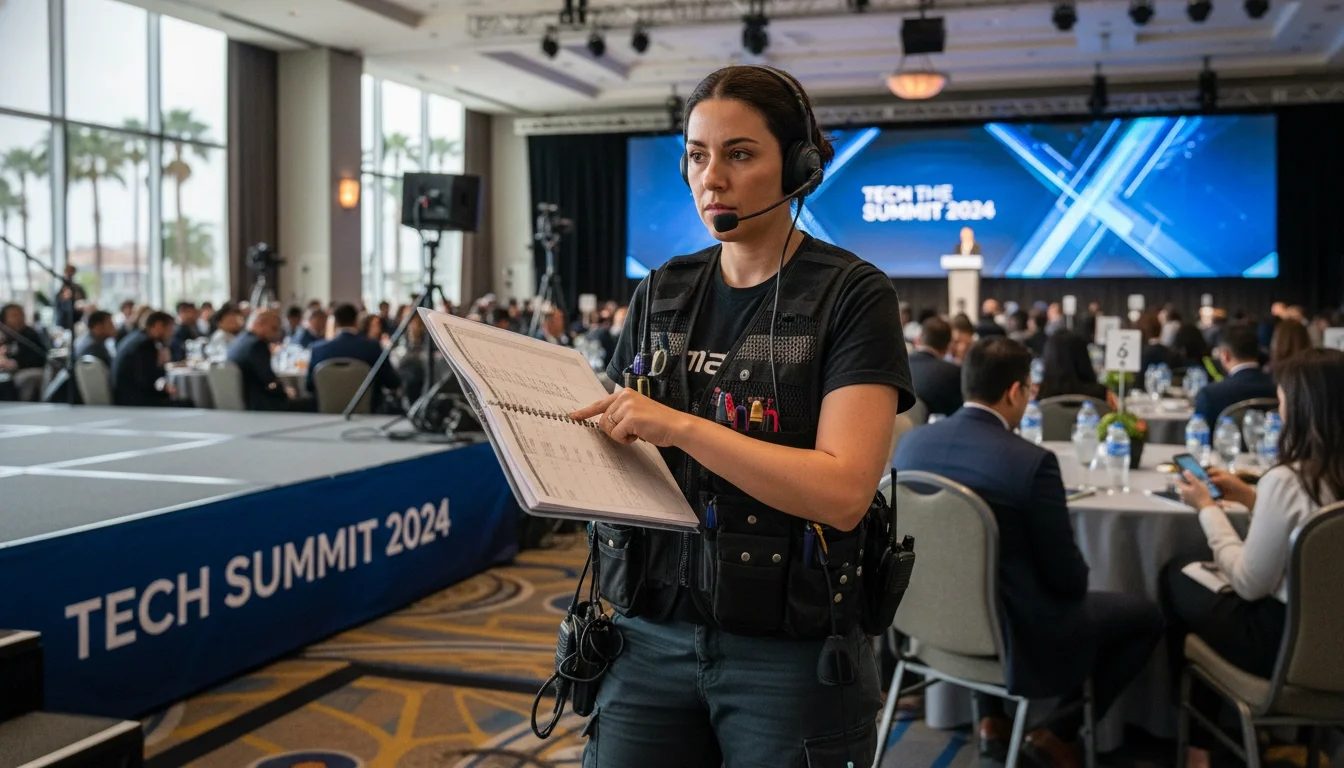
A production assistant reviews a run-of-show at a live corporate event in Los Angeles
You don't need a film degree, years of experience, or a famous last name to get your foot in the door of the event industry. What you do need is the right preparation, a professional mindset, and a clear understanding of how the hiring process actually works.
The event production assistant role is one of the best entry points for anyone serious about building a career in live events, brand activations, corporate gatherings, or experiential marketing. It's demanding, fast-paced, and sometimes unpredictable — but for the right person, it's also the most direct path from "I want to work in events" to actually doing it.
This guide covers everything you need: from what the role actually involves, to building a resume with no experience, to what hiring managers at event staffing agencies look for in a first-time PA. If you're in Los Angeles — one of the most active event markets in the country — there has never been more opportunity, especially with major productions like the FIFA World Cup 2026 and the LA 2028 Olympics driving massive demand for skilled event staff.
What Does an Event Production Assistant Actually Do?
An event production assistant is an entry-level member of the event operations team whose job is to keep things moving. Think of the PA as the connective tissue between different departments — logistics, client services, technical crews, and on-site vendors all rely on the PA to fill gaps, relay information, and execute tasks before anyone has to ask twice.
On any given event day, a PA might be responsible for:
Distributing run-of-show documents and call sheets to staff and vendors
Managing check-in for guests, VIPs, or exhibitors
Coordinating with catering and A/V teams on timing
Communicating via walkie-talkie with production leads
Running last-minute errands or handling unexpected logistical issues
Supporting brand ambassadors, registration teams, or hospitality staff during the event
Event PA vs. Film/TV PA: Key Differences
Most guides about production assistants focus on the film and television world — and while there's overlap, an event PA role is its own distinct career path. The environment is different, the skills are weighted differently, and the hiring process looks nothing alike.
| Factor | Event Production PA | Film / TV PA |
|---|---|---|
| Duration | Days or weekends; gig-based | Weeks or months; production-based |
| Hiring path | Often via staffing agencies | Referral-heavy; union connections |
| Key skills | Guest services, logistics, client-facing | On-set protocol, camera department support |
| First gig access | More accessible without connections | Highly relationship-dependent |
Types of Events Where PAs Work
Event PAs work across a broad spectrum of productions. Knowing the landscape helps you target the right opportunities and speak the right language in your applications:
Corporate events and conferences
Brand activations and experiential marketing campaigns
Conventions, trade shows, and expos
Music festivals and large-scale entertainment events
Awards shows and red carpet productions
Private VIP events, galas, and product launches
The Skills That Get You Hired as an Event PA
Hiring managers — whether at production companies or staffing agencies — are not just looking for a warm body who can follow instructions. They're looking for someone who anticipates, adapts, and communicates without drama. Here's what that looks like in practice.
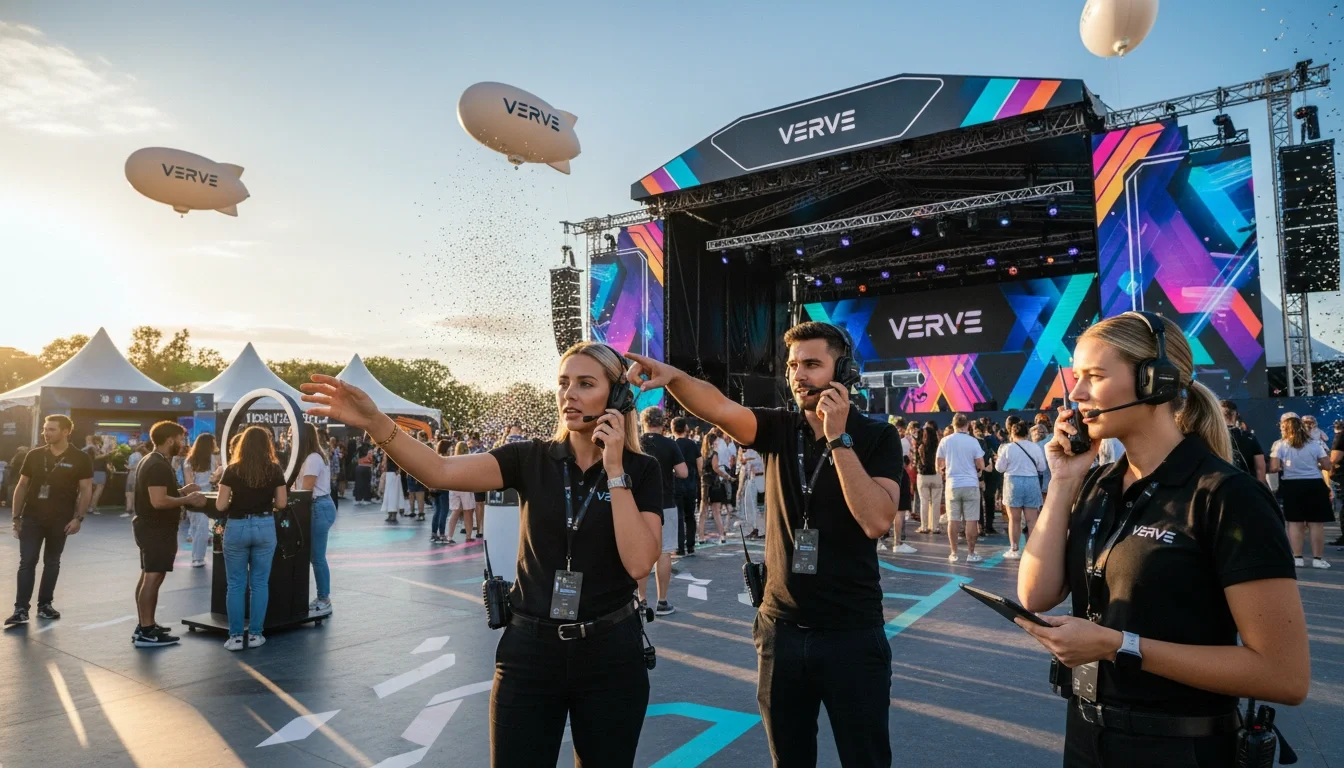
Event staff coordinate via walkie-talkies during a large-scale brand activation
Hard Skills Employers Look For
Walkie-talkie communication: Standard on most events over 200 people. Know basic radio etiquette — don't tie up channels with unnecessary chatter, always confirm receipt.
Call sheet and run-of-show literacy: You should be able to read a schedule-based production document and understand timing, positions, and dependencies.
Registration management: Familiarity with event check-in tools (Eventbrite, CVENT, or custom platforms) is increasingly valuable.
Basic A/V awareness: You don't need to be a technician, but knowing how a stage monitor, patch bay, or microphone check works means you won't slow down setup.
Crowd and flow management: Understanding how to position signage, manage queue lines, and direct foot traffic is a differentiator at large events.
Soft Skills That Separate Good PAs from Great Ones
At the entry level, soft skills often matter more than technical knowledge. The best PAs are hired back again and again because of their temperament and judgment — not just their task completion rate.
Proactive communication: If something is unclear, you ask before it becomes a problem. If something changes, you tell the right person immediately.
Calm under pressure: Events have a way of going sideways. The PA who can absorb the chaos without spiraling is worth their weight in gold.
Reliability: Show up early, stay late, and do what you said you'd do. In this industry, a reputation for reliability is more valuable than any certification.
Professional appearance and discretion: High-profile events — awards ceremonies, corporate galas, brand launches — require staff who present well and know how to be invisible when needed.
Initiative without overstepping: Learn the difference between solving a problem creatively and making an unauthorized call that creates a bigger headache.
Building Your Resume for Event Production Roles
Your resume doesn't need to be long. It needs to be targeted. Hiring managers spend seconds — not minutes — reviewing PA applications. The goal is to make the relevant information jump off the page before they scroll away.
What to Include When You Have Zero Experience
Everyone starts without event experience — what matters is how you frame what you do have. Consider any of the following as relevant background:
Customer service or retail roles that required quick thinking, conflict resolution, or guest-facing professionalism
Volunteer event experience — school productions, charity galas, sports tournaments, community gatherings
Administrative or coordination roles (scheduling, logistics, data entry)
Any role involving physical stamina and extended hours on your feet
A separate skills section highlighting relevant tools: Google Workspace, Eventbrite, Slack, Microsoft Office, walkie-talkie experience
Keep your resume to one page. Use clean, readable formatting. Write your bullet points with action verbs and quantify wherever possible: "Managed guest registration for 300-person corporate fundraiser" is far more compelling than "helped at events."
Resume Red Flags That Get You Passed Over
Unexplained employment gaps without context
No contact information or an unprofessional email address
A generic objective statement — skip it entirely or replace with a two-line professional summary tailored to events
Typos or formatting inconsistencies — in an industry built on detail, sloppy materials signal sloppy execution
Where to Find Event Production Assistant Jobs
The channels for finding event PA work are different from traditional job searching — and most first-time candidates miss the most effective ones entirely.
Job Boards and Online Platforms
Start here, but don't stop here. These platforms aggregate posted opportunities:
ProductionHub — dedicated to event, video, and broadcast production roles
EntertainmentCareers.net — strong for live events, film, and TV
LinkedIn — use the Events and Entertainment filter, and follow event companies directly
Indeed and Handshake — set alerts for "event production assistant" and "event staff"
Facebook groups like "Event Staffing Los Angeles" or city-specific event industry groups
Working With an Event Staffing Agency
For most people entering the live event world, a staffing agency is the fastest and most reliable path to their first paid assignment — and often their second, third, and fourth.
Unlike job boards where you're competing against hundreds of applicants for a single role, a reputable event staffing agency maintains an active roster and deploys staff across multiple clients and events. Once you're in their system and you've proven yourself on a shift, repeat placements follow naturally.
Agencies like Eleven8 Events work with major brands, convention centers, and production companies year-round — including large-scale productions like KCON at the LA Convention Center, Coachella activations, awards season events, and Fortune 500 corporate gatherings. Their staff roster is curated through a rigorous screening process, which means being accepted is a credential in itself.
When applying to work with an event staffing agency:
Submit a professional application with your availability, experience, and any relevant certifications (food handler's card, CPR, etc.)
Be honest about your experience level — agencies want to place you in the right role, not discover a mismatch on event day
Respond quickly to communications — in this industry, response time signals reliability
Treat your agency relationship like a professional partnership — it's the single most powerful career accelerator available to entry-level event staff
How to Network Your Way Into Event Production
Networking in the event industry doesn't look like handing out business cards at mixers. It looks like showing up, doing good work, and making it easy for people to remember and recommend you. Most event PA hires — especially at the agency level — come from referrals within an existing roster.
Practical ways to build your network:
Volunteer at local events — charity galas, city festivals, university events, and nonprofit gatherings are all places where working PAs and coordinators show up
Attend industry meetups through ILEA (International Live Events Association) or BizBash events in your market
Connect with working PAs and coordinators on LinkedIn — not with a generic pitch, but with a genuine observation or question about their work
Follow event companies and agencies on Instagram and LinkedIn — many post hiring calls and open roster positions on social media before they hit job boards
If you're in Los Angeles, the event scene around Coachella, awards season, major conventions, and the upcoming FIFA World Cup 2026 makes this one of the most networking-rich environments in the world

Aspiring event professionals network at an industry mixer in Los Angeles
Preparing for Your First Event PA Interview
Whether you're interviewing with a production company directly or going through an agency intake process, the objective is the same: demonstrate that you are the kind of person who makes an event easier to run.
Common Interview Questions and How to Answer Them
"Tell me about a time you had to adapt quickly to a change."
Use any example from work, school, or volunteer contexts. The interviewer is testing your composure, not your event credentials. Describe what changed, what you did, and what the result was.
"How do you handle receiving multiple instructions from different people at the same time?"
Explain how you prioritize: by urgency, by who the request came from in the chain of command, and by what affects the guest experience most. This tells the interviewer you understand hierarchy on an event site.
"What does good event-day communication look like to you?"
Talk about clear, concise updates, knowing when to escalate, and minimizing back-and-forth. If you've used walkie-talkies before, mention it. If you haven't, say you're comfortable learning and give examples of environments where you communicated under pressure.
"Why do you want to work in event production?"
Be specific. "I love the energy of live events" is fine as a start, but follow it with a genuine observation about the craft — the way a well-run event feels invisible to guests, the satisfaction of a tight load-out, the team dynamic of a large-scale production. Specificity reads as genuine.
What to Expect on Your First Day
Arriving at your first event PA shift is a different kind of nerves than a regular job. There's no desk orientation, no IT setup, no tour of the building. You show up, you get a briefing, and then the event happens — ready or not.
What to bring and do before you arrive:
Read every document you're sent in advance — call sheet, parking instructions, dress code, point of contact information
Arrive 15–30 minutes before your scheduled call time, not on time — on time is late in this world
Wear comfortable, non-marking footwear — you will be on your feet for 8–16 hours
Bring a pen, a small notepad, and your phone charger
Eat a real meal before your shift — event catering for staff is not guaranteed
How to Impress on Event Day and Get Called Back
The majority of event PA careers are built entirely on repeat business. If you do well on a shift, you get another one. Here's how to make that happen:
Introduce yourself to your direct lead the moment you arrive and ask for your assignment
Stay off your phone unless it's for event communications
If you finish a task, go find the next one — don't wait to be told
Stay until you're formally released, even if your scheduled shift end approaches and things are still active
Send a thank-you message to your coordinator or agency contact the next day
Ask for feedback — not in the moment, but in your follow-up. It signals professionalism and a growth mindset
Career Paths After Your First Event PA Role
The event production assistant role is not a dead end — it's a launching pad. The skills you develop in your first few events translate directly into advancement opportunities across multiple career tracks.
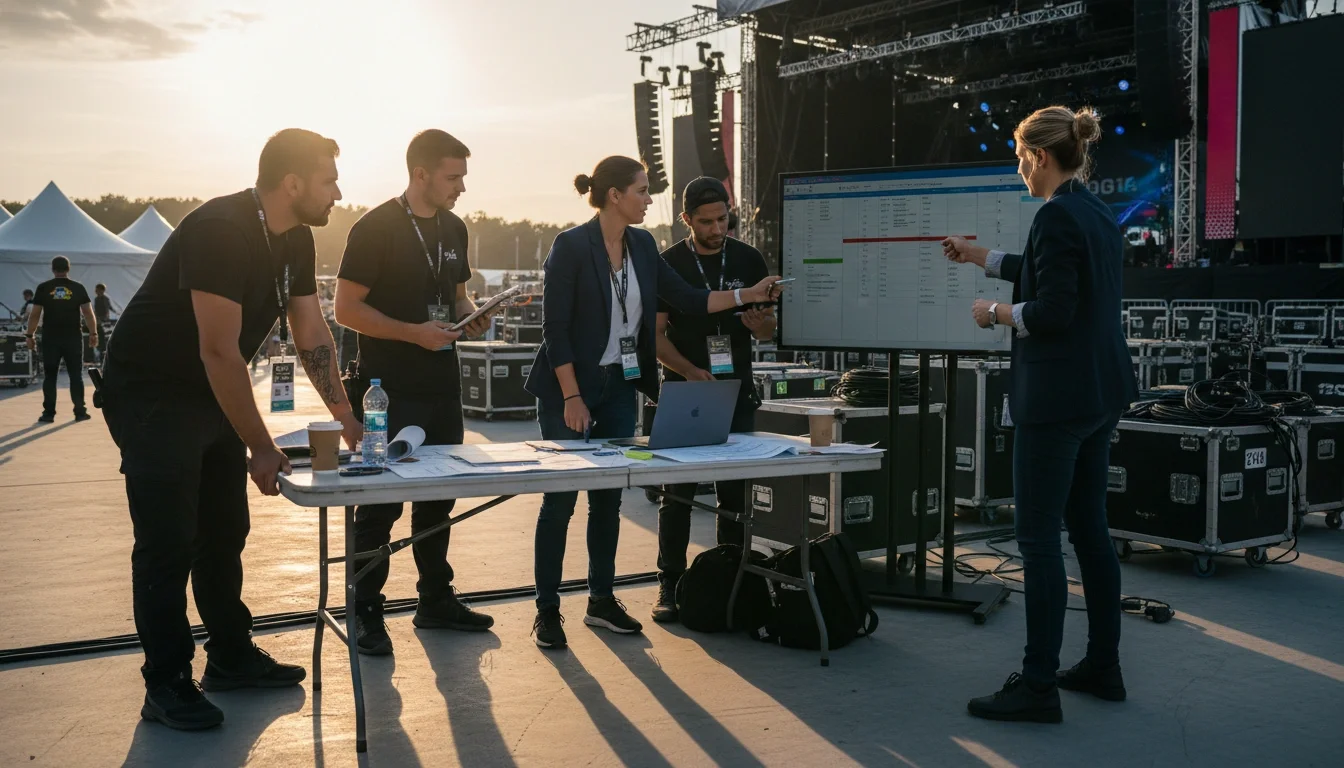
Event coordinator leads pre-event briefing with production assistant team
Common advancement paths from an event PA role include:
Lead or Key PA: Supervising a team of PAs on larger productions
Event Coordinator: Managing logistics, vendor relationships, and scheduling
Brand Ambassador Lead or Account Manager: Transitioning into the agency or client-facing side of the industry
Event Producer: Overseeing full-scale productions from concept to execution
Specialized Roles: Experiential marketing, venue operations, show calling, or production design
The most common thread among event professionals who have built successful careers is that they started by saying yes to every legitimate opportunity — and then showed up and performed. The rest follows from there.
Ready to Start Your Event Career in Los Angeles?
Eleven8 Events is one of LA's top-rated event staffing agencies, with a roster that works everything from brand activations to major award shows. We accept only the top 3.5% of applicants — and we're always looking for driven, professional individuals ready to grow.