How to Stand Out as a Retail Temp (Skills That Book You More Gigs)

A confident, professionally dressed retail temp assisting a customer at a brand activation event
Retail temp work looks simple from the outside. Show up, help customers, follow instructions, go home. But anyone who has worked in it — or who runs a staffing agency — knows the difference between a temp who gets called back week after week and one who never hears from the agency again.
That difference almost never comes down to experience alone. It comes down to a specific set of skills, behaviors, and habits that signal one thing to every client and staffing coordinator watching: this person is worth booking again.
This guide breaks down exactly what those skills are — and how to use them to turn scattered one-off shifts into a steady, reliable stream of gigs.
Why Standing Out Matters More in Temp Work Than Anywhere Else
In a permanent job, your reputation builds slowly. You have weeks, months, even years to show what you're made of.
In temp work, you often have one shift.
That single shift is your entire audition. Clients are forming opinions within the first hour. Staffing coordinators are noting who came through and who caused headaches. And when the next booking opens up — for a product launch, a trade show, a pop-up retail activation — the names that come to mind first are the ones who made someone's life easier last time.
The "First-Call" Effect — How Top Temps Get Chosen Before a Shift Even Posts
Premium staffing agencies like Elevate Event Staff maintain curated rosters of their highest-performing talent. When a client request comes in — often with tight timelines — coordinators don't scroll through hundreds of profiles. They reach out to the people they trust first.
This is the first-call effect. Getting into that mental shortlist is the single most valuable career move a retail temp worker can make. Everything below is designed to help you get there.
The Skills That Get Retail Temps Rehired (and Referred)
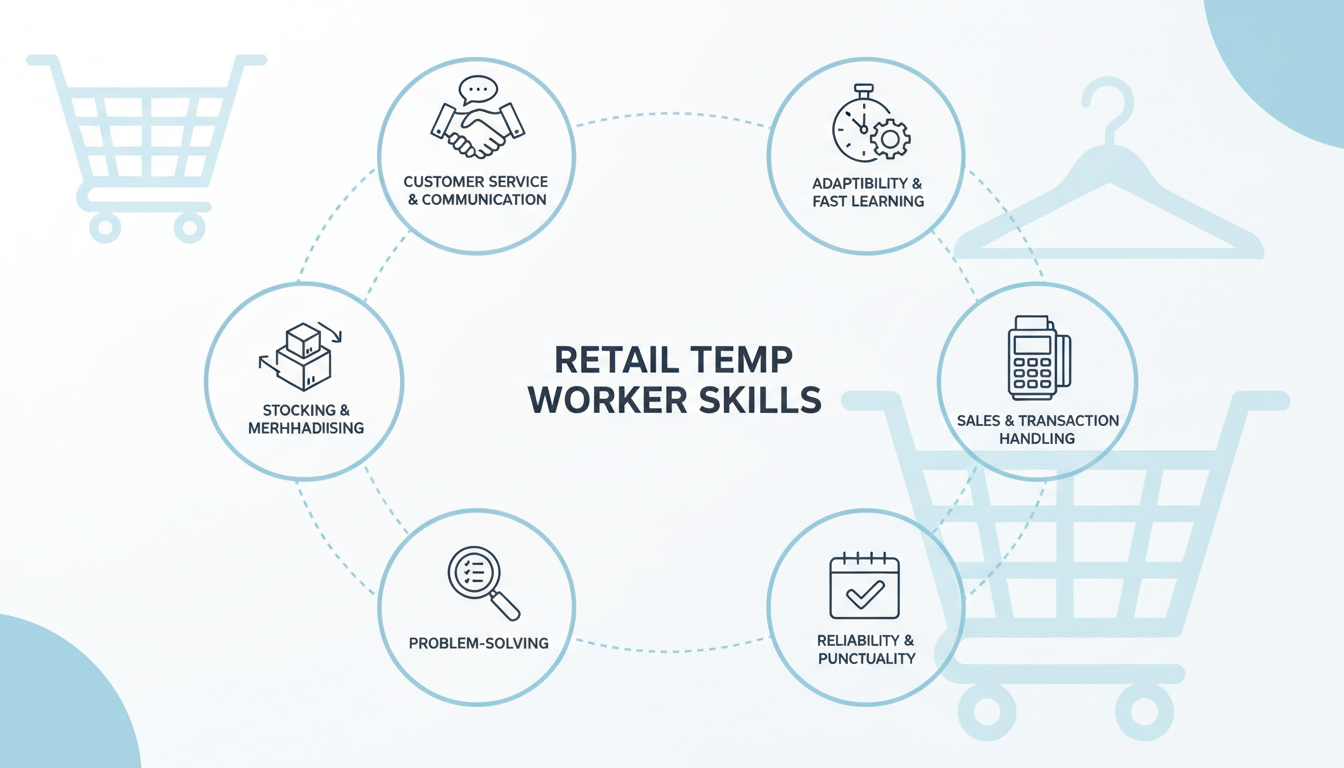
Top skills retail temp workers need to book more gigs consistently
1. Mastering the Customer Interaction
Customer engagement is the heart of every retail and brand-facing role. But there's a big difference between being friendly and actually knowing how to read a customer and respond accordingly.
The best retail temps can sense when a customer wants information versus when they want space. They know how to open a conversation without coming across as pushy, and how to close it in a way that leaves the person feeling genuinely helped. They adjust their tone based on the brand they're representing — luxury is different from streetwear, which is different from a tech demo station at a trade show.
Develop this skill by paying attention during every shift. Notice what opens people up and what shuts them down. Ask follow-up questions. Stay curious.
2. Brand Voice Awareness
One of the most underrated skills in temp retail work is the ability to become the brand, not just represent it. Every company has its own language, values, and customer experience standards. The staff member who picks that up quickly — adapting their tone, vocabulary, and energy to match — is worth ten times their weight to any client.
Before any gig, study the brand. Visit their website. Walk their store or look at their social media. Know their top products and talking points. Show up already aligned with who they are.
This applies whether you're doing in-store retail coverage or working as a brand ambassador at a live activation. Clients notice the difference immediately.
3. Reliability and Punctuality — The Baseline Everyone Gets Wrong
This sounds basic. It is basic. Which is exactly why it separates the field so drastically.
A significant number of temp workers — even otherwise competent ones — lose bookings because of inconsistency. Showing up five minutes late. Calling in last minute. Going quiet after a gig instead of confirming availability. These habits signal unreliability to agencies and clients alike, and in temp work, unreliable people simply stop getting called.
Set alarms. Confirm your shift 24 hours in advance. Arrive 10–15 minutes early whenever possible. These small acts accumulate into a reputation as someone who can be counted on — which is exactly what every coordinator is looking for.
4. Adaptability Under Pressure
Retail environments change fast. A product demo station gets moved. A VIP guest arrives early. The event setup is different from the briefing. The shift supervisor gives different instructions than the agency did.
How you respond to these moments is what defines you as a temp worker. The people who adapt without drama — who ask one quick clarifying question and get on with it — are the ones who get booked for harder, better-paying gigs over time. The people who freeze, complain, or wait to be told every step are the ones who fill basic shifts when no one else is available.
5. Physical Presentation and Professionalism
Appearance standards in premium retail and event staffing are non-negotiable. This doesn't mean you need a runway wardrobe — it means you show up clean, polished, and dressed appropriately for the assignment.
Follow the dress code precisely. If a client specifies all-black, wear all-black — not navy, not charcoal. If a uniform is provided, wear it correctly. Keep hair neat, nails clean, and fragrance minimal. These details matter significantly more in client-facing roles than people realize.
Beyond clothing, physical professionalism includes posture, eye contact, and how you carry yourself on the floor. You are representing the brand. Act accordingly.
6. POS Systems and Retail Technology
Many short-term retail roles involve operating point-of-sale systems, check-in software, or registration platforms. Temps who are comfortable with technology — who can learn a new system quickly and don't slow down operations — are far more useful to clients and agencies.
If you haven't worked with common retail POS systems (Square, Shopify POS, Lightspeed), take time to familiarize yourself with the basics. Many platforms offer free demos or trial accounts. Even a basic level of comfort makes a meaningful difference on the floor.
For trade show and expo staffing, check-in and registration technology is often central to the role. Knowing how to navigate these systems calmly and efficiently — especially when lines form — is a skill clients will request you back for specifically.
7. Product Knowledge and Upselling Ability
If you're staffing a brand's booth, pop-up, or in-store event, you need to know the product. Full stop. "I'm not sure, I just started today" is not an acceptable answer when a customer asks a question at a luxury activation.
Prep before every gig. Ask your staffing agency for any brand materials or briefing documents. Read them. Know the three or four things every customer asks, and have clear, confident answers ready.
Upselling doesn't have to feel aggressive. In most retail and event contexts, it simply means guiding a customer toward the right product — or mentioning a related item they might love. This skill alone can turn an ordinary shift into a memorable one that the client talks about when they rebook.
How to Build a Strong Relationship With Your Staffing Agency

A staffing coordinator reviewing temp worker profiles and ratings before assigning a shift
The client relationship matters. But the agency relationship is what actually controls your booking frequency.
Staffing agencies are in the business of delivering reliable, high-quality people to clients. When you make that job easy for your coordinator — when they know you'll show up, perform, and represent the agency well — you become an asset they want to deploy regularly.
Communication Habits That Get You Prioritized
Respond to availability requests promptly. A coordinator who has to chase you will stop doing so.
Confirm bookings as soon as they're sent — don't leave it open for 24 hours.
Send a brief check-in message the night before a shift: "Confirmed for tomorrow at 9am at [location]. Looking forward to it."
After a shift, send a short thank-you note or recap: "Great event today — happy to help with future [brand/client] bookings."
These small communication habits take minutes. They create a perception of professionalism and enthusiasm that sets you apart from the majority of temps who simply show up, do the shift, and disappear.
How to Request Feedback and Use It
Don't wait for performance reviews. After a few shifts, reach out to your coordinator and ask directly: "Is there anything you'd suggest I work on to be a better fit for your top clients?"
Most coordinators will appreciate the initiative. Some will give you genuinely useful feedback. All of them will note that you care — which is itself a signal that puts you ahead of the competition.
Use every piece of feedback constructively. A temp who improves visibly over time is one every coordinator wants to champion.
Building Your Reputation Across Multiple Gigs
The Power of Positive Client Reviews and Ratings
Many staffing platforms and agencies now use rating systems to track performance. Treat every rating as a professional asset.
When clients have the option to rate or re-request specific staff members, the temps with consistent high ratings are always the first to be booked. This creates a compounding effect: great ratings lead to premium gigs, which lead to more opportunities to earn great ratings.
After a strong shift, it's entirely appropriate to let your coordinator know you'd welcome any client feedback they're able to share.
Expanding From Retail Temp to Event and Brand Ambassador Work
Here's something many retail temps don't realize: the skills you build in customer-facing retail transfer directly to higher-paying event and brand ambassador roles.
Hospitality staffing, experiential marketing events, trade shows, product launches, and VIP activations all draw from the same core skill set — customer engagement, brand fluency, physical presentation, and reliability.
If you've been building these skills through retail temp work, you're already qualified for the next tier of gigs. The key is making that known to your agency and positioning yourself for those opportunities explicitly.
Common Mistakes That Cost Retail Temps Repeat Bookings
Even talented, skilled temps make avoidable mistakes that quietly remove them from consideration. Here are the most common ones:
Showing up without researching the brand. Clients notice when staff clearly have no idea what they're there to represent.
Being on your phone during downtime. Even when it's slow, idle phone scrolling signals disengagement to supervisors and clients.
Being passive instead of proactive. When there's nothing obvious to do, find something useful: straighten the display, engage a browsing customer, check in with the supervisor.
Not following the dress code exactly. Close enough is not close enough in premium staffing.
Disappearing after a good gig. Failing to follow up or confirm future availability leaves bookings on the table.
Attitude Red Flags Agencies Watch For
Staffing agencies are protective of their client relationships. Temps who complain publicly about clients, create friction on-site, or behave unprofessionally — even in subtle ways — are quietly removed from active rosters. This isn't punitive; it's how agencies protect the quality that makes their clients keep coming back.
Be the person every coordinator is proud to send. That reputation, more than any single skill, is what builds a long-term career in temp staffing.
Ready to Work With a Premium Event Staffing Agency?

Professional brand ambassadors representing a luxury brand at a Los Angeles event
If you've been investing in your skills and you're ready to work with a team that only accepts the top performers, Elevate Event Staff may be the right fit. The agency works with clients like Nike, Porsche, and Netflix — and only admits the top 3.5% of applicants through a rigorous vetting and training process.
Whether you're interested in event staffing in Los Angeles, trade show representation, brand ambassador work, or hospitality roles, the skills covered in this guide are exactly what their coordinators are looking for.
The gigs are out there. The question is whether you'll be first call when they open.