How Tour Activation Staff Can Help Brands Capture Leads & Data
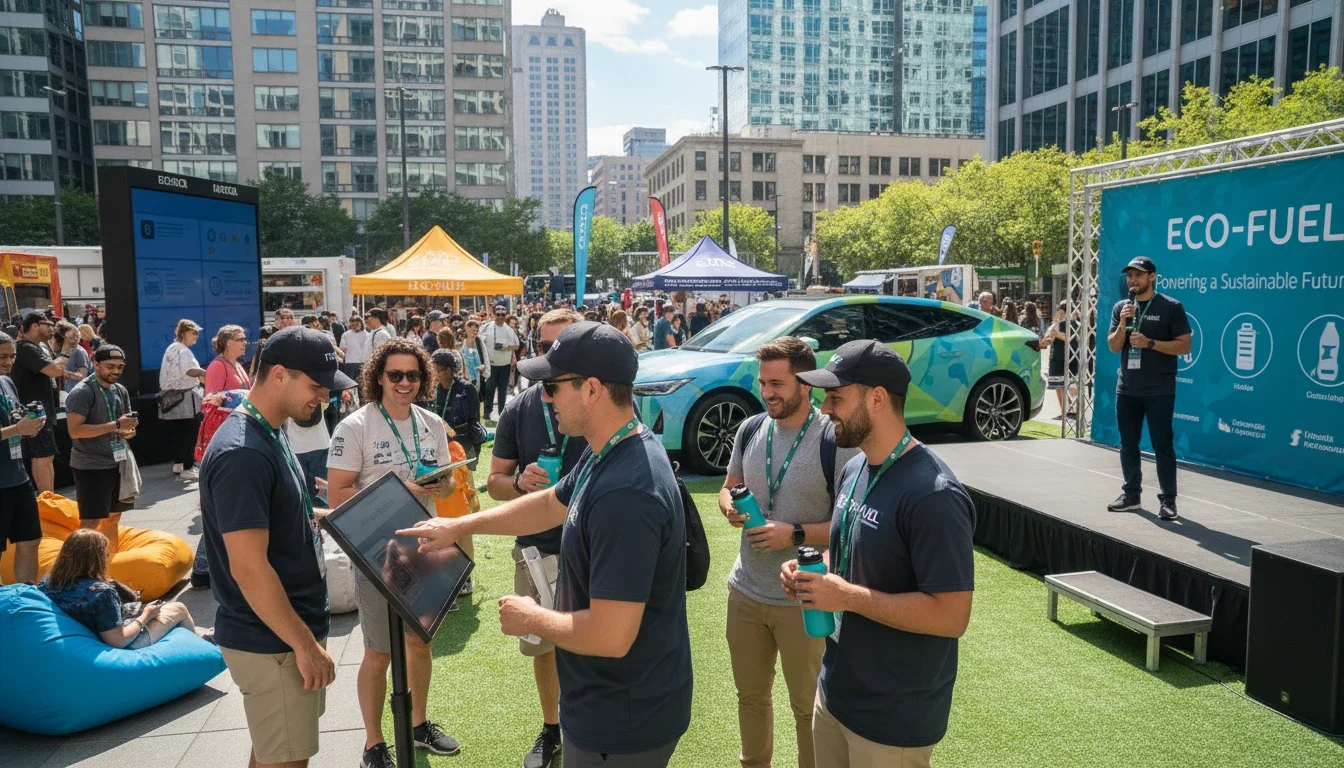
Tour activation staff engaging consumers at a live brand event
Brands invest significant budget in tour activations — the multi-city experiential campaigns, road shows, pop-ups, and sponsorship activations that put their products directly in front of consumers. The logistics are handled. The creative is dialed in. The venues are booked.
But when the activation wraps up, too many brands walk away with a pile of vague impressions and very little to show the marketing team. No usable data. No qualified leads. No pipeline.
That gap — between foot traffic and actual ROI — isn't a strategy problem. It's a staffing problem.
The right tour activation staff don't just represent your brand. They function as the front line of your data collection operation, turning every meaningful consumer interaction into a lead your sales and marketing teams can actually work with.
This guide breaks down exactly how that works — and what it takes to do it well.
What Is Tour Activation Staffing?
Tour activation staffing refers to the deployment of trained brand ambassadors, experiential staff, product demonstrators, and event support personnel across a series of live activation events — often spanning multiple cities, venues, or dates as part of a broader campaign.
Unlike a one-off event, a tour activation is a sustained effort. It might run across eight cities over three months, hitting festivals, retail partners, college campuses, sporting events, or trade shows. The goal is to create repeated, high-quality consumer touchpoints that build brand awareness and generate measurable responses.
Staff is the human infrastructure of that effort. They are the ones making first contact with consumers, delivering your brand message, and — critically — collecting the data that makes the entire investment measurable.
How Tour Activations Differ from Single-Event Campaigns
Single events are contained: one location, one day, one set of logistics. Tour activations introduce a new layer of complexity — market-by-market execution, varying demographics, different venue formats, and the need to maintain consistency in messaging and data standards across every stop.
This is why staffing quality matters even more in the tour context. An ambassador who performs well in Los Angeles needs to follow the same lead capture protocols in Nashville and Chicago. The data collected at stop three needs to look the same as the data collected at stop seven. Without disciplined, well-trained staff, the datasets become fragmented and nearly useless.
Why Lead Capture and Data Collection Matter at Live Events
Live events have historically been difficult to measure. Marketers could estimate impressions, count samples distributed, or track social media mentions — but the leap from "we touched X number of people" to "here's what that produced for the business" was often more assumption than analysis.
That's changed. Brands now expect their activations to generate concrete outputs: email lists, consumer profiles, qualified leads, purchase intent signals, and data that flows directly into their CRM.
The Gap Between Foot Traffic and Actual ROI
Foot traffic is not a business outcome. A consumer who walks through your activation, receives a sample, and leaves without sharing any information is essentially anonymous to your brand. You have no way to follow up, no way to nurture them toward a purchase, and no way to attribute their eventual conversion back to your activation investment.
Lead capture closes that gap. When activation staff are trained to engage, qualify, and collect data from consumers, foot traffic becomes a pipeline. Even a modest conversion rate — turning 15–20% of engaged visitors into qualified leads — can represent hundreds of new contacts per activation stop.
What High-Quality Event Data Looks Like
Not all event data is created equal. A first name and email address collected hastily with no context gives your marketing team very little to work with. High-quality event data typically includes:
First and last name
Email address (verified, not guessed)
Phone number (where relevant)
Product or category interest signals
Purchase timeline or intent qualifiers
Opt-in consent for future communications
Staff notes on the conversation context
Collecting data at this depth requires more than a clipboard and a smile. It requires staff who understand the product, know how to guide a natural conversation toward qualification, and are trained on the tools being used to capture and sync that information in real time.
The Role Tour Activation Staff Play in Lead Generation
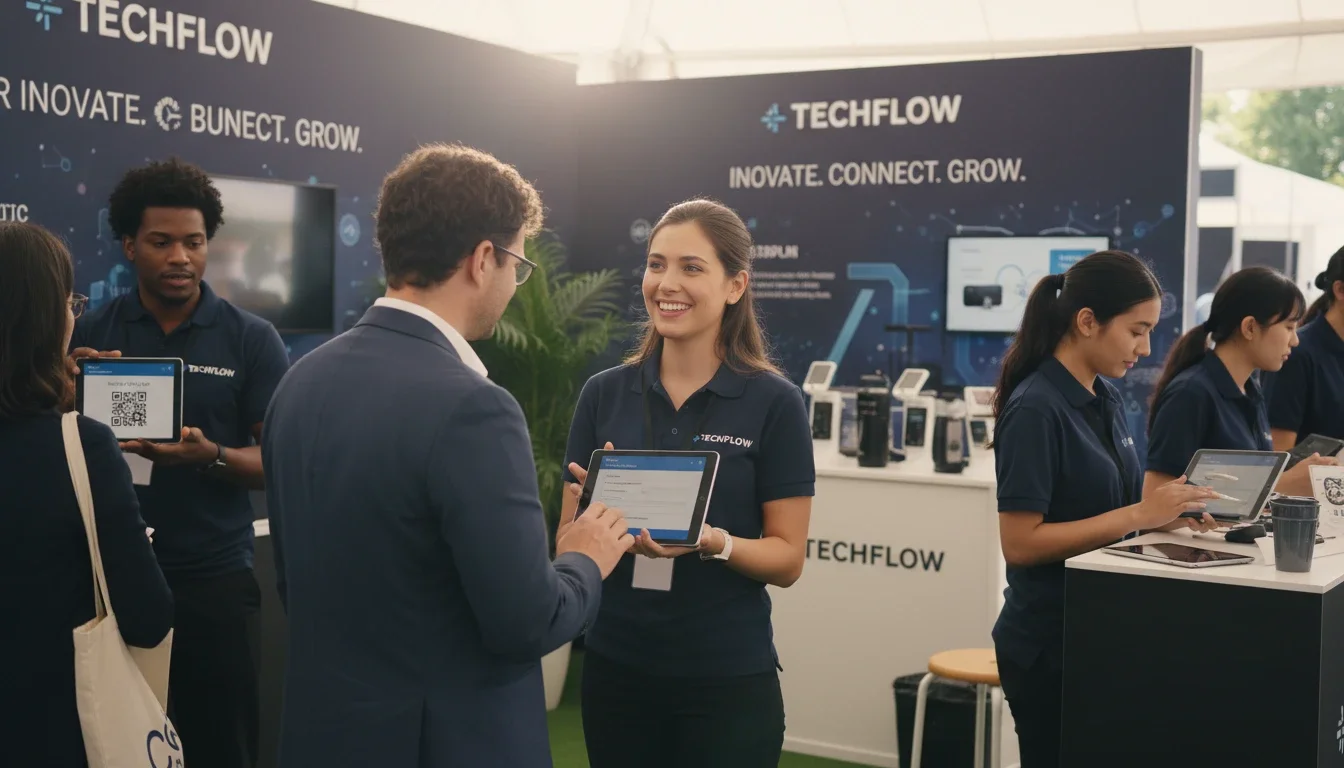
Brand ambassadors using digital tablets for on-site lead capture
Activation staff are not passive brand representatives. In a well-designed tour activation, they are active lead generation assets — responsible for initiating consumer engagement, qualifying interest, and feeding clean data into your pipeline.
Engagement as the Entry Point to Data
The first job of any activation staff member is to stop the walk-by. At a busy event, festival, or trade show floor, consumers are surrounded by competing stimuli. A staff member who can make genuine, warm contact — create a moment that feels relevant and worth pausing for — is the beginning of every lead capture opportunity.
That engagement creates the natural context for data collection. A consumer who has sampled a product, tried a demo, played an activation game, or had a real conversation with your staff is far more willing to share their information than someone who was simply handed a form.
Training is what separates staff who can reliably create those moments from staff who simply stand near the booth.
Trained Staff vs. Untrained Staff: Why It Makes a Difference
Consider the difference in outcomes between the two scenarios.
In the first, a brand hires whichever staff are available from a marketplace platform. They arrive, learn the product on the spot, and do their best — but they have no consistent approach to conversations, no lead qualification framework, and varying comfort levels with the digital capture tools.
In the second, a brand works with a staffing agency that vets for communication skills and brand fit, delivers product-specific briefings before event day, trains staff on the exact lead capture workflow, and holds them accountable to data quality standards post-event.
The second scenario consistently produces more leads, better data quality, and higher consumer satisfaction scores. The investment difference is often marginal. The output difference is substantial.
At Eleven8, every staff member deployed to an activation goes through an 11-step event process — including pre-event briefing on brand messaging, event-specific role training, and a post-shift debrief. That structure is what makes data collection consistent, not incidental. Learn more about how their brand ambassadors and experiential staff are deployed.
Specific Staff Roles Built for Data Capture
Effective lead capture at a tour activation typically involves multiple staff roles working in coordination:
Brand Ambassadors are the primary engagement layer. Their job is to initiate consumer contact, deliver the brand message, and create the context for information exchange. They are the most visible — and the most important — members of your data collection team.
Product Demonstrators drive engagement through hands-on interaction. A consumer who has touched, tried, or tested your product has higher purchase intent and is more likely to opt into follow-up communications. Product demo staff are especially effective at generating warm leads.
Data Capture Assistants or Lead Qualifiers operate the digital tools — tablets, QR stations, badge scanners, or lead retrieval apps — that sync information directly into your CRM. In high-traffic environments, having a dedicated staff member focused on this function prevents bottlenecks and improves data accuracy.
Event Captains or On-Site Supervisors monitor lead capture consistency across the team, address real-time issues, and ensure data protocols are being followed correctly across every shift. Eleven8 trains dedicated captains for exactly this function.
Tactics Activation Staff Use to Collect Leads and Consumer Data
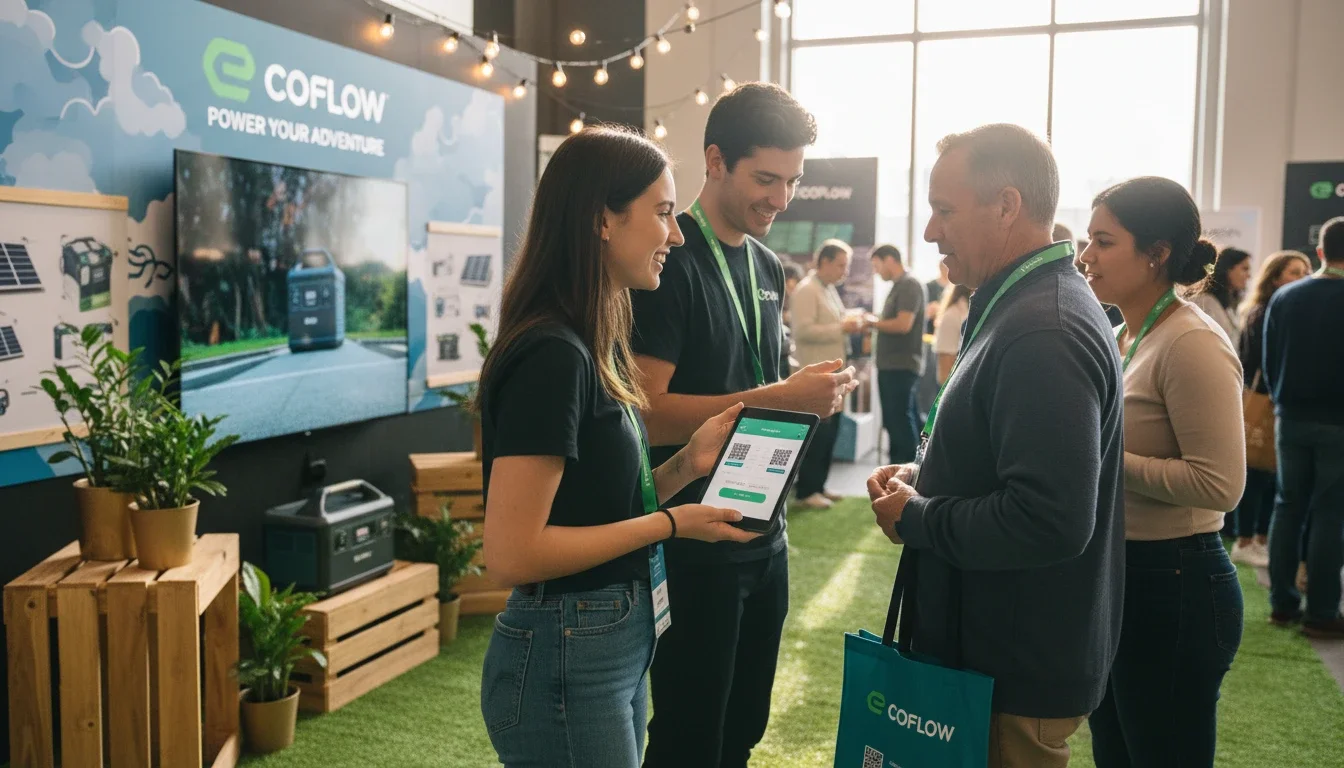
Activation staff operating lead retrieval app at brand pop-up
The mechanics of lead capture have evolved significantly. The most effective activations combine trained conversational techniques with digital tools to collect data that is both high-volume and high-quality.
Conversational Lead Qualification
The most reliable lead capture happens through natural conversation, not form-filling. Staff trained in conversational qualification guide the interaction toward a set of qualifying questions that feel like genuine interest — not interrogation.
A well-trained ambassador might ask questions like:
"Have you tried [product] before, or is this your first time?"
"What's your biggest challenge with [category]?"
"Would it be helpful if we sent you some information after the event?"
Each question signals intent and produces data that helps your marketing team prioritize follow-up. Staff who can hold these conversations authentically — without sounding scripted — dramatically improve the quality of leads collected.
Digital Tools Staff Operate On-Site
Modern activations typically use one or more of the following lead capture tools, all of which require trained operators to use effectively:
Badge scanners at trade shows and conferences for instant contact retrieval
Tablet-based forms with custom qualification fields synced to CRM in real time
QR code opt-ins tied to landing pages, sweepstakes, or exclusive content offers
NFC tap interactions at kiosks or interactive installations
Lead retrieval apps (such as those offered by EventMobi, Captello, or Popl) that centralize data across multiple staff members
Staff who are unfamiliar with these tools slow down the collection process, introduce data errors, and create friction in consumer interactions. Pre-event tool training is not optional — it is a non-negotiable component of lead capture preparation.
Incentive-Based Data Collection
Incentives are among the most reliable drivers of consumer willingness to share information. When a consumer is asked to provide their email or answer a few questions in exchange for something of value — a product sample, a discount code, entry into a giveaway, access to exclusive content — the conversion rate rises significantly.
Activation staff play a central role in communicating and delivering these incentives. The way an ambassador frames the exchange matters: "Drop your email here for 15% off your first order" lands differently than "We need your information." Staff who understand the value proposition of the incentive and can communicate it naturally will consistently outperform those who simply hold a tablet in front of consumers.
Opt-In Methods and Consent Best Practices
Data collected at live events must comply with applicable privacy regulations, including CAN-SPAM, CCPA, and GDPR, where relevant. Well-trained activation staff understand how to facilitate affirmative opt-in, making sure consumers actively agree to receive follow-up communications rather than being auto-enrolled.
This is not just a legal requirement. Opt-in data is demonstrably higher quality than coerced data. A consumer who explicitly agrees to receive follow-up is far more likely to open emails, engage with content, and convert into a customer. Staff should be briefed on exactly what the opt-in language is, where it appears on the form or screen, and how to present it without pressure.
Managing and Activating the Data After the Event
Collecting data is only half the equation. What happens to that data after the activation determines whether the investment pays off.
CRM Integration and Lead Handoff
The most effective activations are built with data flow in mind from the start. That means choosing lead capture tools that integrate directly with your CRM — whether that's Salesforce, HubSpot, Marketo, or another platform — so that leads captured on-site are available to your sales and marketing teams in near real time, not days later when the context has gone cold.
When staff operate tools that sync automatically, the lead handoff is seamless. When data is collected on paper, exported manually, or uploaded after the fact, quality drops — names are misread, emails are typo'd, context is lost.
Brands running multi-city tour activations especially benefit from standardized, automated data pipelines. Every stop on the tour should feed into the same CRM fields in the same format, so the post-campaign analysis is clean, and the sales team can work leads without having to sort through inconsistent spreadsheets.
Lead Scoring and Segmentation
Not every lead collected at an activation is equal. A consumer who tried a product demo, asked about pricing, and explicitly requested follow-up is a very different prospect than someone who dropped a business card in a fishbowl for a chance to win something.
Staff can contribute to lead scoring in real time by adding qualitative notes — their CRM tool, tablet app, or even a simple tagging system — that help the marketing team segment leads by interest level, product category, purchase timeline, and geography.
Higher-scoring leads should trigger faster, more personalized follow-up sequences. Lower-scoring leads go into longer nurture tracks. Staff who understand this framework — and take the time to add meaningful notes — add significant value beyond the initial data collection.
Why Post-Event Follow-Up Speed Matters
The research on follow-up timing is consistent: the faster you respond to a lead, the higher your conversion rate. Studies from InsideSales.com have found that leads contacted within an hour of showing interest are dramatically more likely to convert than those contacted later — and this dynamic is accentuated at events, where consumer attention and enthusiasm are at their peak.
For tour activations, this argues for same-day or next-day automated follow-up sequences triggered directly by the lead capture tool. A confirmation email, a personalized offer, or a simple "great meeting you" message keeps the interaction alive before your brand blends into everything else the consumer encountered that day.
What to Look for in a Tour Activation Staffing Partner
Not all staffing agencies are equipped to support the lead capture and data collection demands of a serious tour activation. When evaluating a partner, the following factors matter most.
Vetting, Training, and Brand Alignment
The quality of your lead data is a direct function of the quality of your staff. Look for an agency that goes beyond availability-based placement — one that selects staff based on communication skills and professional presence, conducts pre-event briefings specific to your brand and campaign goals, and trains staff on the exact lead capture tools and protocols you're using.
An agency with a strict hiring process — like Eleven8's top 3.5% acceptance rate and 11-step event protocol — gives you meaningful assurance that the people representing your brand on-site can hold a qualified conversation and handle your data tools with competence.
Consistency Across Markets
For a multi-city tour activation, consistency is everything. Your lead capture protocol in Miami should look exactly like your lead capture protocol in Seattle. The qualification questions, the opt-in language, the tool setup, and the data fields — all of it needs to be standardized across every market.
This requires an agency with genuine nationwide infrastructure — an established roster in every market, dedicated account management that oversees execution across markets, and a reporting system that aggregates results tour-wide.
Eleven8 operates in 25+ markets across the U.S., deploying from an existing vetted roster rather than reactive recruiting. For tour activations, this means consistent quality from stop one to stop ten. Explore their trade show staff, check-in staff, and street team capabilities across markets.
Accountability and Reporting
Your staffing partner should be able to report on more than attendance. Look for post-event data that includes shift performance, lead volume per staff member, qualitative notes on consumer interactions, and flags for any data quality issues.
The best agencies build feedback loops into every assignment — rating staff performance, identifying top performers for future tours, and giving brand clients visibility into exactly how their activation played out at ground level. This is the kind of intelligence that makes each tour stop better than the last.
How Eleven8 Supports Lead Capture Across Tour Activations
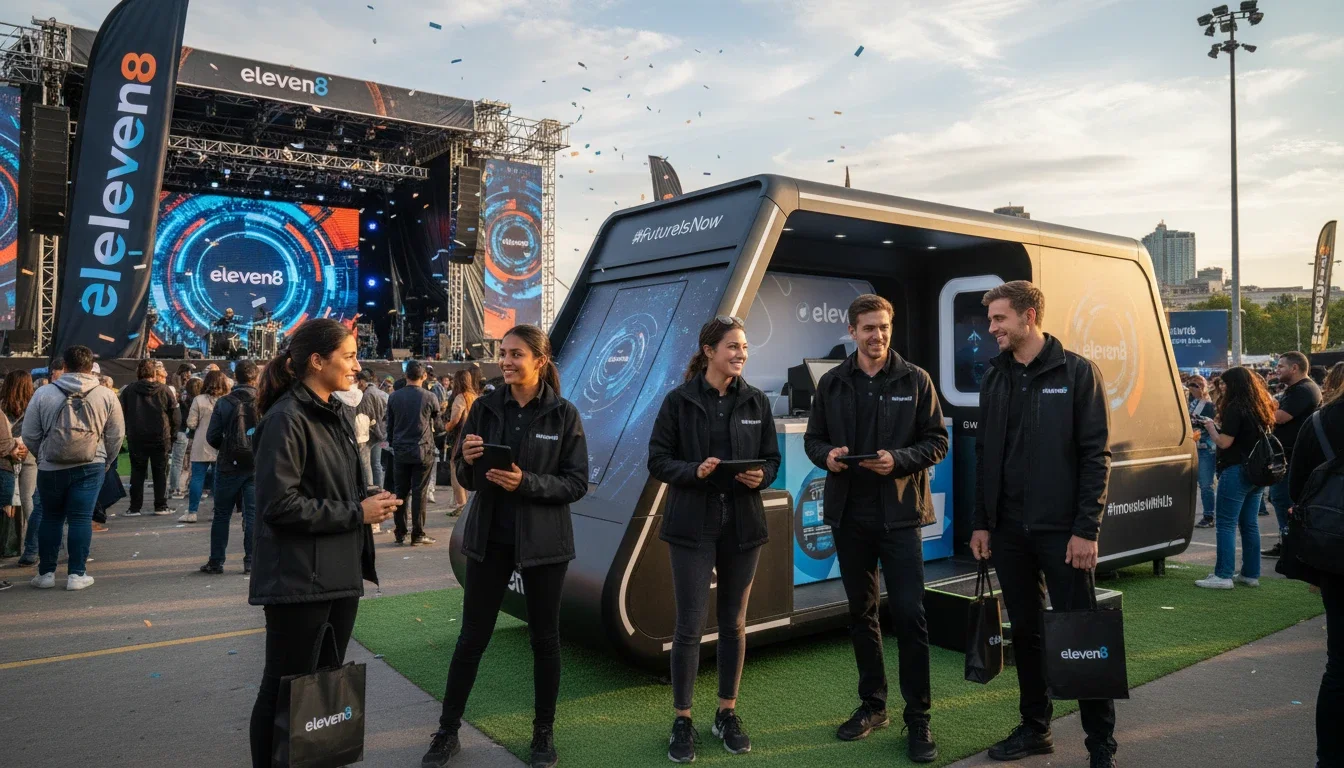
Eleven8 brand ambassador team deployed at a national tour activation
Eleven8 Event Staff has staffed more than 34,000 events across the United States, working with brands like Nike, Netflix, and Porsche on activations that require not just professional representation but measurable outcomes.
Their staff is selected through one of the most rigorous vetting processes in the industry — with a 3.5% hire rate from a pool of nearly 100,000 annual applicants. Every team member is briefed on event-specific protocol before deployment. Dedicated account managers oversee execution from booking through post-event recap, with 24/7 support available on event day.
For tour activations specifically, Eleven8's nationwide roster and standardized 11-step event process give brands the consistency they need to generate clean, usable data across every market. Their brand ambassadors, experiential staff, and product demo specialists are deployed ready to engage, qualify, and collect — not just show up.
If your brand is planning a tour activation and you need a staffing partner equipped to support real lead generation — not just booth presence — reach out to the Eleven8 team for a custom quote and staff recommendation.