From Event Staff to Tour Activation Specialist: Career Roadmap
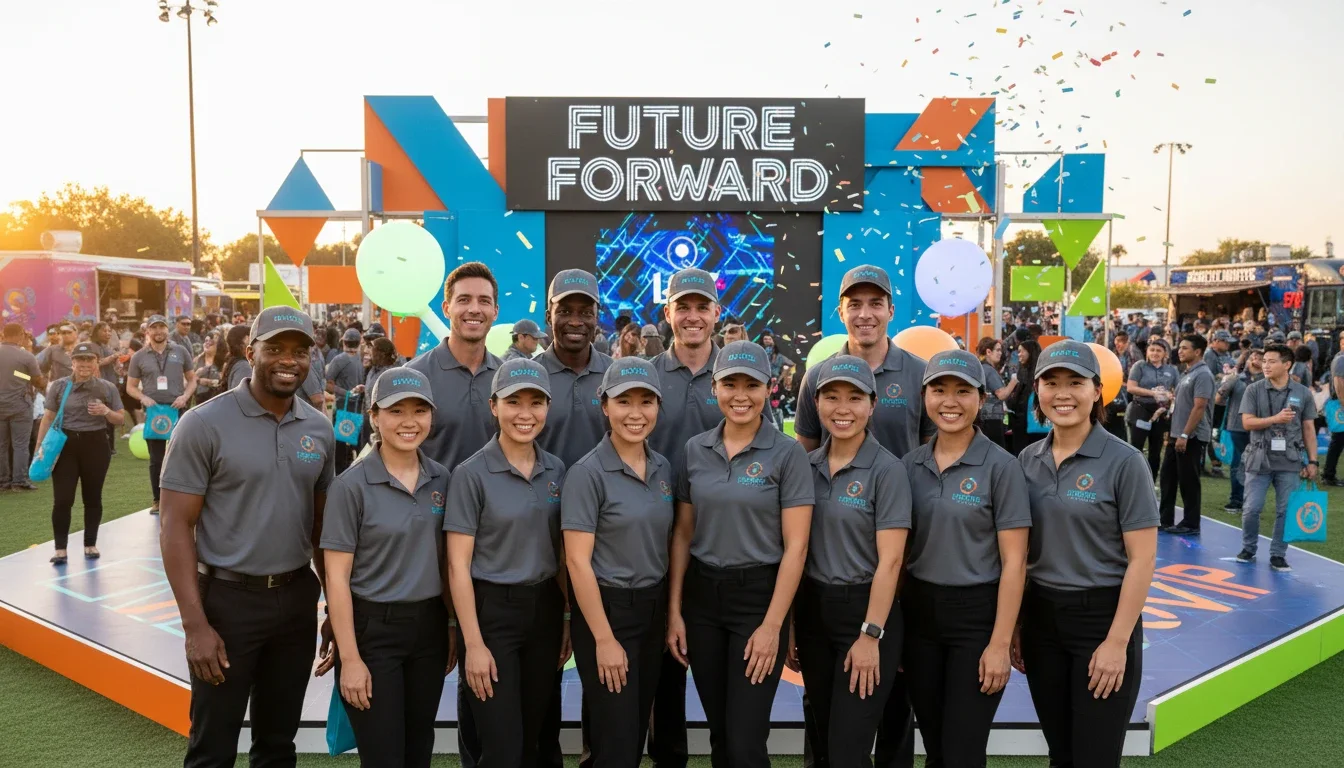
A diverse team of professional event staff at a brand activation, wearing matching branded uniforms at a vibrant experiential marketing event
If you've ever worked a brand activation, handed out samples at a festival, or checked guests in at a corporate conference, you already have your foot in the door of one of the most dynamic career paths in marketing.
The event staffing industry is no longer just a side gig. For thousands of professionals across the U.S., it's a deliberate, well-mapped career that leads to roles like tour activation specialist, experiential marketing coordinator, and field marketing manager — positions that pay well, travel widely, and put you at the center of how brands connect with real people.
This guide breaks down exactly how that career progression works: the stages, the skills, the titles, and the practical steps to move from entry-level event staff to a specialist role that brands specifically seek out and pay a premium for.
Understanding the Event Staffing Industry Career Landscape
The experiential marketing industry has grown into a multi-billion-dollar sector, and the demand for skilled, reliable field talent has never been higher. Brands like Nike, Netflix, and Porsche don't just want bodies at their events — they want trained specialists who understand brand voice, consumer engagement, and how to execute flawlessly in fast-moving environments.
This creates a natural career ladder that rewards people who show up consistently, develop their skills intentionally, and work with agencies that invest in developing their talent.
What Is a Tour Activation Specialist?
Definition — Featured Snippet Ready
A tour activation specialist is an event marketing professional who manages or executes multi-city or traveling brand campaigns — often called "tours" or "road shows." They are responsible for setting up experiential installations, engaging consumers in live environments, representing brand messaging, and sometimes managing a field team across multiple stops.
Unlike a general event staffer, a tour activation specialist understands the full lifecycle of a brand campaign: pre-event logistics, on-site execution, consumer data capture, and post-event reporting.
Why This Career Path Is Booming
Brands have shifted significant marketing budgets from digital ads toward field and experiential marketing. A 2023 EventTrack study found that the vast majority of consumers say live brand experiences make them more likely to purchase a product. That trend is only growing.
This means companies are hiring more field staff, investing in tour campaigns, and actively looking for people who can grow into activation leadership roles — which makes this career path more viable and more lucrative than ever before.
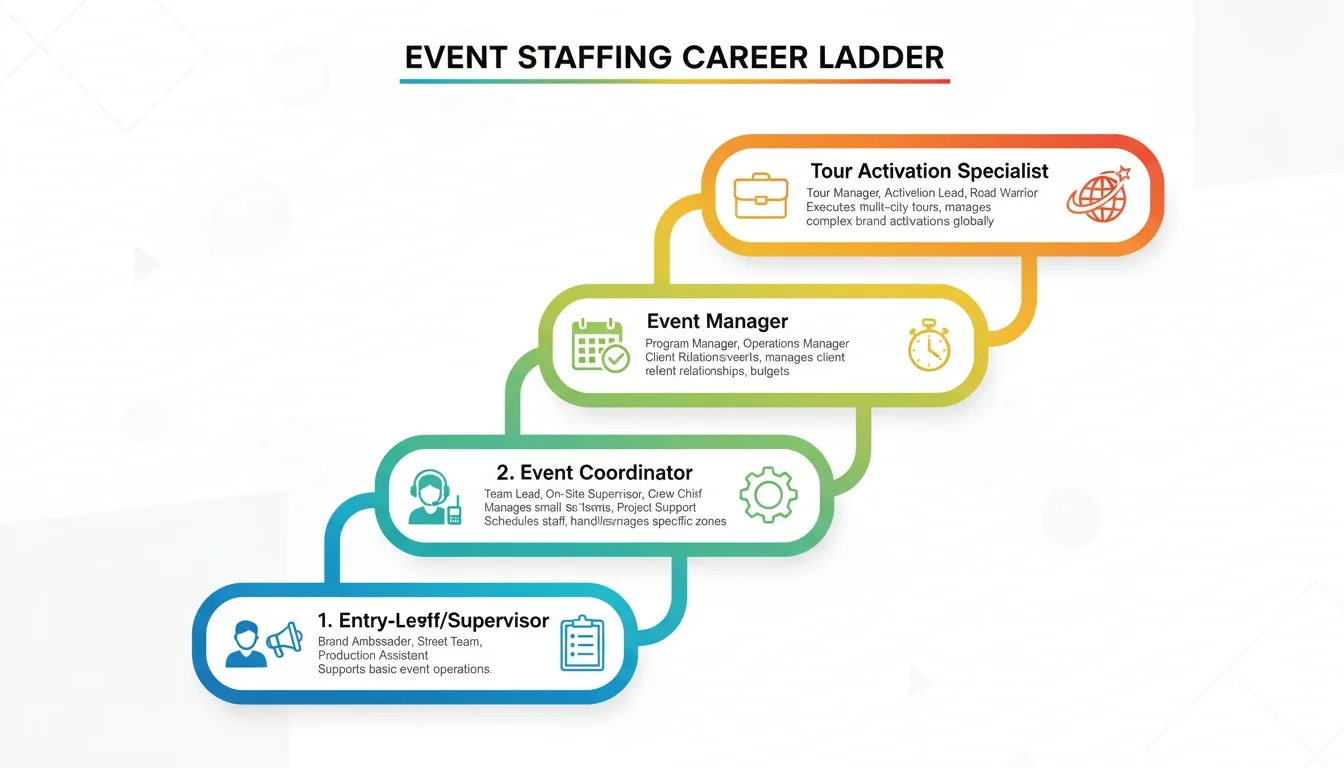
Infographic showing the event staffing career ladder from entry-level staff to tour activation specialist, with icons for each stage
Stage 1 — Entry-Level Event Staff: The Foundation
Every tour activation specialist started somewhere. For most, that starting point is an entry-level event staff role — and it's a far more valuable launching pad than people realize.
Entry-level roles expose you to the operational backbone of live events: how they're set up, how teams are briefed, how guests are managed, and how brands want to be represented. These aren't throwaway experiences. They're the building blocks of everything that comes later.
Key Entry-Level Roles and What They Teach You
Brand Ambassador (entry level): Consumer engagement, brand messaging, product education, energy management in high-traffic environments
Check-In / Registration Staff: Organizational systems, tech tools (check-in apps, lead capture), guest flow management, attention to detail
Event Usher / Greeter: Crowd flow, guest relations, communication under pressure, venue orientation
Production Assistant: Event logistics, setup/teardown, vendor coordination, behind-the-scenes operations
Catering / Server Staff: Hospitality standards, service flow, reading the room, managing VIP interactions
Skills You'll Build at This Stage
Don't underestimate what you learn in your first six to twelve months working events. The most promotable candidates at the entry level are those who treat every shift like a portfolio piece. Here's what you're building:
Adaptability — no two events are the same
Brand literacy — understanding how to embody and protect a brand's image
Physical and mental stamina — event work is demanding
Communication skills — with guests, supervisors, and colleagues
Reliability and professionalism — the single biggest career differentiator
What Agencies Actually Look For in New Hires
The best staffing agencies — the ones connected to Fortune 500 brands — hire for attitude and reliability over experience. At Eleven8, for example, the application process includes live interviews, background checks, and reference reviews. Only a small fraction of applicants are accepted.
What gets you in the door: punctuality, presentation, a positive attitude, and a willingness to learn. What keeps you there and gets you promoted: performance ratings, flexibility, and the ability to represent a brand at the highest level.
Stage 2 — Brand Ambassador and Promotional Staff
Once you've built a track record of reliable, professional performance, you'll naturally begin moving into more brand-specific roles. The brand ambassador stage is where your career starts to take real shape — and where you begin to differentiate yourself from the average event worker.
What Separates Good Brand Ambassadors from Great Ones
A good brand ambassador shows up on time, stays on script, and smiles. A great brand ambassador understands the brand's goals for that activation, adapts their approach to different types of consumers, captures attention without being pushy, and reports insights back to the team lead.
That shift in mindset — from "doing a job" to "running a micro-campaign" — is exactly what moves people up the career ladder.
Types of Brand Ambassador Roles at This Stage
Product Demonstrators: Education-forward ambassadors who teach consumers how a product works
Promotional Models: Appearance-forward roles at auto shows, trade shows, and high-visibility activations
Sampling Staff: High-volume consumer interaction, often on tour-style campaigns
Street Teams: Grassroots outreach, flyering, local guerrilla marketing campaigns
Experiential Brand Ambassadors: Immersive, interactive activation roles with more depth and audience engagement
Compensation at the Brand Ambassador Stage
Pay at this stage typically ranges from $18–$28 per hour, depending on the market, brand, and campaign complexity. High-profile activations (auto shows, major festival tours, national brand campaigns) sit at the top of that range. Specialized demonstrators and bilingual ambassadors often command a premium.
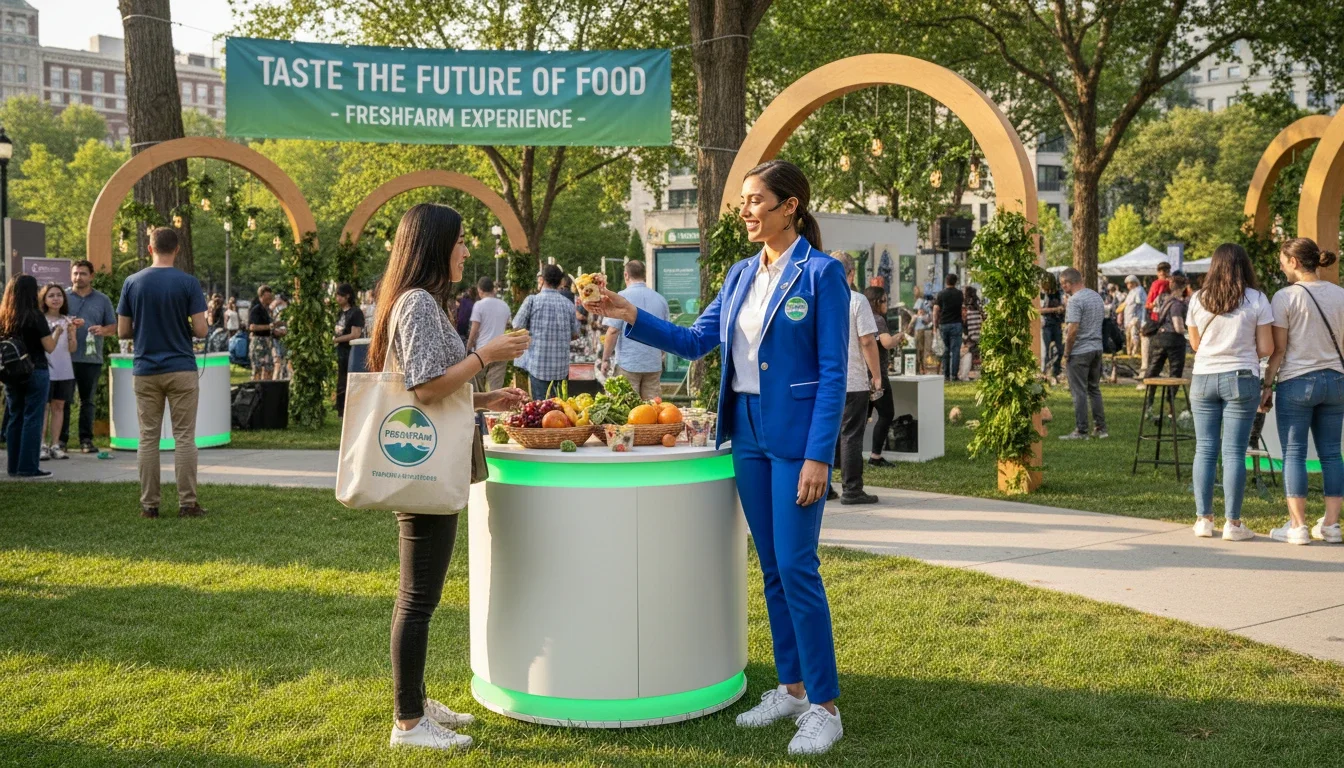
A brand ambassador in a professional branded uniform engaging with consumers at an experiential marketing activation event
Stage 3 — Team Captain and Lead Staff
The team captain role is the first major leadership step in the event staffing career path — and it's one that many talented ambassadors miss because they never actively pursue it. Agencies like Eleven8 develop captains deliberately, providing training and leadership briefings that go beyond the standard staff process.
If you've been performing consistently and showing initiative on-site, the captain role is within reach. And it's a pivotal stage — because it's here that you transition from being someone who executes a campaign to someone who helps run one.
What the Captain Role Requires
Arrive early for pre-event walkthroughs with agency supervisors
Brief the team on brand guidelines, event flow, and expectations
Monitor team performance on-site and provide real-time coaching
Serve as the primary point of contact between field staff and client
Handle escalations and guest issues without escalating to management
Complete post-shift debriefs and performance reporting
How to Earn a Captain Designation
At most agencies, the captain role is earned through consistent five-star performance ratings, demonstrated leadership on-site, and an expressed interest in taking on more responsibility. At Eleven8, captains go through a dedicated training program — 320 captains were trained in the last year alone.
If you're aiming for the captain role, communicate your goals to your agency contact. Request captain shifts. Volunteer to lead briefings. Make your ambition visible and back it up with flawless execution.
Stage 4 — Experiential Marketing Coordinator
The experiential marketing coordinator is the bridge between field execution and campaign management. At this stage, you're no longer just working on activations — you're helping plan, organize, and manage them.
This is where the career often branches: some professionals move toward the agency side (joining an event or activation agency in a coordinator capacity), while others stay on the talent side and evolve into senior or lead specialists.
Differences Between Field Staff and Coordinators
| Responsibility | Field Staff | Experiential Coordinator |
|---|---|---|
| Brief Handling | Receives a brief | Helps write or review the brief |
| Execution | Executes on-site | Manages logistics and team prep |
| Reports To / Lead | Reports to a lead | Acts as the lead on-site |
| Event Load | Works one event at a time | May manage 3–5 activations in a week |
| Compensation Type | Paid hourly | Often salaried or project-based |
Skills That Bridge Stage 3 to Stage 4
Project management fundamentals (timelines, task delegation, resource tracking)
Familiarity with activation tools: lead capture apps, CRM basics, reporting templates
Client communication — emails, status updates, post-event recaps
Staffing coordination: scheduling, backups, uniform sourcing
Budget awareness — understanding cost-per-engagement, ROI reporting
Stage 5 — Tour Activation Specialist
This is the destination role this entire roadmap has been building toward. A tour activation specialist is the expert the event marketing industry calls when a brand is hitting the road.
Tour campaigns — mobile sampling activations, multi-city experiential pop-ups, roadshow-style marketing campaigns — require a very specific type of professional. Someone equally comfortable managing a team in Miami on Tuesday and executing an immersive installation in Austin on Friday. Someone who can represent a brand at the same level, whether the audience is 50 people or 5,000.
What a Tour Activation Specialist Does Day-to-Day
Lead pre-tour planning calls with brand clients and agency teams
Manage travel logistics, equipment, and vehicle/trailer coordination
Hire, brief, and manage local market staff at each tour stop
Execute experiential activations across diverse formats and venue types
Maintain brand consistency across every stop, regardless of market
Track KPIs: impressions, samples distributed, leads captured, social engagements
Submit post-activation reports and learnings to brand and agency clients
Tour Formats You'll Execute at This Level
Mobile Sampling Tours: A branded vehicle or trailer that travels city to city, distributing product samples and creating consumer moments
Multi-City Pop-Up Activations: Temporary branded experiences installed in high-traffic locations across multiple markets
Roadshow Campaigns: Brand education and demonstration tours targeting retail locations, colleges, or community events
Experiential Installations: Immersive, high-production brand environments that tell a brand story through interaction
Salary and Earning Potential at This Stage
Tour activation specialists typically earn between $25–$55 per hour for project-based work, or $55,000–$90,000 annually in salaried roles at agencies and brand marketing teams. Top specialists with established client relationships and a strong portfolio can exceed this range significantly, particularly for national campaigns or premium brand partnerships.
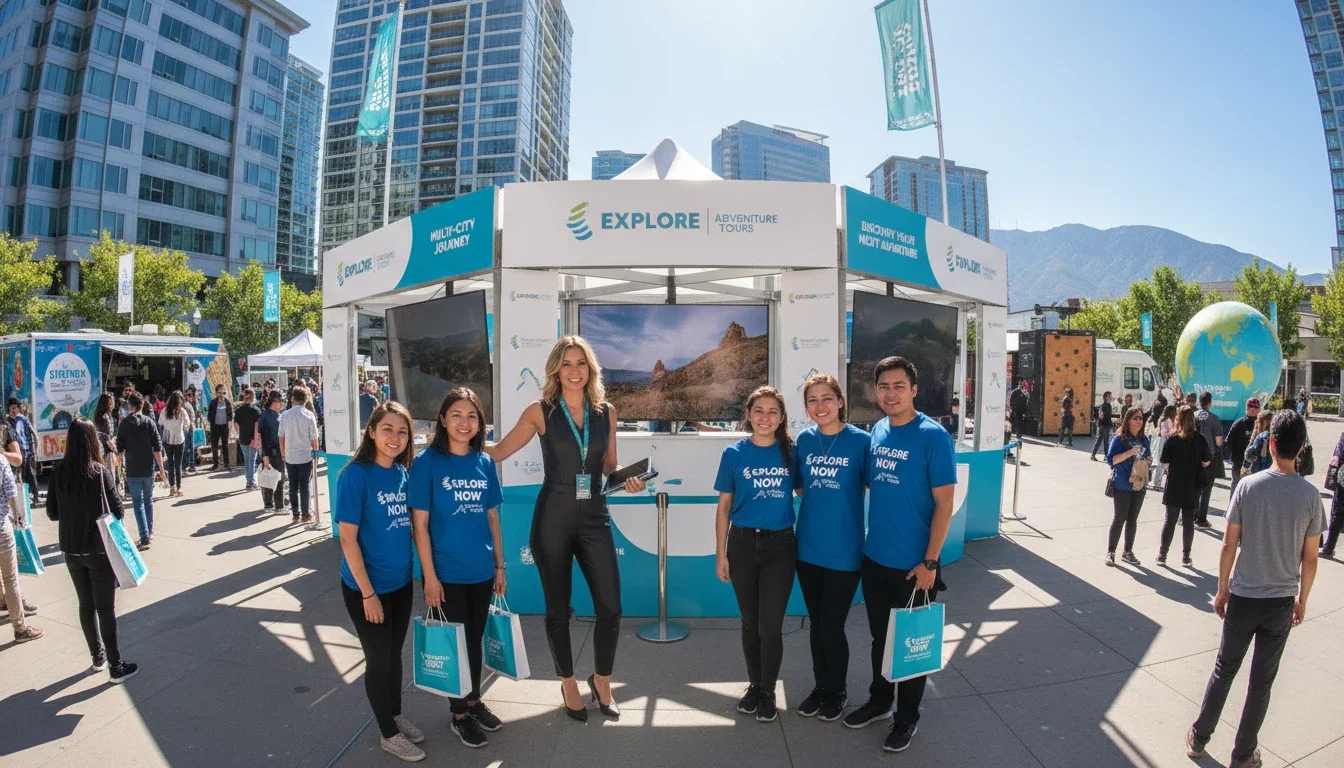
A tour activation specialist overseeing a multi-city branded pop-up campaign with a team of event staff at an outdoor activation
How to Accelerate Your Career in the Event Industry
The career path above isn't automatic. People who reach the tour activation specialist level are those who are deliberate about their growth. Here's how to move faster than the average trajectory:
1. Build Your Portfolio at Every Stage
Document every event you work on. Keep a log of the brands you've represented, the formats you've executed, the team sizes you've managed, and the results you've delivered. When agencies and brands ask for your experience, this portfolio speaks louder than a resume.
Take professional photos when permitted. Collect written references from account managers. Ask for feedback after every shift — and use it.
2. Work with a Top-Tier Staffing Agency
Not all staffing agencies are equal. Commodity platforms send whoever's available. Elite agencies like Eleven8 match staff to campaigns based on experience and brand fit, provide briefings and training, and actively develop their top performers into captains and lead specialists.
Working with a premium agency means you get access to higher-profile brands, better-paying activations, and a development system that actually moves your career forward. It's one of the highest-leverage decisions you can make at any stage of this career path.
3. Seek Out Tour and Activation-Specific Assignments
Once you have solid experience as a brand ambassador or captain, actively request tour and multi-city activation assignments from your agency. These experiences are irreplaceable for building the skills that define a tour activation specialist — travel logistics, multi-market team management, and sustained brand consistency over multiple stops.
4. Certifications and Training Worth Pursuing
While formal certifications aren't required in this field, a few credentials add credibility and expand your opportunities:
TIPS or RBS certification (for beverage-related activations and events)
CPR / First Aid certification (required or preferred by many major agencies and venues)
Food Handler certification (for sampling and culinary activations)
Project management fundamentals (Google Project Management Certificate or similar)
Experiential Marketing Summit training or industry association membership (EACA)
5. Build Your Network Intentionally
The experiential marketing world is smaller than it looks. The brand managers, agency account leads, and marketing directors you meet on activation today are the people who will recommend you for your next big role. Treat every event as a professional networking opportunity — not just a paycheck.
How Eleven8 Develops Staff Into Specialists
At Eleven8, staff development isn't an afterthought — it's built into how the agency operates. Every new hire goes through an 11-step onboarding and briefing process. Staff is rated after every event, and that feedback shapes how they're assigned, promoted, and recognized.
The agency trained 320 captains last year alone — a deliberate investment in developing field leaders who can run activations, not just work them. Top-performing brand ambassadors are moved into captain roles, given access to higher-profile campaigns, and supported with the tools and briefings to grow into experiential coordinators and specialists.
For anyone serious about building a career in event staffing and brand activation, working with an agency that invests in its talent is the most direct path to the specialist roles that define the upper tier of this industry.
→ View Eleven8 services and staff types | Apply to Eleven8 Careers | Trade Show Staff
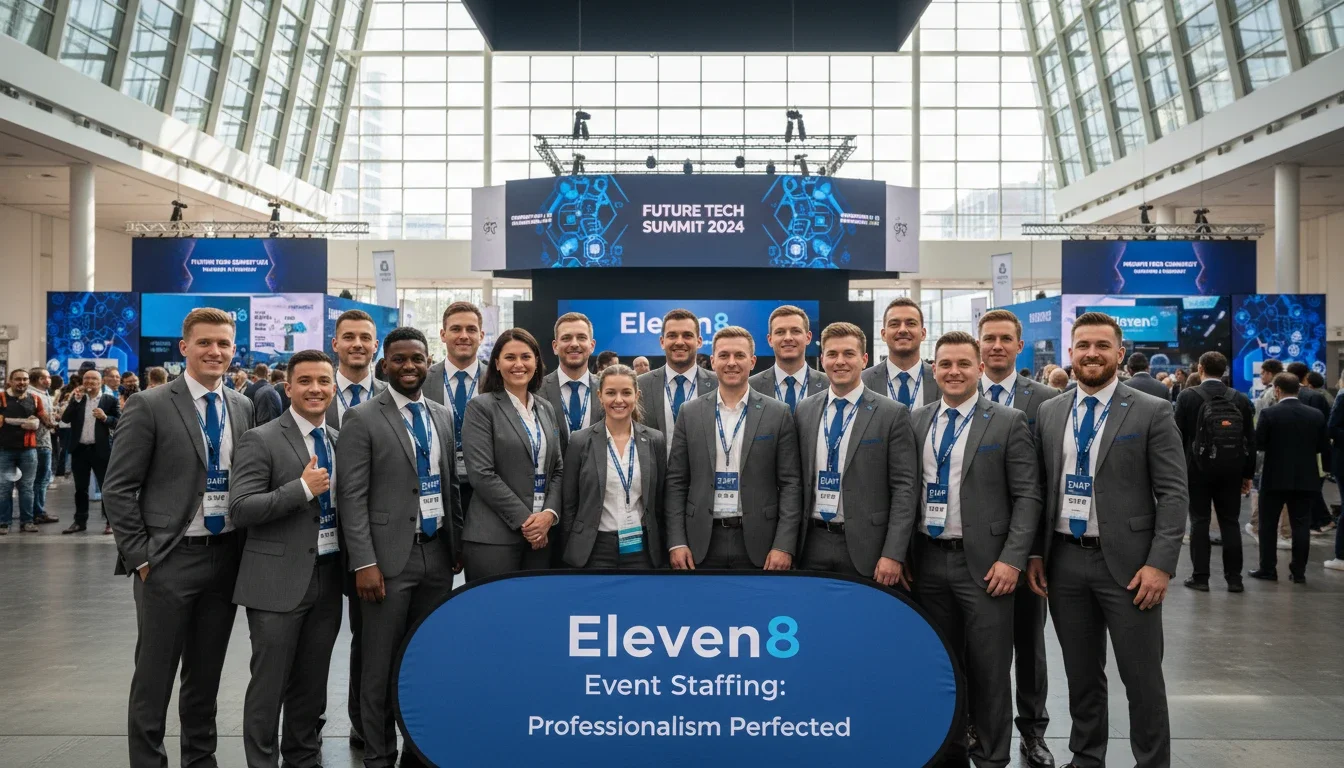
Smiling Eleven8 event staff team at a large-scale conference or expo, representing professional event staffing done right