Production Jobs vs. Other Event Support Roles: Which Should You Pursue?
The events industry is one of the most dynamic, fast-moving, and genuinely exciting fields you can build a career in. But when people picture themselves working events, they often imagine very different things — one person sees themselves behind a sound console, calling lighting cues as a keynote speaker walks onstage. Another sees themselves greeting VIP guests at a brand activation, representing a name like Nike or Netflix in front of thousands of people.
Both visions are valid. Both lead to real, sustainable careers. And both happen at the same events, just in very different ways.
The question isn't whether events are a good industry to work in — they are. The question is: which side of the event world suits your skills, your personality, and your goals?
This guide breaks down production jobs and event support roles clearly and honestly, so you can stop second-guessing and start building.
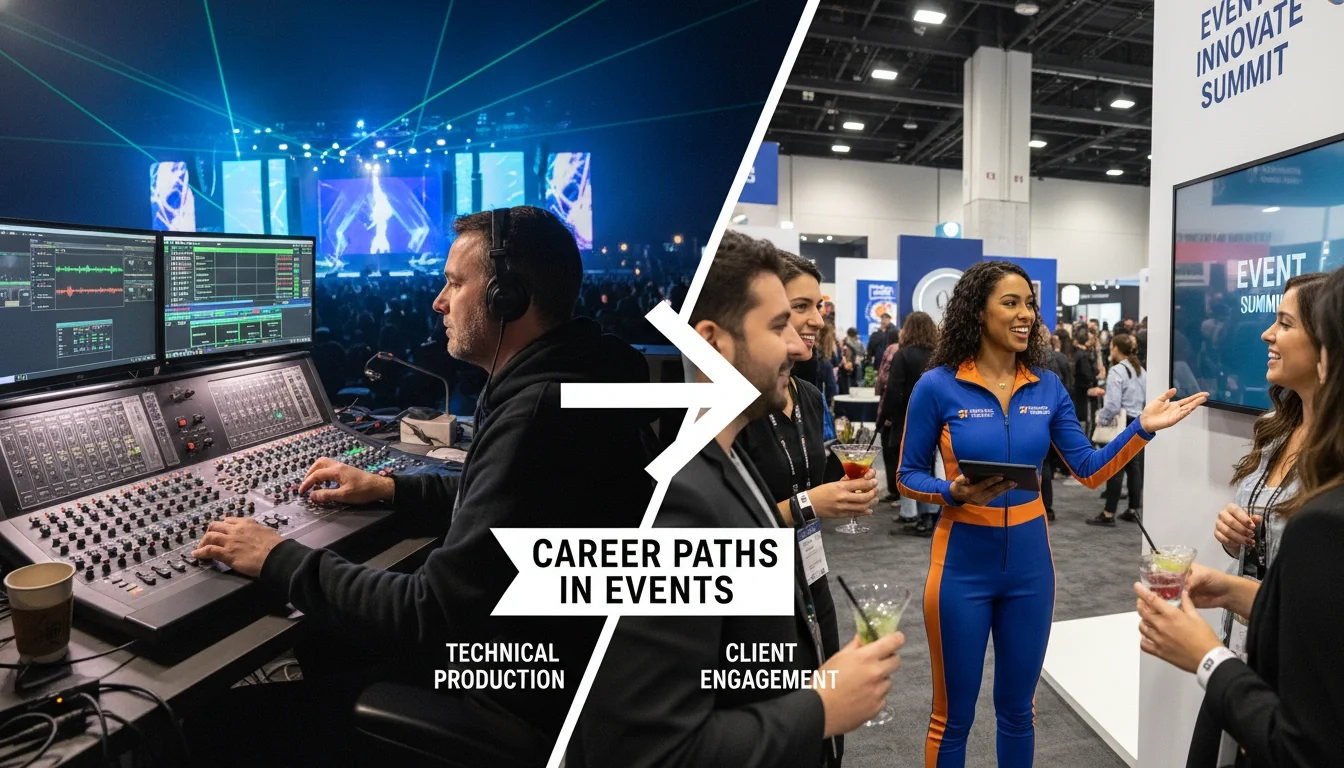
Two event professionals — a technical director at a production console and a brand ambassador engaging guests — representing the two major career tracks in the events industry
Understanding the Two Sides of the Events Industry
Every event — from a 50-person product launch to a 50,000-person convention — relies on two distinct types of talent working in sync.
On one side, you have the production crew: the people who build the technical and logistical infrastructure that makes the event physically happen. Sound systems, lighting, video, stage management, and show direction all fall here.
On the other side, you have event support staff: the people who manage the human experience. They're the first faces guests see, the professionals who keep crowd flow moving, the brand ambassadors who turn a product activation into a genuine connection, and the hospitality staff who make guests feel valued every moment they're on-site.
Neither track is more important. A flawless audio setup means nothing if guests feel lost and underserved. And the most welcoming staff in the world can't compensate for a broken PA system at a keynote.
Understanding where you naturally belong — and where your skills will be most rewarded — is the foundation of a smart career decision.
What Are Event Production Jobs?
Event production jobs are roles that focus on the technical and operational execution of an event. These positions are responsible for the setup, programming, operation, and teardown of the systems that make an event come to life: sound, lighting, video, staging, and overall show flow.
Production roles tend to be more technically specialized. They often require hands-on knowledge of specific equipment, familiarity with industry software, and the kind of calm-under-pressure problem-solving that only comes with real experience on the floor.
What Are Event Support Roles?
Event support roles are positions that manage the guest experience and on-site human infrastructure of an event. This includes brand ambassadors, registration staff, hospitality teams, booth staff, convention support, and on-site event coordinators.
Support roles require strong interpersonal skills, adaptability, brand awareness, and the ability to represent a company or product with professionalism and personality. They tend to be more accessible as entry points into the events industry and offer a broader range of day-to-day experiences.
Breaking Down Production Job Titles
If you're considering the production track, here are the core roles you'll encounter — and what each one actually involves.
Show Caller / Show Director
The show caller is the conductor of the entire event. They sit in a production booth or command center and cue every element of the show — lighting transitions, audio changes, video playback, speaker introductions — down to the second. This role requires a deep understanding of all technical disciplines and extraordinary composure under pressure.
Show callers typically come up through stage management or technical directing before stepping into the calling role.
Technical Director
The Technical Director (TD) oversees all technical departments — audio, lighting, video, and staging — and serves as the bridge between creative vision and operational reality. They make equipment decisions, manage technical budgets, and ensure every department is coordinated and ready.
This is a senior production role that typically requires 5–10 years of experience across multiple technical disciplines.
Stage Manager
The stage manager is the backbone of on-site coordination. They manage performers, speakers, and stagehands; distribute and enforce the production schedule; and serve as the communications hub between the show caller and the technical team.
Stage managers are detail-oriented, organized, and perpetually calm. They're the ones with the clipboard — or these days, the tablet — tracking every moving piece of the production.
Audio Engineer (A1 / A2)
The A1 is the lead audio engineer responsible for the full front-of-house sound mix. They handle microphone placement, sound checks, mix levels, and real-time audio adjustments throughout the event. The A2 supports the A1 — managing mic swaps, monitoring systems, and any backstage audio needs.
Audio engineering is one of the most in-demand production skills in the industry, and experienced A1s command premium rates — especially for large-scale corporate events and concerts.
Lighting Designer and Technician
The Lighting Designer (LD) creates the visual atmosphere of the event through lighting. They design lighting plots, program cue sequences, and collaborate with the event producer on creative direction. The L1 (Lighting Technician) handles the physical rig, focuses lights, and maintains equipment throughout the show.
Video Engineer
The Video Engineer (V1) manages all visual content during the event — camera feeds, projector systems, LED walls, and video playback. They work closely with the technical director to ensure visuals are synchronized with the event's programming.
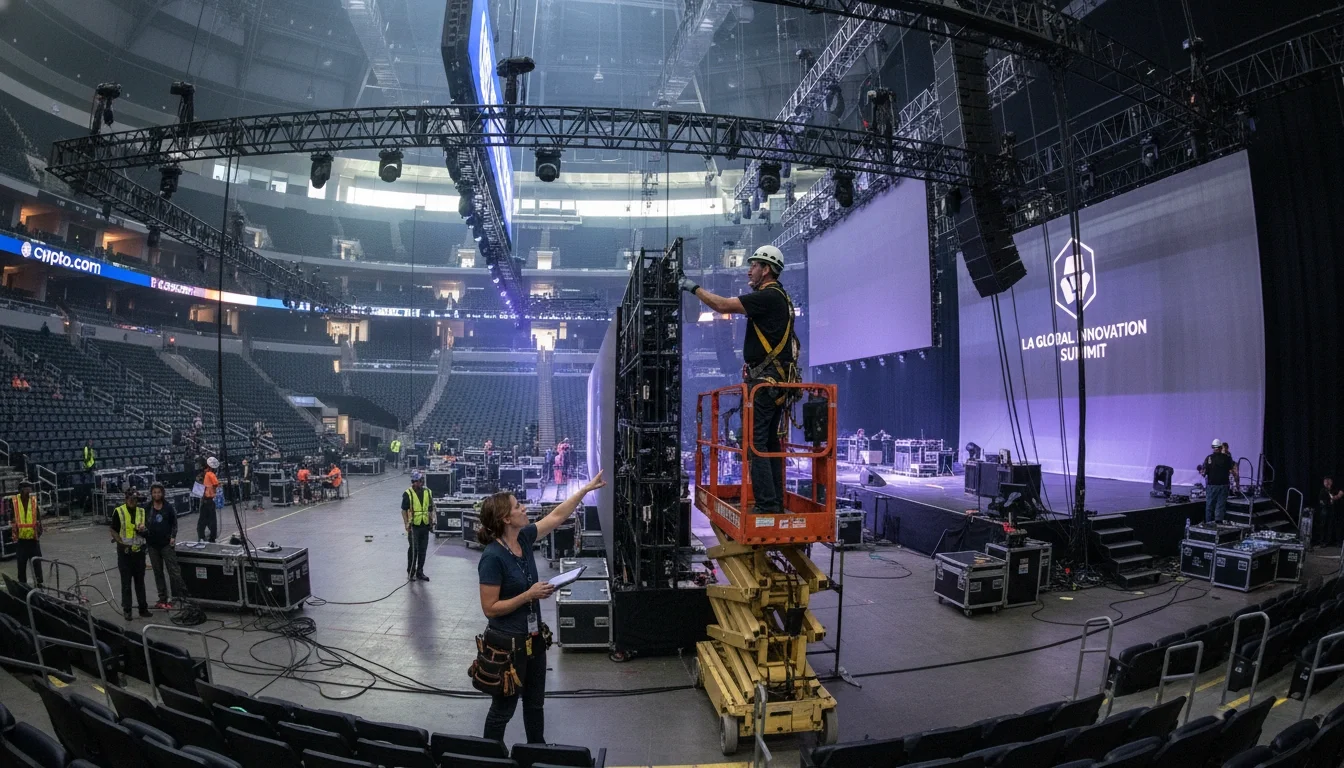
A technical director and lighting technician working together during event setup at a major Los Angeles venue
Breaking Down Event Support Role Titles
Event support roles cover the full range of guest-facing and operational support positions that keep an event running smoothly from the attendee's perspective.
Brand Ambassador
Brand ambassadors are the public face of a product, company, or campaign at an event. They engage attendees, demonstrate products, distribute materials, and create positive brand impressions through direct human interaction.
This is one of the most flexible and accessible entry points into the events industry — and one of the most visible. Agencies like Elevate Event Staff represent some of the most in-demand brand ambassadors in Los Angeles, placing them with clients like Netflix, Nike, and Instagram.
A great brand ambassador is outgoing, brand-aware, adaptable, and genuinely good with people. Experience in retail, hospitality, or customer-facing roles translates directly.
Convention and Registration Staff
Convention staff handle the operational flow of large-scale events: registration check-in, credential management, attendee navigation, exhibitor support, and crowd control. These roles require efficiency, organization, and the ability to stay composed in high-traffic, fast-moving environments.
Events like KCON, Anime Expo, and large corporate conventions rely heavily on well-trained convention teams to ensure thousands of attendees move through smoothly and have positive experiences from the moment they arrive.
Hospitality and Guest Services Staff
Hospitality staff manage the elevated guest experience — greeters, concierge-style support, VIP room management, server roles, and bartenders at upscale events. These positions require polish, discretion, and genuine service instincts.
At premium events — awards shows, luxury brand activations, high-profile galas — the hospitality team sets the tone for the entire guest experience. Elevate's hospitality staffing in Los Angeles serves clients that include Versace, The Academy, and Cartier precisely because the standard of professionalism is non-negotiable.
Booth Staff
Booth staff work within a specific exhibitor or brand space at a trade show, expo, or convention. They engage passersby, explain products and services, support lead generation, and keep the booth space organized and energized throughout the event day.
Strong booth staff are a direct extension of a brand's sales and marketing team. Elevate's booth staff have represented clients like Fortune, Got Milk, and Sephora at major industry events.
Event Coordinator / On-Site Manager
On-site coordinators serve as the client's representative during the event itself — managing vendor relationships, coordinating staff assignments, troubleshooting issues in real time, and ensuring the event runs according to plan. This role bridges the gap between event support and production, requiring both interpersonal skill and operational awareness.
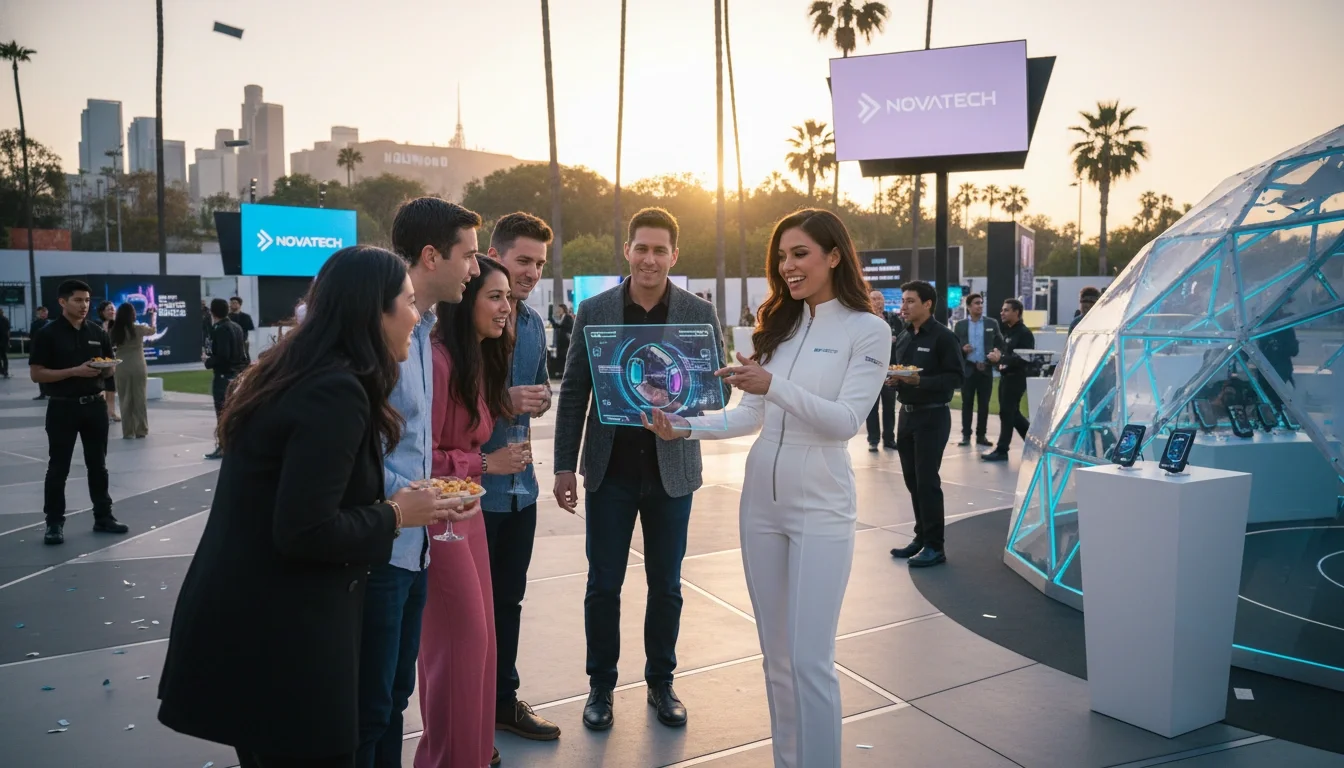
A brand ambassador engaging with guests at a product activation event in Los Angeles
Production Jobs vs. Event Support Roles: A Side-by-Side Comparison
Now that you have a clear picture of both tracks, let's compare them across the dimensions that actually matter for a career decision.
Skills Required
Production roles demand technical competency above all else. Whether it's running a sound board, programming a lighting console, or directing camera operators, these roles have steep learning curves and require ongoing investment in equipment knowledge and certifications (such as the CTS — Certified Technology Specialist — credential, which is widely respected in the AV industry).
Event support roles prioritize interpersonal skills, adaptability, and brand presentation. The learning curve is lower for entry-level positions, but progression requires developing deeper capabilities in client management, team leadership, and brand strategy.
Schedule and Lifestyle
Both tracks involve irregular hours — evenings, weekends, and holidays are standard in events. However, the nature of the work differs significantly.
Production professionals often work intensive setup days (sometimes 12–16 hours) before and during events, with post-event teardown adding to the load. Support staff typically work event-day shifts that, while sometimes long, are more predictable in structure.
Freelance is common in both tracks, though production roles tend toward project-based engagements while support staff work more frequently through staffing agencies that provide consistent placement opportunities.
Pay and Earning Potential
Production roles tend to have higher ceilings at senior levels. Experienced Technical Directors and A1 Audio Engineers on major touring productions or high-profile corporate events can earn $600–$1,500+ per event day. Entry-level production assistants, however, often start in the $18–$25/hour range.
Event support roles typically range from $20–$45/hour depending on the market, event type, and agency. Brand ambassador and promotional model roles at premium agencies in major markets like Los Angeles often command the higher end of this range. Volume and consistency of work — particularly through an established agency — can add up to a strong annual income.
It's also worth noting: support roles generally offer faster access to steady income. Production roles often require a longer runway of investment before the high-earning work becomes accessible.
Entry Barriers and How to Get Started
Getting into production: Many production professionals start as stagehands, runners, or production assistants — essentially doing physical labor on event sites while learning from the crew around them. Shadowing experienced technicians, taking AV certification courses, and building a kit of personal equipment are common first steps.
Getting into event support: The most direct path is applying through a reputable event staffing agency. Agencies vet, train, and place staff across a wide range of events, providing both consistent work and exposure to different event types and brands. For candidates in Los Angeles, working with an agency like Elevate Event Staff — which accepts only the top 3.5% of applicants and places staff with globally recognized brands — is both a quality credential and a meaningful income stream.
Career Trajectory
Production career path: Production Assistant → A2 / L1 / V2 → A1 / Lighting Designer / Video Engineer → Technical Director → Show Director / Executive Producer
This path can take 5–10 years to reach senior levels but can be accelerated significantly through intensive hands-on experience and focused skill development.
Event support career path: General Event Staff → Brand Ambassador / Specialist Role → Event Captain / Team Lead → Account Manager / Event Coordinator → Director of Events / Agency Manager
This path is often faster to gainful mid-level employment and offers strong flexibility for those who prefer variety over deep specialization.
How to Decide Which Path Is Right for You
There's no universally "right" answer here — but there are strong indicators.
You Might Be a Production Person If…
You're drawn to technical systems — audio, lighting, video, networking
You enjoy building and troubleshooting complex setups
You're comfortable working long, often physically demanding hours before the audience arrives
You find satisfaction in craft-level mastery of a specific discipline
You're patient with the longer runway required to reach high-earning positions
You thrive in behind-the-scenes, precision-driven environments
You Might Thrive in Event Support If…
You're genuinely energized by interacting with people
You have strong presentation skills and adapt quickly to different brands and environments
You want to start earning quickly and build experience across many different event types
You prefer variety — different clients, venues, and challenges — over deep specialization in one technical area
You have a background in hospitality, retail, customer service, or performance
You're interested in eventually moving into client management, experiential marketing, or agency operations
Can You Do Both? Crossover Paths in the Events Industry
Many of the best event professionals don't stay in just one lane.
It's entirely common — and often strategically smart — to gain experience in event support roles while learning the production side of the industry. Working as a brand ambassador or convention staff member gives you access to live events, exposure to how productions are structured, and professional connections that can open doors on the production side.
Similarly, some production professionals transition into event operations or client-facing roles as they gain seniority, leveraging their technical knowledge to serve as highly effective event producers or technical account managers.
The events industry rewards people who understand the full picture. And the fastest way to understand the full picture is to work in it — at every level you can access.
How Professional Event Staffing Agencies Fit In
Whether you're leaning toward production or event support, connecting with the right staffing infrastructure early can significantly accelerate your career.
For those pursuing event support roles, a professional staffing agency isn't just a way to find work — it's a career platform. The best agencies vet, train, and develop their staff, provide exposure to high-caliber clients and events, and serve as an ongoing professional home as your skills and reputation grow.
Elevate Event Staff has placed professionals across thousands of events for brands like Nike, The Academy, Versace, and Netflix. For candidates in Los Angeles and across the US, working with an agency at that level means your career starts with the kind of experience that takes most people years to reach.
For those on the production track, agencies and production companies also offer a critical launch point — with entry-level PA positions, equipment access, and mentorship from senior technicians being the most common way professionals build their early experience base.
Whichever path you choose, the network you build in those early years will shape your entire career. The events industry is relationship-driven, and your reputation travels faster than your resume.
Ready to start or grow your event career in Los Angeles? Contact Elevate Event Staff to learn about open opportunities and how we match talented professionals with events that fit their skills and goals.