Retail Event Staff: What to Look for During Peak Seasons
Peak season retail events are some of the highest-stakes moments a brand will face all year. Whether you're running a Black Friday activation, a holiday pop-up, a product launch, or an in-store experience tied to a major sales event, the people representing your brand on the floor can make or break how customers walk away feeling.
The problem is that most brands and event planners don't hire for peak season the way they should. They focus on numbers — how many staff do we need? — when the more important question is: what does excellence look like, and how do I find it?
This guide answers that question directly. Below, you'll find what to look for in retail event staff during peak seasons, the red flags to avoid, and how the right staffing partner changes the outcome.
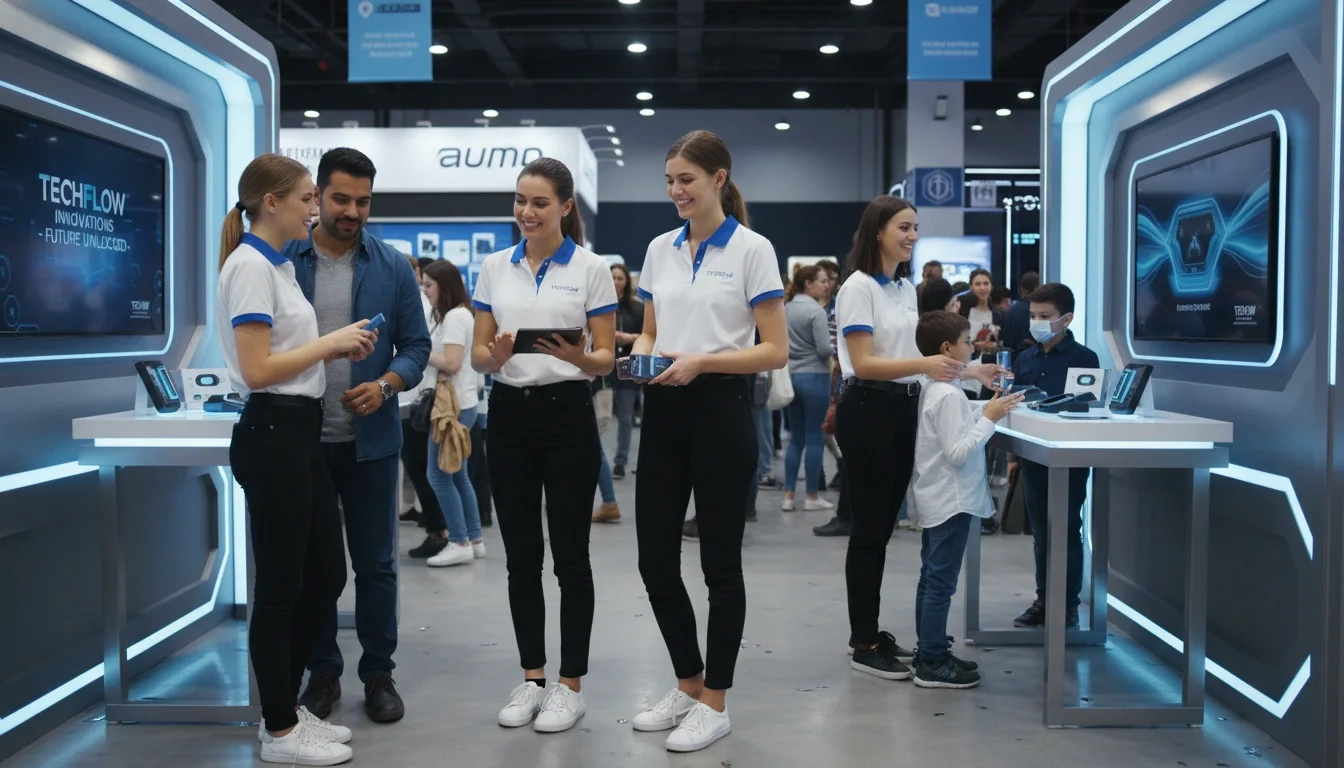
Professional retail event staff engaging with customers during a brand activation
Why Peak Season Retail Events Demand a Higher Standard of Staff
The stakes are different when your store is packed
During a regular Tuesday in March, a staff member who is slightly off their game has limited impact. During a holiday pop-up or a major product launch weekend, that same underperformance gets multiplied by hundreds — sometimes thousands — of customer interactions.
Peak season events concentrate foot traffic, compress timelines, and amplify every customer-facing moment. Staff who are unprepared, disengaged, or simply not the right fit for a high-energy retail environment can create bottlenecks, frustrate shoppers, and create impressions that stick.
For premium and aspirational brands especially, peak season is when your brand story is being told at the highest volume. The person handing someone their first product sample or guiding them through a pop-up experience is, in that moment, your brand.
One bad interaction can cost more than a missed sale
Research from the National Retail Federation consistently shows that customer experience is among the top drivers of brand loyalty and repeat purchase decisions. A poor in-person interaction — an inattentive greeter, an unprepared product demonstrator, a staff member who seems like they'd rather be anywhere else — doesn't just lose the immediate sale. It creates a negative association that follows the customer out the door and sometimes onto social media.
The inverse is equally true. An exceptional staff member who is genuinely warm, knowledgeable, and composed under pressure can turn a browsing customer into a loyal one. That's why the question of who you hire matters far more than simply how many you hire.
What Counts as "Peak Season" for Retail Events?
Beyond the holidays: the full retail event calendar
Most people immediately think of Black Friday and the December holiday rush when they hear "peak season." And those are certainly high-stakes periods. But for retail brands that invest in experiential marketing and in-store activations, peak season is a more complex landscape.
The major retail event peaks typically include:
Q4 Holiday Season — Black Friday through New Year's, the most intensely staffed retail period of the year
Back-to-School — late summer activations, particularly relevant for apparel, tech, and lifestyle brands
Valentine's Day and Mother's Day — concentrated premium retail events, especially in beauty, gift, and luxury categories
Product Launch Windows — tied to brand calendars, not the retail calendar; these create their own demand spikes
Brand Pop-Ups and Experiential Activations — increasingly common year-round, but especially concentrated in Q1 and Q4
Each of these windows has its own customer energy, foot traffic pattern, and staff requirement profile. Understanding which peak you're staffing for helps define exactly what to look for in your team.
High-volume moments that require specialized staffing
Beyond dates and seasons, certain event formats push staff into a different performance zone. A trade show or convention demands different skills than a luxury in-store activation. A high-volume Black Friday floor team operates differently from a product sampling event. When evaluating staff, it's worth being specific about the type of retail event experience you need — not just availability.
The Core Qualities to Look for in Retail Event Staff
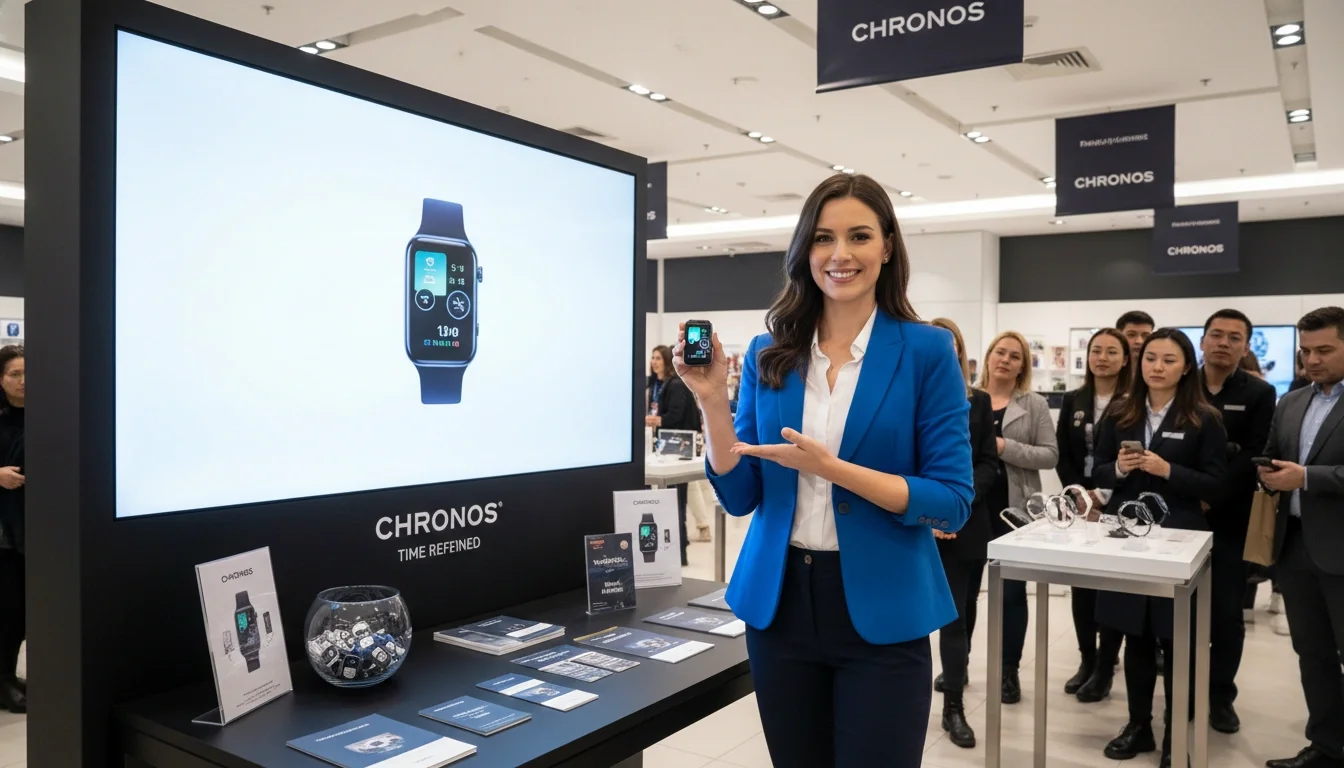
A brand ambassador representing a product at a retail event with confidence and polish
This is the heart of what separates event staff that deliver from those that simply show up. Here are the qualities that consistently distinguish excellent retail event staff from average ones.
1. Composure Under Pressure
High-volume retail events are not calm environments. There are long queues, impatient customers, logistical surprises, and near-constant sensory noise. Staff who perform well in these conditions have a specific kind of composure — they don't rush, they don't get rattled, and they don't let the chaos show in their face or body language.
Look for candidates who can describe specific examples of managing high-pressure environments. Ask them about the busiest event they've worked and what they did when things went sideways. The answer tells you far more than a resume does.
2. Brand Alignment and Presentation
Staff at retail events don't just perform tasks — they represent a brand identity. The way they carry themselves, speak, and engage with customers should feel consistent with the brand's positioning.
For a luxury skincare pop-up, that means understated elegance and warmth. For a tech product launch aimed at Gen Z, it might mean energy, relatability, and cultural fluency. For a high-end fashion activation, it means impeccable presentation and discretion.
When evaluating staff, ask yourself: does this person naturally embody the tone and feel of our brand? That alignment can't be trained into someone in a one-hour briefing session.
3. Genuine People Skills — Not Just a Friendly Face
There's a difference between a person who is pleasant and a person who is good with people. Great retail event staff are genuinely curious about the customers they interact with. They ask questions, listen actively, and adjust how they engage based on the cues they receive.
They're approachable without being aggressive. They can hold a conversation without dominating it. And they know when to step back and give a customer space versus when to lean in with relevant information.
This is one of the harder qualities to screen for on paper. A brief in-person or video interview — ideally with a role-play component — reveals it quickly.
4. Product Knowledge Agility
The best retail event staff don't need to have worked with your specific product before — but they need to be fast learners who take pre-event briefing seriously. Look for staff who ask preparation questions before the event, not after.
Product knowledge agility means absorbing brand talking points quickly, translating them into natural conversation rather than scripted recitation, and handling questions they haven't been explicitly prepped for with grace and confidence.
Ask prospective staff how they prepare for a new brand. Their answer — whether they review materials thoroughly, ask clarifying questions, or request brand samples in advance — tells you whether they'll be effective on day one.
5. Reliability and Punctuality
This one should go without saying, but it's the most common source of peak-season staffing failure. A no-show or a late arrival during a high-volume event doesn't just create a staffing gap — it throws off the entire floor operation and puts pressure on every other team member.
When evaluating staffing partners or individual staff candidates, dig into their track record. How many events have they worked in the last six months? Have they had any cancellations? How do they handle last-minute conflicts?
For high-stakes events, reliability isn't a nice-to-have — it's the baseline requirement.
6. Adaptability on the Floor
Even the most carefully planned retail event encounters surprises. A delivery that's running late. A queue that forms faster than expected. A section of the space that becomes congested. Staff who can adapt — reassigning themselves, flagging issues proactively, helping where they see a need — are invaluable.
Adaptability also means being able to shift communication styles quickly. A conversation that starts with one type of customer can turn unexpectedly, and staff who can read the room and adjust are the ones who consistently get called back.
7. Professional Communication
Professional communication during a retail event goes beyond being polite. It means clear, brand-appropriate language; confident and calm tone under pressure; and the ability to de-escalate a frustrated customer without creating more friction.
It also means good internal communication — checking in with the event lead, flagging issues before they become problems, and operating with the kind of situational awareness that keeps the team running smoothly.
Red Flags to Watch for When Evaluating Event Staff
Knowing what to look for is only half the picture. Here are the signals that a staff candidate may not be the right fit for peak season retail work.
Vague availability without commitment
Staff who say they're "probably available" or who hedge on dates and times without confirming are a liability in high-demand periods. Peak season events require confirmed commitments early. If a candidate can't make that commitment clearly during the booking conversation, they're unlikely to show up reliably when it counts.
No verifiable event experience
A candidate who lists "events" on their resume without being able to describe specific roles, brands they've worked with, or how many events they've done in a recent period deserves closer scrutiny. Verifiable experience — specific events, venues, brands — is a meaningful signal of credibility.
Poor preparation in the initial interaction
How a candidate shows up to the vetting process is a preview of how they'll show up on the floor. If they're late to an interview, unprepared with basic questions about your brand, or communicate poorly during the screening process, consider that a data point — not an anomaly.
Questions to Ask Before Booking Event Staff for Peak Season
Vetting questions that reveal the right candidate
Whether you're hiring independently or evaluating staff presented by an agency, these questions cut quickly to what matters:
Can you describe the busiest event you've worked and how you managed it?
What's your process for preparing for a new brand briefing?
Have you ever had a scheduling conflict come up last-minute? How did you handle it?
What do you do when a customer asks you a question you weren't briefed on?
Tell me about a time you had to adapt on-site when the event didn't go as planned.
The specificity and confidence in the answers — not rehearsed perfection — tells you who you're dealing with.
Why Working With a Vetted Event Staffing Agency Changes the Equation
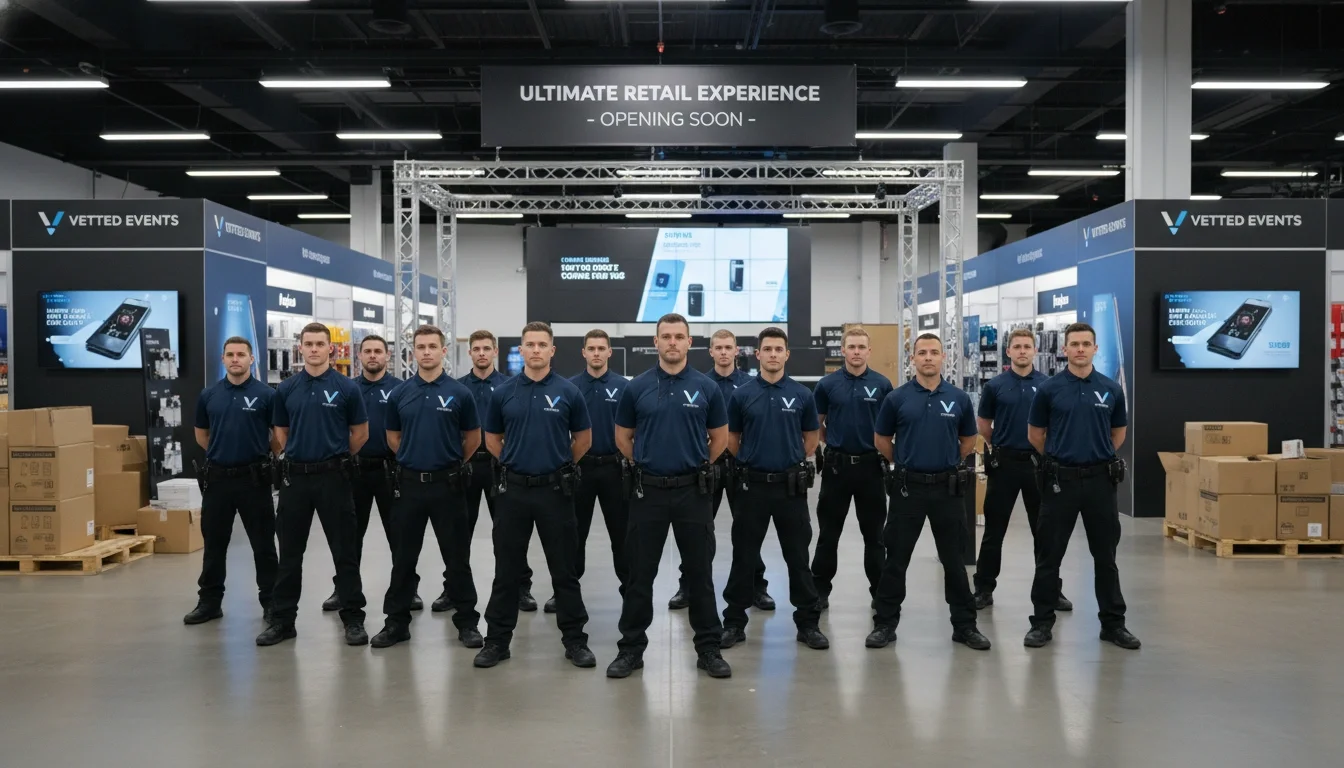
Vetted event staff team ready to deploy for a high-volume retail activation
The difference between available and qualified
One of the most common mistakes brands make during peak season is confusing speed with quality. Posting a job listing in October and hiring based on who replies fastest gets you a roster of available people — not necessarily qualified ones.
Elite event staffing agencies solve this problem by maintaining pre-vetted rosters of staff who have already been screened, interviewed, background-checked, and placed successfully at real events. When you book through a reputable agency, you're not starting the vetting process from scratch under time pressure — you're accessing a curated pool that's already been filtered for the qualities that matter.
At Eleven8 Event Staff, for example, fewer than 4% of applicants make it through the full vetting process, which includes live interviews, reference checks, and a supervised trial placement. The result is a roster of professionals who are ready to represent premium brands — not candidates who just needed a job.
How elite agencies pre-screen for peak season performance
The best staffing agencies don't just vet for work history — they evaluate for the specific qualities that determine peak-season performance: composure, brand presentation, communication style, and adaptability. They also match staff to event type, brand positioning, and audience profile before a single confirmation is sent.
This kind of matching — rather than generic placement — is what produces teams that feel like a natural extension of your brand rather than a temporary add-on.
For brands that regularly execute retail activations, building a preferred roster with an established agency is one of the most effective investments in event quality. By the second or third event, your agency partner understands your brand voice and can proactively recommend staff who are right for the specific ask.
Planning Your Retail Event Staffing Strategy Early
The timeline that protects your peak season execution
For major retail events — particularly Q4 holiday activations — the staffing conversation should begin 8 to 12 weeks in advance. For events during extremely high-demand periods like Black Friday week, even earlier is better.
Here's a practical planning timeline:
10–12 weeks out: Confirm event dates, staff count requirements, and role types needed. Begin conversations with your staffing agency.
6–8 weeks out: Finalize staffing roster; review staff profiles if your agency provides them. Confirm uniforms and appearance standards.
2–4 weeks out: Deliver brand briefing materials. Schedule any pre-event training or walkthroughs.
1 week out: Confirm all staff, timing, and on-site contacts. Ensure your agency has a backup plan for no-shows.
Day before: Staff receive final briefing, venue details, and point-of-contact information.
Starting early isn't just about securing enough warm bodies — it's about securing the right people before they get booked by competitors.
How to brief your event staff for maximum brand impact
Even the best event staff perform better with a thorough, well-organized brand briefing. The briefing should cover:
Brand story and values — who are we and what do we stand for?
Product or service talking points — what to emphasize, what to avoid
Target customer profile — who they'll be engaging with and how
On-site logistics — layout, flow, key contacts, emergency procedures
Tone and presentation standards — language, dress code, energy level expected
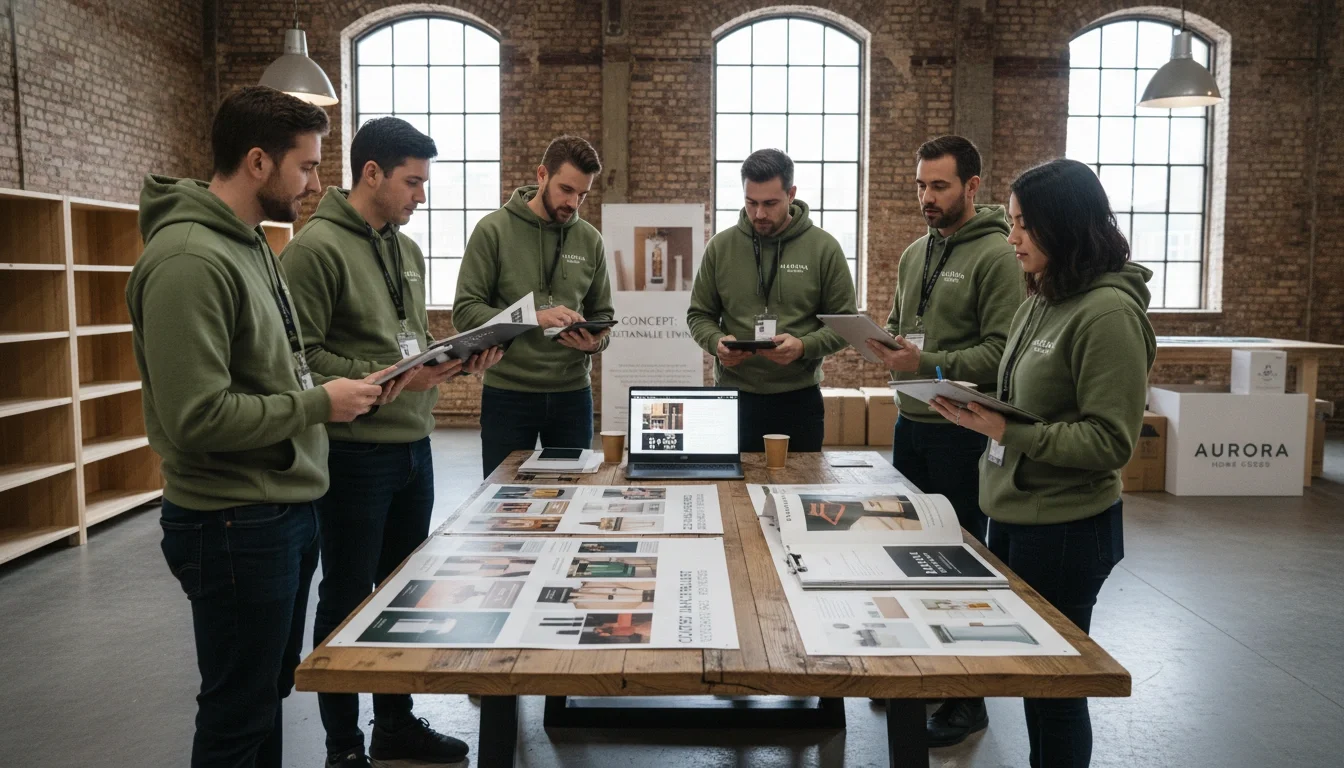
Event staff reviewing brand briefing materials before a retail pop-up
Providing this information in writing at least 48 hours before the event gives staff time to genuinely internalize it — rather than absorbing it in a rushed, pre-event huddle when they're already in execution mode.
The brands that consistently get the best performance from their event teams are the ones that invest in briefing. They treat staff as partners in brand delivery, not task-fillers. That mindset — and the preparation it leads to — comes back in results.
The Bottom Line on Retail Event Staffing
Peak season retail events reward preparation. The brands that win during their highest-visibility moments are the ones that planned their staffing thoughtfully, evaluated candidates with the right criteria, and partnered with agencies who maintain genuine quality standards.
The seven qualities outlined in this guide — composure, brand alignment, real people skills, product knowledge agility, reliability, adaptability, and professional communication — aren't abstract ideals. They're observable, screenable, and the consistent differentiators between event staff that deliver and those that just show up.
If your next retail activation is approaching and you want to build a team that represents your brand the way it deserves, connect with Eleven8 Event Staff to discuss your staffing needs. With over 30 years of experience and a roster built from the top 3.5% of applicants, we match brands with professionals who are ready to perform when it counts most.