Training Your Retail Temps for Better Brand Engagement: A Practical Guide
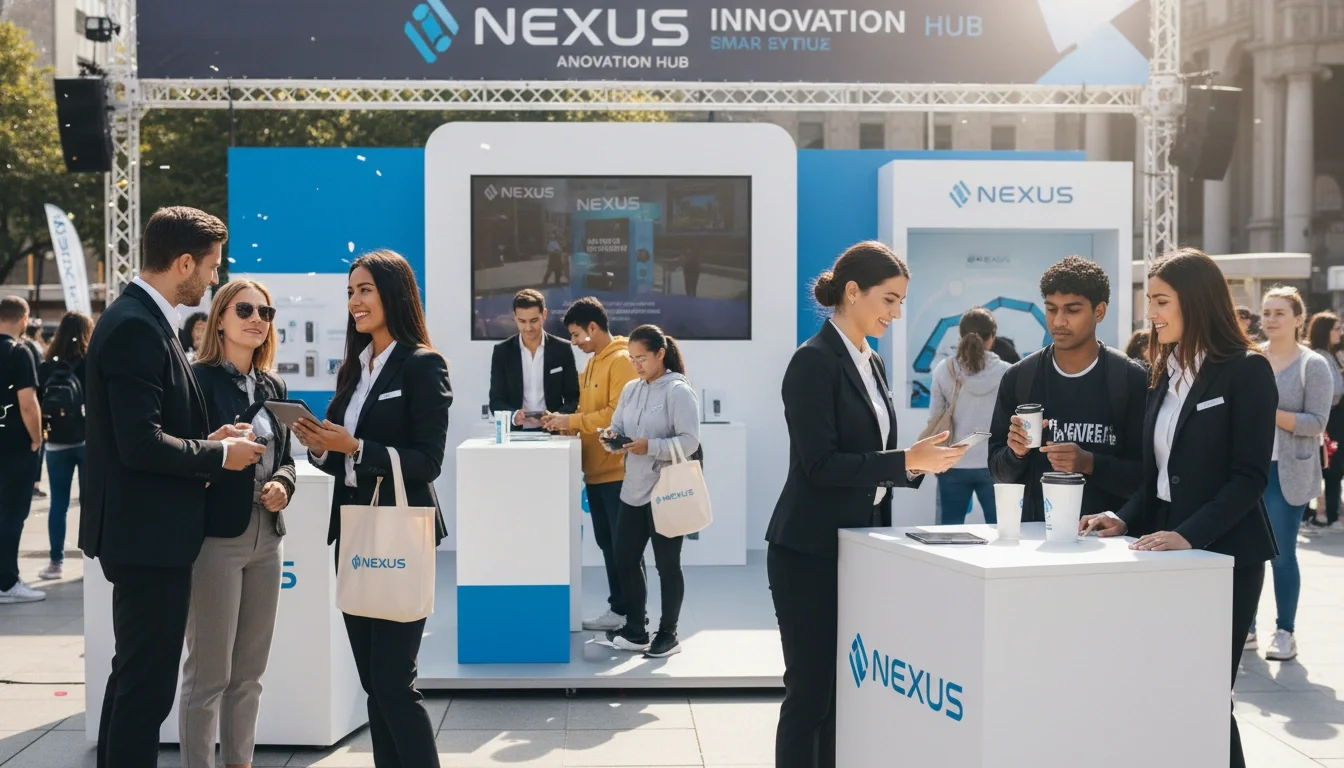
Professional brand ambassador staff engaging customers at a branded retail activation
Hiring a temporary retail team is the easy part. Getting them to genuinely represent your brand — to speak with the right tone, engage customers with confidence, and leave a lasting impression — is where most activations fall short.
When a shopper walks up to your promotional display or pop-up booth, they don't know whether the person greeting them is a permanent employee or a temp hired three days ago. What they experience in that moment is, to them, your brand. That's the stakes.
This guide breaks down how to train retail temp staff for real brand engagement — quickly, effectively, and in a way that scales whether you're running one activation or a hundred.
Why Brand Engagement Training Matters for Temporary Staff
The Gap Between 'Showing Up' and 'Representing'
There's a meaningful difference between a staff member who shows up on time and one who actively represents your brand. The first checks a logistical box. The second creates customer experiences that drive loyalty, word-of-mouth, and conversion.
Temporary retail staff are often deployed at moments of peak brand opportunity — product launches, seasonal pop-ups, trade shows, experiential activations. These aren't low-stakes touchpoints. They're frequently the first live interaction a customer has with your brand in person.
A temp who doesn't know your brand story, can't answer basic product questions, or engages with a generic service-industry script is worse than having nobody there at all. Indifference is memorable in the wrong way.
What Happens When Temps Are Undertrained
The downstream effects of poor brand training are well-documented. According to research cited by Gallup, companies with high employee engagement — including frontline brand representatives — are significantly more profitable than those that treat staff training as an afterthought. The same principle applies to temporary workers.
Undertrained temps create inconsistent experiences across locations. They give inaccurate product information. They handle customer objections poorly. And in an era of instant social media feedback, one negative interaction at a live event can reach an audience your entire activation budget was designed to win.
The good news is that training temporary staff for brand engagement doesn't require a six-week onboarding program. It requires a smart, focused system.
The Business Case for Investing in Temp Training
Research consistently shows that consumers form lasting impressions within the first few seconds of a live brand interaction. Physical brand experiences have outsized influence on loyalty — one industry study found that 86% of consumers consider physical brand experience to have a high or very high impact on their long-term loyalty decisions.
When you invest even a few additional hours in brand engagement training for your temps, you're not just improving one activation. You're protecting the brand equity that your marketing, product, and creative teams work year-round to build.
Key Insight: Your temporary staff are the live expression of your brand at its most visible moments. Every hour invested in training them is an hour invested in your brand's reputation.
Understanding What Retail Temps Actually Need to Know
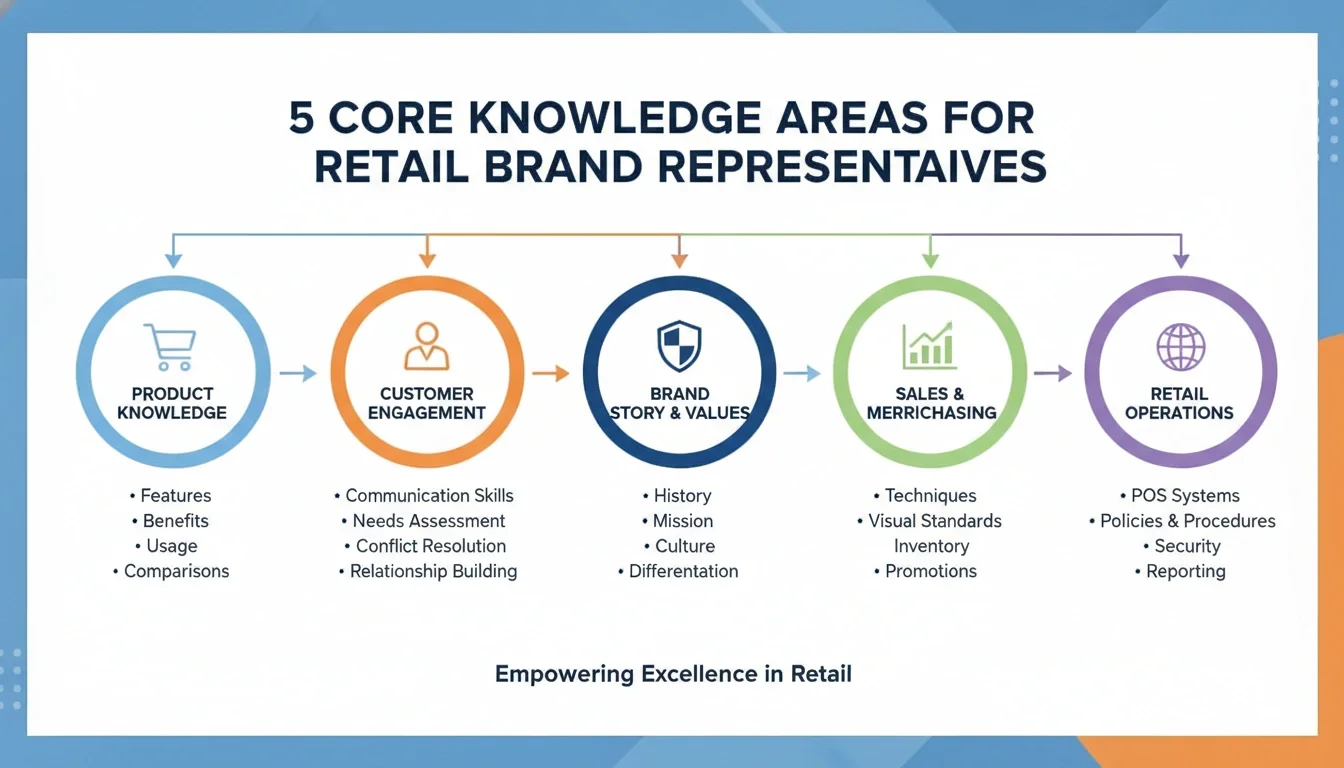
Infographic showing the 5 core knowledge areas for retail brand representatives
Brand Values vs. Brand Voice — What's the Difference?
This is the distinction most brand training programs miss. Brand values are the principles your company stands for — innovation, sustainability, community, quality. Brand voice is how those values are communicated in conversation.
A temp can memorize your tagline and still communicate in a way that feels completely off-brand if they haven't been trained in voice. A luxury brand's voice is measured, confident, and attentive. A streetwear brand's voice is energetic, informal, and culturally aware. A wellness brand's voice is warm, empathetic, and educational.
Your brand training needs to cover both dimensions — not just what your brand stands for, but how it talks.
The 5 Core Knowledge Areas for Retail Brand Reps
When time is limited, focus your training on these five areas:
1. Brand Story & Positioning: Who you are, what you stand for, and why customers should care. This should be deliverable as a 60-second verbal overview.
2. Product or Service Essentials: The most frequently asked questions, the hero product or offering, key differentiators from competitors.
3. Customer Engagement Language: How to open a conversation naturally, transition from greeting to engagement, and handle interest or hesitation.
4. Objection Handling: The top three or four objections or questions a temp will face, with practiced, on-brand responses.
5. Brand Boundaries & Compliance: What staff should never say, how to handle media requests, and any regulatory or legal considerations for the product category.
What to Prioritize When Time Is Limited
Most retail temp deployments involve a pre-shift briefing of 30 to 60 minutes at best. In that window, you can't cover everything — so don't try.
Prioritize the brand story, the top three product questions, and the customer engagement opener. Everything else can be supported by a one-page reference card your staff keeps accessible. The goal is confident, on-brand first impressions — not encyclopedic product knowledge.
Building a Fast-Track Brand Briefing System
The Pre-Event Briefing Framework
A structured pre-event briefing is the single most effective tool for rapidly aligning temporary staff with your brand. This doesn't need to be a formal training session — it can be a 45-minute guided conversation that covers the right territory in the right order.
Here's a proven briefing structure used by professional event staffing agencies:
Minutes 1–5 | Brand Context: Who the client is, what the event is for, and what a successful interaction looks like.
Minutes 6–15 | Product/Service Walkthrough: Hands-on if possible. Physical products should be handled. Service offerings should be demonstrated through examples.
Minutes 16–25 | Voice and Engagement Practice: Staff practice their greeting and opening questions with each other. The manager listens for off-brand language and corrects it.
Minutes 26–35 | Scenario Practice: Two or three common customer scenarios are role-played, including one objection.
Minutes 36–45 | Logistics, Dress, and Standards: Uniform check, brand standards review, communication protocol for the event day.
Creating a Brand Bible Temps Can Actually Use
A brand bible doesn't have to be a 40-page PDF. For temp deployments, what you need is a single-page 'Brand Essentials Card' — laminated or digital — that your staff can reference on the floor without it looking like they're reading from a script.
The essentials card should include:
Brand positioning statement in one sentence
Top 3–5 products or offerings with one-line descriptions
Three approved conversation openers
Four pre-answered customer FAQs
One clear statement of what the brand is NOT (to prevent off-brand improvisation)
Emergency contact for the shift manager or brand representative
This card becomes the foundation of your pre-shift briefing and a fallback resource for confident, consistent engagement throughout the activation.
Digital Tools for Rapid Knowledge Transfer
Short-form video briefings (under five minutes) sent to temp staff before an event are now standard practice among sophisticated brand marketing teams. A brief walkthrough from a brand manager — covering the brand story, the product focus, and the day's goals — creates a personal connection before the team even arrives on site.
Platforms like mobile learning apps and messaging tools allow you to share reference materials, product images, and engagement scripts directly with your team in the hours before a shift. The key is keeping it short, visual, and directly applicable to what they'll face on the floor.
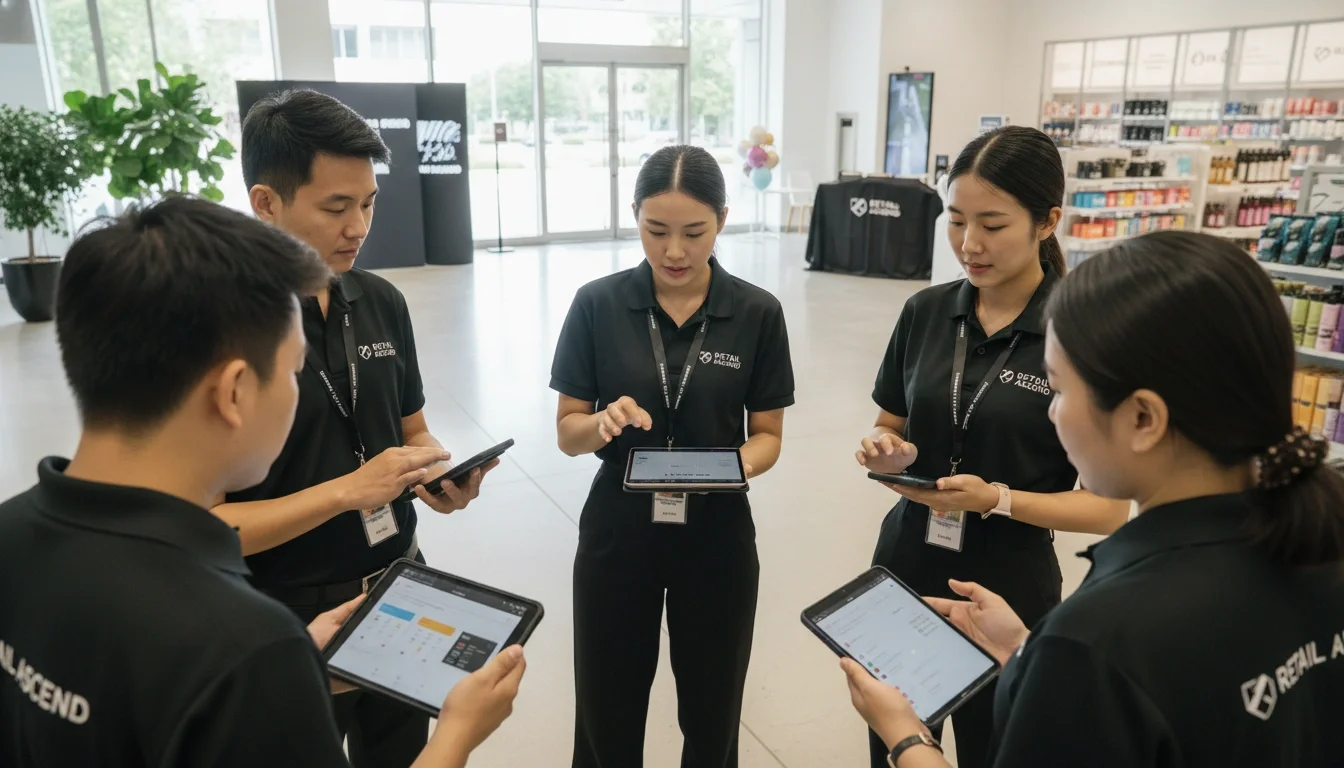
Event staff reviewing brand briefing materials on mobile devices before a retail activation
Practical Training Techniques That Work for Temps
Role-Play and Scenario-Based Learning
Role-play gets a bad reputation — mostly because it's done poorly. When it's done well, it's the fastest route to confident, on-brand interaction. The key is making scenarios realistic and keeping feedback immediate.
The most effective retail brand scenarios include: a curious but hesitant customer, an existing customer who wants to compare to a competitor, and a customer who asks a question your staff don't know the answer to. That last scenario is critical — because it happens, and how your temp handles it is a direct reflection of your brand.
Train a specific response for knowledge gaps: 'That's a great question — let me find out for you' is always more on-brand than silence or a guess.
Microlearning and On-the-Floor Reinforcement
Microlearning — short, focused lessons delivered in five minutes or less — is particularly well-suited to temporary retail staff. Unlike hour-long training modules, microlearning integrates naturally into pre-shift briefings, break periods, and shift transitions.
On-the-floor reinforcement works through check-ins. A brief mid-shift conversation between a manager and a temp — asking what questions have come up, what's working, and what feels unclear — reinforces training, builds confidence, and catches brand inconsistencies before they become patterns.
Pairing Temps with Experienced Brand Staff
Shadowing is one of the most underused training tools in temporary retail deployments. Assigning each new temp a brief shadow period with an experienced brand ambassador or permanent team member accomplishes several things simultaneously: it demonstrates the brand voice in action, it builds confidence through observation, and it accelerates the learning curve faster than any briefing document can.
Even a 20-minute shadow period before a temp engages with customers independently produces measurably better brand consistency. If you have the staffing depth to support it, build it into your deployment plan.
Setting Standards and Measuring Brand Engagement
Defining What 'On-Brand' Looks Like in Practice
Brand standards for retail temps need to be specific and behavioral, not abstract. 'Be professional' is too vague. 'Maintain eye contact when greeting customers, smile before speaking, and never look at your phone while on the floor' is actionable.
Create a simple one-page behavioral standards document specific to the deployment. Define dress and grooming standards, greeting behavior, conversation protocol, how to close an engagement, and how to handle dissatisfied customers. Make it clear what success looks like so that temp staff can self-assess.
How to Measure Temp Staff Brand Performance
Measuring brand engagement in a temporary retail context doesn't require sophisticated technology. The most effective indicators are:
Conversion rate at the activation: How many conversations resulted in a sign-up, lead capture, sale, or sample distribution goal?
Customer feedback: Post-event surveys or direct manager observations during the event.
Mystery shopper assessments: For ongoing programs, periodic mystery shopper evaluations provide objective brand consistency data.
Staff self-reporting: A brief post-shift debrief asking temps what worked, what was challenging, and what questions came up repeatedly.
Feedback Loops That Improve Future Activations
The brands that consistently deliver exceptional live experiences treat every activation as a data source. After each event, consolidate what you learned from customer feedback, staff debriefs, and your own on-floor observations into a living brief that improves with every deployment.
Note which product questions came up most often — and make sure those answers are in the next briefing. Flag any language patterns that felt off-brand. Recognize temps who performed exceptionally well; they become your benchmark for future training.
Pro Tip: Build a simple post-event debrief template that your shift manager completes within 24 hours of every activation. Over time, this becomes your most valuable training resource.
When to Partner with a Professional Event Staffing Agency
Professional Elevate Event Staff brand ambassador at a branded live event activation
What Trained, Pre-Vetted Brand Staff Actually Deliver
For many brands, the real challenge isn't training philosophy — it's execution capacity. Building and maintaining an effective temp training system takes time, expertise, and operational infrastructure that most in-house marketing teams don't have.
A professional event staffing agency that trains its own staff — and matches them to deployments based on brand fit — provides something that ad-hoc hiring can't: a team that arrives already oriented to professional brand representation standards, with the interpersonal skills and event experience to adapt quickly to your specific briefing.
The difference between a staffed-and-briefed professional brand ambassador and an untrained temp is visible in the first five minutes of an activation. Customers feel the confidence. Managers feel the reduced friction. And the brand data shows it in engagement and conversion metrics.
How Elevate Event Staff Approaches Brand Training
At Elevate Event Staff, every staff member goes through a rigorous vetting process that accepts only the top 3.5% of applicants. Before any deployment, staff receive event-specific briefings tailored to the client's brand, audience, and activation goals — so they arrive informed, confident, and ready to represent your brand at the highest level.
Whether you're running a trade show activation in Las Vegas, a product launch pop-up in Los Angeles, or a nationwide retail sampling campaign, our brand ambassador staff and experiential marketing teams bring the professionalism, presence, and brand fluency that make live experiences memorable.
Brands like Nike, Porsche, Netflix, and Versace trust Elevate to staff their most important live moments. Explore our event staffing services in Los Angeles — or contact us to build a custom staffing solution for your next brand activation.