Sedalia's 10 Days: Matching Staff Schedules to Crowd Peaks
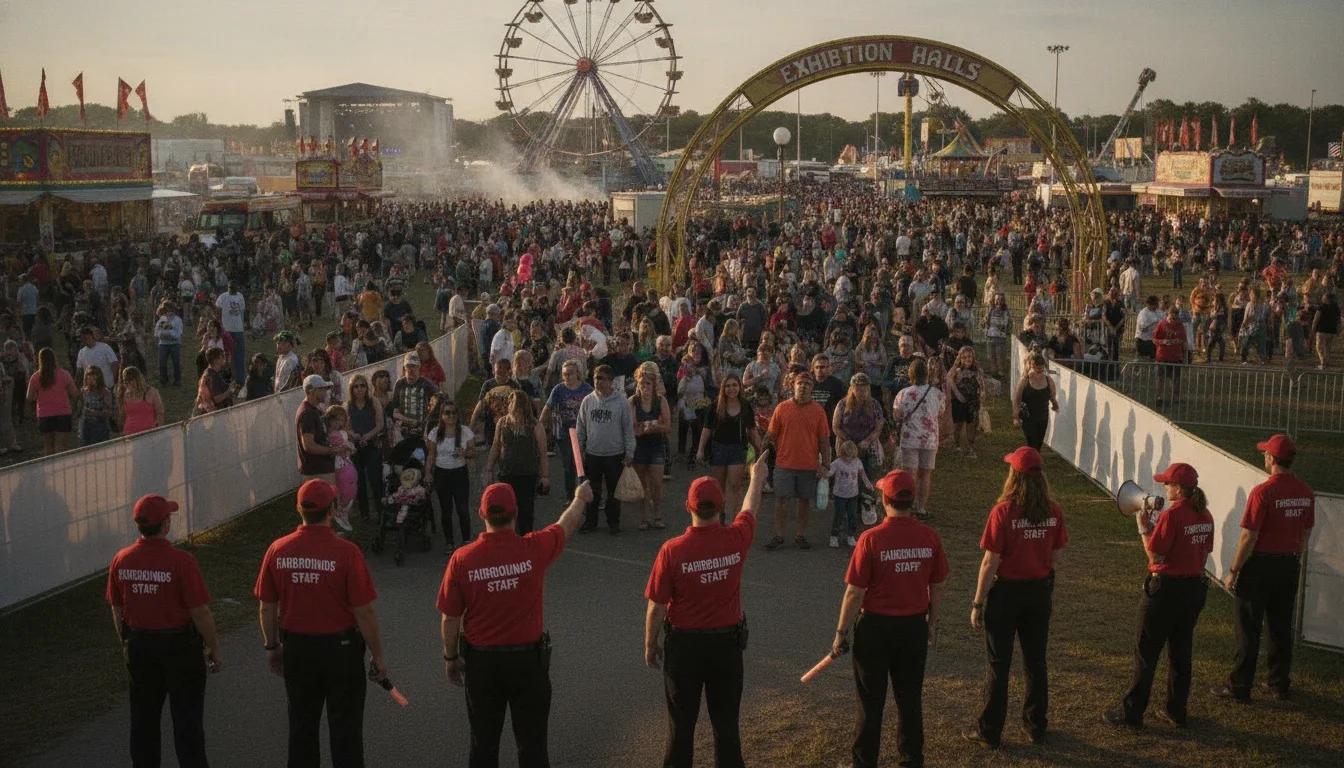
Professional event staff managing crowd flow at a large state fair
Ten days. Roughly 330,000 visitors. Eleven grandstand concerts. Dozens of competitions, exhibits, food vendors, and brand activations spread across 400 acres of fairgrounds in Sedalia, Missouri.
The Missouri State Fair is not a weekend pop‑up. It is one of the longest‑running, highest‑attendance agricultural fairs in the American Midwest — and it behaves like a living organism. Attendance rises and falls, crowd energy shifts by day and hour, and the pressure points that matter most to event organizers are rarely where generic staffing plans expect them to be.
If you are planning to staff a vendor booth, brand activation, food operation, or guest‑services function at the Sedalia fair, one of the most important things you can do is understand the crowd curve first — and build your staff schedules around it, not the other way around.
This guide breaks down what a 10‑day fair crowd cycle actually looks like, maps specific staffing roles to the moments where each is most critical, and provides a practical framework for matching team schedules to shifting attendance peaks across the full run of the event.
Why the Missouri State Fair Demands a Different Staffing Approach
Scale and Duration Change Everything
Most event staffing conversations are built around single‑day or two‑day events — a trade show, a concert, a festival weekend. You hire for peak capacity, plan for entry and exit surges, and you are done.
A multi‑day fair running 10 to 11 consecutive days in Sedalia is a fundamentally different challenge. The Missouri State Fair has welcomed nearly 350,000 visitors in a single edition and draws over 330,000 in a typical year. That volume does not arrive uniformly. It concentrates, disperses, and reconcentrates based on the day of the week, the weather, the concert lineup, and the programming schedule.
For event organizers and brand activators, this means a staffing model built for Day 1 will be wrong for Day 4, and a model built for Day 4 will fail on concert nights. The only reliable approach is to plan by phase — understanding when crowds peak, when they thin, and what your operation needs at each point.
The Crowd Doesn’t Behave the Same Way Every Day
Anyone who has managed an activation at a state fair will tell you the same thing: weekday crowds are quieter, more deliberate, and more open to engagement. Weekend crowds are dense, faster‑moving, and often more distracted. Concert nights bring an entirely different audience energy — one that taxes gate operations, food lines, and crowd management simultaneously.
Each of these crowd types requires a different staffing posture. The teams that succeed at a 10‑day fair are the ones that build schedules flexible enough to meet each phase on its own terms.
Understanding the 10‑Day Crowd Curve
State fair attendance is not random — it follows a predictable arc shaped by opening excitement, mid‑week slowdown, weekend return, and closing‑day momentum. Here is how that curve typically breaks across a 10 to 11‑day run in Sedalia.
Phase 1 — Opening Weekend (Days 1–2): Maximum Surge
The first weekend of the Missouri State Fair is consistently the highest‑traffic period of the entire run. Attendees who have waited since the previous year, families planning their annual visit, and media and sponsor representatives all arrive in a concentrated window.
Gate operations, registration points, and entry management face their heaviest load in this phase. Brand activations see peak foot traffic, and food and beverage operations hit capacity within the first hours of opening.
Staffing priority areas: check‑in and registration staff, crowd control, entry greeters, food service staff, and brand activation personnel. This is the moment to staff at or above capacity — not at your average‑day estimate.
Phase 2 — Early Weekdays (Days 3–4): Managed Lull
The Monday and Tuesday after opening weekend mark the fair’s quietest attendance window. School is back in session, the initial excitement has peaked, and casual visitors wait for the next weekend.
This does not mean the fair is empty — far from it. Agricultural competitions, livestock shows, and scheduled programming draw dedicated attendees throughout the week. But the crowd character changes: visitors are more patient, more engaged, and often spend more time at individual exhibits and activations.
Staffing priority areas: Reduce gate‑facing headcount to a leaner operation. Shift resources toward product demonstrators and brand ambassadors who can take advantage of longer dwell times and more receptive audiences. This is your most cost‑effective phase for deep engagement work.
Phase 3 — Mid‑Fair Weekend (Days 5–6): Second Surge
The second weekend of a multi‑day state fair reliably produces the second‑highest attendance figures of the run. Out‑of‑town visitors who could not attend the first weekend arrive, and local audiences return for programming they missed.
Operationally, this phase often catches teams off guard. Staff who reduced their headcount for the weekday lull are not yet back at full strength, but crowds can approach or equal opening‑weekend density at peak hours.
Build this surge back into your schedule explicitly. Do not assume the second weekend will be lighter because the first weekend was “the main event.”
Phase 4 — Concert Nights (Variable): Controlled Spike
The Missouri State Fair’s Grandstand has hosted major national acts for over a century. Concert nights — which occur throughout the fair’s run, not only on weekends — produce sharp, predictable crowd spikes that are distinct from general daily attendance.
In the hours before a concert, foot traffic throughout the fairgrounds accelerates significantly as fans arrive early to explore before showtime. During and immediately after the performance, gate and entry operations surge, food lines extend, and crowd movement patterns shift entirely.
A practical rule of thumb: concert nights require supplemental deployment on top of your standard daily schedule. The teams managing your activation or vendor space at 2 p.m. are not the same teams equipped to handle the 7 p.m. pre‑show surge. Plan for a second shift wave or explicit overlap coverage on every concert date.
Phase 5 — Final Stretch (Days 8–9): Building Again
The last two days before closing produce a distinct crowd behavior. Visitors who have been waiting for the final weekend begin arriving, often with a sense of urgency — this is the last chance to see exhibits, ride attractions, and complete fair experiences.
Attendance climbs steadily through this phase, and your staffing should reflect it. Operations that ran lean through the mid‑week window need to rebuild to full strength for the final push.
Phase 6 — Closing Day (Days 10–11): Last Rush
Closing day at a long‑running state fair is consistently one of its highest‑attendance dates. The combination of last‑chance urgency, weekend timing, and often a headline concert produces crowds that rival or exceed opening weekend.
Staff fatigue is a real operational risk at this stage. Teams that have been working through the full run are physically and mentally worn down, and the days they most need to perform at capacity are also the days they are most taxed.
Experienced multi‑day event staffing agencies plan for this explicitly — rotating staff through the schedule so that the people working closing day are not the same people who worked every peak day before it.
Matching Staff Roles to the Right Moments
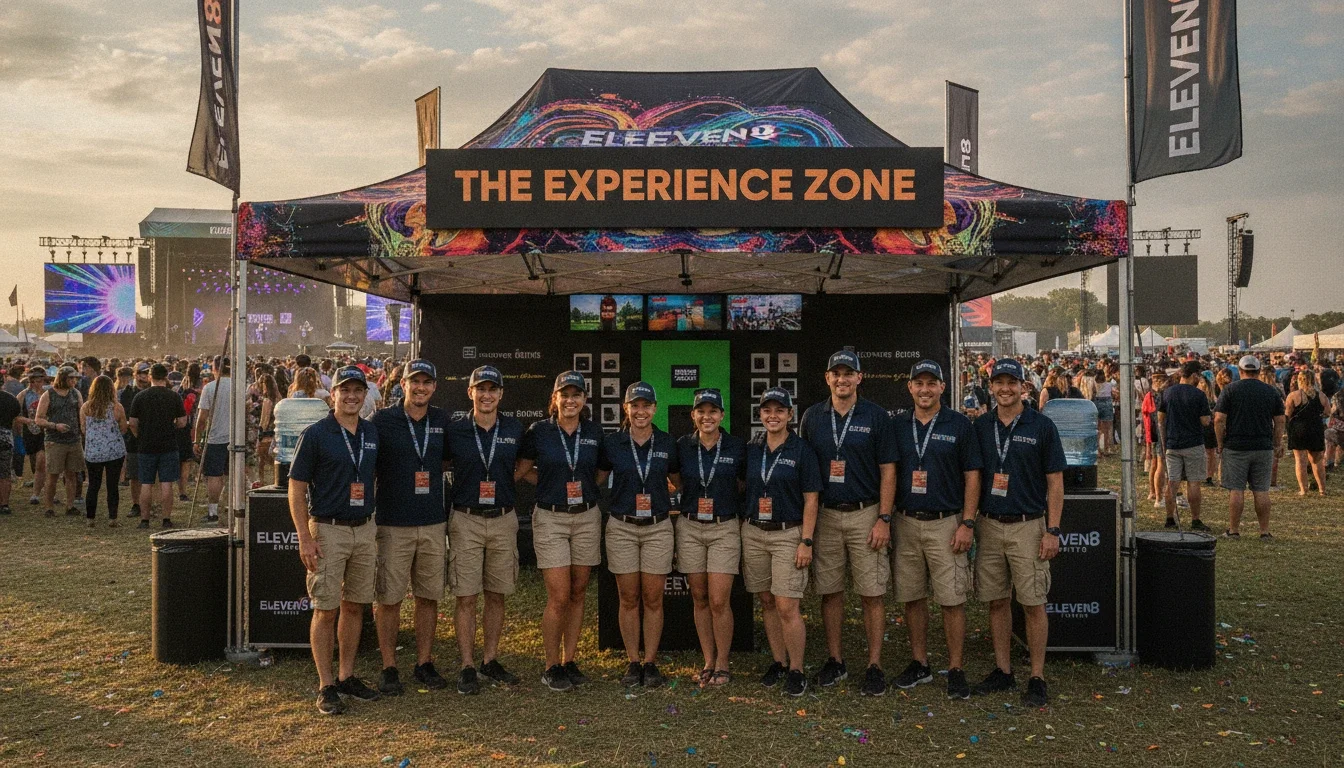
Eleven8 event staff members in uniform at a multi‑day festival activation
Crowd phases matter — but only if you match the right roles to the right moments. Here is how key staff functions align with the 10‑day fair curve.
Registration and Check‑In Staff
Entry and registration staff are your highest‑priority asset on opening weekend and closing day. Every attendee who enters the fair passes through a gate. When lines back up at entry points, every downstream experience suffers — brand activations get less traffic, food vendors lose business, and guests form negative first impressions before they have seen anything.
Schedule your heaviest registration staffing on Days 1 and 2, the second weekend, all concert nights, and the final day. Mid‑week entry operations can typically run leaner without service degradation.
Crowd Control and Ushers
Crowd control and usher staff follow the same surge pattern as entry — but with an important difference. Concert nights create the most acute crowd management challenges, not opening day.
The Grandstand fills for headline acts, and the movement of thousands of attendees into, within, and out of the venue requires coordinated deployment at every access point. If you are operating anywhere near the Grandstand on concert nights, plan for a surge layer of crowd management staff above your baseline.
Brand Ambassadors and Activation Staff
Brand ambassadors perform differently across phases. High‑traffic days produce volume — more contacts, more samples distributed, more brand impressions. Mid‑week produce quality — deeper conversations, more receptive audiences, and better recall.
The most effective activation teams at multi‑day fairs adjust their approach, not just their headcount. On high‑traffic days, brand ambassadors work the crowd actively and efficiently. On quieter days, they slow down, engage more deeply, and focus on quality interactions.
Match your ambassador count to the traffic phase, and brief your team on the different engagement styles each phase calls for.
Catering and Food Service Staff
Food and beverage operations at a state fair mirror the attendance curve almost exactly, but with sharper spikes around mealtimes. Your catering and food service staff should be scheduled to accommodate both the daily phase (more staff on peak days) and the intraday pattern (lunch and dinner surges every day, regardless of overall attendance level).
On concert nights, food service demand extends well beyond normal dinner hours as concert‑goers arrive early and stay late. Build this extended coverage into your shift plan before the first concert, not after the first queue complaint.
Production Assistants
Production assistants support the operational backbone of your activation or vendor setup — logistics, restocking, communication coordination, and on‑the‑ground problem solving. Their value is highest at transition points: setup before the fair opens, teardown and reset between phases, and contingency coverage when unexpected situations arise.
At a 10‑day event, production assistants also serve as your institutional memory on the ground. Staff who are present for the full run understand the layout, the vendor relationships, and the operational rhythms in ways that day‑staff cannot replicate. Wherever possible, maintain continuity in this role across the full fair.
Surge Staffing: How to Handle Concert Nights Without Overscheduling the Whole Fair
The Grandstand Effect
The Missouri State Fair Grandstand has hosted decades of nationally recognized performers, and concert nights reliably produce the sharpest, most concentrated crowd spikes in the fair’s schedule. In years where a single Grandstand show drew over 50,000 attendees in a single day, the operational difference from a standard mid‑week Tuesday was extreme.
The key challenge is that these spikes are predictable in timing but variable in magnitude — a sold‑out headliner produces a very different crowd profile than a mid‑tier act on a Tuesday night. Review the concert schedule before finalizing your staffing plan, and build concert‑night coverage in tiers based on expected draw.
Layered Deployment vs. Flat Staffing
The most common mistake in multi‑day fair staffing is applying a flat headcount across all days. An agency or organizer books the same number of staff for every day of the run, overstaffs the quiet weekdays, and understaffs the concert nights and peak weekends.
Layered deployment solves this. Your baseline crew handles standard daily operations. A surge layer — additional staff with specific assignments for peak periods — deploys on opening weekend, all concert nights, and closing weekend. This approach controls labor costs without creating the gaps that flat staffing produces at the moments that matter most.
The Backup Coverage Problem at Multi‑Day Events
Why No‑Shows Hurt More Over 10 Days
At a single‑day event, one no‑show is a problem you manage in the moment. At a 10‑day fair, no‑shows compound. A staff member who calls off on Day 3 may have been scheduled across four of the remaining days. Without a pre‑planned replacement pipeline, you are scrambling to fill gaps across the remainder of the run.
Reactive replacement — recruiting a replacement after a no‑show occurs — does not work reliably at a multi‑day event. The recruiter has to find someone who is qualified, available, already briefed on your operation, and able to reach a fairground in Sedalia on short notice. The probability of success drops sharply with each of those requirements.
Building Redundancy into a Long‑Run Schedule
Experienced multi‑day event staffing agencies build backup coverage into the plan before the event starts, not after the first no‑show occurs. This means having briefed alternates for every team lead and every critical‑path role, and maintaining a real‑time communication channel that allows rapid deployment when coverage gaps appear.
At Eleven8 Event Staff, every booking includes one briefed backup for every eight staff at no additional charge. Backups are not recruited when needed — they are already on standby before the event begins. At a 10‑day fair where 101.8% fill rate is the operational standard, redundancy is built into the system from the start, not bolted on as an afterthought.
Practical Scheduling Principles for a 10‑Day Fair
Plan Shifts Around Phase Logic, Not Headcounts
The most effective scheduling approach for a multi‑day fair starts with the crowd curve, not the budget. Define the phases (opening surge, weekday quiet, second weekend, concert nights, closing rush), assign staffing tiers to each phase, and then calculate headcounts. This sequence produces a schedule aligned with operational reality.
Starting from a headcount and distributing it evenly across days produces a schedule aligned only with accounting convenience.
Use Zone‑Based Assignments
A fairground with multiple zones, multiple access points, and multiple concurrent programming tracks cannot be managed with a single undifferentiated staff pool. Zone‑based assignments give each team member a defined operational area, a supervisor, and a clear set of responsibilities.
This structure also enables intelligent redeployment. When a zone is running light because an exhibit has lower‑than‑expected traffic, zone supervisors can shift resources to a busier area without pulling anyone from a critical‑path function.
Rotate for Fatigue — Not Just Breaks
A standard shift break schedule manages physical rest within a single day. Fatigue management across 10 days requires something more: deliberately rotating which staff are deployed on peak days so that no individual is carrying peak‑day workload continuously throughout the run.
Your hardest‑working staff should have mid‑week recovery days built into their schedule, particularly if they are carrying supervisory or high‑engagement roles on opening weekend, concert nights, and closing weekend. This is not scheduling Slack — it is operational insurance that your most valuable team members are performing well when crowds demand it most.
Why Staffing Consistency Matters More Than Staffing Volume
One underappreciated truth about multi‑day event staffing is that consistency of personnel often matters more than headcount. Staff who are present on Day 1 and Day 10 know the layout, the vendor relationships, the crowd patterns, and the operational quirks of the venue in ways that freshly deployed day‑staff cannot replicate.
Guest experience is also cumulative at a fair that many attendees visit multiple times across the run. Returning visitors notice familiar faces at activation booths and registration points. Brand ambassadors who recognize repeat visitors can build on previous conversations. These interactions are only possible when the same personnel are consistently present.
When you are evaluating staffing options for a long‑run fair, look for agencies that can commit the same core team across the full run — not just send whoever is available each day.
How Eleven8 Approaches Multi‑Day Fair Staffing
With over 35 years of event staffing experience and more than 34,500 events staffed nationwide, Eleven8 Event Staff has managed activations at events of every scale and duration — from single‑day brand activations to multi‑week fair deployments. The operational principles that work at the Missouri State Fair are the same ones we apply across every long‑run event in our roster.
What makes a multi‑day engagement different is not just the duration — it is the expectation of sustained performance across shifting conditions. Our staffing model is built for exactly that:
A pre‑built roster of vetted, trained staff ready to deploy before you call — not recruited after you book
One briefed backup for every eight staff at no additional charge, built into every engagement
A dedicated account manager who oversees the full run from the first day to closing, maintaining continuity across every phase
A 24/7 live operations support channel that resolves issues in real time — not after the fact
Post‑shift feedback loops that track staff performance and adjust deployment based on results
Whether your Sedalia activation needs brand ambassadors, registration staff, crowd control teams, or catering and food service staff across the full 10 days of the fair, Eleven8 can build a schedule that matches the crowd curve — not just the calendar.
Ready to Staff Your Sedalia Activation?
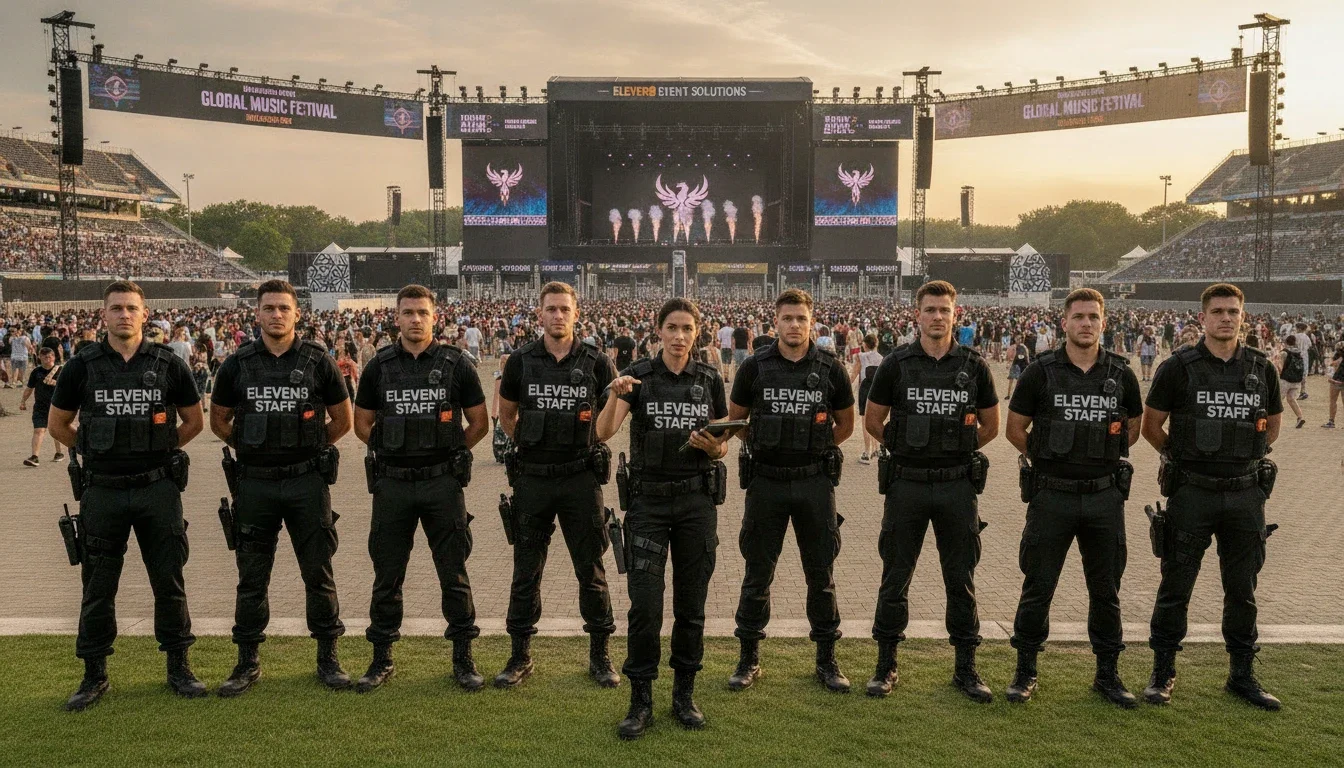
Eleven8 Event Staff team ready for deployment at large‑scale event
The Missouri State Fair draws hundreds of thousands of visitors across 10 days of shifting crowds, concert nights, and programmatic peaks. Staffing it well is not about hiring the most people — it is about putting the right people in the right places at the right moments.
If you are planning a brand activation, food operation, vendor presence, or guest‑services function at the Sedalia fair, Eleven8 Event Staff can help you build a staffing plan that accounts for every phase of the crowd curve. Request a quote today at elev8.la/book-now and get a proposal built around your specific activation — not a one‑size‑fits‑all headcount.