When national brands invest hundreds of thousands of dollars into sports marketing, they need more than a one-time event—they need a reliable platform that delivers consistent results across multiple markets. The Rock 'n' Roll Marathon Series has emerged as precisely that: a proven, repeatable brand activation opportunity that combines massive reach with operational excellence.
Since its establishment in 1998, the series has transformed the running event landscape by infusing athletic competition with music, entertainment, and community celebration. But beyond creating memorable experiences for participants, it's built something equally valuable for brand marketers: a standardized, multi-city platform where activations can scale nationally while maintaining local authenticity.
For brands ranging from Fortune 500 financial services companies to consumer packaged goods manufacturers, the series offers what few sporting events can provide: the ability to execute similar activations in eight major markets with predictable audiences, consistent infrastructure, and proven engagement metrics. This article explores why the Rock 'n' Roll Marathon Series continues to attract major brand partnerships and what makes it a particularly effective platform for national activation strategies.
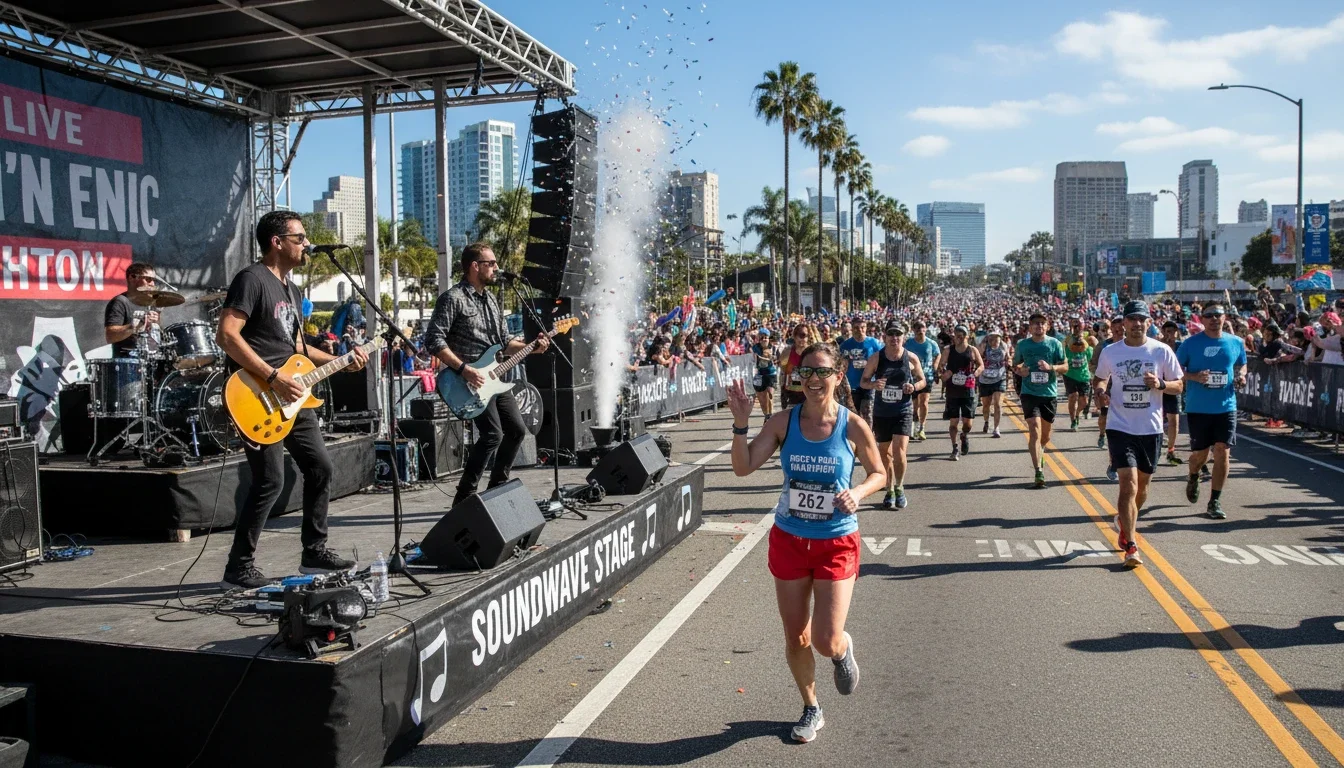
Rock 'n' Roll Marathon Series events combine athletic competition with live entertainment across multiple cities nationwide
Understanding the Rock 'n' Roll Marathon Series Platform
Before examining why brands choose this platform, it's essential to understand what makes the Rock 'n' Roll Marathon Series fundamentally different from other running events.
What Makes the Series Unique in the Running Event Landscape
The Rock 'n' Roll Running Series distinguishes itself through a simple but powerful concept: making running fun by integrating live music, entertainment, and community celebration into the traditional marathon format. Unlike conventional races focused solely on athletic performance, these events create a festival atmosphere that attracts both serious competitors and recreational runners.
This entertainment-forward approach manifests throughout the race experience. Live bands perform at intervals along the course, cheerleading squads energize participants, and themed water stations add personality to what could otherwise be routine hydration stops. The experience culminates in a finish line concert featuring nationally recognized musical acts, transforming the post-race celebration into a significant entertainment event in its own right.
For brands, this unique positioning creates activation opportunities that extend beyond traditional sports marketing. The festival atmosphere attracts participants and spectators who might not engage with a conventional marathon, expanding the potential audience for brand interactions. The integration of music and entertainment also provides natural co-branding opportunities that feel authentic rather than forced.
Scale and Reach: Event Footprint Across North America
The series currently encompasses eight events spanning three countries, creating a platform that genuinely delivers national reach. Events take place in major markets including Phoenix/Scottsdale (Arizona), Washington D.C., Las Vegas, Nashville, San Diego, San Jose, Madrid (Spain), and Manila (Philippines), with each event drawing thousands of participants and tens of thousands of spectators.
This geographic distribution is strategically valuable for national brand campaigns. The cities represent diverse markets with different demographics, allowing brands to test messaging variations or maintain consistent presence across regions. Unlike sponsoring a single marathon in one city, partnering with the series provides legitimate nationwide visibility.
The series is owned and operated by the IRONMAN Group's Competitor Group, part of Advance Publications. This corporate backing provides infrastructure stability and professional event management that independent marathons often cannot match. For brand partners, this ownership structure means working with an organization that has both resources and experience executing complex events across multiple markets simultaneously.
The Evolution from Marathon-Only to Multi-Distance Inclusivity
In 2021, the series underwent a significant rebrand from "Rock 'n' Roll Marathon Series" to "Rock 'n' Roll Running Series"—a change that reflected its evolution beyond marathon-only events. This shift acknowledged that the half marathon had become the most popular distance, and that the series now welcomes participants of all abilities across 5K, 10K, half marathon, and full marathon distances.
This inclusivity dramatically expanded the potential audience for brand activations. Rather than targeting only the small percentage of runners capable of completing 26.2 miles, brands can now engage with first-time 5K participants, recreational half marathoners, and marathon veterans within the same event weekend. The "Remix Challenge" further encourages participation by offering special medals to runners who complete multiple distances over the weekend.
For brands, this multi-distance approach means reaching a more diverse demographic profile. The parent training for their first 5K, the corporate team bonding over a half marathon, and the experienced runner chasing a personal record all participate in the same event ecosystem—creating touchpoints with consumers across different life stages and fitness levels.
The Strategic Advantages of Multi-City Marathon Sponsorships
Marathon sponsorships offer unique benefits compared to other sports marketing channels, but multi-city series like Rock 'n' Roll amplify these advantages through consistency and scale.
Nationwide Reach with Local Market Authenticity
One of the primary challenges in national brand marketing is balancing broad reach with local relevance. National advertising campaigns can feel disconnected from local communities, while grassroots marketing efforts struggle to scale efficiently. The Rock 'n' Roll Marathon Series bridges this gap by providing a platform that is simultaneously national in scope and deeply integrated into local running communities.
Each event, while following the series' standard format, incorporates local elements that create authentic connections to the host city. Course routes showcase distinctive landmarks and neighborhoods. Local bands perform alongside national acts. Community organizations participate in expo spaces and volunteer programs. This local integration means brands activating at these events aren't perceived as external advertisers but rather as participants in a community celebration.
For brands executing activations across multiple series events, this structure enables a powerful combination: consistent brand messaging and activation design across all markets (creating efficiency in planning and execution) paired with the credibility of local presence. A financial services company, for example, can deploy the same booth design, staff training, and promotional materials in Phoenix, Nashville, and San Diego while benefiting from the local goodwill each event generates.
Consistent Brand Messaging Across Diverse Demographics
The Rock 'n' Roll Running Series attracts remarkably consistent demographic profiles across its events, despite geographic differences. Participants skew toward higher-income, educated consumers who value health and wellness—a premium demographic for many national brands.
According to industry research on marathon participants, these events typically attract audiences with above-average household incomes, higher education levels, and strong consumer spending power. These runners and their support networks invest significantly in fitness-related products and services, but also represent desirable customers across financial services, automotive, technology, travel, and consumer goods categories.
The consistency of this demographic profile across markets creates powerful advantages for brands. Messaging that resonates with runners in Las Vegas will likely perform similarly with participants in Washington D.C. This demographic consistency reduces the testing and customization required when expanding from regional to national campaigns, lowering execution costs while maintaining effectiveness.
Furthermore, the health-conscious nature of marathon participants creates a halo effect for brands that associate with these events. Consumers increasingly choose brands aligned with their values, and wellness-focused consumers view running events as authentic expressions of health-oriented lifestyles. Brands activating in this environment benefit from positive association, particularly when their activations genuinely enhance the participant experience rather than simply seeking visibility.
Scalable Investment Models for Different Budget Levels
The Rock 'n' Roll Marathon Series offers sponsorship and activation opportunities at multiple investment levels, making the platform accessible to brands with varying budgets and objectives.
At the highest tier, title sponsorships and presenting partnerships provide maximum visibility across all series events. Synchrony Financial's multi-year partnership, which included title sponsorship of the Brooklyn Half Marathon and presenting sponsorship of runner tracking across all events, exemplifies this comprehensive approach. Such partnerships integrate the brand deeply into the event experience, creating numerous touchpoints throughout participants' journey from registration through post-race celebration.
Mid-tier partnerships might focus on specific event elements across multiple races—water station sponsors, expo presenting sponsors, or distance-specific title sponsors. These focused partnerships provide strong visibility within particular activation zones while requiring less investment than series-wide title rights.
Brands can also participate at individual event levels, testing the platform in one or two markets before expanding to broader series partnerships. This flexibility allows brands to validate their activation strategies and measure ROI before committing to larger investments.
The ability to scale investment creates a pathway for brand partnership evolution. A consumer brand might begin with expo booth space at a single event, expand to multiple cities based on positive results, then eventually pursue series-wide sponsorship elements as the partnership matures. This scalability reduces risk for brands new to marathon marketing while providing growth opportunities as partnerships prove successful.
Audience Demographics: Reaching High-Value Consumers Through Running Events
Understanding who attends Rock 'n' Roll Marathon Series events—and why—is fundamental to appreciating the platform's value for brand activation.
Who Participates in Rock 'n' Roll Marathon Series Events
The series attracts a diverse mix of participants unified by their commitment to active lifestyles. Registration numbers vary by event and distance, but successful series events typically draw 15,000 to 25,000 participants across all distances, with spectators and supporters often doubling or tripling the total event attendance.
Participants range from elite athletes competing for prize money and course records to first-time recreational runners celebrating personal fitness milestones. The half marathon remains the most popular distance, typically accounting for the largest participant segment, followed by 5K events, full marathons, and 10K races.
The demographic composition skews slightly female (approximately 55-60% of participants), with age distribution centered in the 25-45 range but including significant participation from both younger and older runners. Many participants travel from outside the host city, particularly for destination events like Las Vegas and San Diego, creating tourism impact alongside local participation.
Corporate teams, running clubs, and charity fundraising teams represent substantial participant segments. The series' "Groupies Program" facilitates group participation with specialized support for teams of 25 or more participants. These groups create concentrated brand exposure opportunities, as team members often coordinate training, travel, and event-day activities together.
The Economic Profile of Marathon Participants
Marathon participants represent an economically attractive audience for brand marketers. Industry research consistently shows that marathon runners have higher-than-average household incomes, with many events reporting median household incomes significantly above national averages.
This economic profile reflects several factors. Marathon training requires significant time investment—typically 16-20 weeks of structured training for a first-time marathoner—which correlates with professional flexibility and job stability. The financial costs of participation (registration fees, travel, accommodation, gear, and training expenses) represent meaningful investments that higher-income consumers can more readily afford.
Beyond household income, marathon participants demonstrate consumption patterns valuable to brands across categories. They invest in fitness equipment and apparel, pursue health and wellness services, travel frequently, adopt fitness technology early, and demonstrate brand loyalty when products support their training and performance goals.
For financial services brands, health and wellness companies, athletic apparel manufacturers, nutrition brands, and technology companies, this audience represents core target demographics. Even brands outside these categories benefit from the positive brand associations that marathon participation creates—celebrating achievement, embracing healthy lifestyles, and investing in personal goals.
Beyond Runners: Engaging Spectators and Supporters
While participants receive primary focus in event marketing, spectators and supporters represent equally valuable activation opportunities. Each runner typically brings 2-4 supporters (family members, friends, training partners) who attend expo events and populate the course on race day.
These supporters spend hours along the race route, creating extended dwell time at branded activation points. Unlike runners who pass through quickly, spectators linger at strategic locations—the start line, mid-course landmarks, and especially the finish line—creating opportunities for deeper brand engagement.
Spectator demographics often differ from participant profiles in valuable ways. They may include different age ranges (parents of young adult runners, children of older participants), varied fitness levels, and diverse interests beyond running. For brands seeking to reach beyond core fitness enthusiasts, spectator activations provide access to broader audiences still connected to the event's positive associations.
The finish line festival, in particular, creates a concentration of spectators and finished runners in a celebratory atmosphere highly receptive to brand interactions. With live music, food and beverage options, and space to relax and celebrate, these post-race festivals generate extended engagement opportunities that differ substantially from brief on-course touchpoints.
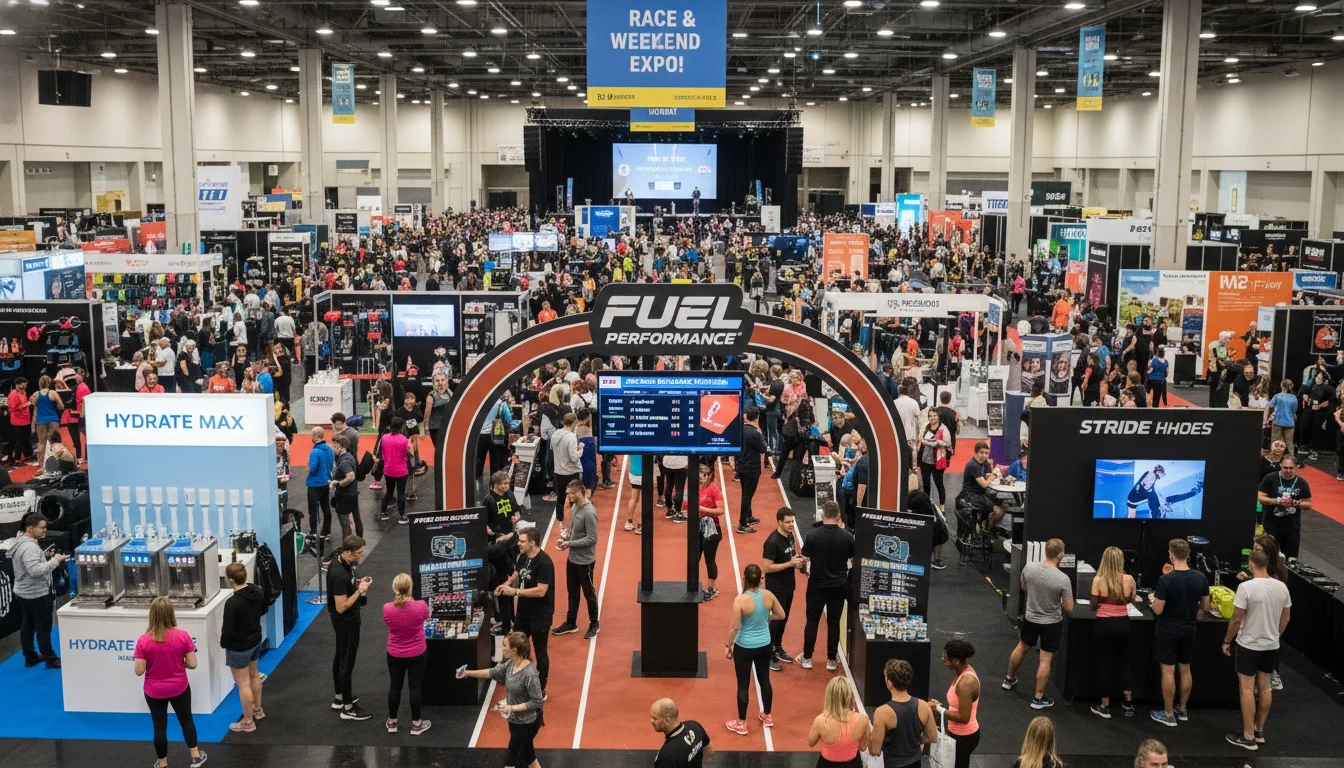
Health & Fitness Expos provide high-traffic brand activation zones before race weekend
Key Brand Activation Opportunities Within the Series
The Rock 'n' Roll Marathon Series provides multiple distinct activation zones, each offering different engagement characteristics and audience profiles.
Health & Fitness Expo Integration
All Rock 'n' Roll Marathon Series events feature health and fitness expos held in the days before race weekend. These expos serve a critical function—mandatory packet pickup for all registered participants—ensuring high traffic and attendance. Additionally, expos are free and open to the public, attracting spectators, aspiring runners, and fitness enthusiasts who may not be participating in the current event.
For brands, expos provide controlled environment activations with extended consumer interaction time. Unlike brief on-course encounters, expo attendees often spend 30-60 minutes browsing vendor booths, watching demonstrations, and engaging with brand representatives. This extended interaction enables meaningful conversations, product trials, data collection, and relationship building that brief activations cannot achieve.
Expo booth spaces vary in size and prominence, with premium locations near packet pickup areas commanding higher investment but guaranteating maximum foot traffic. Brands can create elaborate booth experiences with product demonstrations, sampling programs, interactive games, and technology integrations that would be impractical in outdoor course settings.
The expo environment also facilitates strategic partnerships and cross-promotions. Running apparel companies demonstrate products alongside nutrition brands offering pre-race fueling samples. Fitness technology companies showcase wearables while coaching services provide training advice. This clustering of complementary brands creates a destination shopping and discovery experience that benefits all participants.
Professional event staffing is critical to expo success. Quality brand ambassadors who understand both the brand's value proposition and the running community's interests create authentic connections that drive post-event engagement. Unlike generic promotional staff, ambassadors knowledgeable about running can have substantive conversations with participants about how products support their training goals, creating credibility and trust that generic sales pitches cannot achieve.
On-Course Activations and Water Station Branding
The race course itself offers dynamic activation opportunities through branded water stations, entertainment zones, and spectator areas. These on-course touchpoints reach participants during their athletic effort, creating memorable associations between brands and personal achievement.
Water stations represent particularly valuable activation zones. Participants must stop or slow down for hydration, creating natural engagement moments. Branded water stations can include signage, decorated cups, staff uniforms, music, and spectator engagement elements that make these functional stops memorable. Some brands create themed stations with costumes, music genres, or interactive elements that participants anticipate and share on social media.
The series allows groups to "adopt" water stations, creating opportunities for corporate teams, community organizations, and sponsors to bring personality to these touchpoints. Approval from race organizers is required for station theming, ensuring quality control while enabling creativity.
Beyond water stations, brands can sponsor entertainment zones featuring live bands, cheerleading squads, or interactive displays. These zones create course energy and provide shareable moments that extend beyond the race experience through participant photos and social media posts.
On-course activations require different operational considerations than expo activations. Setup must occur early morning on race day, staffing must accommodate extended duration as participants pass over several hours, and logistics must account for outdoor conditions and limited infrastructure. Professional event staff experienced in outdoor activations and comfortable with early deployment are essential to successful on-course programs.
Finish Line Festival and Concert Experiences
The finish line area represents the pinnacle of brand activation opportunities within Rock 'n' Roll Marathon Series events. This is where athletic achievement intersects with celebration, creating an emotionally charged environment highly conducive to positive brand associations.
Finish line festivals typically include live music performances, food and beverage vendors, massage and recovery services, medal presentation areas, and branded sponsor zones. Participants who have just completed their race are in celebratory moods, joined by supporters and spectators creating festival atmospheres that last several hours.
For brands, finish line activations benefit from extended dwell time, concentrated attendance, and high engagement readiness. Unlike expos where participants are focused on packet pickup logistics, finish line attendees are there to celebrate and relax, making them more receptive to brand interactions.
The Toyota Headliner Concert series, featuring nationally recognized musical acts, creates additional activation opportunities. Brands can integrate with concert elements, sponsor VIP viewing areas, or create concert-themed activation experiences that complement the entertainment programming.
Social media amplification is particularly strong in finish line zones. Participants share completion photos, medal selfies, and celebration moments, often including branded elements visible in backgrounds or activation experiences. Hashtag campaigns, photo opportunities with branded backdrops, and shareable experiences can dramatically extend reach beyond attendees physically present.
Professional event staff in finish line zones must balance celebration facilitation with brand messaging. The best activations enhance the celebratory atmosphere rather than interrupting it. Staff who genuinely congratulate participants, facilitate photo opportunities, and provide services (recovery drinks, cooling towels, etc.) that support the post-race experience create positive associations more effectively than purely promotional approaches.
Digital and Social Media Amplification
Modern marathon activations extend far beyond physical presence through digital and social media integration. The Rock 'n' Roll Marathon Series has evolved its digital ecosystem to provide sponsors with amplification opportunities that multiply physical activation reach.
Runner Tracking and Technology Integration
Live runner tracking has become a standard expectation for marathon events, and the Rock 'n' Roll Series provides robust tracking capabilities. Synchrony Financial's presenting sponsorship of runner tracking across all series events demonstrates how technology integrations create continuous brand touchpoints.
Runner tracking allows friends and family to follow participants' progress in real-time via mobile apps and web platforms, generating repeated brand exposures throughout race day. These aren't passive impressions—supporters actively engage with tracking platforms, refreshing frequently to monitor their runner's progress, creating high-attention brand visibility.
Beyond basic tracking, technology integrations can include personalized progress notifications, predicted finish times, course segment performance analysis, and social sharing capabilities. Each of these features creates opportunities for sponsor branding and messaging integrated into high-value, personally relevant information.
For brands sponsoring tracking features, the value extends beyond race day. Tracking platforms often remain available post-race for participants to review their performance and share results, creating extended exposure windows. Email follow-ups with race results and performance analysis provide additional sponsor visibility opportunities to highly engaged audiences.
Virtual Running Club Extensions
The launch of the Humana Rock 'n' Roll Virtual Running Club in 2020 represented a significant platform expansion, creating year-round engagement beyond physical events. The virtual club has attracted over 65,000 participants from 145 nations, with 45% being new to the brand—demonstrating its effectiveness in audience expansion.
Virtual platform sponsorships create different value propositions than physical event activations. Digital engagement enables data collection, personalized communications, and ongoing relationships rather than one-time interactions. Virtual challenges, leaderboards, achievement tracking, and community features provide numerous integration points for sponsor messaging and experiences.
The virtual platform also creates testing opportunities for activation ideas before deploying them at physical events. Digital pilot programs can validate messaging, refine engagement tactics, and identify high-performing concepts with lower investment and faster iteration cycles than physical activations require.
For event staffing and execution partners, virtual extensions create new service opportunities. While virtual events don't require on-site staff, they often need customer support teams, community managers, and technical support personnel to ensure participant satisfaction. Professional staffing partners who understand both the brand's objectives and the running community's expectations can provide these services effectively.
Success Stories: How Major Brands Have Leveraged the Platform
Examining specific brand partnerships illuminates how different companies have extracted value from Rock 'n' Roll Marathon Series activations.
Financial Services: The Synchrony Financial Case Study
Synchrony Financial's multi-year partnership with the Rock 'n' Roll Marathon Series provides an instructive example of comprehensive series integration. As a national sponsor, title sponsor of the Brooklyn Half Marathon, and presenting sponsor of runner tracking, Synchrony achieved multi-layered brand presence.
This partnership aligned with Synchrony's positioning as a consumer financial institution focused on empowering customers to achieve their goals—a natural thematic fit with marathon participation and achievement. The runner tracking sponsorship particularly demonstrated strategic thinking, associating the brand with a functional service participants and supporters actively use throughout race day.
Financial services companies face particular challenges in creating authentic connections with consumers in enjoyable, non-transactional contexts. Marathons provide these opportunities—celebrating achievement, facilitating goals, and supporting communities—where financial service brands can demonstrate values alignment beyond product features.
The dedicated marketing and hospitality opportunities included in Synchrony's partnership enabled client entertainment, employee engagement, and business development activities. These corporate hospitality applications often justify significant sponsorship investments by creating valuable business relationship touchpoints in unique environments.
Media Integration: iHeartMedia's Multi-Platform Approach
The iHeartMedia partnership demonstrated how media companies can leverage marathon sponsorships to extend their own platform value. With 858 radio stations nationwide, 245 million monthly listeners, and 97 million monthly digital visitors, iHeartMedia brought substantial promotional power to the series.
In return, iHeartMedia gained association with one of the largest running event series globally, access to an engaged fitness audience, and content creation opportunities through race coverage and athlete interviews. The custom Rock 'n' Roll Marathon branded iHeartRadio station created a 24/7 streaming channel that extended the partnership beyond event weekends.
This partnership illustrates how complementary platforms create mutual value multiplication. The Rock 'n' Roll Series gained promotional reach across iHeartMedia's vast network, while iHeartMedia gained content assets and audience relationships through the partnership. For other sponsors activating within this ecosystem, the iHeartMedia integration provided additional amplification of their own activation efforts.
The integration of live musical performances, concert elements, and race day entertainment powered by iHeartRadio demonstrated authentic brand integration rather than superficial logo placement. When sponsor integration genuinely enhances participant experience—providing better entertainment, more engaging atmospheres, and added value—it generates positive brand associations that purely visibility-focused sponsorships cannot achieve.
Consumer Brands and Product Sampling Excellence
While not all brand partnerships are publicly disclosed, the Rock 'n' Roll Marathon Series has historically attracted consumer packaged goods companies, nutrition brands, beverage companies, and athletic apparel manufacturers seeking product sampling opportunities.
Marathon events create ideal sampling contexts. Participants actively seek products that support their performance and recovery. The extended nature of endurance events means participants consume multiple products throughout their experience—pre-race energy foods, mid-race hydration and fuel, post-race recovery nutrition, and celebration refreshments. Each of these consumption moments represents a sampling opportunity where product relevance is high and trial intent is strong.
Expo sampling reaches participants before their race, when they're preparing and planning. Successful brands use expo sampling not just for product trial but for education—explaining how and when to use products during the race, providing usage instructions, and answering questions from knowledgeable staff. This educational approach creates confidence that simple sampling cannot achieve.
On-course sampling at water stations reaches participants during their athletic effort, creating powerful associations between products and performance support. Post-race sampling in finish line zones benefits from participants' need for recovery and their celebratory mindset, increasing receptivity and creating positive emotional associations.
The success of sampling programs depends heavily on event staff quality. Generic promotional staff who lack knowledge about endurance athletics cannot effectively communicate product benefits in this context. Professional event staff who understand running, can speak credibly about nutrition and hydration strategies, and genuinely engage with participants create sampling experiences that drive post-event purchase intent and brand loyalty.
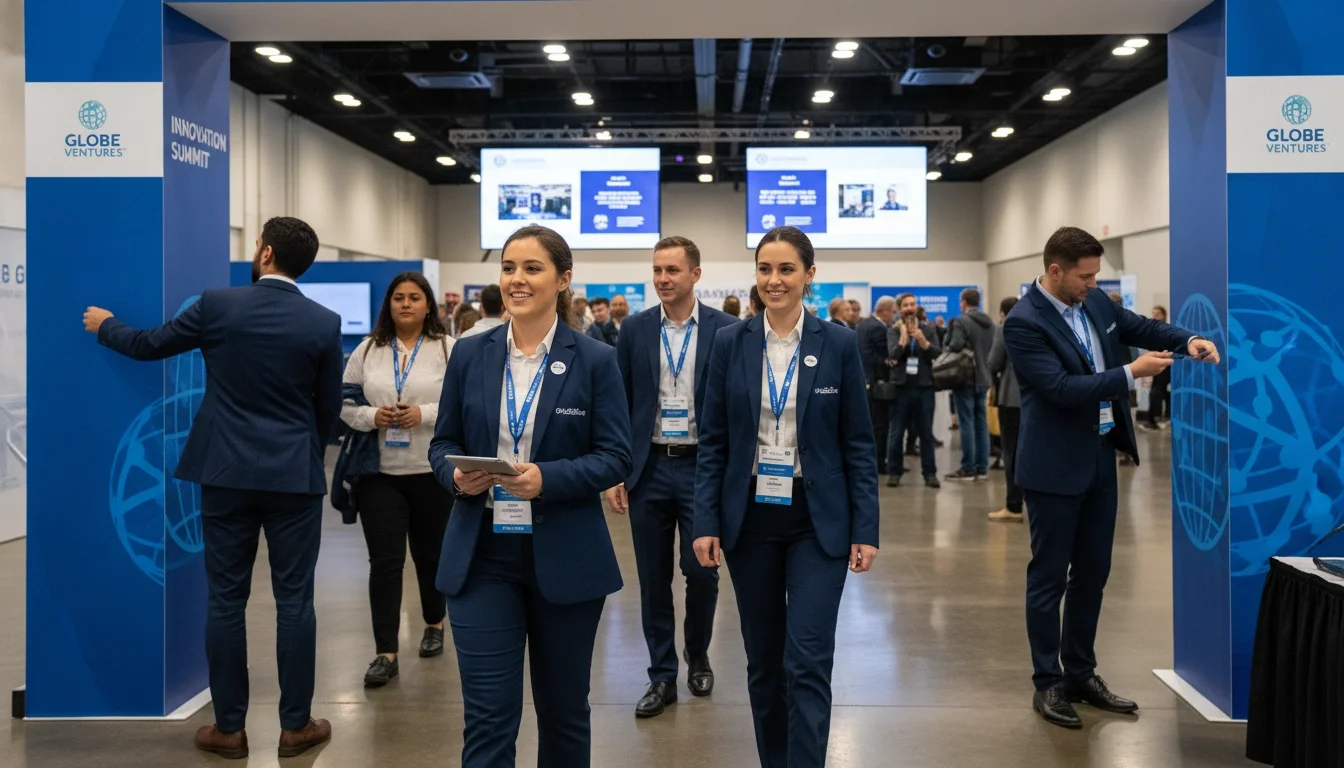
Professional event staff ensure consistent brand representation and positive participant experiences
The Infrastructure That Enables Consistency Across Markets
The Rock 'n' Roll Marathon Series' value proposition to brands rests on its ability to deliver consistent quality across multiple events. Understanding the operational infrastructure that enables this consistency helps explain why the platform reliably performs.
Standardized Event Production and Quality Control
IRONMAN Group's ownership provides centralized management systems, standardized operating procedures, and quality control mechanisms that ensure event consistency. Unlike independent marathons where each event organization develops its own approaches, the Rock 'n' Roll Series benefits from institutional knowledge and systematic processes refined over decades.
Course certification, permitting, safety protocols, timing systems, and participant communications follow standardized templates adapted to local requirements. This standardization means sponsors can rely on similar event structures, timelines, and capabilities across different markets. Activation plans developed for one event require only minor modifications for deployment at another, creating efficiency in planning and execution.
The series' event production team includes specialists in different functional areas—course design, entertainment programming, expo management, volunteer coordination, and sponsor services. These specialists work across multiple events, carrying best practices from one market to another and maintaining consistency in specialized domains.
For sponsors, this infrastructure reliability reduces risk. When investing in multi-event activations, brands need confidence that each event will deliver comparable quality, attendance, and operational excellence. The Rock 'n' Roll Series' track record and professional infrastructure provide this assurance more reliably than partnerships with independent, single-event organizers.
Professional Event Staffing Requirements
While event organization provides the foundation, front-line event staff create the actual participant and sponsor experience. Professional event staffing emerges as a critical success factor for both the series itself and for brands activating within these events.
Rock 'n' Roll Marathon Series events require hundreds of staff across multiple functional areas: registration and packet pickup personnel, expo coordinators, course marshals, water station staff, medical support teams, finish line operations crews, volunteer coordinators, and VIP hospitality teams. The quality and training of these staff directly impact event success.
For sponsors, dedicated activation teams represent a parallel staffing requirement. Brand ambassadors, product demonstrators, sampling coordinators, booth managers, and technical support staff must be recruited, vetted, trained, and deployed for each activation. The quality of these activation teams often determines whether sponsorship investments generate positive ROI.
Why Quality Event Staff Matter for Brand Success
The difference between mediocre and excellent event staff manifests in measurable outcomes. Quality staff create authentic connections with participants, communicate brand messages naturally rather than scripting promotional language, solve problems proactively rather than escalating issues, and represent brands professionally under the pressure of high-volume events.
In marathon environments specifically, staff who understand running culture create significantly better participant experiences. They recognize training achievements, appreciate the physical demands participants face, and communicate with genuine respect for runners' efforts. This cultural competence cannot be taught in brief training sessions—it requires hiring staff who are themselves part of running communities or who have experience in endurance sports events.
For activation teams, product knowledge combined with event experience creates powerful capability. Staff who understand both the brand's value proposition and the specific needs of marathon participants can have substantive conversations that drive brand preference. When a participant asks whether an energy gel will upset their stomach during a race, a knowledgeable staff member who can discuss formulation differences and personal experiences provides value that generic promotional staff cannot deliver.
The logistics of marathon events add additional staffing complexity. Early deployment requirements, outdoor conditions, extended duration, and high-intensity periods during peak participant flow demand staff who are reliable, resilient, and experienced in event environments. Staff who call out at the last minute, arrive unprepared for weather conditions, or cannot maintain energy and professionalism throughout long days create operational failures that undermine activation effectiveness.
The Role of Vetted Brand Ambassadors
Brand ambassador quality particularly impacts activation success in marathon environments. Unlike brief retail activations or casual promotional events, marathon activations involve repeated interactions with discerning consumers who quickly identify inauthentic representation.
Professional staffing agencies specializing in sports and fitness events employ rigorous vetting processes to identify ambassadors who can authentically represent brands in these contexts. These processes typically include background checks, reference verification, video interviews assessing communication skills, trial assignments evaluating performance, and specialized training in both brand messaging and event execution.
The best event staffing partners maintain established rosters of vetted, trained staff rather than recruiting reactively for each assignment. This roster approach ensures availability of qualified personnel, maintains consistency across events, and enables preferred team development where brands work with familiar faces who understand their specific requirements and standards.
For brands activating across multiple Rock 'n' Roll Marathon Series events, working with professional event staffing partners who can deploy consistent teams across markets creates powerful advantages. Participants who have positive interactions with a brand's ambassadors in Phoenix might encounter the same team in Nashville or San Diego, creating continuity that reinforces brand recognition and relationship development.
Investment in quality event staff should be viewed as activation infrastructure, not cost minimization opportunity. The differential in participant engagement, data collection quality, problem resolution, and brand impression between top-tier and budget staffing approaches typically far exceeds the cost difference between them.
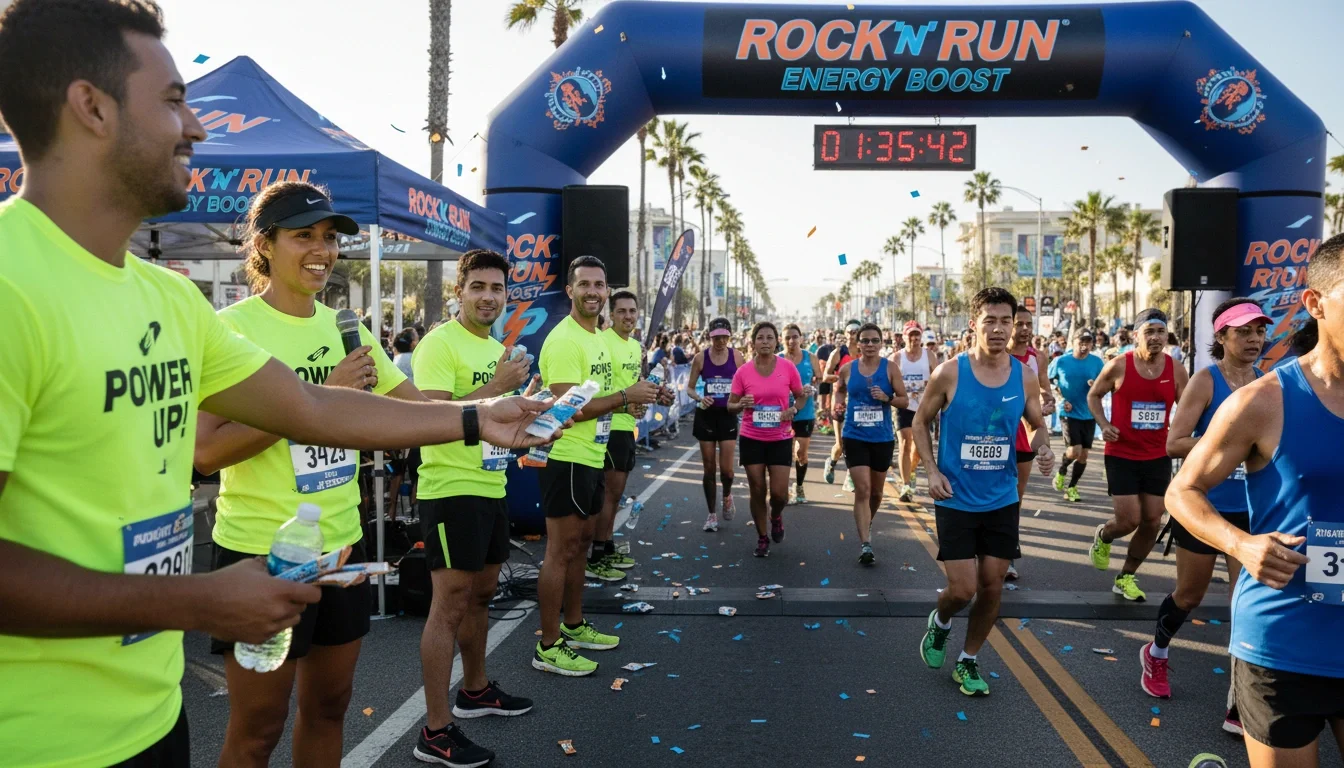
On-course brand activation with event staff distributing samples to Rock 'n' Roll Marathon runners
Logistics Coordination Across Multiple Cities
Multi-city activations require logistics capabilities that single-event sponsorships don't demand. Shipping booth displays, coordinating equipment rentals, managing product inventory across locations, and deploying staff to different markets create operational challenges that can derail activations if not managed professionally.
The Rock 'n' Roll Marathon Series occurs across different weekends throughout the year, requiring brands to coordinate timing, resource allocation, and staff deployment across the series schedule. Some brands maintain dedicated tour teams that travel from event to event, while others deploy local resources in each market. Each approach has tradeoffs between consistency and cost efficiency.
Professional activation partners experienced in multi-city deployments bring valuable expertise to these logistics challenges. They understand venue-specific requirements, local vendor relationships, shipping timelines, and staff recruitment in different markets. This expertise reduces the burden on brand marketing teams while increasing execution reliability.
For brands new to marathon marketing, the logistical complexity of multi-city activations can be daunting. Partnering with specialized event staffing and activation agencies who have Rock 'n' Roll Marathon Series experience can dramatically reduce risk and accelerate learning curves. These partners often have established relationships with series organizers, understand event-specific requirements, and can navigate the unique characteristics of each host city.
Executing Successful Brand Activations at Rock 'n' Roll Events
Understanding the platform is valuable, but successful activation requires thoughtful planning and execution. This section provides practical guidance for brands considering Rock 'n' Roll Marathon Series partnerships.
Planning Timeline for Multi-Event Sponsorships
Marathon event planning operates on long lead times, requiring sponsors to commit and prepare well in advance of event dates.
12-18 Months Before Event: Initial partnership discussions, sponsorship level selection, and contract negotiation typically occur a year or more before event dates. For multi-event commitments, this early timing is essential to secure preferred sponsorship categories and activation zones.
6-12 Months Before Event: Activation planning intensifies during this window. Brands finalize booth designs, develop activation concepts, create promotional materials, and begin staffing recruitment. For multi-event activations, this period includes developing standardized approaches that can scale across markets while accommodating local adaptations.
3-6 Months Before Event: Production and logistics ramp up. Display construction, product procurement for sampling programs, staff training program development, and technology integration all occur during this phase. Brands also finalize promotional campaigns, social media content calendars, and measurement frameworks.
1-3 Months Before Event: Final logistical details, staff deployment schedules, and on-site coordination plans are confirmed. For touring activations, this period includes coordinating shipping between events, managing inventory replenishment, and conducting team debriefs after each event to capture learnings for subsequent markets.
Event Week: Intensive execution period requiring on-site management, real-time problem solving, and participant engagement. Quality event staff and experienced activation managers are critical during this high-pressure window.
Post-Event: Data analysis, performance assessment, and learnings capture should occur promptly after each event. For multi-event series, incorporating learnings from early events into later activations creates continuous improvement and optimization.
Staffing Your Activation Team: Best Practices
Assembling the right team determines activation success as much as sponsorship investment levels or creative concepts.
Staff Selection Criteria: Prioritize candidates with genuine passion for running and fitness. Cultural fit with the running community creates authentic interactions that scripted promotional approaches cannot replicate. Look for reliable individuals with event experience, professional presentation, strong communication skills, and problem-solving capabilities.
Training Programs: Comprehensive training should cover brand messaging, product knowledge, activation logistics, participant engagement techniques, and problem escalation procedures. For marathon events specifically, training should include understanding runner needs at different race stages, appropriate interaction approaches, and recognizing medical concerns.
Staff Ratios: Calculate staff requirements based on expected participant volume, activation complexity, and operational hours. Under-staffing creates poor experiences; over-staffing wastes budget. Experienced activation managers can provide guidance on appropriate ratios for specific activation types.
Backup Planning: Always maintain backup staff availability for call-outs, illness, or unexpected volume surges. Marathon events typically occur on weekends, when finding last-minute replacement staff is particularly challenging. Professional staffing agencies maintain on-call teams specifically for this contingency management.
Team Composition: For large activations, mix experienced team leads with newer staff. Establish clear hierarchies and communication protocols. Ensure all team members understand their specific roles and can function independently while supporting the broader team.
Working with Professional Staffing Partners: For brands without internal event staffing capabilities, partnering with specialized agencies provides access to vetted talent pools, training expertise, and operational management. Quality agencies handle recruitment, training, deployment, and on-site supervision, allowing brand teams to focus on strategy and participant engagement rather than staffing logistics.
When evaluating staffing partners, prioritize those with specific sports and fitness event experience. The cultural knowledge and specialized expertise these partners bring creates substantially better outcomes than working with generalist promotional staffing agencies. Look for partners who maintain established rosters rather than recruiting per event, who have multi-city deployment capabilities, and who can provide references from similar activations.
Creating Memorable Touchpoints That Resonate with Runners
Effective activations create value for participants rather than simply seeking visibility. The most successful marathon activations enhance the event experience while building brand affinity.
Solve Real Problems: Marathon participants face practical challenges throughout their event experience. Brands that provide solutions—hydration when runners need it, recovery tools post-race, entertainment during course lulls, or logistical support at expos—create genuine value that participants appreciate and remember.
Respect the Achievement: Marathon completion represents significant personal accomplishment for most participants. Activation approaches that acknowledge and celebrate this achievement rather than treating it as promotional opportunity create positive associations. Simple congratulations, encouragement during the race, or celebration facilitation post-race demonstrate brand values alignment with participant priorities.
Enable Social Sharing: Runners extensively share their marathon experiences on social media. Activations that create shareable moments—photo opportunities, unique experiences, or memorable interactions—amplify reach beyond direct participants. Ensure branded elements appear naturally in these shareable moments without overwhelming the participant's personal narrative.
Provide Education, Not Just Promotion: Participants seek information about training, nutrition, recovery, and performance. Brands that provide genuine educational value—expert advice, product usage guidance, or performance insights—establish credibility and authority that pure promotional messaging cannot achieve.
Cultural Sensitivity: The running community values authenticity, inclusivity, and genuine passion for the sport. Activations that feel corporate, disconnected from running culture, or focused solely on sales objectives risk backlash. Ensure activation teams include individuals who genuinely understand and participate in running communities.
Measuring ROI and Engagement Metrics
Quantifying activation success requires establishing clear metrics and measurement systems before events occur.
Quantitative Metrics:
Foot traffic to activation zones
Direct participant interactions
Product samples distributed
Data captures (email addresses, survey responses, app downloads)
Social media mentions and hashtag usage
Website traffic spikes during event periods
Promotion code redemptions
Lead generation and sales attribution
Qualitative Metrics:
Participant sentiment and feedback
Brand perception shifts
Quality of staff-participant interactions
Media coverage and editorial mentions
Competitive differentiation assessment
Internal stakeholder satisfaction
Long-Term Value Metrics:
Customer lifetime value of acquired participants
Repeat engagement in subsequent events
Relationship development with key target accounts
Platform learning and capability building
Partnership relationship strengthening
For multi-event activations, consistent measurement across markets enables comparison and optimization. Standardize data collection methods, reporting formats, and analysis frameworks to identify patterns and best practices that can be replicated in subsequent events.
Comparing Rock 'n' Roll to Other Marathon Sponsorship Platforms
While many marathon sponsorship opportunities exist, the Rock 'n' Roll Marathon Series offers distinct advantages and characteristics worth comparing to alternatives.
What Sets This Series Apart from Single-City Marathons
Major single-city marathons like the New York City Marathon, Chicago Marathon, or Boston Marathon offer enormous single-event visibility but lack the multi-market scalability that series partnerships provide. These prestigious events attract massive participation and media attention, but brands must execute separate negotiations, activations, and logistics for each event.
The Rock 'n' Roll Series provides streamlined multi-market access through single partnership negotiations. Brands can deploy similar activations across eight events with consistent production support, standardized sponsorship assets, and coordinated timing. This efficiency reduces overhead and accelerates deployment compared to managing eight separate event partnerships.
Single-city marathons also vary widely in professional sophistication and sponsor services. Some are managed by established event production companies, while others are run by volunteer organizations or municipal recreation departments. This variation creates inconsistent experiences and capabilities that the Rock 'n' Roll Series' standardized professional management avoids.
However, single-city marathons sometimes offer advantages the Rock 'n' Roll Series cannot match. Events like Boston carry prestige from their history and qualification requirements that create unique brand association opportunities. Local marathons deeply embedded in specific communities may provide more authentic local connections than a national series can achieve in any single market.
For brands with broad national reach seeking efficient multi-market activation, the Rock 'n' Roll Series typically offers superior value. For brands focused on specific prestigious markets or seeking association with marathon heritage and tradition, select single-city events may be more appropriate.
Advantages Over Regional Running Series
Many regions host running series that link multiple smaller events within a geographic area. These regional series offer multi-event benefits but lack the Rock 'n' Roll Series' national scale and professional infrastructure.
Regional series often have limited professional staff, relying on volunteers or small operational teams. While this creates tight-knit community connections, it can result in inconsistent event quality, limited sponsor services, and variable execution capabilities. The Rock 'n' Roll Series' professional event production and dedicated sponsor services teams provide more reliable support for complex activations.
National reach represents another key differentiator. Regional series by definition limit geographic exposure. Brands seeking nationwide campaigns must piece together multiple regional partnerships, each requiring separate negotiations, customized activations, and independent management. The Rock 'n' Roll Series provides true national coverage through a single partnership framework.
However, regional series sometimes offer advantages in local market depth. Their focused geographic footprint enables deeper community relationships, more concentrated marketing impact, and stronger local brand building than spread-out national series. For brands with strong regional presence seeking to dominate specific markets, regional series partnerships might complement or substitute for national platforms.
Integration with IRONMAN Group Resources
The Rock 'n' Roll Marathon Series' ownership by the IRONMAN Group creates unique advantages through resource sharing and cross-platform opportunities. IRONMAN is the global leader in triathlon events, owning the iconic IRONMAN World Championship and operating triathlon events worldwide.
Brands can potentially negotiate cross-platform partnerships spanning both Rock 'n' Roll running events and IRONMAN triathlon events, creating access to endurance sports audiences across multiple disciplines. These audiences often overlap—many triathletes also run marathons, and vice versa—but each platform also reaches distinct participant segments.
The IRONMAN Group's scale provides infrastructure advantages including sophisticated registration systems, event technology platforms, global marketing reach, and professional sponsor services teams. These capabilities enable activation sophistication and support that smaller event organizers cannot match.
For brands in the endurance sports, fitness, or wellness categories, IRONMAN Group's integrated platform provides comprehensive access to active lifestyle consumers across running, triathlon, and related events. This creates efficiency in partnership management and amplification of brand presence across complementary audiences.
Planning Your Brand Activation Strategy
Successfully leveraging the Rock 'n' Roll Marathon Series requires thoughtful strategic planning aligned with broader brand objectives.
Determining If This Platform Fits Your Brand Objectives
Not every brand benefits equally from marathon sponsorships. Assess platform fit by examining several key factors.
Target Audience Alignment: If your core customers or prospects include health-conscious, active individuals with above-average incomes and education levels, marathon participants represent a concentrated target audience. Categories with strong natural fit include financial services, athletic apparel and equipment, nutrition and wellness, automotive (particularly active lifestyle vehicles), travel and hospitality, technology (especially fitness wearables and apps), and consumer packaged goods emphasizing health positioning.
Geographic Market Priorities: Evaluate whether Rock 'n' Roll event locations align with your priority markets. If your business concentrations or growth objectives focus on cities where series events occur, the platform provides efficient access. If your priorities lie elsewhere, alternative platforms might better serve geographic objectives.
Marketing Objectives: Marathon sponsorships excel at brand awareness, positive brand association building, product trial and sampling, community relationship development, and customer relationship enhancement through hospitality. They typically underperform for direct response, immediate sales conversion, or B2B lead generation (though corporate hospitality applications can support business development).
Experiential Marketing Capability: Successful marathon activations require experiential marketing expertise, event execution capabilities, and commitment to creating participant value. Brands lacking these capabilities should develop them internally or partner with specialized agencies before committing to significant sponsorships.
Budget Realities: Marathon sponsorships require meaningful investment to achieve impact. Underfunded activations that cut corners on booth design, staffing quality, or participant experiences often generate negative ROI. Ensure budget allocation supports professional execution across all activation elements.
Budget Considerations for National vs. Regional Presence
Financial planning for Rock 'n' Roll Marathon Series activations should account for multiple cost categories beyond base sponsorship fees.
Sponsorship Rights Fees: Costs vary dramatically based on sponsorship level and category. Title sponsorships and series-wide presenting partnerships require six-figure annual commitments. Mid-tier sponsorships might range from $50,000-$150,000 per event. Individual event participations can begin at lower levels for expo booth spaces.
Activation Production: Budget for booth design and construction, promotional materials, signage, technology integration, product inventory for sampling, and shipping and storage. Multi-event activations create economies of scale—designing one booth that travels to multiple events costs substantially less than creating unique activations for each market.
Event Staffing: Professional event staff typically represent 15-25% of total activation budgets, but this investment directly impacts execution quality. Budget for adequate staff ratios, comprehensive training, experienced team leads, and contingency backup availability.
Travel and Logistics: For touring activations, account for staff travel and accommodation, equipment shipping between events, vehicle rentals or transportation, and on-site expense budgets. Local resource deployment in each market reduces travel costs but may increase staffing complexity and consistency challenges.
Marketing Integration: Maximize sponsorship value through integrated marketing campaigns including digital advertising, social media content, email marketing to runners, public relations, and partnership promotions with race organizers.
Measurement and Analysis: Allocate budget for data collection systems, post-event analysis, participant surveys, and performance reporting. Without measurement investment, optimizing activations and demonstrating ROI becomes impossible.
For brands testing the platform, consider starting with 2-3 events to validate approach and build capabilities before committing to series-wide partnerships. This phased approach reduces risk while providing sufficient scale to assess effectiveness.
Building Your Event Staffing and Execution Team
Activation success depends on assembling teams with the right mix of capabilities.
Internal Team Requirements: Designate a brand-side activation lead responsible for strategy, vendor management, budget oversight, and stakeholder communication. Larger activations may require dedicated project managers, creative directors, and measurement specialists.
External Partner Selection: Most brands benefit from partnering with specialized agencies for various activation elements. Consider the following partnership categories:
Activation Design and Production: Agencies specializing in experiential marketing can develop activation concepts, design booths and displays, produce materials, and manage logistics. Look for partners with sports event experience.
Event Staffing: Professional event staffing agencies provide recruitment, training, deployment, and on-site management of brand ambassador teams. Prioritize partners with running event experience and established talent rosters rather than generalist promotional staffing companies.
Measurement and Analytics: Specialized firms can implement data collection systems, conduct participant research, and provide performance analysis. Integration with existing marketing analytics platforms ensures activation results connect to broader marketing measurement frameworks.
Public Relations: Sports marketing PR specialists can generate media coverage, coordinate spokesperson activities, and amplify activation stories beyond direct participants.
Internal Resources vs. Professional Event Staffing Partners
The build vs. buy decision for event staffing capabilities depends on several factors.
Internal Staffing Advantages:
Direct quality control and culture alignment
Deeper brand knowledge and commitment
Potential cost savings at high volume
Intellectual property and process ownership
Internal Staffing Challenges:
Recruiting and retention complexity for event-based roles
Training program development and maintenance costs
Geographic deployment logistics for multi-city activations
Backup and contingency management
Seasonal volume fluctuations
Professional Partner Advantages:
Immediate access to vetted talent pools
Specialized training and quality management systems
Multi-city deployment infrastructure
Risk mitigation through backup teams and replacement protocols
Scalability for growing or fluctuating needs
Expert guidance on activation best practices
Professional Partner Challenges:
Less direct control over staff selection and management
Potential cost premium vs. internal employment
Variability in partner quality and specialization
Relationship management and communication overhead
For most brands activating at Rock 'n' Roll Marathon Series events, professional event staffing partnerships provide optimal solutions. The specialized nature of marathon activations, multi-city deployment complexity, and importance of running community cultural fit favor working with partners who maintain established capabilities and relationships in this space.
When evaluating potential staffing partners, request specific references from marathon or endurance sports activations, assess their recruitment and training processes, verify their backup and contingency protocols, and ensure their geographic coverage aligns with your event schedule. The best partners will demonstrate genuine understanding of running culture, not just generic event staffing capabilities.
Future Trends in Marathon Brand Activations
The marathon sponsorship landscape continues to evolve, with several emerging trends shaping future opportunities.
Hybrid Virtual and In-Person Engagement
The COVID-19 pandemic accelerated virtual event adoption, and hybrid models combining physical and virtual participation are likely permanent fixtures. The Rock 'n' Roll Virtual Running Club's success demonstrates substantial demand for virtual participation options that complement physical events.
For brands, hybrid events create extended activation windows and expanded geographic reach. Virtual participants can engage with brand content, access digital activations, and participate in online communities while physical event activations continue serving in-person attendees. This dual engagement model multiplies touchpoints without proportionally increasing costs.
Future activations will increasingly integrate physical and digital experiences. Participants might engage with brand content virtually during training, interact with physical activations at events, and continue engagement through post-race digital platforms. This journey-based approach creates more numerous and meaningful touchpoints than event-day-only activations.
Technology infrastructure supporting these hybrid approaches includes mobile apps, virtual reality experiences, augmented reality course enhancements, and gamification platforms linking physical performance to digital rewards. Brands investing in these technologies can create differentiated experiences while collecting valuable data about participant engagement patterns.
Sustainability and Cause Marketing Integration
Environmental consciousness is increasing among marathon participants, creating pressure on events to reduce environmental impact and opportunities for brands to demonstrate sustainability commitment.
Events are adopting practices including eliminating single-use plastics, implementing comprehensive recycling and composting, using renewable energy, reducing waste in participant swag and materials, and calculating and offsetting carbon footprints. Brand activations aligning with these sustainability priorities create positive associations while supporting important environmental objectives.
Cause marketing integration represents another growing trend. Many participants run for charities or causes, creating natural opportunities for brands to support these commitments. Activations that facilitate fundraising, celebrate charitable participation, or contribute to causes valued by running communities generate powerful goodwill.
For brands with authentic sustainability credentials or cause marketing programs, marathon activations provide platforms to demonstrate these commitments to receptive audiences. Superficial or inauthentic approaches risk backlash from increasingly sophisticated consumers who scrutinize corporate social responsibility claims.
Technology-Enhanced Runner Experiences
Wearable technology, fitness apps, and performance tracking have become integral to how many people train for and participate in marathons. Brand activations increasingly integrate with these technologies to create enhanced experiences.
Potential integration opportunities include real-time performance feedback during races, personalized training content delivery, social comparison and competition features, achievement recognition and celebration, and predictive analytics for race strategy. Brands providing these technology-enhanced experiences position themselves as performance enablers rather than passive advertisers.
Data generated through these integrations creates valuable insights about participant behavior, preferences, and performance. Brands that responsibly collect and utilize this data can personalize communications, optimize product development, and improve activation effectiveness over time.
Privacy and data security considerations are paramount as technology integration deepens. Brands must implement robust data protection, transparent privacy policies, clear opt-in mechanisms, and demonstrated respect for participant information to maintain trust while leveraging technology capabilities.
Conclusion
The Rock 'n' Roll Marathon Series has established itself as a premier platform for national brand activation by combining massive reach with operational consistency, attractive demographics with authentic community connections, and standardized infrastructure with local market relevance. For brands seeking to engage health-conscious, affluent consumers across multiple major markets through memorable experiential activations, few sporting event platforms offer comparable advantages.
Success on this platform requires more than financial investment in sponsorship rights. It demands thoughtful strategy aligned with brand objectives, professional activation design that creates genuine participant value, and flawless execution delivered by quality event staff who understand both the brand's message and the running community's culture.
The series' evolution through its virtual platform expansion, multi-distance inclusivity, and technology integration demonstrates ongoing platform development that creates new opportunities while maintaining core strengths. Brands willing to invest in comprehensive partnerships, professional execution, and long-term relationship building can extract substantial value from this proven platform.
For organizations considering Rock 'n' Roll Marathon Series participation, the path forward begins with clear objective setting, honest capability assessment, and strategic partner selection. Whether building internal activation capabilities or partnering with specialized event staffing and experiential marketing agencies, success requires commitment to professional execution that honors both the brand's investment and participants' achievements.
The running community rewards authenticity, values genuine support for their athletic pursuits, and remembers brands that enhance their experience. Activations executed with this understanding—focused on participant value, delivered by knowledgeable staff, and integrated thoughtfully into the event journey—create brand relationships that extend far beyond race day, generating returns that justify the significant investments national marathon sponsorships require.